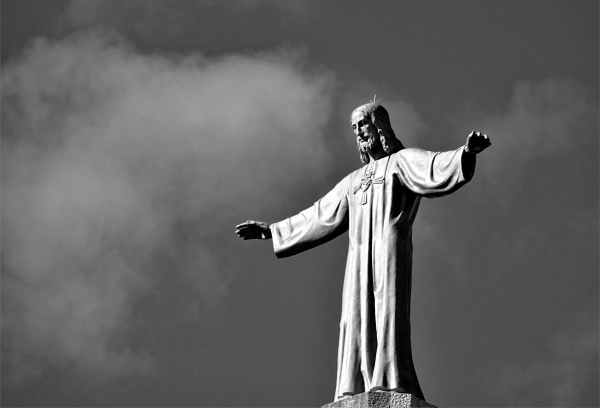
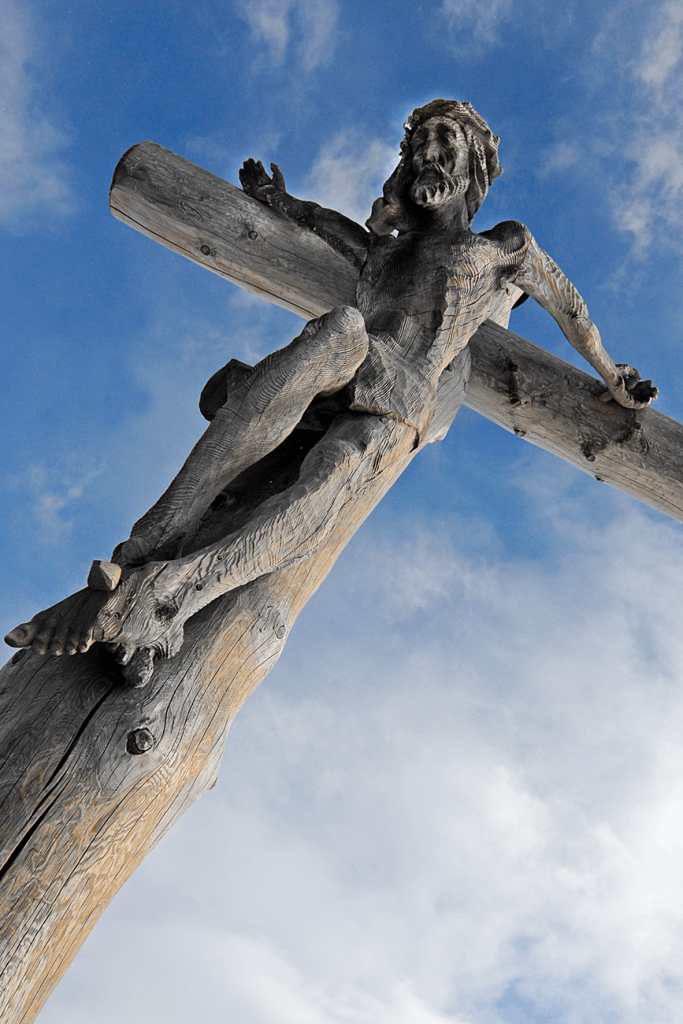
Holy Terror

It’s the end of October, and tomorrow will be Halloween. Stores and houses around the neighborhood are decorated with frightening figures of skeletons, witches, ghosts, and gravestones. Some of my friends love this time of year, and they look forward to binge-watching movies about zombies or vampires– anything scary, spooky, or terrifying.

Photo by Toni Cuenca on Pexels.com

I don’t like Halloween. I don’t like scary movies. But I believe in the value of fright. Life is filled with things–natural and supernatural– that fill us with real fear. And that is as it must be in a fallen world. Sin and death, evil and darkness, fires, earthquakes, violence and plague–they are real and should produce both fear and caution. The Bible is not silent or dismissive of such things. God’s laws warn against evil spirits, calling on the dead, consulting with witches, fortune telling, even giving in to anger, envy, and hatred. God’s laws also provide for hygienic practices to ward off disease and plague.

Photo by Mike on Pexels.com

And yet, the Bible also gives hundreds of warnings against giving in to fear and letting it control our lives. We are to be cautious and wise where fear is concerned. Over all, we are to remember that God is bigger and more powerful than our fears. God can calm storms, put out fires, even conquer disease and death! There is no power, no force, no terror, that can overwhelm God, or touch those under His protection.

Photo by Pixabay on Pexels.com

Terror holds no power in God’s presence. Therefore, if we know God, we can experience no true terror. But where there is no God, terror will reign. It’s like the saying: “No God; No Peace–Know God; Know Peace”. Terror comes with darkness, with chaos, with lawlessness and loneliness.

Photo by Skitterphoto on Pexels.com

There is only one other kind of terror– a Holy Terror. We can be terrified by the awesome Holiness of God. It is altogether more powerful and alien than anything we can even imagine. Even for those who know God, there is the knowledge that God is GOD, and we are not worthy to look on His face or enter into His presence on our own. Normally, when we think of terror, we think of things that are very unholy–evil things; supernatural forces of darkness. Yet Holiness can also inspire terror because it causes us to see our own unworthiness; our own sin and failure. I am reminded of the “face-melt” scene from Raiders of the Lost Ark– Nazis, who have been fearlessly and relentlessly pursuing the Ark of the Covenant, believing that it holds supernatural powers they can use to gain power over life and death, are suddenly and horrifically destroyed when they gaze inside–as they come in contact with the very Glory of God, their terror is absolute, and they are destroyed by its presence.

Photo by samer daboul on Pexels.com

This season, may we celebrate that God, in His awesome and mighty power, constantly reminds us that we can “Know” Him without fear; instead of running, cowering, or melting, we can come to Him with confidence and joy! And in doing so, we can face any other terror, knowing that God is with us, and for us, and even filling us with His peace! We need not be filled with Holy Terror– instead, we can be filled with the Holy Spirit!


Photo by Pixabay on Pexels.com

An Empty Cup

Sometimes, I come to God full– full of joy, full of worry, full of praise, full of confession. But sometimes, I come to God feeling very empty. I am worn out, tired, depressed, inadequate, and lacking. My cup is very empty.

Photo by Madison Inouye on Pexels.com

The Bible is filled with images of cups and pouring out– have you ever noticed? “My cup runneth over” (Psalm 23:5) “Let this cup pass from me.” (Matthew 26:39) “Take this cup..” (Luke 22:19-20) “I am being poured out like a drink offering..” (Philippians 2:17) (and many others).

Photo by Linnea Herner on Pexels.com

My husband and I went out to lunch recently. The hostess took our drink orders while we looked at the menu. By the time we were ready to order our food, there were glasses of ice water, lemonade, and hot coffee already at our table. Our waitress came over often to check on our food and drink. Before I had finished my lemonade, there was another glass waiting! Before David had finished his coffee, there was more– fresh and piping hot! We came into the restaurant hungry and thirsty– we left refreshed and full. Imagine if our hostess had brought us cups with only a small amount of water or drink, and refused to give us more. We would be disappointed, even surprised. And often, the hostess would come around to a table to find that no one wanted or needed a refill. There was plenty of water to satisfy thirst, yet some people drank sparingly, or left their drink nearly untouched. We take for granted that there will be plenty to drink at the restaurant, yet we often come to God expecting only a little of His rich blessings.

Photo by sergio omassi on Pexels.com

When we come to God empty, He is always ready to fill our cup to overflowing. God’s blessings are abundant. He fills us to overflowing, so the blessings can be shared. Jesus said to the woman at the well, “Everyone who drinks this water will be thirsty again, but whoever drinks the water I give them will never thirst. Indeed, the water I give them will become in them a spring of water welling up to eternal life.” (John 4:13-14 NIV via biblegateway.com)

Photo by Tuu1ea5n Kiu1ec7t Jr. on Pexels.com

I feel guilty when I come to God feeling empty and needy. I don’t deserve a full cup of God’s blessing. But I must come willing to accept, not what I think I deserve, but what God is pleased to give. Even if I feel empty, I may be ignoring a cup filled with pride, shame, guilt, or self-dependence. God cannot fill a cup already full of such things. But God is pleased to fill to overflowing the cup that is ready to receive Him! And He is not just filling my cup to overflowing– He is filling my cup so that I have something to pour out to others!

Photo by Cameron Rainey on Pexels.com

Sometimes, my cup seems empty because I have been pouring myself out. I can do this in good ways or bad, for the right reasons or in self-abasing ways. But Jesus poured Himself out for others–figuratively and even literally, spilling His blood for our atonement. We are to share our lives and resources with others– to pour out of our abundance. Sometimes this leaves us feeling empty–temporarily. God does not mean for us to live in emptiness, but He also doesn’t mean for us to hoard His blessings. The more we pour out, the more there is to refill our cup!

Photo by NIKOLAY OSMACHKO on Pexels.com

But there is another blessing– the blessing of another empty cup. There is a cup of wrath that should be ours– a cup filled with bitterness, regret, punishment, and pain–a cup of eternal thirst for justice and salvation–one that Jesus willingly drank for us. The cup He extends is the cup of blessing and joy that was His from the foundation of the world; a cup we could never have tasted but for His sacrifice.

Before us are two cups– one that can be forever filled to overflowing, and one that can remain empty of the bitter dregs of sin.

Photo by Karolina Grabowska on Pexels.com

“Discovering” Jesus

Some places in America are observing Columbus Day today. This has become a controversial subject. For many years, schoolchildren were taught that Christopher Columbus, an Italian explorer working for the Spanish, “discovered” America when he landed on the island of Hispaniola in 1492.

Modern scholars are offended by this for a variety of reasons. First, there were already people in the Americas– Columbus didn’t “discover” a new-found continent devoid of people or culture. Just because the Spanish court, and most of Europe, didn’t recognize the existence of North and South America and the Caribbean, doesn’t mean they were undiscovered. It only means they were undiscovered by the major European powers. Scholars go on to argue that Columbus and the Spanish (and the French and English and Portuguese who followed) did not so much “discover” the “New World;” they invaded and stole it from those who were living here “in peace.”

Photo by kat wilcox on Pexels.com

I disagree with the way scholars have “revised” the history of Western culture. But it causes me to think of how, over the years, we have also revised the message of the Gospel, and our concept of Christianity.

Much like the modern scholars’ version of Columbus “Discovering” America, many people like to talk about “discovering” Christianity. We “encounter” the Gospel. Maybe we join a local congregation of believers, or a Bible study group. It’s exciting– at first. It is new and amazing in its message of hope and love and grace.

Photo by Luis Quintero on Pexels.com

But then we hear ugly stories of Christians who are hateful, judgmental, condemning, greedy, hypocritical, and hurtful. “That can’t be true; that can’t be what Christianity is about,” we say. And so we vow that “our” Christianity will be different. We adapt our message to the current trends in our society. We tailor our message to our friends and neighbors, even when the it’s no longer true. We wipe out and “conquer” and reshape those verses that cause offense. We recreate Jesus into a “great teacher,” a pal or a guru, rather than a Sovereign Savior. We end up following our own gospel, rather than the Gospel of Jesus Christ.

Photo by Andrea Piacquadio on Pexels.com

Or, we double down on legalism, making our walk with Christ more like a walk with His accusers, the Pharisees. We scream and argue about the “right” way to worship, or dress, or manage money. And we seek to wipe out those who don’t follow our traditions. We remove the promise of Grace from our Christianity, and replace it with judgment.

Except it isn’t “our” Christianity. We haven’t “discovered” the Gospel to make it into a “new” and better religion. We haven’t “discovered” a Jesus who is kinder or more accepting or less judgmental than He ever was. And We don’t follow a Jesus who refuses to love those who are not perfect or forgive those who have “fallen short of the glory of God.” (Romans 3:23)

Photo by Pixabay on Pexels.com

Our “discovery” of Jesus should be a lifelong discovery– a lifelong journey of becoming who He wants us to be; becoming more like who He really is. Part of that is living out our faith in a world that refuses to understand or accept the Gospel. Part of it is living our lives according to the Bible’s principles, and not our culture’s trends. Part of it is trusting that God’s word never changes, even when the world around it does. And part of it is a consistent pursuit and practice of humble and earnest prayer. Otherwise, we may well be guilty of the same conquest and colonization as those we are condemning who came before us.

Just Another Haunted House?

He said to them, “It is written, my house will be called a house of prayer, but you are making it a den of thieves!”

Matthew 21:13 (Christian Standard Bible, via Biblehub.com)
Photo by Marta Dzedyshko on Pexels.com

It’s October. Time for apple cider, falling leaves, pumpkin spice cookies, bonfires, corn mazes, and “haunted houses.” I don’t know about other parts of the world, but in my neighborhood, we usually have dozens of local charities decorating barns or old factories or houses, and charging people to visit in the nights leading up to Halloween. They hang cobwebs and mirrors, create mazes and special effects– creaky doors, moving floors, glowing objects, eerie moans, flashing lights, and pop-up creatures , along with volunteers dressed up as ghosts or mummies or zombies to guide them along the way. Hundreds of people tromp and shudder, laugh and scream, as they travel through the house. They come back and bring their friends, eager to watch their reactions, and see if they can remember all the “surprises” to come.

Photo by Jack Gittoes on Pexels.com

I’m not a big fan of haunted houses. I don’t like being frightened for “fun.” And I don’t like giving money, time, and thought to making “fun” of death and evil spirits. This year, with COVID still a factor, many of the haunted houses are closed or operating very differently. So are many other venues, including churches.

Photo by Adrien Olichon on Pexels.com

Which brings me to a startling thought–have some of our churches become nothing more than a kind of haunted house? People come to be entertained; to feel their pulse beat faster, or get excited about a particularly good worship sequence. They may even come to be “frightened” a little by sermons about hell and death, sort of like watching a spooky movie or listening to ghost stories by the campfire. They meet up with their friends, and go out together afterwards to their favorite restaurant. The service is filled with special effects– lights and videos, booming bass lines and dynamic guitar solos, volunteers dressed up to greet visitors, serve coffee and donuts, collect money, and take attendance; sometimes even gimmicks, and props, and prizes.

Photo by Josh Sorenson on Pexels.com

I’m not saying it’s wrong for churches to be warm and welcoming; I don’t think they have to be gloomy and boring. But we’ve spent so much time making our churches “attractive;” put so much of our time and effort into making worship thrilling and fulfilling, that we’ve lost our focus. This isn’t “the people’s house.” It isn’t a “fun house.” It is God’s house. A house of prayer. A house of honor and reverence. A Holy place. We’ve made our churches places of basketball courts and coffee bars; playrooms and gift shops; social networks and small business incubators…

Photo by Vova Krasilnikov on Pexels.com

We read about Jesus chasing the moneychangers out of the Temple, but we erect huge signs in front of the church tracking our fundraising efforts for a new roof. We are not a “den of thieves.” But are we a “house of prayer?” Are we meeting together to pray, or to be entertained? To meet with God, or to meet up for fellowship? Are we creating a maze of mirrors and gimmicks, instead of calling out in urgency and humility to Almighty God? Are the pews, or chairs, or stadiums, filled with the (spiritually) walking dead?

Photo by Foss Valentine on Pexels.com

Jesus created a stir when He rebuked the money changers. They hadn’t suddenly appeared and set up shop. They didn’t see themselves as “thieves.” After all, they weren’t stealing from anyone. They were buying and selling items connected with the Temple worship–animals for sacrifice, incense, food for hungry travelers… They weren’t stealing money– not exactly. Maybe they charged extra for their services; for the convenience. Maybe they had bribed someone or used their influence to get a prime marketing spot inside the Temple perimeter. But that’s just business. And, until Jesus kicked up a fuss, no one seemed to notice or mind.

Photo by Igor Ovsyannykov on Pexels.com

Jesus wasn’t upset about money– He was upset about those who were stealing from the Father. Cheapening His glory, crowding in on His House, bringing the noise of everyday commerce into the court of contemplation. Bringing dust and pettiness into His Holy presence. Trading the Awe of His Majestic Temple for the “aw, shucks” of a day at the mall– or a trip to the Haunted House.

Photo by Ric Rodrigues on Pexels.com

We have a real opportunity as “The Church” to take a close look at what we have become, and how we want to adjust to “life after the pandemic.” If Jesus were to visit our church, would He find it a House of Prayer, or a Haunted House?

“I Never Knew You”

21 “Not everyone who says to me, ‘Lord, Lord,’ will enter the kingdom of heaven, but only the one who does the will of my Father who is in heaven. 22 Many will say to me on that day, ‘Lord, Lord, did we not prophesy in your name and in your name drive out demons and in your name perform many miracles?’ 23 Then I will tell them plainly, ‘I never knew you. Away from me, you evildoers!’ Matthew 7:21-23 (NIV)

Photo by Raphael Brasileiro on Pexels.com

In my life I have met “important”people– people with money, or power, or fame, (or all three!) And I have met “forgotten” people, “ordinary” people, “special” people, flamboyant people, even repugnant people.

I know hundreds of people’s names; recognize their faces; carry memories of laughter created, or goals accomplished, or griefs shared. As I get older, I sometimes meet up with people I should remember or know, but I can’t place their name, or their face has changed out of recognition since we last met. And of course, the same thing sometimes happens in reverse– I expect to be recognized, but the other person has no memory of me. It can be distressing; this feeling of not remembering or not being acknowledged.

Photo by omar alnahi on Pexels.com

I know many families who have journeyed through Alzheimer’s or other forms of dementia. Loving someone who no longer remembers looking into your eyes, no longer reacts to the tone of your voice, no longer knows your intimate secrets…who searches your face and sees only a stranger. Hoping for even a glimmer of recognition; a moment of memory–it’s heart-breaking and harrowing and exhausting.

Photo by burak kostak on Pexels.com

But imagine hearing those words from your creator– “I never knew you.” In all your life, never having made time to create memories with the God who formed you in the womb, who counts the very hairs of your head; hearing HIM say, “I never knew you. I made you; I was as close as your next breath through every moment of your life. I heard every laugh; I saw every tear– yet I never KNEW you. You never let me in; you never reached out or looked in my direction. You pretended to others that you knew me. You ‘name-dropped.’ You told others that we were friends. That you spoke with me every day. I heard you. I wept. But I never knew you. And you never knew me. Oh, you learned about me. You knew enough to convince some others that you knew me. You even said elaborate prayers and quoted many of my words. You put on a good show. But you lived your life as though you never met me; as though I were no more than a myth or a shadow. And now, now that you see me for who I AM; now that your eternal life depends on it–you have to hear the most frightening words I will ever speak: ‘I never knew you.'”

Photo by Andrea Piacquadio on Pexels.com

10 I want to know Christ—yes, to know the power of his resurrection and participation in his sufferings, becoming like him in his death, 11 and so, somehow, attaining to the resurrection from the dead.
12 Not that I have already obtained all this, or have already arrived at my goal, but I press on to take hold of that for which Christ Jesus took hold of me.
Philippians 3:10-12

Of all the people I have met; of all the people I know– Lord Jesus, let me recognize Your voice above all. Let me cherish your presence in every moment of my life, and in every relationship. Grant me grace and wisdom to follow you and live in joyful obedience. And let me invite others into your presence. Let me know you and be known by you. Let me be eternally yours as you are mine.

Photo by Munmun Singh on Pexels.com

Blog at WordPress.com.

Up ↑