Let Every Heart Prepare Him Room


Joy to the world, the Lord is come!
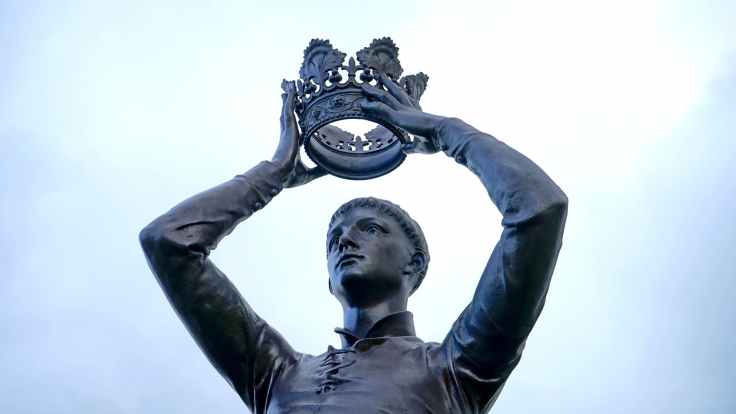
Let earth receive her King;
Let every heart prepare Him room,
And heav’n and nature sing,
And heav’n, and heav’n, and nature sing.
Joy to the earth, the Savior reigns!
Let men their songs employ;
While fields and floods, rocks, hills, and plains
Repeat the sounding joy,
Repeat, repeat, the sounding joy.
No more let sins and sorrows grow,
Nor thorns infest the ground;
He comes to make His blessings flow
Far as the curse is found,
Far as, far as, the curse is found.
He rules the world with truth and grace,
And makes the nations prove
The glories of His righteousness,
And wonders of His love,
And wonders, wonders, of His love.

Joy to the World– words by Isaac Watts

Advent is a time of preparation– joyful preparation. It is an oxymoron to say it, but it is a time when we remember with anticipation. It is a time once again to prepare our hearts for the arrival of an event that happened over two thousand years ago. Each year, we look backward to look forward! And we prepare as though it were all happening anew– the announcement of the angels, the travels of Mary and Joseph and their arrival in Bethlehem, the wise men following a star..

And we prepare for this year’s festivities– the gifts, the food, the decorations, the invitations and greeting cards, programs and parties, caroling and shopping…But in the midst of it all, hopefully, we prepare our hearts to be rekindled, reawakened to the wonder– beyond the star and angels and virgin birth–the wonder that God would ransom the lost, break the chains of sin and death, redeem the fallen and weary world, and pour all of his Glory into the frail cries of a newborn baby. All the rest of the preparation is meaningless if we don’t prepare to be overwhelmed again by the “glories of His righteousness, and wonders of His love.”

“Lord, may our hearts be prepared to accept the wonder and joy of this season. May we have new hearts for the wonders of your great Love for us– that you would humble yourself to live among fallen men and women, and die to set them free. That you would rise triumphant, so that we need not fear death. Thank you for this indescribable gift. Once again, let Earth receive her King with joy as all of heaven and nature sing!”

Be Not Afraid

Have you ever anticipated something so wonderful, that, when the time came, you were almost afraid of it? Afraid that the anticipation would exceed the wonder of the actual event? Afraid that the wonder would be eclipsed by some unforeseen tragedy? Afraid that your dreams were too big? That you could never deserve such happiness or blessing?

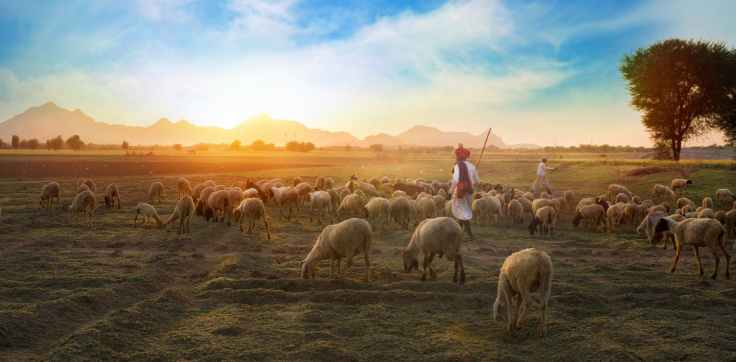
 That night there were shepherds staying in the fields nearby, guarding their flocks of sheep.  Suddenly, an angel of the Lord appeared among them, and the radiance of the Lord’s glory surrounded them. They were terrified– but the angel reassured them. “Don’t be afraid!” he said. “I bring you good news that will bring great joy to all people. The Savior—yes, the Messiah, the Lord—has been born today in Bethlehem, the city of David!  And you will recognize him by this sign: You will find a baby wrapped snugly in strips of cloth, lying in a manger.” Suddenly, the angel was joined by a vast host of others—the armies of heaven—praising God and saying
 “Glory to God in highest heaven,
    and peace on earth to those with whom God is pleased.”
When the angels had returned to heaven, the shepherds said to each other, “Let’s go to Bethlehem! Let’s see this thing that has happened, which the Lord has told us about.” 
They hurried to the village and found Mary and Joseph. And there was the baby, lying in the manger. After seeing him, the shepherds told everyone what had happened and what the angel had said to them about this child. All who heard the shepherds’ story were astonished, but Mary kept all these things in her heart and thought about them often. The shepherds went back to their flocks, glorifying and praising God for all they had heard and seen. It was just as the angel had told them.” Luke 2:8-20 NLT (Emphasis added)

The shepherds on that first Christmas were terrified– their ordinary night had been shattered by the appearance of an angel of the LORD. And that was only the beginning! The angel announced the birth of Messiah– Christ, the LORD– in the nearby village of Bethlehem. And then an angelic host– a vast army– of angelic beings chose to worship in the skies that, just moments before, had been dark, still, and lonely.
“Fear not!” “Be not afraid!” Through the terror and overwhelming glorious radiance came a calm voice. “I bring good tidings of great joy!” “..shall be to ALL people…” “PEACE on earth!” “Christ is Born!”

The fulfillment of centuries of longing was finally here. The central hope of the entire nation of Israel had arrived. And the angel left no doubt that the shepherds were welcome, even commanded, to GO and see this miracle with their own eyes. The Biblical account says that they did go– but it also says they stopped to discuss it first. They talked it over and decided to face the mixture of thrilling joy and weak-kneed trembling. Could it really be?! The Messiah! Here and now! But…a babe? Wrapped, not in robes of glory, but in swaddling cloths? And…lying in a manger? Surrounded by sheep and donkeys? What if this was a cosmic hoax? What if there was a mistake? Would they be disappointed? Ashamed? Turned away because of their lowly status?

“Be Not Afraid!” The shepherds talked it over. How could they NOT go and see? What if the news was true?! And in going, they became the first ordinary witnesses of the most extraordinary birth in history! They came. They saw. They believed! And they worshipped.

And then, they shared their experience with others. They went back. They probably shared the news first with the sheep, rehearsing how they would spread the fantastic tale to those who still lay sleeping. But they may also have shouted it in the streets, waking up all the neighbors with the joyous news. The Bible doesn’t give us details. But it does tell us that they went back with joy and gladness. And conviction–“It was just as the angel had told them.” Nowhere in the Bible story did they show any more fear. They had no doubt. The wonder of Christ’s birth was everything they had been told to expect, and more!

This Christmas, we look back at the shepherds, and we try to recapture the wonder of that Holy Night, and the visit of the angels, and the discovery of a tiny Savior in a manger. And we will have the opportunity to celebrate, just as the shepherds did.

What will be our response to His coming? Will we spend this season glorifying a praising God? Will we “astonish” our neighbors as we tell about the Savior’s birth, and His subsequent death and resurrection? Will we heed the angel’s calming tones to “Be Not Afraid” as we encounter the Messiah? As we go “back to (our) flocks” and fields and daily life?

I pray that we will “consider well” this Christmas how “our good God” gave us His “beloved Son”– born in a humble manger, willing to die a humiliating death He did not deserve so that we could be free from the curse of Sin and Death. And may we pray for the courage and conviction to live out and speak out the Joy and Glory of His coming!

On a Cold Winter’s Night…

One of the great classic Christmas carols, “The First Noel,” describes the night of Christ’s birth as a “cold winter’s night, that was so deep.”

It is dreamy and dramatic to think of Jesus coming into a cold, dark, dreary (and even snowy) world, bringing angels, glorious stars, kings bearing expensive gifts, and joyous songs.

We tend to look at Advent as a time of darkness and silence, in anticipation of the coming light and the Gospel. The idea that the world before the Birth of the Savior was cold continues the pattern of absence. Darkness does not exist independently. Neither does silence or cold. Each is the absence of something else– Light, sound, warmth–and it can only be known by the degree to which its opposite is reduced, distant, or absent.
In contrast, the light, sound, or warmth is made more evident in contrast with its opposite–we may not notice a slight difference in lighting on a sunny day, or a slight difference in temperature; but a candle in a dark room, or a whisper in a silent auditorium has a dramatic effect.

We don’t actually know the exact date of Jesus’ birth, and while December falls during winter, that doesn’t always mean a cold night in every part of the world. If shepherds were watching their flocks in fields just outside of Bethlehem, it is not likely that the temperatures were below freezing, or that there was snow and ice all around. The Middle East is not known for icy winters, after all. Nighttime generally brings colder temperatures, and it may be close to freezing by the middle of the night if you have no fire or protection from the wind, but a “cold winter’s night” is more likely to be found in Minnesota or Finland, not in Bethlehem, and usually in the middle of winter– January– rather than the beginning of the season.

However, just like the darkness and silence, the cold of that first Christmas was spiritual in nature. (https://www.biblegateway.com/passage/?search=John+1%3A9-12&version=ESV). Jesus entered a frigid world– a world of closed-off people, suspicious, oppressed, angry, sick, and world-weary. Hatred can be cold, but colder still is apathy and disdain and hopelessness. The world of Advent is a world desperate for the light and heat and sound of God’s love– not because God is absent, but because people have moved so far away from Him. The light becomes dimmer, the songs become a series of indistinct noises, and the cold and damp of night creep into our souls. Today, even with the hope and light of the Gospel story, we take our focus off of the true light of the world, and the true source of warmth and love, and too often focus on the lesser warmth of a new jacket, or the glittering lights of a shopping center, or the strident sounds of greed and envy.

Jesus may not have come in the cold of midwinter. But He came into a world of cold hearts as a helpless baby in a strange and unwelcoming land. And he was wrapped in rags and placed in a feeding trough– the warmest place that could be found. But even in this tiny, shivering baby, there was the warmth of Pure Love. And it was felt by all who came in contact with Him– shepherds rejoiced, Mary pondered, Wise Men knelt in adoration.

I love seeing candles and firesides at Christmas time– I love coming into a warm house, full of laughter and love, or singing carols on a cold night, and being invited inside to share the warmth. I love fellowship at church, and sharing a hug and a smile with those I meet. Imagine the warmth of God with us–All of the warmth and life of being wrapped in the arms of Grace, and held by the nail-scarred hands, never to be cold or alone ever again. Can you feel it? Can you anticipate it? Imagine passing that on to someone who has never known such warmth…on a cold winter’s night…

What Child is This?


What Child is this who, laid to rest
On Mary’s lap is sleeping?
Whom angels greet with anthems sweet,
While shepherds watch are keeping?
This, this is Christ the King,
Whom shepherds guard and angels sing;
Haste, haste, to bring Him laud,
The Babe, the Son of Mary.
Why lies He in such mean estate,
Where ox and ass are feeding?
Good Christians, fear, for sinners here
The silent Word is pleading.
Nails, spear shall pierce Him through,
The cross be borne for me, for you;
Hail, hail the Word made flesh,
The Babe, the Son of Mary.
So bring Him incense, gold, and myrrh,
Come peasant, king to own Him;
The King of kings salvation brings,
Let loving hearts enthrone Him.
Raise, raise a song on high,
The virgin sings her lullaby;
Joy, joy for Christ is born,
The Babe, the Son of Mary.

Words by William C. Dix

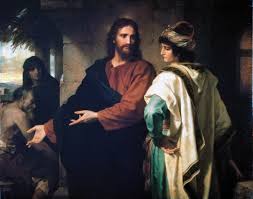
No other name in all history elicits such differing and intense responses.  Jesus, the son of Mary
Jesus, the Son of God
Jesus, the Son of Man
Jesus, the Son of David
Jesus, the Christ
Jesus, the Messiah

Who is this child– ruler of the universe,
Laid in a feeding stall,
In a simple stable,
In a small town,
In a captive land?
Son of a carpenter (illegitimate, by some accounts),
In the royal line of David (but so far removed as to be of no account).


Yet angel hosts sing “Gloria!”
Kings and philosophers travel from distant lands for just a glimpse,
Bringing priceless treasures and humbled hearts,
While the beleaguered puppet king of a conquered people 
Prepares to destroy him.

Will he rise to take his place in Herod’s palace?
Will he lead a revolt to free his people from Rome?
Will he bring together rival factions among the priesthood?
Will he …
Die in agony, betrayed and scorned?

This, this is Christ the King;
The Lamb of God.
Savior and Sacrifice.
“The Silent Word”, 
Pleading,
Healing,
Bleeding,
Ascending.
Even in his humble life and
Ignominious death
He rose to change the world–
Stopping time and dividing it into
All that came before and
All that has happened since.

This is Christ the King
Bruised for our sins,
Betrayed by our selfishness
Cheapened by our compromise and corruption.

Bring him incense, gold, and myrrh;
He is more than our tinsel, jingle bells, and platinum charge cards.
He is the King– He is the babe– the son of Mary.
He is the King who will return in all of His Glory!
He is the Christ!

The Weary World Rejoices…

We live in a weary world– weary of war, weary of chaos, weary of worry, and weary of sin and its consequences. From the time the alarm rings to the time we finally lay down our weary heads, we are bombarded by stress, misunderstandings, distractions, disappointments, questions, harsh words, harsh images, demands, doubts– I’m tired just listing them…

Even so, we are surrounded by promises (mostly false) of peace and rest, satisfaction and success. “Buy this!” “Try that!” “New!” “Improved!” The voices call out, offering temporary bliss, or temporary escape from the weariness all around. “Jingle Bells!” “Happy Holidays!” “Tidings of Comfort and Joy!” It is tempting to let Christmas become just like all the other worldly distractions–shiny, loud, stressful and fleeting, full of promise, but leaving us empty and cold in the end.

But Christmas IS different, because it doesn’t celebrate what the world has to offer. The celebration includes lights and bells, songs and gifts, food and friends and family– but at its heart, Christmas celebrates something “out of this world!” Jesus came to a weary world long ago, and no matter how weary the world was, or is, or will be, Jesus brought all the hope and healing of Heaven in the small package of a tiny infant child in a crowded town in a conquered land.

On that Holy Night, God crashed the party– He did more than watch from a distance, more than speak from the skies above or send angel messengers–He arrived, actively participating in the struggle, the bone-weariness, the hunger and thirst and chill and stress of living among His fallen and fractured creation.

And the weary world rejoices–can you hear it? Above the bustling noise of people shouting, and car horns blaring, and advertising slogans, and piped-in Christmas songs…Can you feel it–beyond the comfort of a warm blanket and hot cocoa, beyond the hugs of friends or the smiles of strangers or gifts from loved ones? Can you see it–beyond the glare of city lights, undimmed by the darkness of hatred and greed?

The lights and songs will fade away, but the Love, Joy, and Peace of God that came to the world that first Christmas is for all time!

“Fall on your knees!
Oh, hear the angel voices,
‘O Night Divine. O Night, when Christ was born.
O Holy Night!'”

What Can I Give Him?

In the Bleak Midwinter

words by Christina Rossetti


1 In the bleak midwinter, frosty wind made moan, 
earth stood hard as iron, water like a stone; 
snow had fallen, snow on snow, snow on snow, 
in the bleak midwinter, long ago.

2 Our God, heaven cannot hold him, nor earth sustain; 
heaven and earth shall flee away when he comes to reign. 
In the bleak midwinter a stable place sufficed 
the Lord God Almighty, Jesus Christ. 

3 Angels and archangels may have gathered there, 
cherubim and seraphim thronged the air; 
but his mother only, in her maiden bliss, 
worshiped the beloved with a kiss. 

4 What can I give him, poor as I am? 
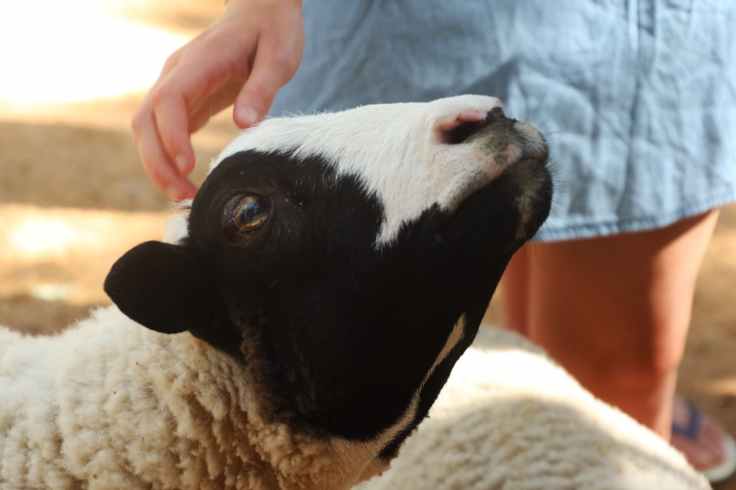
If I were a shepherd, I would bring a lamb; 
if I were a Wise Man, I would do my part; 
yet what I can I give him: give my heart.


United Methodist Hymnal, 1989

I love this Christmas Hymn, though it creates a picture that is likely very false.  Historically, we have no reason to believe that Jesus’ birth occurred on the 25th of December, or even in the winter at all.  And even if it was December, it is very unlikely that the Middle-Eastern countryside was experiencing frosty moaning winds or icy waters on the night of Christ’s birth.
In addition to Mary, the Bible tells us of others who came to worship that night– the shepherds in the nearby hills.  The wise men likely came days, weeks, or even months later to bring their gifts.  And Joseph would certainly have been there, as well.

The song is still lovely, and the last verse is the key.  Christ poured out all that He was; taking on the form of a helpless baby, He lived among those who rejected and mocked Him.  He served those whom He had created, healing their wounds, forgiving their sins, providing for their eternal redemption.  He died, betrayed and despised by His own chosen people, and dismissed by the rulers and authorities of the day.  He never owned a home, built monuments, carved his name in stone, or wrote books to preserve his legacy.  He had no dynasty or even children to carry on his name; at the time of his death, all his friends and followers had abandoned him– all but one disciple and his mother.  Yet his birth (the actual date of which has been obscured by history) is synonymous with generous gifting, rejoicing, singing, worship, and renewed hope.  So what could any of us possibly give that could even begin to match what His life, death, and resurrection gave us?

He asks for only one thing– everything we have: all the failures, mistakes, good intentions, bad choices, selfish desires, and hurts of the past–and in return, He gives us everything beyond our wildest imaginations: eternity with Him; all the riches of His Glory; all His holiness and majesty imputed to us; peace with Him; rest and restoration in Him; and His Spirit to guide and sustain us!

The bleakness of midwinter may not have been the physical setting of Christ’s birth, but it represents the spiritual setting of our lives without Him.  In that sense, Christ comes in the bleak midwinter of our rebellion, our despair, and our isolation, and offers to give us everlasting light, hope, peace, and joy!

That’s worth celebrating every day throughout eternity!

O Little Town of Bethlehem

O Little Town of Bethlehem


1. O little town of Bethlehem, 
how still we see thee lie; 
above thy deep and dreamless sleep 
the silent stars go by. 
Yet in thy dark streets shineth 
the everlasting light; 
the hopes and fears of all the years 
are met in thee tonight. 

2. For Christ is born of Mary, 
and gathered all above, 
while mortals sleep, the angels keep 
their watch of wondering love. 
O morning stars together, 
proclaim the holy birth, 
and praises sing to God the king, 
and peace to all on earth! 

3. How silently, how silently, 
the wondrous gift is given; 
so God imparts to human hearts 
the blessings of his heaven. 
No ear may hear his coming, 
but in this world of sin, 
where meek souls will receive him, still 
the dear Christ enters in. 

4. O holy Child of Bethlehem, 
descend to us, we pray; 
cast out our sin, and enter in, 
be born in us today. 
We hear the Christmas angels 
the great glad tidings tell; 
o come to us, abide with us, 
our Lord Emmanuel! 

Words by Phillips Brooks


Micah 5:2 English Standard Version (ESV)
2 But you, O Bethlehem Ephrathah,
    who are too little to be among the clans of Judah,
from you shall come forth for me
    one who is to be ruler in Israel,
whose coming forth is from of old,
    from ancient days.

God’s ways are not our ways.
I grew up in a tiny village in Michigan, and when we used to sing “O Little Town of Bethlehem,” I always imagined a similarly tiny town, draped in silence in the dead of night, sleeping right through the most glorious and stunning event in history.  It wasn’t difficult to imagine the same thing happening in my sleepy village– Christ could have come to any of a dozen sway-backed sheds or garages around town without fanfare as hundreds of strangers crammed into local houses and public buildings, eager to be done with a bizarre census that led them back to where their ancestors once lived.  There is nothing special about my hometown to anyone but those of us who grew up there.

Bethlehem was just such a small town.  Prophecy that a king would arise from such a backwater village was mostly ignored.  Four hundred years had passed since the last mention of Bethlehem by God or any of His prophets.  No one expected a miracle there, just as no one would expect a miracle in our little town today.

We expect big things to happen in big cities– bustling, surging, modern, energy-filled cities.  This is where grand events are held– political rallies, sold-out concerts, championship sporting events, groundbreaking new developments in business and medicine, coronations and ceremonies.  But God often works in the quiet spaces and unexpected places of our world and in our lives.  He comes softly and silently into the dark corners and forgotten nooks filling them with His glory.

And He gives us the privilege of sharing in this miracle– wherever we are, whoever we are, whatever our circumstances.  Christ did not spend most of His life on earth in the halls of power or the centers of commerce.  He didn’t “tour” the university circuit giving lectures, or fill great auditoriums while His image was splashed across a Jumbo-tron.  He walked humbly from small village to small town, spreading truth and love and drawing people to Himself, that they might believe and find true life.  He modeled how we can extend His grace– starting with those in our own small towns or neighborhoods–with simple acts and earnest prayers like the ones in this song:
“Cast out our sin, and enter in, be born in us today.”
“Oh, come to us, abide with us, our Lord Emmanuel.”

No Two Alike

Snow has been falling in earnest lately in our area– sometimes wet and heavy blobs, unsure of their status as liquid or solid; other times cold and wispy flakes, hovering and swirling in the frosty air, shimmering as they catch the light of street lamps, headlights, and even moonlight.  Snow has coated limbs and branches of trees, and painted iron fences and rooftops white against the leaden skies.

We learn as children that each flake of snow is unique– no two are alike among all the hundreds of millions of flakes that fall.  And just so, we are also taught, no two people are exactly alike.  Each of us is unique.

God himself underscores this analogy in the book of Job, when He describes rain, dew, frost, and ice:


28 “Has the rain a father,
    or who has begotten the drops of dew?
29 From whose womb did the ice come forth,
    and who has given birth to the frost of heaven?
30 The waters become hard like stone,
    and the face of the deep is frozen.

Job 38:28-30 (ESV)

Just as each drop of water, each snow flake, each bit of frost is unique, so are we.  And so should be our prayers–millions of voices and hearts raised to our Father in praise, petition, repentance, supplication, worship, adoration–trembling or triumphant– each as unique in our needs and utterances as the beautiful snowflakes dancing and skittering around in the moonlight.  No two of us are alike, yet together we fill the empty night with wonder and give honor to our creator by being who we were created to be.

As we pray today, let us remember to be grateful for our uniqueness– celebrate God’s artistry by being fully ourselves and celebrating the uniqueness of the others around us.

O Come, O Come, Emmanuel!

It is Advent season. We celebrate in four weeks an event that was anticipated for four hundred years! For four centuries, the people of Israel waited for the coming Messiah without ever hearing a word from God. Oh, there were prophecies– some stretching back centuries– that promised he would arrive. But when?!

Imagine praying earnestly for an event that would not happen for another three or four hundred years? Imagine praying into silence for an entire lifetime for an event that even your great-grandchildren would never witness?

We live in a fast world. Fast food, high-speed internet, overnight delivery of packages, instant communication, bullet trains– we have lost the skill of waiting. Yet Advent celebrates the waiting, the anticipation of a birth so amazing and so consequential, that we look back over 2,000 years in wonder!

The birth of Emmanuel was worth the wait. “God With Us” came into the world “at just the right time.” (Galatians 4:4). He was not a moment too early or too late to fulfill all the prophecies and bring Salvation to mankind. Those who prayed faithfully over the centuries may not have lived to see the fulfillment, but they put their hope and trust in the prophets and in the God they served.


We are in another Advent season– we await the return of Christ! We have no way of knowing the exact hour or day (or year or even century) of His return. But with the same wonder and hope of those faithful men and women of old, we should pray for His coming again! We should share the glorious story of His first coming. We should celebrate and worship the Faithfulness of God. He keeps all His promises “at just the right time.”

And as we wait, we must not give up hope or lose our passion for the Mission that Christ left with us. “Go, and make disciples of all nations” (Matthew 28:19-20). As wonderful as Christ’s birth was, it pales in comparison to His triumphant return to judge and rule the earth. May we look back in wonder and forward in joy as we celebrate this season.

Do You Hear What I Hear?

high angle view of train on railroad tracks

George: You know what the three most exciting sounds in the world are?
Billy: Uh-huh. Breakfast is served; lunch is served, dinner…
George: No, no, no, no! Anchor chains, plane motors, and train whistles.

James Stewart (as George Bailey) in “It’s a Wonderful Life”

I’ve mentioned before that I love the old movie, “It’s a Wonderful Life.”  In it, the protagonist, George Bailey, is in despair and considers taking his life.  As his family and friends pray, God responds by sending “an angel, second class” named Clarence, who shows George what life would be like if he had never been born (and how much impact his life has had on those around him).

ItsAWonderfulLife4

One of the key events in George’s life happens when he is 12 years old.  He dives into a freezing river to save his brother from drowning, but in the process, he loses the hearing in his left ear.  This hearing loss weaves its way through the rest of the movie.  As a young man, George designs an indoor swimming pool under the gym floor for his high school (the movie makes no direct link to the earlier event, but it might be presumed that his experience caused him to think of ways to keep active kids indoors during winter months…)  His bad ear (and his need to help his dad at the Bailey Building and Loan) keeps him from playing football in high school.  It later keeps him from fighting in the war but leaves him stuck at home coordinating scrap drives and air-raid drills–“safe” but less-than-honorable positions for a young man of his day.

There are many things George cannot hear, but three things he listens for– Anchor chains, plane motors, and train whistles!  George spends much of the first part of his life longing to leave Bedford Falls (his home town), to travel the globe.  While his friends travel to exotic places and build successful careers in big cities, George gets tangled up in financing small houses for ordinary people in his small town.  All around him are bitter reminders of the life he dreamed of leading.  His brother becomes a pilot– a fate denied to him.  His best friend makes a fortune selling plastic parts for fighter planes, and takes cruises and fancy vacations that George cannot afford.

jimmy_stewart_in_its_a_wonderful_life

There is a dramatic change, however, when Clarence turns George’s life upside-down.  One of the first things George notices after Clarence declares that George has gotten his wish (and never been born) is that the hearing has “returned” to his left ear.  He marvels at this simple but profound change, but attributes it to his recent encounter with more freezing cold river water.  Soon other changes capture George’s attention–his brother is dead because George wasn’t there to save him; his mother is destitute and care-worn because George wasn’t there to save the Building and Loan after his father’s death; none of the houses he helped finance were ever built, and dozens of families are living in squalor and being over-charged for rent by the evil Mr. Potter.  And the peaceful town of Bedford Falls has been transformed into a noisy hotbed of crime and filth, anger and greed.

Its-A-Wonderful-Lifeb

After George has a change of heart and is “returned” to his wonderful life, the hearing loss is back– this time, George laughs in gratitude as his “disability” confirms that all is back to normal.  He no longer listens for plane motors or trains whistles– instead, he eagerly listens for the sound of his kids as he returns home, and the breathless call of his wife as she returns home with help and hope in the form of neighbors and friends.  The sirens and screaming of his earlier nightmare are replaced with joyous music and laughter.

One of the last shots of the movie shows a tiny, tinkling bell on the Christmas Tree.  Zuzu says that her teacher has told the class that every time a bell rings, an angel gets his wings, and George, hearing the bell ring, simply says, “Atta boy, Clarence.”

pexels-photo-788567.jpeg

What are we listening for in life?  Are we consumed with the sounds of excitement and adventure?  Or are we listening for the important sounds of lonely people softly crying, children giggling, birds singing their morning worship song, or raindrops dancing on the sidewalk?  Are we listening for the Spirit’s whisper in the wind, or God’s voice in the thunder?  Exciting sounds can sometimes deafen us to important sounds.  God calls for us to “be still” and know that He is God (see Psalm 46:10)–what we hear in the stillness and silence is rest and peace for our souls.  And that is one of the best sounds of all!

Blog at WordPress.com.

Up ↑