I am passionate about pursuing a relationship with Jesus Christ. To that end, I want to share my journey in learning more about prayer. I am a former teacher and librarian. I love to read, write, share awful puns with friends, and share the joy that comes from trusting my loving Savior.
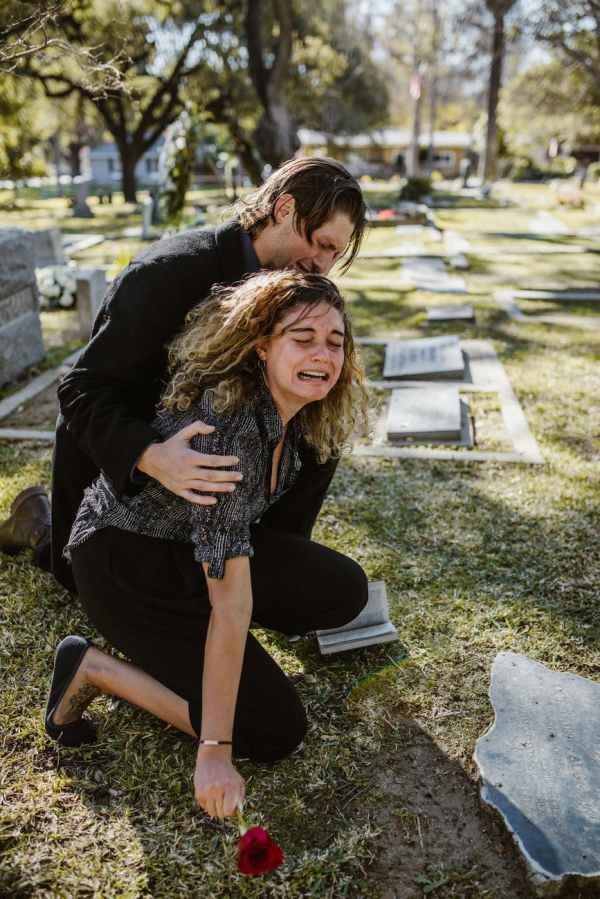
As I write this, I am keenly aware that one year ago, I was at a graveside, saying farewell to my mother. Grieving comes in waves. I rejoice that she is in heaven, and I rejoice that she had a good, long life, and that she didn’t suffer very long at the end. But there is still an ache– wanting to share a memory or a laugh and knowing she isn’t here; questions I didn’t know I had, but now she can’t answer them; just missing her voice and her smile. My father has been gone for 25 years, and the same ache still hits at odd moments.
Sometimes, grieving brings us closer to God. At other times, we can let our grief drive us away from God. But God doesn’t move. He is ever-present. And He reminds us that He is “close to the broken hearted” (Psalm 34:18). When we are grieving, that is a blessed reminder. Grief tends to isolate us. “No one understands…” “Laugh, and the whole world laughs with you; cry, and you cry alone.” We see the “rest of the world” enjoying life, seemingly untouched by sorrow, and we feel abandoned twice over.
As Christians, we are called to follow Jesus’ example, and be close to the broken hearted. We should be the ones ready with a hug, a listening ear, and a shoulder to cry on. We should be the ones who, like the friends of Job (before they offered ill-advised ‘counsel’) are willing to sit with our suffering friends for days at a time, offering the comfort of solidarity and ‘presence.’
My family was blessed with a host of Christian friends and family who comforted us in the days and weeks after Mom’s passing. They still ask. They still share memories. They still pray for us. And in return, we do the same. God does not want any of us to suffer alone.
And this is also true for those who suffer a broken heart for other reasons– divorce, the loss of a home to fire or flood, the loss of a job, a wayward son or daughter– it is important for us to draw strength from others, and offer strength in our turn. But the source of our strength is Jesus, who suffered on our behalf, and rose victorious over death and separation. When “no one” understands, He DOES. When the world leaves us grieving alone, He is THERE. And when we see someone else grieving and suffering, and we don’t know what to do– He gives us the strength and the compassion to reach beyond our own resources and offer comfort.
On our own, we can be like Job’s friends– after awhile, we try to offer solutions, explanations, even judgment about another’s grief. “It’s time to move on.” “Just get over it.” “Well, if only you had…” None of these are helpful. Jesus never said any of those things to the people He came to comfort. Instead, He encouraged them to look to Him as the “resurrection and the life.” (see John 11:25).
Today, let us do the same. There are hurting people all around us. Let’s be an encouragement to others to embrace life– even when we are broken hearted.
Sometimes, I am impulsive. I blurt out my thoughts and emotions; I end up buying a candy bar as I finish checking out my groceries; I decide to turn left at the intersection instead of going straight. Generally, impulsive actions are frowned upon. They can be foolish, wasteful, even dangerous. God does not call on us to be foolish or thoughtless, but there are times when He wants us to act on HIS impulse– to obey without stopping to weigh the pros and cons, without stopping to consider how we will appear to others or how obedience might “mess up” our carefully planned day.
Have you ever felt the “impulse” of God’s love moving you to an unexpected action? Maybe you had a sudden urge to speak to a stranger on a train, or get in touch with an old friend. Maybe you felt compelled to give a gift to someone or stop and offer to help carry a load for them. Maybe you saw a news story and it caused you to pray– and to remember someone’s need and pray some more!
Our own selfish impulses can get us into a lot of trouble. But God’s impulses can lead to blessing beyond our understanding. Just remember:
God’s impulses will never cause you to act contrary to His word. Buying things you know you can’t afford (especially for yourself!), or blurting out judgmental and hurtful comments– such impulses are NOT Godly. “Speaking the truth in Love” is not the same as spewing finger-pointing condemnation and self-righteous justification. Trusting that “God will provide” is not the same as assuming He wants you to have everything you desire.
Delayed obedience is the same as disobedience. God’s impulses are meant to be spontaneous moments of joyful service– not grudging acceptance of an imposition. That doesn’t mean that we can’t take a split second to discern God’s voice (see above) and respond appropriately. But God wants our “moments” as well as our “days”–He knows our plans. But He also knows His plans are better. If we are not willing for our plans to be redirected, then God is not really our Lord.
God’s impulses almost always involve others. God is LOVE. His impulses, therefore, are all about showing love–HIS LOVE–giving, serving, listening, helping, sharing, encouraging! God’s impulses will be directed outward, either toward others or toward God on the behalf of others. Amazingly, in God’s economy, we often reap a residual reward when we put aside our own plans. Sometimes the reward is not immediate or obvious–we may seem to meet with rejection, or even failure at first. Our actions may be misunderstood; our offers to help may fall flat; our prayers may seem to go unheard. But the love we show is not empty or worthless. We may never see the fruit of our actions or prayers, but we can still plant the seeds and water them!
God is a God of Grace and Mercy. Did you fail to act on a Godly impulse today? Stop. Take a moment to repent. Learn from today. Ask for wisdom to do better at the next opportunity!
I’m always amazed at the miraculous opportunities God has given me to bless others, and to learn more about His amazing Love. From unexpected encounters in faraway places, to reminders and prayer requests on Facebook or local news stories, to a sudden urge to do a random act of kindness– God’s impulses give us the opportunity to participate in His miracles!
“Times are tough!” I hear many people complaining about the economy lately. And they have good reason– gas prices, food prices, housing prices, taxes– everything is getting more expensive, and wages or other sources of income just aren’t keeping up.
While we may worry about the current economic conditions, we need to step back and look at a different economy– God’s economy.
This weekend, I wrote out checks and paid bills. I even put some money in the offering at church. But God doesn’t look at the amount of money I paid or gave away, how much I spent or saved, earned or invested. He’s aware, of course, of such things, but God looks at a different “bottom line.” God cares how I spend or save money, whether it’s pennies or thousands of dollars. But He also cares how I spend my time and energy. And my life is “richer” than just the money in my bank account or the things in my house.
God doesn’t give us everything we want– He loves us too much for that. Life isn’t about having the most “toys;” it isn’t about having the easiest or most entertaining experiences. It isn’t about “winning” and having “more.”
I have noticed that the happiest people are often those who have had to struggle the hardest. In God’s economy, it is His pleasure to give more than we can ask or imagine– but often in ways we would never expect. (see Ephesians 3:20-21) In God’s economy, I am rich. Not because of anything that I have done, or earned, or because I was born to a wealthy family or because I won the lottery. I am rich because of what God has done. And if I am tempted to doubt that, I can begin listing all the blessings of God– and I will run out of space and time!
God has given me life. I didn’t choose to be born. I did not have the power to create myself. But God made me unique among all the people who have ever lived. He gave me a body, a mind, a soul, and a spirit. He gave me thoughts and dreams and opportunities to grow and enjoy life.
God gives me hope and purpose and a reason to live. Life can be difficult. It can be painful. It can be tempting to see only the darkness, the grief, the regrets. But it can be beautiful. It can be almost painfully beautiful, sometimes. What a gift. And what a gift God offers in each new day. A new chance to hope. A new chance to strive. A new chance to make a difference.
God has given me family and friends. And sometimes, that can be a struggle! We aren’t perfect, and we don’t always see eye to eye. We step on the toes or we step on the feelings of others. But we also make each other laugh. We make each other stronger. We help each other grow. We enrich the lives of others, and others enrich our lives in return.
God has given me His word– His promises; His love-letter; His wisdom; His counsel; His power to shape my story. And yours! The Bible is not just a collection of stories or words. It is Truth. It is Grace. It is how we can KNOW the riches God has for each of us.
God has given me His Salvation. No matter what today brings; no matter what has happened in my past– whether things I have done, or things that have been done to me–God sees me as His child. And if I believe in Him; if I trust Him to be who He says He is– my Father, my Savior, my Lord–He will throw my past and my guilt “as far as the east is from the west”(see Psalm 103:12). I am debt-free! And I will inherit all that God will share with His children throughout eternity!
And God has given my His Presence. I am never alone. I am never forsaken or forgotten. NEVER. (Hebrews 13:5) If I am sitting in despair on an ash heap, seeing no hope and no future, God is sitting there with me, waiting for me to see Him, and accept that He is more than “enough” to get me through.
And with such riches, I can follow God’s lead and be generous in return. I don’t have the power to give life, but I can celebrate it, advocate for it, protect it, and remind others of its beauty and promise.
I can encourage others– with acts of service, with a smile, by faithfully lifting them up in prayer. What if we thought about hugs as endowments? What if, in God’s economy, every hug you give is worth $2,000? What if every prayer is like investing in a bank account? What if your smile is worth a fortune to someone today? I can be a friend to someone who feels unseen or unheard. I can share a conversation with someone who feels lonely. I can share a burden for someone who just needs a helping hand.
I can share God’s promises. I can share His wisdom. I can share His compassion. I can share His Mercy and Grace with those who least expect or “deserve” it. I can share my hope and my joy. I can help someone look up and look beyond a bad day. And where there is suffering and pain– I can share that, too, knowing it is part of God’s good economy. And maybe, as I offer my presence, I can help someone else see the presence of God sitting there with us both!
You may not feel very rich today. And in this world’s economy, you may be in great need. God may not shower you with cash or assets in the present moment. But God has promised to give you everything you truly need for life and Godliness (2 Peter 1:3-4)
A few years ago, I got really ambitious and decided I would take up crocheting. My grandmother taught me the basics many years ago, and I thought I would be able to pick it back up and make delightful scarves and mittens and maybe even afghans… Except, when I started a scarf, I ended up with a nice start attached to a horribly snarled up ball of yarn. No problem. I would simply work at the snarl until it melted away, and continue with my scarf. Except it didn’t melt away. I was able to “move” the snarl a foot or so down from where it was, but I couldn’t work it all the way out.
I struggled with that snarl far longer than I should have, and eventually gave up the project and moved on to making candles (another story for another time). But I learned a painful lesson. I would love to say that I prayed about the snarl and God unraveled it for me, but that didn’t happen. I prayed– yes; but God allowed me to continue in my stubbornness and self-confidence to do battle with a few yards of green yarn for days, when I could have been doing more productive things.
I have a great need to try to “fix” things– I think most of us do at some level. We live in a broken world, and we know that there are things that are “snarled” all around us–relationships, situations, circumstances–that need fixing. And God has given us opportunities to do good works that can make the world around us better. But it is not our job to “fix” the brokenness in the world. Only God can really “fix” it–even though He may give us work to do along the way.
And that brings me back to prayer. No, God didn’t “fix” the snarl in my yarn. And He didn’t “fix” my stubborn attitude or my willingness to finish the project another way or ask for help from someone else. God isn’t interested in making our lives (or our projects) easier for us by removing our problems. And God isn’t impressed by our stubborn efforts to “fix” the situations in our lives. God’s ways are not our ways (see Isaiah 55:8-9; and check out https://blackaby.org/gods-ways-are-not-our-ways/.
So many times, we think of prayer as a last resort, as a crutch to fall back on when our efforts seem to be failing, or when we think a situation is “too big” for us to handle on our own. Even in the things of Christ, we tend to plan first, and pray later. Prayer becomes our Plan B. But what if, in the grand scale, prayer was always our Plan A? What if we started the morning, not looking at our planners and calendars, but listening for God’s direction? Even if it meant scrapping our own plans and leaving the “snarls” to God? What if, as our churches planned for programming and outreach, we resolved to do nothing until we had prayed for a month about our goals for the coming year? What if our churches had more people coming to prayer meetings than coming to Family Game Nights or Teen Overnight Parties? In my own life, what if I spent less time writing in my prayer journal than actually asking God to inhabit my prayers?
In the book of 1 Samuel, King Saul undertook a mission for God– God had chosen him to be King over all Israel, and to lead the nation against the wicked peoples in their midst. Saul led his warriors in battle, and even had success, but God rejected Saul because of his disobedience. Saul wanted victory to confirm his status as a warrior and a king. He listened to God’s instructions– superficially. He even insisted that he had followed God’s instructions– after all, he defeated the enemy! But he didn’t do it God’s way or for God’s glory. God gave him victory in many battles, but Saul was impatient, imprudent, and impudent. Saul ended his reign in shameful defeat because he wanted to “fix the snarls”– his way.
I’m not saying that my prayer blog and prayer journal are wrong, or that churches shouldn’t do programming– not at all. But it is something to think about, before the next yarn snarl comes along… Am I busy trying to “fix” a situation that I can’t (or shouldn’t) fix, when I should be watching for God’s next assignment? Am I trying to win a battle to prove myself worthy, or am I letting God set the terms and take the Glory that is rightfully His? Am I busy asking God to unsnarl yarn, when He wants to move mountains?
There once was a distinguished scholar and lecturer who was invited to be part of a symposium at a prestigious university. But during his time on stage, the professor realized that he was having a gas attack. Not wanting to embarrass himself by passing gas in front of the rest of the panel (and indeed the entire auditorium full of students) he politely asked to be excused to take a short break as the rest of the panel discussed a minor issue. He proudly excused himself, making it seem as though he was merely bored and wanted to stretch his legs a bit. Exiting the auditorium, he raced to the nearest bathroom and “let it rip,” not realizing that his portable microphone was still “hot.” The entire audience could hear, not only the gas he passed, but the other noises he made– of pain as the gas was passing, and of relief at the end of the attack. As he returned to his seat on stage, he was stunned to see people grinning and pointing, and hear stifled giggles as he rejoined the panel. Even his colleagues were finding it difficult to meet him with a straight face. Finally, the moderator asked, somewhat sarcastically, if the professor felt better after his break, and could be please be sure that his microphone was “turned back on…” As he finally realized what had happened, the professor was mortified, and barely spoke during the rest of the symposium. He left in a hurry, and it was many years before he agreed to visit that university again.
We may laugh at the downfall of the proud professor, but how often do we try to “pass gas” discreetly, pretending that we are “above” petty embarrassments and minor setbacks. As Christians, it is especially tempting to pretend that we “have it all together;” that because we follow Christ, we never struggle with pain, or niggling doubts, or unanswered questions. We sit in judgment on our neighbors because we do not stumble over the same sins that we see in them.
The world is watching. They pay close attention, not only to the sins we avoid, but to the sins we push aside or try to explain away. Sins like pride and gossip; sins like “bending the rules” and “fibbing.” It’s not that they don’t know about their own sins. In many cases, they are trapped in a cycle of guilt about their own sins, and their inability to escape the cycle on their own. Or they live in a web of lies about their lifestyles and habits– “I’m no worse than Him!” “God understands my weakness. He can’t condemn me for being the way He made me!” “God and I have a bargain. I don’t do X, and he’s ok that I do Y instead…”
But are we any “better?” “I don’t gossip. I ‘share’ prayer concerns.” “I’m a work in progress. God isn’t finished with me yet!” “King David told lies, and he was a ‘man after God’s own heart’!” “I’m not cheating on my taxes. You should hear my neighbor talk about what he’s done!” “I know I need to lose weight, but, well, there’s just more of me to love!” We are just as ready to find excuses for doing things we know to be wrong, unhealthy, unloving, and sinful, as our neighbor or our “enemy.”
Even more, we are tempted to pretend that we “have all the answers.” After all, if we trust God, how can we still have questions about pain or suffering or grief? We feel that admitting our weaknesses will expose us to ridicule, and that it may hurt our testimony.
That doesn’t mean that we should condone the sins of others, or that we should carry a load of shame over our own lapses. The point is that Jesus calls us to walk humbly and bring ALL our burdens to Him in prayer. Do I still struggle with my tongue–am I still spouting sarcastic retorts make me look smart, while putting others down? I need to submit that habit to the Lord. Does it bother me that my brother smokes or looks at porn? I should not condone such behavior, but it’s not my place to “make him” change his behavior. I should pray about it, and let him know I care about what these habits may be doing to his health and relationships. God doesn’t “hate” my neighbor who can’t seem to hold down a job, nags her husband and kids, and uses foul language– and neither should I! I shouldn’t encourage her bad behavior, but I should be willing to listen to her, show her compassion as someone Christ died to save, and offer her the same friendly helping hand I would be willing to give my other neighbors.
And I should be honest about my own limitations. God has saved me. I am His. But he didn’t save me because I had “cleaned up my act.” And he doesn’t reject me because I still don’t know all the answers or do all the “right” things. Instead, He guides me to be more like Him as I faithfully follow His ways, including confessing when I mess up. God is big enough to save me and re-shape my future in ways I can’t even imagine. I didn’t “win” my salvation. It is a gift– one that keeps on giving!
Being a Christian isn’t about acting “better” than those around us– though we should be walking in Jesus’ footsteps and living more like Him each day. It can be difficult, as the rest of the world may hold us to a higher standard. We will be judged more harshly than our neighbors who do not attempt to follow Christ. We will be accused of holding judgmental attitudes, even when we don’t display them. And we will find our standards and morals being maligned as “old-fashioned” or “snobbish” or even “hateful.” Not because they are any of those things, but because God’s standards (and anyone who agrees with them) offend those who rebel against them. And we still live in a fallen world, just like everyone else. We still wrestle with temptations, we still experience the consequences of sin– our own and others’–that make us sick, or weak, or poor, or otherwise look like “failure” to those around us. And it does no good to pretend that life isn’t sometimes difficult and painful–we’re not fooling anybody!
Instead, being a Christian is about “becoming” better than we can be without God’s Spirit living, moving, and acting THROUGH us. And a big part of that process involves “passing gas.” We need to let go of the sin and the “bad gas” that still builds up inside of us– pride, shame, stubbornness, laziness, envy, criticism, apathy, anger, bitterness, hatred, and so much more. And we need to acknowledge that our Salvation– now and through eternity– only comes through the finished work of Jesus Christ, not our own efforts. This process is called “Sanctification.” We are “saved” by Grace through Faith (see Ephesians 2:8-9). We cannot boast about having been saved. But we testify about our salvation by a changed nature, led by God’s spirit– a “new” compassion for those around us; a new delight in following God’s standards; a new humility about our own limitations, and a new joy for the way God can work through even our weaknesses to give us victory!
Ironically, passing gas is a necessary part of our bodily processes. If we don’t get rid of the “bad” gas, it will lead to bloating and actually poison us! Similarly, if we don’t acknowledge areas where we need to confess, continue in obedience, and submit our will to the Holy Spirit’s promptings, we will become bloated with our own self-importance, and poisoned by our self-deceptions.
So today, as I pass gas– as I surely will at some point– I hope that I will be convicted, and even amused, at how God uses the lowly things of this world for our benefit, and His Glory!
The Bible is filled with images of family–long lists of “begats” and genealogies, parables about sons and fathers, brothers, weddings, brides and grooms…God is even described as our Father, with Christ as “the son.”
One of my hobbies is genealogy– tracing my family’s roots back through several generations and several different places. While the Bible warns that we should not get caught up in “endless” and vain genealogies that lead to false pride and foolish divisions (1 Tim. 1:4/Titus 3:9), there are many good reasons to pay attention to families, family histories, and family dynamics.
First, the family is God’s design– God instituted marriage, parenthood, and family units. It is God’s will and purpose that we should not live in isolation and self-absorption, but learn to depend on and be responsible to others. Families honor, protect, love, provide, comfort, teach, encourage, build and work together. Even in a broken world, filled with dysfunctional and chaotic family relationships, the purpose and design of “family” is still part of God’s good and perfect plan for living. Broken families and toxic relationships are not a failure of God’s plan– they are the result of Sin’s power to distort and corrupt the Good that only God can create. The great news is that God also has the power to restore and redeem individuals and families; offering “rebirth”, adoption, and an eternal “inheritance” within His family!
Second, families can teach us about the astounding and limitless love of God. There is something about the bonds of familial love that stretch us beyond our regular capacity to hope, to sacrifice, to share, to grieve, to endure, and to forgive. Who has seen a mother or father go hungry so their child can eat; or a sister or daughter donate her kidney or bone marrow to help heal a family member? Or a father carry his son who could not walk, or a wife who visits her aging husband when he no longer knows her face? How can we see such devotion and not be struck by how much greater, wider, deeper, and more eternal the Father’s love is for each of us?
Third, family (particularly the idea of genealogies and long family histories) teaches us the eternal nature of God. We live our lives as part of three or four generations– a span of 70 or 80 years for many of us–and we concentrate our efforts on “making our mark” for less than that entire span. But even the longest of our lives are so short in the span of God’s plan for His people. We have one lifespan to play an important role in the story of centuries. When we fail to understand that role, we can miss our sense of purpose in life. Sometimes, we overestimate our own importance or miss the significance of our own legacy. Even “important” people are forgotten, or have their legacies tarnished or rewritten in the pages of history. And those people who never made the history books are often the inspiration for actions and movements that span generations and change nations. When I study the history of my own family, I find lives that were cut short by war or disease– yet these lives shaped the lives (or were the lives) of my ancestors, and without them, I would not be who or how or where I am today. Maiden aunt, baby brother, empty seat at the table– every life touches others in ways that God alone truly comprehends. “Coincidental” meetings, “unplanned” children, migration patterns, epidemics– all loom large in a single generation, but they all become part of the fabric of each person’s “history.”
Lastly, genealogy reminds us that we are all one enormous family! There is so much talk on the news and online about all our differences– language, culture, skin tone, beliefs, skills, abilities, interests, even diets!– and it is important to note that God loves variety and created us each with unique and precious differences to reflect His infinite character. But sin twists our differences into conflicts; sin spreads lies about God’s character, and thus, about how we (or others) reflect, honor, understand, acknowledge, or obey our amazing creator. Differences may cause division in our broken world, but they do not cancel God’s mercy or limit the reach of His love for us all.
This lesson is being brought home to me in a secondary way as I see the time approaching for my 40th high school class reunion. Of course, we are not all directly related. And we are all the same general age, rather than being multi-generational. But it struck me that our class has been very much like a family– we grew up together; we learned to get along (most of the time), to share, to work together, to understand and appreciate our differences and our unique gifts–we send birthday greetings and share pictures, we laugh together, grieve together, share fond memories and special connections with one another. We pray for one another, argue with one another, encourage one another, and challenge one another. There are some who have distanced themselves–whether through physical distance or emotionally– from the rest of us. Some have even ended their earthly journeys. But that doesn’t make them any less a part of our class/our family. We are short and tall, thin and stout, hairy and bald, dark and light complected; we are single, married, divorced, and widowed– some with children still at home; some with no children at all. We are rich and poor, healthy and ill, walking around with scars and wounds and unresolved questions, arrogant assumptions, or chips on our shoulders. And we are optimists and mentors, healers and teachers, helpers and protectors. We are loud and quiet, social and task-oriented, driven and laid-back, dreamers and doers. And in my genealogy research, I have made genetic and marriage connections to about 1/3 of them! We really ARE family, and I can show how we are related! How small would this world seem if we looked at our brothers and sisters across the world, and realize that those connections are so much greater than the differences that divide us?
I’m also in the process of writing a book about my family. I estimate that there are nearly 500 people who can claim the same ancestral “roots” from the same two people, who lived through some of the most amazing events of the twentieth century! Once again, we don’t all look , or act, or think alike– some are tall, some are tattooed, some are old, some are newborns, some argue about college football teams, or politics. Some of us speak other native languages or live very different lifestyles. But we love each other, encourage each other, and many of us share our prayers and concerns and joys and pains. My great-grandparents (and all their children) left a legacy of love and faith that continues to influence and inspire the fourth, fifth and sixth generation to follow!
When we pray for others, we are always praying for our family! Praying for our neighbors and classmates and co-workers– we are praying for family! Praying for our enemies, for strangers, for those who look and speak differently than us–We are praying for family! May God give us eyes to see and hearts to love our brothers and sisters, sons and daughters, cousins and even the “long lost family members” and lift them up in prayer to the One who loves us and wants to bring us all into His family!
24 “Everyone then who hears these words of mine and does them will be like a wise man who built his house on the rock. 25 And the rain fell, and the floods came, and the winds blew and beat on that house, but it did not fall, because it had been founded on the rock. 26 And everyone who hears these words of mine and does not do them will be like a foolish man who built his house on the sand. 27 And the rain fell, and the floods came, and the winds blew and beat against that house, and it fell, and great was the fall of it.”
Matthew 7:24-27 ESV via biblegateway.com
I’ve been thinking on old hymns lately, and one that has gotten stuck in my head is the one often called “The Solid Rock”, or “My Hope is Built on Nothing Less.” While slight variations of the lyrics exist, the words follow here:
1
My hope is built on nothing less Than Jesus Christ, my righteousness; I dare not trust the sweetest frame, But wholly lean on Jesus’ name.
On Christ, the solid Rock, I stand; All other ground is sinking sand, All other ground is sinking sand.
2
When darkness veils His lovely face, I rest on His unchanging grace; In every high and stormy gale, My anchor holds within the veil.
3
His oath, His covenant, His blood, Support me in the whelming flood; When all around my soul gives way, He then is all my hope and stay.
4
When He shall come with trumpet sound, Oh, may I then in Him be found; In Him, my righteousness, alone, Faultless to stand before the throne.
While the song speaks of anchors, frames, and trumpet sounds, its inspiration comes from Jesus’ parable of the houses built on rock and sand, found in Matthew 7. We understand the wisdom of building our house upon the rock, on a solid foundation; we may even agree that Christ is the only solid foundation, and our only hope of salvation. We confess that Jesus is Lord; we say all the right things, and do many good works, believing that we are building on the rock.
But there are days when I build a temporary summer house on the beach–days when I plant my bare feet in the sandy shoreline, while the gentle waves tickle my toes and slowly cover my feet with glinting sand. My “main” house is safely sitting on the rock, but I am living at the beach. If the storm comes, I might run back inside, but I am lulled into thinking that the storm will never come, and I will only need the shelter and the solid ground in times of distress and obvious danger.
Slowly, the tide and sinking sand can pull me in– I slide into the sinking sand, until the water covers my ankles, and knees. I am still standing, but I am farther from the solid ground, and more vulnerable to the next big wave. It doesn’t take a storm to make me fall over and start thrashing in the surf. I don’t have to rush toward danger, or ignore clear warning signs. I just have to stand in the sinking sand, idly enjoying the scenery, and trusting in my own ability to run to safety at the last minute.
“All other ground is sinking sand.” There is nothing wrong with enjoying some time at the beach (although I wouldn’t recommend the beaches in my area in November, when the waves are treacherous and the wind slices through several layers of clothing!). There is nothing wrong with enjoying the blessings God has given us in this life. But we cannot plant ourselves in comfort and complacency and hope to build a solid foundation. I cannot trust in my circumstances when they are pleasant and only look to God when I am half-drowned and far from shore. Not because He can’t or won’t rescue me– He is still my hope and my firm foundation– but because I will forget how to stand and where to turn to regain solid footing. My house will be on solid ground, but empty and useless to me on the shifting, sinking sand where I am actually spending my life.
But when I live on solid ground, the storms of life cannot pull me away from safety. “When all around my soul gives way, He then is all my Hope and Stay.”
Recently, this old hymn has been updated and revised. The message still remains– My Hope is Built on Nothing Less: Christ alone is my Cornerstone and sure foundation. I dare not trust in my circumstances, my own wisdom or feelings, my family, my finances, my health, or any dreams or hopes apart from Christ. That doesn’t mean I don’t enjoy any of these things. I do, and I thank God for all He has given me. But I pray that I never drift away from the solid and eternal foundation that only He can bring and be in my life.
I’ve been reading in the book of Numbers this week. Numbers is not the most exciting book of the Bible. Many of the chapters are about the census, or about further rules and regulations concerning sacrificial offerings, etc.. But the chapters from 11-15 detail a series of rebellions– grumblings against Moses and efforts to return to Egypt. These rebellions happen after over two years after God had led the people out of Egypt. For two years, they have been protected, fed, sustained, and instructed by God himself. His spirit has appeared as a pillar of cloud by day and a pillar of fire by night throughout their journey. They have had manna and quail to eat, water from the rock to drink, and they have seen the vast army of Egypt drowned in a matter of minutes, while they were led through the sea on dry land!
And now, they are so close to the “finish line.” They are on the very doorstep of the land of Canaan; the land God had promised to GIVE them. All that is left is for Moses to send out some scouts to bring back a report about the land– its cities and farmland, its people and its produce. Those two years must have seemed like a lifetime, but now it would be coming to an end. God would provide a homeland; a place to build houses, raise crops, rear their children, and settle into lives of peace and prosperity.
So what happened? The scouts brought back a factual report. The land had fortified cities, and lush farmland. It was already planted with plenty of fruit trees and vineyards. And there were ancient people groups with mighty warriors. Israel had just taken a census. They also had mighty warriors, and a lot of them! Moreover, they had God’s promise that the land would be GIVEN to them as their inheritance.
They were so close! Victory, rest, and prosperity were so close they should have been able to taste them. Instead, their warriors moaned and wailed like infants. The same people who had vowed to follow the Lord at Mount Sinai, now planned to walk away from His promised prize. They decided to turn around and go back to slavery in Egypt–the same Egypt that God had decimated two years earlier by sending plagues and destroying its army.
Two years of camping and living “on the road,” lost in two hours of grumbling and fear-mongering. And the punishment? Forty years of needless wandering–time to realize what had been thrown away in petty worrying and imagining the worst. Time to regret their reaction and their failure to trust God. Time for God to show them, once again, His ability to keep them safe and sound in the desert places.
And the learning curve would be a steep one. Almost immediately, a group decided that they would “prove” to God that they were ready to conquer Canaan– on their own. But it didn’t work. Then a group decided that Moses was to blame for their misfortune. But they were “swallowed up.” In the forty extra years of wandering, group after group would challenge Moses (and God) and be destroyed from within. Moses, who had already lived forty years in the wilderness tending sheep, would have to repeat the task, shepherding the entire nation of Israel for forty long and difficult years. And even he would fall victim to his own frustrations, calling water from another rock, but doing it “his” way. Even Moses would fall in the wilderness, never getting to enter the promised land.
How many times have you noticed that the closer we get to a goal, the more likely we are to fall short. We sabotage our own efforts, or we rebel against good instruction. Sometimes we just give up a few yards short of the finish. We are just over half-way through the month of February. What goals or resolutions did you make for this year? How many of them have you stuck with?
Here are three things I take away from the lessons of Numbers 11-15:
Look Beyond. Don’t take your eyes off the prize! The scouts’ report was not all bad. Yes, the cities were walled and the warriors were big and fierce. But the walls of Jericho were eventually brought down without a single battering ram, siege ramp, or arrow! Don’t ignore the trials ahead, but don’t let them blind you to the blessings beyond them!
Look ahead, not behind. Don’t waste time living in past comforts or running from past mistakes. God has something better than whatever we’re going through now. But God isn’t waiting on the other side. He is beside us, around us, WITH us right now. He is patient with us. It may take us two years (or forty-two!) to reach a goal, but if we learn to follow God, we will never be forsaken.
Look UP! God’s spirit didn’t appear on the ground around the Israelite camp. He appeared as a pillar. God called Moses UP on Mount Sinai. We need to stop looking back at our past, or around, comparing ourselves to others, and look at God’s promises. In relation to our goals and dreams, we need to LIFT them up in prayer! Daily!
We are so close! Let’s keep going in the right direction towards God’s promises.
15 When they had finished eating, Jesus said to Simon Peter, “Simon son of John, do you love me more than these?” “Yes, Lord,” he said, “you know that I love you.” Jesus said, “Feed my lambs.” 16 Again Jesus said, “Simon son of John, do you love me?” He answered, “Yes, Lord, you know that I love you.” Jesus said, “Take care of my sheep.” 17 The third time he said to him, “Simon son of John, do you love me?” Peter was hurt because Jesus asked him the third time, “Do you love me?” He said, “Lord, you know all things; you know that I love you.” Jesus said, “Feed my sheep. 18 Very truly I tell you, when you were younger you dressed yourself and went where you wanted; but when you are old you will stretch out your hands, and someone else will dress you and lead you where you do not want to go.” 19 Jesus said this to indicate the kind of death by which Peter would glorify God. Then he said to him, “Follow me!”
Today is Valentine’s Day, and many people will be saying, “I love you,” or asking, “Do you love me?” And many others will reply, “Yes, I love you,” or “I love you, too!” Cards and gifts may be exchanged; some couples will dine out or have romantic candlelit dinners at home. It is a day to celebrate love. There are thousands of poems and songs about love– ooey, gooey, gushy love; unrequited love; first love; true and lasting love; even “puppy” love.
But Valentine’s Day can also be a painful reminder– of lost love, betrayal, and loneliness. The story of Peter’s betrayal and reinstatement is not a “Valentine” story of romantic love, but it carries some lessons for today about love in general, and the Love of Christ in particular.
Love is a choice– freely given and freely accepted (apologies to Elvis Presley and others who have sung about not being able to help falling in love…) When Jesus first called Peter (and in the above passage as well) He simply asked Peter to “Follow me.” He made no demands, offered no bribes, used no intimidation. There is no long list of requirements or expectations; no bargaining; no “quid pro quo.” That said, Love is not a light-hearted or whimsical thing. Peter’s choice to love Christ, and to follow him cost him his life. Christ’s choice to love us led Him to humble Himself to death, even death on the cross (Philippians 2:8). Jesus could have escaped this fate several times over– He CHOSE to die for each of us!
Love is more than just a feeling. “Follow me” demands an action and a commitment. There are many today who “love” the idea of Jesus; they love the parables, or the gospel story; they are in love with “love.” But the idea that “Love” is all you need (apologies to the Beatles) misses the mark. Feelings change; feelings are transitory and often dependent on circumstances. Love chooses to follow– even when the going gets rough; even when it is not convenient, even when it involves sacrifice.
Loving someone involves taking the risk of being hurt, denied, or betrayed. There is no Biblical passage describing the amount of hurt Jesus must have felt when Peter denied Him three times, or when Judas betrayed Him. The Biblical account tells us that Jesus already knew and predicted these two events, but how agonizing–every bit as painful as the nails in His hands and feet! Jesus loved those who spit at Him, abandoned Him, condemned Him, and persecuted Him. And we also see Peter in this passage being hurt at Jesus’ questioning him a third time; Peter was shocked and hurt when Jesus predicted his denial, and when Jesus said to him, “Get behind me, Satan.”(Matthew 16:23) Love is never free from risk– especially the imperfect love we have as humans.
Love leads to restoration and forgiveness. Peter’s denial of Christ could have haunted him for the rest of his life. Had Jesus said nothing; done nothing to address this hurt, it would not have changed the fact that Peter was forgiven. But in publicly restoring Peter, Jesus made it clear that it was “all good” between them– Peter wasn’t just conditionally forgiven, he was completely restored!
Love is stronger than death! It is stronger than sin, or betrayal, denial, or hurt. Love is eternal and limitless, everlasting, and enduring. God IS Love and to know God is to know love. To speak to God and to hear His voice and read His Word is to converse with Love. Whether in the presence of saints on a mountaintop, in the midst of a raging storm, or on a quiet beach– Love is closer than our next breath, and more powerful than our deepest fear. Love never fails (1 Corinthians 13: 8)
Across from our shop, there is a mural that tells the story of the first “Orphan Train.” In October of 1854, 45 children– some orphaned, others abandoned–arrived in southwest Michigan from New York City. Conditions for such children in the large cities were dangerous. Floods of immigrants included children who had lost their parents on the voyage to America, or who had been separated from their families upon arrival. There were very few orphanages, and almost no resources dedicated to child welfare. Hunger, disease, crime, and exposure to the elements meant that many children never lived to maturity. Most of them lived on the streets; ignored, preyed upon, or simply forgotten. A group called the Children’s Aid Society, founded in 1853, had tried helping children– especially boys–but their limited resources were overwhelmed within the first year.
Section of the Orphan Train Mural, Dowagiac, Michigan (Ruth Andrews)
It was the idea of a man named Charles Loring Brace that large numbers of these children could escape the dangerous environs of the city and find safety and hope in the expanding “West.” With the help of the new railroads, groups of children could travel west, where kind-hearted families could adopt them. Food, shelter, education, fresh air, opportunity, and a loving family- this was the promise of the orphan train. For some children, it was the start of a wonderful new life. For some, it was trading a hard life in the city for a hard life on the frontier.
I can only imagine how frightening it must have been for the first train-load of orphans to travel here. Few people had ever traveled by train in those days. Some of the children had never traveled more than a few blocks from where they had been born– had never seen a farm or a forest. Part of their journey was on a steamboat. The journey would not have been comfortable, but it would have been exciting and even terrifying at times. They had no guarantee of finding homes or families who would be willing to take care of them– only the hope that someone might.
What does this have to do with prayer? Well, the obvious connection would be that everyone involved with this venture must have prayed diligently. All 45 children were placed with local families in that first journey. And the success of this first placement encouraged future endeavors. The “orphan trains” ran for 75 years, and carried nearly a quarter of a million children to new homes throughout the growing United States. And while not every child found a “happy ending” with their new family, most of them survived to create a new life as adults–an opportunity many other orphans had been denied.
But it struck me today, as I was looking at the mural and thinking about the fate of these children, that we are or were all in a similar situation. I am so thankful to be able to pray to my Loving Father– but there was a time when I was lost and without hope. There was a time when Sin had made me an orphan. I was alone and frightened and helpless to save myself. Like the orphans in first part of the mural, I was sick and sad, my best intentions were no more than tattered rags. Even as they line up to board the train, their faces show fear and pain.
It can be frightening to call out to God– frightening to leave the life we know, even when it is dangerous and unhealthy. God’s way takes us to uncomfortable and unfamiliar places–we can’t see the road ahead, and we don’t know what our “new” life will be like.
As I gaze once again at the mural, the last section shows an idealized version of the “new life” experienced by the riders of the “Orphan Train.” It shows a groups of children in a circle, holding hands and playing in the sunshine among grass and trees, while a bird flutters nearby. It is a heavenly place– the children’s clothes are clean, and they look healthy and happy. And while this is an ideal, rather than the reality for some of the children, it is a reminder of the contrast with the life they left behind.
Thanks be to God for His Grace that rescues us from the ravages of Sin. He offers us an escape to a new life– complete with a new family and a glorious hope of Heaven. He offers full adoption– guaranteed by the blood of His own Son– for those who will choose to leave their old life of Sin behind and travel as an orphan on His own “Orphan Train.”
4 I mean that the heir, as long as he is a child, is no different from a slave, though he is the owner of everything, 2 but he is under guardians and managers until the date set by his father. 3 In the same way we also, when we were children, were enslaved to the elementary principles of the world. 4 But when the fullness of time had come, God sent forth his Son, born of woman, born under the law, 5 to redeem those who were under the law, so that we might receive adoption as sons. 6 And because you are sons, God has sent the Spirit of his Son into our hearts, crying, “Abba! Father!”




















 Pursuing Prayer