Unspoken

What does it mean when someone says they have an “unspoken” prayer request? If you are new to Christianity or to prayer, this can seem confusing. Aren’t we supposed to present our requests to the Father? Aren’t we supposed to pray for one another? How can we ask someone to pray for us, and then hold back on giving a reason? Is that “cheating” somehow?

There are several reasons why someone may ask for “unspoken” prayer, and there is no reason why we should not pray just as fervently for an unspoken request. So why would someone be reluctant or even unable to speak their request?

  • Sometimes, they are passing along a request from another. Someone has shared a burden, and it seems too large for just one or two people. But the original request was not shared publicly, nor did the sharer give permission to share details in a group. It is important to honor the other person’s attempt to avoid gossip and oversharing.
  • Sometimes, the request involves a delicate personal situation– an unsaved spouse, an aging parent facing financial difficulties, etc.– and the details of a request might cause unnecessary pain or shame to another, or strain an already tenuous relationship.
  • Sometimes, the person asking for prayer cannot put their request into words. They know there is a problem, but they may not fully understand what they need or even want. Sometimes, a sudden change throws them into turmoil. Other times, an unrecognized problem has been looming, and they are taken by surprise. Sometimes, there are multiple issues and layers of issues that can’t be explained easily.
  • Sometimes, the person is ashamed of asking. They may feel like a failure for even asking. It may be an issue they thought they had overcome, and they are reluctant to admit that it isn’t resolved. They may not be ready to confess a secret sin, but they know they need help.

Whatever the reason, we should always be willing to pray, especially when asked to do so. But how can I pray for someone who won’t or can’t tell me what they need? 

In many ways it is the same– If I know that “Sue” is battling cancer, I am still praying to the same God as I am for “Janet” who can’t tell me about her recent diagnosis or her ongoing battle with a wayward teenage daughter. Yes, I can be more specific in my prayer for Sue, but I can still lift up Janet as someone who needs God’s care, protection, and encouragement. I can acknowledge that God loves both women, and that God is the only one who can meet their needs. I can praise God that HE knows all; that He is sovereign over all, and that He cares about Sue and Janet (and Me) far more than I can understand. 

What are some practical guidelines when praying for “unspoken” requests?

  • Honor the other person’s privacy. Don’t try to drag a confession or sordid details from someone who is already struggling to share their need for prayer. Your “need to know” all the details is less than another person’s need for earnest encouragement, compassion, and support.
  • Concentrate on the basics— don’t try to “guess” at specifics. Pray for their general health, well-being, growth, encouragement, and strength to persevere. If you know of an ongoing situation, don’t get bogged down on praying for just that issue. Use this opportunity to uphold your friend or neighbor, brother or sister in loving prayer, not intense scrutiny.

  • Do not cast judgment. It is NOT your place to decide whether or not the other person “should” be more open or share more details. It is NOT your place to decide whether or not the other person “really” needs your prayer. We all know people who “overshare,” and we all know people who seem addicted to drama. We all know other people who never open up or seem independent and self-contained. Their “unspoken” requests are still “real” requests– even if they are making the third one this week. Lift up your sister or brother with love, not exasperation or comparison with anyone else. Remember, you would not want someone else dissecting your life trying to decide if your prayer requests are “worth” their time.
  • Thank God for the opportunity to join God in loving others! If someone is asking for your prayer, it generally means that they respect and trust you to respond. God is giving you a unique and wonderful opportunity to join in His work! Prayer of this type is not a burden or an obligation. It should be a joyful experience.
  • Follow up. Let the other person know that you are praying for them. If possible, pray with them, remembering that this is not an opportunity to pry, poke, or condescend, but to uplift, encourage, and invite God to act! If you get the opportunity to do so, check in with the other person in a few days or a week, to let them know you are still praying.
  • Use this opportunity to build your relationship. ”In what other ways can I be praying for you?” ”Is there anything I can do for you?” Don’t make a fuss. They may (even probably will) say no. Don’t pry about details, but offer practical assistance, as well as prayer, whenever possible.

I try to use this model whenever I get an “unspoken” request– whether in person, as part of a prayer chain, or scrolling through social media. EVERY request is an opportunity. EVERY request deserves my eager and faithful response.

The Value of a Life

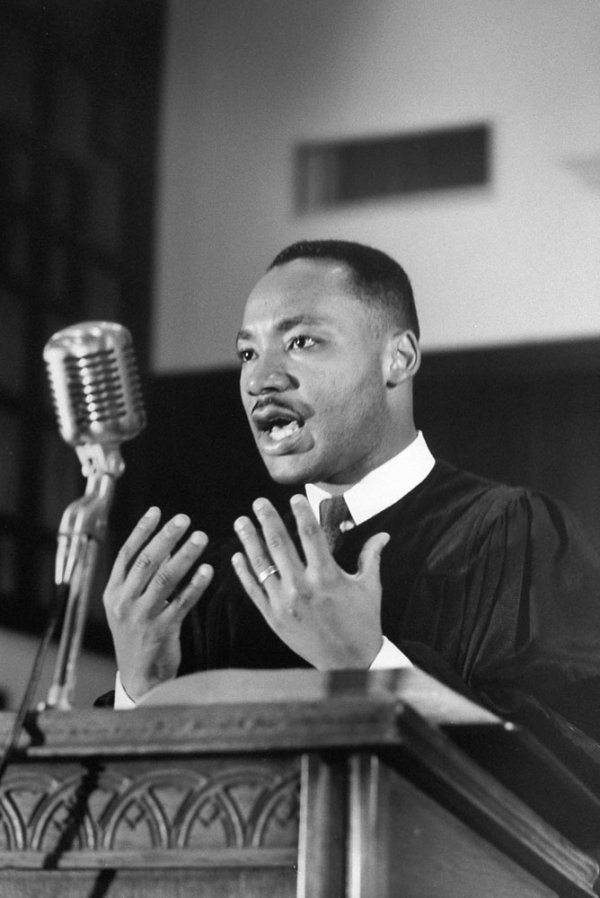
Today in America, we celebrate the life of Dr. Martin Luther King, Jr. Dr. King was a minister, a brilliant writer and student of theology, a leader in the Civil Rights movement of the late 1950s and early 1960s, a noted speaker, and man who arguably made a difference in the world. Dr. King was murdered in 1968, at the age of only 39, leaving a family and a nation devastated by his loss.

Next Monday, we will observe the 51st anniversary of the Supreme Court decision Roe v Wade, in which nine judges effectively legalized abortion in the U.S. for over half a century. Even though this decision has been overturned, many states, using the precedent of Roe v Wade, have changed their state laws to allow for abortion. In many states, it is now legal to abort a child right up to the moment of birth!

What is the value of a single life? Who gets to decide that they have the right to take another person’s life– whether by assassination, capital punishment, abortion, murder, or euthanasia?

It is a question that our society has struggled with for centuries. Who can give life? Who can take life? Who can determine the conditions of another person’s existence? And, for those who live, what is the “value” of their life–to their family, to their neighborhood, to their nation, or to history? Who gets to set the standard of what constitutes a “worthwhile” life or the “quality” of life for someone else? For themselves?

I’ve been reading through the book of Genesis this month, and, according to the Bible, this subject is as old as human life on earth. Cain decided that Abel’s life was expendable, so he killed him– the first murder. The people of Sodom and Gomorrah felt they had the right to enslave and rape anyone they wanted to. Joseph’s brothers plotted to kill him, before selling him into slavery, instead.

The Bible doesn’t hide this history, nor does it sugar-coat the actions of those featured in its pages. But, the Bible offers us a clear picture of WHO gives life, and WHO has the authority to decide what life is worth. God alone has this authority. It is God alone who can create and sustain life. Mankind has the choice– to protect life or destroy it; to treat life with respect or with disdain; to honor the Giver of Life, or to rebel against Him.

All the atrocities of the Old Testament lead to the ultimate decision on the value of a single life. Jesus lived a simple, ordinary human life. He lived with compassion, with purpose, and with humility. And He was willing to GIVE His life to atone for all the murders, all the abortions, all the slavery, all the injustices in history, so that WE could enjoy abundant, eternal life with Him. By looking to this singular life, and trusting in the power of His death and resurrection, we can choose to honor all life. We can make a difference. We can live with purpose and joy.

Dr. King’s legacy is one of honoring life, and pointing out the evils of those who seek to devalue the lives of others based on the color of their skin. Abortion’s legacy is one of destroying life, and promoting those who devalue the rights of the helpless.

The choice is still before us. How will we determine the value of a single life in the coming week? How will be add value to life on earth? How will we live for more than just the moment?

How Much Is That Doggie In the Window?

How much is that doggie in the window?
The one with the “waggly” tail…
How much is that doggie in the window?
I do hope that doggie’s for sale!

Two songs about puppies–how could that possibly relate to a life of pursuing prayer? Well, I’m going out on a limb, but let me try to connect the dots.

“If anyone comes to me and does not hate his own father and mother and wife and children and brothers and sisters, yes, and even his own life, he cannot be my disciple. Whoever does not bear his own cross and come after me cannot be my disciple. For which of you, desiring to build a tower, does not first sit down and count the cost, whether he has enough to complete it? Otherwise, when he has laid a foundation and is not able to finish, all who see it begin to mock him, saying, ‘This man began to build and was not able to finish.’ Or what king, going out to encounter another king in war, will not sit down first and deliberate whether he is able with ten thousand to meet him who comes against him with twenty thousand? And if not, while the other is yet a great way off, he sends a delegation and asks for terms of peace. So therefore, any one of you who does not renounce all that he has cannot be my disciple”

Luke 14:26-33

33 But seek first his kingdom and his righteousness, and all these things will be given to you as well. 34 Therefore do not worry about tomorrow, for tomorrow will worry about itself. Each day has enough trouble of its own.

Matthew 6:33-34 (NIV)

22 But be doers of the word, and not hearers only, deceiving yourselves. 23 For if anyone is a hearer of the word and not a doer, he is like a man observing his natural face in a mirror; 24 for he observes himself, goes away, and immediately forgets what kind of man he was. 25 But he who looks into the perfect law of liberty and continues in it, and is not a forgetful hearer but a doer of the work, this one will be blessed in what he does.

James 1:22-25 (NKJV)

Children love puppies. Most children have expressed desires similar to the ones in both of the songs above. They wish and dream and beg for a pet to love; a furry “best buddy” to play with and befriend. There is a longing deep in our hearts for someone to understand; someone who is always ready to greet us with unconditional love and companionship. And sometimes, we have a tendency to take this desire–this wish– and see in our relationship with Christ its fulfillment. Christ is the our “forever” friend; someone we can talk to; someone who will share our burdens, and walk along with us “most everywhere.” This is not “wrong.” But Jesus warned His listeners that becoming a disciple would involve more than just dreams, wishes, and good feelings.

Following Christ comes with a cost– we cannot just wish for God’s presence when it is convenient and jolly, and escape or turn our backs when our Christian Walk involves sacrifice or hardship. Jesus is not just our Friend; He is our Lord! We need to be ready to let go of anything that would hinder our relationship with Him; we need to be willing to risk and even lose things we love in the pursuit of the One we Love Best. After all, Jesus gave up everything– including His Life– to make our relationship and reconciliation possible.

Jesus challenged His followers to “count the cost” of their discipleship. It’s more than just wanting a “fuzzy feeling” of belonging and listening to the Wisdom of God. It’s committing to a life of growth, work, and submission to His Will and His Purposes. A child may want a puppy, but may not be mature or responsible enough to care for it. We may want a relationship with Christ, but we need to measure our willingness to do His Will and make changes and sacrifices. And when we count the cost, we also need to assess the value of what we are gaining! We may “lose” the life we dream about, filled with warm puppies and cloudless days. But we will gain eternal life in the Presence of the one who created the clouds and puppies, as well as the one who fashioned our very soul. Christ gave up His life so that we could experience a more abundant life. Not an easier or dreamier life, but a life with purpose and victory.

The Christian Walk is far more than just “dreams and wishes.” It is more than just asking about the initial price– because that is far beyond what we could ever pay! Redemption and Eternal Life are beyond any price. But they are also free! The cost of our Salvation has already been paid. The cost of our sanctification– our growth and maturity– is what we need to consider as we walk forward.

And the joy we will experience on this journey is greater than the joy of having a puppy–greater than the fulfillment of all our dreams and wishes–it is nothing less than the Glory of Eternity in the Presence of the One who truly loves us perfectly and unconditionally! That is worth the pursuit. That is worth EVERYTHING.

More Jesus, Less Me?

Last week, I saw numerous posts with New Year’s resolutions, promises, and goals. One that I saw repeated often was the phrase, “This year, I need more of Jesus and Less of Me.” And, while I can see the appeal of such a phrase, I’d like to take a closer look at what that really means in a practical sense.

It’s easy enough to say a phrase like this and then proceed to live exactly the same as last year– struggling to be a “better” person, a more Christ-like person–and wondering why it isn’t working. But what if we’re missing the real transformation we need this year by misunderstanding what this phrase really means?

“More Jesus.” Actually, there is no “more” Jesus to be had than there already is. We can’t “get” more Jesus. We already have access to all the Grace, Power, and Peace that Jesus can offer. We have His Spirit to guide us, His example to follow, His indescribable sacrifice to motivate us, His promises to sustain us…what “more” are we looking for?

What we really mean by this phrase isn’t more of Jesus, but more TO Jesus and more FOR Jesus– more of our devotion, more of our obedience, more of our submission, more of our learning to lean on Him. We need to make more room for Him, more time for Him, more energy.

“Less Me.” In today’s world that revolves around identity and self-expression, this is where we lose non-believers, and many Christians, as well. The language of the New Testament– Jesus’ own words in fact! — call for us to die to ourselves and be raised to new life in Him. To many people, this seems like a very bad bargain. Matthew 16:25 puts it this way: “ For anyone who keeps his life for himself shall lose it; and anyone who loses his life for me shall find it again.” (The Living Bible) But look closely at this statement. Jesus is not promising death, but LIFE. (See also John 10:10) Jesus isn’t proposing to take away our life, but to help us find our best life. The word “life” in this passage can be translated as “life” or “soul.” When we think of “dying” to ourselves, or “losing” our life, we see only the negative. And death IS the ultimate negative. We don’t want to “die.” We don’t want to let go of this precious gift of life that we have been given. And it seems as though Jesus asks us to make a ridiculous trade– our life for His; our will for His; our self-control and determination for His mastery and domination.

Except that is Satan’s oldest and greatest lie! When Jesus says, “anyone who loses his life for me shall find it again,” He’s not promising a shadow life of slavery or degradation. God doesn’t want Holy zombies or robots, mindlessly and grudgingly following orders. He wants to bring us into the BEST and most abundant LIFE we can experience! But in order to experience any of it, we have to “get out of the way!” We have been given the ability to choose between right and wrong, between following God’s way or rebelling against it. It is when we believe the lie that God doesn’t love us, that He doesn’t have our best interests at heart, that He is withholding “something” from us– power, “fun,” happiness, achievement, etc.–that we lose our true life. We lose perspective, we lose joy, we lose peace, we lose our true purpose, we lost trust, and we lose hope. We get so worried that God will “cheat” us out of what we want in life, that we become enslaved to our own limitations and fears. I have hopes and dreams, but on my own, I will scheme, connive, compromise, and fall short of what I could become. I will let circumstances and bitterness determine my limits. I will betray all the promises of God for all the lies of the world. i may “win” the game of life, but in the end, I will still die. And I will die never knowing what I might have achieved WITH God, instead of in my own strength and wisdom.

So when we say, “Less Me,” what we really mean is less of my grasping, less of my whining, less of my demanding my own way, less of me shutting out others, less of me standing in opposition to God’s best for my life. ”More Jesus”– more trust in Him, more humbly walking WITH Him, instead of shaking my fists AT Him, actually results in “More Me”– not the ME that wants the world to revolve around only myself, but the Me that God created me to be! The Me that can only be shaped by a Master’s Hand. The created me bringing glory to and through the Creator!

So this year, instead of saying “More Jesus, Less Me,” maybe we should say, “Me Less, Jesus More!” Me less and less in the driver’s seat. Me less prideful and isolated. Me less prone to anger and bitterness. Me less in the center of my thoughts and plans for today. Jesus more in my daily talk. Jesus more in control of my emotions and reactions. Jesus more of my focus. Jesus more of my best and most trusted friend! And in the end, Me, More like Jesus made me!

He Already Knows..

Prayer is a wonderful thing; sometimes it’s also a curious thing. Why do we pray to a God who is omniscient? If He already knows our needs, why do we bother to ask? If He already knows everything we’ve done, why do we need to confess? If He already knows about my neighbor’s cancer, why do I start a prayer chain?

Prayer is much more than sharing information with God. It is sharing my heart with God. What I pray, who I pray for, how and when and even where I pray– all come from my heart. God knows the information. He knows my heart, too. But He longs for me to take the time and effort to share it with Him (and to listen to His response!). God doesn’t want to be the one I turn to when I’ve tried all the other options. He is my Father, and He wants me to come to Him at every opportunity.

Moreover, when I pray, God is not surprised by anything I say, but sometimes I am! I find that one confession often leads to another– God already knew all that I had done and all about my attitude, but I lied to myself about my motive or about a small act or comment. Only in prayer does God have my full attention, and His Spirit uses that opportunity to help me see myself better, and clean the slate. Sometimes, I ask God for something I want, and God’s Spirit causes me to see what I really need, instead. Often, when I pray for someone I know, the Spirit will remind me of other ways I can pray for them, or bring another person to my thoughts. I may not know the other person’s need– but God already knows!

Finally, I find it a great comfort to pray to the one who holds everything together– the one who knows the end from the beginning, and everything in between. I don’t pray to a God who is kind, but ineffective. I don’t pray to a God who knows, but doesn’t care. God is the maker and sustainer of the universe; He is the lover of my soul, and the Almighty and Eternal One.

Today may be full of surprises– some good, some disappointing, some even overwhelming. God already knows. He knows our anguish, our hopes, our faults, and our triumphs (even the tiny ones). Many things about my life are difficult to understand or anticipate. I don’t have to know all the answers. I don’t even have to know all the “right” questions. God already knows!

Praying for Time

When I was a late teen, and into my early twenties, I loved English pop music, including the duo, Wham! Their music was bubbly, upbeat (mostly), and easy to sing along to. I listened along, sang along, watched their videos, and danced along. When the duo broke up, I was eager to follow the rise of singer/songwriter George Michael, whose first two solo albums I bought and listened to, as well. But the tone of his solo music was different. There were danceable, singable tunes, but they were darker and more cynical. And many of the songs were less about enjoying life and more about social commentary, confusion, and even despair. The songs were well-crafted, but they were haunting, rather than enjoyable or uplifting. They spoke of sadness, depression, and world-weariness.

One of the songs that has haunted me for years was from his second album, “Listen Without Prejudice.” In it, he talks about greed, poverty, apathy, and a loss of innocence. It’s called “Praying for Time,” but the tone of the song suggests that time has all but run out.

And yet…

One of the ideas that still shines through the words of the song is that prayer–specifically praying for time–may be the only hope that we can still cling to. And in a time of darkness and hopelessness, prayer can reach beyond “wounded skies” to a God whose Grace extends even to His children who have “slipped out the back door.”

There is something about the idea of time as a gift from God that stays in the soul, long after most hope is gone. I think it is why we are so driven by the concept of time and time “running out” as we hustle through our busy lives. I think it is why we spend time avoiding “down time” and “alone time” and the quiet time we should take to reflect, meditate, and yes, even time to pray. And I think, too, that it is why we recognize that wasted time is a sin– that there is a purpose in our time on Earth that transcends having “fun” or living for our own selfish aims. George Michael often used “spiritual” words and phrases for his songs– often with a cynical twist, pointing out some of the hypocrisy he saw around him (and occasionally, within himself).

These are the days of the open hand
They will not be the last
Look around now
These are the days of the beggars and the choosers

This is the year of the hungry man
Whose place is in the past
Hand in hand with ignorance
And legitimate excuses

The rich declare themselves poor
And most of us are not sure
If we have too much
But we’ll take our chances
‘Cause God’s stopped keeping score

I guess somewhere along the way
He must have let us all out to play
Turned his back and all God’s children
Crept out the back door

And it’s hard to love, there’s so much to hate
Hanging on to hope
When there is no hope to speak of
And the wounded skies above say it’s much, much too late
Well, maybe we should all be praying for time

These are the days of the empty hand
Oh, you hold on to what you can
And charity is a coat you wear twice a year

This is the year of the guilty man
Your television takes a stand
And you find that what was over there is over here

So you scream from behind your door
Say, “What’s mine is mine and not yours”
I may have too much but I’ll take my chances
‘Cause God’s stopped keeping score

And you cling to the things they sold you
Did you cover your eyes when they told you
That he can’t come back
‘Cause he has no children to come back for

It’s hard to love, there’s so much to hate
Hanging on to hope when there is no hope to speak of
And the wounded skies above say it’s much too late
So maybe we should all be praying for time

“Praying for Time” George Michael, Listen Without Prejudice, 1990 (lyrics taken from Lyrics.com)

In an interview, George Michael analyzes his own lyrics:

While he mentions “He” and “God,” it is clearly humanity he blames for the apathy and selfishness, greed and scandal, the “empty hand” and “wounded skies” mentioned in the song. And his repetition of “all God’s Children” and its counterpart, “no children to come back for,” is aimed at US– people who “slipped out the back door,” moving away from God and embracing our own wickedness. WE have entered this time of hopelessness and despair. WE have crafted it in our own ignorance, and then in our own pride and stubbornness. But we can still pray for time– time to repent, time to return, time to reach out to others with compassion and hope. What the song just barely misses is that prayer can open so much more than just time. Prayer can bring renewal, justice, redemption, and eternal hope! God hasn’t stopped “keeping score,” by any means. But He is holding back the wrath and judgment we all deserve, giving us time to seek Him! Most of all, we can pray, not with desperation, but with confidence– even in times of confusion and distress, because we have an Advocate, Jesus Christ, who hears all our prayers– desperate, confused, ashamed, angry, hopeful, offered with no more than a mustard seed’s faith.

George Michael, like all of us, lived in a fallen world. He was looking at the world, and seeing injustice, greed, apathy, corruption, violence, and the ravages of Sin. His own life was plagued with sorrow, tragedy, pain, injustice, drug addiction, betrayal, and the effects of Sin– both his own and others’. I don’t know if he ever found peace and hope in this life. I hope so. His gifted life ended early and tragically. But his song lives on with a warning, and a hint of promise, too.

We SHOULD all be praying for time– time to change. Time to repent, and seek God’s wisdom. Time to reach out to a darkened world with more than despair and dark analysis. To reach out with the Hope of Christ, who brings Redemption, Justice, and MERCY! We should be praying for time to meditate on the Goodness of God, as well as time to see the needs of others. We should be praying for wisdom to share our resources, and to multiply the good we can do– things that only God’s power can really accomplish. We should be praying for connection– restored relationships, and renewed fellowship with the Father. We should be praying for time to pray! Not just a desperate kind of prayer that this song suggests, but a lifelong pursuit of prayer that connects us to the Source of Hope, Joy, Peace, Power, and Love.

This year, while I don’t often listen to George Michael’s music anymore, I will be “praying for time.” And I will be investing more time in prayer! I hope you will join me in the time God has gifted us with this year!

For more analysis of the song and its relation to prayer see the following:

Praying in Anger

Ephesians 4:25-32 English Standard Version (ESV)

25 Therefore, having put away falsehood, let each one of you speak the truth with his neighbor, for we are members one of another. 26 Be angry and do not sin; do not let the sun go down on your anger, 27 and give no opportunity to the devil. 28 Let the thief no longer steal, but rather let him labor, doing honest work with his own hands, so that he may have something to share with anyone in need. 29 Let no corrupting talk come out of your mouths, but only such as is good for building up, as fits the occasion, that it may give grace to those who hear. 30 And do not grieve the Holy Spirit of God, by whom you were sealed for the day of redemption. 31 Let all bitterness and wrath and anger and clamor and slander be put away from you, along with all malice. 32 Be kind to one another, tenderhearted, forgiving one another, as God in Christ forgave you.

I grew up hearing that anger is a sin.  Yet God experiences anger and wrath.  And the Apostle Paul says in this passage that we are to “Be angry and do not sin” (Eph. 4:26a).

Anger is an emotion; feeding on anger, wallowing in it, stewing and screaming and acting out under the control of our anger– that is sin.  That is why Paul goes on to say that we should “not let the sun go down on your anger ” (4:26b).  Anger doesn’t have to be a bad emotion, but it is a bad master.  We need to take control over our anger to resolve it, and let it go.  In Genesis, God spoke to Cain about this very thing–Cain and his brother Abel had brought sacrifices to God; Abel’s sacrifice was pleasing to God, but Cain’s sacrifice did not find God’s favor.  The sacrifices were voluntary– Cain and Abel were not in competition to see who could bring the “best” sacrifice.  God had not ordered them to bring a sacrifice only to find fault with Cain’s efforts or the way he chose to present the sacrifice.  The scriptures don’t even say that God rebuked Cain or pointed out a flaw in his offering.   He simply found favor with Abel’s offering– Abel had brought the best he had; the firstborn of his flocks.  Cain had brought “some” of his crops. 

garlic beside ginger and pepper on brown wooden table

The difference in the sacrifices had nothing to do with the content or the manner of offering, but in the intent to worship God halfheartedly, instead of wholeheartedly.  God saw that Cain was angry (as well as proud and envious of his brother).  Instead of rebuke, God offered grace and wisdom:

man head face portrait

Genesis 4:6-7 New Revised Standard Version (NRSV)

The Lord said to Cain, “Why are you angry, and why has your countenance fallen? If you do well, will you not be accepted? And if you do not do well, sin is lurking at the door; its desire is for you, but you must master it.”

God doesn’t want us to deny our anger or pretend we are never angry.  But He does want us to acknowledge it, and deal with it.  Why am I angry?  What should I do about it?  Anger can motivate us to do the wrong things, but it can also spur us to change our course, and do something good.  Righteous anger can spur us to speak out about injustice, and seek to correct wrongs.  Anger can lead us to our knees, asking God for direction, strength, or His intervention and justice.  King David often prayed angry prayers asking God to strike down the people who were plotting against him, or those who were doing evil or mocking God’s people.

walk human trafficking

I wish I could say that I had mastered this area, but I’m writing as much for my own instruction today as anything else.  Here are some wonderful steps we can and SHOULD take to deal with anger:

  • Pray!  Anger can strangle us, or it can sneak up and suffocate us, but the worst it can do is drive us away from our source of help and hope.  God WANTS us to come to him.  He reached out to Cain in his anger, wanting to draw him near and help him overcome it; He offers us the same help.  God can handle our anger– he can give us the power to let it go, and direct our feelings appropriately.

  • Own it–Angry people tend to deflect responsibility.  Yes, other people can say or do things that make you angry, but they can’t make you say or do sinful things in response to their actions.  You still bear the responsibility for what you do with your anger– even “righteous indignation.”
  • Question it!–This is something I have found helpful.  Just as God asked Cain, ask yourself, “Why am I angry?  Why am I downcast?”  And then, answer them honestly.  Many times, the root of my anger isn’t justified–instead it’s “just a lie”.  I have no right to be angry with someone else when I chose to waste time, cut corners, or neglect to do what was necessary.  I have no right to be angry or outraged because someone else feels differently or sees a different side of an issue.  In fact, if I keep listening instead of exploding, I might find compassion overriding the anger.  I might even learn something new!  Or I might better understand why I feel or think as I do, and be better able to explain it to others, instead of just yelling the same thing over again.
adult anger angry angry face
  • Deal with it–This is a difficult one for me.  I don’t like confrontation.  If someone hurts me, I just want to walk away and lick my wounds.  And we shouldn’t confront others WITH our anger, striking out at them and seeking to hurt them.  But I have found that a lot of anger and hurt that I have harbored is not only unjustified, but is based on misunderstandings and pride.  It takes humility, but it also takes courage to seek out someone to offer an apology you don’t want to give, or to ask for clarification instead of harboring hurt.
women typing on the notebook
  • Don’t spread it!  “Don’t let the sun go down upon your wrath”  is not permission to “vent” to seven (or seven hundred) friends by spreading your hurt and outrage  until you feel calmer.  This is particularly true in the age of Facebook, Twitter, and Instagram.  In the short-term, this may seem right– “they need to know what is happening”– but it is just the opposite.  Anger often leads to rash judgments, and hasty actions that we can’t undo or call back.  If you are not talking with the object of resolving a misunderstanding, apologizing, or offering a positive solution, you are engaging in sin.  The old saying, “If you can’t say something nice about a person, say nothing at all” applies here.  And it applies about situations and circumstances, too.  I am angry about various practices and policies by governments, companies, even churches; what I need to spread is not my anger about them, but awareness of how God can change them, and why we should be seeking His justice, His righteousness, and His grace toward those who have been impacted by them.
  • Repent of any anger-related sin.  Remember, anger itself is an emotion.  God experiences it; we are made in His image, so we experience it, too.  But God’s anger is Holy; ours is often tainted with other feelings and thoughts– pride, envy, greed– or even other human frailties like misunderstanding, exhaustion, hunger and pain. Instead of feeling guilt over the anger, we need to turn away from the sin that overpowers us in our anger.

For more Biblical wisdom about dealing with anger, see the following:

belief bible book business

https://www.biblestudytools.com/topical-verses/anger-bible-verses/

https://www.biblegateway.com/passage/?search=Matthew%205%3A21-26&version=NCV

https://thewisebeliever.com/anger-bible-examples/

All Things New

Every year, I try to read the Bible from cover to cover…a little each day, beginning with Genesis on January 1, and ending with the last of Revelation on December 31. So yesterday, I finished the last verse of Revelation 22– AMEN! And today’s reading begins with “In the beginning…”

Once again, I will read the Bible as a cycle– “beginning” to “AMEN.” But the Bible, like most other books doesn’t really have a beginning and an end. Things happen “before” the beginning, and things happen after “the end.” The Bible tells us of the beginning and the end of our created earth. But where Genesis begins with darkness and void, Revelation ends with light and joy and victory! ”They all lived happily ever after…”

And I am reminded that God’s character shines through every page of His Word. He makes all things new! He creates! He redeems! He Blesses!

Photo by Munmun Singh on Pexels.com

As we go into a new year, we can take great encouragement from the message of the Bible. Every year– every day, and even every moment–is filled with God’s presence and His promise of eventual renewal and redemption. We face an uncertain year in terms of human achievement and “progress.” War, famine, economic collapse, natural disasters, disease, heartbreak, and death– all are possibilities and even probabilities in our fallen world. But the Bible teaches that our problems, as enormous as they seem to us, are not outside of God’s power to redeem and redress. 

His plan is to recreate, rejuvenate, and replenish. All our relationships; all our ambitions; all the landscapes of all our dreams– will one day be reshaped. All the terrors and tribulations of Sin and Death will be vanquished. There will be no more need for fear or distrust or even cautious optimism. It will be NEW– not just “new and improved”, but new and perfected! Whatever we pray for in the coming year, we can know that God will bring situations full circle from tragedy to eventual triumph. It may not happen today; it may not happen this year or even in this lifetime. But God keeps His promises from “the beginning” to the Final “AMEN!”

And on this first day of a New Year–let’s rejoice that God is the God of all New Things; the Maker of All Good and Perfect Gifts; the God who is able to do exceedingly abundantly above all that we ask or imagine (see Ephesians 3:20-21)!

Out of Time

We’re are approaching the end of another year. It’s time to finish old projects, close out budgets, put away the old calendars, and get ready to start writing a new year in our planners and checkbooks. As we prepare for a “new” year, we set new goals, start new projects, and think ahead to what “will be.”

But, if you think about it, New Year’s Day will just be another day in a new week. The week actually begins on Sunday, regardless of when January first falls. We will go to sleep– possibly after midnight–and wake up just as we’ve done all the days of the past year, and all the days to come in the “new” year. Time is cyclical, as well as chronological. Time doesn’t go backward, but neither does it stop and “start over” when we complete a weekly cycle or at the end of a month, or year, or even a millennium. It just keeps repeating the natural cycles of day and night, moon cycles, and yearly orbits around the sun.

Yet, New Year’s Eve and New Year’s Day are important reminders about the nature of Time. God created the cycles of time– days and weeks, months and years–even though He exists outside of the boundaries of time. And God created the world with a beginning, and an “end.” As humans, we exist within these boundaries. Our years have beginnings and ends; our lives here have a beginning and an end, as well, even if the rest of the world keeps cycling around our short time on this planet.

New Year’s Eve reminds us of our own mortality. We need to be aware of the brevity of life, and the value of our time. We will come to an end. We will “run out” of time. Our plans and actions need to be accomplished in the time we have left. We may see the dawn of the new year, and of the year after that– but we do not know the moments and days we have left in our earthly lives.

But New Year’s Day also reminds us that God has NO end! His mercies are new EVERY morning, every week, and every new year! New Year’s Day reminds us that we can break old cycles and start fresh. We can look forward, instead of always looking back at past mistakes and regrets. And we can rely on God to continue to sustain us through days and weeks and years as they come and go.

Someday, we will be enter eternity. Time will no longer limit us. There will be no deadlines or endings for our dreams and activities. We will never “run out” of time. And we will never face an end of our access to God’s goodness and His Presence.

Photo by Bich Tran on Pexels.com

That is true today, at the “end” of this year, and it will be equally true in a few days, in the “new” calendar year. The calendar may change, but God never will! And we will never “run out” of time to spend with Him– if we have trusted Him for Salvation. What a wonderful thought as we “close out” one year and step into the unknown future of another!

Faith, Faithfulness, and Moving Forward

Now faith is confidence in what we hope for and assurance about what we do not see. This is what the ancients were commended for.By faith we understand that the universe was formed at God’s command, so that what is seen was not made out of what was visible… And without faith it is impossible to please God, because anyone who comes to him must believe that he exists and that he rewards those who earnestly seek him.

Hebrews 11:1-3; 6 (NIV) taken from http://www.biblegateway.com

Faith is essential to prayer. Not only is it essential that we know the truth, we must depend on it. Those who lift up general prayers to some unknown “force” in the universe have no real hope that their prayers will be heard, instead of bouncing around among the planets in silent expectation. We pray to a God who sees, hears, loves, and works among us. And He will answer our prayers– in His way, in His time, and to our ultimate benefit.

That does’t mean that we must blindly believe everything we hear about God, or that we must agree exactly with everyone else who claims to believe. None of us has ever seen God face-to-face, nor can we claim perfect knowledge. But there are certain truths that do not change– God is GOD; creator, ruler, unchanging and Holy. God is who He says He is, not who someone speculates or imagines Him to be. God is mysterious, but He is “Knowable”–we see His character in the natural world, and we can see His reflection in the people around us who are all created in His image. Most of all, we have the testimony of Jesus Christ and of all who have followed Him and been transformed by Him. To all who earnestly seek Him, He has given us His Word, and His Spirit to guide us. And God is Good. Even though nature (and human nature) has been tainted and twisted by sin, God remains true to His own goodness. Even in the hard times, when God seems distant–especially when He seems distant–faith looks beyond our present circumstances, and the taunts of our enemies, to remind us of God’s providence, His Power, and His promises. Our present trials and calamities are not beyond His ability or His willingness to turn to good purpose, and they do not compare to the promises God has given.

Faith is essential to prayer, but so is faithfulness. Prayer is part of a growing relationship with our Maker. And like any relationship, it must be maintained. God is eternally faithful, but we are not–not in our own power or in our own will. And our faith, without faithfulness (in prayer, in devotion, in our everyday thoughts and actions) will wither and die. The same thirst we have for prayer in the valleys of life should be present when we reach the mountaintops. The same need we have to cry out for help should be the need we feel to cry out in praise. This will not happen without discipline, developed by daily seeking His face.

As we approach a new year, we can make many plans and resolutions– let one of them be to strive for faithfulness, especially in our pursuit of prayer. We know it is the right thing to do. And our faithfulness is not just for us. It blesses the heart of the One who was faithful even unto death. And it shines as an example to those around us– inspiring some to faith, and others to renewed faithfulness.

Finally, let’s also resolve to move forward a step each day, remembering that
“The steadfast love of the Lord never ceases;
    his mercies never come to an end;
23 they are new every morning;
    great is your faithfulness. (Lamentations 3:22-23 ESV)

God’s mercies are new every morning. And our resolve should be renewed every morning. It is God’s faithfulness that allows us to work toward greater faithfulness. We will not keep our resolutions in our own power, nor will we keep them by remaining stuck in our past failures.

Let’s embrace the coming new year as an opportunity to stretch our faith muscles, grow in faithfulness, and move forward in mercy!

Blog at WordPress.com.

Up ↑