It Is Well With My Soul

I’ve been reading through the book of Job this past week. Job’s story challenges us– especially if we trust in our circumstances to confirm God’s love for us. Job was a seeming pawn in a situation beyond his control or understanding. He lost nearly everything– his cattle, flocks, all his children, and even his health. The only thing he did not lose was his nagging wife, and his faithful, but very unhelpful friends.

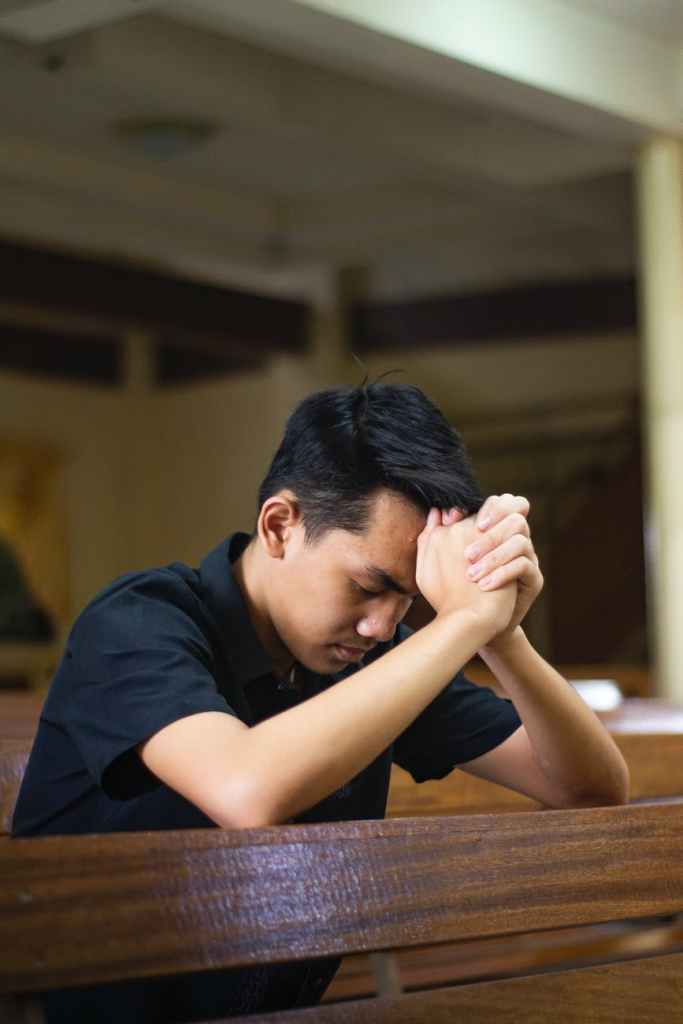
Photo by Parij Photography on Pexels.com

At first, Job’s friends seem very supportive. They stay with him, saying nothing, just offering their presence for a week! But then, they start spouting the kind of useless aphorisms and accusations that make Job’s bad situation infinitely worse. They “remind” him that good people don’t suffer–only the wicked experience pain and loss. This knowledge, they assure him, comes from their own experience, and the wisdom of the past. When Job protests that he is innocent, that his suffering is NOT because of his own wickedness, they become increasingly angry and irrational– making up accusations and heaping blame on Job for daring to “question” God.

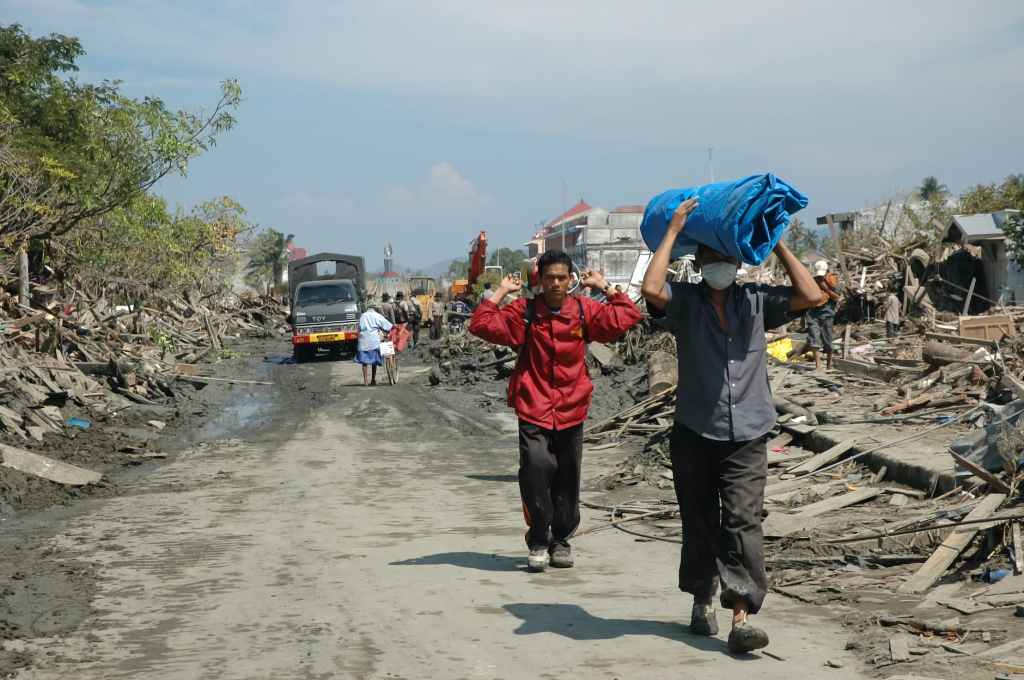
But Job’s friends, even though they speak with confidence and sound very much like many people we hear today, are wrong. Job’s experience is real–suffering comes to the innocent, while the wicked often “get away with” their sin, living lives of ease and comfort at the expense of others. We see it in the world around us– innocent people are the targets of mass shootings, or war, or famine, or disease. Meanwhile, criminals get “off” on a technicality; decorated war “heroes” destroy entire cities; powerful tyrants bend laws and oppress the helpless.

Photo by Ron Lach on Pexels.com

Where is God in all this? WHO is God in all this? There are many different responses, but I want to look at three that are all present in the book of Job:

  • Mrs. Job: “Curse God and Die.” Some people look at evil and suffering, and they decide that God must be a fraud. Either He cannot or He will not destroy evil, or He would have done so before now. They declare with great defiance that either God does not even exist, or He must be malicious, capricious, petty, and weak.

  • Job’s friends: “Everyone knows that God rewards good and punishes evil.” Doesn’t the Bible say this? Isn’t this what we learned in Sunday School? Surprisingly, most of us would say, “Yes, that is exactly what I learned as a child, and it is exactly what the Bible says!” But look closer. The Bible says that “All have sinned and fall short of the glory of God.” (Romans 3:23) It goes on to say that “The Just shall live by faith” (Habakkuk 2:4 and Romans 1:17)–not their good works. God DOES reward goodness, and he DOES punish evil– but He also redeems the wicked and causes the good to go through times of trial and suffering. God is more than a two-dimensional dispenser of rewards and punishments. God’s ways are not our ways (Isaiah 55:8), and there are times that He chooses not to explain His ways “in the moment” of our suffering, or in the moments when wickedness seems to be “winning.”
    Unfortunately, when bad times come; when we experience pain, or watch someone else going through inexplicable suffering, if our view of God is incomplete or two-dimensional, we are left repeating the little we KNOW (or think we know) about God, and defending, not God’s character, but OUR knowledge. This is especially true if we have not been tested ourselves.
  • Job: “Though He slay me, yet will I trust in Him.” (Job 13:15) “I know that my redeemer lives, and that in the end he will stand on the earth. And after my skin has been destroyed, yet in my flesh I will see God; I myself will see him with my own eyes—I, and not another. How my heart yearns within me!” Job 19:25-27 Even when Job struggled with his pain and suffering–even as he defended his character to his accusing friends, Job KNEW that God was GOD. He knew all that his friends were saying ABOUT God, but he also knew God–even when he didn’t understand His actions. And after all the arguments had been made and all the “easy” answers had been spilled out, GOD did not slay Job; he did not leave him in his agony. Neither did He provide Job with detailed answers or explanations. But He redeemed the situation– Job ended up with more blessings than before. More importantly, Job ended up with a greater understanding of who God is.
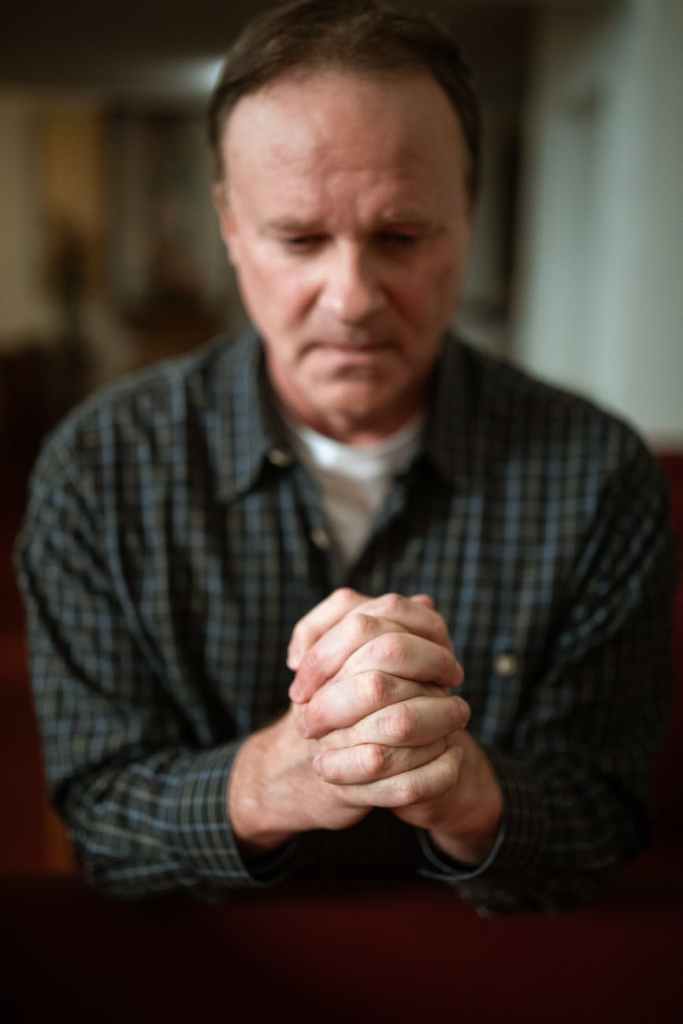
When all is not well with our health, or our finances, or our safety, or our relationships, it can still be “well with (our) Soul.” God does not change, but He does ask us to trust Him, even when His ways are not our ways. God will reward good and punish evil– but it may not be in our lifetime or as we imagine. God may stay silent during times of great stress and pain, but He will not leave us! In every situation, we can trust Him.

Will we?

As Far as the East is From the West..

In blogging about prayer and in keeping a prayer journal, there is one type of prayer I don’t dwell on very often.  Prayers of confession and repentance are very important, but I don’t  include them in my journal and I don’t spend much time analyzing them.  It’s not that I want to ignore them or that I want to give a false impression that I don’t say them.

arrogant

I’m a saint–but only in the sense that Christ’s blood is my atonement and my only hope of salvation.  He who started the work is still working, and there’s a lot of work yet to be done.  So, while I include prayers of confession and repentance in my practice of pursuing prayer, I don’t write them down or share them publicly.

Photo by Mikhail Nilov on Pexels.com

Here are some of the reasons I don’t spend more time talking about confession:

trueconfessions
  • Confession is not meant to be a public spectacle.  It is generally private and very personal between an individual and God.  Apologies may be public, and repentance may include public atonement or recompense, but those are not prayer; rather they are the actions taken in conjunction with  and as a result of prayer and confession.
  • Confession is fundamental– it’s not a prayer option, or a stylistic preference–every one of us has sinned, and we all need to admit to our sins, bring them before the throne of God’s grace, and ask for his forgiveness.  Hiding sins, denying sins, or lying about them will get in the way of all our other prayers.
  • Writing about past sins keeps them alive and keeps the focus on me and on my faults, rather than on God and on His Grace.
  • Making confession public has a tendency to devolve into gossip and self-justification.  Descriptions of my sinful actions will necessarily be from my incomplete and very biased point of view.  Other people can be misrepresented and hurt.
  • But the last reason is my favorite– I don’t waste time writing down and discussing past sins because GOD HAS FORGOTTEN THEM!  Writing them down, rehearsing them, analyzing them–even analyzing how I might approach confession won’t change God’s response:

10 he does not treat us as our sins deserve
    or repay us according to our iniquities.
11 For as high as the heavens are above the earth,
    so great is his love for those who fear him;
12 as far as the east is from the west,
    so far has he removed our transgressions from us.

Psalm 103:10-12 New International Version (NIV)
  • The key is that we DO confess– humbly, consistently, and with a heart of true repentance.  What follows is a free and forgiven conscience, no longer weighted down or pulled off focus by guilt and doubt.
pexels-photo-941693.jpeg

Happy Birthdays

Today marks 90 years since my mother was born. She didn’t live to see this birthday; she died back at the end of February. But birthdays were important to my mother– hugely important. She never forgot a birthday. Mom was pretty sharp into her later years. She might forget someone’s name–for awhile. She might forget a few details about what happened yesterday or last year, but she didn’t forget to take her medication. She would eventually remember that name she couldn’t come up with earlier in the day. And she had an elaborate system of calendars, date books, and directories to help her remember birthdays.

Photo by Bich Tran on Pexels.com

Mom had a large desk calendar. Each day’s “square” was covered in her handwriting– names, numbers, etc., reminding her of birthdays and anniversaries of her relatives, friends, neighbors, and church family. If she knew your name and birthday, it was on her calendar. If she knew your age, it was on there, as well. If she knew your anniversary, it was there, too. If she knew. your birthday and/or anniversary AND your address, you received a greeting card– and it generally arrived on the exact date! Mom did this for literally hundreds of people each year.

Today hits me hard. Not because Mom made a fuss about her own birthday–even special ones like a 90th. She enjoyed getting a card or gift, or having some cake or ice cream on her birthday, but that’s not what I miss. I miss the absolute joy she had in remembering others, and in being remembered. I can still see the look of childlike glee on her face when she and a friend were both surprised with a birthday party a few years ago. She was delighted for her friend as much as for herself. I can remember her insistence that certain cards be placed in the mailbox on certain days, so that they would not arrive too early or late, but just at the right time for someone’s special day. I remember shopping with her for box after box of greeting cards. Even though she bought “in bulk,” filling a basket or cart with multiple boxes of cards, she was very choosy about them– looking over the designs and the messages inside each box. Often, she had “buyer’s remorse” about a particular box of cards: she wasn’t satisfied with the tone or the greeting. In a box with four different designs, she might send out cards with two of the designs and just leave the others untouched.

Birthdays were important to Mom because individuals were important to her. She wanted every person she knew to feel loved, remembered, and special. Because they ARE! Not just by Mom, but by the God she loved and served.

Mom loved birthdays, including her own. But Mom had another birthday. Mom won’t celebrate another earthly birthday– she won’t get any cards or ice cream today– but she is celebrating her “other” birthday today. She did not knew the exact date, but she was born into eternal life when she accepted Jesus as her savior, and that birthday has no end. It is much more important than her earthly birthday, and fills her (and all who love her) with a greater joy. I can only imagine the gleeful expression on her face at this moment that “was” her birthday, and in every moment since she went “home.” And it’s in large part due to my Mother’s witness and influence that I also have a “second” birthday. I don’t knew its exact date, though I remember it was a beautiful summer day. Later this year, I will celebrate my earthly birthday–and it will be a bit sad without Mom’s card and her smile. But I know that we will someday share much more than a cake with candles, or a greeting card or a wrapped gift.

Photo by Pixabay on Pexels.com

Mom taught me to appreciate birthdays– and to share the joy of wishing others a “Happy Birthday.” And to anyone celebrating an earthly birthday today, “Happy Birthday!” But I am looking forward to the day that I can share eternity with all those who have a “second birthday” in Christ! I’ll see Mom again, but even that will pale in comparison to experiencing God’s presence and the love He lavishes on His Children!

Just think– God loves you so much that He never forgets your earthly birthday. He not only knows your birthday, He remembers the exact moment of your conception, and every moment since! He knows you and loves you so much that He wants you to have another Birthday into eternal life with Him! And that is better than any earthly birthday card, cake, gift, or party you could ever celebrate! If you have a “second” birthday, even if you don’t know the exact date, I want to wish you a “Happy Birthday” as well– today and every day!

Green Acres

Psalm 23:2a King James Version (KJV)
He maketh me to lie down in green pastures

Photo by Michael Block on Pexels.com

Many years ago (never mind how many..) there was a television show called “Green Acres.” It was a comedy about a couple from New York City, who moved to a small town in the country. The husband was excited about the move– he was tired of the rat race and bustle of the city; his wife, however, was reluctant to leave all the opportunities– she missed the shops and activity.

Green Acres was one of a group of shows that both celebrated and poked fun at rural life in America in the sixties and early seventies. The shows were very popular among viewers, but were panned by critics, and cancelled by network executives, even at the height of their popularity. https://www.closerweekly.com/posts/cbs-rural-purge-mayberry-rfd-green-acres/

More than fifty years later, you can often see these shows on networks like TV Land. They are still popular among some viewers, who like the nostalgia and the gentle humor. These shows all have happy endings. They don’t involve grotesque murders, lots of foul language, preachy lectures on social issues like homelessness, domestic abuse, or drug addiction, or copious amounts of sex, violence, or nudity. They don’t talk about war and gangs, poverty or prejudice, or urban sprawl. They celebrate family, fresh air, hard work, community, truth, justice, kindness, and humility.

What does “Green Acres” (or Andy Griffith or any other old TV show) have to do with Psalm 23 and Pursuing Prayer? Not a lot, but I would like to look at the phrase in verse 2– “He maketh me to lie down in green pastures..” Not the same as “Green Acres,” but I think the green pastures of God are viewed by the world in much the same way as “Green Acres;” scorned by a small and vocal group, but quietly cherished by many others.

Our Shepherd causes us to lie down– to find rest and nourishment and refreshing– in green pastures. That doesn’t mean that He won’t lead us through times of bustling stress, struggle, anxious moments, or rugged paths. But He will make us lie down. He will cause us to stop our frantic rushing, and renew our strength in green pasture. He doesn’t offer green pastures as an “escape from reality”, but as a reminder that dealing with reality requires us to see beyond the immediate stresses of the day and listen beyond the distracting noises around us.

Photo by Anna Shvets on Pexels.com

God’s green pastures won’t look like “Green Acres” with old tractors and fresh-mown hay. They may not look like the small town simplicity of Americana. In fact, God’s green pastures may not be places at all, but practices– spending time in Scripture, time in prayer, times in fellowship and encouragement, time in meditation, even time in service to others. You may find green pastures in the heart of a barrio, or in the quiet of a walk in the forest, or in praying as you climb a flight of stairs or fold laundry. But you will find spiritual nourishment and renewal in God’s green pastures, wherever they are and whatever they look like. https://www.biblestudytools.com/commentaries/treasury-of-david/psalms-23-2.html

Photo by Matheus Bertelli on Pexels.com

God’s green pastures will have many critics, who will ask that you cancel these practices. They will call them old-fashioned, failed practices– naive, simplistic, even laughable. But as we respond to God who make us lie down in green pastures, others are watching– and taking heart. The critics in our life may be loud and insistent. It may seem like they have the power to “cancel” our rest, and pave over the green pastures to build another fast food restaurant. But others are watching in silence, longing to experience the kind of rest and refreshment they see in us– the kind that cannot come from sophisticated treatises on war or crime, or harsh critics’ disdain, or yet another trip to an upscale shop or fast food restaurant or spa. God may ask us to stay in Manhattan, or Tokyo, or Nairobi, but He doesn’t want us to live in the same way as many of our neighbors. We are to stand out and stand apart. And that will make us targets for criticism, but it will also make us shining examples!

Photo by Emre Kuzu on Pexels.com

A few years ago, I left a full-time job– a job I loved–to help my husband open up a second-hand store that also sells amateur radio equipment. Most people would look on our store as a failure–it doesn’t make a lot of money; we don’t have hundreds of sales in a week; it hasn’t made us famous or important. But it gives me the opportunity to spend time talking and listening to the customers we do have, many of whom are lonely. It gives David the opportunity to do the same. And it gives me time to pray more, spend more time in God’s word, and write and edit this blog. It has allowed me more flexibility to spend time with my family. And it has reminded me that God is our provider and protector in ways I took for granted when I drew a bigger salary and had a more prominent position. From a worldly perspective, this is a move I would never have chosen. I spend most of my days unnoticed and unpaid–hardly a recipe for worldly fulfillment. And many days, I actually miss the bustle of deadlines, the drama of staff conflicts, and the extra money in the bank. Some days I am frustrated and ungrateful and restless–God has led me to the green pastures, but I refuse to lie down and receive the rest He wants to give me. I’d rather be shopping, or running the rat race. And God may choose to make me get up and move through valleys, up hills, or over rocky paths to the next pasture. But for this season, in this pasture, He is teaching me to lie down–to be less busy about my business, and more open to His.

Photo by Binyamin Mellish on Pexels.com

The world may offer us Times Square; God offers us fresh air. The world may offer us clever ways to spend our time and money– God gives us peace that passes all understanding. God’s “Green Acres” is the place to be–resting where and how our Shepherd leads us.

How Great Thou Art!

O Lord My God! When I in awesome wonder consider all the worlds Thy hands have made…Then sings my soul…” (emphasis added) When was the last time you spontaneously broke into the kind of wonder and praise that we find in this old familiar hymn? If it has been awhile, let today be the day that you joyously and loudly sing praise to our Awesome and Great God.

Photo by Ketut Subiyanto on Pexels.com

So often, I come to prayer focused on myself– my needs, my unworthiness, my circumstances. But prayer is the act of communicating with the One who is all-sufficient, all-worthy, all-powerful, and all-loving. As we pray, it will often happen that all the cares and concerns melt away in the wonder and insight that we are actually talking to GOD!

But there are times when we miss the great opportunity to fully open ourselves to the Glory and Majesty of Our Father. Yes, we communicate; Yes, He still hears us. But we fail to come away with the full blessing of having spoken WITH God. We speak TO Him; we even speak OF Him. But when we speak WITH God, we are in the presence of such majesty, that we are left beyond words! Our Soul Sings! Our Heart is overflowing! Our mind is overwhelmed with the concept!

Prayer is so much more than what we say; so much more than what we think. God is so much bigger, so much greater, so much MORE than anything we can describe, anything we can imagine! And THIS is who we approach when we pray.

Photo by Tookapic on Pexels.com

If you have the opportunity, spend some time in nature today. Look up at the sky– clouds, stars, and the endless canopy of space– and let the Majesty of God fill your senses as you make time for prayer. If you cannot get outdoors, find a picture or film or website to remind you of the grandeur of God’s wonderful creation. And then, sing out, shout out, pray and praise the Maker of the Universe, and the Lover you Your Soul! This same God of the beginning is the God who was, who IS and who is to come! The same miracles He has done in the past, He will do NOW and through all time.

There is NOTHING too big or too difficult for God. There is nothing too small or unimportant for Him to do, either. And what He does, He does with Joy and in Love! He rejoices over every one who comes to salvation. He rejoices over every one who comes to Him empty and tired and discouraged– and He rejoices to give them rest, and hope, and strength for the journey ahead. He offers Grace and Beauty from ashes. He offers Eternal Life and Everlasting Peace!

And if that doesn’t make your soul sing, I don’t know of anything else that can!

Photo by Andrea Piacquadio on Pexels.com

For more information about the hymn– its origins and meaning– check out this site: https://www.godtube.com/popular-hymns/how-great-thou-art/

Where Do Prayers Go?

Do you ever pray “directional” prayers? Some people pray TO something or TOWARD something. It may be positioning yourself to pray toward the east or toward the rising sun, or even toward a particular holy place. Some people pray to the moon or stars or a statue or image of a person. Some people pray rather aimlessly into the sky or the ceiling or the floor.

Does it matter? What does the Bible say?

In Exodus, when God gave Moses the Ten Commandments, He said, “Thou shalt not make unto thee any graven image.” In other words, no carved images of any animal or person that takes the place of God. For some people, this extends to icons and statues of Jesus; for others, it means only idols from other religious traditions.

However, later in Israel’s history, when King Solomon dedicated the first Temple, he prayed that when people prayed toward the Temple in Jerusalem, that God would hear from heaven and intervene. For many, this edict still holds true– they focus many, if not all their prayers toward the city of Jerusalem. Others specifically pray to the “Wailing Wall”– the last part of the Temple that still stands. Tradition states that the Spirit of God “dwelt” in the Temple– therefore to pray to the Temple was to pray to the God who lived there.

Jesus did not command His followers to pray toward the Temple itself, but rather to pray directly to “Our Father, which art in Heaven.” Throughout the Bible, the image of prayer is linked with the image of smoke or incense– rising toward Heaven. Jesus sometimes is described as looking up toward Heaven as He prayed. But other times He bowed or knelt as He prayed.

So what are we to conclude? Which is the “correct” direction for our prayers?

There is no conclusive answer in the Bible. And I think this is because God is Omnipresent. He is everywhere at once, so that we can pray anywhere, facing any direction, without a fixed focus point. There is only one direction that is “wrong.” And that is when our heart is facing away from (in rebellion to) God. We can pray aimlessly to nothing and no one, or to something that we know is NOT the One True God–to creation itself or to an invisible but remote “Force.” But the Bible IS clear that we are to pray to God alone– Father, Son, and Holy Spirit– and directly and personally to Him. We do not need a personal altar in order to be heard; we do not need to be facing an icon or a building or the rising sun or an imaginary point in the stratosphere. God Himself, through Christ– will accept and respond to our prayers. God will hear us from anywhere, in any position or circumstance. Altars and images and icons may represent Christ and His Holiness– they can be helpful tools in reminding us of who we are in relation to Him–but they must never become replacements for His Spiritual Presence.

Our prayers end up– through whatever mysterious and wandering way– finding their true destination, which is the heart of God Himself, when we seek Him sincerely and whole-heartedly. In much the same way, God’s answers to us will find their way through His Holy Spirit, no matter where we are or what direction we are facing.

Photo by cottonbro on Pexels.com

God transcends space and time, and can be found by those who seek Him from the ends of the earth. I am greatly comforted by this truth. My Father is in Heaven– and right beside me, and dwelling within me! He is always listening, and always available.

Keep Praying!

My prayers will not change the world. Read that again, because it is important to come to grips with certain realities, and with certain half-truths. My. Prayers. Will. Not. Change. The. World. BUT…

My prayers WILL be heard and answered.

My prayers WILL reach the throne of Heaven.

My prayers WILL make a difference!

Photo by Ian Panelo on Pexels.com

We have a great tendency to think in extremes. And the subject of prayer is no exception. Either our prayers seem powerful or they seem empty. But we live in a world of limitations, a world of boundaries. I can do small things– things that make a small difference. I can help a neighbor. I can give out of my abundance. I can exert whatever power or influence I might have. I can write or speak in an effort to persuade.

But I can’t move mountains. I can’t fix a broken soul. I can’t end wars or stop famines or control the wind and waves. And my prayers cannot FORCE God to bend to MY will; to act as I see fit, or in My timing. It is not my actions or my wishes or my words– even in prayer– that will ever change the world.

Sometimes, others will see this as failure. They will say that prayer is ineffective, or weak, or no more than wishful thinking. They see it as an abdication of power– asking God to do something instead of taking action. And that kind of faulty thinking can take root and cause me to stop praying as fervently or as faithfully as I once did. It might make me doubt God’s goodness or His willingness to hear me, or to bless others. Worse, I may see His blessing of others as a slight to my own prayers and pains. I may see my prayers as a waste of time, and I may place more value on striving and struggling and fighting over the power of Faith and Obedience.

Keep Praying!

The truth is that God is the only one who has both the power and the wisdom to save the world– and us– from all the problems we see around us. And the other truth is that HE is the one who invites us to pray as an act of communion with Him IN all his power, wisdom, mercy and love. Our “small” prayers are tied to a Great and Mighty God!

Photo by stein egil liland on Pexels.com

My prayer will not CAUSE God to change circumstances, but it WILL involve me in the process of change– it will allow me to confirm and acknowledge God’s work as it unfolds.

My prayer may not result in immediate change of my circumstances or in the face of great disasters. But it will result in a change in ME. And it will result in changes I can’t even begin to imagine– changes that may unfold over generations; changes that may multiply ten-thousand-fold! Prayer will put me in a place where God can more easily mold me and shape my character to endure and thrive and even ACT in ways that make a positive and lasting difference.

Even prayers of worship and thanksgiving, that may seem to go in only one direction– we have no idea how God uses such prayers to pour out His greatness and worthiness on those of us who are unworthy. God’s ways are mysterious and unpredictable– but they lead to unexpected miracles and unmerited blessings.

Keep Praying!

Photo by Pavel Danilyuk on Pexels.com

Keep praying in the face of doubt. Keep praying in the face of exhaustion and pain. Keep praying in the face of persecution and misunderstanding. God is listening. God is at work. And others are watching and listening, too. Your prayers may be the inspiration to someone else who is struggling. Your prayers may be the seed that is being planted in the very person who is persecuting you. Your praise may be the fuel that will start a fire elsewhere in the world!

Keep Praying!

Everyone is Asking For You

I went to a weekly prayer meeting the other day. We started with a reading from scripture. It was just a short passage from Mark (chapter 1, verses 29-39) about Jesus’ early ministry. But I was so excited about the insight we got, that I want to share it here.

Photo by Tima Miroshnichenko on Pexels.com

29-30 Then, leaving the synagogue, he and his disciples went over to Simon and Andrew’s home, where they found Simon’s mother-in-law sick in bed with a high fever. They told Jesus about her right away. 31 He went to her bedside, and as he took her by the hand and helped her to sit up, the fever suddenly left, and she got up and prepared dinner for them!

32-33 By sunset the courtyard was filled with the sick and demon-possessed, brought to him for healing; and a huge crowd of people from all over the city of Capernaum gathered outside the door to watch. 34 So Jesus healed great numbers of sick folk that evening and ordered many demons to come out of their victims. (But he refused to allow the demons to speak, because they knew who he was.)

35 The next morning he was up long before daybreak and went out alone into the wilderness to pray.

36-37 Later, Simon and the others went out to find him, and told him, “Everyone is asking for you.”

38 But he replied, â€śWe must go on to other towns as well, and give my message to them too, for that is why I came.”

39 So he traveled throughout the province of Galilee, preaching in the synagogues and releasing many from the power of demons.

Mark 1:29-39 The Living Bible

The first thing we noticed was the timing. Jesus had just been at the Synagogue, so this was likely on the Sabbath– the day of rest! Jesus and the disciples walked to the house where Simon Peter and Andrew lived. This would be close to the Synagogue, since travel was curtailed on the Sabbath. But instead of being able to rest, Jesus ended up healing Simon’s mother-in-law. Then people start flooding in, before and after sunset, begging to be healed. After sunset, even more people could come from a farther distance, and many were there just to watch. Jesus worked far into the night, healing and casting out demons.

Photo by Ivan Samkov on Pexels.com

But look what happens in verse 35. “The next morning, he was up before daybreak and went out alone into the wilderness to pray.” Jesus might have been tempted to sleep in. He might have decided to wake up and find a quiet corner of the house to say a quick prayer for the morning. He might have done many things. But He chose to wake up before dawn, even after an eventful evening, and go off into a solitary place to spend time with His Father.

Prayer was a priority with Jesus. Not sleep. Not comfort. Not convenience.

But later, Simon and the others tracked Him down and asked Him to come back. The response to His healing of the day before had been phenomenal. People were asking for Him, waiting to see more of His miracles and hear more of His teaching! Surely this was success!

But Jesus didn’t come to have a popular ministry. He didn’t come to do command performances and His miracles were not meant primarily to impress and astonish people, or to draw vast crowds. Jesus came to do His Father’s Will. And so He dismissed the opportunity to do an “encore.” Instead, He was focused on His true mission– to preach the Kingdom to the other towns as well. Some of these towns would be eager to hear the message and receive the blessings and healings that Jesus brought. Others would mock Him and urge Him to leave their village or city. But His mission was clear– He would travel where the Father led Him, and preach the message the Father gave Him. Even at the expense of His own popularity; even at the expense of the temporary success of his ministry.

What did Jesus and His Father speak of during that early morning encounter? Did Jesus talk about how tired He was from the day (and night) before? Did He share with the Father the success of His healing, and the great need in that village? What advice did He seek from the Father?

We know only that Jesus got up from Prayer and was immediately obedient to the Father’s Will. Though His trusted friends and companions were encouraging Him to return and repeat the success of yesterday, Jesus walked into the unknown, following the Voice of His Father. “For that is why I came.” Jesus could have done much good by staying put and continuing the success He had on the Sabbath. But that wasn’t why He had come. He didn’t just come to do “good.” He came for much more! Sometimes “good” can be the enemy of the “best.” It takes discipline, humility, and obedience to follow God into the unknown– especially when we are tempted to continue in our own power to do what others deem as “important” and “good.”

Photo by Ian Panelo on Pexels.com

What voices are speaking to us today? Have you taken the time today to speak to the Father and seek His direction? Have you submitted yourself to His Will? Are there people “looking for you” to do good; to replicate a good performance from yesterday? What if God is calling you to move on? What if He has something better in mind? Maybe He is calling you to go out into a solitary place, where you can better hear His voice over the noise of the crowds or even the pleas of your friends.

Photo by Michelle Leman on Pexels.com

My prayer today is that I will find the discipline to meet with God early, listen intently to His voice above the others, and obey! May I do not just what is “good” in the short-term, but what is “best” in the long-term. Even if “everyone” is looking for me– I want to be looking for God first and foremost! Don’t you?!

Souvenirs or Baggage?

My Mom died recently, and my brother and sister and I are cleaning out her estate. This is by no means a small task, as my Mother saved EVERYTHING! All of our elementary school report cards, 4-H Awards programs, class play programs, thousands of photos (mostly unidentified), post cards from all of our vacations (including places we re-visited!), ticket stubs from movies and football games and banquets, our old baby shoes, broken toys, recipes clipped from magazines and old boxes, letters we sent from college, and letters sent to her when she was in high school. She even saved such things that her own mother and grandmother had saved! Souvenirs and memories, all tucked away or piled up throughout her house.

Photo by Tina Nord on Pexels.com

My mom was what is known as a “hoarder.” She was pathological in her collecting bits and pieces of everything that went on all around her. She had clothing she had never worn. She had Christmas gifts she had opened and put back in their wrapping, but never enjoyed. She had books she had never read, DVDs she had never watched, and pots and pans she had never used. She had stacks and bags and boxes of memories she always meant to sort through– someday.

Photo by Ricky Esquivel on Pexels.com

As she grew older, she sometimes would lament that we, as her children, would be burdened with the job of sorting through all her “stuff.” Even so, she wouldn’t let us touch any of it until the last months of her life, when it was obvious that she would never be able to do it herself. And we weren’t to throw anything out– only make an attempt to organize it all!

Photo by Ketut Subiyanto on Pexels.com

Of course, now we are throwing out the majority of what she kept. Much of it was damaged by being stacked and stored in the haphazard way it was. Some was damaged by a leaky roof, or mice. Many of the things that are damaged were once useful, and might have been useful yet if they had not been hoarded and held back. Blankets and towels that might have been passed on were left to be chewed up or rotted. Books and photos are warped or stained.

Photo by Wendelin Jacober on Pexels.com

I loved Mom, and she was a great woman of God– a prayer warrior and evangelist. But she was human. In this part of her life, she missed some great opportunities to bless others with the resources she had. She even missed the opportunity to enjoy many of the things she obsessively stored for “someday.” Moreover, she saved many things that weren’t useful. Old boxes and jars of spoiled food, old bills and advertisements, expired credit cards and driver’s licenses.

I have been reminded of many things as I’ve helped go through Mom’s “things.” There are many wonderful memories that still can be found in all of her souvenirs. I found an old storybook– one of my favorites–about a Mama Bear and her naughty, curious little cub. “Why do you love me?,” the cub asks after getting into trouble yet again. “Because you’re my little bear,” she answers as she cleans the wounds and lovingly carries her cub home. Love transcends mischief. It transcends things like lost opportunities and hoarding tendencies, and the frustrations of life.

But sometimes we hang on to things, not out of love, but out of pain or desperation. Mom was a child of the Great Depression. Her family had to move a lot when she was younger. She was forced to give away toys and clothes she wanted to keep; forced to leave old friends and make new ones; forced to make things “last” when new things couldn’t be had. She spent many years having to be frugal and careful to make small memories last a lifetime. She became obsessed with collecting “souvenirs” of even the smallest events, even tragic ones, and holding on to what was “good enough,” even if something better was offered.

Photo by Carlo Ju00fcnemann on Pexels.com

Many of Mom’s “souvenirs” have become baggage for those of us who follow. And many of our “souvenirs” will be baggage for those who follow us. Some of our scars will be passed down to our children. Some of our hopes and dreams will be unrealized–unopened and unused gifts that “might have been.” Others objects and experiences will be pleasant reminders of the love that lasts beyond our own lives and limitations. But objects, in themselves, cannot take the place of the actual experiences of joy, love, and peace they are meant to represent.

Photo by Inna Lesyk on Pexels.com

God wants us to hold fast to certain things. Truth. Hope. Love. Faith. But He calls us to let go of other things. Bitterness, resentment, anger, self-pity. I know that in my final days, I will probably find that I am still carrying some baggage. But I hope that I will find more souvenirs– good memories of a life enjoyed, goals accomplished, and relationships that have stood the test of time. Mom had those in abundance. But some were hidden among the baggage–treasured memories of those who loved her, and those whom she loved, surrounded by the baggage of heartache and longing. I pray that those who follow me won’t have to search among the ruins to find my souvenirs, or hunt through piles of souvenirs to find my treasures.

“Hallowed Be Thy Name…”

Christians have a lot of confusing “jargon”.  If you grew up in the church, there are certain words and phrases that are supposed to be intuitively understood.  If you didn’t grew up in the Bible Belt, or in an old-time church, you may feel like you’ve been dropped into a parallel universe where people speak the King’s English– but it’s King James’ English!  Words that would fit neatly into a Shakespearean monologue are flung at you:  “Thou shalt not,” “graven images”, “begat”, “beseecheth”, “whosoever believeth,” “Hallowed be Thy Name.”

As a child, I used to think the phrase was “hollow-ed be thy name”– it was confusing.  Why would God want his name emptied and hollow?  Why would I do that?  Of course, it was explained to me that “hallowed” meant holy, or honored, or revered.  That made more sense, but I think in some ways we have done more “hollow-ing” and less “hallow-ing” of God’s name in our churches lately.

church-bank-wood-benches-161060.jpeg

And it’s not just the argument I hear a lot about actual language usage.  I hear some people complain about those who pray to “Daddy God” or “Papa God” or those who use “OMG” when they text, or “Jeesh!”  To me, these are “splinter” arguments (another Christian jargon term, referring to Jesus’ example of someone trying to pick a splinter out of someone else’s eye when they have a plank in their own!).  That’s not to say that we shouldn’t be careful about the words and names we choose, especially around those who do not know Jesus personally. But the core issue isn’t the vocabulary, but the attitude. The real trend I see is that we are losing our attitude of AWE in God’s presence.  We use words, and carry attitudes that devalue the one who is most worthy of our absolute best.  Or, we try to put ourselves, our own efforts, and our own attitudes in His place. God IS our Father. He is not “the man upstairs,” or “the Big Guy,” or “Daddy-O.” He is not our “pal” in the sense of any other human acquaintance. He is the Lord of the Universe! But we can call Him “Lord, Lord” and still not have a relationship with Him (see Matthew 7:21-23). Using “religious” sounding language doesn’t make us any closer to God in our heart, and it certainly doesn’t fool Him!

arrogant

God wants a relationship with us; he loves us with an extravagant, boundless, and everlasting love.  He doesn’t want us to run from him in fear or hide from him behind big, empty, but important-sounding words.  In fact, in his time on Earth, Jesus walked side by side with his disciples, he ate with people, embraced his friends and family, danced, burped, wiped his nose,  held children on his lap, laughed, and lived among us.  But he is eternally GOD.  Yahweh– the LORD–I AM.  Almighty, all-powerful, omniscient and completely HOLY.  And his Name is to be revered.

When we say that we follow Christ;  when we call ourselves Christians, we bear that name– we take on that Hallowed name–we strive to be ambassadors and representatives of the name which is above all names.  This isn’t just about saying his name, “Jesus”, “Father”, “Savior”, “Heavenly Father” in a less-than-honorable fashion.  It’s about how we represent His Name as his ambassadors.

girl-praying-hands-eyelashes-41942.jpeg

We’re not perfect; we will not always live up to the Name we carry– that’s part of the Gospel message–Jesus came to show us how we ought to live, and to give us victory over the reality that we can’t do it in our own flawed state.  But in praying “Hallowed be thy Name,” we are not asking for God’s name to become more honorable.  We are asking God to give us the wisdom, the power, and the desire to bring him the honor and worship he so rightly deserves.  And that only happens when we live transparently, humbly, and in a manner worthy of His Name.

“Our Father, who art in Heaven, Hallowed be Thy Name…”

Blog at WordPress.com.

Up ↑