I am passionate about pursuing a relationship with Jesus Christ. To that end, I want to share my journey in learning more about prayer. I am a former teacher and librarian. I love to read, write, share awful puns with friends, and share the joy that comes from trusting my loving Savior.
It is easy to be thankful for the really nice things that we may have– cars or homes or comforts. But it can be difficult to pour out praise for “nothing.” How often have I given thanks for all that I DON’T have?
I was looking around our shop the other day. We weren’t busy, so I had plenty of time to look around. As an entrepreneur, this should bother me. A quiet store is not earning money. But I was suddenly very grateful– grateful for the quietness and time to pray, to reflect, to take stock. Because we own the shop, I have a lot of flexibility that I did not have at my other jobs. I don’t work in the mornings, so I can do more around the house, visit my mom, do the shopping, etc., before I come to work. If something comes up, I can close the shop. I can decide when to have a sale, what items to offer, and how to arrange them. In fact, when the shop is not busy, I can write my blog! Not only that, but because we sell used and vintage items, I don’t have to worry about shelf life or expiration dates or items being trendy or passé– they’re almost all “out of style” anyway!
For several months, we had just one vehicle– which is still a great deal more than most families have– but it meant that David needed to use it for work, leaving me without convenient transportation. But we live in town– I can walk to the bank, the store, the post office, the library.. almost everywhere I really need to go during the week. NOT having a car meant that I got used to walking everywhere. Now that I have access to a vehicle, I can still choose to walk (which saves on gas!), and I am happy and grateful to be able to walk in good weather and ride in the rain.
So often, God chooses to withhold, or even take away things in our lives. He chooses to give us “nothing”—empty space, empty moments, times of need, and times of lacking. Sometimes, He does it to teach us discipline; sometimes to keep us from becoming slaves to our things or our schedules. Sometimes our emptiness is for a short season; other times, it may last for months, or even decades.
In the end, though, God never leaves us with “nothing.” God will provide for our needs– He will make a way or a provision where there seems to be no way. Not having a car did not keep me from meeting with God; not having a busy, thriving shop does not keep me from having a long list of things for which to be grateful. We have been open for almost 10 years– longer than many small businesses, especially having gone through COVID and lockdowns for two of those years! God is ALWAYS Good. He is ALWAYS Faithful. Even when I think there is “nothing” to see– God is at work.
Today, I want to pay special attention to the “nothing” in my life– to the empty spaces and lonely times that keep me aware that God fills them all to overflowing!
I went on a “weight-loss” plan because my doctor said I should. Even so, I didn’t give up meat or chocolate, Or sweets, or even television, like some others did.
I didn’t give up shopping. I didn’t give up social media. I didn’t give up…anything for this short season.
But today I acknowledge that Lent isn’t really about What I have or haven’t given up. It’s about what YOU gave up. You gave it all: Your Glory; Your Power; Your Majesty. You became a simple man. A servant of men. A man without a home; Without prestige; Without a title.
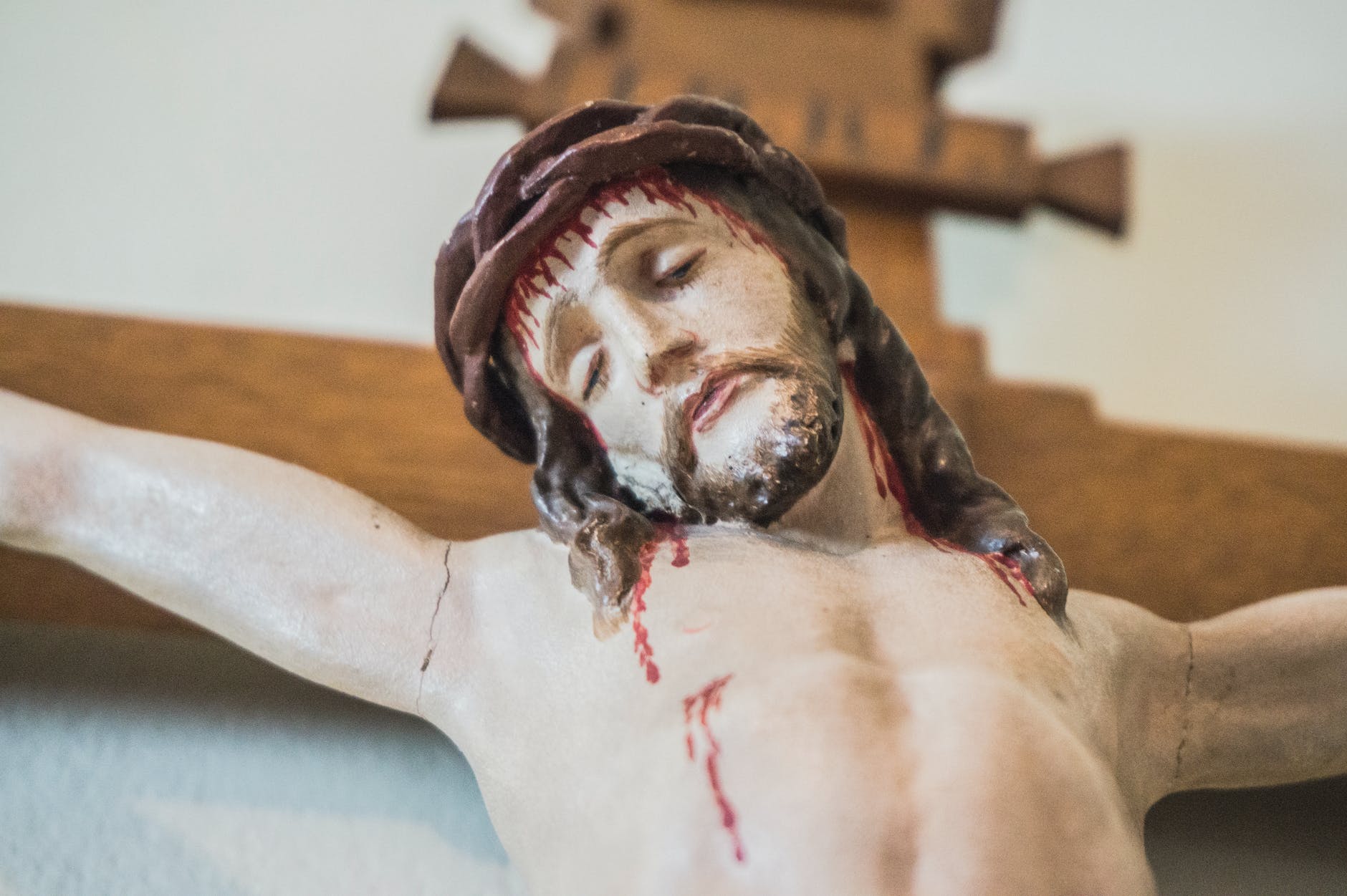
You were betrayed; Falsely accused, Corruptly tried, Shamefully condemned, Brutally beaten, Crucified. So that I might gain eternal life.
You do not judge me for what I haven’t given up for a season. You do not withhold your love and forgiveness; Waiting for me to learn the disciplines of Lent. You ask for more than that– and less. You ask me to follow you–to leave it all behind. You ask me to give up my life– only to find it again in You.
Let me reflect today on what more I need to give up: My pride. My apathy. My selfishness with time and money. My need to have my own way; My own comforts.
May I be free to serve you; To serve others. May I be ready to give up whatever is Keeping me in thrall; Keeping me enslaved; Keeping me from serving you with abandon.
Show me how to let go Of all but You– That You may be my All.
Recently, I found out that I have developed diabetes. One of the ways to lower my glucose count and mitigate the effects of diabetes is to lose weight– something I’ve been trying to do over many years with little success!
Weight loss can be a tricky thing– the harder I try, the less I seem to lose. In fact, sometimes, I gain weight instead! Part of the process is not to think of it as weight loss, but as a change of attitude and lifestyle. It is easy to get fixated on numbers– calories, carbs, ounces, serving sizes, etc.. But numbers alone don’t tell the whole story. It’s not just what I eat, or the amount, but when, and how, and why. Am I skipping meals? Do I fry my vegetables in butter, or drown them in cream sauces? Do I eat because I am bored, or stressed? Do I exercise? Do I drink enough water?
Prayer can be a tricky thing, as well. It shouldn’t be complicated or stressful, but I can add all kinds of expectations and structures to my prayer life that actually get in the way. I can stress about whether I am praying enough, or too little; whether I am forgetting to pray for someone, or if I’m praying selfishly for a certain situation; whether I am too distracted or tired; the list seems endless.
One of the biggest barriers to prayer comes when we carry the extra “weight” of subtle sins like guilt, fear, doubt, or pride. And just like physical weight loss, the harder we try to deal with it using our own willpower and our own wisdom, the less likely we are to “lose” it. The only way to lose this kind of weight is to confess it– asking God to take it and replace it with a new way of thinking and a new attitude. Instead of focusing on what I need to lose, I need to start focusing on what I will GAIN as I change my eating habits.
My current weight-loss goal is to lose between 15-20 lbs. over the next three months (in time for summer). But my REAL goal is to change my way of cooking and eating, such that I am living a healthier lifestyle going forward. My current prayer goal is to spend more time in prayer (an hour each day). But my REAL goal is to develop prayer habits that further my relationship with God– to continue to draw closer to Him. It’s worth losing old habits and attitudes to gain so much more!
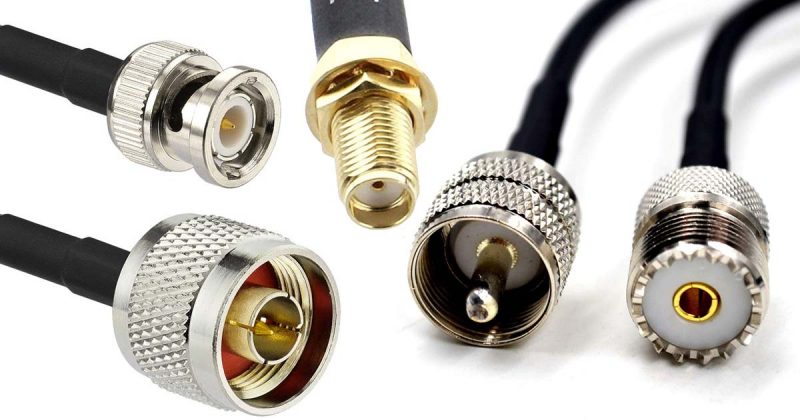
My husband and I own a shop. It is a dual shop: one part is a resale/collectibles/vintage and antiques shop, while the other part sells amateur radio equipment. We sell new and used radios, antennas, coaxial cable, power supplies, amplifiers, and other, smaller accessories, including connectors.
Connectors are small (usually only about an inch or two in length). But there are dozens of different types, connecting various sizes of cable and wire to various types of equipment. We have BNC connectors, SMA connectors, PL259 connectors, “male” to “female” connectors, and many more, with different sizes and styles in each type! I find it very confusing. It seems as though it would be much simpler if there was just one universal type of connector, that would work for all the radios and accessories.
I have a similar sense of confusion with other electronic connections– jacks and USB ports and charging ports–without the correct connection, many of our electronics just don’t work!
Human beings often have trouble with connections, as well. We speak different languages (even different dialects of the same language sometimes), have different interests and personalities, different life experiences– we just can’t seem to understand one another or connect to one another. We end up being confused, offended, hurt, angry, and isolated. Worse yet, our connections can break down– interests change, resentments build up, life experiences pull us in new directions, and sin corrupts relationships.
I’m so glad that God is the Universal Connector! No matter what I’m going through; no matter what I am thinking or feeling; no matter how I express myself, God understands me– even better than I understand myself! Others– even those closest to me– may misunderstand my words, my motives, or my emotions, but God knows exactly what I mean. And that connection is eternal. If I feel “disconnected” from God, there may be something wrong with my understanding, or I may choose not to listen to His wisdom. I may be “plugged into” something that distorts or distracts the message. But God never “tunes out” or loses the ability to hear my prayers or understand my thoughts.
Amazingly, God is connected in the same way to everyone! There is no need for Him to have hundreds of different connectors in order to get the message. He never needs a replacement part to enhance or clarify His understanding– no matter the language of the speaker, her/his life circumstances, or emotions. God understands the broken-hearted, the hurting, the overjoyed, the overwhelmed, and the confused among us. He lovingly listens to billionaires and bums alike. Drug addicts, rape victims, murderers, self-righteous snobs, “grammar police,” Pharisees, nose-pickers, thumb-suckers, braggarts, liars, thieves, model citizens, and PTSD patients– God “connects” with each one who seeks Him. God meets us where and how we are, because He knows and loves us without limits.
It can be frustrating to try to connect with some of our neighbors, co-workers, enemies, and even some of our family members. That’s one great reason to pray about our relationships– God can make connections even when and where we cannot. God can also build, strengthen, and redeem relationships that lack connection or have broken connections. Even those relationships that seem solid need help from the Universal Connector. Instead of trying to “make things fit” with someone else, or working harder to force an understanding, maybe today is a good day to stop saying more, and start praying more!
It’s been very windy here lately. Even when the sun is shining, the wind still makes it feel like winter (which, technically, it still is)! I don’t know that I have ever bothered to thank God for wind. After all, most of the time, we think of wind as being destructive–tornados, hurricanes, typhoons–winds tend to blow things over, knock things down, and they are often accompanied by water in the form of rain, waves, or hail.
God created wind. He uses it for many good purposes that we may ignore or take for granted:
God used winds to dry up the waters after the great flood. (see Genesis 8:1)
God used a strong wind to blow locusts into Egypt as one of the plagues demonstrating His power to Pharaoh. He used another strong wind to blow them back out of the land and into the Red Sea. (see Exodus 10: 13-19)
God used a mighty wind to blow on the Red Sea, dividing the waters and allowing the Israelites to escape from the Egyptian army that pursued them. (Exodus 14)
Wind moves things. Without at least some wind, the air becomes stagnant, wind-borne seeds cannot find a home, and flying creatures must work harder to stay aloft. Wind can act as a cleanser, blowing away dead leaves and dust so that new growth can occur. Wind moves the waters– from gentle ripples to white-capped waves–pushing along the boats and ships over lakes and seas. Wind bears clouds and brings gentle rains and shade from the harsh sun. Wind can be directed for power in windmills and wind tunnels. Wind can even “sing” as it whistles through bare tree branches or moves wind chimes.
One of the most unusual uses of wind in the Bible happened to the great prophet Elijah. In 1Kings19:11, God told Elijah to stand on the mountain. Elijah had fled for his life from the wrath of Jezebel and Ahab. He was discouraged to the point of death. God sent a strong and destructive wind, but His presence wasn’t in it. He sent an earthquake, but His presence wasn’t in that, either. Finally, in the stillness, God appeared to Elijah and gave him a message of hope and encouragement. Sometimes, the winds come, not as a judgment, not as a message, but as a signal that God wants us to be still. HE is the mover; HE is the wind– but He is also in the middle of the stillness, if we are ready to listen!
I don’t know that I have ever bothered to thank God for wind. I take it for granted when it is gentle, and I dislike it when it is destructive– even when it just musses my hair or makes me shiver on an otherwise sunny day. But today, I thank God that He has the power, wisdom, and authority to use wind for His purposes. May He blow away all that is old and stagnant in my life, and move me to see His power at work in the world around me today. Thank You, God!
The Bible is full of examples of prayer– long prayers, elegant prayers, short prayers, confident prayers, even arrogant and angry prayers. Much has been written about praying boldly and with confidence. But I want to say just a few words about timid prayers.
Sometimes, our awe of God is so powerful, and our awareness of our own shortcomings so deep, that it makes us pause. We “know” that God hears us; we “know” that God has made it possible to approach Him with assurance in His Love and Grace. But what we “know” and what we “feel” don’t always align. Sometimes this may make us “feel” as though our prayers are lesser, somehow– that God may still listen to our prayers, but will count them as less worthy or that they will be less effective.
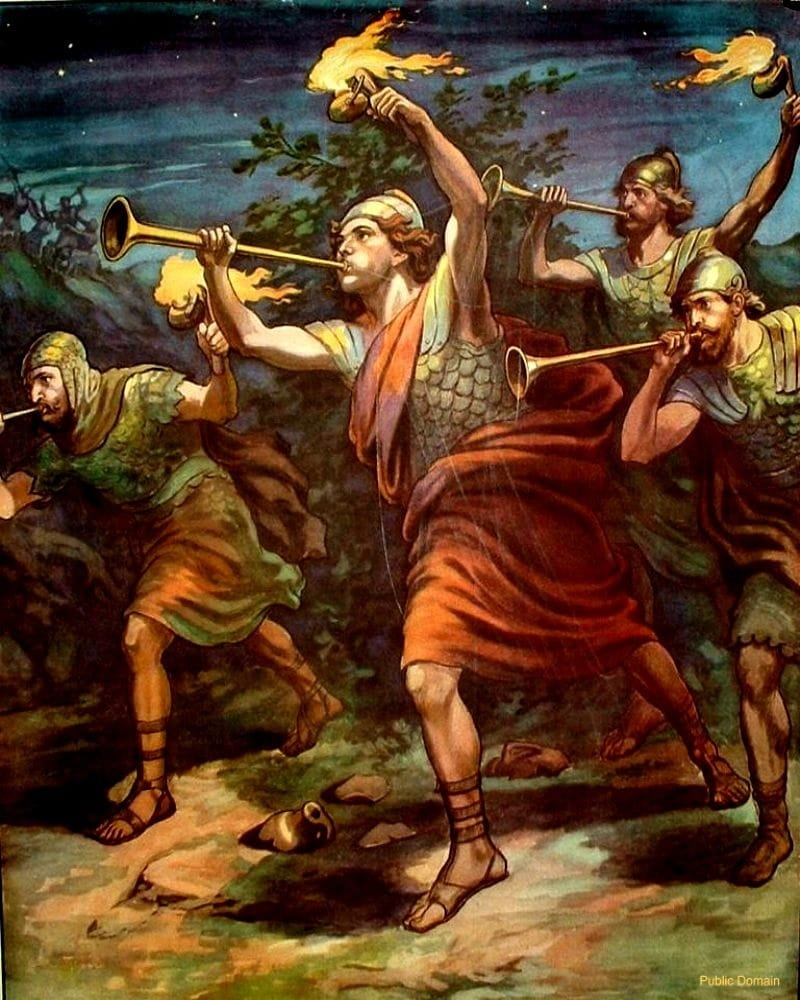
God listens to the spectrum of our prayers–including those when we are timid and fearful, confused and anxious, even those for which there are no words (see Romans 8:26)! Gideon (see Judges 6-8) was timid and reluctant; and yet he prayed for God’s help to strengthen his resolve. He ended up defeating a mighty army with just 300 men, and was listed in Hebrews 11 as one of the heroes of Faith. David’s psalms and prayers include many that are timid and questioning, yet God described King David as a man after His own heart. Even Moses doubted his abilities and prayed that God would send someone else to speak to Pharaoh. God answered Moses’s request, sending Aaron to help, but it was through Moses that God delivered an entire nation!
Sometimes, our timidity can be traced to our doubts or fears. Sometimes, it can be traced to guilt or shame. There are many reasons why we may “feel” timid, frightened, or unworthy to come before a Holy God, to ask for His help or guidance when we feel inadequate, or to admit that we have failed. But we must remember that NOTHING can separate us from God’s Love or from the privilege of praying to Him. A timid heart is not always a humble heart, but a humble heart is often a timid heart. And God promises to give grace to the humble (James 4:6).
We should rejoice with those who pray boldly (and not arrogantly). But never despise the lowly and timid prayer. After all, what makes prayer effective and powerful is not who is doing the praying or what words we use, or even how we feel– it is to WHOM we pray that makes all the difference.
Last Monday, I went into the doctor’s office to get the results of my latest blood test. It had been a while since my last check up, and my doctor told me that I have developed Type 2 Diabetes. This requires that I make some changes to my diet and lifestyle– more veggies, more exercise, less pasta and fewer desserts– and pay close attention to my blood sugar levels. Every day, I have to prick my finger and get at least one drop of blood on a test strip, and feed that into a glucose meter. It takes just about a minute, and just one drop of blood, but it has to happen every day.
Millions of people around the world deal with diabetes, and I am so grateful that we caught it, and that it can be managed with these few changes. But I was surprised at how much I resented the daily “prick.” It is not painless, but it is not difficult, either. Still, I resisted, even when my husband offered marvelous support and help. I know this is part of what it will take to keep me healthy, but oh how I miss the freedom I took for granted just days ago!
It got me thinking of the ritual sacrifices that were set up for the nation of Israel. Every day, animals were not just “pricked,” but slaughtered–their blood poured out and their flesh burned–to represent the atonement necessary for sin. Hebrews 9:22 says that “without the shedding of blood, there is no remission.” There is no way to be made right with God without the shedding of blood. And the blood of rams and lambs, while it represents the atonement we seek, is inadequate to cleanse our souls of the stain of sin. Our own blood is tainted with sin in exactly the way my blood is tainted with glucose. My blood is not only imperfect, it is unpredictable, and even poisonous, if left untreated. And even with the “shedding of blood” every day to check my glucose levels, there is no “remission”; the only way to treat my condition is to have a change– a permanent and drastic change– in my lifestyle. For Sin, there is only the shedding of perfect blood applied to my condition that can make me whole.
Though I have to shed blood every day to check on my blood sugar, I don’t have to shed blood every day for my Sin condition. But I do have to accept that Christ paid–in His perfect Blood– for my soul. He only had to do it once, but because of His sacrifice, I can be renewed every day– empowered to live the kind of life He wants me to live; empowered to grow and make healthy decisions, and righteous choices; empowered to live free of the guilt and poison of being enslaved to Sin.
With healthy choices and medication, I will be able to manage my blood sugar levels as I grow older. And I will never have to feel a “prick” or shed a drop of blood in eternity– there will be no death, and no disease! And all because of the Lamb who was willing to shed His blood for me– and for you! Not just a drop, not just another drop each day, but a once-for-all, extravagant, living sacrifice.
I’ve already posted recently about Ash Wednesday (see the post from Feb. 15), so it may seem strange on a day of fasting and ashes to be writing about food. And manna doesn’t seem to have much of a connection to prayer– bear with me…
Manna was, quite literally, “daily bread.” God sent manna each day for the children of Israel as they wandered and camped in the wilderness on their journey to the Promised Land. It appeared overnight, much like dew, and evaporated in the heat of the day. Yet the small “grains” could be gathered and made into nourishment for the thousands of Israelites who had no other source of bread. Manna and the bread made from it were only good for a day (except on Friday, when twice as much would fall so no work needed to be done on the Sabbath). God provides for our needs daily– we don’t have to worry and fret. Jesus returned to this theme often, including the Sermon on the Mount and The Lord’s Prayer.
Manna was uniquely suited for the Israelites in their situation. Manna did not require time to grow, harvest, or prepare. It did not require storage space, as it was collected and used up daily. It did not require yeast, salt, or sugar to be added to it–God designed it to be simple, sufficient, sustaining, and even sweet!
Manna was provided even after the Israelites complained and accused Moses (and God!) of leading them into the wilderness to die. God will not withhold punishment (see what happened in Numbers 11 when the Israelites complained about the manna!), but He will provide for our needs out of His love for us, not as a condition of our righteous behavior. All the people had access to manna, even those who complained or were defiant. If someone went hungry, it was not because God refused to provide– but because they chose not to avail themselves of His gift, or because they refused to accept the nature of the gift.
Manna was consistent. God didn’t send manna one week and raisins the next; God is faithful and unchanging–the manna wasn’t just a nutritional provision, it was a reflection of God’s nature! God gives good gifts; it is our selfish nature that often takes His goodness for granted, and asks for what we do not need.
Once the Israelites reached the Promised Land, the manna stopped. God’s gifts meet our needs– in His way, and in His time. God does not give gifts blindly or absent-mindedly. God knew exactly how much manna to send each day, and exactly when the manna would no longer be needed. He was watching closely the whole time– every step of the journey.
So today, whether or not you are fasting, you can rejoice in the knowledge that God has seen every step of YOUR journey. He will provide for our every need, including the need for forgiveness, courage, physical nourishment, and spiritual growth. All we need to do is look for it, gather it, and use it!
I used to work in a public library. I was the Youth Services Librarian, which meant that most of my time was spent working on building up the collection of children’s books, planning and presenting programming and story times, and going into schools to do book talks and promote library offerings. But I also spent time at the reference desks– both in the Children’s Area and the Adult Services area– and some of my time was spent finding answers to a wide range of questions:
Does the library have books or articles about Okapis (for a 4th grade report)?
Do you carry tax forms for my out-of-state business?
What are the school colors for _______ college (a small community college in Nebraska)?
Do you have a picture of the Egyptian queen Hatshepsut?
What is the title of a children’s book that featured muskrats making chicken soup?
My great-aunt left me a set of dishes and I want to know if they’re worth anything.
Some questions were easy to answer. Some required a little research within the library’s resources. Some were next to impossible and required hours of searching databases, or calling on expert help. Searching a database can be tricky. You need to find solid key words and search terms. For instance, our computer catalog did not recognize the the search term “cooking” or “cookbook.” You had to use the term “cookery” to get the best results. You could also use “cook***” to force the algorithm to look at all words that contained the letters c-o-o-k and any other letters that followed, such as cooks, cookies, cookery, etc. (Many library databases have since been updated, so searches will automatically redirect or refine common terms like this.)
Databases and search engines are amazing things, but they have limitations. They will only search for what you type in, and they will only search in the way they are programmed to do so. Computers (currently) “think” laterally–they do not make leaps of imagination, nor do they second-guess what you might have meant to ask but didn’t. If I want to know about pemmican, but I misspell it, the search engine may not find what I’m looking for.
That’s where algorithms come in. If I misspell pemmican by leaving out the second “m”, the algorithm will look for words close to what I typed, based on thousands of other inquiries. It may ask if I meant to search for pelican, instead. Or it may ask if I want pemmican. But if my spelling is really bad, or if the word I type in is actually another word, the search engine may miss my real inquiry altogether, and send me on a fruitless search. If I’m searching for a children’s book with muskrats and chicken soup, and the search engine doesn’t find both terms in a description, the algorithm will usually stick with the first term, and give me a list of children’s books with muskrats. Hopefully one of them also includes chicken soup… If I type the key words in reverse, I will get a list of children’s books with chicken soup…hopefully one of them includes muskrat characters! And algorithms can be skewed by advertisers or other interest groups that pay to have their information appear more often or first whenever certain search terms are entered.
When people request prayer, they are usually focused on what they perceive as their greatest need. They are searching for an answer; a solution to a specific problem or situation. “Pray for complete healing.” “Pray that my son/daughter will…” “Pray that I get this job.” And it is tempting to pray very specifically. This is not wrong. But sometimes, it limits how we see prayer and how we look at God’s answers. The opposite is also true. Sometimes, we pray so broadly, that we may not see God’s answer for what it is. Sometimes, we pray, hoping to change some sort of algorithm and get to the “top of the list” or get the “right” answer. This is not what prayer is about…we know this, but sometimes, our wants blind us to what we are actually asking (or asking others to ask for).
So what are some of the key words we can use in our prayer requests and prayers? Jesus gives us a fantastic blueprint in The Lord’s Prayer (Matthew 6:9-13):
“Our Father”–remembering to whom we are praying is vital. We are not praying to a distant, absent-minded, shadowy figure; He is our Father. He knows what is necessary, and what is best.
“Who art in Heaven”–God is Omnipotent. There is nothing we can ask or imagine that is too big, too difficult, or too much to ask. That doesn’t mean that God will give us whatever we want, whenever we want it, but it does mean that God is not limited by the same things that limit us!
“Hallowed by Thy Name.”–God is not our “genie in a bottle.” He doesn’t work for us, or at our command. God is sovereign; He commands the Universe. And even though He makes Himself known and wants a relationship with us, He is not like anyone else–He ALONE is GOD. When His answers seem “wrong,” or don’t make sense, it isn’t because He didn’t hear us, or because He doesn’t love us, but His ways are not our ways (Isaiah 55:8-9).
“Thy Kingdom come, Thy will be done on Earth as it is in Heaven”–There are a lot of “good” things that are NOT part of God’s best will for us. There are a lot of difficult and painful things that God can use for our good. He wants to hear the cry of our heart–“I want to be healed.” But He also wants to hear our willingness to accept that healing may not be immediate or easy.
“Give us this day our daily bread”– It is not “wrong” to pray for things in the future, or to pray for “big” or complex things, but our dependence on Him is shown best when we acknowledge our everyday basic needs are met by Him.
“And forgive us our debts as we forgive our debtors, And lead us not into temptation, but deliver us from evil”–Don’t be fooled. God will not ignore our hidden resentments, hatred, disdain, rebellion, and unforgiveness. Our requests can be sidelined by holding on to grudges and harboring secret doubts about God’s essential fairness, as well as hanging on to sinful habits.
God doesn’t need algorithms or special prayer “search terms”. We can come to Him with our requests, and He knows precisely what we want and what we need. But we will learn more about ourselves and about who God truly is when we refine our hearts and our prayer life.
St. Francis was allowed to visit a 21st century university, which housed a chapel bearing his name. He was both honored and confused by the opportunity. Walking about the campus, he was amazed at the number and variety of students rushing to and fro; they were not looking at the grounds or the sidewalks or at each other– they were focused on their devices. It was a noisy campus, full of the sounds of buses and other traffic, music and podcasts playing, people arguing… Finally, St. Francis arrived at “his” chapel. It was a beautiful building, quiet and simple in its design. It was empty, except for a single student, saying her prayers. At the entrance, there was a plaque with a well-known prayer:
Lord, make me an instrument of Your peace; Where there is hatred, let me sow love; Where there is injury, pardon; Where there is doubt, faith; Where there is despair, hope; Where there is darkness, light; And where there is sadness, joy.
O Divine Master, Grant that I may not so much seek To be consoled as to console; To be understood, as to understand; To be loved, as to love; For it is in giving that we receive, It is in pardoning that we are pardoned, And it is in dying that we are born to Eternal Life. Amen.
Francis took a seat, absorbing the peaceful stillness, yet wondering at his assignment. Why had he been sent here? Why this moment in time? Taking his cue from the student, he also spent some time in prayer. Then he walked back outside.
He was struck again by the students– they were everywhere, but they were isolated. No one noticed him or stopped to speak. He tried to talk to someone–anyone–but they were all busy and not inclined to pause or interact. He noticed a coffee house across the street. Carefully avoiding speeding buses and weaving bikes, he crossed and entered the shop. It was a little quieter than the commons, but most of the customers were sipping their drinks and staring at screens–personal devices or the huge screen above the counter, streaming the latest news. War, scandal, protests, mud-slinging politicians, all made their appearance, only to be replaced by a commercial break and the next headline. No one stopped in horror at the litany of injustice, death, greed, or duplicity. They simply sipped their lattes and went back to scrolling through their Instagram accounts.
The door opened to admit the student he had seen earlier in the chapel. She glanced up at the big screen, shook her head, and ordered a coffee. She found a table, and sat down. The coffee house was busy; it was the last empty table. She smiled as another student came in. She invited the other student to sit with her. She started a conversation. At first, the other student was jumpy and disinclined to talk. But soon, the two students were chatting. The sound of it attracted attention. Some customers were bothered by the new noise; others were intrigued by the sound of real conversation– even laughter! Two other students brought their chairs and drinks over and joined the conversation. They spoke of missing their families, of struggling with certain classes, and enjoying others. They spoke of future plans, and the obstacles that stood in the way. They spoke of fears for the future, as well. Francis noticed that one student listened from a distance, but did not join the others. He seemed weary and despondent. Francis walked over and asked if he could just sit at his table for awhile. The young man was startled, but said, “Suit yourself.”
Francis sat in silence, his head bowed. Finally, the young man spoke quietly. “I saw you watching that girl. Just a word of warning– she’s a nut job. She comes in here about once a week, talking nonsense. She’s not even a student here.”
“And yet, I saw you were also watching her. She intrigues you.”
“I don’t know how she does it. She comes in here, talking about love and joy and faith, and people listen to her. They eat that stuff up. Don’t they know it’s all garbage? Look at the news! But she comes in, all smiling and happy– she’s crazy.”
“But she still intrigues you. Could it be that she is at peace, and you are not?”
“Peace?! Peace is nothing but an illusion. Power is what counts. Action. Look at her– she’s not doing anything to make the world better, and yet she acts like she’s got all the answers. It’s sickening!”
“Why do you keep watching her?”
“I don’t even know. She’s so stupid. She’s all wrong, and she acts like everything is fine.”
“Have you spoken to her? How do you know what she thinks and feels?”
“I’ve told you. She’s crazy. I don’t want to talk to someone like that.”
“Are you afraid?”
“Afraid of what?”
“That she’s not as crazy as you think. That she might laugh at your thoughts, the way you laugh at hers. That she won’t talk to you, like she talks to the others… Maybe you’re afraid of what you would say.”
“What do you mean?”
“What would you say to her if she spoke to you? Would you listen, or would you argue? Would you wipe the smile off her face and take away her joy and faith? Would you make the world a better place by winning your argument with her?”
The young man was at a loss for words. He suddenly noticed that other conversation had stopped. People were looking at him– even the young woman he had been talking about. His face turned red, and he jumped out of his seat and dashed out of the coffee house. The group dispersed, and Francis was left alone with the young woman.
“He may be right, you know,” she said with a wry smile. I don’t think I do enough to make the world a better place. I just sit and talk with people, and listen, and pray. It’s not much. Not enough to make a real difference.”
Francis put a hand on her shoulder and shook his head. “It is enough in God’s economy to be available. To be humble and willing and faithful. Keep up the good work. And may God bless you.”






































 Pursuing Prayer