God of the Impossible

35 On that day, when evening had come, he said to them, “Let us go across to the other side.” 36 And leaving the crowd, they took him with them in the boat, just as he was. And other boats were with him. 37 And a great windstorm arose, and the waves were breaking into the boat, so that the boat was already filling. 38 But he was in the stern, asleep on the cushion. And they woke him and said to him, “Teacher, do you not care that we are perishing?” 39 And he awoke and rebuked the wind and said to the sea, “Peace! Be still!” And the wind ceased, and there was a great calm. 40 He said to them, “Why are you so afraid? Have you still no faith?” 41 And they were filled with great fear and said to one another, “Who then is this, that even the wind and the sea obey him?”

Mark 4:35-41 ESV

I’ve been reading through the Gospels this month, and one of the phrases that has stood out for me this year is “ye of little faith.”(or “you have so little faith!) Jesus uses this phrase to chastise His disciples, as well as the crowds– they claim to want miracles, yet when Jesus does miracles, they seem astonished almost to the point of fear. Or they attempt to “explain them away.”

Photo by Andrea Piacquadio on Pexels.com

We live in a world of possibilities– when we are young, we see possibilities everywhere. “When I grow up…” we imagine ourselves as astronauts, or world leaders, or Olympic champions. As we grow older, our world of possibilities grows narrower. We become cynical (or more aware of our own limitations!) and, while we long to see miracles, we neither expect them nor ask for them. We know some difficult or unexpected things are still possible, but we tend to see more “impossibilities.” “My health will never get better.” “My boss will never listen to me.” “I can’t…”

Photo by Andrea Piacquadio on Pexels.com

One of the biggest roadblocks to becoming a Christian (and to continue to grow in faith) is to accept that NOTHING is impossible for God. We set limits on God’s ability, His willingness, His goodness–we expect to be disappointed, disillusioned, and disheartened. And it becomes a self-fulfilling prophecy– we end up disappointed, disillusioned, and disheartened in others, in ourselves…

Photo by Dimitry Zub on Pexels.com

Yet, God has given us an entire book filled with miracles and impossible events that are meant to show us that He is the God of the Impossible; the God of Miracles. From the beginning, God has demonstrated His willingness to make a way when there seems to be no way. From Noah and the Flood, to Abraham becoming the Father of many nations, to bringing Joseph from a pit to becoming the second-most powerful man in Egypt, to the story of Moses leading the Israelites out of slavery…the stories abound. Whether sending food from heaven, water from a rock, or fire from the sky, God’s power is on display throughout the Old Testament. The crowds following Jesus grew up hearing these stories. But after four hundred years of silence, they seemed to remember what God COULD do, but doubt what God WOULD do for those who call on Him.

Jesus walked on water, healed the sick, turned water into wine, cast out demons, raised the dead, and much more. And still the people wanted “proof.” But we are not so very different. Not only do we have all the stories of the Old Testament; we have all the stories of Jesus’ miracles. Yet we still wonder whether God will hear and/or answer our prayers. And it doesn’t take 400 years of silence to cause us to doubt. Sometimes it is four hours, or four days, or four months of seeming silence.

Photo by Skyler Ewing on Pexels.com

Nothing is impossible with God. There are some things that are not productive; some things that are not part of His plan. Imagine Shadrach, Meshach and Abednego praying that God would not allow them to go into the fiery furnace? That wasn’t the plan. Instead, God chose to do the unexpected, the unthinkable–the impossible. He rescued them IN the fire– caused them to come through without being singed. Imagine those who prayed that Lazarus would recover from his illness. That wasn’t the plan. Instead, Jesus did the impossible– raising Lazarus after four days; after the funeral, after the burial, after all possible hope was gone.

God excels in the impossible. He delights in it. What impossible situation are you facing today? God may not choose to remove the situation. But He can take an impossible situation and turn it into a miraculous victory. Not because we demand “proof” of His divinity or power. But because His plans are bigger and better than what we can comprehend.

Photo by Anna Shvets on Pexels.com

I’ve shared a bit about one of my current struggles. My Mom is in her 88th year, and her health is failing. She is very independent and lives alone. My siblings and I are being “stretched” in trying to help Mom navigate several decisions and several changing conditions. God has not taken away her health issues, or conveniently provided an easy transition or simple answers to our questions. But He has been “with us in the fire.” That doesn’t mean that I understand all that Mom is going through, or how best to help her from moment to moment. And I’m not asking God to provide a dramatic “rescue” for Mom as she navigates this part of her journey. But I trust that God has already seen the end from the beginning– none of the “setbacks” or “unexpected events” we face can take God by surprise or leave Him unprepared to use them for His glory and our ultimate good.

Always Remember, Pray, Give Thanks

The Apostle Paul is consistent in opening most of his letters with a phrase that uses the same four key words– Always, Remember, Prayers, and Thank. The order of the words may change, but the idea stays the same. Paul is always remembering others, always praying for them, and always thankful to God for them.

Photo by John-Mark Smith on Pexels.com

Paul uses similar phrasing whether addressing individuals, like Timothy or Philemon, or church groups, like the Ephesians or Philippians. But the message is always very personal. He is not saying a general “Thank You” to God for people “like” Philemon, or “like” the church in Ephesus. He is remembering shared burdens, shared laughter, shared experiences, and thanking God for those deeply held memories. He is lifting up individual burdens, such as the on-going disagreement between Euodia and Syntyche in Philippi (Philippians 4:2), or Timothy’s stomach problems (1 Timothy 5:23).

Photo by RF._.studio on Pexels.com

It is easy, and costs nothing, to pray generic prayers for a large, faceless mass of strangers. It is easy to love humanity from afar. It is another thing to enter into another person’s “messiness” and “bear one another’s burdens” (Galatians 6:2); to remember struggles and sacrifices made on behalf of others (or to remember being the one in great need of another’s sacrifices). Life– abundant, vibrant, and glorious–calls us to get involved. Not just from the sidelines, not just when it’s convenient, but “always.”

Photo by Helena Lopes on Pexels.com

Prayer calls us to be involved. That doesn’t mean we can’t pray “general” prayers– for peace in foreign lands, or and end to drought or hunger, etc. But we must not neglect “wrestling” prayers–prayers for our unsaved loved ones, prayers for persecuted believers (whether next door or around the world), prayers for our community workers, and prayers for those who are in need. Nor should we neglect prayers of remembrance and thanksgiving for those who have come into our lives. Finally, we need to be willing to let individuals KNOW that they are being remembered, prayed for, and appreciated.

Photo by Design Killer on Pexels.com

One of the greatest blessings I know is remembering all the special people who have crossed paths, shared the journey, and borne shared burdens with me, and knowing that each person, each memory, each moment, is eternally and infinitely precious to God! What a privilege it is to share good times and even “battle scars” with so many amazing, unique, beloved people! What a privilege to lift them up before the throne of grace!

When Nothing Else Could Help

6 Do not be anxious about anything, but in every situation, by prayer and petition, with thanksgiving, present your requests to God.

Philippians 4:6

Sometimes, I write because I feel as though I have received wisdom to pass on about prayer. But sometimes, like today, I write because I need to confess how much I still need to learn (or put into practice)!

Photo by MART PRODUCTION on Pexels.com

My mother has been in and out of the Emergency Room over the past few weeks. It’s not that she is experiencing actual emergencies–heart attack or difficulty breathing or broken bones or blood clots (though she has been checked for all of these at one point or another). Instead, she is experiencing pain and fear– fear that her pain is related to a larger issue that could be life-threatening. My mother is 88 years old, and there is a reasonable fear that her health is deteriorating and that death is closer than she wants to think about.

Photo by Pixabay on Pexels.com

The other day, I received a call from a dear friend and neighbor of my mom to say that she had stopped by to visit Mom and ended up taking her to the ER at the local hospital. Again, Mom was not in medical distress requiring an ambulance– this was not a “life or death” call; but Mom hadn’t slept well, she was hurting, and she just didn’t feel “right.” She had just seen her physician last week, and she had an appointment to see another doctor the next day, but she was afraid.

Photo by SHVETS production on Pexels.com

I was very much less than gracious about receiving the call. My siblings and I are exhausted, frustrated, and worried. I can’t speak for the others, but I feel guilty about not doing enough, and guilty for doing “too much” all at the same time. My emotions were raw; my gut was churning, and my mind was a complete disaster. I couldn’t think clearly, and I couldn’t “feel” anything. As a “last resort,” I sent out a request via Facebook asking others to pray for my mom– I didn’t feel like I could even do that on my own.

Photo by Alexander Dummer on Pexels.com

Of course, there is a power in prayer that goes beyond anything we can comprehend, much less explain. Within minutes, over three dozen people let me know they were sending prayers for my mom. But more than that, I received a call from my cousin–and he had just the words to assuage my false sense of guilt and refocus my thoughts and emotions. As time passed, our friend called with an update–Mom has severe arthritis in her back, and another minor issue that should respond to simple medication. She will still have pain; but now she has one less reason to worry about the cause.

Photo by Matej on Pexels.com

I can’t say that this is the “end” of the frustration, exhaustion, or even the worry about my mom’s declining health. We are still struggling with various questions and decisions she needs to make for the future.

But this episode reminded me that prayer should not be a “last resort” when facing the unexpected. It’s not that I haven’t prayed about Mom’s health recently– a lot! But in that initial moment of hearing about yet another trip to the ER, my first thought was not to “take it to the Lord in prayer,” but to worry and let my thoughts run everywhere but up.

Thankfully, God is eternally gracious and powerful– willing to give the doctors wisdom in dealing with my Mom, and willing to give me peace and restore my flagging faith. Mom still has to face pain; my siblings and I still have to face the looming reality of life “after” God calls Mom home, and the chaos and uncertainty in the time between now and then. But we can seek Him first, with confidence and hope, rather than letting worry sap our energy and steal our joy. God’s love and grace are more powerful than worry and doubt, fear and guilt.

Photo by Min An on Pexels.com

I’ve mentioned it before, but one of my earliest memories is of my Mother singing and humming an old hymn as my lullaby. Even as I watch her struggling with end of life issues, I am joyfully anticipating that this season will give way to being “lifted” by Love into eternal bliss. I am so grateful that this song is etched in my heart– even when I need a reminder. So I’m going to listen and let it be part of God’s comforting message to me. And I hope, for anyone struggling with stress, guilt, worry, or fear, that it will be “uplifting” for you today, as well.

The Thief Comes

10 The thief comes only to steal and kill and destroy. I came that they may have life and have it abundantly. 11 I am the good shepherd. The good shepherd lays down his life for the sheep.

John 10:10-11 (ESV)

I know a very wonderful and kind-hearted woman who put out a table with several items she wanted to give away to anyone in need. She set up the table, taped a sign to the front, reading, “Free”, and went about her day. She returned to find that not only were all the items gone, but so was the table!

Photo by Andrea Piacquadio on Pexels.com

I also know many other people (including my husband and I) who have been victims of theft, shoplifting, pick-pocketing, mugging, etc. The world is full of honest people, but it is also full of thieves. One of the worst things about theft is not the loss of “stuff.” It is the loss of security; the loss of trust; the loss of innocence and faith. Theft is invasive, even when it is non-violent and impersonal, like fraud or shoplifting. Theft is almost never random– a thief “comes.” A thief has a plan, and a target. Thieves tend to choose their targets based on two factors– the risk and the perceived “payoff.” A thief will target a person or place where the risk is worth the prize–if a target is low-risk, a thief may strike even for a small amount. A high-risk target may still attract thieves, but they will not take such a risk without a lot of planning.

Photo by KoolShooters on Pexels.com

Thieves also come unannounced and unexpected. While thieves plan carefully, their victims have little or no warning. Theft is shocking and upsetting. We don’t set aside a time to be robbed, or items that are meant to be stolen. Thieves creep in, or distract and deceive us. It would be very foolish to leave valuables or cash around unattended or unprotected. As my friend found out, even a table left unguarded can be lost.

Most of us take precautions against theft. We lock our doors, put our valuables in a safe or in hiding, and even install security cameras and alarms to alert us to possible theft. We avoid dark alleys and dangerous places. We keep watch.

Photo by Life Of Pix on Pexels.com

We guard our valuables, but how well do we guard our hearts? Jesus compared us to sheep– helpless and vulnerable to predators, including thieves. He warns that the thief– Satan– comes only to steal and kill and destroy. Satan doesn’t want our money or our watch, though– he wants our time, our attention, our desires, and our worship. He wants to steal them, and kill us, and destroy our relationship with the Eternal Lover of our Souls. He wants us to be distracted by worry, greed, fear, pride, addictions, dysfunctional relationships, anger, abuse, emotional entanglements, empty pursuits, and endless doubts and questions.

Photo by Mikhail Nilov on Pexels.com

Satan doesn’t wait for us to seek him out. He doesn’t give us warning about his intentions. But he does come like a thief. He comes to steal our joy, our faith, our innocence, our rest, our security, our gratitude, our focus, our sense of purpose, and our hope. How much of an effort have we taken to stop him? How much effort do we take to guard what is more valuable than our money– our families, our character, our very soul? We wouldn’t walk down a dark alley with a wad of cash– but will we walk into temptation? Will we ignore warnings, believing it just “won’t happen” to us?

Luckily, we have a Good Shepherd. Even when we, like sheep, aren’t paying attention, and don’t see the enemy, God is still there, laying down His life, so that we can have a more abundant, more joy-filled life. The thief will still come– that’s not just an abstract warning, it’s a guarantee. There will be troubles in life that will threaten to steal all that God intends for us to enjoy. And, if we insist on going it alone, we will become victims of theft– our relationships, our character, our futures– we are at great risk. But if we trust in the Shepherd, we will have the best protection. The thief will still come to attack, but he cannot take what is in the Father’s hand– US!

The thief comes– to take; to destroy. The Shepherd comes– to give; eternal and abundant Life!

All the Same

When I was growing up, my Mom used to say, “I love all my children differently, but I love them all the same.” It didn’t make sense to me at first, but what she meant was that she loved us equally, but also uniquely as individuals. She didn’t treat us exactly the same, because we weren’t the same person, and because our circumstances were different. When my brother was small, there wasn’t enough time or money to do some of the things she did with me or my sister. When my sister and I were young, Mom was older and had less energy to do some of the things she had done with my brother. She punished us in slightly different ways, and encouraged us in slightly different ways, because we responded differently.

Photo by RODNAE Productions on Pexels.com

Mom is human, so even her best efforts weren’t perfect. Sometimes, we felt she treated us unfairly in certain matters. But overall, Mom has lived out her intention to “love us all the same.”

God follows the same principle. He shows no partiality; no favoritism. He sends rain and sunshine on “the just and the unjust.” (Matthew 5:45) He allows us to face sickness, trials, hardships, and disasters, regardless of our status or our relationship with Him. And He allows others, even evil-doers, to prosper and enjoy good health. This can be difficult for some of us to accept. I know many people who believe that they have an “in” with God– a special status that is supposed to keep them “safe” from disappointments and hardships, while punishing those who cross them in some way. But it doesn’t happen like that. God loves us and treats us each differently, according to our unique circumstances and personalities.

Photo by Emre Kuzu on Pexels.com

It is especially difficult to accept this in relation to prayer. God does not promise that, if we pray or if we have dozens of others praying for us, we will be spared pain and suffering, or receive only blessing and favor. This past year, we prayed for many friends and family who struggled with COVID (including David and I!) Many of them recovered; but others died. I just heard some wonderful news about a relative who was supposed to have a biopsy of a tumor on his brain. As he was being prepped for surgery, the surgeon realized that the lump had disappeared– there was nothing to biopsy! Case closed! It was wonderful news, and an answer to prayer. But what about my friend who had dozens praying for him to be healed of cancer? He had been in remission, but his cancer came back and just kept getting worse, and then he died. Does God love my relative more than my friend? Is he a “better” person, or more deserving of health and life? Absolutely not!

Photo by sergio omassi on Pexels.com

When we pray, we pray about what we see and what we understand. But God loves us each as individuals, and with perfect understanding and wisdom that we lack. I may never understand why some of my friends died of COVID or cancer, while others lived. I don’t know why some of the people I love have had to suffer pain and grief and loss, while others have been blessed with good health, opportunity, and riches. But I know this– God loves each one exactly as much as the others, and exactly as much as He loves me. Nothing about who I am or what I do can change God’s love for me– but it can and DOES change my love for Him!

Photo by Luis Quintero on Pexels.com

Praying for those we love, especially those who are suffering, is not a “magic” formula. While God listens to and answers prayer, He doesn’t guarantee that “more” prayers or “better” prayers will change our circumstances or the outcomes of our circumstances. But prayer changes US. It can change our outlook and our attitude. It can change circumstances in unseen ways we cannot measure or imagine. One thing prayer cannot change– it won’t cause God to love us any more or less than He already does. His love is perfect in scope and power. He loves us–“All the Same!”

Plenty of Room…

14 1-4 “Don’t let this rattle you. You trust God, don’t you? Trust me. There is plenty of room for you in my Father’s home. If that weren’t so, would I have told you that I’m on my way to get a room ready for you? And if I’m on my way to get your room ready, I’ll come back and get you so you can live where I live. And you already know the road I’m taking.” Thomas said, “Master, we have no idea where you’re going. How do you expect us to know the road?” 6-7 Jesus said, “I am the Road, also the Truth, also the Life. No one gets to the Father apart from me. If you really knew me, you would know my Father as well. From now on, you do know him. You’ve even seen him!”

John 14:1-6 “The Message”

My mother is fast approaching that time in life where she may no longer be able to live independently. Her health issues and failing eyesight mean she can no longer drive, and her house in the country, while familiar to her, causes her anxiety– What if the furnace breaks down in the winter? What if her pipes freeze? What if she can’t get back and forth to her mailbox, or falls down in the bathroom?

Photo by Anna Shvets on Pexels.com

My siblings and I are facing questions, too. Are any of us able to provide room for Mom to stay with us? Can we provide proper care? Can any of us “be there” when she needs us? Where can she go, if she can’t stay in her own home? How will she manage if she has to go “into care” somewhere? Will they provide for her needs?

Photo by cottonbro on Pexels.com

These are questions that plague us during our lifetime. I remember looking for housing after I left college and got my first job. Where would I stay? Could I afford rent? Would it be safe? Noisy? What about maintenance and utilities? When I got another job– Could I find another place close to my new job? How would I get moved? Would I be able to fit my furniture into the new space? Would I need to buy new appliances? Would the neighbors be friendly?

Photo by Nithin PA on Pexels.com

One day, we will “move” to our eternal home. If we have trusted Christ’s promises, we don’t have to worry about any of those questions. Our new and everlasting home has been prepared especially for us by our Loving Father. There is plenty of room, and it is rent-free! We don’t have to worry about the location, the safety, or the utility of our Heavenly home– it comes with an eternal guarantee.

Photo by Pixabay on Pexels.com

Jesus gave this promise to His disciples during the “Last Supper.” Preparations had been made for them to eat the Passover meal in an “upper room.” Jesus didn’t own a house; He had no apartment or condo or even a hut where He could invite His friends or family to join Him for a meal. “Foxes have holes, and birds of the air have nests, but the Son of Man has nowhere to lay his head.” (Matthew 8:20 ESV) This is the same Jesus who was born in a stable “because there was no room in the inn.” (Luke 2:7) This is the same Jesus who was “in the beginning” creating the whole of the universe.

Photo by Pixabay on Pexels.com

We can trust the promise of Jesus– there is “plenty of room” in God’s Kingdom. There is room for all who come to the Father’s house. No one will have to wonder or worry about heat or light or plumbing. No one will have to wonder about food or clothing, mobility issues or health concerns. No one will have to worry about the neighbors or the neighborhood. All we have to do is follow the “road” laid out by Jesus Christ.

Photo by Pixabay on Pexels.com

Jesus came into a world that had “no room” for Him– a world that rejected Him– so that we could have plenty of room with Him, forever.

Even though we may have decisions to make about finding a temporary “place” for Mom, we can be very sure that God’s already prepared a place for her– better than anything we can plan for or imagine! 

Cleanliness or Brokenness?

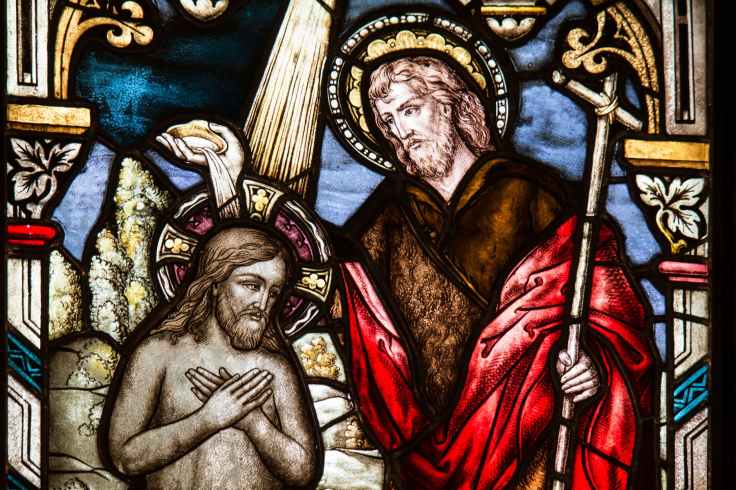
“Cleanliness is next to Godliness.” If you grew up hearing this old maxim (as I did), it may seem like something very wise–even Biblical. After all, so many of the chapters in Leviticus talk about ritual washing and being clean (or unclean). God’s people should be clean and tidy, organized and pure. But if you continue reading through the Old Testament, God becomes very angry with His people. Sure, they are following the letter of His law. They are bringing sacrifices, making sure that they wash everything properly and measure out the right amounts of incense. In Jesus’ day, the Pharisees even tithed their spices! Yet, Jesus called the Pharisees a “brood of vipers,” (Matthew 12:34) and “whitewashed tombs, which look beautiful on the outside but on the inside are full of the bones of the dead and everything unclean.” (Matthew 23:27b NIV)

Photo by Ron Lach on Pexels.com

We spend so much time worrying about appearances. But just because our lives look “clean” and “tidy” doesn’t mean that we are close to God. God isn’t impressed by our outward observance of His laws or by our neat appearance. Jesus did not reach out to the clean and tidy Pharisees; He went out of His way to speak to lepers and tax collectors and others who were considered “dirty” and tainted.


Photo by ding lei on Pexels.com

That doesn’t give us a pass to be slovenly or careless about hygiene! But it does mean that we should care less about what others see, and more about what God sees–on the inside. God wants to see hearts that are humble and willing to serve. He doesn’t want clean hands that are unwilling to reach out in love; He doesn’t want spotless houses or cars filled with complaining, gossip, and anger. God hasn’t asked us to “tidy up” our lives or “get our act together” to impress our neighbors. He asks us to repent of our uncleanness; to be broken in spirit, so that we will submit to His yoke and follow Him. HE will provide the cleaning we need, through the power of His “once-for-all” sacrifice!
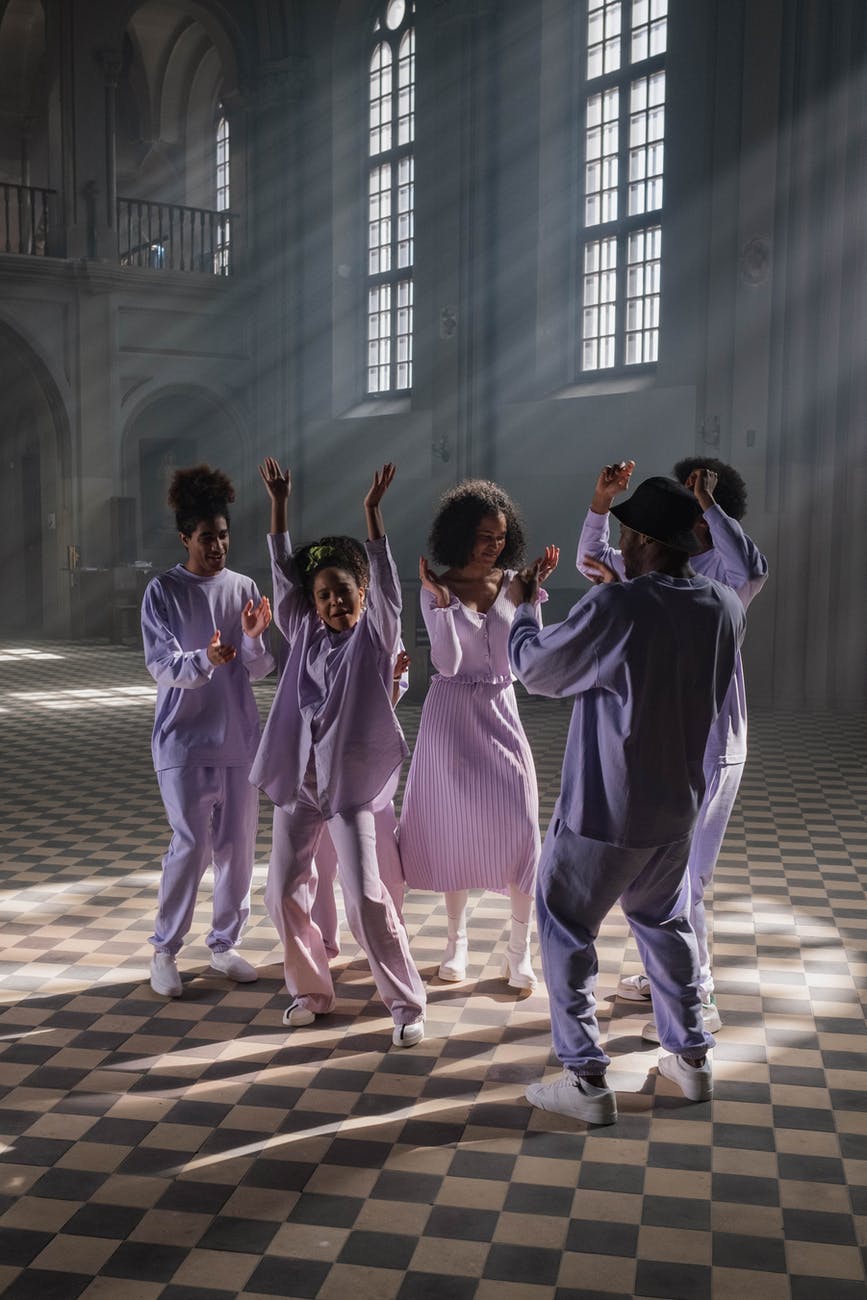
Photo by Pixabay on Pexels.com

In other words, “Brokenness is next to Godliness; and Godliness leads to Perfect cleanliness.” Our sins cannot be covered up or cleaned up by our efforts; they can only be washed away by the Blood of the Lamb. Only through Him can we become truly clean.

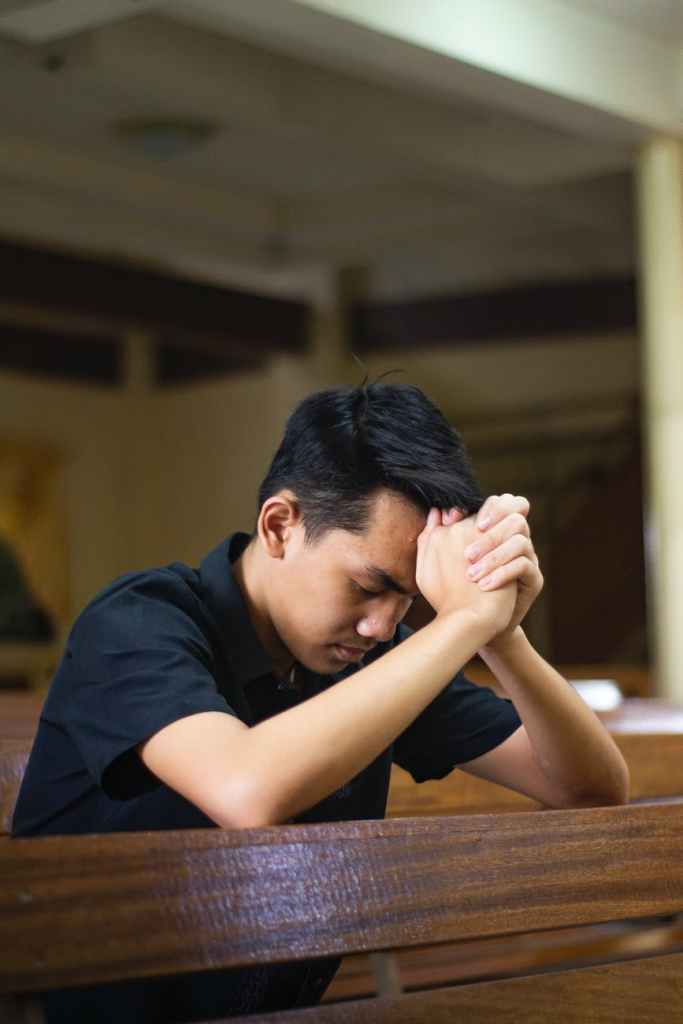
When we come before God in prayer, let us come, not just with clean hands, but with hearts that are open and tender, willing to listen to His words of wisdom, and follow in His footsteps.

Ceaseless Praise

Have you ever thought that right now, somewhere in the world, someone is singing praises to God? Someone is praying somewhere in the world at every moment of every day. There is not a solitary silent moment in the universe, where God is not receiving the worship He deserves. In fact, Jesus told some angry Pharisees, when they asked Him to rebuke the people of Jerusalem, that if they (the people who were shouting praises) were to be silent, the very rocks would cry out! (See Luke 19: 37-40)

Photo by Joshua Brits on Pexels.com

In fact, “the whole earth is full of His Glory” (Isaiah 6:3). From the smallest insect to the giant creatures in the seas; from the smallest of dust motes to the stars in the galaxies, all of creation sings, shouts, shines, and testifies to the Majesty of God.

Photo by Petr Ganaj on Pexels.com

We don’t hear this constant praise. Nor do we smell the aroma of constant prayers that rise up “like incense” to the throne of Heaven. But our prayer should be that Jesus would be as close as our every thought, word, and action throughout the day; that in everything we think, say, and do, we would be participating in the eternal and glorious worship of the One who is worthy. And that our prayers and praise would blend in harmony with all the others in the great “Song of the Redeemed.”

Photo by cottonbro on Pexels.com

Prayer and praise should not be a single activity undertaken for a minute or even an hour a day. It should be as natural as breathing or blinking. And while we are in the flesh, and may not physically “pray without ceasing,” (1 Thessalonians 5:17) we can ask God to “take our moments and our days–let them flow in ceaseless praise!”

Photo by MART PRODUCTION on Pexels.com

Praying with Confidence

What does it mean to pray with confidence?

Does it mean that we pray with the sure knowledge that God will give us whatever we ask for?

Photo by Andrea Piacquadio on Pexels.com

22 Then Jesus said to the disciples, “Have faith in God. 23 I tell you the truth, you can say to this mountain, ‘May you be lifted up and thrown into the sea,’ and it will happen. But you must really believe it will happen and have no doubt in your heart. 24 I tell you, you can pray for anything, and if you believe that you’ve received it, it will be yours.

Mark 11:22-24 (New Living Translation)
Photo by Pixabay on Pexels.com

This is a difficult concept– and one I don’t fully understand. But I do believe the following:

  • “Confidence” means: “A trusting, or reliance; an assurance of mind or firm belief in the integrity, stability or veracity of another, or in the truth and reality of a fact.” (from studylight.org) Our trust is not in the power or our own words or in our worth, but in the power of God’s will to act justly, righteously, and in His sovereignty. I cannot ask God to act against His will and have confidence that He will give me what I ask for. Even if I ask for a miracle– like moving the mountain into the sea–I must trust that God will do it because it is part of His plan; not because God must obey my whims.
  • The more I learn of God’s power and love– by seeking Him, following Him, and experiencing His Grace–the more I will ask in confidence and assurance.
  • The more I seek my own will and ignore God’s wisdom, the more I will ask in arrogance and/or doubt.
  • Confidence will change the tone of our prayers from beseeching to believing–instead of asking for an outcome we don’t really expect, we will ask expecting that God already knows the outcome that is best.
  • Confidence doesn’t need immediate results. That mountain may not be moved in an instant. That doesn’t mean that it won’t be picked up and thrown into the sea–perhaps in our lifetime; perhaps in a year; perhaps in a thousand years. We sometimes trust in God’s power and willingness, but we forget to trust His timing.
Photo by Michelle Leman on Pexels.com

We can pray in confidence. In fact, we must learn to pray with confidence! And we can be confident that it will happen!

Photo by Ian Panelo on Pexels.com

3-6 Every time you cross my mind, I break out in exclamations of thanks to God. Each exclamation is a trigger to prayer. I find myself praying for you with a glad heart. I am so pleased that you have continued on in this with us, believing and proclaiming God’s Message, from the day you heard it right up to the present. There has never been the slightest doubt in my mind that the God who started this great work in you would keep at it and bring it to a flourishing finish on the very day Christ Jesus appears.

Philippians 1:3-6 (The Message)
Photo by Alyona P on Pexels.com

We the People

Yesterday and today mark two important milestones in North America. September 16 is Mexican Independence Day, and September 17 is Constitution Day in the United States. On these days, people in our two countries celebrate some of the great things that can be accomplished by “we the people.” The founders of our nations were not perfect, but they fought and worked and came together to make “a more perfect union,” and a brighter future for their citizens.

All around the world, governments are instituted to protect the rights and lives of people– to protect them from danger, to allow them to interact in peace and safety, and to provide for “the general welfare” of all. But governments– even the best–are run by fallible people.

Photo by Hugo Entrepreneur on Pexels.com

The Bible tells a long and complex story of the ancient nation of Israel. Tracing its origins to a single patriarch (Abraham), the family grew to be a powerful nation, ruled first by priests and judges, and then by a series of kings. The nation split into two distinct countries, before being scattered and sent into exile. The story of the nation is chronicled (literally) in the books of 1 and 2 Samuel, 1 and 2 Kings, and 1 and 2 Chronicles. In the books of the prophets, the same message comes from God again and again–Israel and Judah have both fallen into the same idolatry and corruption that doomed the nations they had conquered in former times. Instead of seeking justice for all the people, and providing order and protection, the leaders had become drunkards, liars, thieves, and murderers. They betrayed their allies, made foolish treaties, oppressed the poor and helpless, and celebrated their own cleverness. “We the People” had devolved into “us versus them.” Worship of God had been replaced by worship of a pantheon of foreign gods–worship that involved ritual prostitution and human sacrifice. Family members and fellow citizens were sold into slavery, robbed and beaten, used and abused, and slaughtered–without remorse or fear of retribution. God’s warnings were followed by His justice and punishment, and the demise of both nations, as well as punishment for their neighbors.

Photo by u0404u0432u0433u0435u043du0456u0439 u0421u0438u043cu043eu043du0435u043du043au043e on Pexels.com

Israel’s story, while very detailed, isn’t unique in history. Instead, it is a case study of what can happen when the people abandon unity and the rule of law for division and corruption. It is what happens when “who we are” becomes more important than “whose” we are; when “we” are more important than anyone else–even God. Israel and Judah continued to be religious right up to the point where they were dragged off to exile. They brought offerings and sacrifices, sang songs, prayed, and memorized scripture. Their leaders assured them that God would protect them and continue to let them prosper as their enemies marched up to the gates of Jerusalem. They had not abandoned the worship of God– they had just added idolatry to it. They worshipped their own prosperity, they worshipped gods and goddesses of the harvest, of war, of wealth, and wisdom. They still thought God was great– but not necessarily Sovereign.

Who or what are we worshipping today? What “new” and additional principles have we added to our own Constitution? To the laws of the land? To our way of being good citizens in our respective countries? To the eternal Word of God? When we hear the phrase, “We the People,” does it bring to mind people who look and live differently than us? Does it bring thoughts of justice and unity? Does it humble us?

Photo by Life Matters on Pexels.com

King David, the second, and one of the greatest of Israel’s kings wrote: “Know that the Lord, He is God; It is He who has made us, and not we ourselves; We are His people and the sheep of His pasture.” (Psalm 100:3 NKJV) “We the People,” by ourselves, will scatter and fall into destruction, like sheep without a shepherd.

Blog at WordPress.com.

Up ↑