Praying for Happiness

A while ago, I was following a thread on Facebook. It was about good parenting, and the idea being discussed was about what a good parent would do to ensure their child’s happiness. Several of the people on the thread agreed that happiness was the highest priority, and that they would do anything to ensure that their child was happy.

Photo by Trung Nguyen on Pexels.com

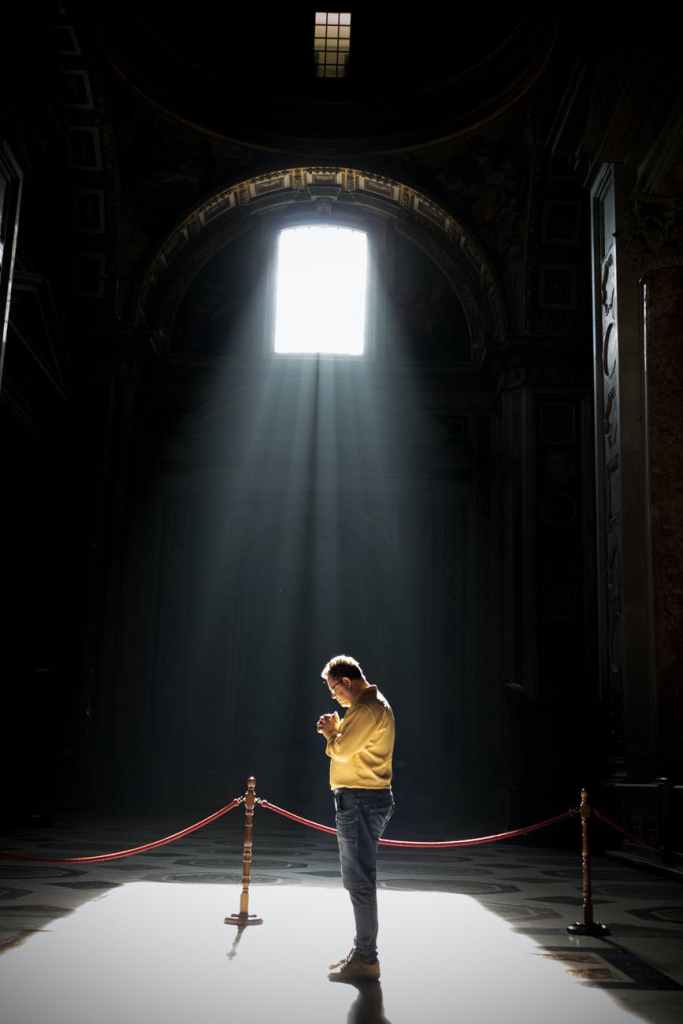
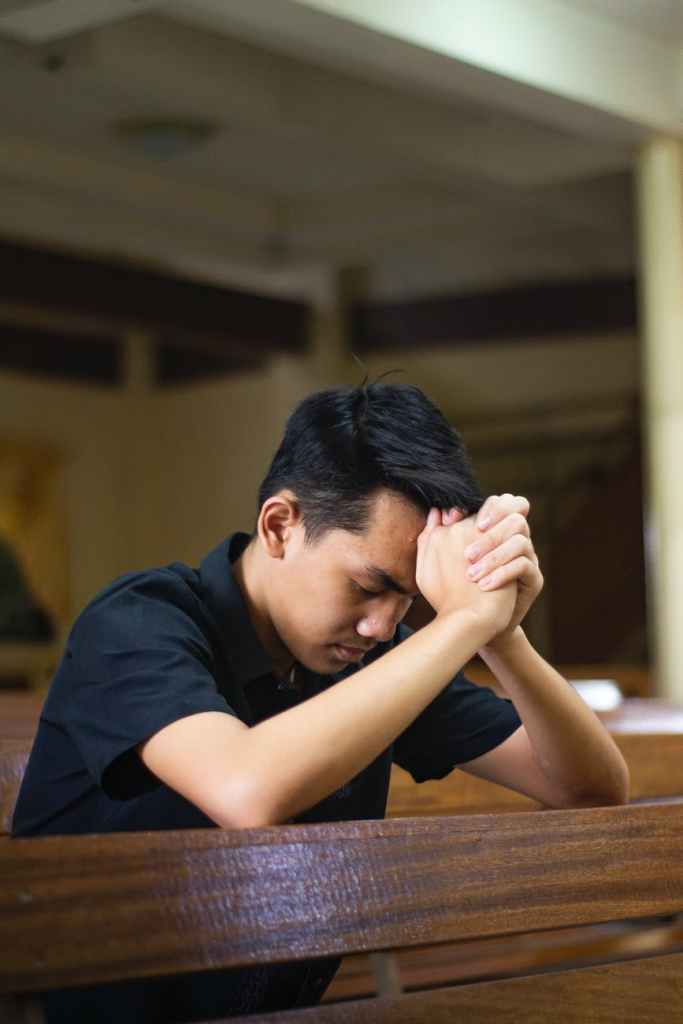
I disagreed, but I felt it was better not to argue as part of the thread. I never raised any children of my own, and threads on social media tend to pull out our gut reactions, rather than our studied ones. At first glance, it seems natural and good to want the people we love to be happy. I certainly don’t want my family and loved ones to be miserable! But is happiness the very best I can wish for– pray for? So often in life, true and lasting happiness is a process that involves going through struggles and periods of frustration and even failure. I don’t enjoy seeing loved ones struggling, but I want them to learn the life lessons that will help them become all they were designed to be.

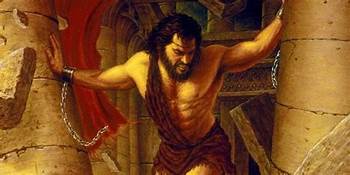
I think of the life of Samson (Judges 13-16). Samson was set apart from birth to be a Nazarite. During his childhood, his parents followed the rules set aside for such a designation. The Biblical account makes much of the rule about never cutting his hair, but there were other rules his parents likely followed as he was growing up, such as keeping him away from grapes, wine, wine vinegar, or any other fermented drink, and keeping him away from defilement by dead bodies. It’s never easy to be “different” when you’re growing up. I’m sure Samson had many questions, and moments of unhappiness as a child. But somewhere along the way, his parents seem to have made Samson’s happiness more important than his character development.

Photo by fabio.tsu on Pexels.com

Samson grew to be petulant and spoiled. He seemed to think he was entitled to whatever whim took his fancy. Now the Bible is clear that some of Samson’s desires were part of God’s plan to confront the Philistines, but Samson’s parents put up only a token resistance when he told them he wanted to marry a Philistine woman. At the wedding feast, Samson posed a riddle which exposed his lack of respect for his Nazarite vows. Not only had Samson killed a lion; he had come back later and eaten honey taken from the lion’s carcass– a defilement that broke his vow. Later, of course, he would use the unclean jawbone of an ass to kill a thousand Philistines in a single incident. Samson could have made an offering and renewed his vow, but we have no record that he ever did.

Photo by Pixabay on Pexels.com

The most famous story of Samson is his infamous liaison with a prostitute named Delilah. Though she does little to hide her intention to learn the secret of his strength and betray him to his enemies, Samson toys with her, lies to her, and finally reveals his sacred secret. Once his hair is cut, Samson loses his great strength and is captured by the Philistines and tortured. Only when he is blind, imprisoned, and shamed does Samson seek the Lord and ask for God’s blessing.

Photo by Sinitta Leunen on Pexels.com

Samson pursued a life of pleasure, and gave full vent to his lust, anger, and other strong emotions. I’m sure there were many moments of happiness in his life, but there were also moments of pain, tragedy, betrayal, and shame.

I think the story of Samson is full of lessons for us today. One of those lessons is that even when we are not faithful, God can still use us for His good purposes. God used Samson to judge the nation of Israel, and to bring punishment on the Philistines for their cruelty toward them. God could have disqualified Samson for having broken his vows time and time again, but God used even Samson’s weakness to highlight His strength.

But another lesson, I think is that God showcased exactly what can happen when we place happiness, pleasure, and ease ahead of everything else. Samson caused his own unhappiness and torture. There is no record of Samson bringing happiness to anyone else– only shame, tears, violence, and retribution. God caused Samson to be a model of all that the book of Judges is about– at the end of the book, there is a significant verse, “In those days, Israel had no king: everyone did as he saw fit.”

Photo by August de Richelieu on Pexels.com

I don’t want my family and friends to be “happy” at the expense of their character, or at the expense of others. I pray that they develop Love, Joy, Peace, Patience, Kindness, Goodness, Faithfulness, Gentleness, and Self-Control (Galatians 5:22-23). In the end, this will bring them a level of happiness that surpasses anything the world can offer.

Fast Forward

I’ve written dozens of blog posts about prayer, and very little about fasting. Fasting is a practice that is often coupled with prayer, but fasting rarely appears in my blog.

There are several reasons for this. I don’t make a practice of dedicated fasting, so I don’t feel comfortable writing about something I don’t know well. or practice often. I also don’t want to give fasting equal time or importance, because I feel it can become a substitute or even an obstacle to prayer if done for the wrong reasons.

Photo by RODNAE Productions on Pexels.com

The Lenten season is fast approaching, and it is a time when many people choose to fast, so I am stepping out of my comfort zone a little to give more time and effort to fasting (and discussing it here). Here are a few things I have found:

Photo by Marx Alexei Illaconza on Pexels.com
  • While we often think of fasting as going without food or water (or both), there are actually many kinds of fasting. Fasting simply means that we do without or set aside something as an act of obedience, reverence, contrition, or worship. Fasting should be done with the goal of getting closer to God, increasing our focus and our dependence on Him. When we fast, we are creating a “space” of dependence– separating ourselves from one thing to be available for another thing– namely prayer and worship. It isn’t about not eating, so much as not allowing food and drink (or other things) to call us away from time with God.
  • Fasting is Biblical. It was practiced by Biblical figures from Moses to King David, Ezra, Daniel, Nehemiah, Esther, and the entire nation of Israel! Jesus fasted and members of the early church practiced fasting as well. Fasting is encouraged, but not required. It is never prohibited, but there are several biblical warnings about improper fasting (see below).
  • For an excellent discussion (by people who have studied longer and know far more than I do), see: https://www.biblestudytools.com/bible-study/topical-studies/what-exactly-is-fasting-all-about.html or any number of other excellent blogs and websites, many of which are linked in the site I’ve listed.
  • Fasting is NOT meant to be an end in itself. There are many people who use fasting as a diet plan, or as an exercise in self-control. This is NOT biblical fasting. Whatever you are “setting aside” in your fast should be “filled” with prayer, meditation, and worship, and that should always be your focus. If you have health issues, a history of eating disorders or obsessive behavior, you should be very careful about fasting. Consider seeking advice or an accountability partner to help you remained focused on the real goals.
  • Fasting will not make you more righteous, or better than someone else who does not practice fasting. In fact, Jesus warned that when we fast, we should not do anything to call attention to the fact– no moaning or sighing, etc. Fasting isn’t about impressing others with our religious devotion. God knows our actions, but He also knows our heart.
  • Fasting is a commitment, and should not be taken lightly. If you decide to do a fast, and you’ve never done one, it’s best to start small and complete it, than to jump in headfirst and fail to keep your commitment. Not because God will be angry or disgusted– remember that God LOVES you and wants you to desire a closer relationship. But God wants each of us to grow to maturity. God will give us grace to do what He asks us to do; but He won’t honor our efforts to “outdo” Him.
Photo by Paulo Mu00e1rcio Dos Santos on Pexels.com

In taking a closer look at fasting, I am encouraged to do it more often. I have done short fasts, food fasts, and fasting from activities, and I can say that such practices often have surprising results. If you are planning to do any kind of fast for Lent, I pray that you will find it brings you closer to God and helps you in your own pursuit of prayer.

Photo by John Ray Ebora on Pexels.com

Whiter Than Snow

Winter has arrived full force in my part of the world– snow, falling temperatures, ice, and freezing winds make travel difficult and even dangerous. But snow brings about some good things–and one of those things is its color. The white of the snow helps reflect every small bit of light during the short, gray days of winter. When there is no snow cover, some of us can suffer from a condition called “seasonal affective disorder” (SAD). We don’t get enough exposure to sunlight, which can lead to depression, diminished immunity, and other health-related issues. And, while snow doesn’t contain vitamin D or create sunlight, it does reflect it and sometimes that is enough.

Photo by Maria Orlova on Pexels.com

I am enjoying the whiteness of the new-fallen snow as I write this. Even though it is late afternoon, and normally, it would seem dark by now, the snow makes it lighter; I can actually see better because of the snow! (Of course I couldn’t say this if I were driving and the snow was blowing about or covering my windshield…)
Many people in my community are rejoicing in the snow and cold– it means they can go skiing, snowmobiling, sledding, and build snowmen and snow forts. Some of the children (and their teachers) are hoping to have a “snow day” today. And some people are hoping to make some money from shoveling or plowing driveways and parking lots!

Photo by Jill Wellington on Pexels.com

There will be many people praying for snow; and others praying for the snow to end! And in a few days, the pure white snow may end up dingy and gray from being exposed to unclean air particulates, vehicle exhausts, smoke from chimneys, animal tracks, tire tracks, boot tracks, and trash. But for now, it has a purity and beauty that brightens the spirit.

Photo by Josh Hild on Pexels.com

God uses the imagery of snow to speak of His Salvation. In Isaiah 1:18, He says, “Come now, let us reason together, says the Lord: though your sins are like scarlet, they shall be as white as snow; though they are red like crimson, they shall become like wool.” The psalmist David says to the Lord, “Purge me with hyssop, and I shall be clean; wash me, and I shall be whiter than snow.” (Psalm 51:7) And the Apostle John writes, “And everyone who thus hopes in Him purifies himself as He is pure.” (1 John 3:3)

I don’t feel particularly pure most of the time– I know my past; I know my own failings, and the times I have NOT sparkled, or reflected God’s perfection. And God’s salvation doesn’t ignore any of that. God doesn’t declare that I have never sinned–instead, He takes the dirt, shame, and guilt that I deserve, and swallows it up in His grace. In its place, He gives me a renewed mind, a clean heart, and the power to make choices that reflect His heart and mind.

In a “SAD” world that is cold and gray, depressed and weak, God offers redemption that can make us purer, lighter, and fresher than new-fallen snow. We can reflect His light to a darkened world. And, even though the world is filled with contamination and filth, God has the power (and the desire!) to purify us, protect us, preserve us, and give us a sparkling purpose.

Photo by David Dibert on Pexels.com

Celebrate Life

My husband has celebrated his birthday this week, and it reminded me of some of the many ways we celebrate life. Before a baby is even born, we share special moments of excitement–sonograms, gender reveal parties, baby showers, picking out names, feeling little “kicks” and movements in the womb. We give gifts and blessings when the baby arrives. We take baby photos and commemorate all the “firsts”– first tooth, first steps, first words, etc. And each year, we remember. We send cards and other birthday greetings; we give gifts and have parties with special cakes and songs and party hats. We invite others to celebrate, as well.

Photo by Jonathan Borba on Pexels.com

Not everyone celebrates birthdays, and some people make a mockery of their advancing age, but most of us think birthdays are a big deal, and worth celebrating. LIFE is a big deal. Life is a sacred gift, and we should cherish every moment of it. We celebrate the events of life– achievements, milestones, graduations, new jobs, promotions, relocations, marriages, anniversaries, retirements, and much more. Celebrating life is an industry– cards, balloons, T-shirts, reception halls, catering, special clothing (wedding dresses, tuxes, caps and gowns, etc.), special foods, party favors, confetti, gift items– we spend a lot of time, energy, money, and even “life” celebrating our lives.

Photo by Anna Shvets on Pexels.com

And we also celebrate life at its end. Even as we grieve the loss of loved ones, we seek to memorialize their lives. We hold funerals, publish obituaries and memorials, erect tombstones, build monuments, and write tributes and biographies. We celebrate the achievements, memories, and legacies of those who pass on. Their lives mattered. They don’t cease to matter when death comes. For the Christian, there is a special reason to celebrate the end of life– because it is NOT the end! Imagine the celebration of Life that will never end–the celebration of eternity with the Author, Giver, Redeemer, and Sustainer of Life!

Photo by nappy on Pexels.com

Many people have wished my husband an happy birthday this week, and they’ve offered prayers and good wishes. Today, I will be praying for many people who are celebrating a birthday. I will offer up a thanksgiving for their life, and celebrate the One who created each unique person on today’s list.

We’re going through a journey that has focused on worldwide death– fear of death and disease, despair, anger, desperation, and hopelessness. We shouldn’t ignore the reality of death around us, but we mustn’t let it overwhelm the life that is within us. Life is worth celebrating–ALWAYS!

Esprit de Corps

Photo by Paulo Mu00e1rcio Dos Santos on Pexels.com

It is important to spend time alone with God, but it is also necessary that we spend time with others. This may not always be possible in a physical sense. This past year of pandemic and lockdowns has kept many of us apart. Even church services, Bible study groups, and “fellowship” events have been limited or suspended. But we have other ways of being “together.” Phones, internet, and letters are just a few of the ways we can stay in touch. And prayer is another. This is nothing new, but I’ve been reminded recently that prayer is more than just a personal pursuit. It is also a corporate pursuit. We do not live alone, and we do not pray in a vacuum.

It can be tempting to feel isolated and even apathetic when we are forced by circumstances to spend more time alone. We often succumb to the lure of “escapism”– binge-watching, gaming, or other forms of mindless entertainment to pass the lonely hours. It is not “wrong” to relax or be entertained for a time, but we can lose sight of our purpose and “sleep-walk” through our days, losing opportunities to connect with others and be a blessing (and be blessed in return)!

Photo by Kampus Production on Pexels.com

The term, “esprit de corps” is used by tight-knit groups– military units, dance and theatre groups, etc.–to describe their unity, devotion, and camaraderie. It should be natural for us to apply this same phrase to Christ-followers. After all, we are the “corps”– the body– of Christ! To pray for and with one another should be a given, and a “core” feature of the Church. To stay in touch, to build up and encourage one another, to forgive, accept, and protect one another, to defend the honor of the Church and ALL its members– this should go without saying. But I’m saying it here, because I see so many examples of division, in-fighting, finger-pointing, shaming, and other nonsense. And I’m saying it because I see so many examples of people like me, who withdraw, stay silent, and allow ourselves to become weary and jaded, instead of reaching out and pulling together. (Hebrews 10:23-25)

Photo by Public Domain Pictures on Pexels.com

I pray everyday for people from around the world– but am I willing to pray for those down the street who hurt my feelings last week? Am I willing to risk reaching out to call or write to someone who may be discouraged, or having doubts and struggles? Do I pray with gusto; eager to lift others up and bring blessing to them, even in difficult times? Do I cheer on fellow believers, even if we disagree about politics or music? Do I champion the Church, even when some believers or even congregations bring momentary shame to the name of Christ?

“Esprit de corps” is not a phrase of apathy, or discouragement. It is not just an idealistic motto. It is not a phrase of grudging duty to a group or idea. It is bold, and forward-looking. It is united and strong. Just as the Body of Christ must be in the days ahead.
For more info on corporate/group prayer, see https://www.compellingtruth.org/corporate-prayer.html

Photo by Luis Quintero on Pexels.com

BTW– There are several terrific prayer groups online–Groups that pray for your requests; groups that share requests locally; groups that pray globally for healing or intercession; groups that will connect you to local churches or Bible studies.
*As with any online activity, please be careful. Not every group that calls itself “Christian” or talks about prayer is legitimate. Avoid sites that seek to get personal identifying information, or ask you to send a fee to join their group. Many local churches will be happy to add you to their “prayer chain” to pray for (and/or encourage or visit) people in your own community. Other church groups may have “Zoom” or “Skype” prayer meetings, or other corporate prayer opportunities.

My Eyes Have Seen Your Salvation!

Tomorrow marks the Christian observation of Candlemas, or Presentation Day. The Gospel of Luke (Luke 2:21-40) recounts the presentation of the infant Jesus at the temple. This was a purification ritual, and it involved bringing a small sacrifice (https://www.biblegateway.com/passage/?search=Leviticus%2012&version=ESV) Luke records the sacrifice as “a pair of doves,” underscoring that Joseph and Mary were unable to afford a lamb for the sacrifice. Kind of ironic, given that Jesus was the “Lamb of God.”

Photo by Pixabay on Pexels.com

This would normally have been a quiet ceremony. The sacrifice would be offered. The priest might say a few words of blessing and purification for Mary, and spoken of the traditions of Israel and the redemption of the firstborn son. There might have been a few other “new” parents coming to the temple that day– or not. The priest would have gone through the motions and left the new parents to attend to his other duties of the day.

Photo by nappy on Pexels.com

But on this occasion, Mary and Joseph were surprised by an elderly gentleman, who came up to them and took their son in his arms as he praised God in song:


“Sovereign Lord, as you have promised,
now dismiss your servant in peace ,
For my eyes have seen your salvation,
which you have prepared in the sight of all people,
a light for revelation to the Gentiles
and for the glory of your people Israel.”

Luke 2:29-32 (NIV)
Photo by cottonbro on Pexels.com

We know nothing about Simeon, other than what Luke tells us– He was a man from Jerusalem, devout and religious, who was waiting for the Messiah to be born. He had been told that he would not die before the Messiah appeared, and he had been led by the Holy Spirit to go to the temple on that day.After his song of praise, Simeon blessed Jesus’ parents and spoke prophetic words. Not comforting words about glory and redemption, but rather words of truth and warning.

After the surprising visit from Simeon, Joseph and Mary had another encounter; this time an old prophetess named Anna. Anna was a widow living in the temple, worshiping, praying, and fasting there daily. As soon as she saw the small family, she approached and she too offered blessings, praises, and prophetic words.

Photo by Nashua Volquez-Young on Pexels.com

Simeon and Anna weren’t the only other people in the temple courts that day. They weren’t high-ranking church officials or priests. But they were the only ones who recognized in this tiny child the wonder and majesty of God Almighty, and His Messiah.

Photo by Jeswin Thomas on Pexels.com

It was an ordinary day; an ordinary Jewish custom; an ordinary occasion. It went largely ignored by most. But for Simeon and Anna (and for the gospel writer Luke) it was a revelation.

I don’t expect Candlemas 2021 to be as momentous as that first presentation day. But I hope that we will have eyes and hearts like Simeon and Anna– ready to see the Salvation of the Lord, to recognize it right before our eyes in a hundred seemingly ordinary moments. May we be ready to step forward in praise and share the glory and wonder with others around us.

Photo by Pixabay on Pexels.com

Chariots of Iron

I was reading from the book of Judges today, and a curious phrase jumped out at me. The entire book of Judges is filled with the failure of the people of Israel to fully claim their promised inheritance from God. Generation after generation passes, with a cycle of sin, enslavement, and deliverance as God raises up various judges and heroes, like Gideon, Deborah, or Samson.

Already in chapter one, there is a hint of the trouble to come. The book begins with several successful battles after the death of Joshua. The people of Israel consult the Lord, who fights with them in several key battles. But in verse 19, it says: “The Lord was with the men of Judah. They took possession of the hill country, but they were unable to drive the people from the plains, because they had iron chariots.”

Say what? The Lord was with the men of Judah– the LORD! They had taken possession of the hill country– rough terrain that would have been filled with natural barriers, rocky fortresses, and literal “uphill battles.” They had destroyed massive cities like Jericho less than a generation before. They had defeated armies far larger and better positioned. They had defeated giants! And now, suddenly, they are “unable” to drive the people from the plains– because the enemy had chariots of iron?

Photo by van4er ivan on Pexels.com

https://www.biblestudytools.com/commentaries/gills-exposition-of-the-bible/judges-1-19.html I think this commentary says it well. The chariots of iron became the excuse for the Israelites’ unwillingness to obey; to trust in God’s strength instead of their own. After all, it wasn’t that long before in their history when God had drowned the entire Egyptian army, including all its chariots, in the Red Sea.

I don’t think it was about the chariots of iron. I think it was about the plains. I think sometimes it can be more difficult to fight on “the plains.” When God sends us on an “impossible” mission, we must face our own fears and acknowledge our weaknesses– we KNOW we cannot do it in our own power. But when we face an enemy on “equal footing,” we are tempted to trust in our own resources– the toughness of our armor, the skill of our generals, the speed of our horses, and the superiority of our weapons. We hope and expect God to fight for us where we cannot hope to win alone, but we don’t ask for God’s help or protection in areas where we believe our own strength should be sufficient. Israel had a fine army– seasoned veterans of battle. If they HAD iron chariots of their own, victory might have been expected– with or without God’s divine intervention. But victory eluded them, because they didn’t finish the fight!

Photo by Sora Shimazaki on Pexels.com

We do the same thing today–we fail to march into battle because the enemy has “chariots of iron.” Maybe they have more social status, more political or economic power then we have. Perhaps we see that they have the means to make our lives painful “on the plains.” We see their arrogance, and their wealth and success, and we let ourselves be intimidated. We know that God has promised never to leave us or forsake us, but He has not given us chariots of iron to match those of the enemy. We don’t pray for the courage to face their chariots, or the wisdom to trust that the battle belongs to the Lord. Instead, we make excuses for not fighting the battle at all.

The rest of the book of Judges is filled with war, slavery, corruption, death, and evil. The very last verse sums it up: “In those days Israel had no king; everyone did as he saw fit.” (Judges 21:25)

Photo by Ian Panelo on Pexels.com

Lord, help me to be courageous, and humble. May I always trust in You above all–especially above chariots of iron, and weapons of mankind.

The Right Side of History

My nation– and even my community–is divided right now. People argue, accuse, blame, and reject their neighbors because of political beliefs. And they defend the “rightness” and righteousness of their own beliefs–even when they must compromise on other beliefs and teachings of the Bible. Some people use the phrase “I’m on the right side of history..” or “History will prove us right.” And they cross their arms, jut out their chin, and stand smugly convinced that they have won the argument.

Photo by Vera Arsic on Pexels.com

But history books are written by human beings– and usually those human beings who are in power. “History” is constantly in flux– some things that were deemed “virtuous” or “necessary” in the past are looked on with horror today. Times change; societies change; customs and morals change.

Photo by Wallace Chuck on Pexels.com

When we justify our politics, or our actions to others in this way, we are really saying, “whatever I am doing, saying, or supporting today will be judged “righteous” by future generations. And that may be so. Those who advocated for the abolition of slavery in America over a century ago should surely qualify as people who were on the “right side of history.” Yet, in the past year of rioting across my country, many of the statues that were toppled, and spray-painted, and chiseled, and marred were of abolitionists. Their moral prowess notwithstanding, they were seen as “old, white men” in old-fashioned clothing, whose lives and legacies were long forgotten, or confused with other “old, white men” who had supported slavery during the same time period. We delight in “debunking” cherished histories, toppling our heroes, and rewriting traditions. And we often compare our “struggles” to those of previous generations, even if the comparisons are skewed or largely non-existent. And in our fight to push forward a particular narrative or policy; in order to “take back” a certain position or tradition, we often lose our moral compass, believing the lie that “the end justifies the means” or that “might makes right.”

Photo by RF._.studio on Pexels.com

In order to be on the “right side of history” today, people tend to make certain compromises– regardless of what “side” they choose. Political parties tend to support diverse causes and groups. Whatever good policies they promote, chances are they also promote policies and beliefs that are in direct conflict with scripture. Words like “compassionate,” “wholesome.” “traditional,” “patriotic”, “liberal,”and “progressive” may sound noble, but they often mask actions and policies that are corrupt, wicked, and destructive.

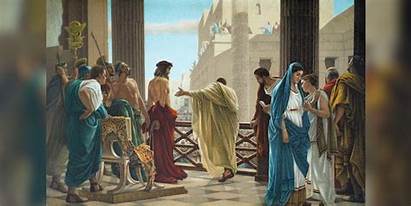
As Christians, we must be careful not to make “comfortable compromises” and to avoid righteous-sounding justifications. Just as importantly, we must be careful when confronted with labels and accusations, not to over-react or respond with bitterness or arrogance. If someone accuses me of being “hateful” or “gullible” because of my political beliefs, it is tempting to puff up and respond in kind. No one likes being judged. In fact, we are told in scripture NOT to judge, lest we be judged in kind. (Matthew 7:1-6) Jesus was often misunderstood, hated, falsely accused. He went to the cross after being found innocent by Pilate– who compromised by offering the Jewish people a choice of the innocent Jesus or the condemned Barabbas, instead of commanding that Jesus be released. In spite of his compromise, Pilate is not considered to be on the “right side of history” for his political masterpiece.

In fact– we are ALL on the WRONG side of of history! No matter how righteous our beliefs, ALL have sinned and fall short of the glory of God (Romans 3:23). Our allegiances, our morality, our political affiliations– none of them will save us from the just judgment of God, or the wavering judgments of future generations. We need, more than ever, to hold fast to the truth, and to seek God’s wisdom. When the final “history” is written, I want to be on God’s side!

Photo by Ray Bilcliff on Pexels.com

Blessings Come Down…

I’ve been reading through the books of Genesis lately, and I was struck anew by the story of the Flood. God caused it to rain for 40 days and 40 nights, and the floods raged for 150 days (See Genesis 7). But the description of the flood does not focus only on rain– instead, it talks about God opening the “springs of the great deep and the floodgates of Heaven” (v. 11).

Photo by GEORGE DESIPRIS on Pexels.com

There are some who argue that before this time, there had been no rain on the earth (see Genesis 2: 5-6). The Bible is not clear whether there was rain after Adam and Eve were expelled from the Garden of Eden, but it appears that rain was unnecessary in the wonderful Garden itself. God had provided rivers and springs to provide water, and there were mists that rose and settled. If this was still so in Noah’s time, then the falling rain would have been terrifying in itself. Things that fall from the sky can inspire both fear and praise.

Photo by Pixabay on Pexels.com

Rain is generally considered a blessing–we need rain in its season, in showers of good quantity, to water crops, provide nourishment for trees and soil, and to replenish springs, pools, lakes, etc. And rain is part of the water cycle…moisture evaporates and rises (like the mists of old) into clouds, where it is held in storage until it rains back down to the earth. Water is a resource, but it is meant to be replenished, renewed, and reused. “New” water is not created, so much as recovered from steam or taken from its current source.

Photo by Jens Johnsson on Pexels.com

Not so with God’s blessings and His mercies. They are “new every morning.” (Lamentations 3:22-23) He sends them down like rain or snow, letting them fall in refreshing showers, reminding us that even when we are separated from God, He still loves us, watches over us, and delights to lavish His gifts on us.

Photo by Velroy Fernandes on Pexels.com

In return, we send up praise. The prayers go up, and the blessings come down. Which reminds me of a song we used to sing in Sunday School.

http://childbiblesongs.com/song-21-wise-man-built-his-house.shtml

God sends rain–God sends blessings. Whether we feel blessed often depends on where WE are. Are we safe in the Ark? In a house built on the solid rock of faith and dependence? Or are we living in perilous ignorance of God’s power to save and sustain us?

Photo by Bibhukalyan Acharya on Pexels.com

And God Saw That It Was Good…

Throughout the story of Creation, a certain phrase gets repeated– “And God saw that it was good..” God’s purpose and will are always to see the good. At the end of the creation process, God saw that it was “very good.” He placed mankind in a garden filled with goodness, peace, safety, plenty, and promise– a garden filled only with Good.

Photo by Cindy Gustafson on Pexels.com

The one tree that was forbidden to mankind was the Tree of the Knowledge of Good AND Evil. Humans chose to know and see and experience evil in an effort to be “like God.” We still recognize Good; but now we are surrounded by evil– lies, greed, hatred, selfishness, bitterness, addictions, compulsions, disease, destruction, and death. We cannot go back to the beginning. We cannot just close our eyes and deny, ignore, or excuse evil in our midst. And we cannot control the consequences of our evil choices. We cannot stop death or reshape the past.

Photo by Harrison Haines on Pexels.com

But we must make the choice to look for the Good– to look to the author and creator of all that is good, and true, and noble, and holy. It can be very difficult to do. The voices of this world will continuously call out all that is bad– all our past hurts and present difficulties; all our guilt and shame; everything that is ugly, diseased, unjust, lop-sided, dying, and ruined. And our knowledge of good AND evil will tempt us to justify evil means to “good” ends…

Photo by Karolina Grabowska on Pexels.com

God, who sees the end from the beginning, has looked through time and space, and pronounced His creation “Very Good.” God who redeems and resurrects, renews and transforms, has promised to make all things new in His time. God not only has the knowledge of Good and Evil– He has the power over both. Our efforts to find Good on our own will end in heartache, failure, guilt, and shame. God knows we cannot redeem our own actions, let alone the legacy of evil we’ve inherited from the past. But the Good News is that He has done it for us! Just as He saw that everything was “Good” in the Garden of Eden, He sees the end result of His redemption– and it is “Very Good.” We don’t have to keep trying and failing to achieve what only God can do. We DO have to trust in God’s ability and His willingness to keep His promises!

Photo by Evgeny Tchebotarev on Pexels.com

Through prayer, we carry all that is wrong to the One who can make it all “right.” And, through prayer, we praise God for all the Good– the good that God has created in the past; the good that we choose to see in the present; and the good He has promised that we cannot yet see.

Photo by Edu Carvalho on Pexels.com

Blog at WordPress.com.

Up ↑