I am passionate about pursuing a relationship with Jesus Christ. To that end, I want to share my journey in learning more about prayer. I am a former teacher and librarian. I love to read, write, share awful puns with friends, and share the joy that comes from trusting my loving Savior.
I’m really sick of hearing about shoes in the news lately. But, surprisingly, I think it’s time for a brief word about shoes— from a Biblical perspective.
The Bible has a lot more to say about shoes than most of us realize. Way back in Exodus, when God called Moses from the burning bush, He commanded Moses to take off his shoes. Later, in Deuteronomy, the Israelites are reminded that during their years of wandering, their shoes did not wear out– God took care of even the smallest and lowliest of details in providing for their needs in the wilderness.
Boaz secured the right to marry Ruth through an old ritual involving an exchange of sandals. The prophets used shoes to indicate the coming exile, and the need for people to be prepared to leave their homeland.
In the New Testament, John the Baptist declares Jesus’ superiority by saying that he (John) is not worthy to latch Jesus’ shoes! And the Apostle Paul includes shoes (or sandals or boots) in his list of spiritual armor, asking us to wear on our feet the readiness of the gospel of peace (Ephesians 6:15). A Christian’s shoes are to be used to bring good news and peace– not anger, protests, and divisiveness.
Shoes are meant to serve a useful purpose. They protect our feet from surfaces that are hot, cold, wet, dusty, or rough. They provide traction, allowing us to start and stop moving on pavement, gravel, rocks, and flooring. Some shoes even provide arch support so we may stand and walk for hours with minimum damage to our bones and nerves. Shoes allow us to walk farther, run faster and with more confidence, and stand firm.
The most ridiculous thing about all the fighting over a shoe’s ad campaign is that it’s not about the SHOE–and no one is entirely clear on what it IS about– is it about race, police, injustice, patriotism, lack of patriotism, residual guilt over slavery, respect (or lack of respect) for military and/or rescue personnel, the NFL, Black Pride, White Privilege, income inequality, all of the above, something entirely different? Mostly, it seems to be about anger, hurt feelings, hatred, and generic outrage.
Lord, from my head to my toes, I want to bring peace, hope, and love to this world in YOUR NAME. Help me not to be blinded or distracted by all the world’s empty substitutes. Let me wear the shoes that make my feet ready to bring your gospel of peace and reconciliation to others. May I walk and run and climb and stand in Christ’s name and for His sake. Amen.
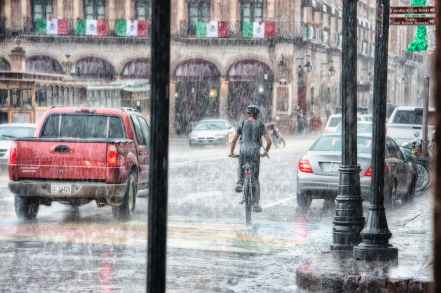
We’ve had a lot of rain lately– torrential bursts that turn our street into a river for a few minutes, before running into the sewer drains. In that time, many small objects come floating by our apartment– fallen leaves, pebbles, cigarette butts, discarded plastic spoons, candy wrappers, etc. The swift waters propel them from wherever they had been– someone’s drive, the alley, the parking lot–past houses and stores and toward the drains. Some of them end up clogging a drain, forming a small pile of trash where there was none before.
The opposite scenario is happening along several coastal areas, where debris is washing up from the ocean and landing on beaches, clogging up deltas and salt marches and having a terrible impact on the environment.
Flotsam and jetsam–the terms come up occasionally in literature or movies. There are characters in Disney’s “The Little Mermaid” with those names. There is a chapter in Tolkein’s “Lord of the Rings” Trilogy (the ninth chapter of the first book of The Two Towers, for purists) titled “Flotsam and Jetsam”. There is even a band by that name. They are almost always used in tandem, and most people use them interchangeably.
But there is a difference. Flotsam is considered debris that ends up in the water by accident, as in the case of a shipwreck. Jetsam is something deliberately thrown overboard or “jettisoned”. Legally, flotsam can be reclaimed by its original owner, while jetsam can by claimed by anyone who finds it. more about flotsam and jetsam from NOAA.
Most of what I’ve seen floating by this week is neither flotsam nor jetsam– it’s merely garbage. And that is what is causing so many problems along the coastlines, as well. Our lands and oceans (and our lives, too) can easily get overrun by waste and packaging and excess. We fill our lives with things that do not have any good purpose, and even if we dispose of them, they can come back to haunt us or hurt others down the road (or on another coast).
Today, I want to pray that God would continue to teach me to find my satisfaction in Him, and to watch out for spiritual flotsam and jetsam:
Flotsam– those things, people, habits, beliefs, promises, warnings, etc. that get washed overboard or lost along the way. May God reclaim relationships, help me relearn good habits, and restore joy in my salvation (Psalm 51:12)
Jetsam– those things I need to jettison–bad relationships, bad habits, faulty thinking, pride, clutter, etc. In His power, and with His help, I need to cast such things aside, or better yet, put them to death and bury them, never again to be reclaimed.
17 As iron sharpens iron, so a friend sharpens a friend.
I’m not really sure why this single verse, this single idea, has been rattling around in my mind lately, but I’ve taken a week off from doing the blog, trying to regroup and refocus, and yet this is the phrase that keeps coming back. So here’s what I’ve been thinking:
Iron –God uses a lot of imagery, analogy, parable, and metaphor throughout the Bible. What does this image suggest? Iron is hard. Iron is used for tools and (in Bible times) weapons. Iron is strong. Iron is forged in the fire. Iron being sharpened can bring out sparks. Iron crafted by a master blacksmith can be forged, shaped, smoothed, hardened, and, yes, sharpened.
God calls us to be useful– light, salt, vessels, iron, hands–we have purpose; we have work to do during our time on earth. Sometimes, that work calls for us to be steadfast, immovable– like iron. But iron that is not being used can become brittle, or rusty, and lose its edge.
“Iron sharpens iron“– We don’t always use iron to sharpen iron– sometimes we use honing stones or grinding wheels or even strops. But we don’t use cheese to sharpen iron– it won’t work. We don’t sharpen it with paper or “positive energy” or a block of wood. How are we staying “sharp”? Do I make an effort to sharpen my skills, my knowledge, my service, my body, mind, and spirit? Am I using the right method and materials to stay sharp?
Who or what do I turn to when I want sharpening? Do I have friends who keep me accountable (and vice versa)? Do I even WANT to stay sharpened and ready for service? Or do I serve without guarding my edge until it becomes dull and useless?
Iron sharpens iron– but not always. Sometimes iron blunts iron. Sometimes it cuts away at it. Sharpening is not accomplished by just banging pieces of iron together randomly. There are circumstances, habits, people, or activities that try to chip away at my surface, that try to crush or bend or destroy. There are others that are not made of iron; they cannot help me stay strong and sharp. I need to be deliberate and careful about what and who I include in the sharpening process. I also need to be as deliberate and as careful about who I “sharpen”. We are here to live, and work, and build relationships together. But I need to learn when and how to “sharpen” others in my life. Otherwise, I can cause great damage to others and to my own soul.
What can I do to keep sharpened and help others stay sharp?
Pray. I don’t have answers, I don’t have the power to stay sharp on my own. But God is the one who can give us wisdom, power, and send us all we need (2 Peter 1:3) Also, seek out a prayer partner or prayer group.
Get involved in Bible Study– seek out a Bible Study group or an on-line resource where you can ask questions, have meaningful discussions, and share insights.
Seek out “iron” friends– friends who will hold you accountable, who will offer support, but also share their own struggles. We all have friends who fill one or the other of these roles, but seek out friends who are not merely takers or givers, but true brothers and sisters in the faith.
Don’t run away from challenges, “tough” questions, and earnest discussions–that doesn’t mean that we need to get pulled into senseless arguments, either; but we are disciples— that’s the same root word as discipline! We need to come out of our comfortable corners and exercise our faith.
22 And they came to Beth-sa′ida. And some people brought to him a blind man, and begged him to touch him. 23 And he took the blind man by the hand, and led him out of the village; and when he had spit on his eyes and laid his hands upon him, he asked him, “Do you see anything?” 24 And he looked up and said, “I see men; but they look like trees, walking.” 25 Then again he laid his hands upon his eyes; and he looked intently and was restored, and saw everything clearly. 26 And he sent him away to his home, saying, “Do not even enter the village.”
Have you ever wondered why certain stories and events are recorded in the Bible while others are not? Scholars and theologians have been trying to make sense of this story for centuries. Why did Jesus spit on the man’s eyes? Why did He do the healing in two stages, when He had the power to heal the man instantly? Why did He grab the man’s hand and lead him out of town? Why did He tell the man not to enter the village on his way home? We are left with dozens of questions and no definitive answers.
This is not the only gospel story (or Biblical story for that matter) that raises questions and includes inexplicable elements. In fact, many people, wanting to discredit the Bible, point to stories like this as “proof” that the Bible is not “true”; there are too many unanswered questions, inconsistencies, gaps and omissions. Why is God silent for hundreds of years between the prophets and the gospels, or why do we have no account of Jesus’ teen years? Why are there stories of some of the Judges, and mere mentions of others? Why did some writings become “canon” and others became apocryphal or even heretical? For my part, I find such stories to be proof that the Bible IS inspired by God– Truth really is often stranger than fiction!
I don’t intend to try to answer all the unanswered questions, but since I think that ALL scripture is inspired by God, I’d like to look at what this passage might have to say about prayer, sight, and walking with Christ.
First, this story comes about because, as Jesus is coming up to Bethsaida, he is approached by a group begging him to heal their blind friend. Jesus responds by taking the blind man by the hand and leaving– taking him out of town and away from his friends. We aren’t told why, but I think even without explanation, there are two “takeaways” here:
The blind man was not asking for healing– for whatever reason, his friends were the ones asking for help on his behalf. We jump at the chance to pray for people who ask for help and prayer, but are we as eager to pray for those who do NOT? The passage says the friends brought the blind man to Jesus– it doesn’t say if the man came willingly, grudgingly, unknowingly, or eagerly. His friends brought him and begged for Jesus to touch/heal him. We should have the same passion for lifting up our friends, family, neighbors, bosses, community workers, leaders, and even enemies.
Jesus took the man out of town to heal him. Nowhere in the passage does it mention that his friends followed or saw the healing take place. The story includes them, and their actions, but it is not ABOUT them. Just because we beg God for a miracle, or ask Him to help us plant a seed or make a difference, doesn’t mean that we will get to see the result. Often, God will remove someone from our life just as they are on the verge of changes– even miracles– for which we have prayed. That doesn’t negate our need to keep praying, nor should it diminish our joy at the ultimate result.
Next, there is the curious circumstance of the two-phase healing. Jesus spits, touches the man’s eyes, and then asks, “Do you see anything?” It is a unique question from Jesus. Normally, in the healing process, Jesus doesn’t ask, he commands..“I tell you, get up, take your mat and go home.” (Mark 2:11 NIV); When he had said this, Jesus called in a loud voice, “Lazarus, come out! (John 11:43 NIV); He took her by the hand and said to her, “Talitha koum!” (which means “Little girl, I say to you, get up!”) (Mark 5:41 NIV). Just as curious is the answer from the man. Yes, he can see, but there is obviously a problem that needs to be addressed. In this instance, healing did not come instantly and completely.
My point here is not to speculate, or try to find answers as to why this story is so different. But once again, I see a couple of points to ponder:
Jesus often leads us to a place of questions instead of clear solutions, and it can be frustrating and uncomfortable. But he doesn’t leave us there, alone and with no remedy (even if it feels scary in the waiting!) Jesus did not torment the man with a hundred questions; he didn’t blame the man for not seeing clearly right away; and he didn’t leave him unable to see clearly. Instead, he asked the man a simple question, “Do you see anything?”
When I am in a season of questions, am I listening for and listening TO the questions or merely itching for an easy answer?
Jesus didn’t explain his question or justify his healing. He didn’t redirect or ask a hundred clarifying questions. He was more interested in the man’s response. The man could have answered, “Yes, I can see,” and walked away disappointed and half-healed. He could have answered in anger or bitterness or sarcasm and unbelief. “How could you do this to me?. What good is my sight if everything looks wrong?”
How do I answer when Jesus leads me to a place of questions? Am I honest with myself and with Him about what I see (or don’t see clearly)? Do I answer with the truth, or do I answer with impatience and distrust?
Lastly, we have a curious ending to story, though one more consistent with other healing events– Jesus restores the man’s sight so that he can see perfectly. Then he directs him NOT to enter the village when he returns home. Once again, I want to look at what I can learn and apply from this passage:
God wants to bring restoration and correction. He wants me to see clearly. He wants me to see others clearly; he wants me to see Him clearly. It isn’t just physical sight that is important to Him. He wants me to get insight as well. I don’t need to have all the answers to the many questions this passage brings up to get insight and wisdom from it, but I do need to see that there IS wisdom to be gained from studying even the odd passages He has chosen to give us in His Word.
God brings healing and insight, but He also gives us direction– in this case, the man was NOT to enter the village. Once again, we are not given a reason why. And we are not given any information as to the man’s response. Did he obey? It is a curious feature of many of Jesus’ healings that He commands people not to run off and tell others. On this point, since it happens often, I will speculate..I don’t believe that God wants us to stay silent about miracles and blessings, but I do believe that there are good reasons to pause and reflect before we spread the word:
So often, in our elation and wonder, we trumpet “our” miracles and blessings– as though we were singled out because of who we are or what we have done or how we prayed. We don’t do this on purpose; we’re normally not even aware of how it sounds to others…In time, the wonder sinks deeper, the humble awareness of God’s mercy and grace replaces the initial euphoria and self-congratulation. We bring more glory to God and less attention to ourselves. In my excitement when God sends me blessing, do I try to take some of the credit, or take pride in His gifts?
Related to this is the temptation to forget that others around us are still in pain or darkness. God’s power to heal is absolute, but He doesn’t choose to remove all pain, nor does he prevent us from experiencing suffering and tragedy. We NEED to share stories of His power, mercy, grace, and joy, but we need to do so with loving insight into the hearts and lives of others, remembering to “rejoice with those who rejoice, and mourn with those who mourn” (Romans 12:15) Do I spend equal time listening to others, praying for them and sharing their burdens?
The commands of Jesus are not arbitrary or capricious. We may not understand why, but we should trust that they are for our good and God’s glory. We don’t know what might have awaited the man in Bethsaida. What we do know is that Bethsaida was singled out (along with Chorazin) as a village of unbelief and stubborn refusal to accept miracles. When God closes a door of opportunity in my life, do I keep trying to break in? Or do I take the next step in faith?
So I ask myself today– “Do I see anything?” “Do I see clearly?” and “Am I obeying Christ’s direction for the next step?”
In “Pursuing Prayer”, I want to explore ways to develop my prayers; to become “better” at praying– more confident, more Christlike. But along the way, I have found that “better” doesn’t always mean what I think it ought to mean. Sometimes, becoming “better” requires becoming broken.
I don’t like being broken. I don’t want to be shattered, ruined, like a broken vase. I don’t want to pray like a broken record– sending up the same failures, the same weaknesses, the same painful memories. I don’t want to be pinched, and cracked, and mangled. I don’t want to be stretched and molded and squeezed. I want to have comforting chats with God, not drawn-out confessions, or rebukes, or unanswered questions.
It is tempting to avoid brokenness–cover it up, pretend, deny, ignore its existence. I don’t want to bring God my questions, my fears, my hurts. I don’t want to open up the dark places of my soul. I want to wear a smile and make small talk with God–“How are you today?” “Just lovely, Father, and how are you?” “Fine weather we’re having.” “Yes, thank you for the breezes yesterday. And could I just put in a plug for my neighbor’s gall bladder surgery? I told her I would pray for her, so could you just give her a speedy healing? That’d be great. Well, gotta run. Talk to you soon…Oh, and I’m sorry for the way I blew up at the kids the other day. I don’t know WHAT got into me. You know I’m just not that way, right? So I’m just asking for grace to kinda cover that up and make it ok again. Thanks.”
God is not fooled. God is not impressed or amused at our shallow righteousness. He’s not impressed or overcome by our brokenness, either. But He wants it, anyway. He wants all of it. Because He wants to build honesty, intimacy, and most of all, restoration. God doesn’t want us to wallow in our failures, any more than He wants us to gloat in our false perfection. He wants to break the bondage they have over us. He doesn’t get tired of hearing our voices, even in guilt or shame, rage or despair…if they are raised to Him. He doesn’t want us to stay shattered and ruined. But He needs us to be redirected, refreshed, rebuilt, rekindled, and renewed.
There are many things that need to be “broken” to become better– we “break” in shoes, we “break” ground to create a new field or prepare for a new building. We “break bread” to eat it and share it with others. We “break” horses in order to prepare them to run or work more effectively. We “break” bad habits. We even “break” the ice in a new friendship. The point is not to stay broken, but to “break through” whatever is keeping us oppressed and held down.
When I am feeling broken, and I cry out to God, He doesn’t deny my brokenness; He doesn’t turn away in disgust; He doesn’t stick a hasty bandage on my wounds. God acknowledges my pain, He listens to my questions. He loves me enough to come and stay with me through the worst moments–even when others have gone; even when I deny His presence and turn my face to the wall–and He begins the process of turning even those scars and cracks and tears into treasures.
Brokenness is inevitable in our fallen and broken world– God is not out to break us; people and time, circumstances, and even our own good intentions will cause us to fall and fail–am I willing to uncover my brokenness and need, and allow God to reshape my shattered dreams?
Last week, I was called upon to give testimony in court as a witness to a crime. The crime itself occurred months ago, so I was very nervous, trying to remember the sequence of events, and trying to make sure I didn’t add or leave out important details.
There is a reason the judge asks for “the truth, the whole truth, and nothing but the truth.” It is very easy to exaggerate, to leave out details that may reflect poorly on us or on those we know, or to add commentary or opinion. Even the way a lawyer asks a question can evoke a certain memory or reaction that is more or less than the original event warrants.
As hard as I tried, I couldn’t tell the entire “truth”–not because I lied or withheld evidence, but because I only witnessed a portion of the crime, and because I don’t have total and perfect recall. No one does. Three witnesses may testify and get certain details “wrong” or mix up the sequence of events, or be confused or hazy months after the event. Even seeing the same event from a different perspective can alter one’s testimony. One person hears a conversation clearly, but cannot see one speaker’s facial expressions or gestures. Another sees the event close up, but cannot see what is happening “behind the scene.” One person’s personal biases may come out in the way they give testimony, even if they are unaware of it. While I hope and believe that I told the truth as I witnessed it, my witness alone is not enough to determine the defendant’s guilt or innocence–nor should it be.
The ninth Commandment (in Exodus 20) warns about giving or “bearing” false witness. We usually equate this with lying, but it is more than telling “a whopper.” Bearing false witness includes spreading rumors, “sharing” questionable posts, omitting facts, and even “faking it” until you make it– pretending to be what we are not; hypocrisy, and false appearances.
As a follower of Jesus, I am a full-time witness. This is far more important even than being a witness in a court case. I should always speak and behave as if I am “under oath.” Not just when I know all eyes may be watching; not just when I’m with other “witnesses.” Always. This doesn’t mean that I aggressively volunteer my opinion and beat people over the head with commentary everywhere I go. It doesn’t mean that I smile and say only what I think others want to hear. It means that I speak less than I listen, but when I speak, it is truth–loving, sometimes harsh, spoken with the intent to help, heal, encourage, challenge, and bring justice.
In prayer, it means that I repent of falsehood, pride, envy, anger, and bitterness. It means that I acknowledge God for who He is, and myself for who I am in Him. It means that I ask for wisdom to seek and see truth, and to see through deception and falsehood–even in my own heart and mind. And it means that I thank God for His Truth, which is perfect and victorious. I pray that the Truth will shine in, around, and through my life and my words, and in the lives of others.
Many people will point out when I get it “wrong.” They will point to other Christ-followers, other “witnesses” whose lives may look different from mine, who speak differently, act differently, vote differently, even worship differently than me. And I need to trust that the “whole” truth will come from each of us bearing honest and full witness to what we know and experience of God’s goodness, His power, and His love. I don’t have the “whole” truth– but I am a witness of the one who IS the whole Truth!
Do you not know that in a race all the runners run, but only one receives the prize? So run that you may obtain it. I Corinthians 4:24 (ESV)
I mentioned the other day that the county fair is on in our area. Each day of the fair, young people from around the county (and some from neighboring counties) have been showing livestock. The animals are judged on their general health and appearance, weight, height, and other factors that mark them as the best of their breed or class. The young people are judged on their presentation, their knowledge of their animal (anatomy, breed, hygiene, health, etc.), and their ability to “show” the animal– to keep in still, to pose it, and, in some cases, to walk or trot it in a pattern. Different shows and different judges will determine which animals are worthy of prizes and which of the youth deserve a prize for “showmanship.” Both are coveted awards.
The young competitors spend countless hours and work incredibly hard to get their animals (and themselves) ready for the judging. Animals and their handlers are scrubbed, groomed, brushed, gussied, and polished. They preen and pose for the judges, and the students answer questions, listening for instruction and correction, and show both self-confidence and respect for those in charge of the show. They also show respect for each other, and often lend a hand (or a brush) to help someone else.
The Apostle Paul spoke of the Christian life as a race–one that we should run so as to receive the prize. When we serve, when we worship, when we pray, when we study– we should be giving it all our passion, all our energy, all our focus.
Most of these competitors will not win the trophy or the purple ribbon– but most of them will still go home winners– because they gave it their all. They did the work, and built the discipline, and came prepared to win or lose with grace. The trophies and ribbons are wonderful and colorful, but the true prize is the discipline, the knowledge, and the character that are built long before the judgment day.
May that be true for all of us as we travel through this life– may we grow in discipline and character to be more like Christ. He is the prize for which we work and train and run and pray. May we “show ourselves approved” (2 Timothy 2:15).
And may we pray for a spirit that does not grow weary or apathetic; a spirit willing to listen for correction and instruction; may we show up ready to give our best, even if the prize (and the praise) goes to someone else today.
Farm animals on display everywhere– pigs, chickens, cows, horses, ducks, geese, turkeys, goats, sheep, rabbits, pigeons, cats, a burro, an emu, and probably more that I missed–perhaps a mule or an alpaca!
Youth competitions for animal showmanship, arts and crafts, etc.
A quilting competition
Commercial and community booths featuring local businesses, churches, political groups, schools, and services
Tractor pulls, horse pulls, Motocross, a Demolition Derby, and a Monster Truck show
Free live entertainment venues
Antique and new tractors on display
People– lots of people…some of them who live in the area, and some who visit from neighboring counties and states.
What does the County Fair have to do with prayer? I suppose for some, there is no connection. For me, there are two ways prayer goes hand in hand with the County Fair:
The local Fair is a long-standing tradition, tying the community together and celebrating its heritage and hope for the future. All around the fairgrounds, there are banners and plaques honoring people who have given of their time and talent to this community– farmers, teachers, civic leaders, doctors, police officers, pastors, donors, veterinarians, business owners, parents, coaches, and helpers. In each generation, people pass on their knowledge, enthusiasm, passion, and excellence to those who will use it, expand on it, modify it, and pass it along to others. In the same way, prayer warriors of the past have inspired and led people to the knowledge and love of Christ– many of the names at the fair represent people who poured love into, and prayed for my generation. They discipled, taught, cared for, and inspired me and so many others. We don’t worship them as idols or honor them in place of God, but we honor the way God used their lives as examples for us to follow. Even those who were not Christ-followers had talents and wisdom that they shared, and God used, to help others. This is a tradition worth celebrating, remembering, and continuing.
The County Fair is a great place to see people I know but don’t always get to talk to
Classmates from school I haven’t seen in ages.
“Children” (now grown with children of their own) I used to babysit.
Former students, from when I was a schoolteacher.
Former neighbors, friends of my family, and people I knew from the church I attended as a child.
Family and extended family who still live in various parts of the county or surrounding counties.
People for whom I have been praying– because I have heard of their needs or seen an e-mail or FB post or talked to a concerned family member.
What an honor and a privilege to spend time (even a short minute or two) to catch up, encourage and be encouraged, or even share a smile or a memory! I might meet up with someone who needs a hug, a simple assurance, or even an “on the spot” prayer. I might also have the opportunity to reconnect, restore a relationship, or even meet a new friend. In addition, I see exhibits with names of people I know– people I can be praying for with joy and gratitude for all that they mean or have meant in my life.
I hope, for anyone reading this, that you can think of times or opportunities when you can connect, reconnect, or form connections with others in your community. Think of ways others have challenged, inspired, or encouraged you. Take a minute to lift them up in prayer, and, if you have the chance, to pass on (or back) some of what they have given you along the way. Imagine what even the smallest connection can do to spread God’s love to others.
Growing up, I loved going to pot-luck meals at our little country church. Neighbors, family, and friends would bring large dishes of home-cooked deliciousness for all to feast on as we chatted, laughed, and encouraged one another. There were certain dishes we all could count on–homemade yeast rolls, courtesy of Lulu M. Jello with fruit was my mom’s standard. Another lady almost always brought meat loaf. Baked beans, candied carrots, fried chicken, chocolate cake, scalloped potatoes– my mouth still waters just from the memories! The wonderful woman who has since become my mother-in-law brought her famous cookies, and often, a seven-layer salad.
I love Mom’s seven layer salad, and I have learned to make my own variation. It’s easy, it’s delicious, it’s healthful, and it travels well. I’ve seen other recipes that use different vegetables, don’t use eggs or meat or mayo–I’m sure they’re ok, but I’m happy to stick with the basic outline that follows below.
I was thinking about the seven-layer salad the other day– it’s a wonderful dish for this time of year– chilled and utilizing fresh produce, and I realized that you can use a similar “recipe” for prayer. So here’s my modified “Seven-Layer Prayer” recipe:
First, start with a layer of “Let Us”
Prayer doesn’t happen without an act of the will. We must be deliberate about setting aside time and thought for prayer every day. We should “leaf” the busyness and chaos of the day and “romaine” in fellowship with the Father!
Here’s where I like to add some “Meet” (usually bacon!, sometimes ham or chicken)
While it’s vital that we spend time in personal, private prayer, God also wants us to meet regularly with others for fellowship, mutual encouragement, accountability, PRAYER, and guidance.
Now it gets a little dicey–diced onion (sometimes I substitute green onions or sliced or diced mushrooms)
Time to peel back the layers, and cut through to the root of anything that is getting in the way of a closer walk with God–confess it and give it over to Him.
Sometimes, this process may cause tears, or involve a little dirt– clean it up before you proceed!
Time for some dressing– mayonnaise or salad dressing. Annoint your salad, and your prayer, with oil. Remember, God has annointed you to spread His love and grace to others. Don’t forget to add this to your prayer life. Just as the dressing will coat all the elements of the salad, so God’s Spirit will surround and influence your words and actions done for Him!
“Cheese!” It’s a “gouda” idea to round out prayer with a time of joyful thanksgiving. Pile it on– God’s given us a LOT for which to be “grate”-ful!
Finally, the garnish– Hard-boiled eggs. These remind me of the new life we have in Christ, the Triune nature of God (we used to have lessons in Sunday School about the egg having three parts but being a single egg. We don’t use the shell in the salad, of course, but you can’t make a boiled egg without all three parts…), and also, the yolk reminds me of Heaven’s streets of gold. In prayer, we should remember God’s faithfulness in fulfilling His promises, and the hope we have in Him.
That’s the basic recipe for a seven layer salad– enough of each ingredient for a healthy “layer”. I’ve added extra layers a couple of times–diced tomatoes or peppers are good if you are planning to eat the salad quickly, but they will cause sogginess if you let the salad sit. (Also, if you use peas, use fresh if you can– drain canned peas, or get rid of any ice crystals if using frozen peas. )
A good seven-layer prayer should also be presented fresh, and savored. It’s delicious, it’s good for you, it feeds others, and it travels well! Try some!
How do you pray effectively for people who are sick, suffering, or depressed? I find my first instinct is to pray for a return to “normal”–a speedy end to whatever is uncomfortable, abnormal, or unwanted. “Lord, make it end. Take it away.” I want instant healing, a dramatic turnabout in their circumstances. In other words, I want for them what I would want for me.
This is good, but is it Biblical? Yes and no. The Bible is filled with healing, and with prayer for healing. Jesus healed, and so did many of the prophets and disciples. In most cases, the healing was prefaced by prayer, and often followed up with prayers of worship and thanksgiving. But there are two things I notice that bear closer inspection:
Not everyone received instant healing; some received no healing in this lifetime. (Examples– Paul was never healed of his “thorn in the flesh”; Lazarus was raised from the dead, but he was not healed of his illness; Jacob (Israel) never lost his limp, etc.)
Most of the healing was accompanied not only by prayer, but by personal interaction. Jesus didn’t start a prayer chain for someone 100 miles away– he spoke with them, laid hands on them, and prayed with them. The prophets followed the same pattern. Healing comes from God, but it often comes with tenderness, compassion, and sharing from another person. God works through his people. That doesn’t mean that we shouldn’t share prayer requests online or pray for loved ones far away. But it does mean that our prayers are only part of the picture.
We need to avoid “disconnected” prayers– generic prayers for “good outcomes.” Instead, we need prayers that involve us in the work of healing and connecting people with each other, and with Christ.
It is risky and uncomfortable to pray this way, but when we hear about someone struggling, let’s pray for their recovery, and then, let’s pray that God would show us how we can be His hands and feet (or ears and lips) to help make the healing complete–sometimes even just a note of encouragement, or ten minutes spent visiting can glorify God and spread healing and hope. If we are not in a position to be with another person, pray that God will send someone alongside to encourage.
I know many who already do this– it’s nothing new. But we live in an age where we “know” more people than ever before, but we interact personally with very few. There are many in our “sphere” who are desperate for a little TLP– Tender, Loving Prayer. Let’s see that we’re giving it.
















































 Pursuing Prayer