Bloom Where You Are Planted

I love living in Southwest Lower Michigan– especially in the spring.  We have blossoms everywhere– apple blossoms, cherry blossoms, dogwood, red buds, tulips and irises, hyacinth and daffodils.  The rich earthy smell of freshly plowed gardens and fields permeates the air, and rides on the breezes coming off Lake Michigan.  Birds, newly returned from their winter wanderings are busily building nests, chirping away, while the sun’s rays chase away the last of the winter chill each morning.  There is color and new life everywhere you turn.

pexels-photo-165542.jpeg

We have a lot of spring festivals in the area, most of them centered on the blooms and blossoms that fill the countryside.  Gardens, orchards and fields are not just for show around here– they are also important parts of our economy and eco-system.  Without a good spring full of blossoms, buds, and blooms, we may have a disastrous harvest in the fall, and run-off of the soil; bees will die off, wild and domestic animals will have less grass and fewer berries to eat.  A late spring can shorten the growing season and shrink the harvest; an early spring can bring buds out too soon, only to have them lost to a late season frost or to have them mature too early and be burned in a mid-summer drought.

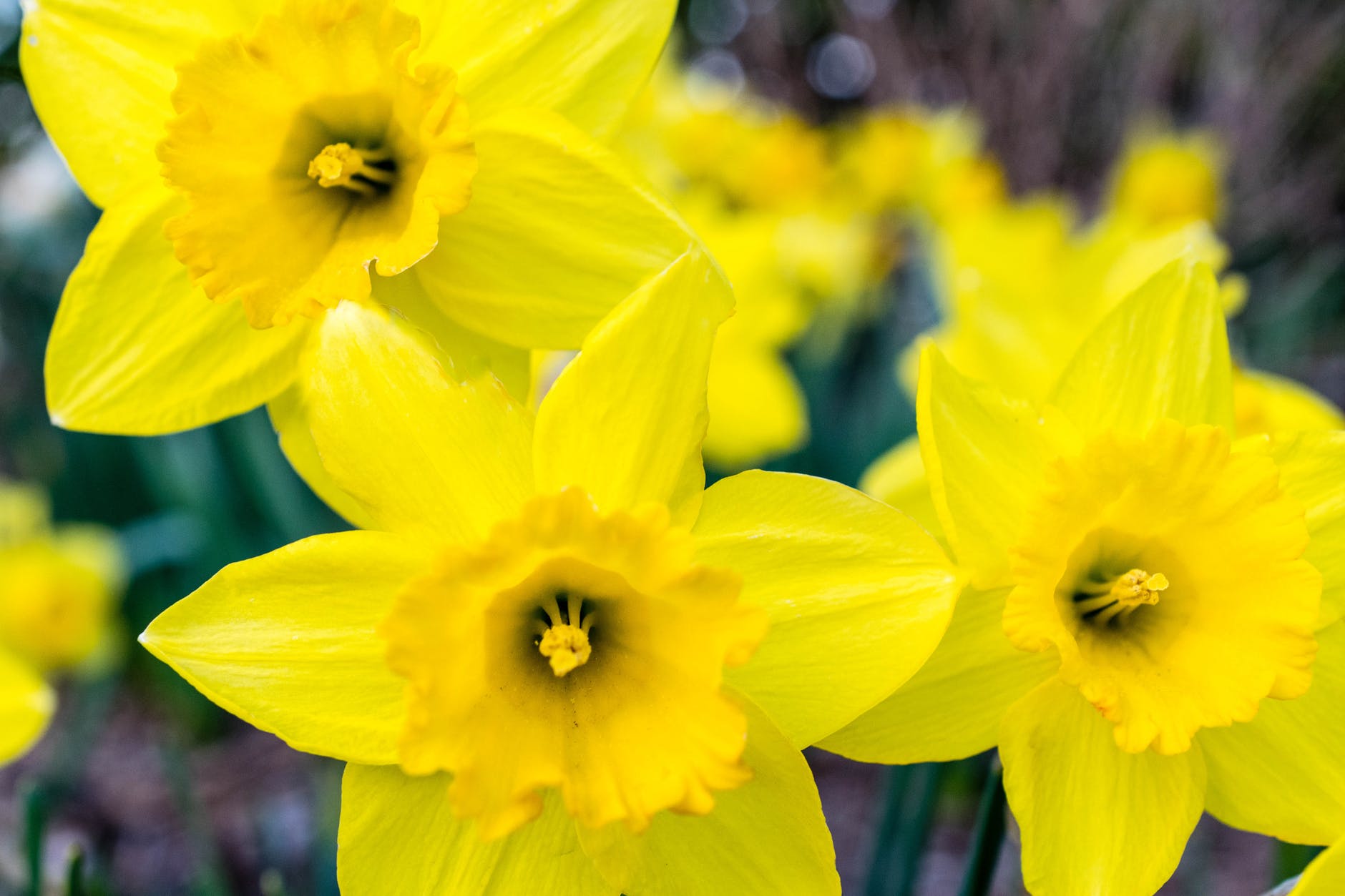
And yet, I have seen crocuses burst through two inches of snow; buds that defy harsh weather and cruel winds.  I have seen daffodils blooming where there once was a house and a yard, but now there are only brambles and foundation stones.  I have seen trees twisted and split by long-ago storms– one side dead and rotting, but with buds and new branches on the other side.

crocus-flower-spring-purple-60120.jpeg
pexels-photo-1031413.jpeg

It is easy to bloom when you are in a lovely flower bed, with tilled earth, fertilizer, gentle rains, just the right amount of sun, and protection from the winds and pests and birds.  But it is more spectacular to bloom in the desert; to defy the odds and stand in stark contrast to brambles, a broken-up sidewalk, or a litter-filled back alley; to bloom in the snow and sleet or weather a flood or a tornado.

pexels-photo-1035739.jpeg


Not always so with prayer.  Sometimes, it is easier to pray when we feel our own needs and shortcomings; when we are driven by our circumstances to call out for help.  When all is well, we may be grateful, but we may also begin to slack off.  We stop asking for wisdom and guidance, coasting in the beauty and ease of a good life, and forgetting that the beauty and the ease– indeed the life itself– is not our right, but a gift.  Amid so many other beautiful prayers, ours seem drab and ordinary, almost unworthy of God’s notice.

But God DOES notice– he has placed each of us where he wants us to bloom and grow– to pray, to fellowship, to walk with other believers and give off the fragrance of His grace as we live our lives in obedience to Him.  Have you been planted in an apartment complex?  Have you been planted as a suddenly single parent of three kids?  Have you been planted on a campus?  In a group of friends that all have Harleys?  Or one block from a rescue mission or homeless shelter?  A classroom full of high-energy first-graders?  A community that has had a lot of crime and blight?

pexels-photo-991681.jpeg

God has not placed you in circumstances to reward or punish you, but to grow you in the soil that can produce the best harvest.  Is your prayer list filled with needy people who live in turmoil and rebellion?  Bloom where you are planted– you may be the only person praying for your cantankerous neighbor– the only raindrop or fertile soil s/he will ever encounter.  Has God placed you in a family of people who taunt you for your faith?  Bloom where you are planted– pray for strength to stand firm in the beauty of meekness and compassion in the face of their taunts and disdain.  Are you in a greenhouse full of self-righteous orchids making you feel dowdy and wilted by comparison?  Bloom where you are planted– pray for God’s eyes to see the beauty in yourself, as well as those around you, and stop trying to be an orchid where God needs a lily.

Has God planted you in trying circumstances?  Bloom where you are planted– pray for God’s Peace as you face each day:

Matthew 6:25-34 English Standard Version (ESV)

Do Not Be Anxious

25 “Therefore I tell you, do not be anxious about your life, what you will eat or what you will drink, nor about your body, what you will put on. Is not life more than food, and the body more than clothing? 26 Look at the birds of the air: they neither sow nor reap nor gather into barns, and yet your heavenly Father feeds them. Are you not of more value than they?27 And which of you by being anxious can add a single hour to his span of life?[a] 28 And why are you anxious about clothing? Consider the lilies of the field, how they grow: they neither toil nor spin, 29 yet I tell you, even Solomon in all his glory was not arrayed like one of these. * 30 But if God so clothes the grass of the field, which today is alive and tomorrow is thrown into the oven, will he not much more clothe you, O you of little faith? 31 Therefore do not be anxious, saying, ‘What shall we eat?’ or ‘What shall we drink?’ or ‘What shall we wear?’ 32 For the Gentiles seek after all these things, and your heavenly Father knows that you need them all. 33 But seek first the kingdom of God and his righteousness, and all these things will be added to you.*

34 “Therefore do not be anxious about tomorrow, for tomorrow will be anxious for itself. Sufficient for the day is its own trouble.

*Emphasis added
The Power of a Praying Mother

Mother’s Day is coming, and I wanted to say a few words about the mothers in my life and their legacy of prayer.  My Mom is a prayer warrior.  I blog about prayer, and I pursue a better prayer life, but my Mom is a seasoned soldier,  and the daughter of another mighty woman of prayer.  Most of what I know about prayer, I learned through the examples of my Mom and Gram, but I have also been blessed by the godly examples of my mother-in-law, sister and sisters-in-law, aunts, cousins, and many more.

030

From my Mother, I learned to pray from the depths of my heart.  I have seen and heard her pray through pain, grief, and despair– not just her own, but more often that of someone else.  I have caught her holding back sobs over relatives and neighbors who don’t know or aren’t following Christ.  I’ve seen her pause in silent prayer over the plight of a person who is facing a lost job, or chemotherapy, or a migraine.  She very seldom offers to pray  aloud,”in the moment”, but she prays fervently, nonetheless.


Gramgrad

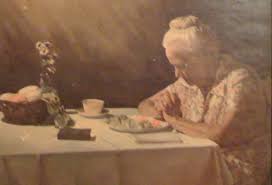
From my Grandmother, I learned to be patient and consistent in prayer.  Gram was quiet and unassuming, but she had an unshakable faith.  She prayed for years over situations that looked hopeless; often for people who or situations which never changed.  I asked her once how she kept from getting angry and frustrated.  She looked me straight in the eye and said, “We can’t change somebody else, and we can’t make them do what’s right.  That’s not our job.  Our job is to love each other, pray for each another, and let God deal with the rest.”  She died never seeing answers to some of what she prayed for, but that didn’t stop others from taking up the banner, and it never stopped her from earnestly and joyfully “taking it to the Lord in Prayer.”  She never gave up, never lost hope, and never stopped showing compassion.


There have been many other prayer warriors in my life– women (and men) of great faith who sought the Lord, and whose lives and words have had an unimaginable impact.  My family, members of my church family, classmates and friends from school or college, neighbors through the years…some of them have held my hand and prayed with me face-to-face; others have prayed on their knees in private; some have prayed for special needs and circumstances; others have prayed at the Holy Spirit’s prompting, never knowing why, but bowing in obedience.

prayermotherdaughter

Praying mothers are a treasure.  If you have one, or had one, don’t underestimate the value of her example.  And don’t just say, “Thank you”…Pay it forward.  Pray for family, neighbors and friends.  Pray early, pray often, pray without ceasing.  We all need more praying mothers, fathers, cousins, neighbors, co-workers, etc.  If you did not have a praying mother, you have a golden opportunity to become that good example to someone else.  You also have the opportunity to adopt a prayer partner– a surrogate praying mother–to pray with you and for you.

Can You Hear Me Now?

We experienced some storms last week, and while we didn’t have a lot of damage from the winds and rain, my husband and I lost our internet connection over the weekend.  No wireless internet meant no Facebook, no WordPress, no e-mail, and no cash register at our little shop downstairs.  We had to do every transaction by hand until we could rig up something so our smart phone could accept cards; no new chip cards, no Apple Pay or PayPal.  And while our phone could begin to accept limited credit payments, it could not provide any printed receipts, nor could it do double duty– we either had a phone or a point-of-sale device, but not both!

It was an inconvenience, but not a disaster.  I thought about thousands of people who are stuck in the aftermath of hurricanes, tornadoes, floods, earthquakes, and blizzards who have no electricity, no phone lines, no cell service, no roads, no water or sewer lines–cut off from common necessities and basic communication.  Suddenly, an emergency becomes even more tragic because of the isolation, and the inability to ask for help or to hear any message of hope.  (Of course, my husband would like me to put in a short plug here about the advantages of amateur radio– the radios can run on battery power and still connect over hundreds of miles!)

sound-speaker-radio-microphone.jpg

Isolation is an earthly concept.  God is eternally Triune.  He created us for relationship; from the very beginning, he declared that it is not good for “man” to be alone (Genesis 2:18)  God instituted marriage, and families, and communities so that we would stay connected, and he himself came to walk and talk with mankind in the Garden of Eden before the Fall.  It is mankind who hid from God and broke off communication– one of the effects of Sin is the desire to run away, to separate, to isolate and cut off relationships and break off contact.

That is one reason that prayer is so basic; so essential.  It is a lifeline to the one who loves us best, who knows what we need, and has the power to hear us, to help us, to lift us up wherever we may be, whatever our circumstances.

pexels-photo-787452.jpeg

But sometimes, even when we want to talk to God, it seems impossible to speak or feel like he hears us.  Sometimes, we are the ones who can’t come up with words, or can’t settle our minds to seek his face.  Sometimes, we pour out our hearts and wait in silence for an answer.   Why should it be that just when we need it most, prayer seems the hardest?

I wish I had a pithy, perfect answer.  I don’t know.  I have a few incomplete thoughts, though:

  • what comes easily has less value to us.  Cheap and pointless conversation doesn’t make us work hard, but it also leaves us empty and unsatisfied.  Crying out to God is hard–it humbles us, it strips us bare and uncovers all our pretenses and subterfuge.  The true depth of our need is ripped out of us like a tumor, and it hurts, but it is a healing hurt.  Waiting in silence can cause us to become restless and to doubt, but it also can cause us to listen more attentively– we strain to hear the answer; we stop the white noise of busyness and half-hearted hand-wringing, and listen with our whole being.  And the smallest whisper– that still, small voice– has the power of the first rain after a long drought.  We are revitalized and our strength renewed as never before.

pexels-photo-546657.jpeg

  • sometimes, though not always, we find prayer difficult because we have not really prayed for a long time (if ever)– we have developed a habit of saying words to the empty air and thinking that the words themselves hold some power of hope or magic or self-fulfilling prophecy.  When life’s realities cannot be wished away with simple words, we search for distractions, for other types of words, for other “realities”, when we should be searching for our maker and the lover of our souls.
  • sometimes, it is a matter of unacknowledged or unconfessed sin that keeps us from breaking through in prayer.  However, there are many people who will use this as a default position, and that, too, is wrong.  Jesus had such difficulty in praying at Gethsemane that he sweat drops of blood— NOT because of unconfessed sin, but because his heart was that overwhelmed.  Still, we should examine ourselves to see if we have started to move away from God– better to turn back than to go father afield.
  • sometimes, as with Christ in the Garden, our hearts are just overwhelmed in the moment– it’s hard to breathe!  It’s hard to go on; it’s hard to ask for help; it’s hard to keep the faith.  Just because it’s difficult, don’t give up– even if all you can do is groan or whimper–even if it feels like God has closed up the heavens and left you alone–don’t give up.  God DOES hear, he DOES care.  Sometimes, we are inches from victory– don’t give up!

And what can we do during those times?  Again, I wish I had better answers, but what I have, I want to share– some from my own experience, some wisdom from others, some of both:

  • Learn to “pray outside the box”–
    • Sing–sing the blues, sing an old hymn, sing along with the radio, sing like nobody else is listening
    • Write it out– write a letter, write an angry letter if you have to– write a rant, write a poem, write out all your questions
    • Move– dance, pace, run, punch a pillow, do some sit-ups, mop the floor, scrub the sink– as you get a rhythm going, add your thoughts or questions to your movements
    • Cry it out– it’s ok to cry, moan, sob, weep, or just stare into space and rock yourself to sleep after all the tears have dried up.  Jesus wept (John 11:35)– what makes us think that we can’t?

landscape-nature-man-person.jpgpexels-photo-256658.jpeg

  • Count your blessings
    • Make a list of what you have; what you have to be grateful for; what you have experienced and enjoyed now or in the past
    • Make a list of your questions, concerns, needs, wants, wishes–Now think back ten years and make a list of what you wanted then, and how many of those concerns have been answered, altered, or forgotten.
    • Put yourself in another time or place– what do you have here and now that others lack?  How do your present troubles compare to what others have had to deal with?
  • Ramp up your pursuit of God in other areas–
    • Search for answers in His word
    • Seek the companionship of someone you trust who will help you keep on going
    • Seek out counselors, web sites, and/or a church group or family who can keep you from becoming isolated

pexels-photo-935944.jpeg


The single most important thing is to continue the pursuit– seek God with all your heart–and you will find him sufficient through the silent times, as well as through the roaring of the fiercest storms.


What Did You Say?

Every once in a while, I like to check an app that counts the words I use on Facebook.  The end result is a cloud full of words that people see when they read my posts.  (You can see my most recent one above.)

Sometimes, I like the cloud– I love to see it filled with words like Love, People, God, Prayer, Joy, Peace, Thankful, etc.  I’d like to think that this is how I always look and sound.  Of course it isn’t.  I don’t always speak encouragement and love on people.  Sometimes, I complain and rehearse negative self-talk, or I explode and rant about bad drivers, rude customers, constant bills, and more.  Checking on my word count may not keep me from using negative words altogether, but it does show me patterns I may not be seeing or hearing on my own or from my friends.

pexels-photo-211816.jpeg

My prayer life acts in this same way–especially as I journal about my prayers.  I can look back through my prayer journal, and see patterns in prayer requests, notes, and even answers to prayer.  Sometimes, I see patterns of struggle–desperation, need, frustration.  Sometimes, the pattern is steady; other times it is a roller coaster of ups and downs.

It’s important to spend a little time periodically getting feedback like this.  Why?  Because what we actually say (and pray) may be very different from what we think we have said.  Jesus was very careful about words:

Matthew 12:35-37 English Standard Version (ESV)

35 The good person out of his good treasure brings forth good, and the evil person out of his evil treasure brings forth evil. 36 I tell you, on the day of judgment people will give account for every careless word they speak, 37 for by your words you will be justified, and by your words you will be condemned.”

Mark 10:17-18 English Standard Version (ESV)

17 And as he was setting out on his journey, a man ran up and knelt before him and asked him, “Good Teacher, what must I do to inherit eternal life?” 18 And Jesus said to him, “Why do you call me good? No one is good except God alone.

Paul is also careful to distinguish between words:

Romans 5:7-8 English Standard Version (ESV)

7 For one will scarcely die for a righteous person—though perhaps for a good person one would dare even to die— 8 but God shows his love for us in that while we were still sinners, Christ died for us.

I include the last two examples because they both refer to “Good” people.  I want people to see God’s goodness in me.  But idle or careless words and habits can show up in my thought life, my prayer life, my on-line life, and my face-to-face conversations.  In attempting to show how “good” I am (self-righteousness), or how clever I am (even at someone else’s expense), or how__________________________________ (daring, popular, hard-working…you get the idea) I am, it compromises all that I want my life to say about God, and all that He is waiting to say through me.

cheaptalk

Words matter– whether in praying or blogging or commenting on someone else’s post.  I pray that I am making mine count!

Great Expectations

Earlier this week, the Duke and Duchess of Cambridge (otherwise known as Prince William  and Kate Middleton), welcomed their third child.  As with most royal births, there was a lot of fanfare and speculation well in advance of the actual delivery.  Early tabloid reports hinted at twins; bookmakers were figuring odds for delivery dates, names– even what the Duchess would be wearing as she brought the newborn outside for his first “sighting”.  As of the writing of this blog, the name has yet to be announced, which is cause for more speculation and anticipation.

pexels-photo-50632.jpeg

Preparing for a newborn is exciting, and filled with certain expectations.   We imagine what the baby will look like, what kind of personality s/he will have, all the wonderful discoveries to be made. But we need to be careful not to let our expectations become idols.  There’s nothing wrong with hoping for good outcomes, but it can be dangerous to get locked into a particular expected outcome.  Children surprise us (in good ways and other ways) be being themselves, and not who or what we expect them to be.

pexels-photo-185934.jpeg

When we pray, we sometimes come with certain expectations–that God will answer in a certain way or on a certain timeline.  This is not the same as having faith.  Faith says that God will hear our prayer; that he knows best, and that he will act in accordance with his own love and mercy.  It doesn’t mean that he will give us what we want when we want it, or that he will give us what makes us comfortable and happy.  His answers may seem difficult or even painful to accept– certainly not what we were expecting.  When he chooses to answer in ways that don’t meet our expectations, we wonder why.  When he chooses to say “wait,” or even, “no,” we may feel cheated and even resentful, instead of thankful that our prayers are heard by a loving God.  Often, we have built up such expectations of what “the best” should look like that we miss the real miracle God is giving us instead.

pexels-photo-236287.jpeg

Worse, there are times when our expectations reveal a lack of faith or a lack of understanding of God’s ways.  We pray for peace, but what we really want is ease and comfort.  Peace– real peace– is often revealed in times of stress, hardship and loss!  We don’t want stress; we don’t pray for stress, but stress and hardship are going to come into our lives at some point.  Praying for peace won’t bring stress, any more than not praying will keep it away!  We expect the peace to come without the battle; we expect the growth to come without the growth pains; we expect to win the race without having to run!

Sometimes we won’t even pray for what we really want or need because we expect that God will “test” us or give us difficult circumstances if we ask for certain things (like patience or peace).  We see God as some sort of cosmic con artist, who teases us with the promise of good things, only to laugh as we suffer.  But this is a wrong view of God.  God doesn’t play games or “trick” us by giving us hardship when we ask for healing, though it may feel like it at the time. Suffering and hardship are not the gifts of God– his amazing gift is the ability to redeem even the worst of circumstances and bring joy and rest and peace that passes any expectation, any dread, or any understanding we have.  Often, our very desire for extra patience, peace, and joy are opportunities for us to learn more about God’s grace–and more about ourselves.

Life seldom meets our expectations–God is waiting to exceed even our wildest dreams!  Don’t just pray expecting something good might happen.  Pray expecting God to SHOW UP!


Taxing Prayers

It’s tax time in my neck of the woods, and that means that a lot of people are praying.  Some are praying for a tax refund; others are praying that their tax bill is lower than expected, or that they can somehow find the money to pay it.

Taxes are not pleasant, but they are a constant reality of this world.  Even Jesus had to pay taxes–to an oppressive foreign empire, no less.  The people of his time wanted him to lead a rebellion against Roman occupation.  But even if he had done so, their own religious leaders collected Temple taxes.

There are a lot of other unpleasant realities in this life– injustice, bigotry, hatred, disease, natural disasters, accidents, and death.  God doesn’t remove them, no matter how hard or how earnestly we pray… he may send healing, comfort, or strength to get us through a crisis, but he never promised to end poverty, or remove the consequences of sin, or wipe out cancer–YET.

These are the taxing prayers that we continue to pray– prayers that come from our pain and longing for a new Heaven and a new Earth.  It is in our fallen nature to yearn for the perfection of God’s original creation;  a world we have never experienced, but for which our souls were designed.  In praying for things to be made “right”, we acknowledge that they are, in this present age, very wrong.  And we acknowledge that our best efforts can never be “enough” to overcome the ravages of sin.  Finally, in bringing them to God, we acknowledge that only He has the power and wisdom to “fix” them– in His time.

pexels-photo-449627.jpeg


Taxes are not pleasant, but there will come a day when they are abolished.  God’s love, his mercy, his blessings– they are tax-free, and they are in endless supply.

Even during tax season, that’s something to celebrate!

The Empty Cross

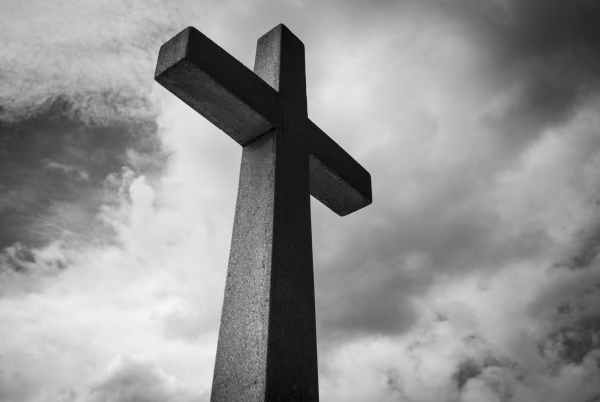
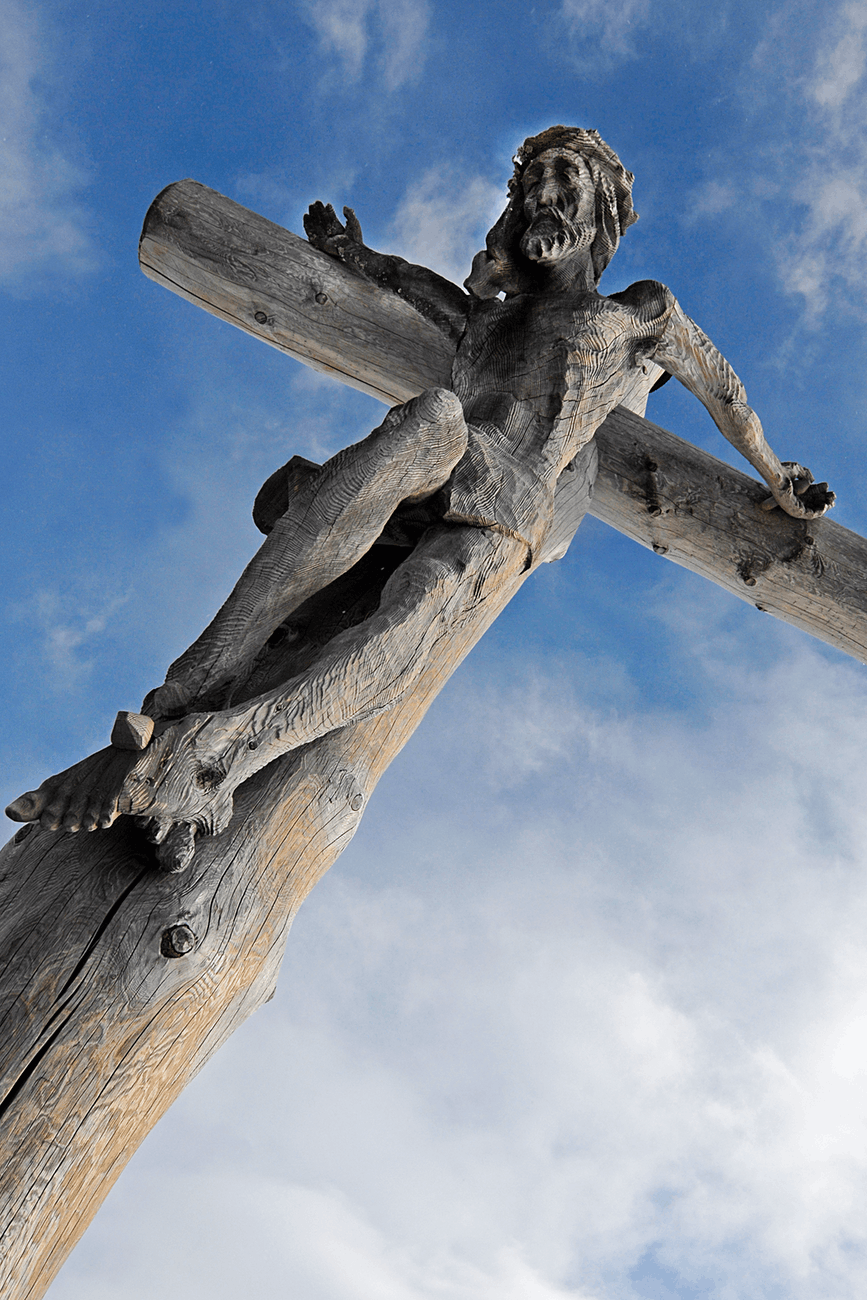
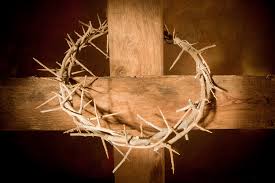
The most common symbol of the Christian religion is the cross.  And, while many statues and necklaces and artistic renderings include a dying Christ figure , the kind you most often see is the empty cross.  On this day between the crucifixion and the resurrection, I want to consider the significance of the empty cross.

  • First, the empty cross reminds us that Christ lived.  In spite of those who continue to challenge the historical evidence, there was a man named Jesus of Nazareth.  He lived in a particular time and place, and he was tried and sentenced to death by crucifixion.  His existence caused the modern Western Calendar to be split into two distinctive parts based on the estimated year of his birth, and his life, death, and resurrection gave rise to a movement that has never been stamped out, equaled, or eclipsed.

pexels-photo-51524.jpeg

  • Second, it reminds us that Christ died.  He was fully human in his capacity to feel pain, rejection, betrayal, hunger, thirst, and grief.  Yet he also experienced joy, companionship, hope, love, compassion, laughter, and growth.  He didn’t just grow old or fade into obscurity.  He didn’t leave his life’s work unfinished, he didn’t compromise or change his message; he didn’t give up or start over with a different “crew.”  Though he never staged a coup, or built up an arsenal, or rose to a seat of power or influence, this homeless, itinerant, soft-spoken rabbi was seen as enough of a threat to the leaders of his time that he was framed, tried and convicted, and sentenced to death.
  • The empty cross also reminds us how he died.  Modern crosses often look imposing and even triumphant, as they tower over a mega church parking lot, or hang on a chain of elegant silver, or stand in rows of chiseled rock in a military cemetery.  “O death, where is your sting?  O grave, where is your victory?”  (I Cor. 15:55)  But the torture before and during the crucifixion were brutal– bones were not broken, but they were pulled out of joint and then forced to bear the full weight of a bloody, swollen and bruised body of ripped muscles and exposed flesh.  Heat caused the salty sweat mixed with blood to drip into his eyes, his open wounds, and around his nose and mouth, but he was unable to wipe any of it away.  Flies gathered; he couldn’t keep them from buzzing or biting.  Each breath was a torturous push and pull of the arms and body upon the nails holding him at an unnatural angle against a wooden bar that rubbed against his already raw back.  And all of this was public; entertainment for the masses of hecklers, and those who were rejoicing in his humiliation and failure.  There was nothing pretty or majestic about the cross on that day.

jesus-cross-summit-cross-37737.png

  • The empty cross reminds us that Jesus was buried and put under Roman guard.  His emaciated, bloody, barely recognizable remains were wrapped up and prepared with spices.  Guards, whose lives depended on this body remaining in the tomb and undisturbed, were posted, and a huge boulder rolled into place to block entry to and exit from the tomb.  Jesus didn’t spontaneously climb down off the cross, or waltz out of an air-conditioned cave.
  • Finally, the empty cross reminds us that Jesus was the Christ–death could not stop him; the grave could not hold him.  His victory was complete.  He didn’t claw his way out of that tomb; he didn’t sneak out in the dead of night; he didn’t hobble into hiding for several weeks because he was only “mostly dead” of his torturous injuries.  He arose, victorious, recognizable to those who knew him best; healed and full of power.

pexels-photo-635699.jpeg

There are hundreds of reasons why we “cherish the Old Rugged Cross.”  And, though the cross stands empty, our reasons are not.  Hallelujah!  Tomorrow, hundreds of millions of Christians will be celebrating the empty tomb.  But for today, I want to celebrate the empty cross.

Why “Good” Friday Matters

Good Friday is a stumbling block for many people who would be Christians.  Some get angered at the mere mention of “Good” Friday.  They see nothing good in it, and no reason to celebrate.  They mock Christian celebrations and practices throughout Holy Week.  They ask, “What could be good about being arrested, beaten, tried in an unfair court, mocked, and condemned to death?”  “What could be good about celebrating someone’s final meal, and following the gruesome details of his humiliating crucifixion?”  “Why remember someone being tortured by his enemies and abandoned and even betrayed by his friends?”  I know someone who uses the crucifixion of Jesus as “proof” that God is neither omnipotent, nor holy.

Yet the Bible chooses to focus time, detailed description, and several varying viewpoints to make this the pivotal event (along with the resurrection) of history.  The Crucifixion does not come as a sudden and inexplicable episode in Jesus’ ministry. He predicts it; not just once, and not just in one account–he doesn’t hint vaguely at some “future trouble,” or potential danger–he gives a detailed description of what will happen to him:

Mark 10:33-34 New American Standard Bible (NASB)

33 saying, “Behold, we are going up to Jerusalem, and the Son of Man will be [a]delivered to the chief priests and the scribes; and they will condemn Him to death and will [b]hand Him over to the Gentiles. 34 They will mock Him and spit on Him, and scourge Him and kill Him, and three days later He will rise again.”

Luke 24:6-7 New American Standard Bible (NASB)

6 He is not here, but He has [a]risen. Remember how He spoke to you while He was still in Galilee, 7 saying that the Son of Man must be delivered into the hands of sinful men, and be crucified, and the third day rise again.”

Why do we need Good Friday?  Why, my acquaintance posits, does a loving God make salvation contingent upon the death of himself in human form?  Is it that God is incapable, or unwilling to offer “unconditional” grace?  After all, does he not offer “unconditional” love?  Why must salvation be achieved only by the unjust death of a perfect being?  Why must reconciliation and new life be forged in suffering and death?

These are not unreasonable questions, but I think they miss the broader picture.  Before the cross, before the scourging and the betrayal, let’s look at the life of Christ.  Jesus, the second person of the Trinity, the author of creation, could have stepped out of Heaven at any moment, and arrived in all his glory, surrounded by angels, to walk in pomp and dignity through the world he created.  He could have swept the entire Roman Empire off the face of the planet, healed every disease with a whisper, and lived in the Temple in Jerusalem as the Ruler he is.   Instead, he came as a helpless child, born to a teenage mom and her fiance during a grueling tax season.  He grew up in relative obscurity, never attended college, and is lost to history until he begins his second career as an itinerant rabbi at age 30.  He never held political office, never owned a home of his own, never wrote a book, or produced a piece of art work, never led an army into battle, never married or had children, never became wealthy, never did anything to make himself famous by worldly standards.  He was not crucified because he posed an actual threat to the Roman occupation of Jerusalem, but because he was accused of blasphemy by not denying claims that he was the promised Messiah of Israel.  His only “claim to fame” was that he was a dynamic teacher and had performed miraculous healings.  By almost every worldly standard, his life was a failure and a lesson in wasted potential.

His death is in keeping with his humble life.  It strikes us as a failure– humiliating, unjust, anti-climactic.  A life of servitude, poverty, being misunderstood, and making all the “wrong” friends and enemies.  Why would God live such a ridiculous and unfulfilling life?  Except he didn’t– it wasn’t a failure; his life and death stand as examples of how to live at peace, and how to change the world!  Hundreds of people flocked to hear him teach; hundreds more to see him heal the sick and raise the dead.  But he never charged a single coin, never demanded accolades or even thanks.

church-window-church-window-stained-glass-46154.jpeg

This is the paradox of the Gospels.  God’s ways are not our ways.  His humiliating death on the cross was necessary for the ultimate triumph of the resurrection, but it was more than that– it was a vindication of justice over injustice and service over selfishness.  Good doesn’t always triumph over evil in a power play.  God has the power to obliterate every one of his enemies, but more often than not, he causes them to fall by their own arrogance and blind ambition.  The Chief Priests, the Roman Soldiers, the agony and torture of death– they were no match for God’s love.

Good Friday showed us that God can ALWAYS make even our most difficult circumstances, even the worst situations, into something VICTORIOUS.  Jesus still had to suffer and die, because we will still have to face betrayal, hatred, injustice, unanswered questions, and even taste death.  An Easter without Good Friday is a happy ending without the story.  Only an omnipotent God could have given us the triumph; only a loving God would have walked the Via Dolorosa to fight in the trenches with us.


Prayers in the Pendulum

I’m late in posting an entry today– it’s been a day of swinging in the pendulum.  Not in a personal sense, but in praying for friends and family.

We all have “pendulum” days (or weeks, or even hours)– times where we are carried, pushed, swung, or banged about by life’s circumstances.  Moments where time stands still– sometimes in astonishing joy, and sometimes in soul–stomping grief.  Then comes the rush of being pulled by forces beyond our control– up, and down, across, and through the arc.  I’ve been hearing from friends all day, sharing those moments, and asking for prayer.  In the space of an hour, I’ve prayed for those who have just lost loved ones– a mother, a sister, a son– and those who are celebrating– an engagement, a birthday, a new home.  I’ve prayed for those whose lives are in the balance– in ICUs and in the womb.  Cancer, anniversaries, new puppies, pneumonia, a new job, a vacation, a car accident…

When we pray for others, we share those joys and heartaches– together, we swing through the arc of tragedy and triumph, even if we don’t all feel the full impact.  We become like the balls on the pendulum swing; absorbing and sharing laughter and tears not fully our own. But by doing so, we provide both energy and equilibrium.  Shared joys are multiplied; shared pain becomes bearable.  Prayer breaks through the isolation or the intensity of the moment, and keeps us grounded, or keeps us from shattering.   It reminds us that even in these defining and refining moments, life is not static.  And the momentum pulses through us in our connectedness.

Yet prayer goes one step further– it brings triumph and tragedy to the God who is above, beyond, around, and amidst the circumstances, the chaos, and the emotional highs and lows.  Our voices, raised together in laughter or grief, exasperation or anticipation, ascend to the one who came and lived and laughed and cried among us– to Jesus, whose arms are fully extended to embrace us wherever we are on the pendulum.

pexels-photo-227390.jpeg

Making Waves

Yesterday, students across the nation walked out of class to protest the school shooting that took place a month ago in Florida.  Many have hailed this as the beginning of a new movement; others have decried it as a stunt.  I’m not here to debate the merits of this particular action or even what it may or may not represent.  What I do want to look at is how and why groups are using various methods to “make waves” in our world.

What does it mean to “make waves?”  According to the online urbandictionary.com, it means:  to cause a disturbance, or to create a situation where chaos or controversy will surface

The underlying assumption is that there is a deceptively calm surface that requires a disturbance– that chaos or controversy are already present, and bringing them to the surface is necessary to prevent more tragic results.

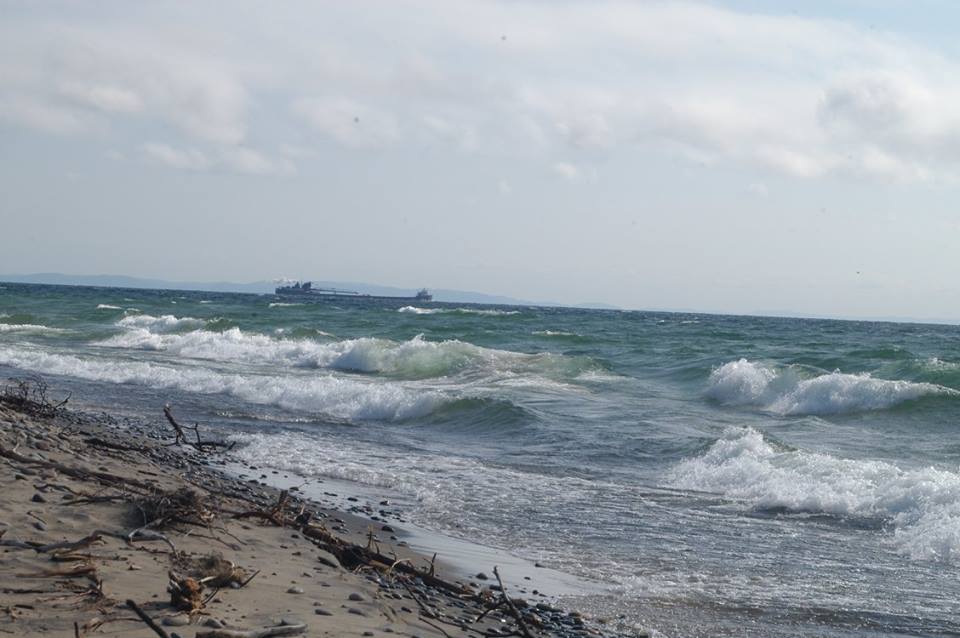
If you live near a large lake or the ocean, you may have watched waves in action.  Waves can be powerful, and even tragic, in their own right.  Storm surge waves and tidal waves have been known to decimate coastal areas; even normal wave action can erode shorelines and pull unwary swimmers under the surface.  But waves also serve good purposes– they polish the stones and wash up treasures onto the beaches.  They prevent stagnation.  They help move small creatures that dwell in the sand and shallow waters.

One thing about waves that sometimes passes unnoticed– waves may change in size or power, but they are constant– rolling in and out unvaried in their rhythm from day to day and year to year.  In this sense, no one “makes” waves, except the creator, who started that rhythm and set the boundaries for the lakes and seas.  Instead, we attempt to create bigger, more powerful waves, or make waves where none were before– puddles, or swimming pools, perhaps.  At some point in our lives, we WILL make waves– but what kind, and to what purpose?

waves

My point is not that we shouldn’t try to be agents of needed change in our world– but we should examine the positive and negative consequences of our wave-making.  Are we pushing something to the surface that needs to be seen or discovered?  Are we pulling something under the surface to drown it out?  Are we eroding a foundation, or carving out a new coastline?  Also, are we being consistent in our wave-making?  Are we hoping for a single tidal wave of chaos, or a constant churning action that brings lasting change.

Of course, since this blog is about prayer, I would suggest that prayers are also like waves– each one breaking in its turn, but constantly rolling, churning, and moving forward, bringing things, both large and small, to the shore.  Prayers have a constant rhythm and a subtle roar that masks their full impact.  Prayers, like rolling waters,  intermingle, push each other forward, dance, and rise, and fall with the winds and storms of life, and roll back to rise up again.
Not all prayers are like waves– not all waves are like prayer.  but  shouldn’t we want to make waves in tune with God’s purposes?  Waves answer to God– he can both calm them, and stir them into wild fury; walk on them, or hold them back.

I pray that our prayers and our actions would be consistent with God’s rhythm; that we would embrace changes and actions that bring him honor.

Blog at WordPress.com.

Up ↑