Have you ever read through a passage in the Bible and been astonished, or even annoyed, at the long lists of names? Genesis, Chronicles, Ezra, even some of Paul’s letters contain genealogies and long strings of names– people whose life stories and deeds we will never know. Yet they are included in the greatest story of all time! God knows each name. He knows who they were, what they did, their hopes and dreams, their fears and disappointments– even the number of hairs on each of their heads!
“And the very hairs on your head are all numbered…”– Jesus Christ in Luke 12:7a (New Living Translation)
God knows you in the same intimate way. In the entire history of the universe, and in all the future years to come, there has only ever been, and only ever will be ONE of YOU. Your fingerprints, your retinas, your DNA are all unique to YOU. Even if you are a twin or triplet– even if you are the “spitting image” of one of your ancestors or relatives, NO ONE else can ever share your life story. Even if you were cloned, and there was another person who shared your exact physical nature, they would not share your soul– your thoughts, emotions, ambitions, griefs, and experiences.
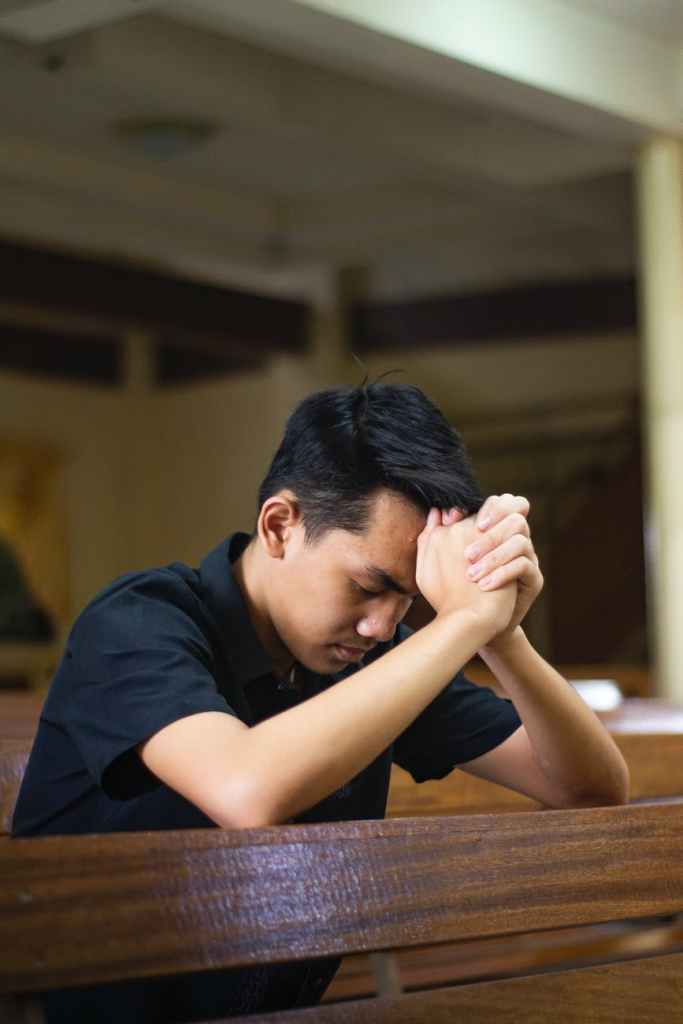
And you are uniquely qualified in prayer. No one else can share your thoughts and feelings, your praises and confessions, your requests or petitions. Thirty people can pray for the same situation, the same person; there will be thirty different prayers! Even if you say the same words, or stand in agreement with another’s spoken words, you will not pray with the same exact thoughts. Your heart-cry is different from everyone else’s.. and God hears and understands each unique prayer. Out of all the prayers rising to heaven every second of every day, God can distinguish and delight in YOURS!
Some days it is frustrating to feel like “just another number” or “lost in the shuffle” of other people waiting in line, or trying to conduct business over the phone, or scrolling though social media. But you are never just a number to God. He knows your name– he has known it from eternity past! Your prayers are not put “on hold,” or filed away for later review, or answered with a form letter. God is personal– eight billion times over! He doesn’t just celebrate your uniqueness– He designed it!
What unique and amazing prayer will you pray today? How can you live out your unique personality and purpose this week? Who might be encouraged by your unique smile, your prayers, or your personal touch as you go through your day? Just remember, no one else can be you– no one else can show God’s character and His love exactly like you can! God didn’t send someone else to do what only you can. But He will be there each moment to help you do it– in your own YOU-nique way.
Father, I’m too busy today. I have filled my life with too many urgencies And obligations. I can’t take the time to quiet my soul And just meditate on You.
I have a checkup appointment with the doctor this morning. (Thank you for my health and wellness, and Give the doctor insight and wisdom to see What I need to do to stay healthy.)
And then, I have a busy day at work, To make up for the time off… (Thank you, Father, for employment!) (Thank you for time off!) (Thank you for travel mercies.)
Tonight, I have to catch up on all the housework… (Thank you for a home, and clothing, and dishes, and furniture…) (Thank you for family to share it all with!) And I promised our neighbor I’d check on their cat while they are on vacation. (Thank you for good neighbors, and the opportunity to serve them.)
Lord, forgive me… I’m just too busy to pray today. (Father, thank you for a busy life– a life with purpose and activity. Thank you for your Presence throughout the day!)
Father, thank you for the truth– I am NOT too busy to give you praise I am NEVER too busy to turn my thoughts and my heart to YOU, even on this busy day!
I have a song that Jesus gave me, It was sent from Heaven above; There never was a sweeter melody, ‘Tis a melody of love.
I love the Christ who died on Calvary, For He washed my sins away; He put within my heart a melody, And I know it’s there to stay.
‘Twill be my endless theme in Glory; With the angels I will sing; ‘Twill be a song with glorious harmony, When the courts of Heaven ring!
In my heart there rings a melody, There rings a melody with Heaven’s harmony; In my heart there rings a melody; There rings a melody of Love.
Hymn by Elton M. Roth (1891-1951)
My grandfather had perfect pitch–he could hear a musical note and tell you what the note was or whether it was “in tune”. He loved music and taught himself to play several musical instruments, including trombone, ukulele, auto harp, thumb harp, saxophone, violin, flute, banjo, dulcimer, trumpet, penny whistle, ocarina, and harmonica. My grandmother played piano, organ, and a host of percussion instruments.
My grandfather could hear perfect pitch, but he rarely sang. He could make wonderful music with instruments, but not with his own voice. He might have done so, but he never bothered to practice. In fact, while he could play a multitude of instruments, he never became proficient on any of them.
Prayer is accessible to anyone, as is music, but tuning and practice are required if we want to pursue prayer as a discipline and a means to develop a more harmonious relationship with God. Prayers that are out of tune can be sharp– nagging, complaining attempts to bargain with God; or they can be flat– lifeless and empty of trust and affection. Prayers that lead to growth, healing, and change are those that are “attuned” to the heart of God. What a sweet song of praise when we live in harmony with God and others– working, growing, sharing, and singing together.
I don’t have perfect pitch– I can usually hear if my voice or my flute seems out of tune with another instrument or other voices, but sometimes I need help. The same is true of my pursuit of prayer. I need help to keep in tune– a prayer journal is one tool I use. But it also helps to have a prayer group or prayer partner, a prayer list, or a book of prayer. For more ideas, see: Proactive Prayer Points and Prayer Journal.
We don’t like to talk about (or write about!) prayers of confession and repentance. And yet, the Bible is full of such prayers. In fact, even the Lord’s Prayer contains the phrase “forgive us..” Even if we pray eloquent prayers of praise and petition, our prayers will be lacking without first evaluating our relationship with Christ and seeking His forgiveness and continued cleansing.
I know there are those who will challenge this statement– after all, once we have “accepted Christ,” aren’t we considered to have His righteousness? Haven’t we BEEN forgiven? If we must keep asking for forgiveness, does that mean that Christ’s death and resurrection are not sufficient to “save” us?
I do not mean to suggest anything of the sort. We ARE forgiven– past, present, and future– our names entered in the Lamb’s Book of Life. God isn’t holding on to a grudge over every future fib, flub, or fall. And nor should we. Confession in the prayer of a Christian shouldn’t be wallowing in guilt and shame, or confessing the same sins over and over, doubting that Christ’s finished work isn’t actually finished. But just as in all close friendships, we sometimes ask, “Are we ok?”, to clear the air and maintain closeness, it is appropriate to “fess up” with God– to clear the air– precisely so that shame and guilt DO NOT build up or slowly seep into our relationship.
God will not withhold His promised salvation from us if we are trusting in Him. We are justified, and our advocate, Jesus Christ, mediates for us constantly, just as the Holy Spirit indwells us to be able to overcome temptation and do what we cannot do on our own. But WE are still living in our fallen world and fallen bodies. We will find it difficult to trust; we will find it tempting to judge others; we will doubt our own decisions– did we really do “right”? And while God is eternally faithful– we are not; nor have we reached perfection in all our daily actions and thoughts. We are “okay” with God– but confession reminds us of that!
In the story of the prodigal son (Luke 15:11-32), the son rehearses a speech of confession. And even as he begins saying his rehearsed words, His father interrupts with complete reassurance of his love. How much more does God delight in reassuring us of His eternal, unfailing love!?
Two thoughts I’d like to add here:
One– It can be very easy for us to fall into confession as a works-based ritual. Confession adds nothing to Christ’s finished work on the Cross. We are saved by God’s Grace– period. Ten thousand prayers of confession will not make us “more” saved.
Two– It can be just as easy to avoid self-evaluation and discipline as we grow “comfortable” with our Christian Walk. Confession is not about “right” and “wrong” as much as it is about humility. The Apostle Paul says, “And I am sure that God who began the good work within you will keep right on helping you grow in his grace until his task within you is finally finished on that day when Jesus Christ returns.” (Philippians 1:6 The Living Bible)
We don’t need to be hampered by guilt, fear, or shame– but we should want to keep our relationship with God pure above all other relationships. And that means being willing to submit to God’s will and God’s discipline on a daily basis. Confession is not an admission of God’s failure to save us; nor of our commitment to follow Him. Rather, it is an admission of how important that relationship is, and how much we need to keep our commitment fresh, pure, and vibrant. God HAS forgiven us; He will continue to forgive– freely, and fully!– as we follow Him.
Social Media can be a wonderful thing– it connects us, and helps us share good news, prayer requests, events, photos, and more. It can help us make new friends, get re-acquainted with old friends, learn new skills, and be more informed.
Sadly, though, social media can also bring out the absolute worst in us. Social media is immediate– we see or hear something, react to it emotionally, and respond without taking time to think. But social media is not really social. It is social only in the “virtual” sense. And that creates problems. There is nothing like being anonymous behind a computer screen to turn us into the biggest bullies, critics, and self-indulgent know-it-alls. Worse, we find it easy to spread vicious gossip, misinformation, and negativity by pressing a single “share” button…we didn’t even say it!
But we DID send it out. And others saw it, heard it, felt it– for better or worse. Even the “good” responses– followers, “likes”, smiling emojis, and such–can feel impersonal or even forced. But what about the comments that reveal contempt, anger, sarcasm, or hatred? Critical, biting, self-righteous, self-gratifying, smug comments and posts.
“Oh, but I would never do that…” Really? I have been guilty of passing along posts (or even creating posts) that drip with sarcasm, or gleefully correct people or groups I feel have said something “wrong”. I’ve even passed along Bible verses with smug captions.
“Well, everyone is a critic.” “I’m only saying what is true.” “Doesn’t the Bible tell us to warn others and speak out against sin?”
There are many “gifts” of the Holy Spirit–teaching, preaching, healing, even prophecy– but nowhere in the Bible does it say we are “gifted” to be critics, nags, or to speak out in contempt, anger, and malice. In fact, the Bible contains several warning against such behavior:
Judging Others 7 “Do not judge, or you too will be judged. 2 For in the same way you judge others, you will be judged, and with the measure you use, it will be measured to you. 3 “Why do you look at the speck of sawdust in your brother’s eye and pay no attention to the plank in your own eye? 4 How can you say to your brother, ‘Let me take the speck out of your eye,’ when all the time there is a plank in your own eye? 5 You hypocrite, first take the plank out of your own eye, and then you will see clearly to remove the speck from your brother’s eye.
Galatians 5:15 But if you bite and devour one another, take care that you are not consumed by one another. Philippians 2:14-16 Do all things without grumbling or disputing; so that you will prove yourselves to be blameless and innocent, children of God above reproach in the midst of a crooked and perverse generation, among whom you appear as lights in the world, holding fast the word of life, so that in the day of Christ I will have reason to glory because I did not run in vain nor toil in vain. James 4:11-12 Do not speak against one another, brethren He who speaks against a brother or judges his brother, speaks against the law and judges the law; but if you judge the law, you are not a doer of the law but a judge of it. There is only one Lawgiver and Judge, the One who is able to save and to destroy; but who are you who judge your neighbor?
This does not mean that we are to stay quiet about evil, or excuse sin. But we are to do so in love, not with contempt for others, or pride in our own understanding.
Moreover, God, who has the right to be critical and pass His perfect, Holy judgment on us, is the very one who offers us Grace and Mercy, encouragement, and hope!
8 Therefore, there is now no condemnation for those who are in Christ Jesus, 2 because through Christ Jesus the law of the Spirit who gives life has set you[a] free from the law of sin and death. 3 For what the law was powerless to do because it was weakened by the flesh,[b] God did by sending his own Son in the likeness of sinful flesh to be a sin offering.[c]And so he condemned sin in the flesh, 4 in order that the righteous requirement of the law might be fully met in us, who do not live according to the flesh but according to the Spirit. (Romans 8:1-4 NIV) https://www.biblegateway.com/passage/?search=Romans+8&version=NIV
God is NOT our critic– He is our Savior, our advocate, our Father.
Lord, may I honor You by my words and deeds today–including my activity on Social Media! May I demonstrate Your love, encouragement, mercy, and goodness today. Amen
Tomorrow, we will celebrate Independence Day, in America. Much will be made of the freedoms we enjoy here. Many are freedoms we take for granted; others are freedoms that have been twisted or abused by our citizens, residents, and visitors.
I am very grateful for the freedoms of America. As a citizen of the U.S., I enjoy Freedom of Speech and Assembly; Freedom of Religious practice; the Right to Bear Arms; the Right to a Jury Trial with representation; the Right to Vote and participate in the democratic process; the freedom to move freely and do business across state lines, and so much more that I take for granted. But I want to be very careful to keep a proper perspective on civil and national freedoms, and citizenship in the United States. My citizenship here comes with many opportunities and freedoms, but it is not perfect. It is also not eternal– my perfect and eternal citizenship is in Heaven.
The founders of the United States, in their Declaration of Independence, listed three “unalienable” rights– “Life, Liberty, and the Pursuit of Happiness.” But they were clear about where those rights come from; not from a government, or a king, but from The Creator. Only God can give “unalienable” rights and freedoms. Governments can topple; Kings can be deposed; Laws and Constitutions can be overturned. The rights and freedoms we will celebrate this week were written on parchment, not stone. Even now, many forces are at work to “redefine” our freedoms; to alter the Constitution and the Bill of Rights– people say they are outdated, or too restrictive (or not restrictive enough!). Many want the government to have more power to define, create, and alter the rights granted in the original Constitution.
When I pray, I don’t pray to a government–even one founded on solid principles and good intentions. As much as I love my country, and support the principles of its founders, I recognize that any government can be corrupted. I may not always enjoy the freedoms I currently cherish. But even a corrupt government cannot take away my freedom in Christ to call on My Creator. I cherish the freedom I have to attend worship service, and to pray with my husband in public, or meet with other believers to share prayer requests openly. But even if those freedoms were curtailed by a corrupt government, I could still commune with God– there is no prison, or dark corner, or hospital bed, or place of exile where God cannot meet with me, hear my heart, and answer my requests.
And it is THIS freedom that I fear I take for granted most of all– that I can freely and confidently approach the very Throne of the Almighty, Sovereign God, and expect to be heard and even welcomed. I don’t have to apply for permission from a priest or the angels to pray. I don’t have to bribe someone to allow me to speak to God. I don’t have to fear that my very act of prayer will cause God to cut me off from His blessings or His presence. The Ruler of the Universe, who has the authority over not only my life and death, but my eternal existence, wants me to seek Him and talk to Him. The one who has the authority to force my obedience wants me to choose to listen to Him and follow Him.
This incredible Freedom is available to every person, regardless of their nationality. As an American, I have the freedom to speak and write, and otherwise tell about and show others about this much greater Freedom. Am I using my civil freedom to point others to eternal Freedom? Am I using this incredible Freedom to seek God’s wisdom and grace to follow Him?
21 “Not everyone who says to me, ‘Lord, Lord,’ will enter the kingdom of heaven, but the one who does the will of my Father who is in heaven. 22 On that day many will say to me, ‘Lord, Lord, did we not prophesy in your name, and cast out demons in your name, and do many mighty works in your name?’ 23 And then will I declare to them, ‘I never knew you; depart from me, you workers of lawlessness.’ –Matthew 7:21-23 (ESV)
As someone who spends her time “in pursuit” of prayer, I pay close attention when I hear others praying. People use many different phrases to address God when they pray– “Our Father in Heaven,” “Father God,” “Heavenly Father,” “Daddy,” “Papa God,” “Lord Jesus,” and many others. And there is no “right” phrase or “wrong” phrase to use. But there definitely IS a right and wrong mindset and heart attitude!
Jesus himself, shortly after teaching His disciples what is known as “The Lord’s Prayer,” talks about those who go around calling Him “Lord, Lord.” But they do not obey God, and they will not enter the Kingdom of Heaven. This suggests that that have “prayed” in some form or other, but it is merely a formality or a ritual, and not something that comes from a humble heart. Jesus goes on to tell of their insistence that they “deserve” to enter Heaven based on the incredible things they have done “in (your) name.” Most people, looking at their outward success and good works, would surely assume that they are sincere followers of Christ– after all, how else could they perform such miracles? They have called on the Name of Jesus and they have called Him, “Lord.” Yet, Jesus says of them, “I never knew you.”
What terror those words strike in the heart of those who desire to follow Christ! Is it possible that God will reject those who have called on His Name and believed on Him?
Well, Yes and No… Later in Matthew, Jesus is teaching His disciples about the final judgment, and He tells a similar story, but with more “context:” In the following parable, both the sheep and the goats claim to have done good works and both groups believe they will enter into the Kingdom of Heaven. It can be assumed that both groups have prayed at various times and believe themselves to be “known” to the Father…
31 “When the Son of Man comes in his glory, and all the angels with him, then he will sit on his glorious throne. 32 Before him will be gathered all the nations, and he will separate people one from another as a shepherd separates the sheep from the goats. 33 And he will place the sheep on his right, but the goats on the left. 34 Then the King will say to those on his right, ‘Come, you who are blessed by my Father, inherit the kingdom prepared for you from the foundation of the world. 35 For I was hungry and you gave me food, I was thirsty and you gave me drink, I was a stranger and you welcomed me, 36 I was naked and you clothed me, I was sick and you visited me, I was in prison and you came to me.’ 37 Then the righteous will answer him, saying, ‘Lord, when did we see you hungry and feed you, or thirsty and give you drink? 38 And when did we see you a stranger and welcome you, or naked and clothe you? 39 And when did we see you sick or in prison and visit you?’ 40 And the King will answer them, ‘Truly, I say to you, as you did it to one of the least of these my brothers, you did it to me.’ 41 “Then he will say to those on his left, ‘Depart from me, you cursed, into the eternal fire prepared for the devil and his angels. 42 For I was hungry and you gave me no food, I was thirsty and you gave me no drink, 43 I was a stranger and you did not welcome me, naked and you did not clothe me, sick and in prison and you did not visit me.’ 44 Then they also will answer, saying, ‘Lord, when did we see you hungry or thirsty or a stranger or naked or sick or in prison, and did not minister to you?’ 45 Then he will answer them, saying, ‘Truly, I say to you, as you did not do it to one of the least of these, you did not do it to me.’ 46 And these will go away into eternal punishment, but the righteous into eternal life.” –Matthew 25:31-46 (ESV)
We can call Christ “Lord” without actually making Him our LORD. We can pray to God without seeing Him for who He really IS. And we can follow “Christianity” without actually following CHRIST.
I think the phrase that Jesus uses in the first quote is very telling. The people call Him “Lord, Lord.” And then, they go into a litany of things “WE have (done) in your name” (emphasis added). They do NOT call Him “Father” or even “LORD” (In the Bible, the term, “LORD” is “Adonai”, which is the substitute for Yahweh– the actual NAME of God, sacred to the Hebrew authors. It is not like “lord” as we might use for any nobleman or someone in authority, but is reserved only for the One with ultimate authority and majesty. In other words, not “Lord, Lord” but “LORD– the ONLY LORD”). Instead, they call Him, “Lord, Lord”. And they boast of the spectacular and even superhuman things THEY have done. But one of the things they fail to mention is prayer. They have used His name, but they have not necessarily called on His name– except as a formality. They have not spent time in communion with Jesus. They have not asked for His will to be done. They have not come to Him in humility or praise for HIS mighty works, only in arrogance of how they have done miracles similar to His. Nowhere do they mention following in service, as Jesus taught His disciples, nor do they mention suffering in His Name! In the later parable, both groups (the “sheep” and the “goats”) were startled by the examples Jesus gave of what they HAD or HAD NOT done. These were simple acts– humble acts rendered to outcasts, rather than showy acts of power. They were acts that materialized (or didn’t!) out of humility and compassion, rather than power or favor.
True followers of Christ will take up His yoke. They will listen for His voice, and they will be eager to obey. They will serve like Him– they will stay yoked to Him in humility and in submission. If you wonder whether or not you are truly following Christ– this is a good test. Satan will always try to make us feel as though WE must carry the load, proving ourselves worthy. He may tempt us to compare ourselves with others who seem to be “winning” at Christian service by getting noticed or listing multiple achievements. But our eyes should not be on others or even on ourselves or our accomplishments. Our eyes should be focused on God– what He has done for us on the Cross; what He is doing in our lives as we obey Him; and what He chooses to do through us as we continue to follow Him–even when it seems that we are doing very little things. We may never know in this life how important our small acts of service really are. In God’s economy, they are huge. Heaven rejoices over such small things as giving a cup of water to a thirsty child, or smiling at a lonely person on the bus, or visiting someone in the hospital or in a jail cell. The world needs more humble servants and fewer TV evangelists. (Note: I am not saying that TV evangelists cannot be doing the work of God– but I am saying that I see very few humble celebrity pastors…just an observation.) And, as the Apostle Paul reminds us, God’s strength is shown best in our weakness. (see 2 Corinthians 12:9) As we come to Him in prayer, in dependence and in humility, God’s power is perfected. As we respond in obedience, our life is brought into conformity with His.
Today, as I pray, “Lord Jesus” or “Heavenly Father,” I pray that I will do it with the right spirit. I pray that I will be quick to praise, quick to obey, and eager to seek my Father’s face, instead of my own validation. After all– Jesus is LORD!
We were reviewing last week’s VBS at our church–sharing stories, “crunching” numbers, evaluating the various elements that made up each day… One of the phrases that came out of our various talks and meetings was that Bible School week had been “bathed in prayer.” What does that actually mean?
For me, it represents how prayer surrounded us– much like bath water.
It covered every part of our efforts– we prayed for the children who were registered– and those who came unexpectedly as guests. We prayed for the families of the children–those from our church, those from neighboring churches, and those who are unchurched. We prayed for all the volunteers– teens, adults, those who where there each day of VBS, and those who helped before and after with decorations, building, providing supplies and funding, advertising, etc. We prayed for each team– teaching, drama, singing, videography, sound and lights, registration, group leaders, science and crafts, snacks, sports and games, record-keeping, security, and more! We prayed weeks before VBS, and we are still praying that the seeds planted last week will grow and produce a harvest!
It flowed freely. We had organized prayer meetings, and spontaneous outbursts of prayer. We prayed in the “opportune moment” and in the planned schedule. Prayer was a consistent part of each day, but came in random bursts, as well. It came from staff, from volunteers, from children and retirees. Everyone can’t work at VBS– but everyone can pray!
It “cleansed” our efforts. It is easy to get side-tracked with the chaos and fol-de-rol of an event like Bible School. It is easy to lose focus and let stress, frustration, and even bitterness worm their way into our efforts. On the very first day, our registration and check-in system crashed– and this could have been a disaster. But we had prayed before; we prayed during our confusion, and we praised God that, system or no, HE knew who was there, where they should go, and how we should respond to THEM. We are in the middle of a construction project in our children’s wing– we had to plan around fewer classrooms available, and less indoor space. On the hottest week of the summer (so far) we had to hope that the weather would cooperate for our games. God provided cloud cover on at least two of the mornings, and overnight showers– we did not have to deal with heavy rains or the worst heat of the day on any of our days! And (at least partly) because we had prayed in advance, we were grateful instead of stressful about our circumstances, marveling at God’s provision.
Praying brings peace– like the clean and relaxed feeling you have after a good soak in the bath! And I hope that peace was reflected in the way we welcomed each child each day– in the way we listened, and in the way we spoke; in the way we encouraged, and in the way we taught; in the way we interacted with the children, and with the other volunteers.
We tend to “bathe” our “big concerns” in prayer. But what about our “little things?” What if we spent as much time praying about our next doctor appointment? Our next church service? Our next family outing?
We NEED prayer! Our efforts, without prayer, humility, and submission to the Spirit of the Lord, will be fruitless. With prayer, our lives, efforts, and plans will be clean, and bring Glory to God!
Just a thought– but if we bathed more things in prayer, we might just receive more “showers of blessing!”
I spent last week helping out at Vacation Bible School. But most of the kids didn’t see me “working.” I was behind a curtain, helping with the puppet show. My puppet was a little boy named “JJ.” He was a hand puppet. Hand puppets are pretty simple to operate– you stick your hand inside the puppet, and move its mouth as you talk. There are also “hands” you can operate with your fingers to make the puppet clap or wave, etc. During the course of the week, “JJ” also had one “costume change”– he wore a simple plastic bag poncho, but he put it on backwards. “JJ” was the comic relief of the puppetry team! But his purpose was to expand on the Biblical principles we were teaching throughout the week. “JJ” learned about sin and its effects– often by example– and about God’s forgiveness. And he helped the younger kids review their daily Bible verse.
I have worked with puppets off and on over the years, especially during my time as a youth services librarian. Puppets help tell stories in an entertaining and engaging way. But puppets are merely tools. The same stories can be told using flannel cut-outs, or videos, or illustrated comic books. In fact, everything that “JJ” did was scripted. If he nodded, it was because the script said to nod. If he sang, the song was in the script. And when the puppet show was done for the day, “JJ” rode around in a canvas bag, lifeless and unused.
We use puppets at VBS to teach about Christian principles– but pursuing a Christian life is NOT about being a puppet. Many people reject Christ, because they believe that God is asking them to become puppets. They learn about concepts like the indwelling of the Holy Spirit, and it sounds to them as though God will “possess” them, and take away their free will and their ability to live life on “their” terms. But that is not what Jesus taught. Jesus was perfect in Righteousness– yet he clearly CHOSE to follow His Father’s instructions, and he did it using His own unique personality and style. Jesus did not parrot the words of God when He taught. He told stories– parables– that brought God’s laws and commands to life, and helped people understand them better. Jesus was no puppet. And He doesn’t ask us to be puppets, either. Instead, we are witnesses– telling our own stories, living our own lives–SHOWing others how Christ lives THROUGH us. God doesn’t want “tools” or mindless puppets. He wants a relationship with us that gives our unique experiences an eternal and sacred purpose.
Yes, in Christ, we become a “new creation.” (see 2 Corinthians 5:17) We see the world through a different lens; our minds are renewed (see Romans 12:2); we follow Christ’s example and walk in obedience to God. But we do so out of our desire to be closer to God– our desire to pursue the relationship that only God can offer us. The Holy Spirit indwells us; He doesn’t coerce us or take over our mind– rather, He helps us continue in our newness and progress toward greater Godliness!
It was fun to spend a week using “JJ” to help teach the daily lessons. But we had dozens of amazing volunteers who also made VBS memorable, fun, and, hopefully a life-changing week for the kids who came. There were the actors who did a daily skit; the singers who taught the kids vibrant songs and dance moves; the Bible teachers who explained deep issues with wonderful skill; the volunteers who taught science lessons and crafts that tied in with our daily themes; the food staff, who created treats that told a story; the sports team that provided games (and plenty of water on hot days!) and the group leaders, greeters, and security staff that ensured that the kids were welcomed, introduced to others, and kept safe. Each of us lived out the message of the Gospel– God’s love for each of His children!– in our unique ways.
One of the ways we served last week was in prayer. We prayed together as a team. We prayed in our small groups and areas, and we prayed with the kids. And each person’s prayer was unique. Some people get nervous about praying aloud in a group– others are eloquent speakers. But each person’s prayer shows their heart for God and others. In our puppet skit, JJ talked about wanting to pray with his “granny” after the skit. But the puppets never prayed. And I think that is appropriate. Prayer is not about a “script.” Prayer is not about someone else putting words in your mouth. Prayer doesn’t come from a hand or a finger moving us to speak. Prayer comes from the heart. And I hope the kids (and adults) last week were moved more by our prayers than by our puppets!
This weekend, my husband, our middle grandson, and I all participated in “Field Day.” This is a 24-hour simulation and contest for amateur radio (Ham radio) operators (like David and I) to test our skills and practice our hobby. Thousands of “Hams” across the United States and Canada spend this time trying to make as many radio contacts as possible. But the object is to try to do it under “field” conditions– many groups or clubs literally set up tents in fields during this time (weather permitting!) and use solar or battery power only. There are also ways to earn “bonus” points by setting up in a public area and teaching or training young people (like our grandson) or inviting other non-licensed people to transmit under supervision. The overall goal is to have fun and share the importance of amateur radio. At the same time, we’re testing both our equipment and our skill under situations that mimic an emergency, like an extended power outage or a natural disaster, when effective and organized radio communication may help save lives.
We aren’t trying to “win” the competition, but we do try to do our best– rising to the challenge. It was a lot of fun this year to see our grandson get excited about making contact with people from Canada, and many areas of the U.S. in states he has never visited in “real life!” In previous years, we have joined up with a local club, or invited friends or neighbors to contest with us. Each year, there is the triumph or making a “difficult” contact– someone from across the continent, or someone from a remote area. And every year there is the frustration of “the ones that got away”– listening in and finding the right frequency, but being unable to both receive AND send the message necessary for a valid contact
Every year during Field Day, I am reminded of how tenuous radio communication can be. Radios are the original “wireless” communication– the forerunners of our modern cell phones. Operators must “tune” their radios to pick up on the sound waves floating through the air. There are billions of sound waves, all floating around the atmosphere. We cannot hear them with our “naked” ears– and a good thing, too! We would never be able to distinguish all the noises that pass around and above us every moment. In fact, when radios pick up on just a single frequency at a time, much of what we hear is buzzing “static.” Most modern radios and cell phones use special equipment, such as filters and “repeaters” to find specific sound waves, translate them, amplify them “above” the static, and allow us to hear messages clearly. Field Day forces us to operate without a lot of these “helpers.” Voices and Morse Code transmissions must be carefully “brought out” of the surrounding static in order to receive even simple messages. And even if I can hear someone else’s message, they must be able to hear my response, or it isn’t a true “contact.”
Field Day also reminds me of prayer– and gives me reason to rejoice! Just imagine the overwhelming volume of prayer on a typical day! With over 8 billion people on the earth, even if only a tenth of them pray on any given day, that’s still millions of prayers all rising up and floating around the universe. And God hears them all! He doesn’t just hear the “noise” of prayer– He hears our hearts! He feels our pain– and our praise! In fact, the Bible even says of our praise, that God “inhabits” the Praises of His People (Israel– see Psalm 22:3) God rides the wavelengths of our worship! And He surrounds the soundwaves of our grieving. God doesn’t have to strain to hear us, or to understand the emotion behind our prayers. Praying is not like sending a message into radio airspace. We never have to wonder if God will be able to hear us through the static! We never have to know the frustration of screaming out into the universe and being lost in the noise.
But listening through the static on Field Day also challenges me…Am I “tuning in” to God’s messages to me? Do I surround myself with extra “static” as I go through my day? Or do I spin my dial, trying to find other voices; other messages to fill the space of my life? If God inhabits praise– Am I offering Him any dwelling space? Or have I filled it up with empty praises and pursuits? And, as God’s witness and ambassador, how well am I listening to those around me? Am I busy adding my “noise” to conversations when I should be “tuning in” to someone else’s need?
Today looks like a great day for a Prayer-themed “Field Day.” Time to test my communication with God– both sending Him praise and petition, and listening for His answer above all else! And it’s a great day for spreading the great news of God’s desire to listen to us– no matter what static we live in!


































 Pursuing Prayer