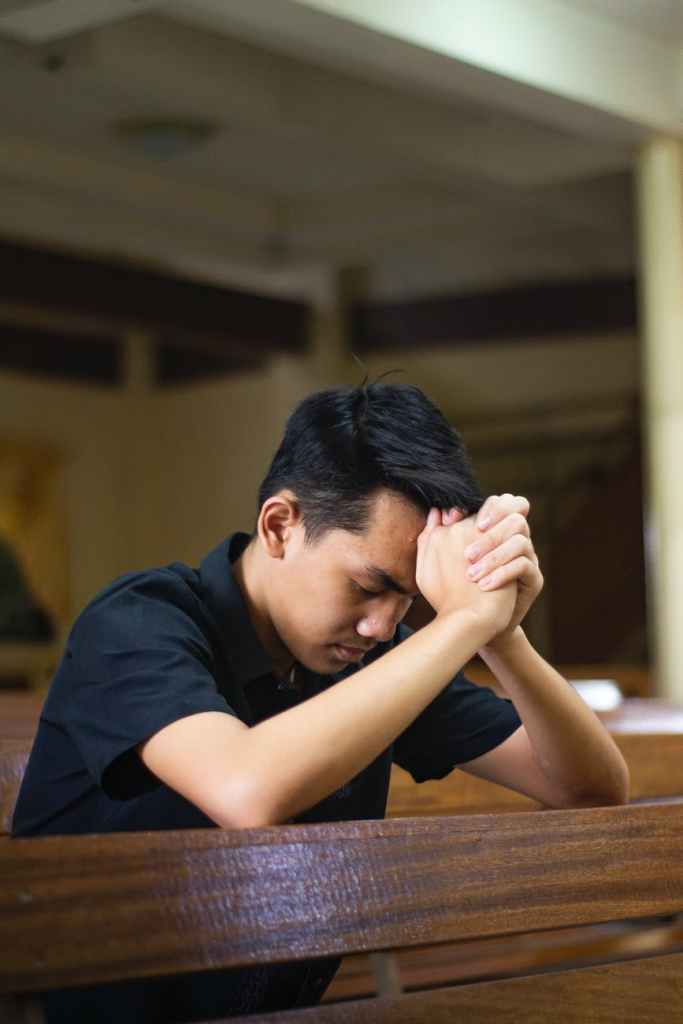
Praying Scripture

At least once a month throughout this year, I want to write about some practical ways to freshen the pursuit of a life of prayer. Today I want to discuss several ways of praying scripture.

Photo by Pixabay on Pexels.com
Photo by Tima Miroshnichenko on Pexels.com
  • Probably the most common way people think of praying scripture is to actually pray the words of a Psalm or Biblical prayer. Many of the psalms ARE prayers in poetic form, so this makes sense. Some excellent “prayer psalms” include Psalm 3, 8, 15, 16, 18, 25, 30, 51, 54, 57, 63, 66, 71, 84, 98, 101, 103, 108, 123, 130, 138, 139, 142, 143, 145, 146, and 150 (among several other passages throughout the others). There are also wonderful “prayer” passages throughout the rest of the Bible. In the New Testament, there are the prayers of Jesus, as well as prayers throughout the Epistles. Choose a familiar one. Choose one that is new to you. Choose an entire passage, or just a few verses…
  • A second way to “pray scripture” is to read a passage and “pray it back” in your own words. Echo the praises (or the confessions or requests) of the original speaker. Add your own personal words and thoughts to those of others through the ages.
  • Another method is to read a passage of scripture, or a story from scripture, study it, meditate on it–then use what you have just learned about God’s character to inform your prayer. Did God show Himself to be powerful, merciful, faithful, Holy, patient? Reflect that back to Him in prayer.
  • Related to this method is praying back to God His attributes and names as found in Scripture. “The God who sees.” “The God who hears.” “The Almighty.” “The God of Abraham, Isaac, and Jacob.” The God of Israel.” “Wonderful Counselor.” “The Son of Man.” “The Lamb of God.” etc.
Photo by Pixabay on Pexels.com
  • Yet another way to use scripture in prayer is to reflect on a person in the Bible and how God used that person, blessed that person, or dealt with that person. David, Daniel, Ruth, Hannah, Jonah, Samson, Gideon, Esther, Paul, Peter, Mary Magdelene– there are several examples of real, fallible, often ordinary people who encountered God. How did God find them? What did He do for them (or in spite of them!)? What could He be planning to do in YOUR life if you follow Him?
  • Finally, there are scriptures that leave us with questions. Why not use these questions as a opportunity to pray!? Take a passage of scripture that you find confusing or even contradictory, and pray about it. Ask God for wisdom and understanding. Come to Him believing that there is a purpose to each word and passage of the Bible, and that He can reveal Himself through even those words that seem to make no sense!
Photo by Tima Miroshnichenko on Pexels.com

Of course, not all of our prayers will be “scripture-based” in this way. But what might happen if we try praying this way once this week? Prayer is so mysterious and multi-faceted–we should engage and explore as we pray. After all– it’s more than just prayer– it’s a pursuit!

Leftovers

As I type this, I am eating leftovers. I made a big pot of beef stew the other night, and we’re making another meal out of what was left. Some things, like beef stew, often taste just as good (or even better) warmed up again. And it’s very convenient not to have to make a new meal from scratch. We like leftovers, and I am very thankful that we are able to have an abundance of good food. But today’s leftovers started me thinking…

Photo by SenuScape on Pexels.com

Did you know the Bible has something to say about leftovers? I’ve been reading in Exodus and Leviticus lately, and as God was giving instructions for the Passover Seder, the gathering of Manna in the desert, and the priestly sacrifices, He spoke about leftovers. During the Passover, all the meat was to be eaten on the night of the Passover Seder. Any meat left over was to be thrown away. Several families could share a Passover meal, in order to avoid waste, but the meat was to be eaten in one meal. Similarly, Manna was to be gathered and eaten for a single day (except over the Sabbath). No leftovers! The priests were allowed to eat leftover meat for a single day after the sacrifice, but no more than that.

Photo by SHVETS production on Pexels.com

So often, the “rules” of the Old Testament seem strange to us– arbitrary and even harsh. But in context, they paint a picture of God that we would do well to study. So what do the rules about “leftovers” teach us about God and our relationship to Him?

  • First, God knows what we need. We may often plan too much or too little, or use more or fewer of our resources, but God knows exactly what is necessary. And if we are listening to and trusting God, we can be sure that His plans and resources are sufficient!
  • Secondly, God PROVIDES what we need. Our tendency to store extra food and other resources “just in case” may be motivated by a sincere desire to help our neighbors in times of trouble– there’s nothing wrong with that– but often we are motivated by fear or pride, instead. We fear not having enough, instead of trusting God to provide. Or we pride ourselves on our ability to provide, rather than acknowledging that our resources and abilities all come from God.
  • God’s ways are NOT our ways. God sent the entire nation of Israel into the wilderness. They had all their animals with them– but no place to plant, grow, or harvest wheat or other grain. God could have ordered them to slaughter their animals for meat, or sent them with huge stores of harvested grain, or led them through areas with gardens and orchards. But instead, He sent Manna and quail for them to eat. He provided in ways that they could NOT.
  • God’s mercies (and provisions) are “new every morning.” (Lamentations 3:22-23) God doesn’t give us the “leftovers” of His abundance. He lavishes us with Love and Grace. Every day!
  • God isn’t impressed with my “leftovers.” My leftover offering; my leftover time spent in prayer or Bible Study; my leftover interactions with others, my leftover discipline.
Photo by Foss Valentine on Pexels.com

And that brings me around to prayer and giving. Do I give God my “leftover” praise and thanks? My “leftover” confession (after I’ve pouted and argued and justified by actions to myself)? Do I lift up “leftover” requests–those things I think I’m “supposed to” pray about, but not those I judge unworthy of MY time or attention? After all, would I want God’s “leftover,” absent-minded help? Would I want His half-hearted blessing? Do I give “leftovers” to my family, friends, and neighbors? Or mere scraps to those in need?

The other day, I was on Facebook, and one of my friends requested prayer. It was something I felt was a trifling situation, and I scrolled past her post. But then I realized that I was scrolling past an opportunity to join God in what He would do for my friend. It might not have felt like a big deal for me, and certainly it wasn’t beyond God’s ability to work in that situation. Why did I hesitate? Did I feel I had the right to judge either my friend’s motives or her situation? Did I think I could lift up a “leftover” prayer– “God, help _________. Amen.” I stopped, scrolled back and took a moment to lovingly lift her up, and pray that God would intervene in her situation and forgive me for presuming to judge.

Leftovers are not “bad” or “wrong” in and of themselves. They are blessings. But we should not live on “leftovers”– especially when it comes to our relationships with God and others! Like God, let our mercies be “new every morning,” and let us share gladly from the abundance God has given, not grudgingly or half-heartedly.

Photo by Andrea Piacquadio on Pexels.com

Cautious or Courageous?

Being a Christian is less about cautiously avoiding sin than about courageously and actively doing God’s will.

Dietrich Bonhoeffer

Dietrich Bonhoeffer was a German pastor and writer who ended up sacrificing his life as he protested the Nazi regime in his homeland. Many of the things he wrote are uncomfortable for modern Christians to read. Sometimes, we want to coast along, joyfully celebrating our own Salvation, and ignoring the evil around us. After all, the ultimate victory is already won in Christ, isn’t it?

I write a lot about the power of prayer. And I stand behind what I write. But a life of prayer and Bible Study that doesn’t result in actively living out and spreading the Gospel is a life of lukewarm and selective obedience. This is not to say that we should skitter around trying to earn our Salvation with random acts and self-righteous crusades. But we must have the courage to “come out of the closet” as Christians in a dark and unfriendly world.

Photo by Pavel Danilyuk on Pexels.com

What does this look like? Does it mean wearing a badge or getting in people’s faces with “the Truth.” Perhaps. But mostly, it means every day living out the kind of love and truth that Jesus demonstrated. Jesus didn’t march in protests, hand out pamphlets with convicting messages, or start arguments to humiliate atheists in front of crowds. But He didn’t back down in the face of arguments and tough questions asked by His opponents. He ate with sinners– but He didn’t wink at their sin, or send them away reassured that they were “good enough” to please God. He went where God sent, spoke God’s Truth, and DID God’s work.

Jesus wasn’t a writer; He wasn’t a professor of Theology, or an elected official. The Pharisees were constantly frustrated with His lack of “credentials.” But their frustration came because Jesus spoke with the kind of authority they could never achieve– Jesus was authentic. He spoke, not from cold and lofty intelligence, but from wisdom and love. And Jesus didn’t just speak. He served. He listened. He lived out all that He spoke. He “courageously and actively” DID the will of the Father.

Jesus prayed and studied scripture. Jesus spent time alone communing with the Father. He spent time in rest. He spent time being social with His family and friends. But in every activity, He wove in the Truth of God’s word. And crowds followed Him. They wanted to listen, even as He spoke uncomfortable truths. And some of them came to love Him. Others came to hate Him, and even kill him.

We can’t be true followers of Christ and not risk being mocked, and hated. We WILL be misunderstood, laughed at, persecuted, ignored, and inconvenienced. We should not invite this with obnoxious or arrogant behavior. But we must not shrink away from it when it comes at us, or try to avoid it by being silent in the face of evil and injustice.

One of the recent charges leveled against Christians is that we meet evil with “thoughts and prayers” but little action. We must be wise and careful with such charges. Often, the taunt is thrown at us in an effort to get us to take a specific, ungodly “action” INSTEAD of praying. But we must honestly examine ourselves and ask what Godly actions SHOULD I be taking to make a difference? What actions should I be denouncing as ungodly, even if they are popular and seem to be “right?” And what must I do to defend the power of prayer in the face of ridicule?

Photo by Mikhail Nilov on Pexels.com

One of the other charges leveled against Christians is that we are “intolerant.” Again, we need to be wise and careful in answering this charge. Are we quick to judge others, while giving ourselves a “pat on the back” for merely avoiding a particular sin or sinful lifestyle? What is if about our life and work that makes others see us as “intolerant?” Are we exclusive and prejudiced in our interactions? Or are we humble in presenting the truth of God’s word? Do we speak from a need to defend our own actions or from a desire to help others? Are others offended by our words and actions, or by the truth of God as it convicts them?

Photo by Ketut Subiyanto on Pexels.com

I pray today that I would be courageous and active in LIVING the Christian life, and not merely writing about it.

What Might Have Been…

One of my favorite movies is “It’s a Wonderful Life.”  No matter how many times I watch it, it never gets old for me.

IAWLposter

Oh, I know it’s in black and white, and it’s out-of-date.  It’s politically incorrect on numerous levels, and it’s theologically incorrect, as well.  But for all that, I think it has a deep wisdom we are sorely lacking, and I think what it says about the power of prayer cannot be dismissed.

Much of the movie is spent tracing the less-than-wonderful things that happen to George Bailey.  George Bailey is the quintessential “nice-guy” who always seems to miss out–as a boy, he leaps into an icy river to save his brother’s life.  His brother is saved, but George ends up losing the hearing in one ear.  While his friends go off to college, George has to stay behind; when he finally saves enough money to enroll, he ends up having to give up his college plans to save the family business after the sudden death of his father.  He loses out on business opportunities, and keeps losing skirmishes with his nemesis, the  “scurvy spider” local magnate, Mr. Potter.  Finally, on Christmas Eve, George has had enough.  The weight of always doing “the right thing,” and watching others get ahead while he falls further behind, has taken its toll.  When his absent-minded uncle loses $8000, George faces scandal and prison after all his years of frustrating hard work in a job he hates.  After uncharacteristic angry outbursts and a short drinking binge, George is in utter meltdown.  In desperation, he prays.  It’s not an eloquent prayer, or an angry outburst.  It’s a wimpy, doubtful, squeak of a prayer, “Dear Father in Heaven, I’m not a praying man, but if you’re up there and you can hear me, show me the way…show me the way.”

ItsAWonderfulLife4.jpg

What the viewer knows, but George doesn’t, is that dozens of people he knows have all been praying for him.  We get to hear the voices of his wife, his children, his friends and neighbors, all praying simple and heartfelt prayers.  And we also know that God is at work– preparing to send an angel to help George.  But in the bar, at the end of George’s tearful and tremulous prayer, God is silent.

Not only is God silent, but George’s downward spiral continues after his prayer.  He gets punched in the jaw by a man he was arguing with earlier in the evening, and he doesn’t even have enough money to pay his bar tab.  Driving away, drunk, he runs into a tree and gets yelled at.  Reeling down the road and onto the bridge, where he intends to jump to his death, he almost gets hit by a truck.

jimmy_stewart_in_its_a_wonderful_life.jpg

While I like the sappy, happy ending of the movie, the incredible darkness and despair leading up to George’s encounter with Clarence, and the even darker “alternate universe” that George experiences are what keep me coming back to this movie– not because I’m a glutton for emotional wringers, but because George’s story is only wonderful when he gets to see it from God’s point of view.  Mr. Potter tells George that he is worth more dead than alive.  But Clarence shows George the true worth of his life, not as it might have been, but as it might NOT have been.

And so it is with our lives–all the “might-have-beens” and broken dreams and failures that weigh us down– God is NOT (as we so often picture Him) shaking His head and grumbling about our wasted potential and weakness.  And often, the people we most fear to disappoint, our family and friends, are rooting for us to stay the course– to finish the race. God wants to wipe away all the seeming failures; all the “what-if”s and the “what might have been”s and replace them with the bigger picture of “what is happening around you”, “what really IS”, and “what can be.”*

Its-a-Wonderful-life-foto.jpg

There was never anything wrong with George’s dreams of traveling the world and becoming a successful builder of skyscrapers “a hundred stories tall.”  George’s desire to have nice things for himself and his family was not evil, and, in fact, his ambition to do great things was not that different than Mr. Potter’s.  But George’s choices, while “right” were not  in his own immediate best interest.  What Clarence showed George was not “what might have been” had George made other choices in his life.  What he showed George was indeed far more wonderful– the ultimate IMPACT of George’s choices!  God didn’t “take away” George’s dreams or ruin his life.  But neither did He prevent him from making selfish choices or getting what he wanted in the moment.  George’s life wasn’t wonderful because of what happened to him– though the ending is miraculous, and George gets toasted by his hero brother as “the richest man in town.”  But what really made George’s life wonderful was that he was THERE– there to save his brother; there to fall in love with Mary; there to help and influence so many people; there to tuck his daughter into bed and “paste” the petals of her flower; even there to stand up to Mr. Potter when no one else did.

God answered George’s prayer.  And He answered the prayers of his friends and family.  But He didn’t answer in the way we would expect.  In fact, George jokes with Clarence that the answer to his prayer was getting slugged in the jaw.  But God’s answer came in the form of a childlike “angel” who struggles and questions his ability to make a difference– much like George himself.  God didn’t answer the superficial aspect of George’s prayer– He didn’t show him the way to get $8,000.  He didn’t show him the way to defeat Mr. Potter, or suddenly become more successful.  But He did show George the way to look for “what is” and “what can be”, instead of the “what might have been.”

quebelloesvivir17.jpg
  • For anyone who has lost a friend or family member to suicide–my prayer is that we too, would find comfort  and hope in the lives our loved ones lived, and not in the manner of their death.  God is gracious and loving above all that we can imagine.  Part of the hope and message of this movie for me is that, even if George had jumped at the end, his life was still wonderful in God’s eyes, just as it was to all who knew and loved him..

“How Are You Today?”

I got a scam phone call the other day. The lady on the other end started the conversation by saying something like, “Hello. My name is Jane, and I’m calling from the Business Lending Department. How are you today?” Her voice was pleasant, and her question innocuous, yet my “radar” went off, and I hung up the phone, rather than answering her question.

Photo by Andrea Piacquadio on Pexels.com

Why?

Three things:

  1. I answered the phone by saying, “Hello” and the name of my little shop. It’s a business phone number, and I get many calls from customers, and from salespeople as well. Usually, as soon as I say my greeting, they jump right in with their request, or their name and request, i.e. “This is Sharon. I was in the other day, and I was wondering about…” or “This is Matt from (Name of my insurance agency), and I need to speak with you about a change in your coverage.” A business person may occasionally say something like, “I hope you’re doing well today.” or “Is this a good time to talk?” A friendly customer or a friend will often ask, “How are you?” or “How are things going?” But this was different. There was a long pause, which seemed odd, as though the call might be from far away. The phone number that came up on caller ID was not from a local area code and didn’t include a state listing or a company name (Pennsylvania or Wyoming, State Farm, or Citibank, etc.) This can happen with cell phone calls, but it can also be an indication that the call is coming from a hidden number. “Jane,” while she sounded pleasant, also sounded like she was reading from a script. “My name is Jane” indicated that she was not someone I would have met before, and “How are you today?” sounds like the opening line from a stranger’s sales pitch.
  2. I have read articles about scam calls. One of the first things they do is ask an innocuous question like, “Can you hear me, ok?” It seems like a simple, silly, harmless question, but if they ask you a Yes/No question, and you say “Yes,” they can record your answer and use it to “prove” that you agreed to a product or program by phone– even if you didn’t. “How are you today?” isn’t a Yes/No question, but it is the kind of question most people will answer without thinking, and it naturally leads to other seemingly innocuous questions, like “Can you hear me?” Call me hyper-cynical or super-suspicious, but these questions seem– from a complete stranger– like “set ups” to me after reading about how they are sometimes used.
  3. “Jane” is such a common and unassuming name. I have friends named Jane. One of my favorite novels is “Jane Eyre.” I love reading books about Miss Jane Marple, the unassuming, crime solving spinster of the equally unassuming village of St. Mary Mead. She was just “Jane.” Not Jane Torquist, or Jane Sullivan, or Jane Suzuki. And “just Jane” was calling from “the Business Lending Department.” Not the business lending department of a particular bank or business group. Not Wells Fargo, or Chase, or even a local banking chain. Not Visa or American Express. Just “the Business Lending Department.” Again, call me paranoid, but that set all my alarm bells ringing.
Photo by Andrea Piacquadio on Pexels.com

Now– what does any of this have to do with prayer? Bear with me, as I tell the “rest of the story.”

Photo by RODNAE Productions on Pexels.com

After I hung up, I felt bad. Hanging up–even when I suspected the call was far from innocent–seems very rude. “Jane” had been very pleasant. It felt churlish and even cowardly to hang up on her. I started stewing. I don’t like to think of myself as rude, churlish, or cowardly. After all, what would Jesus do, right? So I prayed for forgiveness, even though I wasn’t sure precisely what I had done wrong.

And God answered my prayer immediately. “Jane.” The woman had given her name as “Jane.” I have a friend named Jane who is going through a tough time right now. I have been praying for her for weeks. Had I prayed for her today? Not yet! God had sent me a reminder of my friend Jane via a scam call! Aren’t God’s ways mysterious and magnificent?! He also gave me a great idea to help me be at peace about the phone call. I thought, “if “Jane” ever calls back, I’m not going to answer her question, and play a passive role in the conversation. I will simply ask her what company she works for, and how SHE is today!”

And guess what! About an hour later, “Jane” called back. The call started exactly like the earlier call. The script was exactly the same– the same pause, the same wording. So when she asked, “How are you today?” I simply asked her, “which company do you work for? You said you are calling from the Business Lending Department, but which one?” And this time, SHE hung up! I had been right to be suspicious– right to stand my ground and not get involved in a scam– on any level.

Such a simple encounter, but so many lessons to be learned:

  • God answers “little” prayers; “awkward” prayers; He answers earnest and simple prayers when we just don’t even know what to pray or why. Things that seem silly (like whether or not I seemed rude or cowardly to a scam artist!) are never too silly or unimportant to take to the very Throne of Grace.
Photo by Engin Akyurt on Pexels.com
  • God uses simple things to call our attention to bigger things. This woman could have chosen any name, but she said her name was Jane, and I believe that was God-ordained, to remind me to lift up my dear friend– to move my mind from something silly, like a phone scam, to something infinitely more important, like thanking God for Jane’s friendship over the years, and sharing in her immediate concerns.
  • God teaches us to recognize authenticity– and insincerity–as we follow Him. My “alarm bells” went off almost immediately when I answered this phone call. Why? Even though “Jane” was pleasant, she didn’t seem authentic. She used words and phrases that seemed friendly and harmless on the surface, but the delivery just seemed “off.” The same thing can happen when I read an on-line article, or listen to an advertisement, or even get involved in conversations. God sends us a spirit of Discernment that is sharper than just “being savvy.” But it comes from Him– not our own intelligence or listening to “smart people.” I know this because I know people who are acknowledged as “intelligent” who fall for amazingly stupid schemes and make appallingly bad life choices, while others who are called “simple” avoid such things without even being able to explain how. It reminds me of a story about a famous pianist practicing a complicated piece. She was playing along and suddenly stopped, saying she had missed a single note. “How can you tell?,” asked her friend who was standing nearby. “Your fingers are flying over the keys. How can you tell that you missed anything. The piece sounded fine to me.” “But I practice hours each day. I’ve heard myself play this piece hundreds of times correctly. I know what it SHOULD sound like. And this time, I missed a note.” When we practice listening to God’s voice– whether in the Bible, or in our conscience, or in the advice of others, we learn to hear “what it SHOULD sound like!”
Photo by Juan Pablo Serrano Arenas on Pexels.com
  • God teaches us wisdom, and gives us “second chances” to put it into practice. Jesus faced malicious Pharisees who tried to trick Him with seemingly innocuous questions. They came to Him with polite but false flattery, and tried to catch Him “off guard.” Jesus generally responded by asking them simple questions in return– questions that often exposed their real motives. He didn’t lose His temper; He didn’t passively fall into their traps. He didn’t walk away without an answer, either.
  • God can use “bad” experiences to teach us good things. He is teaching me to recognize a “scam” when I start to hear it. But (hopefully) He is also teaching me to speak and act more authentically myself! How often do I ask someone “How are you today?” not because I actually want to hear the answer, but because it is the “polite” thing to do? How often do I ask seemingly harmless questions without thinking? My words can bring healing– or suspicion, harm, or confusion. Jesus asked some probing questions, but always with the intent of helping others see the truth.

Lord, I am so thankful for the lessons you give us– even in the simplest situations in the midst of our busy lives. Help me to listen for your voice– even when “Jane” is on the line. What an amazing and wise God you are!

Paying for the Privilege

I read a most astonishing article some time ago. Wealthy white American women are paying up to $2,500 for a meal and a gut-wrenching session about how racist and bigoted they are. https://www.theguardian.com/world/2020/feb/03/race-to-dinner-party-racism-women?fbclid=IwAR12AvWdTyht5RV0vfBfZ5XUEnA4441GU8efLSX8xtdfePI2R9KEesCipI8 Over a fancy dinner, they discuss how their privilege has (arguably) caused them to ignore and/or deny the needs and rights of others, based largely on prejudices and fear.

Photo by bruce mars on Pexels.com

I won’t waste space to analyze all that I think is wrong with this scenario– but I will say the following:

  • $2,500 is a lot of money for most Americans, let alone many others around the world It’s more than most people spend in a month for groceries, utilities, and more, let alone one meal.
  • Talk is (according to the old phrase) cheap.
  • If having difficult talks over a plate of overpriced pasta and wine could really solve major problems, I’m shocked that we still have so many problems in the world!

I’m dismayed by this article. I hope that some good comes from these efforts, but I don’t expect such tactics to end racism, bigotry, or ignorance. These women are paying for a privilege on top of all their other privileges– the right to feel righteous and “woke” to lingering problems that have never personally touched them. It would not occur to them to invite 10 women who don’t look like them, don’t live like them, don’t speak like them, and don’t dress like them to come and share their dinner. They would not share their hospitality, their fine china, or their fancy dessert with a working-class woman with olive skin and an accent, or a single mother fighting to make ends meet and losing the battle– of any skin color. They might give another $2,500 to a homeless shelter or soup kitchen across town– they would not befriend anyone who needed those services, however.

Photo by Levent on Pexels.com

Most importantly, they are likely to believe that by “owning” their prejudices for an hour, they are absolved of their responsibility to “love their neighbor as themselves.” They can be comfortable in the belief that their feelings “do them credit” and make them better than others who “are in denial” about their “subconscious biases” and “micro-aggressions” toward the people with whom they interact (or routinely ignore). They may take high-minded actions to force the government to “deal with” people less fortunate than they, but they will take no steps to get involved personally with the families who suffer from injustice and poverty just outside the gates of their exclusive communities.

But another more insidious problem with the article is the way I can choose to respond to it. Articles like this are designed (on some level) to create anger, division, and a sense of disgust toward those who are considered “privileged.” I look at the hypocrisy outlined in this article, and I may assume that “privileged” rich white people are all alike. I may assume that the “problem” is their affluence and their indifference– that if they could be “made to” care more, or made to pay “their fair share”, poverty would disappear, and with it, prejudice and other issues that separate the “privileged” from the “rest of us.”

Photo by Steven Arenas on Pexels.com

But poverty, prejudice, injustice, and other issues are symptoms of a much greater problem– Sin. And Sin is a problem that can never be solved by sitting down over a meal or writing a large check or even learning empathy with others who suffer. In one very large sense, we all are “paying a price” for Sin. We live in a broken world, where Sin and its effects are felt by all. Even wealthy, healthy, “privileged” people suffer heartache, betrayal, loneliness, confusion, addiction, and loss. None of us has the “privilege” of being untouched by Sin.

And while each of us can and should be active in helping to mitigate the effects of Sin, we cannot eliminate them. We can never “pay” enough to make Sin and its consequences “go away.” Only the shed blood of Jesus Christ can do that. The real “privilege” in life is not great wealth, or social standing. It isn’t comfort and the ability to shell out a month’s wages for a single uncomfortable meal. It isn’t the temporary feeling of being more “virtuous” than one’s neighbor–and that brings me to reflect on my own actions and beliefs.

What “privileges” do I take for granted? What makes me feel “virtuous?” What makes me feel guilty or ashamed, that I would “pay” to have someone else make me feel “enlightened?” Jesus doesn’t call me to “feel” virtuous. He calls me to follow Him and become more virtuous. He has already paid far more than a month’s wages (or even a lifetime’s wages) to redeem me from Sin’s curse, and allow me to live with peace and joy– no matter my financial or social circumstances! I have the very real “privilege” of knowing Him! And so can anyone else who puts their trust in Him. Through Him, we have riches that cannot be sold, bought, lost, or traded. But they can be shared! I cannot rid the world of poverty, prejudice, greed, injustice, or death. But I can help others find strength, hope, relief, and joy in their journey, as I point them to the Savior. I can’t give a thousand dollars, but I can give a few dollars to a local food bank, or volunteer time to help others. I can share food or water or clothes with someone who is in need just down the street. I can listen to someone who needs a friend, and I can offer to serve where someone needs a helping hand. I can also give the benefit of a doubt instead of harsh judgment– even to those who seem hypocritical or “unenlightened” in their earthly “privilege.”

Lord, my prayer today is that I would pour out compassion– even on the ladies in this article–and on all who need it most. Your heart is that all of us would live in peace and lovingkindness. Help me to see my neighbors as you see them–ALL my neighbors. All the time.

Photo by Kamille Sampaio on Pexels.com

The real privilege is not of wealth or comfort. The real privilege is to learn to love and be loved as Jesus loves– freely, sacrificially, whole-heartedly and without limit. May we celebrate in that privilege today.

Lord of All

Lord of the Universe
Lord of the Laundry
Lord of my Future
Lord of my Pocket Change

Photo by Miguel u00c1. Padriu00f1u00e1n on Pexels.com

Father
Almighty
Sovereign
King

You are bigger, greater, wiser, more powerful and Holier than any
Person
Thing
Spirit
Force
Within or without.

Photo by Yunus Tuu011f on Pexels.com

You are Light
And Life.
Wisdom and
Healing.

You are Trustworthy
True
Righteous
Glorious and
Worthy of Praise.

Nothing escapes Your notice.
Nothing surprises You.
Nothing frustrates or puzzles You
Nothing is too difficult or too messy or too broken
For You to LOVE
To Change
To Cherish

Photo by Gustavo Gutierrez on Pexels.com

You Redeem
Renew
Save and
Reconcile
Make all things New

You ARE!

Photo by Efigie lima Marcos on Pexels.com

And that is More than Enough for anything that can happen today!

The Urgency of Death

Just last week, one of my high school classmates died unexpectedly.  I’m getting to “that age” when more and more of my contemporaries are experiencing health issues– diabetes, heart problems, cancer, arthritis, even early-onset dementia– but this friend seemed to be in good health.  She had just been celebrating the birth of a grandson, and other milestones.  Death sometimes comes when (and to whom) we least expect it.  It is shocking, saddening, and frightening all at once.  

Photo by Andrea Piacquadio on Pexels.com

Death has an urgency that pushes other concerns away.  Death is final; permanent.  Death is powerful– we can’t cheat it, defeat it, or comprehend it.  Death frightens us, angers us, and mystifies us.  We begin to look at our own life and ask questions–Who am I?WHY am I?  What makes me “me”– individual and uniquely different from everyone else?  Is there a purpose to my being– to my being “me”, “here” and “now”?  How can I find and fulfill that purpose if it exists?  Do I have an eternal destiny after this life?  If so, how can I know what it might be?  Can I change that eternal destiny?

sunset ship boat sea
Photo by Pixabay on Pexels.com
Photo by Liza Summer on Pexels.com

Some people argue that our origins are accidental; our uniqueness is merely a random generation of genetic code; our purpose non-existent or self-determined; and our destiny no more than dust. They avoid talking about death–and the meaning of life. They want to “live in the moment,” but they don’t want to ask any questions of the past or future. And they mock anyone who does. Many of them hear me or read what I write and dismiss me as intellectually lazy, gullible, or crazy.  I’m all right with that, as long as they will be intellectually honest enough to admit to the questions; and open enough to acknowledge that there may be more than a quick denial as an answer.  Crazy– well crazy is as crazy does, I guess…I’ll let my actions answer that one.

Death is powerful and mysterious, but I believe that God is more powerful, and omniscient– he has already crushed the power of death, and invites us to view death from a different perspective.  When we take everything– including death– to the Lord in Prayer, he takes the weight of it, the fear of it, the pain of it off our shoulders and carries it to the cross.  HIS death overshadows even our own, in its power to overcome. The urgency of death is not that it is the end of all things.  The urgency of death is that it signals the end of our opportunity to recognize and live out the purpose of this short life.

art cathedral christ christian
Photo by Pixabay on Pexels.com

If that isn’t an urgent reason to pray for those you love, I don’t know of a better one…

It’s also an urgent reason to pray for those around you who are grieving the recent loss of a loved one.  And don’t just be someone who prays..be an answer to prayer– reach out with a card, a note or e-mail, or spend some time with them.  Let them know that a) their loved one is not forgotten, and b) neither are they!

All the Time in the World..

I never seem to have enough time…

Photo by Taryn Elliott on Pexels.com

But that is an illusion. I have the same amount of time as anyone else. And I can’t do anything to add to the amount of time I have in a day, or a week, or even a lifetime.

27 Can any one of you by worrying add a single hour to your life?… 33 But seek first his kingdom and his righteousness, and all these things will be given to you as well. 34 Therefore do not worry about tomorrow, for tomorrow will worry about itself. Each day has enough trouble of its own.

Matthew 6:27; 33-34 NIV via Biblegateway.com
Photo by Andrey Grushnikov on Pexels.com

What’s more, I was created for eternity– I have all the time in the world! Or, at least, I will. Right now, I feel bound and limited by time. And sometimes, I feel controlled by it. Deadlines, promises, schedules–all hem me in and press in on me, making life stressful and forcing me to make tough choices.

Photo by Oladimeji Ajegbile on Pexels.com

Will I choose to use my time each day wisely? Will I let pressing tasks and urgent interruptions throw me off-stride or make me feel guilty? Will I see time as a resource, or let it become my master?

Over the years, I have found several things to be true about time– you’ve probably noticed them too (and maybe even more!), but it’s nice to have a reminder every now and again:

  • Time spent with God in prayer, meditation, worship, and Bible study is NEVER wasted time. It is an investment in eternity. No matter how long or short, it never seems as though I’ve spent “too much” time with God at the expense of other things. It’s when my quiet time turns into self-talk or daydreaming, or when my mind is divided with worry and distraction that it eats into the rest of the day.
  • Time spent caring for others is better than time spent amusing myself. That doesn’t mean that I don’t need “down” time, and “self-care”, and boundaries– everyone does. But hoarding time for my entertainment and achievement at others’ expense is a recipe for depression and emptiness.
Photo by Lgh_9 on Pexels.com
  • Time IS a resource. It should be managed wisely. That means having a schedule, but not being enslaved by it. There is always something you CAN be doing, something you probably SHOULD be doing, and something you SHOULDN’T be doing. None of them matter. What you CHOOSE to be doing is what will get done. Someone may argue that they have no choice–” when I’m at work, I don’t get to choose what I do; when I have chores or housework or family obligations, I don’t have a choice”–but that’s a false argument. You CHOOSE to go to work, to fulfill your obligations and family commitments, to do the “next right thing” that comes your way. And every time you make a choice, you show what is important to you. The difference is owning up to your choices– both good and bad– and recognizing that time (in this life) is a finite commodity. You can’t be everywhere at once or do everything at once.
  • God is beyond time and the giver and keeper of time. He doesn’t want us to waste His gift, and He won’t give us “more” time in our day, but He can redeem some of the mistakes we’ve made with time, and He can give us the wisdom to make the most of today, and help us manage each day to come.
Photo by Andrea Piacquadio on Pexels.com

When Nebuchadnezzar is Your Boss

Have you ever worked with a “difficult” boss or co-worker? Even a job you love can become a source of tension and even torture. Maybe they are lazy. Maybe they are unreasonable and demanding. Maybe they are incompetent. Maybe they are corrupt. Maybe they just “push all your buttons.” Whatever it is, it leaves you frustrated, stressed, and questioning your future.

Photo by Mikhail Nilov on Pexels.com

I’ve worked for several bosses through the years, and most of them were wonderful. But there were a couple…I can still remember uncomfortable confrontations and unresolved issues even years later. And I know several others workers who suffered under those same managers– many of them left to take other jobs because the situation took so long to resolve. A bad boss can really hurt a company or office. They can destroy morale, decrease efficiency, and make it difficult for anyone to know what the goals and expectations are– this week!

Photo by Andrea Piacquadio on Pexels.com

One of the difficult things about working under a “bad” boss, is that, often, what makes them a “bad” boss also makes them look “successful”– at least in the short term. They manage to turn in impressive “numbers”– it looks like production is up and waste is down; it looks like everything is in order to outsiders. Those who leave are often workers who have been with the company a long time– new hires come in at a much smaller salary, and with “fresh” ideas– at least initially. If there is an overriding goal, they will pursue it with fanatical focus, making them look committed, determined, and competent. If workers can see underlying problems, other people only see what looks like focused efficiency and “sour grapes” from harassed staff members.

Photo by August de Richelieu on Pexels.com

When I worked for “bad” bosses, they seemed to last about five years, before their cruelty, arrogance, or incompetence forced them to leave. They went on to “new” positions, where they followed the same patterns.

Photo by Victor on Pexels.com

In the Bible, there was a young man (just a teen when we first meet him) named Daniel. Daniel had grown up in a noble family in the capital city of Jerusalem. But Jerusalem was besieged and fell into the hands of a tyrannical ruler named Nebuchadnezzar. Daniel was captured, exiled, and taken into Nebuchadnezzar’s service. On the surface, this may have appeared to be a “plum” position; he got to live in the palace, and he served as an advisor. He had food, clothing, advanced education, and many “creature comforts” available to him that were lost to many of the other exiles who were forced into manual labor.

But Daniel’s position was far more precarious than it appeared. Nebuchadnezzar wanted men of intelligence, culture, and breeding– and he wanted them to be clean, healthy, and confident–but he also demanded results, and often, he demanded the impossible! Field hands might have brutal masters who would beat them for minor offenses, but Nebuchadnezzar didn’t inflict punishment– he simply “eliminated” anyone who didn’t produce the desired results!

In the history books, Nebuchadnezzar looks like a successful ruler– his armies had conquered every region they attacked. And by sending the people into exile– bringing the best and brightest to Babylon, and scattering the rest–Nebuchadnezzar kept the conquered regions from rebellion and revolt. He appointed satraps and governors to help manage the empire, and it looked like nothing could stop him from conquering the world! But Daniel wasn’t reading a history book. He was living and working under one of the harshest and cruelest rulers of his time!

The book of Daniel gives us at least three examples of Daniel and his friends being put in life-and-death situations involving some of Nebuchadnezzar’s more impossible demands. And in each case, God gives miraculous rescue to Daniel and his friends as they bravely serve this unwelcome “boss.”

When we study Daniel, we tend to focus on the miracles– the fiery furnace, the writing on the wall, the lion’s den, and the answers to impossible dreams. But God didn’t just send miracles, and He didn’t rescue them from having to serve in Nebuchadnezzar’s court (or in the courts of some of the equally bad rulers who followed!)

God’s purpose in our life may involve serving with or under people who abuse their authority, or who don’t “deserve” to be leaders. But His purpose also involves teaching us to serve, as Daniel and his friends did, with integrity, dignity, and consistency. It wasn’t easy for Daniel– he was the target of jealous plots, megalomaniacal panics, and culture wars. God didn’t rescue Daniel from his situation– Daniel remained in exile, likely for the rest of his life–but God rescued Daniel from being consumed or changed by his situation. And Nebuchadnezzar wasn’t a “mistake” that God made. He was God’s chosen tool to punish Israel for its unfaithfulness, and His chosen tool to show His sovereignty OVER even the great Babylonian Empire!

Daniel was known as a man of prayer– that’s how he ended up in the lion’s den (years later under another ruler)! Praying won’t keep us from experiencing “bad” bosses, or from facing difficult situations. But prayer can help us to persevere, to endure, and to be a shining example of God’s faithfulness.

I would love to say that I behaved like Daniel when I was in a “bad” boss situation. I didn’t. I endured, but I was impatient and vocal in my displeasure. I complained, I worked grudgingly, and I even changed jobs to get away from the situations. I don’t mean to suggest that it is always God’s will that we stay in a bad situation– I was lucky to be able to change jobs, and grateful for the opportunity to continue to do good work elsewhere. But in times when we are being tested and cannot change jobs, or have to endure chaos and upheaval for a long season–we need to be willing to be like Daniel, who was faithful, loyal, patient, and trustworthy. Daniel “kept his head” because he kept his heart turned toward the source of his real success– not the King of Babylon, but the King of Kings!

Photo by Pavel Danilyuk on Pexels.com

I don’t know what situation you may be facing today– what injustices, or upheavals you are enduring. But I pray that God would give you the strength and wisdom to be a Daniel. Look past the Nebuchadnezzar in your world, and serve the King!

Blog at WordPress.com.

Up ↑