I like to know things–I like to solve puzzles, figure out mysteries, learn trivial facts. I want answers. So when I go before God in prayer, I often ask questions. Why is this person suffering? When will their suffering end, and how? Where were you in this disaster (as though God had stepped out for a minute and wasn’t aware of what happened)?
God stays silent.
I can grow frustrated in the silence or I can learn to trust. That doesn’t mean that I no longer want answers; just that I am willing to wait on God’s sovereign timing. It also means that I am need to more about God’s nature–God doesn’t keep secrets or withhold knowledge because He wants to torment me, or frustrate me, or play some cosmic mind game (though some people accuse Him of doing just that). God withholds full disclosure of His plans, His reasoning, and His nature out of love and compassion. Suppose I could see into the future, even give out warnings, but had no power to stop disaster from coming. Not only would I be haunted by the disaster itself, but by the full knowledge of its coming. Suppose I could see a miracle in advance; know when and how it would unfold. There would still be joy, but it would be muted by the foreknowledge– of course there would be a happy ending; of course there would be a miracle– I saw it all from afar off.
The Apostle Paul touches on this in 1 Corinthians, chapter 13. This is commonly known as the “Love Chapter”, and the first half is frequently quoted at weddings and church sermons. But the end of the chapter is a wonderful message of hope and faith, ending with Paul’s triumphant statement about all three:
1 Corinthians 13:8-13English Standard Version (ESV)
8 Love never ends. As for prophecies, they will pass away; as for tongues, they will cease; as for knowledge, it will pass away.9 For we know in part and we prophesy in part,10 but when the perfect comes, the partial will pass away.11 When I was a child, I spoke like a child, I thought like a child, I reasoned like a child. When I became a man, I gave up childish ways.12 For now we see in a mirror dimly, but then face to face. Now I know in part; then I shall know fully, even as I have been fully known.
13 So now faith, hope, and love abide, these three; but the greatest of these is love.
God loves us with a perfect love. Because of that, I can trust Him, and have hope in the midst of my questioning. So when I pray with questions, I can know that God has “filed them away”– He is fully aware of my situation, questions and all, and He is fully faithful to answer them all in His perfect wisdom and timing. Someday, I will know– not only all that I don’t know now, but why I had to wait.
God will provide full disclosure. with compassion, love, and wisdom that only He can give.
Many years ago, I watched the movie, Dr. Doolittle. (This was the old version with Rex Harrison, long before Eddie Murphy or Robert Downey Jr. starred in the more recent remakes.) I can still remember the wonder of seeing a “Pushmi Pullyu– a quirky, mythical-type creature that looked like a conjoined llama. It had two heads and two sets of front legs pointing in opposite directions. If one half of the creature wanted to run forward, the other half would have to try to run backward. It was large, awkward, timid, but rather useless for working, herding, etc.
Then, last week, as I was entering the ladies’ rest room at church, I was astonished to find it opening with only the lightest of touches. Just as I tried to push open the door, someone on the other side was pulling it open on her end. Both of us commented on how easily the door swung open as I pushed and she pulled at the same time. We didn’t plan it– we couldn’t see the other person helping us along– but the result was worthy of remark.
There are many things in life that have a push and pull element, including prayer. When we push and pull in opposite directions, awkwardness, complications, and chaos can be the result. How many times have I prayed very specifically for a desired result, only to find that MY will, MY timing, and MY wisdom is NOT the same as God’s?! God still hears– and answers– my prayers. But my expectations and desires cause me to be frustrated and even ungrateful for God’s response. Instead of seeing His protection and provision, I see only delay or denial. I’m trying to push God in one direction as He pulls me in another!
How much easier when I pray for God’s will to be done “on earth as it is in Heaven!” (Matthew 6:10) When I truly push in God’s direction, doors open and peace wraps around me like a comfortable blanket. I may not “see” God’s actions on the other side of the door, but I can sense His presence in a remarkable way!
The same is true when asking for prayer from others. Sometimes, we refuse to ask for help or prayer– maybe we’re too proud; maybe we are too ashamed to admit our weakness or need; maybe we just isolate or withdraw. At other times, we may ask for help (or offer help) that is contrary to what we (or others) really need. I remember one friend from college who would consistently ask for advice, only to come up with dozens of excuses why she couldn’t (or wouldn’t) follow any of it! And I’ve been there, too!
Praying with and for others is a great privilege and responsibility. It is not enough to simply listen to a quick request or make an offhand promise to “pray about it” later. It is important to listen carefully, show compassion, and pray according to Scripture and God’s will. Showing compassion may involve asking questions, getting some background about the circumstances, offering practical help, or stopping to pray WITH the person NOW as well as praying later.
Thankfully, prayer is not meant to be like a Pushmi-Pullyu. God designed prayer to be much more than a means of asking for help. And His power is designed to help us become “more than conquerors” (Romans 8:37). In fact, the Apostle Paul reminds us that God is “able to do exceedingly, abundantly, above all that we ask or think, according to the power that works in us” (Ephesians 3:20)
For anyone familiar with the Star Trek series, the phrase, “To boldly go…” conjures up pictures of galactic travel at warp speed, with haunting soprano voices, uniforms in mustard yellow, red, and black, and the voices of actors William Shatner or Leonard Nimoy (or Patrick Stewart, et al.) It probably does not make anyone think of The Lord’s Prayer, or the teaching ministry of Jesus Christ. I hope to change that today!
There is a running theme throughout scripture of God asking people– from Abraham to Moses to Mary and Joseph to the Disciples and Apostles and on to all of us– to COME, and to GO. BOLDLY! Abraham left all that he knew to follow God’s prompting to the promised land. Moses was told to Go and confront Pharaoh, Mary and Joseph were to Go– to Bethlehem, to Egypt, and then to Galilee. The Disciples were to Go into all the world! We are to continue this Great Commission.
But Jesus, in His teaching on Prayer, also told His Disciples to Come to the Father with boldness:
One day Jesus was praying in a certain place. When he finished, one of his disciples said to him, “Lord, teach us to pray, just as John taught his disciples.” He said to them, “When you pray, say: “Father, hallowed be your name, your kingdom come. May your will be done on earth as it is in heaven. Give us each day our daily bread, Forgive us our sins, for we also forgive everyone who sins against us. And lead us not into temptation but deliver us from the evil one.” Then he said to them, “Suppose one of you has a friend, and he goes to him at midnight and says, ‘Friend, lend me three loaves of bread, because a friend of mine on a journey has come to me, and I have nothing to set before him.’ Then the one inside answers, ‘Don’t bother me. The door is already locked, and my children are with me in bed. I can’t get up and give you anything.’ I tell you, though he will not get up and give him the bread because he is his friend, yet because of the man’s boldness, he will get up and give him as much as he needs. So I say to you: Ask and it will be given to you; seek and you will find; knock and the door will be opened to you. For everyone who asks receives; he who seeks finds; and to him who knocks, the door will be opened. Which of you fathers, if your son asks for a fish, will give him a snake instead? Or if he asks for an egg, will give him a scorpion? If you then, though you are evil, know how to give good gifts to your children, how much more will your Father in heaven give the Holy Spirit to those who ask him!”
As Christians, we often quote the Beatitudes, where Jesus said, “Blessed are the meek..” We should not be pushy, arrogant, or selfish in our actions or our prayers; but we should be bold, confidant, and eager. God doesn’t want us to be timid, coy, or “fake” in asking for wisdom, power, and basic needs– He wants to give us good gifts. He also wants us to trust Him enough to ask forthrightly and boldly.
So let us pursue the “Enterprise” of prayer by “boldly” going before God’s throne, and then “boldly” going forth in the power of His Holy Spirit.
We offer prayers to God, but sometimes, we lose touch with who He really is. One way to freshen our prayer life and our spirits is to rehearse the names of God. There are several throughout the Bible– too many to list them all here, though I will leave some at the end of today’s blog and links to sites that list more.
The pursuit of prayer isn’t just about the act of praying– it is about knowing God better; getting to know who He is, and who we are in Him. God is so much bigger than any one name or title, and the more we rehearse and remember His attributes, the more we discover Him to be beyond all that we can think or imagine.
It is also a wonderful idea to keep a running list (or start one) of your personal names for God– in fact, many of the names we use come from names given by others after a personal encounter with God. “The God Who Sees,” “The God Who Hears.” “God My Provider,” “The God Who Heals,” and many more are scattered throughout the Bible as God revealed Himself in a personal way to various people. There are also names and titles God has used to introduce Himself– “The God of Abraham,” “Yahweh (I AM),” “King of Kings,” “Almighty,” and many more.
God is spirit– we may feel His presence, but we do not see Him as He really is– not yet! And when we don’t see Him, we can lose sight of His Glory and Honor and Power. So let’s take some time today to “see” Him with new eyes– eyes of wonder and awe as we get just a bigger glimpse of Who HE Is!
Yahweh/ Jehovah Abba/Father Adonai Almighty Alpha and Omega Ancient of Days Author and Finisher of Our Faith Beginning and the End Beloved Bread of Life Breath of Life/Breath of Heaven Christ Comforter Cornerstone Counselor Creator Deliverer Divine Dwelling Place Elohim El Shaddai Eternal Everlasting Father Exalted Example Father Fisher of Men Foundation Glorified God Good Gracious Guardian Help High Priest Holy Hope I AM THAT I AM Immanuel Immortal Incarnate (Jesus) Infinite Intercessor Invincible Jesus Just Judge Kind King Lamb of God (Jesus) Law-giver Living Water Lord of Lords Majestic Maker of Heaven and Earth Merciful Messiah Mighty God Most Holy/Most High Name Above All Names Noble Omnipotent (all-powerful) Omnipresent (ever present) Omniscient (all-knowing) Perfect/Perfector Prince of Peace Promised One (Jesus) Provider Quick to Hear Ransom Redeemer Refuge Resurrection (and the Life) Righteous One Ruler Sacrifice Sanctuary Savior Shelter Shield and Defender Strong Tower Teacher Truth Unchanging Victory Well-Spring Wise Worthy Yesterday, Today, and Tomorrow (The Same)…
November 10th marks the 50th anniversary of the wreck of the Edmund Fitzgerald, an iron freighter that sank in Lake Superior. The gale-force winds tossed the ship (carrying over 26,000 tons of iron) in waves of over 35 feet. All 29 sailors aboard the ship were lost. The event has been memorialized in song and stories, and in at least one museum display at Whitefish Point Michigan, near where the wreck occurred. The bell tolled 29 times, once for every life lost in the storm. Fifty years later, families are still haunted by the tragedy– a continuing reminder of the fragility of life, and the power and destructive force of winds and waves.
Some days, the hits just keep coming– an unexpected expense, a misunderstanding at work, a fender-bender during the commute, a plumbing nightmare, a migraine, the phone call with bad news. Each new pain rolls over us, throwing us off balance, and trying to drag us under like a storm-tossed ship.
“Even so, it is well with my soul.” The story of this favorite hymn has been told many times, but it bears repeating. ( It Is Will With My Soul. wikipedia.org ) The author of these words had lost everything– his only son had died; shortly afterward, he lost almost all his money and property in the Great Chicago Fire of 1871. A friend, knowing of his troubles invited him to bring his family to England for an evangelistic campaign. Mr. Spafford (the above-mentioned author of the hymn) had to stay behind and sent his wife and four daughters ahead. Their ship, the Ville du Havre, was struck by another vessel and sank. All four of the daughters were drowned, and only his wife survived to send him news of the tragedy. As he made the heartbreaking voyage to rejoin his wife, he passed the place where his daughters had most likely gone down. At that moment, Mr. Spafford felt a welling of peace and hope beyond human understanding, which led him to pen the words that have given comfort to so many in the years since:
When peace, like a river, attendeth my way, When sorrows like sea billows roll; Whatever my lot, thou hast taught me to say, It is well, it is well with my soul.
Nothing can prepare us for the sorrows that sweep over us at unexpected moments. Nothing can stop them, and though we know they will come, no one knows how high they will rise, or when they will crest and break around us. No one except the one who set the boundaries of the sea, the one who has walked on its waters, and the one who can calm the storm.
God doesn’t remove the sorrows or tragedies from our life or prevent them from washing around and over us. But for those who trust in him, there is a promise that we will not be consumed. We may be in a storm-tossed boat in the middle of a raging sea, but at our faintest cry, Jesus will walk on choppy waves to be by our side and bring comfort. He will teach us to be in awe of him as he commands the winds and waves to obey him. He will teach us to trust him in the good times and the bad. He will teach us to say, “It is well with my soul!”
35 Who can separate us from the love of Christ? Can affliction or anguish or persecution or famine or nakedness or danger or sword? 36 As it is written: Because of You we are being put to death all day long; we are counted as sheep to be slaughtered.[a] 37 No, in all these things we are more than victorious through Him who loved us. 38 For I am persuaded that not even death or life, angels or rulers, things present or things to come, hostile powers, 39 height or depth, or any other created thing will have the power to separate us from the love of God that is in Christ Jesus our Lord! Romans 8:35-39 (HCSB)
11 But Christ having come as a high priest of the coming good things, through the greater and more perfect tabernacle, not made with hands, that is to say, not of this creation, 12 nor yet through the blood of goats and calves, but through his own blood, entered in once for all into the Holy Place, having obtained eternal redemption. 13 For if the blood of goats and bulls, and the ashes of a heifer sprinkling those who have been defiled, sanctify to the cleanness of the flesh: 14 how much more will the blood of Christ, who through the eternal Spirit offered himself without defect to God, cleanse your conscience from dead works to serve the living God? 15 For this reason he is the mediator of a new covenant, since a death has occurred for the redemption of the transgressions that were under the first covenant, that those who have been called may receive the promise of the eternal inheritance.
Some chores just never end– laundry, trash, sweeping, making the bed, doing up the dishes, mowing the lawn/shoveling the drive or sidewalk– the list goes on. Simple chores, but repetitive and sometimes annoying. And they are all necessary– if someone doesn’t do them, the whole family (sometimes the whole neighborhood!) suffers.
Today, I’m so grateful for the promise that Christ’s sacrifice is sufficient– He redeemed us completely and forever through the shedding of His blood. It’s a done deal! It is FINISHED! All that the ancient sacrifices represented has been fulfilled in the death and resurrection of the Messiah. Atonement and reconciliation are available for the asking. We still need to seek His face; to turn from our sin and humble our hearts before our maker. But the Holy Spirit makes it possible to lay the guilt and burden of sin at the foot of the cross and walk away free and unencumbered.
Someday, even the mundane chores of this world will come to an end. Many of the tasks we do every day involve maintenance– maintenance of our earthly bodies (hygiene, eating and/or dieting, dressing, etc.), maintenance of our earthly homes (dusting, sweeping, washing, painting), and maintenance of the earth around us (lawn care, neighborhood beautification, trash pick-up, caring for trees, pets, gardens, etc.). But better by far, the “chore” of cleaning up after our sins and mistakes and emotional scars will be forgotten in the joy of our eternal restoration.
We live in this knowledge and hope even now– one day we will live in the full reality. Every reminder, every vestige and speck of sin will be banished, never to be dug up or brought to mind. Relationships won’t just be patched up– they will be fully restored. Consequences will be expunged; hurts and damages erased and completely healed.
Once for all–for all time, for all who place their trust in Messiah, for all the breadth and depth of words, actions, thoughts, deeds, consequences, injuries–Once for ALL!
What if– I say the wrong thing, and ruin someone’s day? Or perhaps I get lost and lose my way?
What if– I get bad news about my health Or suddenly lose all my worldly wealth?
What if– Friends turn to foes this week? What if I can’t find the peace that I seek?
But
What if– I take it to the Lord in prayer? Bring Him every question and care?
What if– God prevented that unseen wreck; Stopped me from falling and breaking my neck?
What if– God saw the looming temptation And removed me from the situation?
How many times had God stepped in And quietly saved me from the effects of Sin?
And when He hasn’t–do I really know If my life would be better if God never said, “No!”
What if– I trusted and always gave praise When God’s answers reveal His mysterious ways?
What if– I ask and seek and knock, Knowing my God is the Eternal Rock? Knowing that God hears, and cares, and sees Much more than I do when I’m down on my knees.
“..casting all your anxieties on him, because he cares for you.” 1 Peter 5:7 (ESV)
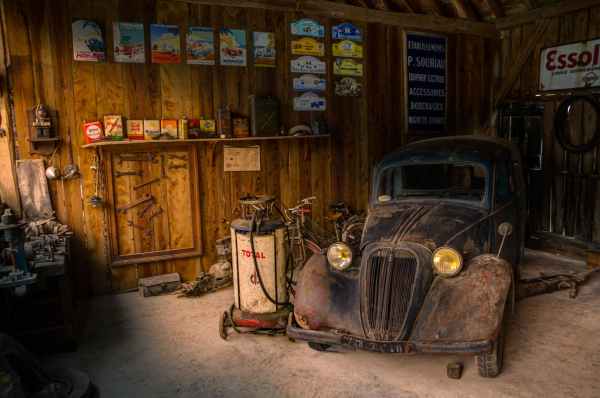
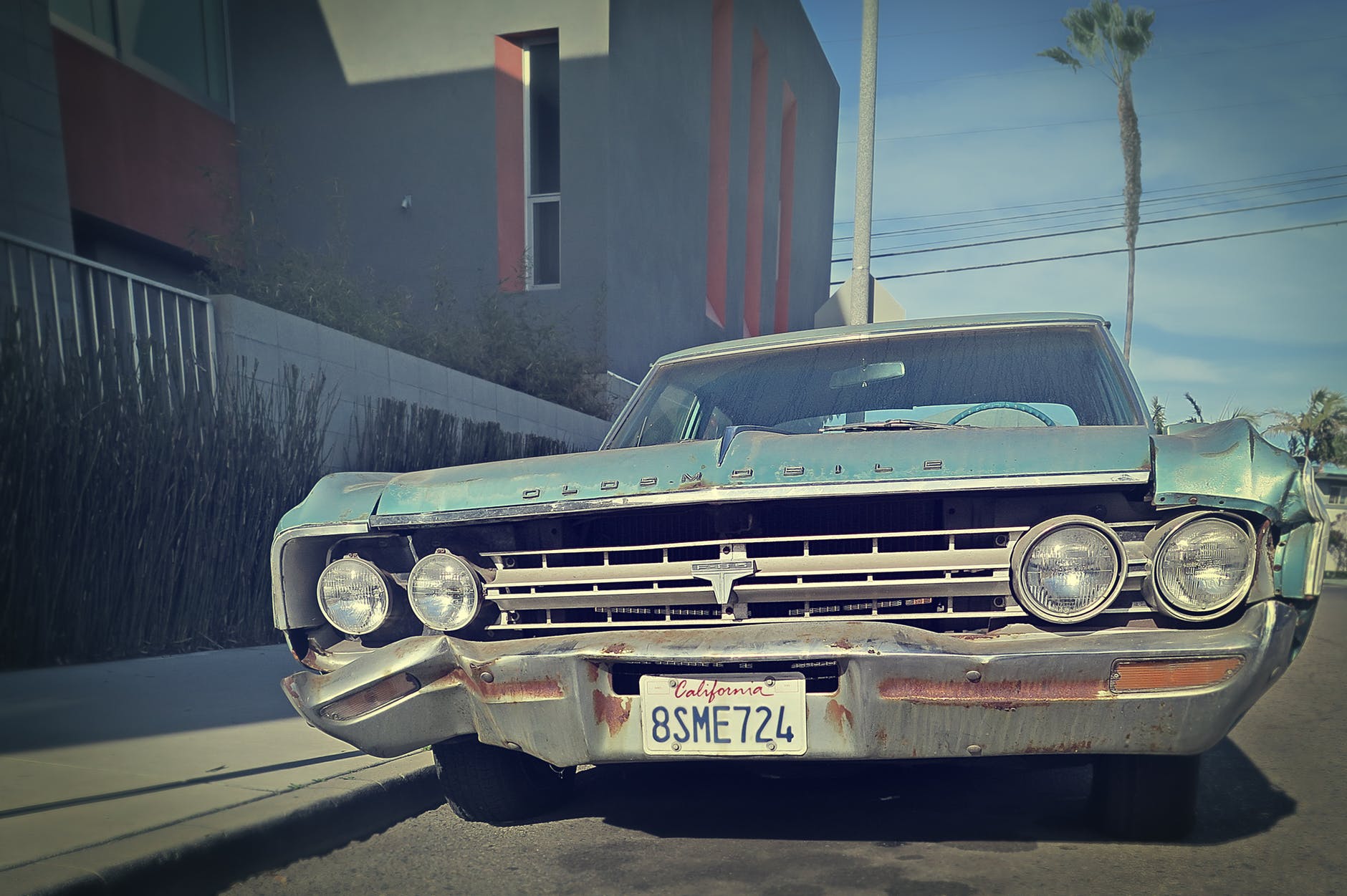
A widow contacted a local church to come pick up an old rusty car that belonged to her late husband. He had one request– that the car be kept in the old garage at the church parsonage and that anyone who wanted to could stop by and work on it. He had purchased it years before with the intention of restoring it to drive around in during his retirement. But time and ill-health had robbed him of his dream. His hope was that someone might enjoy working on it, and if no one came to work on the car, perhaps the church could sell it to scrappers and at least get some money for it. An ad was placed in the bulletin, and another in the local paper. Hours were set up, when people could stop by to work on the car.
Soon, there was a great stir– several members of the congregation came forward to protest. Some were concerned about the safety and liability involved in having the car in the garage where anyone could get to it. Surely, it would be in the church’s best interest to have the car locked away, so only members of the congregation could get to it. Others were arguing about how to restore the car properly– what was the original color of the chassis and the interior? Could they find the exact parts for that make and model? Who would work on the engine? The interior? The frame? Surely the old man didn’t mean for just anyone to come in and work wherever s/he felt like working…how would the job get done? Detailed schedules were posted and discussed; re-posted and opposed.
Weeks, and even months went by. The church was divided; some threatened to leave. And none of the church members had even visited the old car in the garage– it sat forgotten. Except…
A young man in town had seen the notice in the newspaper. He wrote down the original work schedule and followed it, quietly coming every Tuesday and Friday night after work, and patiently working to restore the car. He cleaned and oiled parts, “tinkered” with others, sanded off rust, fixed hose lines and checked all the panels. He patched upholstery and polished up the old tires. He painted the chassis and found matching window wipers to replace the old ones. He worked on the motor and the exhaust, and even the old AM radio. He made sure the mirrors and windows were not cracked or chipped. He even hunted around to find the right hood ornament to replace the one that was lost. Only the pastor knew of his work, and even he had never joined the man or asked about his progress– he merely opened the garage door every time the young man arrived, and closed it when the young man left.
After eight months, the division in the church had reached a fevered pitch. One group demanded that the car be removed to a secure location and that the labor should be divided based on an elaborate chart that focused on how long someone had attended the church, their skill base, what time they were available to work, and whether they were currently an elder or deacon (or had ever served as an elder or deacon).
When the group arrived at the garage, they were shocked to discover that the car was completely restored, polished and glorious in its restoration. Shocked and angry, they attacked the pastor– How could he have allowed this to happen “behind their backs?” When the pastor admitted that he was as surprised as they were, their attention turned to the young man. They hunted him down and demanded an explanation. How dare he come and work on the church’s car without their knowledge or approval! Who did he think he was?!
The young man’s answer left them stunned. He said, “I read an invitation that said anyone who wished could come and help restore an old car. I came every week, and no one else ever showed up to help. No one from your church did any work on this car. No one ever came to check on it or see if any work had been done. No one from your church gave me a word of encouragement, no one had a helpful suggestion or even constructive criticism. No one offered me a word of gratitude. No one helped hold a lamp or flashlight so I could see the hidden damage as I made repairs. No one helped when I had to hoist the motor or clean off the grease and grime or polish the chrome. The invitation was clear– whosoever will, may come. I came. I followed the directions I was given– I came on Tuesdays and Fridays, and I cleaned up each time before I left. I put a lot of work into this car, and now I’m done. I hope your church can decide on a good use for it; she’s a beauty, and I think she’ll run really well– I didn’t take her for a spin, but I hope someone will be able to enjoy her for many years to come.”
The crowd from the church still had one question– Why had the young man come in the first place, and why did he keep working on the car all those months? Did he want the car for himself?
“No,” the man said; “when I first read the ad in the paper and I saw the word ‘restoration’, I was deeply moved. Not too many years ago, I was living a very wild and dangerous life. I felt alone and abandoned and I was filled with anger. I was restless and destructive. But one man in town took me under his wing. He gave me a part-time job, and made me promise to stay in school. But much more than that, he and his wife invited me over for dinner several times. They made time out of their busy schedule to come and watch me play basketball after I finally made the team in my senior year. When I joined the army, they sent letters and care packages. The old man used to tell me that I reminded him of an old car he bought and kept in his garage. He said it was an amazing machine that just needed restoration– he said I was an amazing person who just needed some restoration. He told me that Jesus came to bring restoration to anyone who wanted to come to Him.”
“I finished my time in the army; I came back and started my own business. I got busy and moved on with life. I never came back to thank that man for his kindness, and he never asked for anything from me. I guess I expected to thank him some day, but I found out that he had died. I went to see his widow. She was so gracious, asking about my family and wishing me the best, and then she mentioned her husband’s last request. And when I saw the ad in the paper, I knew this was a way for me to thank the old man, but also to experience what restoration really means. When I came to God, I was rusty, filthy, and broken. God has sanded off the rust in my life, mended broken relationships, and given me new life. It’s an honor to be able to bring restoration, no matter the circumstances. God has done so much to restore my life, it’s the least I can do to help restore an old car. I hope that somehow, this car can inspire renewal in someone else’s life the way its owner helped bring restoration to my life.”
I wish I could say that the young man’s story changed the hearts of the angry deacons and elders. A few of them were touched; some even convicted of their pride and selfishness. But most were simply put out.
What have I done with the precious gift of restoration in my life? God, lead me to someone today who needs to hear, and SEE, the miracle of restoration and Grace.
So often when I pray, I do so in isolation, and I think of it as a solitary activity. I am communicating with God– often silently–it is a private conversation. Or is it?
At any given moment on any given day, millions of prayers are ascending to Heaven. Consider the arithmetic of prayer– millions of prayers, millions of pray-ers, and God is part of each one–twice the number of participants. But God is triune– so now there are four participants in every “personal” prayer, and four participants for every one in a group prayer! It’s mind-blowing to think of all the spiritual investment that is happening through prayer at this very instant around the world. And in heaven? Our prayers ascend; God likens our prayers to incense– a pleasing aroma. If I light a scented candle, or burn incense, the aroma is not personal– it permeates the air, penetrates my clothing, clings to my hair, lingers and touches on all who are nearby. This doesn’t diminish the intimacy of prayer, but transcends it, and transforms it. God is relational– from the intimacy of private prayer to the glory of his kingdom– he wants us to belong, to share, and to love. Love doesn’t happen in a vacuum. It is not a solitary activity, nor one in which anyone is “just a number.”
I think we are often deceived and intimidated by numbers and statistics. We sometimes feel very small and powerless and alone. We measure our prayers by their duration or the number of our words, or how small our perceived influence. We pray alone or in a tiny group, or seem to get swallowed in a crowd, and we think our prayers travel a linear path to God’s ears and they are ended. May our eyes be opened to the reality that we are never alone, never helpless, and never unimportant to God–that our prayers, like incense, linger, radiate, and echo as they ascend.
God uses the small and humble things in life to confound those who think they are wise and powerful and important. He is the God who changes our suffering into sufficiency, and our abiding into abundance. He multiplies our faith, and increases our joy; he divides our sorrows and cancels out our sin. He hears our every sigh. He dries our every tear. He knows our every thought. He inhabits the praises of his people– let that sink in as we pray today.
God always hears our prayers. He always has an answer. But it isn’t always the answer we expect. Sometimes, God answers, “No,” or “Not yet.” Sometimes, He answers in ways that seem confusing and mysterious, and even ironic.
I remember as a young teen praying for a woman in the community who had lymphoma. In treating her condition, the doctors, trying a new experimental treatment, did permanent damage to certain muscles, leading to a progressively debilitating condition. She died a slow and painful death, unrelated to her original condition. Where was God? How could He listen to our prayers and give such a cold, cruel answer?
But God sees a bigger picture than we do. This precious woman had incredible faith and grit. She had spent years working diligently to help others and teach God’s Word. She continued her work, even in the midst of her health struggles almost to the end of her life. What might have caused some people to turn their backs on God made her more dependent on His Grace. She faced her pain and weakness with grit, strength, and hope in God’s eternal healing. God’s answer wasn’t to rescue her from the suffering, but to be present in it with her. And her example lives on to this day.
Some people would read about this and be dismissive. What a cop-out! What a delusion! But there is much more to her story than her own condition or even her response. One of the men in our church really struggled with God’s seeming indifference. He wrestled with his own faith for many months while watching her get weaker and weaker. But through his struggle, he grew in his conviction that God was present in every situation. He was inspired to do short-term mission work, partly as a result of this growth. Knowing that God would be with him, he threw himself into loving people from a different culture–different climate, different language, different work ethic– and helped build churches and other facilities for those in need. Many people were helped, inspired, and encouraged because of his dependence on God– a dependence enhanced by facing his own questions and doubts.
Family members and community members, watching her struggles, were inspired to pick up where she left off– working and teaching and reaching out to others with zeal and joy–following her marvelous example. Today, some of her family members are leaders in their churches, raising the next generations of witnesses to God’s mercy and power. Doctors, having failed in her treatment, learned from it– a difficult lesson for all, but a lesson, nonetheless. Her joyful attitude (before and during her struggles) inspired me to direct the Vacation Bible School program at our church for a few years, and to teach Sunday School when I moved to a new location. And those are just a few of the ways I have “seen” God’s answers to our prayers. God did not give our friend the physical healing we wanted. But her struggles– and her response of faith and perseverance–inspired a ripple effect far beyond her own pain and disappointment. And she has received the ultimate healing! Her pain, intense and unjust as it was, was only temporary. Her life, her legacy, her joy– they all live on!
How often do we look at a situation and think we know what is “best?” How often do we feel that God’s answers are “wrong?” Wrong timing, wrong outcome, full of hardship or pain– how can this be God’s “perfect” will for us? There was nothing about this woman’s situation that was comfortable; no reason to see a good outcome for her or her immediate family. She died. She experienced pain, with no earthly justice. Her suffering was undeserved and unmitigated. She refused to sue the hospital or the doctors– she wanted them to be able to continue to learn from her experience so they could help others NOT to suffer in the future. But her life was shortened and made grueling in the process, and she received no payout, no financial compensation, no symbolic reparation for her sacrifice. We received no “miraculous” answer to our prayers. It seemed at the time that the more we prayed for healing, the worse her condition became. We continued to pray anyway, knowing that God DID hear us, and God’s ways were not our ways– they are always better. Even when His ways seem like silence.
This all happened several decades ago, and many of the “answers” from our urgent prayers are still hidden from our eyes. Many of our questions remain unanswered. But God’s will is still active, even in these tragic circumstances. Someday in Heaven, it may be revealed to us exactly how God used this woman’s life and struggles to bring about blessings to hundreds of other people– causing them to grow strong through her weakness, drawing them to His healing and wisdom in a world of pain and confusion.
I have lost many friends to cancer. I pray for each one, and the outcomes are never exactly the same. Some go into remission, only to have the cancer return three or four years later. Others get amazing healing– surgeons are astonished and perplexed by the rapid or miraculous disappearance of cancer cells. Some go into fast decline and die almost immediately after their diagnoses. And each situation impacts people in different ways, showing God’s power and presence for those who are willing to look for them. Prayer isn’t a magic formula for immediate and total healing. Prayer is lifting up a situation that is beyond our control or understanding and trusting that God has a perfect plan beyond what we can see or understand. Cancer cannot take God by surprise. Death cannot outwit or overpower God. We live in a world where Evil can overwhelm us; our bodies can betray us; our future can be lost in the fog of uncertainty and suffering. But God is present– not only IN our suffering, but ABOVE and BEYOND our suffering.
We don’t pray for our friends and loved ones to suffer. We want them to be healed, to be free of pain and grief; to be at ease and blessed with abundance. This is normal; it is good. God wants to bless us. It doesn’t bring Him joy to watch us suffer. But He also wants us to see the blessing of His presence, His wisdom, and His power. Sometimes, we can’t see that as we look around. Sometimes, we need to look up! Even from a hospital bed (see John, chapter 9). Even from the flames of suffering (see Daniel, chapter 3). Or from the belly of a whale (see Jonah, chapter 2). And we will find that God is there.

































 Pursuing Prayer