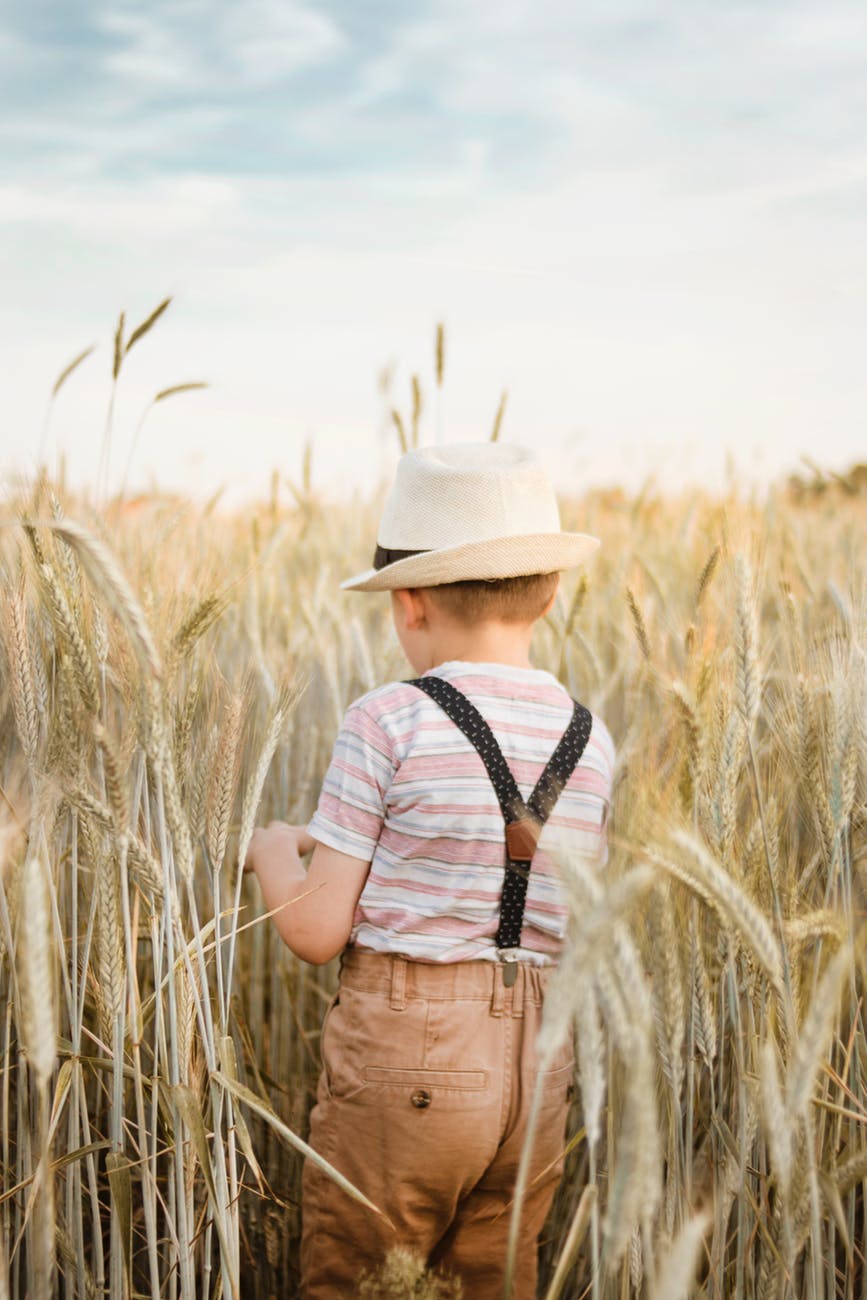
It is harvest time where I live. It is especially fraught with significance this year, as we have had a bad growing season– heavy rains in the spring and low temperatures meant that much of the planting was delayed or cancelled. Fields that normally produce excellent crops of corn or wheat or soybeans look stunted and sickly, or they lie barren. Recent rains and threats of early snow mean that crops must be harvested now or lost, even if the yields are low or the crops not fully mature. While there will be a lot of grief and exasperation among farmers this year, there will also be relief and rejoicing in certain quarters.
As followers of Christ, we are both harvest and harvesters. Like seed, we “die” to our nature, and grow and mature in newness of life by the Holy Spirit. And like farmers and harvest workers, we are called to plant seeds, to “sow” the Gospel of Christ, to tend to one another’s growth and nurture, and to “harvest” a crop– bringing others toward repentance and faith.
Another song from my childhood impressed itself upon me during my worship time today– a simple chorus, but filled with joy. Our mornings, evenings, sunny days and wintry nights may be filled with sowing seeds and tending crops; the work may seem tedious or even thankless. But we can take joy in knowing that there is a joyful and glorious Harvest ahead. Some day, we will be gathered together– not a puny harvest hastily gathered to avoid spoiling, but an abundant, fruitful harvest of God’s love lavished, nourished, and brought to perfection.
Lord, thank you for the reminder that all of this life –even the trials and frustrations–will produce a harvest of praise and worship. Give me the strength and wisdom to work joyfully for Your glory today. Help me to sow the seeds of Grace and Truth that come from your word, and to help others grow. Help me to respond with eagerness to the Holy Spirit’s prompting and counsel, and be a blessing to those around me. Amen.
1 I love you, Lord, my strength. 2 The Lord is my rock, my fortress and my deliverer; my God is my rock, in whom I take refuge, my shield and the horn of my salvation, my stronghold. 3 I called to the Lord, who is worthy of praise, and I have been saved from my enemies. 4 The cords of death entangled me; the torrents of destruction overwhelmed me. 5 The cords of the grave coiled around me; the snares of death confronted me. 6 In my distress I called to the Lord; I cried to my God for help. From his temple he heard my voice; my cry came before him, into his ears. 7 The earth trembled and quaked, and the foundations of the mountains shook; they trembled because he was angry. 8 Smoke rose from his nostrils; consuming fire came from his mouth, burning coals blazed out of it. 9 He parted the heavens and came down; dark clouds were under his feet. 10 He mounted the cherubim and flew; he soared on the wings of the wind. 11 He made darkness his covering, his canopy around him— the dark rain clouds of the sky. 12 Out of the brightness of his presence clouds advanced, with hailstones and bolts of lightning. 13 The Lord thundered from heaven; the voice of the Most High resounded. 14 He shot his arrows and scattered the enemy, with great bolts of lightning he routed them. 15 The valleys of the sea were exposed and the foundations of the earth laid bare at your rebuke, Lord, at the blast of breath from your nostrils. 16He reached down from on high and took hold of me; he drew me out of deep waters. 17 He rescued me from my powerful enemy, from my foes, who were too strong for me. 18 They confronted me in the day of my disaster, but the Lord was my support. 19 He brought me out into a spacious place; he rescued me because he delighted in me.
I grew up hearing hymns– lots of them. My mother and grandmother and aunt all played the piano or organ for church, and often practiced during the week. My father led the congregational singing sometimes, and my grandfather taught himself to play many musical instruments, and used hymns to become familiar with the chords, notes, and fingerings of the instrument du jour. The congregation at our small church sang with more gusto than musical talent, but we sang during the Sunday morning service, the Sunday evening service, the Wednesday evening service, and at any special occasion.
Two things happened as a result of this: one not-so-good, and one very good thing. The not-so-good thing was that I became somewhat inured to the songs and lyrics– I knew what the songs said, but I didn’t really understand or internalize the truths they contained. However, the very good thing was that the hymns stuck in my memory– years later they came back like the best of friends to comfort me, challenge me, and remind me of sacred realities in the midst of mundane frustrations and worldly confusions.
This old hymn, neglected, out-dated, and seldom sung in our current services, was my lullaby growing up. My mother would sing it over and over as she rocked me to sleep, often running out of verses and words and just humming or filling in with “la, la la, la,” until she reached the chorus. “Love lifted me. Love lifted me. When nothing else could help, Love lifted me.”
As a young child, I experienced the loving arms of my dear mother lifting me to her lap and rocking me for what seemed like hours until I drifted off to sleep. As a teen, I scoffed at the lyrics a bit–what need had I to be lifted and helped, when I was invincible and young and ready to conquer the world. As an adult, this old hymn came back with power and comfort when my own efforts and life’s stormy circumstances left me with little hope and lots of confusion, doubt, and regret. It reminds me that help and hope can be found even in the raging storms of grief, depression, oppression, and pain. “When nothing else could help…” God could, and did! He can and will!
“Love lifted me”–such a simple phrase, and by itself not a solid foundation for hope and victory. In fact, there are many popular songs that speak of love lifting a person up, making one feel buoyant and hopeful, joyful or young. But this song speaks of a different and everlasting, all-powerful love– the Love of Christ. And it doesn’t just lift us up from one pleasant place to another. It reaches down into the depths of sin, despair, and even death to lift us up beyond all hope, beyond any strength or effort we could generate or receive from any other source. And this great Love reaches down to lift me–even me! It does not belong only to the elite, the wealthy, the beautiful people, the gifted or the powerful. In fact, this love is especially close and available to those who have done nothing to deserve it; those who have been bypassed and ignored and left to drown in their own shame and sorrow.
Love. Lifted. Me! My prayer is that this same Love will surround you today, lifting you up, and helping you, just as it helps me and brings me life and hope, to the Glory of Christ our Savior.
I keep a prayer journal. For each day of the year, I have a list of names– people who are celebrating a birthday or anniversary. I also list one location (nation, region, major city, etc.) and I have room for urgent prayer requests. As I read through the names, places, and situations on the list, I can lift them up in prayer. Today, I had the names of two young women– distant cousins I’ve only ever met once or twice at family reunions. I know who they are in relation to myself and my husband; I know that one of the young women became a mother earlier this year. But my list today also included the nation of South Africa. I know very little about South Africa, and I am not aware of knowing anyone who lives there. I also received a request to pray for an infant who is critically ill. I have never met her.
How do I pray for people I have never met? I do not know any details about their needs or anything about their background. I do not have a relationship of trust or mutual experiences with them. They don’t know that I have prayed for them or what I have said about them or their needs.
But God does! And in lifting up others to Him, I am not praying into a vacuum; I do not need to know any details, or get the words “just right.” Jesus Himself gave a blueprint, when He prayed for those who would come to faith long after He had ascended into Heaven after His resurrection:
20 “I do not pray for these alone, but also for those who will believe in Me through their word; 21 that they all may be one, as You, Father, are in Me, and I in You; that they also may be one in Us, that the world may believe that You sent Me. 22 And the glory which You gave Me I have given them, that they may be one just as We are one: 23 I in them, and You in Me; that they may be made perfect in one, and that the world may know that You have sent Me, and have loved them as You have loved Me. 24 “Father, I desire that they also whom You gave Me may be with Me where I am, that they may behold My glory which You have given Me; for You loved Me before the foundation of the world. 25 O righteous Father! The world has not known You, but I have known You; and these have known that You sent Me. 26 And I have declared to them Your name, and will declare it, that the love with which You loved Me may be in them, and I in them.”
John 17:20-26 New King James Version (NKJV) (taken from biblegateway.com)
Even when praying for people I know well, it is not my knowing them that makes prayer important, effective, or worthy– it is not the subject of my prayers that makes them worthy or noble–it is the act of bringing EVERYTHING to GOD in prayer. The known, the unknown; the global crises, the aches and pains and heartaches of friends and neighbors, and the unspoken request of a stranger– all of them are welcome at the throne of Grace and in the presence of the King of Kings!
Never discount the wonder that someone, somewhere– someone you have never met–has prayed for you; may be praying for you in this instant. Why? Because God loves you that much! And He loves every stranger you’ve never met just as much. Don’t hesitate to pray for those you’ve never met. You may yet meet them and enjoy their company in eternity!
I love the autumn harvest season, and I believe it has many lessons for us about prayer:
There is a time and season for harvest. We cannot harvest at our convenience; neither should we expect God’s answers and our circumstances to arrange themselves around our wishes. Instead, as we pray, we should watch and wait, ready to do what is necessary in the meantime, and ready when the time is right for harvest. Too soon or too late, and we will miss the best of the crop, or lose it altogether. If we pray for a harvest, we must be willing to wait on God’s timing.
Harvest is a season among other seasons– not a single event. If I pick apples this fall, that is not the end of apples. There will be more apples to harvest next autumn, and the following year. Sometimes, we must wait through several seasons to see the harvest; seasons of rain, sun, even snow and cold dark days. We must be faithful to keep praying for the next harvest, and the next…
The harvest bears little resemblance to what we planted. If I plant an ugly bulb in the ground this fall, I may see a beautiful tulip next spring–unless I plant an onion bulb! If I plant some tiny black seeds in the spring, I may harvest a large orange carrot later in the summer. If I plant kernels of corn, I will get new kernels, but they will be on an ear on a tall stalk. If we are praying for a harvest, it may come in ways and shapes and circumstances that will surprise, or even mystify us. Often, we pray for what we imagine we could do– instead, we need to learn to ask for what only God can do!
We cannot control the harvest– we can plant the seeds, fertilize them, tend them, weed them, water them, prune them–but we cannot predict or guarantee the results. But if we do nothing, we will not see any harvest at all. Similarly, we do not control God’s answers to our prayers, but we will see no growth, no harvest, if we do not pray at all, or if we give up.
Harvest is gathering the crop (and the seeds for a new crop). We need to gather prayer requests, thanksgiving lists, areas of conviction, songs of praise; we need to present a bountiful harvest of prayer–an offering and a fragrant sacrifice to the giver of all good things!
Who are you? If someone were to ask me such a question, how would I respond? Where would I begin? Name? Gender? Race or Ethnicity? Nationality? Marital Status? Age? Profession? Social or Economic Status? Religious Affiliation?
While I can be “identified” by such labels and descriptors, none of them get to the essence of who I “am.” More than just “identification”, there are four important ways to think of “identity.” Jesus dealt with two of them (and hinted at a third) in a discussion with His disciples:
13 When Jesus came to the region of Caesarea Philippi, he asked his disciples, “Who do people say the Son of Man is?” 14 They replied, “Some say John the Baptist; others say Elijah; and still others, Jeremiah or one of the prophets.” 15 “But what about you?” he asked. “Who do you say I am?” 16 Simon Peter answered, “You are the Messiah, the Son of the living God.” 17 Jesus replied, “Blessed are you, Simon son of Jonah, for this was not revealed to you by flesh and blood, but by my Father in heaven. 18 And I tell you that you are Peter, and on this rock I will build my church, and the gates of Hades will not overcome it. Matthew 16: 13-18 (NIV)
“Who do people say (I am)?”–Those who label us are usually those who are most removed from us– “people” who don’t know our personality, our life story–people who can only identify us by faint impressions and simple observations. Unfortunately, our world has become a place where we can feel trapped in this sort of surface identity. Others see that I am young or old, short or tall, Christian, Muslim, Black or Asian, American or Brazilian, Hispanic, female, blind, etc. Or they judge me to be rich or poor, native or foreigner, educated, clean, socially adept…or someone who thinks or speaks like them..or not. Others can shape our social identity, but we must resist the trap of letting them define it.
Through the ages, people have tried to define Jesus– to identify, label, and dismiss Him, just as the people of His own time did. Some have seen in Him a “great teacher”, a “prophet”, a madman; some even question the reality of His physical existence. Jesus was aware of this when He asked for feedback from His disciples. But He wanted more.
“Who do YOU say that I am?”– Those who are close to us can give us a more accurate reflection of who we really are. They know more of the complex nature of our personalities, our backgrounds, the events and experiences that shape our thoughts and emotions. Close friends will often give us a “reality check”, as well–drowning out the voices of other people who may give us a false sense of our worth and identity, and reminding us of where we’ve come from and where we are headed. Our friends and family can remind us that we are maturing (or not), that we have value far beyond our labels. When Jesus asked His disciples to answer the first question, they gave vague answers– “some say…others say”–the second question required a more personal, deeper answer.
Why did Jesus ask the question in the first place? Was He having an identity crisis? Did He not know who He was? Of course not. But He knew what it was like to be misunderstood, mislabeled, mis-identified. And He knew that sometimes, we need to stop and ask the question; we need to reevaluate where our identity comes from and not let others decide for us.
God created us as individuals with unique identities–no two alike, and each one infinitely precious. We, by our thoughts, feelings, actions, experiences and beliefs, become who we are. We can change our identity– not necessarily those parts that people tend to label; we can’t become taller or younger, for instance–but we CAN change our outlook, attitude, beliefs, and choices. Others can give us their observations, advice, encouragement or criticism, but we choose which voices to listen to, and which roads to follow in our life’s journey.
None of the other disciples had a ready answer for Jesus on this occasion, but Peter jumped in with an announcement, “You are the Messiah, the Son of the living God.” This was more than the question demanded. Peter could have said “I think you are the Messiah,” or even “You are my master, my teacher, and my friend.” But Peter cut to the chase–“You ARE the Messiah..” To which, Jesus replied that “this was not revealed to you by flesh and blood, but by my Father in Heaven…” Ultimately, our identity will be declared and confirmed by our Creator. Our identities, unique as they are, were created for purposes– we live and move and have our being within the scope of God’s creation, and within His plan for all of humankind.
Father, who do YOU say that I am? Help me to become the person you created me to be, to fulfill the purposes you have for me, and to honor your Son, who came to reconcile us to Yourself. Amen!
Have you ever been the recipient of a small act of kindness, and “paid it forward” by doing something nice for others? It doesn’t have to be an extravagant gesture–someone holds a door open for you, so you do the same for someone else when your hands are free; you give someone a compliment, and as you walk on, you hear them complimenting the next person they see. It doesn’t even have to be the same action–you may see someone pick up trash along the sidewalk, and later you make a small donation to a local charity that collects gently used items for needy residents…
The idea is that when we see good things happening, we can be inspired to join in and “spread the good.” In a world full of things that are not so “good”– bitterness, greed, hatred, pushing and shoving, name-calling, apathy, sadness, shame, and evil–good deeds stand out. Even the smallest kind word, smile, or simple act can have an exponential impact when it gets passed on.
Have you ever considered “Praying it forward?” Not as a substitute for “paying it forward”, but as a supplement? When you see someone doing a kindness, or when you are the recipient of that kindness, you can pray:
Thank–of course, if you have the opportunity, thank the other person first, but then thank God for HIS goodness and kindness; thank Him for the person you’ve seen or interacted with; thank Him for giving you eyes to see (or ears to hear, etc.) the goodness around you; thank him for others who have blessed you in the past
Bless–if you have the opportunity, bless the other person with a smile, or a reciprocal act of kindness, but then ask God to bless the other person–and/or someone else who is on your mind.
Ask– ask God for opportunities to “pay it forward”, or just to spread more kindness! Ask how you can show kindness, mercy, and love to others throughout the day. Even more, ask God to intervene (or help you intervene) in places and lives that need more than a small act of kindness.
Confess/Repent–sometimes a small act or word of kindness will convict us, reminding us of a time when we have withheld mercy, or have been the means of causing harm or destruction. Use this time to confess and seek to make amends (if possible), or seek forgiveness.
There are at least two great songs and one movie with the title, “P.S. I Love You.” The idea comes from a letter– one in which the writer wants to make sure that “I Love You” are the last three words on the page– the lasting impression for the letter’s recipient.
The Bible is many things– a history, a book of laws, a narrative of God’s dealings with humankind–but it is also a love letter. Scattered throughout the lists of generations, the poetry, the prophecies, the gospels, and yes, the letters to churches, are expressions of love. God begins by creating a beautiful garden, creating Adam in his own likeness, and creating a suitable helper from Adam’s side. He gives them everything they need to live and enjoy everything around them–He even comes to walk and talk with them!
God rescues the nation of Israel from slavery and cruelty in Egypt, and guides them in the wilderness for 40 years–providing food and water, even preserving their clothing and shoes, so they have no lack!
God punishes the rebellious nation, sending them into exile– but He gives them promises, and even in the worst of their punishment, He speaks words of love and healing and reconciliation.
God sends the ultimate Word of Love in His Son– who loves, heals, forgives, and serves, even to the point of dying! And in the death and resurrection of Jesus, this love is extended to everyone who will accept Him.
Finally, God promises an end to death and rebellion–eternal reconciliation and life with Him who loves us best. His love letter ends with a glorious P.S.:
22 Then the angel showed me the river of the water of life, as clear as crystal, flowing from the throne of God and of the Lamb 2 down the middle of the great street of the city. On each side of the river stood the tree of life, bearing twelve crops of fruit, yielding its fruit every month. And the leaves of the tree are for the healing of the nations. 3 No longer will there be any curse. The throne of God and of the Lamb will be in the city, and his servants will serve him. 4 They will see his face, and his name will be on their foreheads. 5 There will be no more night. They will not need the light of a lamp or the light of the sun, for the Lord God will give them light. And they will reign for ever and ever… 16 “I, Jesus, have sent my angel to give you this testimony for the churches. I am the Root and the Offspring of David, and the bright Morning Star.” 17 The Spirit and the bride say, “Come!” And let the one who hears say, “Come!” Let the one who is thirsty come; and let the one who wishes take the free gift of the water of life… 20 He who testifies to these things says, “Yes, I am coming soon.” Amen. Come, Lord Jesus. 21 The grace of the Lord Jesus be with God’s people. Amen. (Revelation 22:1-5; 16-17; 20-21.)
Even when God sends punishment, or stays silent in the face of our immediate questions, He never stops saying “I Love You.” I. LOVE. YOU!
Lord, may I take time today to read your love letter. May I savor Your words and may I take the time to read Your Post Script– and respond to Your Eternal and Fathomless Love! Amen!
It rained all day. It was gloomy and wet. All my plans were ruined. I got nothing done. What a wasted day.
Instead of working in my garden, I stayed inside. My daughter was restless and whiny. I was distracted and had a headache. I ended up making hot dogs for dinner, instead of a roast. I snapped at the dog. I didn’t finish my “quiet time,” and I blew off my Bible study. I made a couple of phone calls and “liked” about a dozen Facebook posts. I wasted the entire day.
Yesterday was different. I worked in the garden, bought a brand new outfit at half price, did Bible study, and two loads of laundry before noon. I baked a pie and made a new casserole for dinner, walked the dog and got in 4000 steps, took my daughter to dance class, and got all my “fall” decorations up in the family room and the porch.
Today was my favorite day! Even though it was rainy, Mommy and I got to spend the whole day together! Yesterday, she was so busy, she barely noticed I was here. She didn’t even smile back when I got out of dance class. I tried to tell her about our new dance, but she was on the phone the whole ride home. She was busy, busy, busy! Today, she was grumpy about the rain, but she made hot dogs! My favorite. She read me a story, too. I know she wasn’t feeling too well, because she made me take a nap, even though it was to early for nap time. She even yelled at Daisy about the noises she made– she made the same noises yesterday, and Mom didn’t even notice! It was so silly, but it was still my favorite day!
Pamela called me today. I haven’t spoken with her in ages. It was so nice to get caught up. It really made my day. I haven’t been at church lately, and I didn’t even realize how much I miss the people there. When my kids grew up and left, I felt the loss, but now that Bud is gone, it’s so much worse. I spend so many of my days alone. They seem like wasted days, sometimes. But today was different. After talking with Pamela, I thought maybe I should call Jason– not to ask for anything, just to tell him I love him. Turns out he was having a rough day at work, but didn’t want to “bother” his mom. We didn’t talk long, but it left us both feeling better. It rained most of the day, but the sun came out for a little bit…it was a good day.
Colossians 3:17 English Standard Version (ESV)
17 And whatever you do, in word or deed, do everything in the name of the Lord Jesus, giving thanks to God the Father through him.
Some days bring rain, and gloom, and loneliness, headaches, and heartaches. But no day is wasted in which we can touch another’s heart, share the love of Christ, and set our minds on all the Good that God has in store for us!
I love reading the 23rd Psalm (among many others). I love the picture of the Lord as my shepherd– the green pastures, the still waters, the anointing oil, dwelling in the house of the Lord forever. It is comforting. But there is also the part about walking in the valley of the shadow of death, fearing no evil, and sitting in the presence of my enemies–I tend to gloss over those parts.
The truth is, much of our life is spent somewhere in between. We journey through hills and valleys, in sunshine and shadow, and there are times of green pastures and still waters, but sometimes we are in a dry season or wading through troubled waters. We face stress, chaos, unexpected obstacles, and swirling doubts.
Jesus was no stranger to troubled waters. In His life on earth, He faced stormy seas– at least once in the bottom of a wave-tossed boat, and again when He walked on water to reach His disciples late at night. (Matthew 14:22-33; Mark 4:35-41, etc.) In each case, Jesus could have stilled the waters sooner, or forbidden the winds and waves to cause any trouble. This is often what we pray for– for God to keep us away from the shadow of death, from the stormy seas, from the trials and hardships we wish to avoid.
Often, God answers those prayers by keeping us from trouble and hardship. Sometimes, He sends friends, counselors, and sweet reminders from His word to build a bridge over rapids or whirlpools or provide light and song on our journey. Other times, He answers our prayers by staying with us through even the darkest and loneliest of valleys, through the raging storms, the unanswered questions, and the waves of doubt. Sometimes we can look back and see how and why God chose to take us by the narrow winding path or through the churning waves. But even when He is silent, He is still there– reaching out to lift us when we fall, or carry us when we can’t go on.
Lord, help me to follow you, even when the way seems dark or the storms rage. Help me to look up from the troubled waters and see you–ready to swim alongside, or lift me up and bring me to safety. Help me to help build bridges and throw life-lines when needed. And help me to remember that you have promised seasons of still waters and green pastures, as well. Whatever comes this day, may I listen for the voice of the Good Shepherd and Savior. In Jesus’ name, Amen.
I had no idea what to write tonight, so I started thumbing through an old hymnal. A song title caught my eye– just a glance, and I turned the page, but it wouldn’t leave my mind. “Have You Any Room for Jesus?” it read. It’s an old hymn; one I don’t know, and have never sung. But there it was, and I had to turn back through the pages and look again. It’s not the sort of song we sing in our modern worship services– it’s an invitational hymn, meant for evangelistic meetings– it has little appeal to those who already consider themselves “saved”, and little appeal to those who see worship as a constant celebration, without any “awkward” conviction, confession, or heart-prodding that might make us sober and thoughtful.
And as I read it, I was struck by the absence. The words are “old-fashioned,” “melodramatic,” “quaint.” They are plaintive and urgent, and they are foreign to our modern churches.
Have you any room for Jesus, He who bore your load of sin? As He knocks and asks admission, Sinner, will you let Him in?
Room for pleasure, room for business– But for Christ, the Crucified, Not a place that He can enter In the heart for which He died?
Room for Jesus, King of Glory! Hasten now; His Word obey. Swing the heart’s door widely open; Bid Him enter while you may.
Sing to the Lord Hymnal– publisher and copyright unknown
We tend to be very critical of such sentiments–we don’t want to be addressed as “Sinner.” We shy away from the image of Christ knocking at the door, waiting for us to invite Him in. We want the aftermath– Jesus sitting with us in the “room” HE has prepared for us in Heaven. Without the knocking, and the waiting, and the mundane obedience. I say this critically (and after my last post, too!), but I say it with conviction of my own shortcomings in this area.
When I was a young girl, our family had a print hanging on the wall in our house. It was a common sight in many homes, as I recall, the image of Jesus standing at the door of a small house or cottage, and lifting His hand to the knocker. But that print has been criticized– the “Jesus” is “too white.” The door is not “consistent with doors Jesus would have seen in his earthly life.” The entire scenario is inconsistent with the image of Jesus that modern culture presents– Jesus “hanging out” with rough and tumble commoners at the park or marketplace, or marching in the streets seeking justice for the poor and marginalized, or “Super” Jesus riding on the clouds coming to reward the faithful and punish the wicked.
We don’t preach a gentle Jesus who knocks at the door and “asks admission.” We don’t give altar calls and urge people to “bid Him enter while you may.” We wear Jesus jewelry, and play contemporary Christian music as we drive around in cars with “Christian” messages stuck to the bumper, and boast about all the “amazing” things God has done for US. Jesus is “cool”– He doesn’t have to knock on our door and ask for admission.
But this is exactly how He came when He was here for His earthly mission. He was born in a stable because there “was no room” (Luke 2:7) in any of the inns at Bethlehem. He had no home of his own; “nowhere to lay his head” (Matthew 8:20). He asked for water from the woman at the well (John 4), and He invited Himself to the home of Zacchaeus (Luke 19: 1-10). And it is Jesus himself who offers the invitation in Revelation: “Behold, I stand at the door and knock..” (Revelation 3:20).
Why, then, have so many of us stopped singing songs like this? When did we stop recognizing ourselves and those around us as “sinners” who need to “swing the heart’s door widely open”? And not just once; we should be heeding the call to make “room” in our hearts and lives daily to meet with the One who bore our “load of sin.”
Lord Jesus, may I answer Your gentle knock– may I clear out the boxes of business and packages of pleasures that clutter my daily life and crowd out my time with You. May I invite You in–to talk with You, listen to You, learn from You, and enjoy Your presence every day! And help me make room to invite others to know the peace, fellowship, and salvation that You offer.