Social media is a dangerous place these days. Everyone is an expert on something– pain, medicine, race relations, politics, religion… I’m an expert, too. I am an expert in my own opinion! I know all I ever need to know about how I feel, what I’ve experienced, how I would solve all the world’s problems, and what everyone else should know, do, and think.
And when I pray, I am an expert in what I want, and what God should do–right?
Turns out, the Bible disagrees with me. Prayer is not about telling God what I think He should do. And one of the things He doesn’t want me to do is go about telling everyone how much I know and how right I am about everything.
I know– it flies in the face of common thought and practice. But my words are not to be about how good I am, how smart I am, how righteous I am, how “woke” I am, or how tolerant I am. My words shouldn’t be all about ME. When I do speak (or write), it should be for one of four reasons:
To praise– to bring honor and glory to God for who He is and all that He has done. To rehearse and proclaim His good deeds and righteous acts so that others may hear and praise Him, too.
To encourage, build up, edify, or heal others. Words have the power to bring hope, energy, confidence, light, and love. They also have the power to destroy, devalue, and discourage. Finally, words have the power to suck energy, waste time, and bring confusion and chaos. When I speak carelessly, selfishly, or foolishly, it does nothing to build up others. (And it probably doesn’t do me much good, either!)
To speak truth and stand up for righteousness–not in an arrogant way, and not to win “points”, but to honestly and firmly defend what I know to be true. I must realize that there will be others who will stand in opposition to the truth and refuse to hear what I say. Others will misconstrue and misrepresent the truth. It is NOT for me to make them believe– only to stand up and give voice to the truth when I see it under attack.
To express unique and creative thoughts, which is part of praising my maker. Everyone has SOMETHING to say– something that expresses their inner thoughts and unique perspectives. That should cause me to take great joy. And it should cause me to take the same joy in helping others find their voice and share their stories and ideas. Not because I’m “right” about the world, or because they are “right” in their ideas. But because God gave each of us a voice. I can listen and not agree; they can do the same. But sometimes, in the act of listening, we do more to come to understanding and agreement than we ever do by speaking. And in being allowed to speak freely, we might listen to ourselves more carefully, too.
Jesus spoke wonderful parables, deep and thoughtful prayers, piercing sermons, and tender words of encouragement and love. But He also listened–not only to the critics and enemies, but to those who hid in the shadows; those who were outcast and oppressed; those whose voices were drowned out by the crowds. He was RIGHT! More than anyone ever, He had the right to be heard…He chose to listen as well as speak. Jesus was more interested in being Himself than being “right.” More interested in showing love than showing off. More interested in understanding than overpowering. Jesus spoke–but He also laughed, and wept, and lived, and listened.
25 Therefore, having put away falsehood, let each one of you speak the truth with his neighbor, for we are members one of another.26 Be angry and do not sin; do not let the sun go down on your anger,27 and give no opportunity to the devil.28 Let the thief no longer steal, but rather let him labor, doing honest work with his own hands, so that he may have something to share with anyone in need.29 Let no corrupting talk come out of your mouths, but only such as is good for building up, as fits the occasion, that it may give grace to those who hear.30 And do not grieve the Holy Spirit of God, by whom you were sealed for the day of redemption.31 Let all bitterness and wrath and anger and clamor and slander be put away from you, along with all malice.32 Be kind to one another, tenderhearted, forgiving one another, as God in Christ forgave you.
I grew up hearing that anger is a sin. Yet God experiences anger and wrath. And the Apostle Paul says in this passage that we are to “Be angry and do not sin” (Eph. 4:26a).
Anger is an emotion; feeding on anger, wallowing in it, stewing and screaming and acting out under the control of our anger– that is sin. That is why Paul goes on to say that we should “not let the sun go down on your anger ” (4:26b). Anger doesn’t have to be a bad emotion, but it is a bad master. We need to take control over our anger to resolve it, and let it go. In Genesis, God spoke to Cain about this very thing–Cain and his brother Abel had brought sacrifices to God; Abel’s sacrifice was pleasing to God, but Cain’s sacrifice did not find God’s favor. The sacrifices were voluntary– Cain and Abel were not in competition to see who could bring the “best” sacrifice. God had not ordered them to bring a sacrifice only to find fault with Cain’s efforts or the way he chose to present the sacrifice. The scriptures don’t even say that God rebuked Cain or pointed out a flaw in his offering. He simply found favor with Abel’s offering– Abel had brought the best he had; the firstborn of his flocks. Cain had brought “some” of his crops.
The difference in the sacrifices had nothing to do with the content or the manner of offering, but in the intent to worship God halfheartedly, instead of wholeheartedly. God saw that Cain was angry (as well as proud and envious of his brother). Instead of rebuke, God offered grace and wisdom:
Genesis 4:6-7New Revised Standard Version (NRSV)
6 The Lord said to Cain, “Why are you angry, and why has your countenance fallen? 7 If you do well, will you not be accepted? And if you do not do well, sin is lurking at the door; its desire is for you, but you must master it.”
God doesn’t want us to deny our anger or pretend we are never angry. But He does want us to acknowledge it, and deal with it. Why am I angry? What should I do about it? Anger can motivate us to do the wrong things, but it can also spur us to change our course, and do something good. Righteous anger can spur us to speak out about injustice, and seek to correct wrongs. Anger can lead us to our knees, asking God for direction, strength, or His intervention and justice. King David often prayed angry prayers asking God to strike down the people who were plotting against him, or those who were doing evil or mocking God’s people.
I wish I could say that I had mastered this area, but I’m writing as much for my own instruction today as anything else. Here are some wonderful steps we can and SHOULD take to deal with anger:
Pray! Anger can strangle us, or it can sneak up and suffocate us, but the worst it can do is drive us away from our source of help and hope. God WANTS us to come to him. He reached out to Cain in his anger, wanting to draw him near and help him overcome it; He offers us the same help. God can handle our anger– he can give us the power to let it go, and direct our feelings appropriately.
Own it–Angry people tend to deflect responsibility. Yes, other people can say or do things that make you angry, but they can’t make you say or do sinful things in response to their actions. You still bear the responsibility for what you do with your anger– even “righteous indignation.”
Question it!–This is something I have found helpful. Just as God asked Cain, ask yourself, “Why am I angry? Why am I downcast?” And then, answer them honestly. Many times, the root of my anger isn’t justified–instead it’s “just a lie”. I have no right to be angry with someone else when I chose to waste time, cut corners, or neglect to do what was necessary. I have no right to be angry or outraged because someone else feels differently or sees a different side of an issue. In fact, if I keep listening instead of exploding, I might find compassion overriding the anger. I might even learn something new! Or I might better understand why I feel or think as I do, and be better able to explain it to others, instead of just yelling the same thing over again.
Deal with it–This is a difficult one for me. I don’t like confrontation. If someone hurts me, I just want to walk away and lick my wounds. And we shouldn’t confront others WITH our anger, striking out at them and seeking to hurt them. But I have found that a lot of anger and hurt that I have harbored is not only unjustified, but is based on misunderstandings and pride. It takes humility, but it also takes courage to seek out someone to offer an apology you don’t want to give, or to ask for clarification instead of harboring hurt.
Don’t spread it! “Don’t let the sun go down upon your wrath” is not permission to “vent” to seven (or seven hundred) friends by spreading your hurt and outrage until you feel calmer. This is particularly true in the age of Facebook, Twitter, and Instagram. In the short-term, this may seem right– “they need to know what is happening”– but it is just the opposite. Anger often leads to rash judgments, and hasty actions that we can’t undo or call back. If you are not talking with the object of resolving a misunderstanding, apologizing, or offering a positive solution, you are engaging in sin. The old saying, “If you can’t say something nice about a person, say nothing at all” applies here. And it applies about situations and circumstances, too. I am angry about various practices and policies by governments, companies, even churches; what I need to spread is not my anger about them, but awareness of how God can change them, and why we should be seeking His justice, His righteousness, and His grace toward those who have been impacted by them.
Repent of any anger-related sin. Remember, anger itself is an emotion. God experiences it; we are made in His image, so we experience it, too. But God’s anger is Holy; ours is often tainted with other feelings and thoughts– pride, envy, greed– or even other human frailties like misunderstanding, exhaustion, hunger and pain. Instead of feeling guilt over the anger, we need to turn away from the sin that overpowers us in our anger.
For more Biblical wisdom about dealing with anger, see the following:
It was almost 160 years ago, during the darkest days of America’s Civil War, that Henry Wadsworth Longfellow wrote a poem “Christmas Bells” that would become the Christmas Hymn, “I Heard the Bells on Christmas Day.” His son had been badly wounded in battle; his wife had died just a few years earlier, and the nation was in ruins and chaos. No one knew how much longer the war would continue or what the final outcome would be; Longfellow did not know if his son would live, or if he would be paralyzed for life. As he listened to the bells of Christmas ringing from church towers, he poured out all his doubts and fears in verse. Yet he concluded, “The Wrong shall fail, the Right prevail, with peace on earth, good-will to men.”
Christmas is not just a celebration of “comfort and joy” that comes from tinsel and lights, cozy fires, or gifts under brightly lit trees. Christmas is about Hope in times of darkness. It is about promises kept; prophesies fulfilled, victory assured, even when it looks as though the Enemy has the upper hand.
It is horribly tempting in troubled times to wonder and question God’s ways– does He hear? Does He see? Is He asleep? Does He exist? How can a “good” God allow such suffering and pain? And like Longfellow, we listen to our circumstances, and they seem to drown out the message of Christmas– “For Hate is strong, and mocks the song of peace on earth, good-will to men.” The cannons of yesteryear may have been replaced with 24-hour news cycles or Facebook news feeds, with protests and terrorist attacks; war and political corruption; social tensions and economic turmoil, but the noise is still the same. There is hatred, deceit, destruction, and doubt in our world–it was present during the Civil War; it was present during the Roman occupation at the time of Christ’s birth. But that birth brought a singular hope– one that has become so familiar, and so casual as to be almost forgotten amidst the immediate urgent noises of the day.
The trappings of Christmas sometimes hide the very Glory of Christ’s Advent. God CAME. He LIVED AMONG US. He was humble. He felt the cold and heat of long days and nights; his feet got dirty from walking. He laughed and cried. And, He DIED. He felt agony and shame and fear as he gasped for breath, naked and bloody and facing sneers and anger from the crowd. But God IS NOT DEAD–He conquered death; He rose again victorious. And He did it so that our suffering is not in vain– our suffering is not the end of our story.
GOD IS NOT DEAD. Hope is not in vain. Nor does He sleep–even in the silence of our lonely nights, even in the noisy chaos of life in 2023–God has not stepped off His throne; He has not turned His back on mankind. “The Wrong shall fail–” though it may seem strong and strut arrogantly through the streets, shouting and threatening–God is the final authority. Nothing is hidden from Him. He sees every injustice, every secret sin; He hears every lie, every twisted truth, every deceit. And He has no favorites– there is no excuse, no “religious” exemption– ALL have sinned, and all will be held to account.
EXCEPT– because of that one birth and death and resurrection–the debt is already paid. “The Right (shall) prevail with peace on earth, good-will to men.” For those who listen beyond the noise of battle, the bells of Christmas ring “more loud and deep” with the hope and joy and strength that overcome our pain and struggle. Longfellow found that truth– and I’m so glad he shared it. I hope his words will continue to remind us to listen through this season for the true message of Christmas.
Sometimes, we pray for God to “show us the way,” to help us know how best to please Him. We are faced with choices that seem right or good, but other choices seem equally good. In fact, sometimes, “God’s ways–” His laws and commands– seem awkward, outdated, harsh, even “wrong” in light of circumstances.
But the prophet Micah points out the God has shown us how to please Him. He even spells out three things God requires of us: to do justice, love mercy, and walk humbly with our God. (Micah 6:8) Later, Jesus confirmed that the two greatest commandments are to “Love the Lord your God with all your heart and with all your soul and with all your mind” and “Love your neighbor as yourself.” (Matthew 22:36-40) I want to explore this in greater detail, beginning with Micah’s first requirement– Do Justice.
On its surface, this seems sensible and self-evident– Justice is good; injustice is bad, and a good God would always want us to be on the side of justice. But this is not a statement of thought or sentiment. God’s requirement is not that we prefer justice, or agree that justice is a good thing, or even denounce injustice. Instead, it is an action statement– DO justice (some versions use the phrase “act justly”). Those of us nodding our heads, or pointing our fingers, or arguing about past injustices miss the requirement entirely. We are to love mercy (more about this in another post), but to do justice– act justly–behave in accordance with justice.
DO. JUSTICE. Tell the truth; honor commitments; pay debts; actively share with the needy around us; actively defend our neighbors against threats; actively confront and seek punishment for those who are doing harm; honor and respect those in authority over us; accept the limits and limitations of our circumstances; obey the law, even when others don’t. There is nothing easy or self-evident about doing justice in a fallen and unjust world.
This is not a “social justice” or social media activity; not a matter of “being on the right side of history” about a specific political agenda, or a moral crusade. It is a personal matter– personal choices to take action toward individuals for the sake of justice. It may involve personal sacrifice of time or money. It may involve confronting family members or close friends who are lying, cheating, or breaking the law, rather than turning a blind eye or excusing their actions. It may mean saying “no” to an opportunity that involves sketchy practices.
We like to think of JUSTICE–in big letters, stretching across decades–as an ideal to which we aspire. We don’t like to see it as a discipline that imposes on us a set of actions and reactions. We want to see others “do justice.” We want to force them to see things “our” way, and to act as we would choose. But if the shoe is on the other foot, we would rather receive mercy than justice. We do not rush to make amends; we do not volunteer to take punishment that we have earned. We are quick to judge and condemn– slow to confess and repent.
Our current political situation in America is a great example of this. As a Christian– someone who wants to follow Christ’s example and please God in every area of my life– I’ve had to confess to being very unjust in my words and attitudes toward political candidates, media personalities, even neighbors and family members. I am constantly bombarded with photos, news stories, FB posts, memes, and more expressing criticism, sarcasm, innuendo, half-truths, exaggerations, and out-right lies. When I pass them on, comment on them, rejoice in (or disdainfully dismiss) their messages, am I acting justly? Am I doing justice to the people involved when I pass instant judgment or give instant approval? When I impute motives before I even know the full extent of actions taken? When I ignore uncomfortable truths, or insist on “my” truth? Can I do justice if I refuse to seek the truth, refuse to get involved or be inconvenienced? Refuse to change direction to align with God’s truth?
It is easy to point out hypocrisy in others, but if I want to please God– to do justice– I have to begin with me. I have to begin with the small acts I do every day. Am I doing justice to my spouse if I complain about her/his habits? Am I doing justice to my boss if I “call in sick” to go shopping or go to the beach? Am I doing justice when I keep the extra change because the cashier made a mistake at the store? Am I doing justice when I pretend that my stances on abortion or marriage or the minimum wage give me the right to silence, or harass, or destroy my neighbor?
I have to stop just talking about justice, or demanding justice for past wrongs, or making an idol of “Justice”– I need to pray for the wisdom and strength to act justly.
Lord, help me to seek justice. But even more, give me the wisdom to discern what is just, and the power to do it whenever and wherever I have the opportunity. For the glory of Your Name. Amen.
I read an on-line article the other day https://www.verywellhealth.com/perils-of-using-the-internet-to-self-diagnose-4117449 about people using the internet to find medical information, rather than seeing a doctor. The article focuses on self-diagnosis, and the dangers of using only on-line sources to diagnose and treat a chronic medical condition. But I was astonished to note that over two-thirds of American adults (according to various studies) are using the internet to get at least some of their medical advice, and many of them prefer to get their medical information in this way. Why is this?
I think there are several factors, many of which are not discussed in the article:
Convenience–The internet is easy, quick, and convenient. I can look up medical terms, symptoms, treatment options, find testimonials and comparisons of various medications and procedures all at the touch of a few buttons, all from the privacy of my own home. I can stay in my pajamas!
Cost (in both time and money)– I can save hours of sitting in waiting rooms and thousands of dollars by seeking help from the internet. I don’t need to “waste” time or money on multiple appointments in multiple locations with multiple specialists. I don’t need to spend more on medication if the internet offers alternative treatments.
“Confirmation Bias”– the article does discuss the idea that using the internet often helps us achieve a sense that we “know” ourselves better than our health care provider– that the information on the internet can be customized to confirm our already-held beliefs about what is wrong and how to treat it. And we can find on-line groups and sites that will confirm and support whatever we already believe about our health or treatment options, or steer us toward a course of treatment that more closely aligns with our established preferences and habits.
Community–One of the positive points about using the internet is that we can connect with a community of others who also suffer from similar chronic conditions. We can receive support and advice from people near and far, and connect with resources that would otherwise be unknown to us, given by those who seem to understand and sympathize.
Credibility–The article does NOT go into much detail about this, but many Americans (and I suspect others) no longer have a blind trust in the medical profession. Even once respected institutions, such as the National Institutes of Health, the Center for Disease Control, and the World Health Organization have lost much of their status and credibility due to their handling of COVID and other recent medical crises. We no longer trust the “experts” to give us the best medical advice. We are looking for someone (anyone) who seems to have a better answer–one that doesn’t require us to trust where we have felt disappointed or hurt.
Of course, this poses danger and risk to anyone who is trying to “go it alone” in their medical journey. We risk getting it wrong and causing more harm– even risking our lives. We may end up spending more time, energy, and money “fixing” the damage we cause by trusting the wrong people, and end up confused, frustrated, and angry at ourselves and everyone else we trusted to help us. Even “support” groups have been known to give false encouragement and even prey on people or families who are struggling with chronic illness.
But this article also reminded me that we can risk our spiritual health in the same way– going it alone instead of getting connected to a local church, or substituting on-line articles and blogs (even this one!) for daily personal prayer and Bible study. How does this happen, and WHY?
Do we find it more convenient to pick and choose our counsel from the abundance of resources available on-line? Do we only want to read or listen to those who tell us what we want to hear? (See 2 Timothy 4:3-5)
Are we trying to “cut corners” in the cost of being a Christian? Do we find it too much to spend time in church, wrestle with questions, accept correction from others, or ask for help?
Are we worried about “fitting in” or are we trying to create a “holy huddle” of like-minded people, regardless of our call to be part of the “Body of Christ?” (see 1 Corinthians 12:12-30)
Have we lost faith in the Church because of past encounters with others, or the attacks of unbelievers? Do we find it easier to “customize” our spiritual life, closing ourselves off from the kind of challenges that cause us to grow, and falling into a comfortable compromise?
The internet can be a wonderful tool, allowing us to share encouragement, testimonies, warnings, and valuable information globally with a few keystrokes! But it is not without risks. Ultimately, we need to trust, not the makers of websites, or the self-proclaimed “experts” of the world, but in the Sovereign God– the Maker of Heaven and Earth, the one who holds the future of our health (both physical and spiritual) in His Almighty Hands!
Trust in the LORD with all your heart and lean not on your own understanding; In all your ways submit to Him, and He will make your paths straight.
Proverbs 3:5-6 (NIV)
I lift my eyes toward the mountains. Where will my help from from? My help comes from the LORD, The Maker of heaven and earth.
Psalm 121:1-2
My prayer today is that we would look beyond the mountains of information we find on the internet, and fix our sight and our trust in God for our daily bread, our health, and our future. May we rely on His wisdom to help us seek the right counsel, and to learn, even from our sufferings, that His Presence and His Promises are eternal, sufficient, and sure!
Children can be very inventive when finding ways to hurt other children. Name-calling, shunning, shaming, or just pushing, shoving, and tripping each other on the playground. As parents, teachers, and concerned adults, we should be working to instill compassion and discipline in our children– compassion to see how such actions and words hurt, and discipline to keep them from speaking and acting out of emotion and carelessness. We also spend time wiping away the tears and comforting those children who have been bullied and hurt by their peers. And we teach them sayings like, “Stick and stones may break my bones, but words (or names) can never hurt me.” Such sayings mean well, but they are not entirely true. Words and names can hurt. They DO hurt. And they don’t just hurt the person who is the target of such words. They hurt the speaker and everyone who lets the words fall unanswered, or who picks up the words to hurt someone else.
Christians should stand out as beacons of light and love. Yet many of us are guilty of throwing “sticks and stones” every bit as hurtful and thoughtless as those hurled by playground bullies.
A few years ago, I read with some shock a hate-filled article from a Christian woman who was urging all her Christian friends to boycott “Operation Christmas Child”, a group sponsored by Samaritan’s Purse, a charitable organization founded by Franklin Graham, son of the famous Evangelist, Billy Graham. Every year, Operation Christmas Child sends out millions of shoeboxes filled with Christmas gifts, meant for some of the poorest children around the world– orphans, refugees, and those in extreme poverty. But according to this woman, Operation Christmas Child is a hate-filled organization, spreading racism and condescension by sending “white” “western” baubles meant to taunt the recipients–useless articles like dolls and toy cars and color books with crayons. She also called out Mr. Graham as a racist, homophobic, hate-monger who should be — well she did stop short of asking for his assassination, but not by much. (I’m not here to champion Mr. Graham. But she gave no examples of racism and homophobia, nor did she give Mr. Graham any chance to defend his organization.)
Her proposal was that anyone wishing to help someone in a “third-world” country should instead send their donations to a group that provides livestock– goats and chickens–to struggling farmers and families in developing countries, giving them the means to be self-sufficient, independent, and providing practical help instead of “frivolous toys”.
I spent hours crafting a response to this woman’s article– one I later deleted without sending. I believe her proposal came from a heart that sincerely wanted to help others in practical ways. And I think her hatred and disgust for Operation Christmas Child was based on criticisms she felt were warranted. But her article left me in tears for three reasons:
It was hateful and filled with the kind of name-calling and condemnation that Christians should not just avoid, but mend and correct with love and grace. That doesn’t mean that we cannot say anything negative about other Christians or criticize their actions if they seem inconsistent with the Gospel. But there are Biblical guidelines for doing so.
Second, the article was divisive. She did not allow that anything about Operation Christmas Child could be done with a loving motive or a positive outcome. And she was ready to condemn anyone connected to the organization– including anyone who refused to join in her condemnation. Because she found issue with the founder and with the design of the boxes and certain contents, she felt justified in condemning everything and everyone connected with it. And because she had found a solution that made her feel virtuous, she wanted every Christian to follow suit. There was no room for any other group who might send toys or school supplies to children. There was no room for mercy or the possibility that her judgment was biased or tainted.
Finally, I believed her article was driven primarily by the passing emotions of rage and disgust. It came from a place self-righteousness, instead of a desire to do whatever she could to honor God and help those He loves. In fact, the majority of those living in poverty around the world (and thus subject to the goals of the charities she contrasted) live in urban areas–often they are homeless or live in crowded refugee camps or sprawling housing complexes. Sending livestock can certainly help farms or families who have land and food available to tend them. It is a helpful and loving gift to send a goat to a family or small village–it is however, impractical to send a pair of chickens to someone living in a high rise in Nairobi, Mumbai, or Tegucigalpa, and her advocacy shows a “western”, “white” naivete that rivals the one she sees in dolls and color books and cartoon pictures printed on the boxes used to send them.
My response was no better–it pointed out her faults (as I saw them), and was designed to make her feel foolish and belittled and “wrong”. And just because I deleted it then, I obviously have not forgotten the incident. But I bring it up now because I see in it an ongoing problem—one to which I am not immune, even as (or maybe especially as) a Christian. It is very easy, especially with social media, to speak “in the moment”– and often in the emotion of the moment. We react, rebuke, chime in with our “two cents,” and let our tongues (and fingertips) destroy when they should be building up.
As schools throughout my area are starting a new year, I am reminded that bullying and name-calling are ongoing problems, and they aren’t just happening in school yards and on buses, and in classrooms. I need to ask myself: Am I hurling sticks and stones, as I sneer at those with whom I disagree? Am I like the playground bully, finding delight in calling others names, or laughing at their expense? Am I tearing down other Christians because I hear others being critical? Or am I using my tongue (and my keyboard) to bless others? Do I speak the truth (harsh as it sometimes is) with love and grace, or with pride and condescension? Do I listen more than I speak? Would I want Jesus to read my Facebook posts or hear my conversations? (Because He DOES!) Does He speak through me?
“A word fitly spoken is like apples of gold in settings of silver” Proverbs 25:11
Taken from pinterest.com, based on Proverbs 25:11
So let’s hand out “apples of gold” this school year– whether teachers, students, parents, or bloggers–let’s spread love and healing. And, where there is bullying, angry recrimination, or harsh judgment, may we be defenders and peacemakers. Our words can build people up, or tear them down– even those caught in the crossfire. Let’s teach our children (and relearn the lessons ourselves) to honor God with our words, both spoken and written!
May His words take up residence in our hearts and spill out of our mouths and fingertips today!
This is how the Lord responds: “If you return to me, I will restore you so you can continue to serve me. If you speak good words rather than worthless ones, you will be my spokesman. You must influence them; do not let them influence you!
Jeremiah 15:19 (NLT via biblegateway.com)
I’ve been reading in Jeremiah for the past week. Jeremiah was given a thankless task of delivering a prophecy of doom for the people of Judah and Jerusalem. God, in His righteous anger even told Jeremiah that he should no longer pray for his own people. Their doom was inevitable, brought about by their continuous idolatry and arrogant disobedience. As Jeremiah received the visions, he grew discouraged. Why should he continue to preach to those who were never going to listen? Why face the ridicule, the persecution, and the death threats? Why bother? Instead of drawing closer to God, He was being influenced by the continued rebellion of the people he was supposed to be warning!
But the Lord responded with a rebuke to Jeremiah–“Don’t give up! Don’t walk away from your mission! Turn around and focus on ME! Don’t let them influence you–You must influence them!” Those are difficult words to read. And even more difficult ones to put into practice. It is very easy to feel discouraged when it seems that you are alone in your beliefs; alone in your commitment; alone in your grief and distress. Jeremiah was torn and broken by his mission–no one wanted to hear his message. No one responded to his calls for repentance or his warnings of God’s judgment. In fact, his complaint was that other “prophets” were saying the opposite– that God would rescue Judah from her enemies; that all would be well. How could Jeremiah stand firm in the face of such opposition?
God’s answer may seem a bit harsh on the surface–“Stop whining! You WILL be my spokesman, and you must influence them and not let them influence you.” But look closer, and you will see an amazing and hopeful message in God’s rebuke. God has not set Jeremiah up for failure and discouragement. God’s promise is to strengthen and protect Jeremiah in spite of the opposition– if he will stay the course. Against the worst odds, against the threats of his enemies, God will be with Jeremiah as he speaks the truth–no matter how difficult; no matter how grievous; no matter how unpopular. Moreover, God will give Jeremiah the power to influence his enemies– not just with his words, but in spite of them–by his faithful, courageous commitment to the truth.
We live in a world where people make a career out of “influencing” others– advertising, advocating, lobbying, arguing on social media, creating memes and soundbites and slogans. We are surrounded by voices and billboards and pop-ups demanding our attention and invading our thoughts. And it can be very easy to be swayed by the overwhelming noise and distraction offered up all around us. Just like Jeremiah, we can be discouraged, and even silenced, by the crowds of others, speaking fear, doubt, anger, and lies. And, in our own voices, we cannot drown out their “influence.”
God does not call us to shout louder, or change our message to be more “palatable” to the masses. God does not call us to “win” every argument or convert all of our neighbors. But God does call us to be faithful in speaking the truth– more, He calls us to live out the truth in obedience and humility. It may seem thankless at times, but living with integrity and solid faith influences others in ways only God can know. We need to continue to speak truth. “Worthless words” may rule the airwaves, or glut our newsfeeds. But truth whispers in consistent, loving action, and humble service. May we be known more for our prayers and our steady confidence than for persuasive tongues or arrogant arguments. In the end, actions really do speak louder than words.
Prayer is the exception to this rule. Prayer taps directly into the heart and mind of God as we pour our own hearts and minds out to Him. Jeremiah’s heart was tender– he wanted mercy, even for those who were far from God. The same people who were taunting Jeremiah and plotting his death were the ones he was asking God to spare! Jeremiah’s prayers reflected God’s heart and character– God delights in giving Grace, and in restoring relationships. But God’s purpose in sending Jeremiah dire prophetic messages had far greater scope than what Jeremiah could imagine. Jeremiah’s prayers WERE effective, even if he couldn’t see the answers. His prophetic message made it crystal clear that Israel (and everyone else) NEEDED a Messiah– the one God would send at “just the right time” (see Romans 5:6) And right in the middle of Jeremiah’s messages of doom and destruction, God sends him a hopeful promise and great assurance :
This is God’s Word on the subject: “As soon as Babylon’s seventy years are up and not a day before, I’ll show up and take care of you as I promised and bring you back home. I know what I’m doing. I have it all planned out—plans to take care of you, not abandon you, plans to give you the future you hope for.
Jeremiah 29:10-11 (The Message)
“This is God’s Message, the God who made earth, made it livable and lasting, known everywhere as God: ‘Call to me and I will answer you. I’ll tell you marvelous and wondrous things that you could never figure out on your own.’ “This is what God, the God of Israel, has to say about what’s going on in this city, about the homes of both people and kings that have been demolished, about all the ravages of war and the killing by the Chaldeans, and about the streets littered with the dead bodies of those killed because of my raging anger—about all that’s happened because the evil actions in this city have turned my stomach in disgust. “But now take another look. I’m going to give this city a thorough renovation, working a true healing inside and out. I’m going to show them life whole, life brimming with blessings. I’ll restore everything that was lost to Judah and Jerusalem. I’ll build everything back as good as new. I’ll scrub them clean from the dirt they’ve done against me. I’ll forgive everything they’ve done wrong, forgive all their rebellions. And Jerusalem will be a center of joy and praise and glory for all the countries on earth. They’ll get reports on all the good I’m doing for her. They’ll be in awe of the blessings I am pouring on her. “Yes, God’s Message: ‘You’re going to look at this place, these empty and desolate towns of Judah and streets of Jerusalem, and say, “A wasteland. Unlivable. Not even a dog could live here.” But the time is coming when you’re going to hear laughter and celebration, marriage festivities, people exclaiming, “Thank God-of-the-Angel-Armies. He’s so good! His love never quits,” as they bring thank offerings into God’s Temple. I’ll restore everything that was lost in this land. I’ll make everything as good as new.’ I, God, say so. “God-of-the-Angel-Armies says: ‘This coming desolation, unfit for even a stray dog, is once again going to become a pasture for shepherds who care for their flocks. You’ll see flocks everywhere—in the mountains around the towns of the Shephelah and Negev, all over the territory of Benjamin, around Jerusalem and the towns of Judah—flocks under the care of shepherds who keep track of each sheep.’ God says so.
Jeremiah 33:2-13 (The Message)
God’s words are powerful. And they are backed by His actions! His Faithfulness and Compassion outweigh His punishments. His final words are Victory and Peace! May we be influenced by the Truth, and may we hold fast and be an influence that lasts longer than a soundbite or a meme!
I won’t waste space to analyze all that I think is wrong with this scenario– but I will say the following:
$2,500 is a lot of money for most Americans, let alone many others around the world It’s more than most people spend in a month for groceries, utilities, and more, let alone one meal.
Talk is (according to the old phrase) cheap.
If having difficult talks over a plate of overpriced pasta and wine could really solve major problems, I’m shocked that we still have so many problems in the world!
I’m dismayed by this article. I hope that some good comes from these efforts, but I don’t expect such tactics to end racism, bigotry, or ignorance. These women are paying for a privilege on top of all their other privileges– the right to feel righteous and “woke” to lingering problems that have never personally touched them. It would not occur to them to invite 10 women who don’t look like them, don’t live like them, don’t speak like them, and don’t dress like them to come and share their dinner. They would not share their hospitality, their fine china, or their fancy dessert with a working-class woman with olive skin and an accent, or a single mother fighting to make ends meet and losing the battle– of any skin color. They might give another $2,500 to a homeless shelter or soup kitchen across town– they would not befriend anyone who needed those services, however.
Most importantly, they are likely to believe that by “owning” their prejudices for an hour, they are absolved of their responsibility to “love their neighbor as themselves.” They can be comfortable in the belief that their feelings “do them credit” and make them better than others who “are in denial” about their “subconscious biases” and “micro-aggressions” toward the people with whom they interact (or routinely ignore). They may take high-minded actions to force the government to “deal with” people less fortunate than they, but they will take no steps to get involved personally with the families who suffer from injustice and poverty just outside the gates of their exclusive communities.
But another more insidious problem with the article is the way I can choose to respond to it. Articles like this are designed (on some level) to create anger, division, and a sense of disgust toward those who are considered “privileged.” I look at the hypocrisy outlined in this article, and I may assume that “privileged” rich white people are all alike. I may assume that the “problem” is their affluence and their indifference– that if they could be “made to” care more, or made to pay “their fair share”, poverty would disappear, and with it, prejudice and other issues that separate the “privileged” from the “rest of us.”
But poverty, prejudice, injustice, and other issues are symptoms of a much greater problem– Sin. And Sin is a problem that can never be solved by sitting down over a meal or writing a large check or even learning empathy with others who suffer. In one very large sense, we all are “paying a price” for Sin. We live in a broken world, where Sin and its effects are felt by all. Even wealthy, healthy, “privileged” people suffer heartache, betrayal, loneliness, confusion, addiction, and loss. None of us has the “privilege” of being untouched by Sin.
And while each of us can and should be active in helping to mitigate the effects of Sin, we cannot eliminate them. We can never “pay” enough to make Sin and its consequences “go away.” Only the shed blood of Jesus Christ can do that. The real “privilege” in life is not great wealth, or social standing. It isn’t comfort and the ability to shell out a month’s wages for a single uncomfortable meal. It isn’t the temporary feeling of being more “virtuous” than one’s neighbor–and that brings me to reflect on my own actions and beliefs.
What “privileges” do I take for granted? What makes me feel “virtuous?” What makes me feel guilty or ashamed, that I would “pay” to have someone else make me feel “enlightened?” Jesus doesn’t call me to “feel” virtuous. He calls me to follow Him and become more virtuous. He has already paid far more than a month’s wages (or even a lifetime’s wages) to redeem me from Sin’s curse, and allow me to live with peace and joy– no matter my financial or social circumstances! I have the very real “privilege” of knowing Him! And so can anyone else who puts their trust in Him. Through Him, we have riches that cannot be sold, bought, lost, or traded. But they can be shared! I cannot rid the world of poverty, prejudice, greed, injustice, or death. But I can help others find strength, hope, relief, and joy in their journey, as I point them to the Savior. I can’t give a thousand dollars, but I can give a few dollars to a local food bank, or volunteer time to help others. I can share food or water or clothes with someone who is in need just down the street. I can listen to someone who needs a friend, and I can offer to serve where someone needs a helping hand. I can also give the benefit of a doubt instead of harsh judgment– even to those who seem hypocritical or “unenlightened” in their earthly “privilege.”
Lord, my prayer today is that I would pour out compassion– even on the ladies in this article–and on all who need it most. Your heart is that all of us would live in peace and lovingkindness. Help me to see my neighbors as you see them–ALL my neighbors. All the time.
The real privilege is not of wealth or comfort. The real privilege is to learn to love and be loved as Jesus loves– freely, sacrificially, whole-heartedly and without limit. May we celebrate in that privilege today.
(Please note: This is an updated post from a few years ago. Please enjoy.)
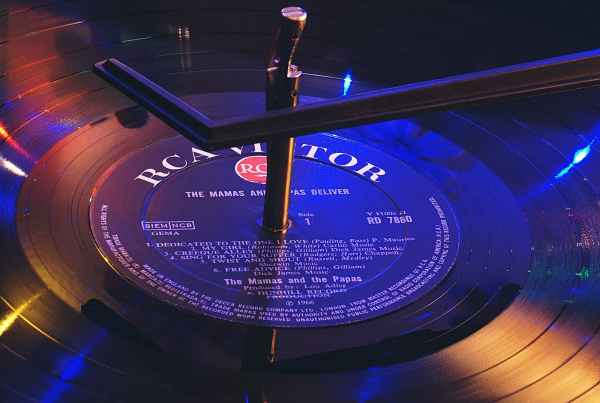
I know by writing this, I’m dating myself a bit, but when I was younger (MUCH younger!) we used to listen to a Hi-Fi stereo system. It was a piece of furniture, made of wood, complete with legs and fabric-covered speakers, and it had an enormous hinged cover that had to be locked into the “open” position or it would slam shut as your head and upper body was “inside” trying to adjust the settings! It had a turn-table for records, an AM/FM radio, and even storage for albums and other gear. It stood proudly, if awkwardly, in the living room or family room, off to the side of the other large piece of entertainment furniture, the giant television set, complete with rabbit-ear antenna. Hi-Fi stood for “High Fidelity”, reassuring us that the sounds issuing from this box were as close as we could get to “being there” for concerts, broadcasts, and other recordings. Our model was “old school”– there was no remote control, no way to record in any other medium (no tape deck or USB port), no “pause” or “mute” function– all the knobs and buttons and “arms” had to be operated by hand.
Today, we have “Wi-Fi”– a word that looks and sounds very much like the earlier “Hi-Fi.” Many people think that Wi-Fi probably stands for “Wireless Fidelity.” I looked it up– the “Wi-” does stand for wireless, meaning that information is transferred via radio waves, eliminating the need for a wire or cable connection. But the “Fi” part does NOT stand for fidelity (or anything else, exactly). It is simply a brand name for a particular wireless protocol See more about the definition of Wi-Fi here. Still, wireless communications, including cell phone service and internet, has radically changed our world, making it possible to connect with virtually anyone, anywhere, any time. It is a marvelous innovation with potential for great good. In our world and culture of global communications, we rely on Wi-Fi or wireless connections every day. We use them for information, entertainment, business, and social networking. I rely on it for this blog.
High Fidelity Prayer (as I see it) is consistent, daily prayer. Faithfully coming before God and seeking His face. Some may use a rote prayer for grace, or bedtime prayers, matins, or other standardized prayers. Others may set aside a daily time to pray–15 minutes in the morning, or an hour after breakfast, or even 10 minutes before bedtime. Some people set an alarm to pray at a certain time each day. Many even make a habit to pray with a group once or twice a week. To some, this type of prayer may seem passe, outmoded, old fashioned–after all, if God already knows our every thought, why does it matter if we pray every day or meet with the same group? It matters because fidelity matters– faithfulness, even in the “small” things, matters to God.
High Fidelity Prayer may seem awkwardly placed in the middle of our “living room”–forcing us to take time; to make and keep a commitment; to face questions or ridicule–it may seem clunky and wooden at first, even scratchy and hard to tune. And it depends on being “plugged in” to our power source! Hi-Fi prayer is meditative, deliberate, and worship-focused. We should be careful, however, of making Hi-Fi prayer a relic. Many Hi-Fi stereos from “my day” are now collecting dust, or being used to hold plants or books! Hi-Fi prayer must be practiced– even in an age of Wi-Fi lifestyles– if it is to do us any good.
Wi-Fi Prayer is not the opposite of Hi-Fi Prayer. It is not “wrong”, or illegitimate. In fact, it is great to know that we can talk to God anywhere, any time, for any reason. Wi-Fi Prayer (again, as I see it) is spontaneous prayer that is poured out to God “in the moment”. It can happen as you are driving or walking down the street (just don’t close your eyes!) It can happen alone or with a group. It can happen in response to something you overhear on a bus or a train, or read in an e-mail, or hear on the news. It is not a substitute for Hi-Fi Prayer, but it is certainly a healthy addition to it.
But Wi-Fi Prayer, just like Wi-Fi communication, can be taken for granted. Wi-Fi prayers can become “small” and “hand-held”– things we bring before God because it seems like the thing to do. We tend to put little thought, and even less grammar, into our wireless messages; we sometimes put little thought, and even less doctrine, into our Wi-Fi prayers, relying on common phrases that sound religious, but lose meaning. “Jesus just be with _____________ during this time”, “put a hedge of protection around ________________”, “I’m just claiming your promises, Lord.” There is nothing “wrong” with any of these statements, but what do we really mean? Isn’t Jesus always with us? Why is protection always a “hedge”? Which promises are you claiming? Again, there is nothing wrong with any of these phrases, and we know that the Holy Spirit can understand even our deepest utterances and wordless groaning. But just like auto-correct can mess up the simplest message, so our auto-pilot praying can mimic real communication with our Lord and Creator. There are entire comedy routines built around this kind of praying– but it creates an uncomfortably convicting kind of laughter. We should not be shamed out of Wi-Fi prayer, but we should also be careful not to let our prayer lives become a joke. Thankfully, God listens to our hearts and not just our words!
Hi-Fi or Wi-Fi, prayer is a sure connection to a faithful God.
On a final note, whether we have to turn down the knob or hit mute, there is another important “sound” principle of prayer– LISTEN! There have been some voices mocking this element of prayer, claiming that those who claim to “hear” from God are hallucinating or just plain crazy. God rarely ever speaks aloud and directly to an individual–even Jesus, while He claimed that He only did what His Father “told” Him to do– never claimed to hear the audible voice of God telling Him what to do or where to go next. There are only a few recorded instances of anyone else “hearing” the voice of God directly throughout history. But there are countless instances of people discerning the “voice” of God, and the leading of the Holy Spirit throughout the ages. How? Often through changes in circumstances, other trusted voices, new insights into scripture, or the “still small voice” of their own conscience giving confirmation. One caveat about “listening” for the voice of God– it will NEVER lead you to contradict God’s own word or act in contradiction to His character.
We have a Hi-Fi, Wi-Fi kind of God–let’s keep in tune, log in, and listen!
I once saw a cartoon involving a person holding a sign that read, “Bad spellers of the world: UNTIE!” Part of what makes the joke funny (at least to a pun-lover like me) is that all the correct letters are there–just two letters are transposed–but the meanings are completely different. And, of course, the bad speller misspelled the most important word. Instead of asking for unity, the sign invites potential destruction and chaos!
There is a serious side to this cartoon, however. Just like the sign-bearer, we often carry a message that is vastly different from what we mean to project– it may look similar or close to what we intend; it may even go unnoticed at first–but eventually, it will make us look foolish and actually call more attention to our faults and failures.
As Christians, we often pray for unity– we talk about it, we long for it, and we call out for it. But what are we DOING to promote unity and love within the Church? I recently ended my subscription to an on-line forum with articles about Christian Living. I wanted to support discussion, encouragement, and even constructive criticism among the Christian community. But more and more, I found the articles and discussions were not constructive; they were divisive, sarcastic, boastful, and condescending to other believers based on how they worshiped– the kind of songs they sang, or the lighting and seating in their sanctuary, whether they wore suits and dresses or ripped jeans and flip flops, whether they collected offerings or had a diverse worship team. There was no effort to listen or present Biblical principals that might help congregations find a balanced way to discuss differences in worship styles. There was no invitation for consensus or inclusion; no discussion of doctrinal principles or lasting truths that must be upheld. It was a forum for bickering, snide commentary, complaints, and virtue-signaling from self-righteous people taking pot-shots at other self-righteous people. I’m ashamed to admit that I did not unsubscribe earlier–I sent in my own snide comments, my own self-justifying judgments of others.
One of the pitfalls of social media is that it gives us the illusion of unity–we “like” posts, or others “like” what we have written or shared. We create convenient “echo chambers” filled with the kind of words and ideas that we find familiar or comfortable. This gives us a sense of well-being–even superiority–but it doesn’t promote true understanding with others. In fact, it may intimidate others into keeping silent about their own feelings or beliefs, while quietly resenting ours.
The Fruit of the Spirit (Galatians 5:22-23) includes Love, Joy, Peace, Patience, Kindness, Goodness, Faithfulness, Gentleness, and Self-Control– it doesn’t include cleverness, arrogance, criticism, complacency, or divisiveness!
4 As a prisoner for the Lord, then, I urge you to live a life worthy of the calling you have received. 2 Be completely humble and gentle; be patient, bearing with one another in love. 3 Make every effort to keep the unity of the Spirit through the bond of peace. 4 There is one body and one Spirit, just as you were called to one hope when you were called; 5 one Lord, one faith, one baptism; 6 one God and Father of all, who is over all and through all and in all.
It is not difficult to let our thoughts and emotions lead us to react badly– to untie, rather than unite. Here are several handy questions to ask BEFORE we grab up our “misspelled” sign and march around spreading dis-unity and chaos:
If Jesus were listening to me or reading my posts– and He IS!–would He agree? Would He “like” or “share” this? Would I send it to Him? Would I say this to His face?
Have I really thought about what this says to my family? My friends? My neighbors? My enemies? My Pastor? My co-workers? Strangers? Will it bring people together? Or will it force people to take sides? (There are times when we all need to be challenged to take sides on important issues, but is this one of them?)
There are some great posters in elementary schools that use the acronym to evaluate social media, but it works equally well for gossip, news articles, or any information or opinion that we wish to pass along– THINK–T: is it True? Have you checked the facts, dates, assertions, etc., to see if they are valid? H–is it Helpful? Is this good information? Am I helping people find a solution to a problem, or offering encouragement? I–is it Inspiring/Important? Am I wasting time passing on information or opinion just because I find it clever or entertaining? Or will this information inspire and build people up?Are lives in jeopardy if I don’t pass this information along or if I don’t comment? N–is it Necessary? Does this information or opinion need to be shared? With everyone? By me? Now? Finally, K–is it Kind? Even if it is “true” and “helpful”, etc., it can be abrasive, hurtful, or condescending in tone. Being “right” can still be “wrong” when it comes to unity and encouragement.
Lord, help me to speak and act in ways that bring unity. Help me reflect the Grace and Peace that comes from You. Let my words and deeds produce Spiritual Fruit that lasts. May I seek to build up others, not tear them down or “untie” relationships that You want to flourish.

























































 Pursuing Prayer