All the Time in the World..

I never seem to have enough time…

Photo by Taryn Elliott on Pexels.com

But that is an illusion. I have the same amount of time as anyone else. And I can’t do anything to add to the amount of time I have in a day, or a week, or even a lifetime.

27 Can any one of you by worrying add a single hour to your life?… 33 But seek first his kingdom and his righteousness, and all these things will be given to you as well. 34 Therefore do not worry about tomorrow, for tomorrow will worry about itself. Each day has enough trouble of its own.

Matthew 6:27; 33-34 NIV via Biblegateway.com
Photo by Andrey Grushnikov on Pexels.com

What’s more, I was created for eternity– I have all the time in the world! Or, at least, I will. Right now, I feel bound and limited by time. And sometimes, I feel controlled by it. Deadlines, promises, schedules–all hem me in and press in on me, making life stressful and forcing me to make tough choices.

Photo by Oladimeji Ajegbile on Pexels.com

Will I choose to use my time each day wisely? Will I let pressing tasks and urgent interruptions throw me off-stride or make me feel guilty? Will I see time as a resource, or let it become my master?

Over the years, I have found several things to be true about time– you’ve probably noticed them too (and maybe even more!), but it’s nice to have a reminder every now and again:

  • Time spent with God in prayer, meditation, worship, and Bible study is NEVER wasted time. It is an investment in eternity. No matter how long or short, it never seems as though I’ve spent “too much” time with God at the expense of other things. It’s when my quiet time turns into self-talk or daydreaming, or when my mind is divided with worry and distraction that it eats into the rest of the day.
  • Time spent caring for others is better than time spent amusing myself. That doesn’t mean that I don’t need “down” time, and “self-care”, and boundaries– everyone does. But hoarding time for my entertainment and achievement at others’ expense is a recipe for depression and emptiness.

Photo by Lgh_9 on Pexels.com
  • Time IS a resource. It should be managed wisely. That means having a schedule, but not being enslaved by it. There is always something you CAN be doing, something you probably SHOULD be doing, and something you SHOULDN’T be doing. None of them matter. What you CHOOSE to be doing is what will get done. Someone may argue that they have no choice–” when I’m at work, I don’t get to choose what I do; when I have chores or housework or family obligations, I don’t have a choice”–but that’s a false argument. You CHOOSE to go to work, to fulfill your obligations and family commitments, to do the “next right thing” that comes your way. And every time you make a choice, you show what is important to you. The difference is owning up to your choices– both good and bad– and recognizing that time (in this life) is a finite commodity. You can’t be everywhere at once or do everything at once.
  • God is beyond time and the giver and keeper of time. He doesn’t want us to waste His gift, and He won’t give us “more” time in our day, but He can redeem some of the mistakes we’ve made with time, and He can give us the wisdom to make the most of today, and help us manage each day to come.
Photo by Andrea Piacquadio on Pexels.com

Sacred Spaces

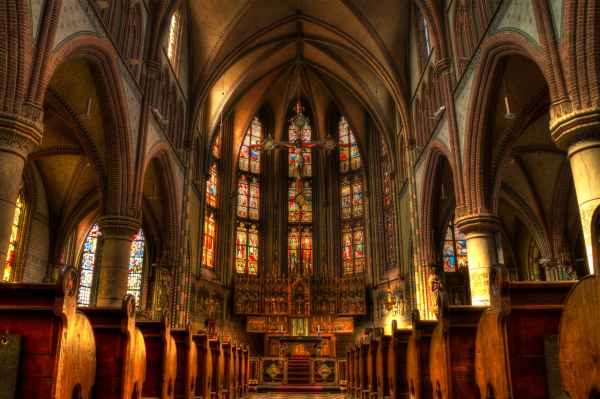
I love visiting old churches and cathedrals, with their vaulted ceilings and solid stone walls infused with centuries of incense and the echoed prayers. And I love being outdoors surrounded by the glorious beauty of creation. These spaces seem infused with a special sense of the sacred. It is easy to feel close to God is such spaces.

Photo by Jarod Lovekamp on Pexels.com

But God is omnipresent. A crowded bus is no farther from God’s presence than a majestic mesa. The hush of a hospital ward is just as close to His heart as the swelling choir in a cathedral. In fact, when Jesus lived among us on earth, He spent much of His time walking dusty roads, talking and working miracles among the noisy “rabble” of ordinary people. He did not seek out “sacred spaces;” instead, He took the “sacred” into the dark and dirty streets where it was often ignored or dismissed.

Photo by Rishiraj Parmar on Pexels.com
Photo by Jonathan Borba on Pexels.com

Sometimes, Jesus would go off by Himself into the wilderness or into the hills to pray, as well. It is important to make a time or space to do this. But there is nothing especially sacred about particular spaces– even ones designed to be places of worship. It may not be easy to find a physical space for prayer and worship, but we can make a mental “space”– close off distractions, move or turn away from others for a few precious minutes–focus on God’s presence. Remember, His presence is always with us; we just need to acknowledge it!

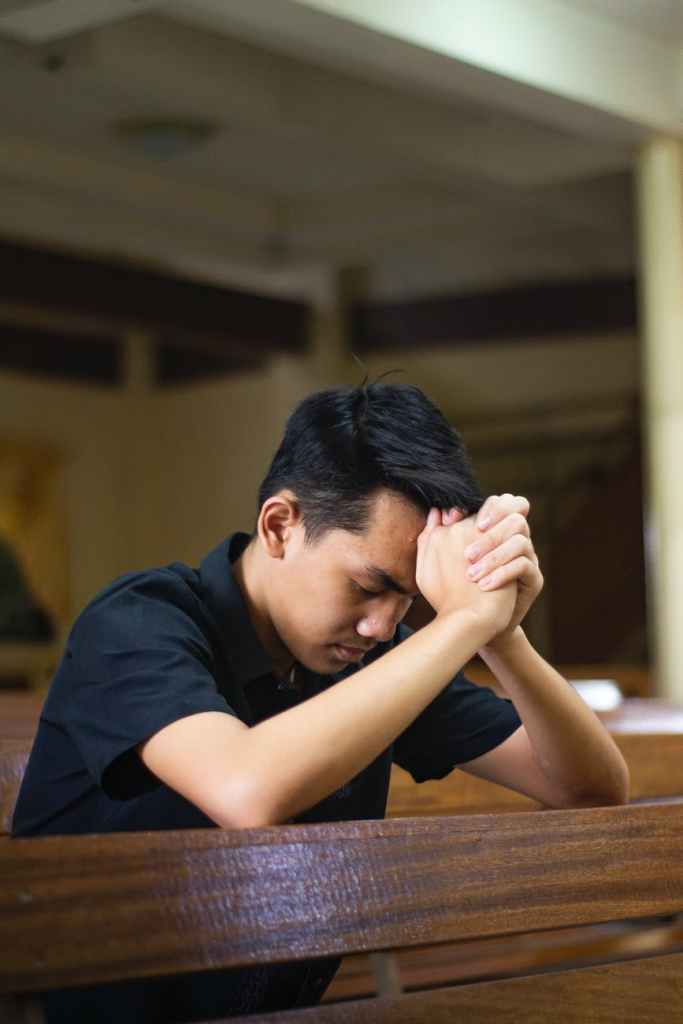
Prayer connects us to God– wherever and whenever we pray. That doesn’t mean that we should not seek out special times and places to be alone with God. But we needn’t wait for a certain moment or location or position in which to meet with God. He is eternally, immediately available to listen. Are we?

Photo by Ian Panelo on Pexels.com

Looking Beyond..

Have you ever tried to read through the Bible in a year? There are many programs that can help you do it–even Bibles divided into daily readings. Some are organized in segments–a short passage from the Old Testament; one from the New; a Psalm, and two or three verses from Proverbs. Mine is organized in bits from Genesis to Revelations– a few chapters or a short book each day, with every seventh day set aside for reflection.

Photo by Luis Quintero on Pexels.com

It’s curious– the Bible is organized naturally in rough chronological order. In January, as we look ahead to a new year, we are challenged to look back and read about how the world began; in December, we read about the “end” of the world as we know it. But of course, Revelations isn’t about “the End.” It is about the new beginning– a New Heaven and a New Earth.

Photo by Bich Tran on Pexels.com

As this year closes, and we naturally look ahead to next year, Revelations challenges us– not just to look ahead, but to look beyond! We can’t see the future, even if we try to prepare for it, or even control it. We can’t know for certain even what will happen in the next days and weeks of next year. But God has given us a glimpse of what will be– in His time. If this year has left us complacent, we must look beyond that complacency to see God’s righteous judgment. If this year has us frustrated about injustice, we must look beyond to see God’s coming endless reign of Peace. If thoughts of next year leave us confused or worried, we must look beyond to see how God’s plan is from everlasting, and that He is Sovereign over time and circumstance.

On January 1st, many of us will “start over” reading the Bible, with the opening of Genesis 1– “In the Beginning, God created the heavens and the earth..”, reminding us again that God has been in control all along. The story is the same–Creation, the Fall, the Promise, the Incarnation, the Crucifixion and Resurrection, and the coming Return of Christ– just as God is the same, yesterday, today, and forever (Hebrews 13:8).

We can look ahead– and hope that 2023 will bring goodness, adventures, triumphs, etc.. But we can look beyond, with a certain and sure hope that God has the future in His Mighty, Holy Hands!

Photo by Sunshine Caro on Pexels.com

Lord, Thank you for this past year. Thank you for giving us new opportunities in the coming year, whatever circumstances may bring. Thank you for your wisdom and sovereignty in all things– that we can have complete confidence in You! Help us to enter 2023 with that confidence, and honor You in the days ahead, and throughout eternity. Amen.

The Door Will Be Opened…

Ask, Seek, Knock

“Ask and it will be given to you; seek and you will find; knock and the door will be opened to you. For everyone who asks receives; the one who seeks finds; and to the one who knocks, the door will be opened.

“Which of you, if your son asks for bread, will give him a stone? 10 Or if he asks for a fish, will give him a snake? 11 If you, then, though you are evil, know how to give good gifts to your children, how much more will your Father in heaven give good gifts to those who ask him! 12 So in everything, do to others what you would have them do to you, for this sums up the Law and the Prophets.

(Matthew 7:7-12 NIV via biblegateway.com)

Photo by Curtis Adams on Pexels.com

A couple of years ago, I took on a part-time, temporary job with the Census Bureau in which I had to make visits to various households and ask to conduct an interview. I knocked on a lot of doors. Few of them were ever opened. Many of the houses were unoccupied– either the family wasn’t at home, or the home was vacant or even abandoned. At others, there were clearly people at home, but they wouldn’t come to the door. At still others, a person would come to the door, or respond via intercom or speaker, but they would not open up or consent to do the interview. This occurred during the height of the pandemic, so some of the fear and evasion was expected. But even though I was wearing a mask and promised to practice social distancing; even though the interview was less than 10 minutes, and would help their community and country, they would not speak to me or let me step up to or across the threshold. *(For the record, I was not required to actually enter anyone’s home to conduct an interview; most took place across the threshold or through a screen door or even out on the front steps.) A select few, however, were gracious and welcoming. They opened the door, invited me in, offered me a seat, and refreshed my spirit. I knocked on the doors of the wealthy, and those in extreme poverty. I knocked on fancy doors with cyber-security, and doors that were hanging off their hinges. I knocked on the doors of large families, and lonely widows. I knocked on the doors of the dying, and the doors of families with newborns. I knocked on the doors of mobile homes, and lake cottages, and apartments, and old farm houses. Some of the kindest people I found were in so-called “bad” neighborhoods. Some of the people who were the most gracious were those who were in the most pain, and had the least to gain by being kind. Those who were threatening and rude were quick to point out that their time was more valuable than mine– that they were too important, or too comfortable, or too busy to answer a few simple questions. In a couple of cases, I had to leave because I was threatened with harm or faced verbal abuse.

Photo by Jermaine Ulinwa on Pexels.com

My job required me to knock on a lot of doors! And throughout our lives, we will have to “knock” on doors– seek out opportunities, ask for needed help, go to places outside our comfort zone– and many of the doors will remain closed. Others will require that we knock several times, or even return another day to knock and seek entrance. But God will never turn away those who knock at His door. God will never tell us we must stand outside or come back at a more convenient time. He will never have a sign that says “No Trespassing,” or “Keep Out!” In fact the only thing keeping us from entering His Courts is our own refusal to accept His invitation; our own pride or guilty conscience, or resentment and rebellion; our own reluctance to approach the door, let alone knock. We don’t need an appointment, or an official summons to “Come!” The invitation is always open, and the door is not locked.

Photo by Meruyert Gonullu on Pexels.com

God is not “too busy”, and our questions, requests, and praises are not “too small” to get His attention. God is gracious. God is available. God is accessible. And God’s opened door is so much more than an entry to someone’s hallway or front room or kitchen. God opens the doors to His very throne room! He invites us to “Enter His gates with thanksgiving and His courts with praise”! (Psalm 100) He invites us to the wedding feast of the Lamb (Revelations), and to everlasting life (John 3:16).

Photo by Augustinus Martinus Noppu00e9 on Pexels.com

Jesus also “knocks” at the door of our hearts, asking to “come in.” (Revelation 3:20) What does He find? Are we “away from home”– so busy chasing after foolish things that we don’t even inhabit our own hearts? Are we ignoring Him, hoping He’ll go away? Are we telling Him to come back another time, or coming up with excuses why we don’t need to speak with Him? Do we try to chase Him away with our anger or bitterness? Or do we open the door, invite Him in, and offer Him a seat?

Jesus urged His listeners on the Mount to Ask, Seek, and Knock. And then, He challenged them to “do to others what you would have them do to you.” How are we treating those who “knock” at our door? Those who need a friend, or a listening ear? Those who need to hear the truth, and the hope that is in us? Trust me– how we answer that “knock” at our door will leave an impression. It will testify to our true nature.

Photo by Pixabay on Pexels.com

God doesn’t just hear us knocking, He opens the door and gives us all we need for life and godliness (2 Peter 1:3). What are we giving to those who knock on our door?

What a Waste!

(The following is an updated post from a couple of years ago..)

The author of Ecclesiastes (presumed to be King Solomon) was a wise man. Yet he concluded that almost every aspect of life was meaningless– nothing more than “chasing after the wind.” Health, wealth, learning, entertainment, popularity, achievement– they can give pleasure and temporary satisfaction. But in the end, everyone dies, and their health is gone, their wealth goes to someone else, their learning is lost, their name and accomplishments are all forgotten and/ or destroyed.

In chapter 3, the author states that there is a time for “everything”– all the seemingly important activities of life–building, and tearing down, war and peace, living and dying…https://www.biblegateway.com/passage/?search=Ecclesiastes+3&version=NIV And then he makes a curious statement in verse 11: “He has made everything beautiful in its time. He has also set eternity in the human heart; yet no one can fathom what God has done from beginning to end.” Solomon describes this as a burden– mankind can sense eternity, but only lives to see a brief span of it. What a waste! What a tragedy!

Photo by u00darsula Madariaga on Pexels.com

So what are we to do?

First, we need to make an important distinction– Solomon explores the pursuits of life and finds them all meaningless. At no point does he say that life itself is without meaning. Life itself is not a waste– but the things we do can waste the precious (and brief!) life we have been given. Nor does he say there is no difference between wisdom and foolishness, honest labor and laziness, or self-indulgence and connectedness. I know some people who, after a quick reading through Ecclesiastes, use it to justify a hedonistic lifestyle. “Nothing matters,” they say. But that’s not what this book actually promotes. It isn’t that “nothing” matters. Rather, it is that none of our personal pursuits produce meaning in and of themselves or beyond our own limitations.

Photo by Harrison Haines on Pexels.com

Next, we should be wise in light of the eternity that God has placed in our hearts. Even if our pursuits seem trivial and temporary, they have consequences that ripple through time– long after we are gone. We may not be able to see the future, but we CAN see the effects of wisdom and foolishness in the lives of others, and we can heed the advice of those who have come before us. Most of all, we have the wisdom that comes from God. Solomon’s wisdom, though incredible among humans, was limited to his own experience and learning. His frustration and despair came from knowing how limited it was!

Photo by freestocks.org on Pexels.com

Finally, we must read Ecclesiastes in context. Solomon was wise, but he seems to have lacked the vision of his father, David, to fully anticipate the coming of Messiah. Solomon’s ambitions were for the span of his own earthly life. He did not have his hope firmly rooted in a resurrection and an eternal life shared with his Creator. For all his wisdom, he was found lacking in his faith. After writing such wisdom (not just in Ecclesiastes, but throughout the Proverbs), Solomon ended his life in a foolish pursuit of relativism and compromise that ruined much of the strength and prosperity he had brought to Israel in earlier years.

Photo by Simon Matzinger on Pexels.com

Solomon reaches a final conclusion. One thing remains– to fear God and follow His commands. God is eternal–and all that is done for Him and by Him and through Him will never be wasted. Solomon’s life may have ended with failure, but his words and wisdom live on. Our lives may be short; we may have wasted precious time in meaningless pursuits–but God has promised that “all things work together for the good of those who love God, who are called according to his purpose” (Romans 8:28 CSB) and that “he who began a good work in you will carry it on to completion until the day of Christ Jesus.” (Philippians 1:6 NIV)

My prayer today is that we would not waste a single minute! And that we would see that even in the wasted moments and foolish mistakes of our past, there is redemption, hope, and renewal. In God’s economy, nothing is wasted!

The Now and the “Not Yet.”

As followers of Christ and believers in an Eternal God, we live in the “here and now,” but we also live in something called the “not yet.” Our life here is finite, but our life in the “not yet” is eternal.

Most of what we pray for belongs in the “here and now.” We pray about what we see and know. We may pray for an upcoming surgery, or a looming job loss, or give thanks for something that happened in the recent past, but most of our prayers do not venture into the eternal future.

Photo by James Wheeler on Pexels.com

Yet, God speaks to us of things to come. No, He doesn’t always reveal details or give us a calendar of times and dates; but He does remind us that what we see is not the whole picture. And we need to remember this when we pray and when we look around us.

Much of the Old Testament, plus parts of the New Testament, are given over to prophecy– visions, promises, warnings about the future. Many of the prophecies have already been fulfilled– in detail. Some of the prophets prayed for revival in Israel and Judah; others prayed for the coming of the Messiah. Their prayers were answered– but not always in their lifetime, and not always in a way they understood. The Apostles, writing to Jesus’ followers looked forward to His return– but they never saw it in their lifetime.

Now faith is confidence in what we hope for and assurance about what we do not see…And without faith it is impossible to please God, because anyone who comes to him must believe that he exists and that he rewards those who earnestly seek him.

Hebrews 11:1, 6 (NIV)

Following Christ involves living in both the “now” of immediate life, and the “not yet” of our faith. We can have confidence in what was, what is, and what is to come. And we must learn patience, and stand firm in God’s promises, as well as living “in the moment” of service and obedience,. We cannot sit back and wait for life to come to us; neither can we live such short-sighted lives that we waste our energy chasing after constant gratification and emotional peaks. Sometimes, the very circumstances we are praying for God to “change” or take away are the circumstances He will use to teach us, grow us, and bless us!

Prayer is not just about us and our immediate needs. Today, spend some time praying with an eternal mindset–that God’s will would be done, in His time and His way. And then, trust that whatever is going on in the “here and now,” it is all part of God’s perfect plan. One that we will understand more fully in the “not yet.”

Photo by Drew Rae on Pexels.com

Priorities

Photo by Miriam Alonso on Pexels.com

Get up.
Make the bed.
Shower and brush teeth.
Get dressed.
Fix breakfast– cereal, toast, orange juice.
Don’t forget to take the morning medication–Must be taken with food
And plenty of water.

Photo by Sora Shimazaki on Pexels.com

Go to work.
“How was your weekend?”
Check e-mail.
“How can I help you?”
Staff meeting. Don’t be late. Don’t forget notes.

Photo by Chan Walrus on Pexels.com

Lunch time.

Meet with an old friend.
Healthy salad. No dessert.
“We must meet up again, soon!”
Don’t forget to tip the waitress.

Photo by Oladimeji Ajegbile on Pexels.com

Back to work.
Check e-mail.
Work on report for the boss.
Take the stairs, not the elevator.

Home at last.
Check e-mail.
Check mail for bills, etc.
Pay bills, etc.
Fix dinner–or maybe get take-out from the Chinese place around the corner–no dishes!

Photo by Nothing Ahead on Pexels.com

Watch TV.
Finish the Sunday Crossword.
Brush teeth.
Get ready for bed.

Photo by Ketut Subiyanto on Pexels.com

(Pray.) Lord, help me to make prayer a priority in the days ahead.

Wake up and repeat…

Photo by cottonbro on Pexels.com

32 For the [pagan] Gentiles eagerly seek all these things; [but do not worry,] for your heavenly Father knows that you need them. 33 But first and most importantly seek (aim at, strive after) His kingdom and His righteousness [His way of doing and being right—the attitude and character of God], and all these things will be given to you also.

Matthew 6:32-33 (AMP)

Infinite Variety

As I look out my window today, I see a wonderful palette of fall colors waving in the wind. There are trees still filled with dark green; others with variegated shades of red and orange and yellow; some have brown leaves– so brown, they are tinged with purple! Back in the spring, the trees had so many subtle shades of green– bright green, yellow-green, and un-nameable greens in between. The colors of nature are astounding in their variety and their ability to change throughout the seasons.

Photo by Taryn Elliott on Pexels.com

God loves variety– not just in colors, but in all of life. Giraffes and gerbils; elephants and eels; ladybugs and llamas; koalas and kingfishers; swans and sloths; trees and termites; roses and raccoons…different shapes and sizes, with different lifespans and different habitats. Nature is a kaleidoscope. And precious people, too. Skin tones that span a vast spectrum; different hair; different eyes; different noses; different heights. But also different speech; different ways of thinking and doing; different ways of life–people living in city apartments, isolated huts, houseboats, underground houses–infinite variety.

Photo by Kureng Workx on Pexels.com

Our prayers are also uniquely different from those of other people. And God LOVES to hear the differences as we lift up our unique praises and petitions. God created us to be uniquely ourselves– and uniquely His!

Photo by Luis Quintero on Pexels.com

Just think– at this very moment, someone is praying in a language you’ve never spoken, in a place you’ve never visited. Someone else is praying for needs you have never even imagined, and thanking God for blessings you’ve never dreamed of.

It is a wonderful exercise to pray in a group– dozens, even hundreds of God’s people speaking the same thing in agreement; raising united hearts in praise or even in pain. But there is also something wonderful about listening to others as they express their hearts, knowing that God values each of us for the unique person He made us to be. We can be just as awed by the variety of amazing people we meet as we are by the amazing colors of the autumn leaves. The same God loves to fill the world with infinite variety and beauty.

Today, let’s try to see people for who God made them to be–infinitely precious and unique. And don’t forget that person in the mirror! God loves you. He loves to hear from you. He loves to lavish His love on you and through you, in ways that only He and You can experience.

Don’t Lose a Minute…

5-9 So don’t lose a minute in building on what you’ve been given, complementing your basic faith with good character, spiritual understanding, alert discipline, passionate patience, reverent wonder, warm friendliness, and generous love, each dimension fitting into and developing the others. With these qualities active and growing in your lives, no grass will grow under your feet, no day will pass without its reward as you mature in your experience of our Master Jesus. Without these qualities you can’t see what’s right before you, oblivious that your old sinful life has been wiped off the books.

2 Peter 1: 5-9 (The Message)
Photo by Liza Summer on Pexels.com

The Apostle Peter was writing to people in the early church– people who were under enormous pressures and persecution. The Epistles of 1 and 2 Peter are filled with dire warnings– and urgent calls to action! Earlier in his first letter, Peter spoke of prayer: “Give all your worries and cares to God, for he cares about you.” (1 Peter 5:7 New Living Translation). Prayer is primary, but it must be paired with action. In this passage, Peter lays out a progression of characteristics to pursue. We must actively chase after a Godly character. It will not develop in a vacuum. We must build on our foundation, and keep building up– so that we can build up others as well!

Photo by SHVETS production on Pexels.com

The foundation is basic Faith. We need a bedrock, solid and sure; unmoving and capable of handling stress and pressure. In our own power and our own wisdom, we will crumble under the kinds of stress and persecution we may face in modern circumstances. We need to trust God– and seek to trust Him more completely–before we can advance in Christlikeness. We will be tempted to doubt– that is normal in a broken world. But we must continue to bring those doubts before the power of the Holy Spirit’s guidance. Doubts, like other challenges, will test us. The challenge of doubt is particularly tricky, because the more we try to wrestle in our own mind, the more doubt (aided by pride) can take hold. It is counter-intuitive. The more I try to answer every doubt and every contradiction– the more evidence and reassurance I require before I am willing to trust, the less I am likely to find faith. Faith is like a muscle– if you never exercise it– you will hardly know it’s there. But when you need it, you’ll wish you had worked out more! Faith is not fully developed overnight. God will NOT answer every question, settle every niggling doubt, solve every seeming contradiction. But He HAS promised not to leave us alone, without hope or help. And when we do exercise Faith, we will learn to trust more. As we learn to trust God’s wisdom and provision, we will develop our other muscles…like goodness, self-discipline, and self-sacrificing love!

Photo by Niko Twisty on Pexels.com

I like the above translation, because it stresses the urgency that is a core of all Peter’s writings. “Don’t lose a minute…” Don’t waste time in second-guessing, excuse-making, distractions, or empty arguments. Don’t lose the opportunity to see God’s work unfolding as you take baby steps of Faith! Don’t become complacent, and lag behind, losing momentum and focus! Chase after Faith! Cling to the “hem of His garment”

20 Then suddenly a woman who had been suffering from hemorrhages for twelve years came up behind him and touched the fringe of his cloak, 21 for she said to herself, “If I only touch his cloak, I will be made well.” 22 Jesus turned, and seeing her he said, “Take heart, daughter; your faith has made you well.” And instantly the woman was made well.

Matthew 9:20-22 (NRSV)
Photo by Andrea Piacquadio on Pexels.com

We may not see the instant miracle of this woman, but our faith WILL make us “well.” It will change our perspective, open our eyes, and chase away doubts like a breeze chases away a cloud of smoke.

Peter’s list is worth exploring more deeply. I’ve looked at Faith today…next time, I want to explore good character (also translated as “goodness,” or “moral excellence.”) Today, I pray that I would build on the gift of Faith, and strive for a deeper faith, aided by the Holy Spirit, as I face whatever challenges life brings.

At Just the Right Time..

But when the right time came, the time God decided on, he sent his Son, born of a woman, born as a Jew, to buy freedom for us who were slaves to the law so that he could adopt us as his very own sons. And because we are his sons, God has sent the Spirit of his Son into our hearts, so now we can rightly speak of God as our dear Father.

Galatians 4:4-6 (Living Bible)
Photo by Adonyi Gu00e1bor on Pexels.com

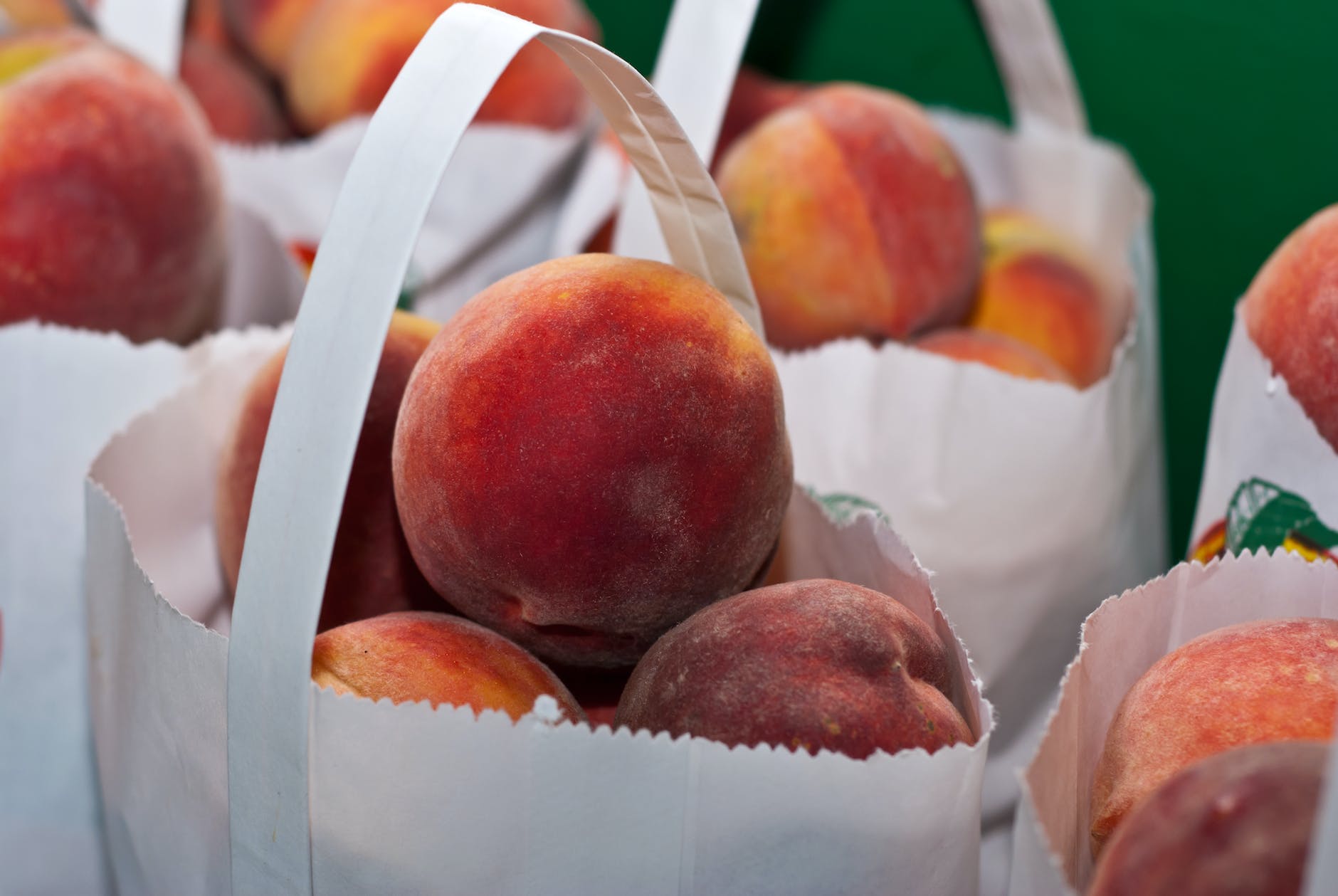
I went to the local farmer’s market the other day. All the “in season” veggies and fruits were on display– peaches, zucchini, sweet corn, some late raspberries, onions, tomatoes, various flowers, peppers, summer squash, pickles, and more! This is the season that we seem to be almost drowning in certain veggies– tomatoes and zucchini seem to top the list–and something needs to be done with them all. Canning, freezing, making jams and jellies, and baking double batches of zucchini bread, making salsa…it is a busy time.

Photo by Ellie Burgin on Pexels.com
Photo by Geraud pfeiffer on Pexels.com

It got me thinking about God’s timing. Sometimes, we might question– why does it seem that so many veggies all ripen at the same time? And yet–I enjoyed blueberries back in July; asparagus earlier in the year, and I’m waiting for apples and pumpkins to ripen later in the fall. God has made every good thing in its own season. There is a “just right” time for each veggie and fruit. And even in times when we might feel overwhelmed by the produce of one season, we have an incredible variety of other produce to fill out the year. And the abundance now, properly preserved, will carry us through the long days of winter.

God created seasons– and not just for fruits and vegetables. We go through seasons of life– childhood, becoming an adult, parenting, empty-nesting, aging– and each season has its own “fruit” of growing, learning, and changing. But God lives outside of human time– His “seasons” include the rise and fall of empires, and the wide and sweeping changes of the centuries.

So when God talks about Christ coming at “the right time,” we can be assured that God knew precisely, exactly when the time was “right” for that series of events. Christ will return at precisely, exactly the “right” time in God’s plan. Just like a flower that seems to take forever to bud, and then seems to open up overnight; so God’s plan seems mysterious to us on this side of time. Our perspective is so narrow that we tend to see only a small part of the whole picture.

Photo by Pixabay on Pexels.com

This is true in our personal seasons as well. “When will I be older so I can…?” “When will I find the time to…?” “Where did the time go…?” And yet, everything comes according to God’s plan at the “right” time. This can be a comforting thought, in the midst of confusing circumstances. The same God who waited for the “right” time to enter human history controls all the “times” of my life. What ripens in my life– relationships, opportunities, even tragedies–comes at the exact moment the God has decided. Never a moment “too soon” or a nanosecond “too late.” While I may not understand or be prepared for events or circumstances, God is NEVER taken by surprise or shaken by “unexpected” harvests.

Photo by Daria Shevtsova on Pexels.com

My job in going to the farm market is not to choose which fruits, vegetables, or flowers will be available. My job is to choose which ones I will purchase and use from what is already there. My job in going through life is not to control my circumstances and their timing, but to use God’s wisdom and provision to keep going, growing, and producing His “fruit” along the way!

Photo by Mark Stebnicki on Pexels.com

I need to keep this in mind as I pray each day. God wants to listen to my heart– all my joys and all my concerns. But He already knows the end from the beginning. My job is to take it all to Him, and then trust Him (AND His timing) as I travel on. Everything will ripen in its season.

Blog at WordPress.com.

Up ↑