God always finishes what He starts. He always completes His tasks, fulfills His promises, and wraps up the loose ends.
As I look back over the past year, I see many tasks that I wish were “finished.” I would like to know that my days of washing dishes, sweeping floors, folding laundry, returning phone messages, etc., were done! Of course, that would mean that my daily life was also finished here on earth! Some tasks here just don’t “end.” I also see many tasks which should be completed, but aren’t–projects started and abandoned, tasks on pause until I can get the right supplies, or tasks left behind because something unexpected and more urgent came along.
God is faithful in all things. So it is possible for Jesus to say, “It is finished,” as He breathed His last on the cross– even though we still experience life in a fallen world. His word is trustworthy and true, so we know that the work is/will be accomplished and completed. But God is also faithful in the daily tasks that He does– sunrises, seasons, Mercies that are “new every morning.” He does not abandon the work of forgiving, redeeming, sustaining, or transforming lives.
We are NOT God, but we should strive to finish what we start. Part of that is recognizing our human limitations. We may not finish everything we dream of doing today. But we can work to finish each task, and take each step in faith and dependence on the One who does all things well. And we can purpose to run our race with courage and confidence, knowing that God will give us what we need to keep moving ahead.
“Father, today I pray that You would help me to finish those tasks that are necessary– both the daily tasks, and the long-term projects You have for me to do. Help me to be diligent in the things I can do, and to trust You in the things I cannot do on my own. As I look forward to another year, help me to learn from Your example, and to seek Your wisdom each day, from start to “finish!”
My paternal grandmother was born in Shanghai. But not the Shanghai most people think of. Not a great Eastern city of importance, but a tiny settlement called Shanghai (or Shanghai Corners) in southwestern Michigan. It doesn’t have a post office; it’s not even listed on most maps. And it wasn’t named directly after the great Chinese city– it was named after a breed of chicken (most likely the breed now known as Cochin)!
Jesus wasn’t born in Jerusalem. He wasn’t born in Rome or Athens, or New York City or London or Johannesburg or Tokyo. Jesus was born in Bethlehem. It wasn’t as small as Shanghai Corners, Michigan, but it wasn’t a city of great importance, wealth, or industry. And yet, it was the place where history would be reshaped. Our modern calendar divides into what happened before that night in Bethlehem and what came after. More than two thousand years later, no event has been able to displace it as the pivotal event of recorded history.
And this division wasn’t caused by a revolution, or a series of wars. It wasn’t shaped by disaster or plague, victory or catastrophe. It came silently with the birth of a single baby, wrapped in strips of cloth and placed into a makeshift bed. But all the years revolve around that single birth. All the great triumphs of history– the moon landing, the invention of the printing press, the conquests of Alexander the Great, the building of the Sphinx–all are placed in the context of the arrival of God in human form. God stepped into the limits of human history, and the timeline was permanently altered. Before His appearance, prophets and seers looked forward. After His arrival, history looks back. But His birth is the focal point; the period. The end of the Beginning and the beginning of the End.
The hopes of all the ancients–shrouded in mists and wonder– were given flesh and bones. The fears– dark and amorphous– were blinded by the light of His Presence.
What hopes and fears are we carrying today? Our hopes have a name– Jesus; Emmanuel! Our fears have nowhere to hide from His power. And this wondrous gift, while it first arrived in the little town of Bethlehem, reaches around the entire Earth– to Shanghai, and Shanghai Corners; New Delhi, and St. Petersburg; Dallas and Buenos Aires; Cairo and Caraballo; Los Angeles and Lagos; and thousands of small towns in between.
Have you ever thought that right now, somewhere in the world, someone is singing praises to God? Someone is praying somewhere in the world at every moment of every day. There is not a solitary silent moment in the universe, where God is not receiving the worship He deserves. In fact, Jesus told some angry Pharisees, when they asked Him to rebuke the people of Jerusalem, that if they (the people who were shouting praises) were to be silent, the very rocks would cry out! (See Luke 19: 37-40)
In fact, “the whole earth is full of His Glory” (Isaiah 6:3). From the smallest insect to the giant creatures in the seas; from the smallest of dust motes to the stars in the galaxies, all of creation sings, shouts, shines, and testifies to the Majesty of God.
We don’t hear this constant praise. Nor do we smell the aroma of constant prayers that rise up “like incense” to the throne of Heaven. But our prayer should be that Jesus would be as close as our every thought, word, and action throughout the day; that in everything we think, say, and do, we would be participating in the eternal and glorious worship of the One who is worthy. And that our prayers and praise would blend in harmony with all the others in the great “Song of the Redeemed.”
Prayer and praise should not be a single activity undertaken for a minute or even an hour a day. It should be as natural as breathing or blinking. And while we are in the flesh, and may not physically “pray without ceasing,” (1 Thessalonians 5:17) we can ask God to “take our moments and our days–let them flow in ceaseless praise!”
Back in 1964, singer Chuck Berry released a song called “No Particular Place to Go.” It was a catchy tune about a couple driving along on a date and having trouble with a new feature in the car– the safety belt– which ends up ruining their plans for a romantic stroll.
This may seem to have nothing whatsoever to do with prayer or Christian living, but stick with me…
The writer of Proverbs includes a unique chapter https://www.biblegateway.com/passage/?search=Proverbs+9&version=NIV in which Wisdom and Folly–both women–call out to passersby inviting them to visit. Both say the same thing: “Let all who are simple come to my house.” But Wisdom has built her house, prepared the food and wine, and even sent out servants to help. Folly lounges outside her door, offering “stolen” water and “food eaten in secret–though she has done nothing to prepare for visitors, and so has nothing real to offer.
Both women call out, both women extend an invitation–the people are not looking for them; they are just passing by. And most of them have “no particular place to go.” And isn’t that the way with us sometimes? We don’t intend to fall into foolish habits, or get caught up in addictions. Nor do we look for wisdom in our fellowship over a meal, or in spending time at someone’s house. We can be very intentional in our actions, but fall victim to our interactions.
Spending time with people of wisdom– people who will pray with us and for us–is so important. Preparing our hearts for fellowship with others, and for time spent with God is not something we should leave for chance. Just as we take time to “map out” our goals for work or health or finances, we should take care to map out our relationships.
That doesn’t mean we avoid reaching out to others, and inviting them to enjoy fellowship, or that we must turn down all invitations from others. But we must be careful not to be drawn into folly. Jesus ate with sinners– but He didn’t carouse with them. He spent most of His time with those who wanted to share His love for the Father, and those who wanted to learn wisdom.
Folly never has a “particular place to go.” She wanders aimlessly. She doesn’t see the danger ahead, and she doesn’t look for a better road. Folly drives off recklessly without fastening her safety belt. Folly scrolls through lies and ads and half-truths on the internet. She gets pulled into relationships that are unhealthy and activities that are unproductive. And she wakes up dazed and confused and unfulfilled.
Wisdom walks in the way of insight– well-marked paths that lead to a clear destination. Wisdom seeks traveling companions who share the same destination. Wisdom pursues the truth, in person and on-line. Wisdom drives defensively and wears a safety belt (and knows how to operate it!) Wisdom seeks shelter that is safe, where she can be well-fed and find rest. She wakes up refreshed and ready to continue the journey.
The fear of the Lord is the beginning of wisdom, and knowledge of the Holy One is understanding. For through wisdom your days will be many, and years will be added to your life. If you are wise, your wisdom will reward you; if you are a mocker, you alone will suffer.
Come to me, all who labor and are heavy laden, and I will give you rest. 29 Take my yoke upon you, and learn from me, for I am gentle and lowly in heart, and you will find rest for your souls. 30 For my yoke is easy, and my burden is light
Matthew 11:28-30 (ESV)
Sometimes, the commands of the Bible are counter-intuitive. In Matthew 11, Jesus tells those who are weary from their labors to come to Him. But He continues by telling them to take on a yoke and learn from Him, to find rest for their souls. This doesn’t seem like a restful offer. The image is of an ox or beast of burden being forced to wear a yoke and do more work. How could that be restful? Jesus finishes the image by saying that His yoke is easy and His burden is light. While that may seem better than a heavy yoke, it still implies work, NOT rest.
There is a lot to unpack in these few verses, but here are some thoughts about rest on this Labor Day:
In order to take on Jesus’ yoke, we must be freed from the yoke we already bear– the very one that has left us weary and “heavy laden.” We can’t throw it off ourselves. We must come to Jesus. And we must understand that Jesus offers rest, not laziness, complacence or inactivity.
Jesus refers to “my yoke” and calls for us to “learn from me”– indicating that whatever work we do, He is our partner and teacher. We are not being asked to work alone or under a weight we cannot bear. This is not an image of a single ox pulling heavy weights, but of a team, sharing the load in companionship.
Jesus doesn’t offer us a permanent vacation from work, but “rest for your souls.” Rest from guilt, worry, grief, anger, loneliness, injustice, and more– when we come to Him and lay down our old burdens to take us His new yoke.
“My yoke is easy, and my burden is light.” Jesus isn’t calling us away from work; He IS calling us to meaningful and fruitful work– the kind that brings reward and fulfillment. We don’t need a heavy yoke and a hard taskmaster when we are eager and enthusiastic to see the results of our labors. But we DO need periods of rest. I hope that you enjoy a restful day, and a renewed enthusiasm for the work that lies ahead.
My dear brothers and sisters, remain strong in the faith. Don’t let anything move you. Always give yourselves completely to the work of the Lord. Because you belong to the Lord, you know that your work is not worthless.
Enjoy times of rest and refreshment, knowing that they are a reward for your work. Enjoy times of work, knowing they are not in vain. For while our work here and now can be filled with struggles, stress, and frustration, we know that Jesus came to redeem every aspect of our fallen world– even the work!
Thank you, Lord, for giving us rest. Rest for our bodies, and rest for our souls. May we find refreshment and renewed strength to stand firm, and to work with enthusiasm, knowing that You not only see what we do, but share in it.
There is a website, On This Day, that can tell you an interesting or important fact about something that happened on any day of the year throughout history.
Of course, this site only gives you certain facts from certain years and in certain areas of interest. So its focus is limited to one or two events per day from random years. Sometimes, the dates and facts are important events in world history; other times, they are trivial but interesting details about a sporting match, or a film star.
I don’t have to consult On This Day today. Something very personal, very important, and very tragic happened on September 1, 1998. My father died. I watched him take his last ragged breath in a hospital bed. I held his hand moments before he died, and I wept with my mother and sister as we tried to take in the great loss. There are many days that are etched into my memory– birth days, death days, graduation days, wedding days–that will never make the pages of history books or web sites. There are other days, “ordinary” days, that pass me by without reference to any memories at all. Many days that mean little to me fill others with joy or pain.
Yet each day is a gift from God to each one of us. My 24 hours today will be different from yours. Somewhere, this day will be a new beginning of life– elsewhere, it will be someone’s last day. Small things will happen on this day– a cheerful greeting, a burnt slice of toast, shared laughter with a friend, a hug, a stubbed toe–things we won’t remember tomorrow, or things we won’t value in the moments when they happen. Big things will happen, too–joyous occasions and tragic events that may shake families, communities, or even the world. This day may be filled with sunshine or rain, happiness or grief, achievements or disappointments.
God sees them all– He not only sees them, but He shares them with us. Every moment–every place– every person!
On This Day, you can be assured that God is with you. In joyful moments and tragic circumstances. In fearful situations and quiet moments of routine tasks. In crowds of commuters or in lonely corners. On This Day– and every day– God wants to share all that is on your mind and in your heart. On This Day and in this moment, God is as close as your next breath.
This past weekend, my husband and I participated in “Field Day.” It is an annual Amateur Radio contest, in which operators have 24 hours to make as many unique “contacts” as possible within the U.S. and Canada, using low power and simulating “field” conditions (many operators and clubs literally set up with tents in fields and use only solar or battery power for their radio equipment).
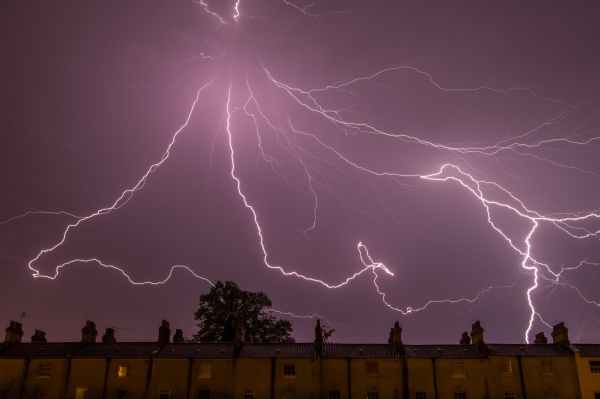
Field Day can be a lot of fun, but it can also be very frustrating. Depending on where and how you set up, the weather conditions, and other random factors, you may end up with very few contacts, and a lot of static! Radio static comes from three main sources– natural electromagnetic atmospheric noise, such as lightning, high winds, and solar pulses; radio frequency interference, when the radio equipment picks up pulses from nearby electrical devices, including TVs, other radios, or even power lines; and thermal noise coming from within the radio device itself.
We chose to set up for Field Day at our radio store, which is located in town, just beneath our apartment. We have several antennas set up on the roof, along with a solar panel and battery, which can power all of our radio equipment. So we met the basic requirements for Field Day, operating the radios on Solar and Solar Battery power, without extra amplifiers and power boosts. We set up two stations, and we were able to make contacts through voice transmission or by Morse Code. But we were not exposed to the weather and discomfort of a tent in the field– we had a refrigerator stocked with food, we had air conditioning and comfy chairs, and we were able to sneak upstairs for a nap in our own bed, if we felt tired.
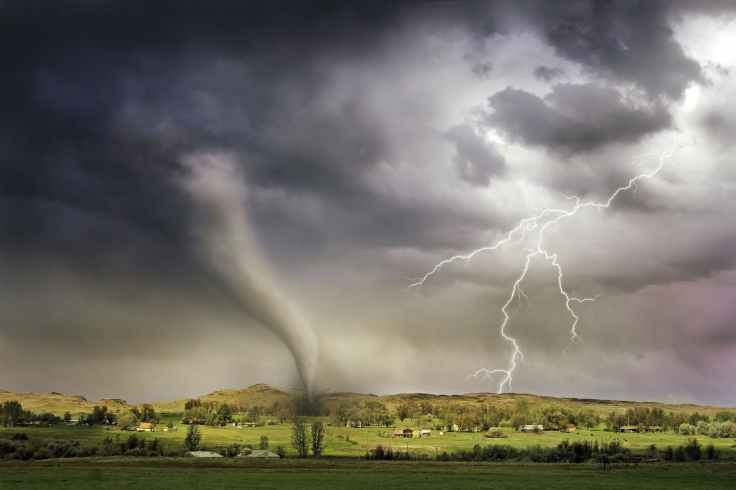
Atmospheric conditions were not so good this year for Field Day– not in Michigan, at any rate. We had a series of extreme storm cells coming through, with torrential rains, thunder and lighting, and a tornado watch, which spanned the first six hours of the contest. We were lucky not to have a tornado touch down, but other areas were not as lucky…
Staying in town also provided some complications– we are surrounded by power lines, neighbors with electronic equipment, street traffic, including cars with loud stereo systems and radios, and our own electronic and radio devices– cell phones, air conditioners, computers, etc.
Finally, we had an ongoing issue with our two radios. If we were using certain frequencies, the two radios interfered with each other. As I was listening to one radio, my husband would try tuning his radio. Suddenly, the noise of his radio could be heard over the sound of other transmissions.
All of this made for a somewhat frustrating contest, but it reminded me of some important aspects of prayer:
Prayer can be “choked out” by atmospheric conditions. If we are not “tuned in” to God’s presence, the noise of other worries, interests, concerns, and even “good” things can cause static. Life struggles, changes in our routine, or the “high winds” of adversity can seem louder than the faithfulness and compassion of the One who never changes and never leaves us. This is one reason we are to make prayer more than a habit or routine– it is to be a lifestyle and a blessed and constant pursuit– regardless of our circumstances or feelings at a given moment.
Prayer can also be derailed by “frequency interference.” If we don’t spend time in deep prayer and meditation with God, listening to His Word, or making ourselves accountable to Him, we will be susceptible to interference from other voices, other philosophies, and other “static” influences. Jesus’ prayer life included many times of retreat and separation from the crowds and stress of His ministry; not because He didn’t love others, but because He loved and honored God more.
Finally, prayer can get lost in the “internal” static of our wayward hearts. The heat of anger, bitterness, selfishness, pride, greed, and lust can keep us from meaningful communication and communion with our Father. Often, we struggle with prayer, because we are hanging on to the “static” of our own desires and fears. King David wrote: “Search me, O God, and know my heart; test me and know my anxious thoughts. Point out anything in me that offends you, and lead me along the path of everlasting life.” (Psalm 139:23-24, New Living Translation, via bible.com)
Field Day is over for another year. We were somewhat disappointed in our performance, but, in the end, it is just a contest– an opportunity to learn and grow in our hobby. While we enjoy being amateur radio operators, and we feel it is an important and worthwhile hobby, it pales in comparison to growing in our Faith and our pursuit of praying and obeying Jesus Christ!
In the middle of our contest this year, we had a singular opportunity– to leave the contest for a few hours and visit a local church where my niece and two of my nephews were getting baptized. It would mean fewer contacts for the contest, at a time when the atmospheric conditions were the best they had been for several hours. After a dismal evening, we could have chosen to focus on our own pursuits. We didn’t have to witness the baptism to rejoice in it. They would have been no “less” baptized, and they had other family and friends there to see it. And going there didn’t make us “better” or more righteous people. But we chose to shut down our contesting activities, pick up my Mom, and join in the happiness of watching three precious young people publicly declare their choice to follow Jesus. And they were among others who made that decision– others whose joy and radiance also filled the church that day.
Field Day is about listening through the static, reaching out, and making contact with others. Yesterday, I was reminded that there is a much more important “Field Day.”
Do you not say, ‘There are still four months, and then comes the harvest’? Behold, I tell you, raise your eyes and observe the fields, that they are white for harvest.
What static is preventing us from making “contact” with those who need to hear the Good News? What static is preventing us from hearing God’s voice? What static is keeping us from seeing the “fields” ready for harvest?
My husband and I run a small business. And I am always surprised at the number of people who call us “after hours.” Sundays, early mornings, late at night…they seem to be under the impression that we will be available to answer their questions 24 hours a day, seven days a week. We have a website, which includes frequently asked questions, and a list of our hours, but people still call when we are not available. Some of them even call to complain that we are not open as they stand outside our door–which also has a list of our hours! We just can’t be at our shop all the time, and we can’t anticipate when someone will call or want to stop by.
God doesn’t have any “after” hours. He’s always available when we need help, have a question, or want to express our feelings and thoughts. There is no busy signal, no “peak” time, and no need to “hold” while waiting for Him to listen to our call.
We know this, or we ought to, but we often take for granted this incredible gift of access to the Almighty. Suppose God went on vacation for two weeks every year, or took a siesta every afternoon, or had a staff of “receptionists” to screen prayers, so that only certain ones reached His ears? Imagine a God who could only be reached between 9 a.m. and 5 p.m. on weekdays, or could only be reached at His “main office” in Peoria, or Lagos?
God– The Only, Sovereign, Eternal God–is accessible in a way that no one else can ever be. He is our “ever present help in time of trouble” (Psalm 46). No matter when, no matter where, God is “on call.” And He is available to anyone and everyone at all times. Hundreds of thousands of prayers rising up at any given moment– ALL reach His ears and capture His attention.
It is tempting, especially when we expect an instant answer, to interpret God’s seeming silence as inattention or even rejection. We begin to wonder if God has heard us, if He cares, or if He is indifferent to our pleas. One way to keep things in perspective is to journal our prayer life. Not just the requests, but the answers.
I keep a prayer journal, and periodically, I go back over the requests from last week, last month, or even last year. I am astonished at how many I’ve forgotten in the march of time, and how many of them God has answered– often in unexpected ways and at unexpected times. He never forgets, but He often acts in His own ways and in His own perfect timing.
God is the ultimate 24-hour help line– ALWAYS there to listen; always available; always able; and always compassionate.
How many times have you suddenly felt the desire to lift someone up in prayer? You have no idea why or what to pray about, just that you should lift them up– in concern, in gratitude, in remembrance…It might be that someone mentioned their name; or you’ve just seen someone who reminds you of someone you knew long ago; suddenly, they are in your mind–an old neighbor or friend, a classmate or co-worker, maybe even someone who hurt you or betrayed you. But you feel an urge to pray–urgently.
Maybe you’ve been on the other end– you get a sense that someone has been praying for you– something that you were dreading turned out to be less scary that you thought, or you had a “near miss” on the highway.. you don’t know who or where, but you know that someone, somewhere just prayed for you.
God works in mysterious ways. Sometimes we ask others to pray for us; sometimes they let us know that they will be praying for us– but other times, we break into spontaneous prayer for someone “God brought to mind.” We may not know the situation; we may not know the particulars. Sometimes, we don’t even know the names or places– we just know we need to pray for a general group– missionaries, police officers, government leaders, teachers, fathers…
Stories abound of people who have obeyed such urgings– praying for people they barely know, or haven’t thought of for years–only to find that in that very moment, those people were in crisis and in need of help. Such stories help us see the heart of God. God is powerful enough to step in and take control of any situation. He doesn’t “need” us to pray for others in such cases. But He wants to include US in His plan! And by “bringing to mind” those who need prayer, and “bringing us to” the minds of others in our time of need, He reminds us of the importance of interconnectedness and dependence on Him.
Of course, we should be looking for opportunities to pray for those around us–faithfully, consistently, earnestly. But we also need to be open to the promptings of the Holy Spirit, who works to involve us in His ongoing work. Our hearts and minds may wander or waste time in empty thinking, but the urge to pray is one we should be quick to follow.
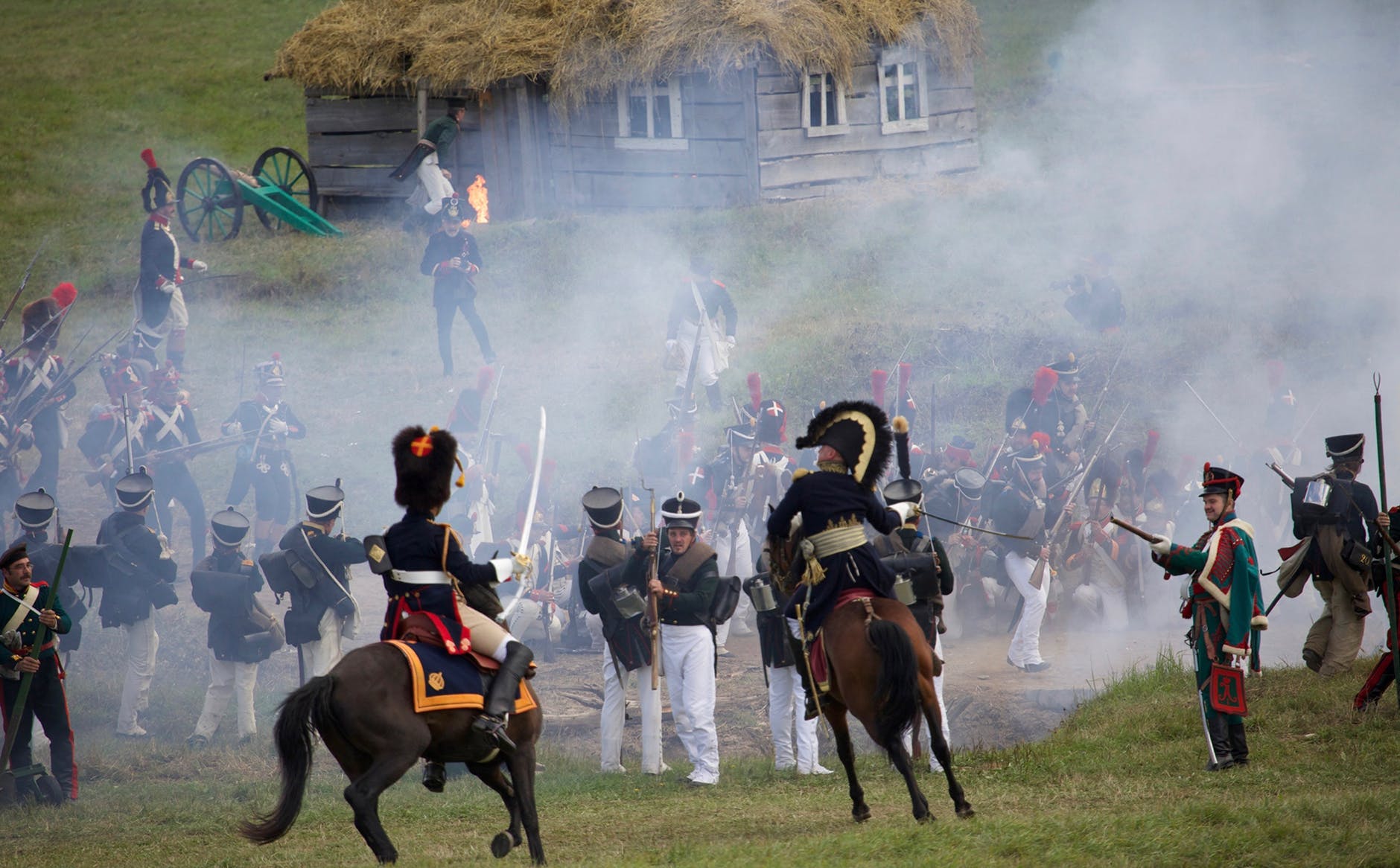
During the era of flintlock muskets, gunpowder was ignited by a spark from a flint striking a plate. The gunpowder was held steady in a small “pan”, and the resulting explosion was supposed to propel the lead shot “ball” or bullet to its intended target. But often, the gunpowder would not explode; it would simply burn out in a brief flash of light, failing to result in a shot, and wasting the powder. This was known as a “flash in the pan.” It came to symbolize an impressive display that accomplished little or nothing of use.
Years later, prospectors in the California Gold Rush would see a “flash in the pan” as they looked for gold. They would take a shallow pan, dip it in a river, bring up water and silt, dirt, and rocks, and swirl it around. Sometimes, they would see the “flash” of a gold nugget or gold dust. More often, they would see a glint of something else– pyrite, or “fool’s gold” was more likely than a flash of real gold. And, as the water swirled, the tiny flash of gold could disappear amid the eddy of dirt and other dull rocks– remaining just a “flash in the pan.”
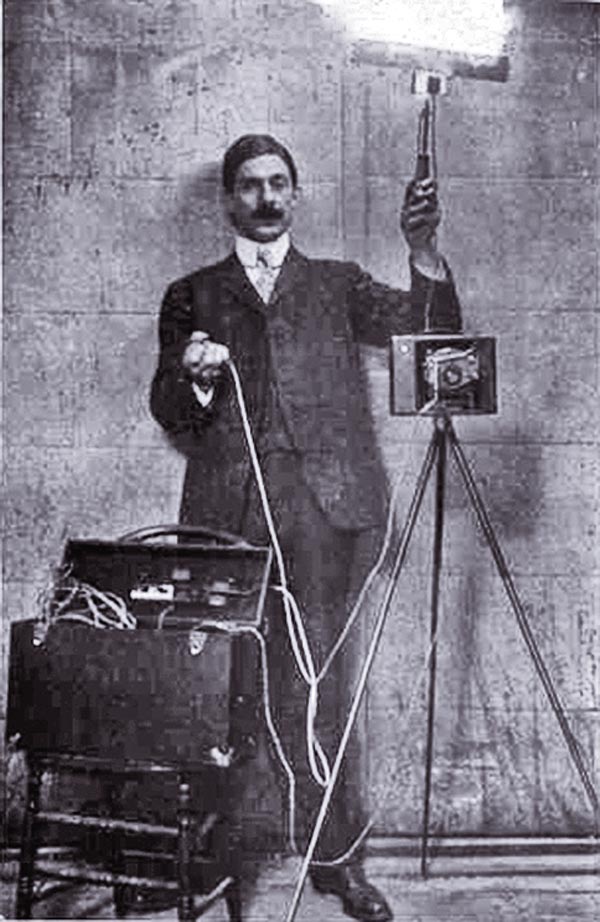
Early photographers, struggling to bring enough light into their studios, experimented with explosive powders, hoping to get a “flash” of light bright enough to create a better negative exposure, so that their subjects would not have to sit so long in the same position in order to get a clear image. They would mix powders, spread some of them on a shallow “pan,” and ignite them to create a brief, but brilliant, flash of light.
Our lives may sometimes seem like “a flash in the pan.” Our days are numbered, and our abilities limited. Even our brightest ideas and most explosive actions seem to be swallowed up in the larger scheme of things; our good deeds and noble intentions disappear in the swirling waters of time and the tides of injustice, disease, and evil around us.
But our lives, while brief, can be more than a “flash in the pan.” We are called to be the follow Jesus, the “Light of the World.” Jesus’s life on earth was brief, even by human life expectancy. But unlike a spark that burned itself out and ended in death and darkness, Jesus brought light and life that continues today. And He calls us to use our lives in ways that light the way for others.
Sometimes, our prayers can also seem like brief flashes, producing little of significance. But God hears each one, and it is in His power that our prayers become part of the larger “picture” of His plan.









































 Pursuing Prayer