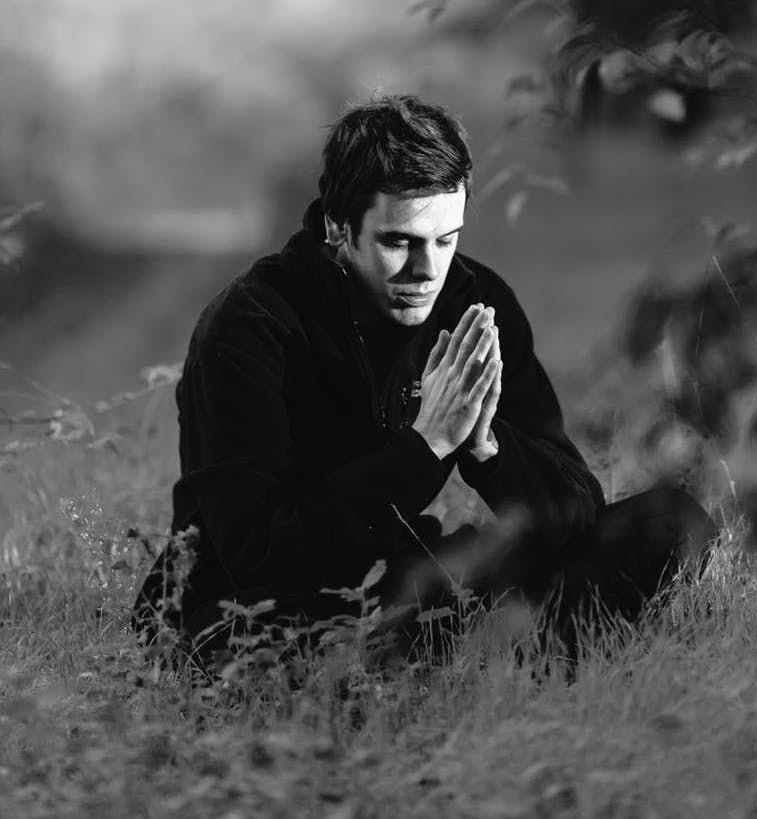
Be Still and Know…

Psalm 46
For the director of music. Of the Sons of Korah. According to alamoth. A song.
God is our refuge and strength,
    an ever-present help in trouble.
Therefore we will not fear, though the earth give way
    and the mountains fall into the heart of the sea,
though its waters roar and foam
    and the mountains quake with their surging.
There is a river whose streams make glad the city of God,
    the holy place where the Most High dwells.
God is within her, she will not fall;
    God will help her at break of day.
Nations are in uproar, kingdoms fall;
    he lifts his voice, the earth melts.
The Lord Almighty is with us;
    the God of Jacob is our fortress.
Come and see what the Lord has done,
    the desolations he has brought on the earth.
He makes wars cease
    to the ends of the earth.
He breaks the bow and shatters the spear;
    he burns the shields with fire.
10 He says, “Be still, and know that I am God;
    I will be exalted among the nations,
    I will be exalted in the earth.”
11 The Lord Almighty is with us;
    the God of Jacob is our fortress.

When I am tempted to fret or worry, I like to read through Psalm 46. I love the way the psalmists use hyperbole to shrink fear and maximize faith– God is an “ever-present help”, we will not fear, “though the earth give way, and the mountains fall into the heart of the sea”, “He lifts his voice, the earth melts!” And I love that the phrase is repeated– “The Lord Almighty is with us; the God of Jacob is our fortress.”

There is so much to unpack in just 11 verses of psalm! But I want to stick to two that always stand out to me.

First, the phrase, “the God of Jacob.” God is the God of Abraham, Isaac, and Jacob. He is the God of Moses, the God of Israel, the God of David…His titles are many. But in this case, He is the God of Jacob. NOT the God of Israel– even though God changed His name. No, He is the God of Jacob– the “heel grabber,” the son who stole his brother’s blessing and tricked his brother out of his birthright– the same Jacob who fled his homeland and worked for twenty years for his duplicitous uncle Laban. This is not the God of the victorious, but the God of those who have had to learn the hard way. He is the God of the one who has acted unjustly, and the God of one who has been treated unjustly. He is the God of the one who wrestles and demands a blessing, the God of the second son, the disappointed husband, and the grieving father. THAT is the God who is with US when we are in trouble and feeling overwhelmed by our own past mistakes, or our own inadequacies, or our unfair circumstances.

Secondly, the phrase “be still and know that I am God.” This same God who wrestled with Jacob, who blessed him in dramatic fashion, was the God who was with him through all the long and lonely night watches as a shepherd. Jacob, with his two wives, their two servants, and all thirteen or more of his children (12 sons and at least one daughter, Dinah)–spent a lot of his time surrounded by noises, nagging, responsibilities, and discord. Yet he took time to ‘be still.” And, though it took many years, and often came “the hard way,” Jacob did learn to “know” his God. He learned to trust that God would protect him, guide him, and bless him– and the generations that would follow him!

I am so grateful for this Psalm to remind me of God’s everlasting presence, His power to save and protect, and His sufficiency for every circumstance in my life. I’m so glad that the “God of Jacob” is the same God who sees me, loves me, and rescues me. I’m humbled to know that I don’t have to be clever enough or brave enough, or “righteous” enough to earn God’s help. I’m glad that the Lord Almighty is always with me. (see Hebrews 13:5) However, I still struggle to “be still and know…” I want to know by doing; by studying and making things happen. But to know God– to really know Him– I have to be still, to wait in silence and anticipation, to trust in what I cannot see and cannot do in my own power. I have to know Him as the Almighty, Omnipotent, Sovereign God that He is, rather than a God of my own imagination or the God I hear about or read about from someone else.

What a mighty God! The God of Jacob is MY fortress! And in stillness, meditation, and trust, I can KNOW Him!

The Unchanging God

A few days ago, we had to reset all our clocks for “daylight savings time.” This is an artificial construct whereby we pretend that seven o’clock is really eight o’clock for several months in an attempt to “gain” more daylight hours. Several months from now, we will “move the clock back” to its “real” time. We talk about a “lost” hour which will be “regained” in the fall, but time is constant. There are still 24 hours in each day throughout the year. We are simply playing a game with time.

We live in a time of great changes. Whether it’s a “time change”, a change of government officials, climate changes, technological changes, and even physical changes as we age, we must learn to “roll with” and adapt to the many changes around us.

God does not change. All the changes in our life can leave us confused, frightened, agitated, and even angry. But God is constant. His love is constant. His nature does not change. His Word does not change. He is the same yesterday, today and forever (see Hebrews 13:8). We can trust Him to do what He has said He will do. We can rely on Him to be the same, regardless of the changes around us; regardless of the changes within us; regardless of our circumstances, our reactions, our failures, and our best efforts. Other people will let us down. Their love may be conditional or fleeting. Their promises can be broken. And the fact that we are so hurt by broken promises and sudden changes points to the reality of the unchanging God, and of our need for Him.

It can be tempting, with all the change around us, to doubt God’s faithfulness; to wonder, or even wish, that He, too, might change. Sometimes, we want Him to “bend” to fit in with our own desires, or to fit in with our society and culture. Surely, if the majority of our culture has changed, we believe that such change equals growth. We look at the past with disdain. “We just didn’t know better, then,” we say. And surely, if we know better now, God will recognize our new thoughts and attitudes as a positive change– in fact, God will change to fit our new awareness, our “better” way of thinking.

But that is not how it works. There are millions who believe that the “bad” days of slavery are behind us; others believe that the “legacy” of slavery is the greatest problem of our age. All without acknowledging that there are still millions of people who are enslaved– victims of the sex trade, victims of organ harvesting, victims of debt and war–even in our “modern” world. Abortion-on-demand still slaughters millions of human beings every year–in spite of our culture’s acceptance, and even championship of abortion as a “woman’s right.” Hundreds of thousands of young people are being mutilated because of our society’s growing belief that gender is “fluid” and God is not a good and wise creator.

While God’s unchanging nature can be a great comfort to the believer, it can be a stumbling block for those who listen to the roar of cultural voices, instead of the still small voice of the lover of their souls. And it can mean that Christians face misunderstanding and persecution as we hold God’s truths to be unchanging and unfailingly good.

I am choosing today to be grateful for God’s unchanging nature. I choose to celebrate that His promises are true; that His love never fails; that He is eternally wise; that His compassions are new every morning, and great is His faithfulness! (Lamentations 3:22-23)

Free to Forgive

“Forgive us our trespasses as we forgive those who trespass against us.” (Matthew 6:12)

Imagine being a prisoner and being told that you were free to leave! Now imagine someone refusing to leave their prison cell, and choosing to stay locked up! Why would anyone do such a thing? And yet, there are stories of prisoners who have been freed– some of them found innocent of the crimes for which they were being held–who cannot seem to adjust to freedom.

For some, the issue is legal. Even though they have been exonerated, or have served out their sentence, they still face legal consequences–even if their conviction was overturned, or their sentence fulfilled, they still wear the tag of “convicted felon.” Their record, even if legally overturned, still hangs over their head when they apply for jobs, try to register to vote, or attempt to establish credit. For most, however, the issue is psychological. They still wear the imaginary label, “guilty.” “Not fit for freedom.” “Incorrigible.” And often, society does nothing to remove those labels, but rather reinforces the idea that once found guilty, a person can never redeem their life or legacy.

As Christians, we have been given a full pardon for our sins– regardless of whether we have spent time in a physical prison or not. We are free! But we can continue to live as though we are in prison– and worse, we can continue to put ourselves in a prison of unforgiveness toward others.

“If we confess our sins, He is faithful and just to forgive us our sins, and to cleanse us from all unrighteousness.” (1 John 1:9) God does not keep us in a prison of guilt and shame. He is faithful to forgive us, redeem us, and renew our mind and spirit. But part of that cleansing involves letting go of our “right” to hold grudges and cling to old hurts and bitterness toward others. God is faithful to forgive US; He is also faithful to act with justice on our behalf. In forgiving others, we are not denying the justice we deserve. And in forgiving us, God does not deny justice to those whom we have hurt!

God wants to give us true freedom– freedom from guilt and freedom from the burden of injustice. HIS shoulders are big enough to offer both– perfect freedom, and perfect justice. We are allowed to be free of both burdens when we trust God to take care of it all. And we are allowed to walk out of the prison of guilt, shame, bitterness, anger, vengeance, pride, self-righteousness, and self-loathing.

Let’s face it– we have all sinned. All of us have said or done things that have hurt others. We may not know the extent of the damage our words and actions have done, just as others may not be aware of how they have hurt us. And “hurting” people often hurt others in reaction. Jesus paid the price for our sins when He offered Himself on Calvary. His sacrifice stops the cycle of “unavenged” hurt.

Sin still continues to hurt us. Forgiveness doesn’t seek to pretend that what happened never happened, or that it didn’t matter, or that our hurt isn’t real and tragic. But forgiveness allows us to walk out of the prison of living with the label “victim” or “convict” that Sin slaps on our forehead or in our heart. It allows us to breathe the free air of God’s grace and the hope of a joyful, productive, courageous future!

Who Do You Say That I Am?

During Jesus’ ministry on earth, there were many discussions about who he was, who he said he was, and who others said he was.  The Bible is full of the names of God, of Jesus, and of the Holy Spirit– there are descriptive names, prophetic names, genealogical references, allegorical names, sacred names…but one of the pivotal questions Jesus asked of his followers was this: “Who do YOU say that I am”? (Luke 9:18-27; Matt. 16: 13-18)

We can ask ourselves why Jesus might pose this question to the disciples– was it some Socratic technique, or a trick question?  The disciples had heard several theories, descriptions, and names tossed about.  Was Jesus trying to determine how effectively he had presented himself to the Jewish people– and to his closest followers?   I don’t think so.  If that were his motivation, he could have asked, “Who to you THINK I am?”, or “Who WOULD you say that I am?”  Instead, he asked “Who DO YOU SAY  that I am?”

This is still a very relevant question today, and not just as a matter of recognizing him as Messiah.  Even when Peter gave an answer, Jesus did not say, “Good job, Peter.  You nailed it in one!  That’s the right answer, and your prize is that you will become “The Rock” on which I build my church.”  That’s how some people might read it, but that’s not the true story– Peter gave a correct answer, an inspired answer, but it was not a definitive answer.  Peter recognized who Jesus was supposed to be, but he had not experienced, and did not know, the fullness of who Jesus was.  Peter would later go on to deny this same Jesus, and say that he did not even know him at all!  Only after Jesus’ resurrection and ascension did Peter fully recognize and live out the answer he gave earlier.  His last years were spent demonstrating  in words and deeds that he had truly encountered “the Christ, the Son of the Living God!”

How does this relate to a pursuit of prayer in our own time?  What we say about Jesus involves more than just a pat answer.  To say, “He is the Christ, the Son of the Living God” is a correct answer, but what does that really mean to us?  What does it mean as we live as a witness before others?  Is he Christ and Savior, and Messiah to me? When I say he is the “Son of God,” is that just another of his many names to me, or do I understand all the richness of that title?  When I review the many names of God, do they resonate with personal meaning?  Do I pray to the “God who Sees,” to the “God who Provides,” the “God of my Salvation,” the “Almighty”, and the “God who Hears?”  Or am I praying to a “God I studied and know a lot about,”  a “God I heard about at Church,” or a “God I hope will hear me?”  If I pray “in Jesus’ name,” is that just an affectation?  Is it just a formality, or does that name, that person, inhabit my prayers and my life?  Am I praying in the name of the “Lion of Judah,” “Emmanuel”, “the Risen Lamb,” or just “a great teacher who talked a lot about love?”

pexels-photo-217114.jpeg

These are not questions meant to trigger doubt about my salvation, but questions designed to challenge my commitment and my faithfulness.  I bear the name of Christ–what I think I say about him; what I think I believe about him; what I think others see of him in me– it matters.  It is of supreme importance.  I need to be sure that I’m not taking for granted that what I know about my savior is the same as Knowing Him, and that what I think I’m saying about him is clear, consistent, and true.

What do my prayers say about Jesus?  What do my actions say about him?  What does my life say about him?  Hopefully, like Peter, the end of my story will bring honor and bear truthful witness to the Great “I AM” of scripture, the God of MY salvation, and the God who has heard me, loved me, corrected me, redeemed me, sanctified me, and welcomed me home to be with Him eternally!

Talk is Cheap

We are entering the season of Lent.  It is supposed to be a season of reflection, repentance, confession, and preparation.  Some people refer to it as a spring cleaning of the soul.  It is a time when many give things up or abstain from things– certain habits or routines, certain foods or activities.  This can be a good practice for many reasons– it teaches us discipline and patience; it reminds us of all that Christ gave up for us; it turns our focus from common earthly things to spiritual matters; and it frees us from habits and routines that have not only pulled us away from God, but away from each other.

I grew up with very mixed, and mostly negative, feelings about Lent. Neither my family nor my church celebrated Lent.  Many of my friends did, and their stories did very little to change my views.  I saw the season as drudgery, self-imposed punishment, dreary and legalistic, a cheerless, fruitless, and (mostly) meatless way of counting down to Easter.  No one seemed to “celebrate” it– it was more like they endured it.  My views have since changed, but I don’t think they were all that uncommon, and I think I was missing something of great value, something I would like to explore.

There are three important elements of Lent that I have struggled with, and I would like to share what I’ve learned.

  • There is great value in sober, somber reflection.  Our world is constantly calling us to revelry, happiness, entertainment, activity, and superficial comfort.  We see weakness in mourning for, and admitting to, our sins. We judge those who are serious and sober as “stodgy”, “boring”, and “prosy”.  We feel awkward in stillness and silent self-examination.  But the Bible paints a very different picture.  And the practices of fasting, confession, and meditation, practiced across a spectrum of religions, have been shown to promote better physical, mental, and emotional health, as well as spiritual well-being.

godlysorrow

  • Because we don’t value Godly sorrow– we sometimes substitute other practices that make a mockery of what Lent should be about.  I know I am not perfect, but I don’t want to feel that emptiness, that bankruptcy of spirit, that comes with honest confession and repentance.  In fact, I sometimes “glamorize” what is really petty.  I justify my bitterness, I excuse my selfishness, I “confide” my dislikes and judgmental thoughts about others.  And I bring these sins before God, not in sorrow and humility, but in scandal, as though he will be shocked or even entertained by my wayward behavior

trueconfessions

  • Which brings me to the third thing–cheap grace.  I spend a lot of time talking about Christian living– about the value of prayer, and confession being good for the soul.  I talk about being forgiven, and loving God, and wanting to serve him better.  But I have fallen into the very bad habit of seeing God as Ward Cleaver, or Ozzie Nelson– lovable and authoritative, but not Sovereign or supremely Holy –“There, there, child.  That’s all right.  You’ve confessed, and you’ve learned your lesson.  We’ll just forget that ever happened.”   Lent should lead us to dependence on God’s amazing grace.  It is the work of Christ in us– and only that– that saves, renews, and empowers us.  There is a danger in our culture that we cheapen grace by making the focus on what we know, or say about Christianity, rather than what God does through us.  Cheap grace leads to cheap talk–in my daily life, and in my prayer life.

This year for Lent, I’m not going to talk about giving up fast food, or Facebook, or shopping at my favorite store.  I’m not going to set a checklist or a target for random acts of kindness or giving alms.  I’m not even going to set a schedule for extra prayers or a list of special prayers just for this season.  There’s nothing wrong with any of those; in fact, if you’re thinking of doing any of the above (or all of the above), I encourage you to do it with all my heart.  My prayer for the next forty days will be to invite God to clean out the pretense and hand-wringing, sweep away the cobwebs of analyzing and making excuses, and empty my heart of pride, self-sufficiency, and false guilt, so that he can fill it again with love for him and for others.  Love that is more than cheap talk.  Love that pours out life and renewal– just as Christ poured out his blood on Good Friday, poured out glory on Easter morning, and poured out power at Pentecost.  Not because it was part of a 40-day program of renewal, but because it could not be contained.

But it starts with ashes and repentance.

psalm139

Just for Pun

I love puns. And while some puns can make you groan; most make you smile– at least a little. It’s good to laugh. It’s also good to step back once in a while and not take everything so seriously. Laughter is good medicine (Proverbs 17.22), and a wise person will not be afraid of a little levity. In fact, some lessons are better taught through gentle laughter than through harsh condemnation. So with that, I am sharing a few bits of “church humor.”

Bulletin notes:
“Next week, our pastor will be out of town. The following week, he will speak on ‘Just a vacation by faith.'”
“Please remember in prayer the many who are sick of our church and community!”
“‘What is Hell?’ Find out during our new sermon series.”
“For those who have children and don’t know it, there is a nursery downstairs.”

Fresh “interpretations”:
Lettuce pray…”
Luke 2: 14…Peas on earth; gourd will to men…
Genesis 2:7… and Adam became a living bean
A-maize-ing Grace…

What happens when children mishear the Sunday School lesson:
“Lot was told to take his wife and flee (Sodom). But his wife looked back and turned into a pillar of salt.”
“But what happened to the flea?”

And the Lord fed the five thousand with five loaves and tuna fish.

“Zacchaeus was a weird little man, and a weird little man was he…”

“We shall come rejoicing, bringing in the sleeves.”

I am so grateful for the gift of joy and laughter! I hope you are able to share a smile or a laugh with someone today. And know that even though “Jesus wept” (John11:35) over the death of His friend, Lazarus, He also shared times of laughter with His family and friends. He LOVES to see you smile! He rejoices in your chuckles and grins. May today be filled with joy, even as you face whatever lies ahead.

When God says, “Wait!”

I hate waiting. Most people do. I hate waiting rooms at the doctor’s office or the waiting area at the garage or the DMV. They try to make it a bit more pleasant with music, or a TV, or magazines lying around to keep you occupied. But usually, I spend the whole time thinking of “useful” things I could be doing if I wasn’t sitting around waiting. Recently, I published my first book, and I had to wait for freshly printed copies to be sent to my door. Every day, I waited for the delivery van to pull up– and every day, I missed it. Finally, I had to pick them up at the post office. Those few days seemed to take forever.

But I have learned over the years that waiting is necessary, and even good sometimes.

I was thinking about my first “real” teaching job–not student teaching or getting called in as a substitute, but a permanent position. I applied for a teaching job in my hometown. They needed an English teacher for middle and high school– perfect! I felt the interview went well, and I was a “known quantity”– many of the staff knew me from my time as a student just a few years before. Nevertheless, I waited and waited and finally got bad news. The job had gone to another applicant with more teaching experience. I was disappointed. I had prayed so hard, and it seemed like the perfect “fit.” I knew I should trust that God knew about my situation, and had everything in hand, but I just felt the outcome wasn’t “right.” What would I do now? I looked for other teaching positions, but could find nothing. I ended up doing substitute teaching. It was sporadic and unpredictable. I wasn’t really teaching as much as babysitting– especially in classes like elementary music!

Still, I learned a lot about classroom discipline; something I hadn’t really experienced much of before. My student teaching had been done with master teachers who were amazing examples of quiet but stern management. Even when they “turned their class over” to me in the final weeks, the students knew that their other teachers would back me up in a classroom situation.

Not so with substitute teaching! Not only was I “on my own” in the classroom, I frequently traveled to schools where I knew no one on staff and no one knew me. I had no idea what kind of discipline was practiced by either the teacher or the administration at some of the schools. Most were ok, and staff were friendly and supportive. Most of the students were typically a bit naughty, but not out of reason. But not all! There was one class of over thirty-five fourth- and fifth-graders whose teacher had left no lesson plans, and another day at a high school where the entire staff was intimidated by the football team– most of whom were in the same third hour class. The lesson plan called for them to do research in the library– the librarian hid– and I was trying to stop them from literally throwing the pumpkins that were meant to be decorations at each other!

All this to say that after several months, I got a phone call. It was my old school, wanting to know if I would be interested in finishing out the school year in the position I had applied for the previous fall. It turns out the teacher they had hired had serious health issues and had missed over 60 days! They had been trying to fill in with substitutes, but wanted someone who could bring stability and order to the classes for the last marking periods of the year.

My first week in the new position was a nightmare. Every class had fallen behind. The succession of substitutes had given up. The classes lacked discipline and focus. In fact, the other regular teacher had written off all the students as irredeemable hooligans, and she was glad to give up the position. My first day, one of the high school students attempted to sneak out of the window at the back of the classroom, while another classmate tried to sneak out the door! And I found out that my last hour class was to be held in the middle school band room– it was a computer class! I had to commute from the high school to the middle school, which took up part of my preparation period, so I had little time for planning or grading paperwork.

In spite of all the challenges, that first “trial by fire” proved that I really was a “fit” for the position after all. I spent another seven years teaching in my hometown. Eventually, my schedule was changed and I no longer had to commute. I loved my students (most of them), and I am still in touch with some of them to this day! Even the ones from that first disastrous partial year.

God did not answer those first eager prayers that I should get the teaching position right away. And even when I finally “got” it, it was filled with challenges and obstacles. But in the waiting, God was there. Even in the difficult substitute assignments, and the adjustments, and the questions about why I didn’t get the job when I first interviewed.

God may not tell us audibly why He wants us to wait. He won’t tell us how long we must wait. And He generally doesn’t put us in a “waiting room”, filled with soothing music or distracting TV ads or old magazines. But we can trust that God has good reasons for us to wait– whether it’s for a job, or a spouse, a chronic illness, loss of income, or change in circumstances. What He asks is that we trust Him, and that we continue walking a praying in faith. Because I will be worth the wait.

“Your Mission, Should You Choose to Accept It…”

Anyone old enough to remember the old TV show, or anyone who has seen the movies with Tom Cruise, will recognize the title quote from Mission Impossible.  A message, containing details of a top secret mission, would be sent to an agent of the CIA.  After the message had been delivered, it would self-destruct, and the agent would set out to save the world from terrorists or other worldwide threats.  It made for exciting entertainment– speeding trains, double agents, close calls with assassins, death-defying stunts, and lots of explosions– all happening in exotic locations around the world.

Prayer doesn’t usually involve death-defying stunts or explosions, but in can involve a mission, and exotic locations.  As I started keeping a prayer journal, I wanted to pray for people around the world– except I’m not a world traveler.  I’ve never been to Fiji or Burundi, Greenland or the Gobi Desert.  I know some missionaries who have lived or are living overseas, and their newsletters are helpful and personal– I can pray for them, for their fellow workers, and for their neighbors and friends and circumstances across the globe.  But I wondered, couldn’t I do more?  What if I set aside one day for every country on earth– to pray for that country and its people even once a year?  That might seem like an impossible mission.  How can I pray effectively for a country if I don’t even know where it is or how to pronounce its name?  Thankfully, I have a lot of help.  The internet is a great resource for finding out about countries, especially those in the news.  But one of my favorite resources is the CIA!pexels-photo-319968.jpeg

The Central Intelligence Agency of the United States of America is not just in the spy business.  They collect “intelligence”– facts about our world and every country in it–maps, statistics, flags, forms of government, populations, literacy and mortality rates, and so much more. https://www.cia.gov/the-world-factbook/
By visiting their site, you can find out more about any country in the world, and use that information to pray for very specific needs–countries that have been ravaged by war, disease, faltering economies; those countries facing turmoil from burgeoning immigration or sectarian violence.  You can find out the official language(s) of any country, the approximate breakdown of religious affiliation, the percentage of the population that suffers from obesity, illiteracy, or poverty– even some of the history and social structure. Are there major rivers or mountain ranges in that country?  What natural resources do they have (or not have).

knowledge-book-library-glasses-159743.jpeg

As I put together a yearly prayer journal, I realized that there are actually more days than countries. But that’s ok. In a single year, I can pray for every nation, but I can also lift up each state in the U.S., every Canadian province, and several major world cities! I can even pray for continents and oceans and focue on one geographic area every day!

I don’t spend hours poring over each country, city, state or continent each day– sometimes, I just lift up that area by name, knowing that God already knows the needs and situations in each place better than I ever could (even with the help of drones and spies).  But when I have the time, I like to learn more about the amazing diversity of peoples, languages, cultures, and circumstances around the world.  It reminds me that God has all of them in his hand, on his mind, and in his heart at all times.  It’s a big world out there, though it often seems to be shrinking.   God is Bigger!  There are a lot of tragic circumstances and heartbreaking issues around the world.  God is still Sovereign!  There are millions of people in remote and forgotten corners of the world– God sees and cherishes all of them!

I still have my “first world” problems, and personal issues to bring to the throne of Grace, but what a privilege to be able to lift up others– people I have never met in places I will never be able to visit–knowing that I can have a tiny part in the work God wants to do in their lives, as well as in mine.

Piece of Mind v. Peace of Mind

We live in an angry world, filled with outrage, entitlement, bitterness, hurt, and arrogance. Everywhere we look, someone is giving someone else (sometimes everyone else) a “piece of their mind.” And those who do are often lauded and celebrated. Pundits, critics, “talking heads,” columnists, “expert” opinion-makers (recognized or self-appointed)– all make careers out of sharing their opinions, their theories, expertise, or knowledge. They may be clever, intelligent, even entertaining; they may be popular, intimidating, or impressive in their range of knowledge. I may agree with their opinions, and share their conclusions or beliefs. But I should be careful not to become “puffed up” with knowledge.

Knowledge puffs up but love builds up. The man who thinks he knows something does not yet know as he ought to know. But the man who loves God is known by God. 1 Corinthians 8:1-3

1 Corinthians 8:1-3

https://dailydevotionscripture.blogspot.com/2012/11/knowledge-puffs-up-love-builds-up.html#:~:text=Knowledge%20puffs%20up%20but%20love%20builds

It is very tempting– VERY tempting– to join in this practice of verbal tongue-lashing. To show off our superior knowledge or our righteous opinions. To win arguments and create “mic-drop” moments.

Meeting anger with anger, sarcasm with sarcasm, and pride with pride is natural. But it is not God’s way. God calls for us to have peace of mind– to have a mind that can see and hear the reality of our fallen world but respond in an unnaturally loving and gracious manner given to us by the Holy Spirit. We are to speak words of peace, to walk in humility, and to love our neighbors as ourselves.

Our words can be powerful– for good or evil. We can speak peace and goodwill, harmony, and love into a world that is drowning in hateful comparisons, disdain, selfishness, malicious gossip, idle chatter, and careless opinions. Words can uplift, encourage, heal, and strengthen. Words–even quiet words– can stem the tide of malice and bring light and hope.

And it is not just what we pass on to others with our words– we become what we speak! When we speak arrogance and self-righteousness, we become (and remain) self-righteous and arrogant. When we speak love and joy, peace and patience, trust and truth, we become more peaceful, joyful, patient and trustworthy.

Jesus– the Word of God– often used a quiet sentence to bring hope, reassurance, and blessing to people in need. Jesus felt anger– and He had every right to speak HIS opinion and HIS omniscience when He was tested and unfairly questioned. But He chose to be patient. His answers were not laced with malice and sarcasm, but they silenced His critics, and served as lessons for others who were listening. What a great example for us!

What might happen if we spent less time giving a “piece of our mind” and more time spreading “peace of mind” in our world?

Where is God When…?

A priest, a Baptist minister and a rabbit go to a pub for lunch. The hostess meets them at the door with a message. “Today, we are helping a local blood bank. Your lunch is free if you donate a pint of blood.” All three agree to donate blood in exchange for a free lunch. The hostess asks each one in turn for his blood type. The priest says, “I believe my blood type is A negative. The minister says, “It’s been a long time, but I seem to remember that I am AB positive.” Finally, she turns to the rabbit. “I was supposed to be a Rabbi, so I must be a Type O!”

I love puns, and like many puns, the humor in this one comes from a grammatical or spelling error. Something in the story is almost, but not quite, as it should be. It is a good thing to be able to laugh at small mistakes. But what happens when things are terribly wrong? It’s not funny at all. It’s devastating, confusing, and frightening. We want answers. We want the situation “fixed.” We want to find out what went wrong, why it went wrong, and who is responsible.

California is burning as I write this. Thousands of acres destroyed; hundreds of homes and businesses reduced to ashes; thousands of people left homeless. Where is God in these fires? When an innocent child is abducted, raped, mutilated and left for dead, where is God? Where is God amid the unrest in Mozambique, where typhoons and political unrest have caused so much havoc? Where was God when the hurricane and storm surge displaced tens of thousands of people in North Carolina, Tennessee, and Georgia less than six months ago? Where is God in the war-torn regions of the world, where innocent families are being terrorized by bombing raids and invading armies? Where was God when millions were dying of COVID just a few short years ago?

I’d love to say that I have an answer. One that is comfortable, unassailable, logical and easy to understand. But I don’t. The “glib” answer is that God is on His Throne, omnipotent and all-wise. And He is. He is not to “blame” for personal tragedies or for sweeping disasters. Sometimes, God intervenes in miraculous ways to “save” us from certain death, “accidents,” or even attacks. But often, He chooses not to do so. And I have no explanation, no all-encompassing, deeply soothing answer for those who are left suffering.

What I do know is this: God is a redeeming God. He is a God who can and often will turn tragedy into triumph. And even if, in such cases, the triumph is often bitter-sweet. This is a God who created mankind, knowing we would reject His goodness and go our own way. This is a God who took a single faithful man (Abraham) and made him the father of many nations– some of whom are still at war to this very day. This is a God who did not spare His Only Begotten Son, but allowed Him to go through a sham trial, be falsely convicted, and die a painful, publicly humiliating death. And then, Christ arose!

What does that mean for someone whose son or daughter is still dead after five (or 25) years of grieving? For someone who lives every day with the trauma of having been raped or abused as a child. It does not give immediate comfort. It does not take away the sting of injustice, pain, and questioning. But it is the promise of redemption– that just as Christ rose victorious, He will cause the pain and grief of the past to disappear in the Joy and Wonder of Eternity with Him. He WILL bring ultimate and complete justice, and it will be perfectly overwhelmed with mercy, grace, and freedom from the past.

It may seem slow and painful, but it WILL happen. Those who have suffered; they will laugh again. Those who are drowning in the senselessness of their own sorrow will experience healing and have answers to their questions. Those areas of the world where suffering is so great in the present– they will recover. Trees and gardens will grow again. Houses will be rebuilt. And yes, there will still be disasters and devastation in our lifetime, and in the years to come– UNTIL THAT DAY. That day when Christ returns to make all things new. Whatever hurts and griefs we carry now, they will be overtaken by joy and healing. No more fires, no more floods, no more war, no more disease, no more “mistakes.”

I don’t know why God allows us to suffer now. I’ve heard some philosophers try to explain, and they have many “good” reasons:

Suffering often leads to growth and necessary change.
Suffering produces resilience and develops character.
Suffering teaches us that there are consequences to our selfish and sinful actions.
Suffering often brings people closer together and brings out the best in us as we offer help and hope and encouragement.
Suffering teaches us to be compassionate toward others in their suffering and grief.
Suffering contrasts with joy, helping us to appreciate what is truly good in our lives.

These are not bad answers. But they are not complete. They are not “enough.” And I think that’s part of God’s plan. God doesn’t want us to live life on autopilot. He doesn’t give us “easy” answers– just like He doesn’t give us a life without any purpose or challenge. He doesn’t want us to focus on having all the answers. He wants us to learn from each other, depend on one another, and ultimately to trust that He knows best. It’s not an easy lesson to learn. But if we stay in pursuit of Prayer, and closeness to God, it’s a lesson well worth struggling through.

And sometimes, we can learn to laugh at life’s “typos” and other little mistakes as we travel this life.

Blog at WordPress.com.

Up ↑