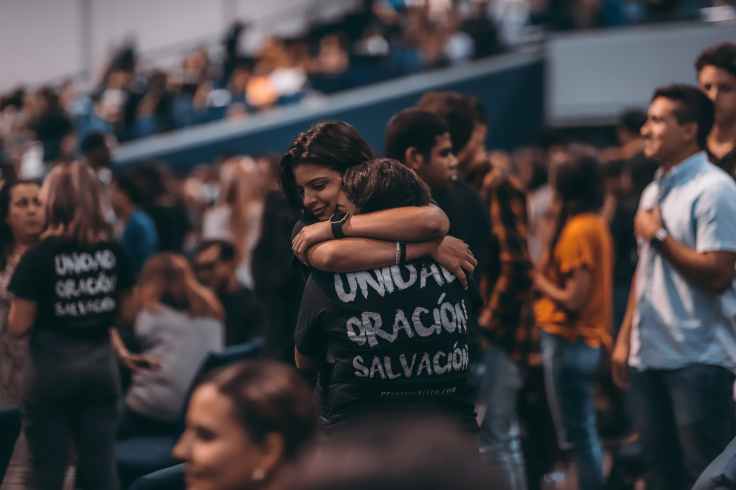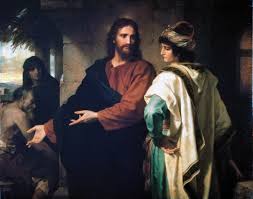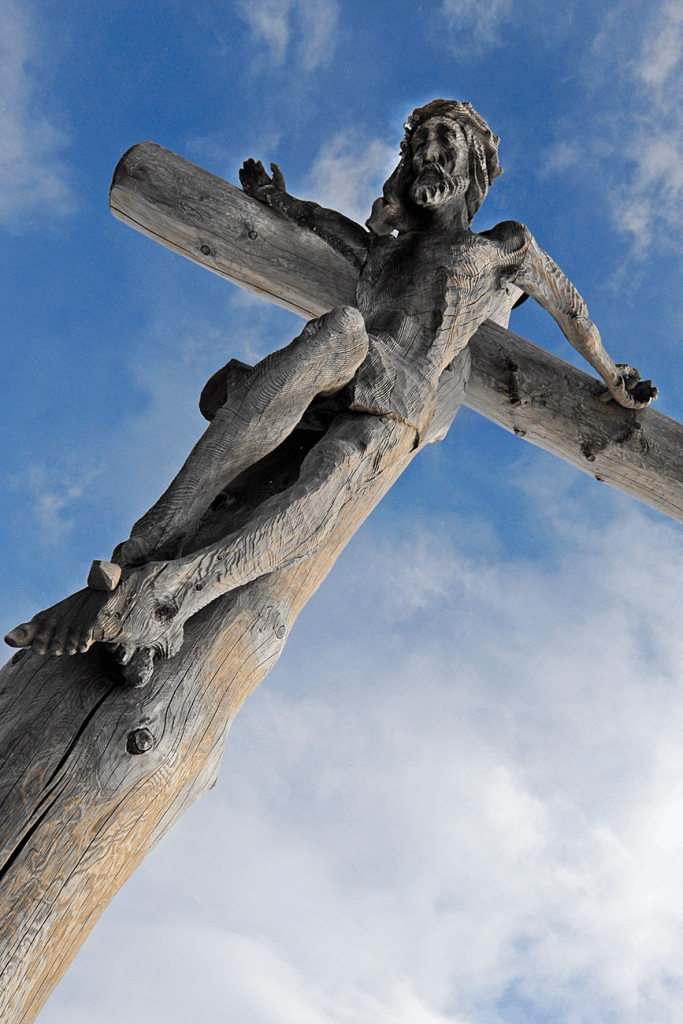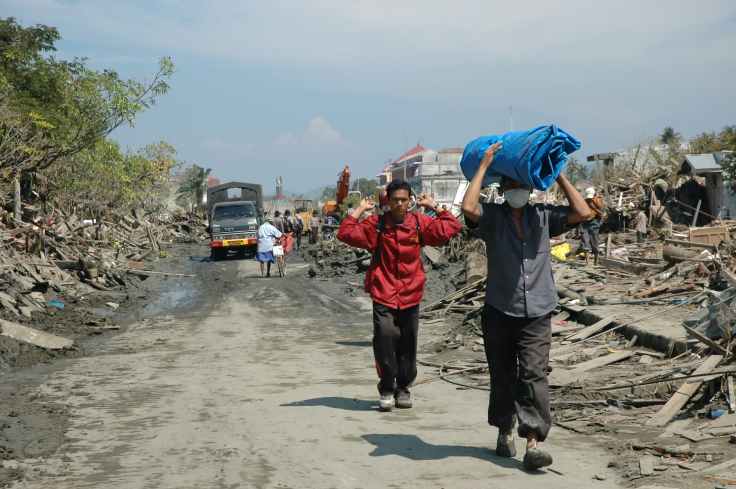
Today is Memorial Day in the U.S.– a day when we honor those who have fallen in battle and given their lives for our country. It is also a day on which we often decorate the gravestones of ancestors and relatives who have passed on. There may seem to be little connection between soldiers of war and civilian great-grannies or uncles, but Memorial Day can stretch to both– especially to Christians. Here’s how I see it:
Soldiers who gave their lives never lived to see the fruits of their sacrifice. They died, never knowing if their sacrifice was in vain. Our ancestors, similarly, poured their efforts into rearing children and living lives of integrity, little knowing how their efforts would be carried on by the next generation. There is a risk in battle– whether a war-time conflict, or just daily survival–a risk that all our hard work and all the perils we face will end in failure. We memorialize those whose efforts did NOT fail. We honor those whose sacrifices made a difference in our lives and in the lives of others. They lived (and died) for a purpose– and we honor that purpose, as well as the individual lives.
All of us are fighting a battle– a spiritual battle– in which our very lives are on the line. Some of us will lose our lives, literally, through imprisonment, persecution, torture, or disastrous choices we make to surrender to the enemy. Others will lose our lives figuratively, giving up our time and our own dreams to a greater cause. We honor those who went before us in this fight. We honor the good examples and the fallen heroes.
Soldiers go where they are sent. They often die and are buried far from their homes, on the battlefield. They may or may not have graves with the rest of their families. Many in our family were immigrants and pioneers, moving far from “home” to start a new life. Some of them moved as the result of war coming to their ancestral home and pushing them to relocate.
Memorials– whether gravestones, statues, monuments, or stories passed down to the next generation– serve as reminders of our priorities– freedom, family, and Faith. God’s people throughout the years have raised memorials to commemorate God’s faithfulness, as well as the high cost of fighting against Sin and its effects.
Dr. Martin Luther King, Jr. Memorial
I pray that on this Memorial Day, we will take time to remember, and give thanks for those who have fought the “good fight” in the name of freedom, and in the name of Faith. But more than that, I pray that we will be inspired to carry on the fight– knowing the risks and weighing the costs–to preserve those things that are most important. Let’s pause to remember– and then let’s move Onward!
Bible teacher and author Chuck Swindoll is credited with saying, “I am convinced that life is 10 percent what happens to me and 90 percent of how I react to it. And so it is with you. We are in charge of our attitudes.” When I was younger, I liked this quote, but I quibbled with the numbers. Surely, we are in control of our reactions and attitudes. And our circumstances don’t determine our lives completely. But just 10%?! What about those whose circumstances are overwhelmingly tragic?
I thought of some of my father’s experiences, and it seemed as though what happened to him in four short years should have had a greater impact on his life. During the four short years that my father was in high school (1945-1948), his family experienced at least three tragedies. Dad grew up on a farm. His dad was a dairy farmer, as was his grandfather. Dad grew up expecting that he would, along with his father and brothers, spend the rest of his life as a farmer. But then, everything changed. First, Dad’s oldest brother was drafted into the Army at the very end of World War 2. Though my uncle was not in combat, he was badly wounded in Germany, as his unit was sent in to find unexploded bombs and land mines, and ordered to clear out rubble. Dad had lost one cousin in the war, and several others had come home wounded or changed, but my uncle’s situation was post-war, and unexpected. It meant more work for my grandfather and the two younger sons, even as they were still in school. It meant uncertainty, as they waited for word from thousands of miles away over several months.
Uncle Jack recovered and returned to the farm. But then, on Christmas Eve, there was a house fire. While the family escaped without major injuries, the house was a total loss. Furniture, clothes, pictures, heirlooms, farm records and financial papers– all gone. Dad moved in with his aunt and uncle to continue his education. But two weeks before graduation, his father died suddenly from complications from emergency gall bladder surgery. My father’s world had been turned upside-down in just a few short years and at a critical juncture in his life.
However, as I’ve matured and thought about it over the years, those events, among other tragedies and triumphs in Dad’s life, really DID only amount to a small percentage of his life. Even numerically/chronologically, those four years were less than ten percent of Dad’s time on earth. Dad couldn’t control the events of those years. He couldn’t have predicted them, and he couldn’t erase them or go back and undo them. But he chose how to respond and react to those events. He learned from them.
Circumstances in our lives, whether tragic or terrific, present us with choices. Will we turn to God, or away from Him? Will we become better, or bitter? Will we seek to assign blame, or seek solutions? My dad and his brothers were not able to continue the dairy farm their father had built up. Without the records and registration papers for the various cows, without their father’s experience and acumen, without money to upgrade their facilities and equipment, they had to sell most of what their father had built up. Uncle Jack kept the farm land, but he took a second job. Dad was drafted and sent to Korea for his own post-war odyssey, and came home to work at the local feed mill, and later in a factory job. He passed away several years ago, partly as a result of complications from gall bladder surgeries.
My dad’s life was impacted and shaped in part by tragic circumstances. But Pastor Swindoll is right– at least 90 percent of my dad’s LIFE was shaped by his attitude and character. My father was a man of faith and integrity. He cherished his family and his role as a father– partly because of the loss of his own dad; but also because of the lasting legacy his father had passed on. He spoke often of his wonderful memories growing up on the farm. He lost out on his dream of being a farmer. But he also made wonderful memories with the life he chose to pursue off the farm– picnics and vacations, family reunions, family devotions, watching baseball (live or on TV), sharing laughter and tears, and making sure we knew we were loved and protected. He ministered to people in the community, mowing lawns for widows, or visiting shut-ins. He taught us to love music, baseball, and animals. He taught us the value of prayer, reading the Bible, and living a life of faith. Dad could have been bitter. He could have chosen to wallow in self-pity or anger. He could have become obsessed with rebuilding the life he “lost” to circumstances. He could have decided that God had “robbed” him of the future he had expected to have. But he chose to believe that God had a plan for his life; one that was bigger than his boyhood dreams and bigger than his expectations. Dad didn’t rise to great wealth and power. In the world’s view, his life was not a great success. He never became rich or famous; he wasn’t powerful or important in politics or business. But the memories he treasured and the relationships he developed were far more than 10% of his life!

As I get older, and look back on the circumstances of my own past, I am encouraged and challenged to think that they represent only a small fraction of my life. I can’t control many of my circumstances– health setbacks, financial struggles, accidents and tragedies. But I can control my attitude and my response. I wanted to marry young and have children and raise a family. But that never happened. I married late, I was barren, and my step-children were already grown. I wanted to live in a big farmhouse; instead I live in a small apartment. But I would not go back and undo the circumstances that have shaped my life. I have marvelous step-children and grandchildren. I have had opportunities that were only possible because I was single for so long and because I was childless. I have a better appreciation for the family I have– including nieces and nephews and cousins– than I might have had if I had been wrapped up in my own smaller family. Dad taught me to trust God’s plans for my tomorrows. That’s what he did. And I choose to do the same– after all, God controls 100% of my future!
Yesterday, I spent time scrolling and playing games on-line. I saw patterns and pictures and memes. I read articles and posts and e-mails.
I learned that the English word “ogre” comes from French, and the French word is from a translation of an Arabic tale. I learned that some dogs can be trained to walk on tightropes. I learned that the least populated state capital in the U.S. is Montpelier, Vermont; the second least populated is Pierre, South Dakota. I learned that grown women will act like second-graders on the floor of the United States House of Representatives, resorting to name-calling and screeching. And that their behavior will be talked about and analyzed for hours afterward.
Today, I spent some time walking around my neighborhood. I saw flowers in bloom. I heard the train as it came through town. I saw houses and cars and people walking their dogs (not on tightropes!)
I learned that it was pleasantly warm outside, but it felt good in the shade. I learned that one of the stores downtown was closed today due to a family crisis. I learned that crews have been working to freshen up the curbs and landscaping around the downtown. I met someone new, and learned that she likes dachshunds (though hers cannot walk on a tightrope).
Tomorrow, I’m going to spend some time with my eyes closed. I’m going to “see” God’s faithfulness as I review my life. I’m going to get a glimpse of how God is working in my life, and in the lives of others around me. (I’m going to wonder about how God will work in other situations.) I’m going to see how small my world is in relation to God’s universe!
I don’t know what I will learn, yet. But I’m quite sure it will be beyond my expectations. And more wonderful than dogs on tightropes and neatly manicured curbs! There is so much more to see! So much more to learn! What majesty!
When I was growing up, we always said grace before our meals. It wasn’t an afterthought; it wasn’t an affectation. It was just part of the meal. We sat down, said grace, and started eating. Sometimes, Dad did the honors; sometimes, it was Mom. And sometimes, my sister or I were asked to say it. It was usually something simple, though it wasn’t always the same. We would say grace at home, around our own table, and we would say grace at restaurants– wherever and whenever our family was together for a meal.
Today, my husband and I have the same tradition. We don’t have children in the house, but he and I take turns saying grace, and if one of the grandkids happens to visit, they know they may be asked to take a turn, as well. If David and I are eating out, we still take a quiet moment to hold hands, close our eyes, and say grace. Some times, other diners or wait staff will stare (or glare) or comment, but most of the time, they don’t even notice.
So why do we do it? Is it no more than force of habit? Are we just “holier” than other diners? Do we really think it impresses God if we say grace, or that God will be angry if we don’t say it?
No. But we believe saying grace is important. Here are some reasons why:
Grace is about gratitude. In our busy lives, it can be tempting to take things for granted– even things like food and family. We are BLESSED to have food to eat, and family with whom to share it. We are blessed when we go out to eat to have others cook and clean up for us. We are blessed whenever our family or neighbors can share a meal with us. God is a loving and gracious God, and grace is a time to remember our blessings.
Grace slows us down for just a minute to REMEMBER who we are, and who God is! All our blessings– including food and family and time to share them– come from God. Grace reminds us to be humble as well as thankful. It reminds us to see God’s hand at work in even the smallest and most mundane happenings in our lives. And it reminds us that God is faithful in all things, big and small.
Grace also helps us to remember to thank the people involved in our meals– the ability to buy groceries; the work it takes to prepare our food; friends and family who share our meals; neighbors who have given or traded with us for food; the cooks and wait staff that serve us at restaurants. Saying grace helps us SEE how we are interconnected; how we depend on God and on others in every area of our lives.
Grace gives us the opportunity to lift up our immediate worries and give them to God, instead of holding on to them. Grace is more than just a quick word about food. It is a time for us as a couple (or a family) to pray together about worries that are on our minds. Then, instead of being stressed as we eat, we can stay “in the moment” with each other, and enjoy mealtime together! It’s also a great way to share our thoughts, feelings, and concerns in a safe and informal environment. How much better mealtime is when stress and frustration are diminished, and joy and peace are given a seat at the table, instead!
Saying grace is much more than just a quaint habit from a bygone era. It is a vital part of our growth as individual Christians, and as a Christian couple. I believe it is a simple and quiet witness to others. I believe it has benefits for our digestion, our attitudes, and our emotions, as well.
Grace– not just the mealtime prayer, but the concept of Grace– is not loud or showy. It is, however, consistent, lovely, and powerful. May we say grace; may we show grace; may we live in the power of Grace today!
We had a storm blow through the area the other night. We were under a tornado warning, and a couple of tornadoes did touch down several miles northeast of here. Long before the tornado warning was issued, the weather forecast predicted strong storms with the possibility of hail and/or tornadoes. But even without them, it was easy to sense that “something was in the air.” There was a quality of heaviness in the very air outside. And the sky was an unnatural greenish-gray color, even where it wasn’t dark with storm clouds.
In life, we often get warning signs of impending “storms”–physical symptoms that tell us there may be a problem like infection or disease that needs to be diagnosed; a tense atmosphere at work that suggests big changes may be coming; withdrawal of a family member that alerts us they may be struggling with emotional or mental issues. These “atmospheric disturbances” may be subtle at first. We may choose to ignore them, or dismiss their importance, until we find ourselves in the middle of the storm!
God calls on us to trust Him in any weather or circumstance. We can pray about even the slightest change in our “atmosphere,” whether at home, work, or even internally. And part of God’s wisdom is to send us warnings so that we can not only pray, but take proactive measures. We can reach out to family members, make an appointment with our doctor, be cautious about spending in the weeks and months ahead, seek out help and counseling, etc.
But sensing “atmospheric disturbances” is not all about seeking a remedy or avoiding struggles. Even with advanced warnings, some people last night were unable to avoid damage to their properties or loss of electricity from the storms. Several people were trapped in a shipping warehouse that was hit by one of the tornadoes. Thankfully, no one lost their life; still, it took hours to rescue them all, and some of them went home to no power. But what if– just what if– someone looking up at the sky, or feeling the heaviness in the air, prayed in that moment? What if they prayed for safety– not just for themselves, but for others who would be in the path of the storm? What if someone in that shipping warehouse made plans weeks ago for tornado drills and emergency plans to protect the workers, and made the call for everyone to shelter together?
There are hundreds of stories of dramatic rescues and miraculously saved lives after almost any weather emergency. But how many untold stories are lost in the simple prayers and small corrections that take place when God’s people respond to “atmospheric disturbances” with prayer and wisdom?
And when God chooses to allow storms to come into our lives, how many stories could be told of the presence of God to calm, not the storm, but our own fear of it? God knows, as we cannot, how big the storm will be, how long it will last, and what “damages” we will face. And His Grace is sufficient to give us everything we need to face them all. That doesn’t mean we won’t suffer– damage, loss, grief, frustration– these are part of our life in a fallen world. God won’t always remove these things from our life. But he will NEVER abandon us to face them alone.
Jesus Christ faced storms in His life. One of them came on the Sea of Gallilee, as Jesus was sleeping in the boat. (See Mark 4: 35-41) A storm came up, and the disciples were terrified. They woke Jesus up, and Jesus calmly rebuked the wind and the waves, and the storm stopped. We often focus on the fact of Jesus being able to control the wind and the waves. But one of the amazing things about this story is that Jesus was IN THE BOAT! His own life was in danger from the storm. The disciples were not alone. Jesus did not let them put out to sea and face the waves, while He was safe on shore.
And so, too, Jesus is WITH US in our storms. We don’t have to wake Him up, and He may not choose to give us a miracle, but He’s right there! He can be trusted, no matter what our circumstances, no matter what dangers or damages we have to face. He knows how the storm ends; He knows how our story ends; He knows when the sun will come out again, just like it did earlier this week, announcing that all will be well.
Today is May 8th. Historically, this is known as V-E Day, or Victory in Europe Day. On this day, in 1945, the German forces surrendered, ending World War 2 in Europe. Parades and parties broke out in several cities. People celebrated the end of war and the promise of peace. But the war was NOT over– not for everyone. War continued to rage in the Pacific for several months. Prisoners in concentration camps were still being liberated, many of whom had lost their homes and families. And the devastation across Europe and North Africa would take decades to clean up. Millions were still facing food rationing and homelessness; there were unexploded bombs and land mines, craters and ruins–all was not suddenly peaceful and prosperous.
The events of V-E Day happened years before I was born. But my parents and grandparents remembered it well. And as someone who loves history, I look back on events of the past and ask, “What can I learn from this day?”
Today, I want to look at what “victory” looks like. Not the thrilling victory of winning a race, or the victory of one army over another in a past century, but true “victory”–an end to all war and struggle and pain and uncertainty. What will that look like?!
In my life, I have experienced small victories, and victories that seem large in the moment. Graduation ceremonies, job promotions, signing the papers on a new car or house, saying “yes!” when David proposed, and later celebrating our marriage with friends and relatives at our reception…These were all moments of celebration and victory. But like the victory of V-E Day, there was still work to do, challenges to face, and even difficulties and set-backs that clouded each victory. Even my greatest Victory– coming to faith and knowing my name is written in the Lamb’s Book of Life– is in the “here and now.” I still face trials and temptations in this life, even though I can claim victory over Sin and Death through the work of Jesus Christ. But true “Victory” is in the “not yet.”
It can be tempting, when celebrating our earthly victories, to get caught up in the momentary feelings of success and happiness. But what happens on May 9? What happens after the parade? What happens when we face the next challenge? I find myself too often disappointed with the fleeting nature of my victories in life. And in the disappointment, I lose not only the joy of the victory, but the strength of the promise of victories yet to come!
There is a day coming– one that will make V-E Day pale in comparison! Some day, the forces of Evil will be utterly crushed. It will be total surrender. No occupying forces, no rationing or homelessness, and no more death or destruction for those who have trusted in Christ. Just sweet Victory. In a moment; in the blink of an eye, God will say, “ENOUGH!” The war will end. The suffering will end. The waiting will end. The dead will rise and the living will be changed.
I can only imagine what that day will truly be like. But I can live with the certainty of a coming day of “Victory.” I can know the hope and the joy of each small victory today, as it reminds me that there is much more to come!
Thank you, Jesus, for each small victory today. Thank you for the ultimate Victory that I find in You!
My late uncle came to know Christ– really know Christ– later in his life. He and my aunt spent their final years doing advanced Bible studies by correspondence course– hour after hour studying Hebrew and Greek, filling out paperwork, sending it in, and waiting for the next lesson (this was before the explosion of online classes and internet shortcuts).
When Uncle Fred was diagnosed with ALS (Lou Gehrig’s disease), and he knew his time on earth was drawing to a close, he planned his funeral service, and it was incredible– uplifting, encouraging, hopeful! This from a man who, earlier in life, had had anger issues, numerous issues with money, and serious doubts about God. One of his favorite scripture passages came from Proverbs, and it surprised me a bit. It wasn’t about promise or hope or power or expectation. Instead, it was about discipline and correction and balance.
Proverbs 30:7-9New International Version (NIV)
“Two things I ask of you, Lord; do not refuse me before I die: 8 Keep falsehood and lies far from me; give me neither poverty nor riches, but give me only my daily bread. 9 Otherwise, I may have too much and disown you and say, ‘Who is the Lord?’ Or I may become poor and steal, and so dishonor the name of my God.
The first request is one we might expect– keep me from lies and falsehood. Not just the lies of others, but keep ME from lying. After all, this is in keeping with the ninth commandment. And we need God’s help to keep away from all sins, including self-deception!
The second phrase is a little harder to swallow– “Give me neither poverty nor riches”– OK, I don’t want to be poor, and it’s probably not good for me to be super wealthy. I’ll just be a comfortable middle-class sort of person.
It’s the last phrase that catches us– “But give me ONLY my daily bread.” Excuse me? I don’t know about some of you who may be reading this, but I don’t want ONLY my daily bread. What about all those verses that say we can ask for ANYTHING in Jesus’ name and he will do it!? What about being prepared in and out of season–what about savings accounts and retirement plans and having extra to give to those in need? What about a cozy lake cottage or a really nice vacation? Don’t I deserve to treat myself? Haven’t I earned a few creature comforts? I give to charity, and I volunteer at church. I don’t need to be rich, but “only my daily bread” sounds a bit like poverty…
The next verse gives the reason, and also the test. “Otherwise, I may have too much and disown you and say, ‘Who is the Lord?’ Or I may become poor and steal, and so dishonor the name of my God.” It’s tempting at this point to brush off the warning. After all, I haven’t disowned God, have I? I still go to church and write about prayer. What more does God want of me…Who is God to ask more of me? Who is the Lord to tell me what I can’t have…We don’t start out denying or disowning God, but we begin to question his ways, and our own obedience. Similarly, we don’t think we are stealing or dishonoring God’s name, but how many of us have tried to “beat the system” to get ahead instead of turning to God or the church for help? Tax breaks that are questionable, lying (see verse 8a again…) about our income to qualify for federal programs or grants, “borrowing” from family or friends with little or no plan for how to repay them… I wish I could say I didn’t know anyone who had ever bragged to me about they had “cheated” just a little, or that I had a perfect track record in this area.
This passage is filled with wisdom, but it is not wisdom we teach in many of our churches today. Yet it is exactly what God teaches by example and what he expects of us. Did not Jesus pray for God to “Give us this day our Daily Bread?” He didn’t ask God to pour out the storehouses of Heaven so we could add a pool in the back yard, or afford a new car, or get that extra pair of shoes or the latest new gadget. Yet he prayed with the complete confidence that God would not withhold any of his needs or cause him to live in shame or starvation.
It’s not as though God has commanded us to live as paupers and beggars– look at the way he provided for the Israelites in the wilderness. He provided, quite literally, their daily bread/manna. Just enough for each day, with a double portion for the Sabbath. Just enough– just a sufficient amount. No one had to worry about losing their food supply to theft, packing it up to travel, using it up before the expiration date, or comparing one brand to another to check for gluten or preservatives or recall notices.
No one had to worry about whether their shoes were the right color to match their favorite outfit, or if they had enough gas in the tank for their next move. God provided all their needs when they absolutely COULD NOT. And he provided more than just their basic needs– they had herds and flocks; he provided water and grazing for them, too. He had caused the Egyptians to give them gold and jewels as they left Egypt, so they would have enough (and far more than enough) to make all the tools and objects for the tabernacle, and still have a medium of exchange when they reached their new homes in the Promised Land.
But God did not encourage His people to seek after riches–even for His sake. When David wanted to build an elaborate temple, God sent word that, while David’s intention was good, He (God) did not need a Temple; nor did He want David to build one. And David listened and humbly thanked God for the blessings he already had, and the opportunities God had provided for him. Solomon DID build the temple, but he allowed the riches flooding into his kingdom (among other things) to turn his heart away from God. He built an elaborate Temple, but then he spent even more time and money to build his own palace and throne! He collected horses from Egypt and many foreign wives (expressly forbidden for the kings of Israel– see Deuteronomy 17:14-17). And he fell into cynicism and idol worship.
Our current culture (at least in the U.S. and in much of the rest of the world) tends to be consumed by…consumption. Having the newest and latest and best of everything. Seeing to our own comfort and self-esteem and satisfaction– often at the expense of our devotion to Christ and our service to others.
There’s nothing wrong with nice things– helpful tools, comforts, pleasures– God doesn’t want us to be miserable or full of a false humility that throws away opportunities and rewards. But he needs us to see that not every “good” thing is the “best” thing for us. We CAN be too rich, too thin, too smart, too proud…you get the idea. Too much of a good thing can blind us to the BEST thing!
Words have weight– I’m not talking about thousand-page novels or multi-syllable legalese terms– some words simply weigh heavier on the mind and heart than others. Some everyday words spill out like dust motes carried on a light breeze. They hang suspended in midair, without any set purpose or destination, and finally settle, forgotten, until someone sweeps them away. Other words explode, sending shards and pellets at unwary targets. Some words thunder like falling rocks in an avalanche of guilt or anger or hatred. And some rare and precious words have the weight of a quilt or a hug, or an arm lifting you up when you are falling.
One of the amazing things about prayer is that as we pour out our words before the Savior, the weight of our words is lifted off our hearts and minds and given to him to carry– the weight of the guilt, the weight of worry, the weight of grief, the weight of anger, the weight of hurt. Not only does God take on the weight of our words (and our pain and guilt), but he makes sense of it all– maybe not instantly, or in the way we imagine– but he brings order and goodness out of our chaos and burden.
And those everyday words swirling around like dust fall into the light, where they shine like gold dust in His presence. When we bring everything to God, he transforms it; he transforms us.
Our words have weight in prayer. And our words to others have weight, as well. Today, I want to weigh my words carefully. Are my words burdening others, or helping them lift a load of care? If I had to carry the weight of my words– my criticisms and clever put-downs, my accusations and angry tantrums, my bragging and comparisons– would I be dragging them behind me with joy and pride? What if, instead, my words were filled with the weight of shared laughter, encouragement, hope, and compassion? What if my words held the weight of truth and kindness and peace?
Today is the first of May– May Day. May Day has a long history, with pagan origins tied to the celebration of late spring or early summer. In many European nations, there would be dancing around a May Pole, or May bush, floral garlands, and floral bouquets offered at various shrines, including to the Virgin Mary. In some communities, girls vied to be crowned the “May Queen,” while stories were told of fairies. May Day was popular in the United States for many years around the turn of the 20th century– with parades, flower baskets, and more. It is less popular in modern times, and many of the floral parades and festive outings take place around Memorial Day, instead.
When I was a child in elementary school, we made paper “flowers” and a small paper coronet with a loop handle for May Day. I remember making daffodils, hyacinths, and tulips out of construction paper and other craft materials, and making the coronet “baskets” out of decorated paper cones. We glued or stapled the pieces together to take home. Then, we were encouraged to loop the handle over the door knob at the front door of our house when we got home, knock, and run and hide around the corner. Presumably, our mothers or babysitters would see the gift of flowers and wonder who could have left them there. It was a fun game to play, and a way to celebrate the season of wonderful spring flowers.
Unfortunately, when we did this in kindergarten, my flowers got trampled on the bus. It was a rainy day, and my flowers fell in the aisle, where a boy stepped on them with muddy sneakers. They were ruined. I cried and cried, and another boy on the bus gave me the flowers he had made. It was a thoughtful gesture– one I’ve never forgotten– but I remained desolate. I told my mother the whole sordid story, and she told me that, in her day, they had picked wildflowers, such as violets and even clovers, and tied them with a string to leave on someone’s porch. Then she took me outside, and we made a small bunch of violets with a couple of “Dutchman’s Breeches.” I didn’t get to surprise her, but we had such fun looking for wildflowers together.
I loved this game so much, I decided to go a step further the next year. We made paper “bouquets” at school, just like the previous year. Mine stayed clean and dry, and I hung it on the doorknob and mom pretended to be surprised. But later, I took one of our juice glasses from the cupboard, and picked a nice bunch of my mom’s live daffodils and hyacinths, a couple of her irises, and a tulip. I tried to arrange them in the juice glass, but it was too short and small to hold all the flowers I had picked. I left it on the porch, near the door, and knocked and hid, waiting to see my mom’s delight at her “surprise” bouquet. But instead of delight, I heard her wail– “Oh, no! My flowers!” The glass had tipped over, the flowers lay limply all over the porch, and the glass had rolled onto the ground. I thought I had made a wonderful surprise. Instead, I had made a mess. I had picked almost all of Mom’s best daffodils, and all of her pink hyacinths. I had trampled some of her other irises to get to the one I wanted. She only had a few tulips, and I had picked the only red one.
My intentions were good, but my execution was poor. And the result was disappointing and hurtful to us both. Mom didn’t realize I was right around the corner hearing her dismay, and I didn’t realize my “gift” would fall so flat.
It’s been over 50 years since my “May Day Mishap,” but there are some lessons I have never forgotten:
Picked flowers die! Mom wasn’t angry with me for wanting to pick flowers, but she knew that picked flowers would wilt and die. In later years, Mom loved receiving hanging flower baskets, and planters with live flowers. And we had many memories of planting live annuals in the front yard or at graves near Memorial Day– flowers that might take root and spread joy throughout the summer months. In the same way, there are so many “showy” projects that vie for our attention– projects that may seem urgent or offer quick rewards like status or money. We are tempted to “pick” projects that will make us look good or feel good in the moment. But the really important projects are those that have lasting impact, even if they don’t “show” as well. We are wise to invest in “little” things that have lasting impact over “big” but fleeting activities and investments.
When giving gifts, it really is the thought that counts! My mom was just as delighted by the “second-hand” flowers I got from my classmate as she was by the the ones I made the next year. Not because his were “better” than mine, but because they demonstrated that I had a good friend at school with a kind heart. My “mishap” gift came, in part, because I wanted to give a “better” gift, not because I wanted to delight my mom, but I wanted to impress her. My mom was a saver– she saved all my old school papers, old valentines, birthday cards, and more. And she saved letters from her friends and family– over eighty years of them! Not because the cards and letters themselves were so wonderful, but because each one came with good wishes. She had an entire farmhouse of good wishes and thoughtful memories when she passed away in 2023.
Relationships are more important and more valuable than resources. I loved looking for wildflowers with my Mom that year of kindergarten. It’s one of my favorite memories of May Day. And I still remember the kindness of my friend, Ken, whose heart has since led him to the mission field on more than one occasion. No May Day flowers will last over fifty years, but friendships and relationships can and do!
Forgiveness is sweeter than flowers. I was so astonished to think that my error in judgment had caused my mother pain– and yet, when she found me, she hugged me tight and gently offered both forgiveness and correction. She demonstrated exactly the way our Father loves us. So often, I want to come to God with a bouquet of praise, or a basket of good works, leave it before His Throne and run away and hide. But God isn’t impressed by my flowers or my grand gestures. He wants to spend time with ME. Every year, he sends fields of wild flowers; in every season of life He sends friends, helpers, and other blessings. And, more than anything, He wants to share all of it with me. Not because I deserve it, but because He is so full of love and forgiveness. He wants to remind me to “come home” to His gracious arms. He is not waiting to scold me, punish me, or make me feel small. He wants to hug me, and with patience and gentleness, He will offer His Love, and correction. No matter what “May Day Mishaps” I may have.
This May Day, I am encouraged by God’s faithfulness, His forgiveness, and the power of His love. I hope you are, too!
It is Morel season in my home state of Michigan. Morels are mushrooms that only grow in mid-Spring. They are usually found in or near wooded areas, and they are delicious! Thousands of eager hunters search woods, roadsides, forests, orchards, and glades looking for the elusive spores each year. While morels can be “grown,” they are not easy to cultivate. Finding them is like a treasure hunt in all the freshness of spring’s new growth!
Morel mushroom
But there are several look-alike mushrooms– some of which are dangerous and even poisonous– growing now, too. It takes a good eye and some knowledge to tell the difference. False morels may have a similar shape, but they usually are slightly different in color and texture. Some false morels will appear brown, reddish, or even slightly purple, while true morels range from yellow, yellow-gray, or gray-black. False morels may be “puffier” or “spongier” than true morels. And while true morel “caps” attach to their stems, false ones may be detached or flared. It is important to know the difference and to be cautious when collecting the elusive morel.
false morel–gyromitra esculenta
The same is true of morals–there are plenty of people masquerading as men and women of integrity. They are polite, clean, charming; many are even respected members of the community. They may volunteer, give to charities, attend a local church, run for public office, hold a job requiring responsibility and trust. They look and act like honest, kind people. But they may be dangerous– even poisonous. They may even rise to positions in the church, destroying faith and trust among members of their flock, or spreading distrust and confusion among neighbors and even families.
So how do we “spot” the difference? Just as importantly, how do know which type we are!?
There are a few principles in the Bible that we can use to identify “false prophets” and those with “look-alike morals.”
First, we need to study what a true “Christ-follower” should look like. It is vital that we take the time to study for ourselves what the Bible says. Asking “what would Jesus do?” does us no good if we don’t know what He actually did and said! Putting all our trust in a role model or a dynamic leader is like choosing a mushroom because it “looks tasty–it could be a morel…”
Second, we need to look for people who try to “color” or “shade” the truth to look “tastier.” All the way back in the Garden of Eden, Satan used this trick with Eve– twisting God’s words, adding supposedly “hidden” knowledge, and dismissing the severity of God’s warning:
The woman said to the serpent, “We may eat fruit from the trees in the garden, but God did say, ‘You must not eat fruit from the tree that is in the middle of the garden, and you must not touch it, or you will die.’”“You will not certainly die,” the serpent said to the woman. “For God knows that when you eat from it your eyes will be opened, and you will be like God, knowing good and evil.”
Genesis 3:2-5 (NIV)
Closely related to this, we need to look for people who use words to spread division or discontent–including constant critics and complainers. It is tempting to get caught up in arguments about certain traditions, worship styles, external standards, new practices, personal revelation, etc.. But we must avoid such poison, and avoid spreading it! One poisonous mushroom can poison the whole “batch!”
Beware of those who arrogantly claim to have “new knowledge” or “new interpretations”– God does NOT change; nor does His Word. New insights and deeper or personal understanding should stand up under testing. Someone who is not willing to be questioned or asked to explain themselves may have a bad reason for their unwillingness. Just because something is traditional, or “old” doesn’t mean it must change.
Also beware those who are dismissive toward others in the church, whether they are critical of the teaching, the music, certain ministry programs, or individuals who serve. We are commanded to build one another up, not pass judgment based on personal prefrerences.
Look (and listen) closely to make sure we are still “attached” to our stem– the Living Word of God. Many Christians will quote “moral” sayings that are found nowhere in the Bible:
“God helps those who help themselves.”
“The devil made me do it.”
“There are many paths to God.”
“All you need is love.”
“God just wants us to be happy.”
“God will never give you more than you can handle..”
Finally, we need to look at the person’s “fruit.” Someone can have an impressive outward show of morals, yet miss out on “bearing fruit.” Such people may display all the trappings of earthly success, yet they seen to have no peace, or their lives seem joyless or filled with discontent or intemperence. In my own life, am I demonstrating Love, Joy, Peace, Patience, Kindness, Goodness, Faithfulness, Gentleness, and Self-Control? (see Galatians 5:22-23) Am I humble? Or am I impatient, unkind, judgmental, fickle, reckless, complaining, bitter, envious, angry, dissatisfied, greedy, worried, and prone to mock others– especially those in the church?
Beware of false prophets, who come to you in sheep’s clothing but inwardly are ravenous wolves. You will recognize them by their fruits. Are grapes gathered from thorn bushes, or figs from thistles? So, every healthy tree bears good fruit, but the diseased tree bears bad fruit. A healthy tree cannot bear bad fruit, nor can a diseased tree bear good fruit. Every tree that does not bear good fruit is cut down and thrown into the fire. Thus you will recognize them by their fruits.
Matthew 7:15-20 (ESV)
When we find true followers of Christ, we should be able to recognize the treasure of a life redeemed and transformed. While none of us is perfect while we remain in our present bodies, we should be producing a harvest of good fruit that sets us apart from “look-alikes” who are merely outwardly moral.