The Twenty-third Psalm is one of the most quoted and well-known poems in the Bible. In its short six verses are contained some of the deepest truths and most beautiful images in scripture.
Today, I want to look at just the first five words of the psalm: The Lord is my shepherd. Familiarity with these words can rob them of their true power. Imagine if we used a modern-day analogy: The Prime Minister (or King or President) is my life coach, or home health care nurse, or bodyguard. Can you imagine!?
How often do we gloss over these words and fail to see the amazingly powerful message there. The LORD– Yahweh, the Almighty, Ruler of the Universe– is MY shepherd. He does all the kind of things a shepherd does for his sheep– feeds, leads, protects, and provides. He fights off predators, binds up wounds, and shears off the extra wool that can get us entangled in briers or slow down our progress. He stands with us in the heat and cold, and finds shelter for us from the wind and rain. He does all of this for me, when I can’t; because I can’t. He knows everything about me– my strengths and weaknesses and limitations. He knows everything about what I need– where the best grass and water are and how to get there; how much rest I need before the next stage of our journey; the likelihood that I will wander off and need to be called back to the flock. He knows what dangers lie ahead, and how to deal with them.
The Lord IS my shepherd– He is always on the job. He hasn’t left me alone in green pastures, or sent someone else to take me through the valleys. He didn’t start out as my shepherd and then decide to quit. He isn’t waiting for me to reach a certain stage or measurement before I qualify to be His sheep.
The Lord is my Shepherd– not my task-master, nor yet my servant. He is both my Lord and my caretaker– my master and my minister. When I pray today, it is not to someone remote and aloof or powerless and malleable– I am bleating in my sheepish voice all my praise, my love, my irrational worries, and my sincerest gratitude, to the eternal and all-powerful shepherd who calls me by name.
I heard a phrase, an idiom, recently..one I hadn’t heard in many years: “I’m as good as dead.” It is an odd phrase, but English is filled with similarly odd sayings, like, “good as gold”, “good as finished”, or “a miss is as good as a mile.” “As good as” in each case signifies being close to, or similar too, without being the same; nearly or akin to being. A child who is “good as gold” is one whose behavior is nearly faultless, whose actions and demeanor shine like gold. Someone who is “as good as dead” is someone who is either in very poor health or in dire trouble and expects to die soon. “A miss is as good as a mile” refers to the idea that a miss, whether narrow or wide, is still a miss–an inch or a mile makes no difference. A puzzle of 1000 pieces, minus one, is still incomplete; missing one’s train by a minute or an hour still leaves one at the depot.
In hearing this phrase, “as good as dead,” I was arrested by the juxtaposition of “good” and “dead.” There is nothing good about death or dying, yet we don’t say, “I’m as bad as dead.” We compare being close to anything as being “good as..”
I think there is an important spiritual and psychological reason. Deep in our soul, we have a desire to be “good.” To be whole, and righteous, and complete. And we also know that we are not whole; not really “good” as we now are. We long to be “as good as” our aspirations; as good as…God. We long to be close to God, and to His Goodness. We spend our lives comparing and measuring and striving to be better, and closer to His perfection. And sometimes, we feel comparatively “good.” Other times, our goodness only seems to measure up to failure and death. https://www.theidioms.com/a-miss-is-as-good-as-a-mile/
But we cannot be “as good as dead” any more than we can be “as good as gold” or as good as God. Because “a miss is a good as a mile.” Being almost as good as God (even if such a thing were possible) will never be enough to save us from the wages of sin, which is death. By the same token, being “almost dead” cannot separate us from God’s love, or His gift of everlasting life!
In the Gospels (Matthew, Mark and Luke), there is a short story of a young man who struggles with this concept. https://www.biblegateway.com/passage/?search=Mark+10%3A17-27&version=NASB The young man asks Jesus, “Good teacher, what shall I do to inherit eternal life?” In asking the question, the young man already reveals a certain lack of understanding. An inheritance is not something that can be earned; it is a gift that can only be received by an heir after someone’s death. It can be accepted or rejected or divided between many heirs. There may be stipulations or conditions– and this may be what the young man meant to find out–but inheritance is determined by the giver, not the conditions of the person or persons expecting to receive an inheritance. Secondly, the man assumes that whatever is required, he can accomplish it easily. He expects, in fact, the beginning of the answer Jesus gives him. But Jesus doesn’t begin with the answer. He cuts directly to the heart of the question: “Why do you call me ‘Good?’ No one is good except God alone.” (Mark 10:18) At the heart of this man’s question is the desire to become “Good” like God– to earn eternal life– to be complete and whole through his own actions. This young man doesn’t want to be challenged. He wants to be justified, lauded, and congratulated on his own wisdom and performance. And Jesus starts by giving him the answer he expects. He lists several commandments– five things NOT to do, and one general principle (honor your parents). One can almost hear the sigh of relief from the young man. “I’m ‘as good as’ guaranteed to get into heaven!”
But that’s when Jesus speaks again. He doesn’t offer a lengthy list of impossible feats; no pilgrimages or vows of silence, no special diets (not even a reminder to follow the Jewish dietary restrictions), no pledge to give more money to the Temple, or lead a rebellion against the Romans. Instead, He gives a single challenge– sell what you own and give it to the poor, and you will have treasure in Heaven– followed by an offer to follow Him.
Jesus did not offer this challenge as a kind of “gotcha” to the man’s initial question. In fact, the Gospel of Mark says that Jesus felt a love for him as He responded, and a great sadness when the man walked away. But “a miss is a good as a mile.” The young man wanted to know what he could do to be (or if what he had already done was) “good enough” to achieve eternal life. He had done all the things he expected would be enough. He had compared his life and actions with others around him. But he had missed the heart of the matter– inheritance. Heaven isn’t “achieved;” it is a gift of inheritance. It can only be given, not earned. And as an “inheritance,” it can only be given because someone else has died (Jesus!). When the young man walked away, he was depressed and discouraged– “as good as dead.” Not because there was no way for him to have eternal life, but because he had not “hit” the target; he would not do the one thing Jesus asked of him– he could not trust Jesus enough to “follow” the “good” teacher.
The disciples, too, missed the point at first. Jesus had not given the young ruler a simple task in earthly terms. But it wasn’t the action that was difficult; it was the heart attitude. The young man wanted something– he wanted the respect of the “good” teacher (not a relationship with Him), the acclaim of all those surrounding him, the honor and prestige his wealth had brought him, AND eternal life– because he was “as good as perfect” in his own eyes. He did not want eternal life more than any of these other things, but in addition to all of them, and by his own efforts.
Lord, forgive me for the times that I have wanted to earn eternal life for myself. Help me to seek you with all my heart, so that I may not miss the blessings you have for me by even the narrowest margin. And thank you, thank you(!) that in those times when I do stray and miss the point, I am not “as good as dead”, but you are always gracious and loving in showing me how to “follow you” and live!
Wilt thou love God, as He thee? then digest,
My soul, this wholesome meditation,
How God the Spirit, by angels waited on
In Heaven, doth make His Temple in thy breast.
The Father, having begot a Son most blest,
And still begetting (for he ne’er begun),
Hath deigned to choose thee, by adoption,
Coheir to His glory and sabbath’s endless rest;
As a robbed man which by search doth find
His stol’n stuff sold must lose or buy again,
The Son of glory came down, and was slain,
Us whom He had made, and Satan stol’n, to unbind.
‘Twas much that man was made like God before,
But that God should be made like man, much more.
John Donne, Holy Sonnets 1633, No. 11
In the Garden
1 I come to the garden alone,
While the dew is still on the roses;
And the voice I hear, falling on my ear,
The Son of God discloses.
Refrain:
And He walks with me, and He talks with me,
And He tells me I am His own,
And the joy we share as we tarry there,
None other has ever known.
2 He speaks, and the sound of His voice
Is so sweet the birds hush their singing;
And the melody that He gave to me
Within my heart is ringing. [Refrain]
3 I’d stay in the garden with Him
Tho’ the night around me be falling;
But He bids me go; thro’ the voice of woe,
His voice to me is calling. [Refrain]
God does not have a Facebook or X account; he’s not in Pinterest or Snapchat. He doesn’t post selfies or have a blog. But he is the same God that Adam and Eve walked with in the Garden of Eden; the same God who spoke to Moses as a man speaks to his friend. He is the same God who listened to the impassioned Psalms of King David, and the lamentations of Jeremiah. He is the same God who has inspired awe and fear in the hearts of apostles, poets, philosophers, songwriters, and evangelists over the centuries.
When we come before God, it is tempting to see him through the lens of our own times– we want him to be one of our “peeps”, accessible, someone who will answer a text or voice mail, “like” our post or “follow” us as we babble about our hours and days and show pictures of what we had for dinner or what we looked like heading out to the concert. We want him to be about US, instead of us laying down our lives for HIM.
Media– especially social media, can help or hinder our prayer life. We can access all kinds of helpful tools to focus our prayers, link up with prayer partners and groups, listen to inspiring music or peaceful slide shows for meditation… But more often than not, media becomes a distraction or even a substitution for real, serious, personal communication with God.
God is not our virtual friend; he’s not our “Bruh” or “the man upstairs.” He is the Sovereign Ruler of the Universe– every galaxy created at his command, every particle obedient to his whim. And he has given us the privilege to come before him as his adopted and beloved children to lay our hearts before him and receive his wisdom, forgiveness, strength, and joy. “Liking” your friends’ posts with Bible verses, sending a thumbs up or an emoji when someone puts up a picture of Jesus on their wall–if that’s the sum total of what you call worship, God has another name for it– Idolatry.
That may seem really harsh, but Idolatry is ANYTHING that we are worshiping in place of God himself. There’s a reason we don’t have statues of God the Father in temples and churches, synagogues, and chapels around the world. God warned us thousands of years ago about the dangers of creating substitutes. Even things that are meant to remind us of him can become substitutes for worship. That doesn’t mean that the crucifix necklace or the picture of Jesus knocking at the door are automatically evil– but when we stop reaching out to the real God, and focus on a false image, no matter how lovely or touching, we can fall into idolatry. And the distractions of the digital age have been shown to create isolation and depression, and become impediments among our human relationships.. We don’t have meaningful meditation or intimate conversations online with people at the other end– what makes us think that wireless devices will bring us closer to God?
That doesn’t mean that we shouldn’t use technology to enhance our worship–just don’t make it an entertaining substitute for the real thing. You wouldn’t (or at least I hope you don’t) text and catch up on Twitter while having a face-to-face and heart-to-heart talk with your spouse or child. Give God the honor, the time, and the respect he deserves. You don’t have to live like a stone age hunter to get some alone time with God, but it is a great idea to set aside some time to unplug from media and the noise of this world, and plug into the wonder of meeting with God in the Garden.
“He remembers His covenant forever, the promise He made, for a thousand generations.” – Psalm 105:8
“God remembered Noah and all the wild animals and the livestock that were with him in the ark”– Genesis 8:1
“God heard their groaning and he remembered his covenant”–Exodus 2:24
Throughout the Bible, God “remembers” His people and His Promises. But that doesn’t mean that He ever “forgot” either one.
God is omniscient– He “knows” everything– He “forgets” nothing. When God says He remembers, He is not suddenly conscious of something that slipped His mind. He doesn’t suddenly recall a person or promise that He hasn’t thought about in a while. Sometimes, it may seem that we are forgotten. God may seem distant, or silent, or preoccupied when we call out to Him. The descendants of Jacob lived for four hundred years in Egypt, and many of them must have felt as though God had abandoned them and forgotten His promises. But when it says, “God heard their groaning and He remembered His covenant (Exodus 2:24), it doesn’t mean that God suddenly heard their groaning, or that He had not noticed their suffering and slavery in the years leading up to that time. When “God remembered Noah and all the wild animals and the livestock that were with him in the ark” (Genesis 8:1), it doesn’t mean that God was letting them drift along in the ark aimlessly while He went off and played golf or took a nap!
God is always watching– always aware– always in control. NOTHING can take Him by surprise or sneak in or out of His conscious awareness. When God says He remembers–that is for OUR benefit. God is reminding us that He will never– can never– forget His promises. It is a reminder that He will NEVER leave us or forsake us– even when we can’t see Him, or understand what He is doing. It is a call for US to remember just how faithful, powerful, and omnipotent God really is!
I love this reminder, because there are many days when I feel alone, ignored, unheard, or “passed by.” There are days when I question whether God really hears my prayers. But I don’t have to wonder or worry. God will never forget me. His love is eternal and unshakable. God’s thoughts toward me are a constant cosmic embrace– even if I don’t feel them in the pain of the moment.
When God “remembers,” it is a powerful testament to His eternal plans for us. He shows up, not when we expect, or not when we have earned His comfort or His grace; He shows up in His perfect timing and for His Glory. Our job is to “remember” who has us in His thoughts, and in His Hands. What a great thing to remember today!
*”Grant Us Peace!” (In Latin, Dona Nobis Pacem) “When Peace like a River attendeth my Soul…” “Peace be with you..” “Give Peace a Chance..” Peace that passes all understanding–Phil.4:7
We spend our days rushing, working, worrying and stressing, always hoping for a time of peace, believing that if we work hard enough, rush fast enough, hope fervently enough, we will be rewarded with peace.
But this is contrary to the Biblical pattern. God has already given us a blueprint for peace, rest, and contentment. And it doesn’t involve working harder! It involves trusting more. And that involves waiting and resting. God wants us to work, yes, but He also wants us to rest, to seek times of solitude, meditation, and silence. This is not a suggestion given to a holy few–it is a principle to be practiced by all of us. God wants to give us peace for the asking—not for the earning.
When prayer becomes a priority, and not just something that happens in our “spare” time, or after all the “important” things get done, we should find that peace is a by-product of our pursuit. Taking time for prayer gives our mind a new focus, calms the rhythms of our heart and body. It forces us to step aside from the frantic pace of life– to lift our eyes (or close them) away from the flickering light of the tablet or phone, to sit (or stand or kneel) still and apart from whatever task is beckoning, and listen, not to the blare of the radio or TV or street noise, but to the underlying sounds of life–heartbeats, breathing, the slow ticking of a clock, or the retreating rumble of the world. We close our eyes to the distractions of “to do” lists and calendars, comparisons and competitions. We set our hearts on all that really matters in the long run.
Most importantly, through our time spent in prayer, we access the source of peace– The Prince of Peace! And it is this same Prince of Peace who will “grant us peace” if we just ask. You may not be able to set aside hours for blissful meditation. But if you ask, God will help you guard your time, and help you find those few precious moments of prayer and peace– peace with Him, peace that comes from Him, peace that passes all understanding.
Many industries rely on charts. Health care workers chart vital signs, fluid levels, symptoms and reactions to medication. Publishers of books and music chart sales by category, age of audience, geographical region, and more. Transport and shipping companies chart routes, weather, road construction, and fuel efficiency.
Keeping charts, graphs, and records can improve performance, solve mysteries, and increase understanding. It is good to keep charts in our Christian walk, as well. Charting scripture can show us where we have or have not studied God’s promises, warnings, and wisdom. Charting our prayer life can show us patterns in our communication with God, and help us see when and how God has answered our prayers.
I keep a prayer journal. Each day of the year has its own page, with lists of people to pray for in general, a geographical region, and more immediate special requests. But the back of each page has blank space. This way, as God answers prayers in these areas, I can record them. I’ve been using this journal for three years now, so the back sides are beginning to get filled up.
But that is not the most amazing part of what I wanted to share today. The most amazing part is that I have had to revisit some of the answers because God keeps answering them! Here’s a case in point: About two years ago, I wrote in a request for a friend who was looking for a job. There was a promising interview, and many friends were praying for a “positive” outcome. The job seemed like a perfect fit. But it didn’t happen. More prayers led to other opportunities and one of them seemed to be working out. I wrote the “answer” in my journal. But when I came across it again this year, I realized that God used both the previous opportunities to prepare my friend for something even better: a job that no one imagined two years ago! We prayed, expecting God to answer with something good. When the first answer was “no,” we trusted God to bring about something else. And He did. But I’m glad that I had charted this request, because I almost missed seeing how God used prayer to prepare for more than we had asked!
Another friend was going through grief and distress just a little over a year ago, and I was reminded of how God answered prayers for strength, peace, and rest. But I was also reminded to lift my friend up again on a painful anniversary, and to offer thanks for the ongoing healing I’ve seen– not just for my friend, but for her entire family.
If you don’t do it already, I highly recommend making a prayer diary or journal. It doesn’t have to be elaborate or complicated– I use wire-bound theme books and write in them daily. But you could use an actual bound journal, or a simple memo pad or old address book. Don’t worry if you miss a day or two– no one is keeping score or grading you–the main thing is to make it a habit to record prayers and answers. You will gain insight, remember God’s answers and promises kept, and be encouraged in the wait for other answers to come.
Tomorrow marks the celebration of St. Valentine– Valentine’s Day. It is a day of hearts and flowers, romantic dinners and gifts, all celebrating love and marriage. Many people choose to marry on Valentine’s day; many more choose this day to propose marriage (my dad did, in fact, and he and my mom were married just a few months later in 1963).
Gifts have gotten more elaborate and expensive over the years, though there are many who choose simple, homemade gifts or cards, as well. Advertisers promote their products as being perfect expressions of romance and love–diamonds, lacy nightwear, expensive candle-lit dinners, vacations, deluxe tool boxes, cars, spa treatments–if a new broom or pair of socks can be made to look romantic, look for them to be advertised as “perfect” for this year’s gift.
I have a long and difficult history with Valentine’s Day. I remember, as a school girl, being forced to choose, sign, and address valentine cards for every person in my class at school. Some were easy enough, but I had to send cards to classmates I didn’t like; classmates who teased or bullied me, or were just “icky.” I think most parents did the same, but I noticed that I rarely got cards back from everyone, and sometimes, the “icky” kids only got two or three cards, which they hid away in their desk or threw away. I never knew if they were glad to have gotten the few cards, or if they were embarrassed and hurt (especially if they had no cards to give to anyone).
As a young woman, I disliked Valentine’s Day for its way of sorting out the “loved” from the “unloved.” I was loved by my parents, and liked by friends and colleagues, students and neighbors. But every 14th of February, I was reminded painfully that I was not considered “loveable” by the young men buying candy, flowers, or engagement rings. Year after year passed with no gifts, no dates, nothing to signify that I was worthy of romantic love or attention. As I write this, I know there are millions of young women who are facing pain and rejection today, where they might feel confident and happy on any other, normal, day.
This year, Valentine’s Day seems like a bad joke– talk of love and romance rings very hollow when I see the amount of hatred being spread on social media. Should I feel “loved” if I receive a card from someone who spews hatred and death wishes for people they barely know because of something they said about politics or the environment? If I followed my parents’ rules and bought valentine cards for everyone at the office, would I be brave enough (or foolish enough) to send them?
The original St. Valentine (though this is disputed and there may be more than one martyr with the same name from around the same time) is believed to be a young martyr who was beaten, stoned to death, and beheaded for marrying young Roman soldiers against the mandate of his emperor. It was felt that soldiers would fight better if they were unmarried and unencumbered by family ties, but soldiers who had converted to Christianity wanted to live pure lives, married to one woman, and faithful to their vows. St. Valentine was committed to helping these men and women live their new found faith and show love for each other, and for God. For that, he was jailed and sentenced to die a horrible death. There were no greeting cards, no diamonds, no spa treatments on that day. There was suffering, death, sacrifice, humiliation, and loss. And plenty of hatred.
But St. Valentine’s death had quite the opposite effect than the emperor intended. God’s love has a way of shining brighter for being targeted, tormented, and beaten down. Real love doesn’t show itself in new clothes, hothouse flowers, or candle-lit dinners. It shows itself in a pouring out of self, and being willing to suffer for others– even those who do not love us back.
This Valentine’s Day, I live in hope that Christians around the world will demonstrate the true love that comes from God– a love that practices Grace, Kindness, Forgiveness, Humility, Patience, and Joy, even in the face of Hatred and Evil. Hatred shouts and raises its fists. Let Love whisper and reach out hands of service. Let Love kneel and pray for our enemies, and bless those who curse us. Let love be ready to die rather than spread hatred and return evil for evil.
Love One Another (1 John 3:11-24 ESV)
11 For this is the message that you have heard from the beginning, that we should love one another. 12 We should not be like Cain, who was of the evil one and murdered his brother. And why did he murder him? Because his own deeds were evil and his brother’s righteous. 13 Do not be surprised, brothers, that the world hates you. 14 We know that we have passed out of death into life, because we love the brothers. Whoever does not love abides in death. 15 Everyone who hates his brother is a murderer, and you know that no murderer has eternal life abiding in him.
16 By this we know love, that he laid down his life for us, and we ought to lay down our lives for the brothers. 17 But if anyone has the world’s goods and sees his brother in need, yet closes his heart against him, how does God’s love abide in him? 18 Little children, let us not love in word or talk but in deed and in truth.
19 By this we shall know that we are of the truth and reassure our heart before him; 20 for whenever our heart condemns us, God is greater than our heart, and he knows everything. 21 Beloved, if our heart does not condemn us, we have confidence before God; 22 and whatever we ask we receive from him, because we keep his commandments and do what pleases him. 23 And this is his commandment, that we believe in the name of his Son Jesus Christ and love one another, just as he has commanded us. 24 Whoever keeps his commandments abides in God, and God in him. And by this we know that he abides in us, by the Spirit whom he has given us.
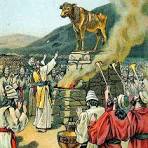
So all the people took off the gold rings that were on their ears and brought them to Aaron. He took the gold from them, fashioned it with an engraving tool, and made it into an image of a calf. Then they said, “Israel, these are your gods, who brought you up from the land of Egypt!” When Aaron saw this, he built an altar in front of it and made an announcement: “There will be a festival to the Lord tomorrow.” (Exodus 32:3-5 CSB)
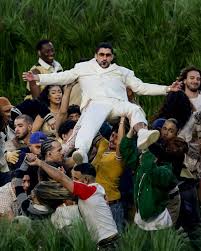
The world has been in festival mode this past week. The 2026 Winter Olympics opened in Milan/Cortina, Italy last Friday, and the competition continues for over two weeks. Elite athletes from all over the globe will demonstrate their skills and artistry on the snow and ice. And there will be a lot of gold medals worn around the necks of the winners, held up for admiration, while flags and banners are waved. News organizations will present stories of glorious achievements, humble beginnings, determination, bravery, and pride. Hometowns and home nations will cheer their local favorites as they compete. And some of the winners will become (or already are) celebrities. One of the figure skaters has been proclaimed “the Quad God” for his ability to execute “quad” jumps– jumping with enough height and speed to complete four rotations in mid-air before landing safely–in all six of the jump categories.
At the same time, American Football fans were gearing up for the “Superbowl” game last Sunday. Many of the athletes who compete in professional football earn millions of dollars each season for their ability to run, pass, catch, guard, kick, and otherwise help their team get a leather oblong object into an “end zone” and score points. And many of them also become celebrities, making even more money for endorsing items, shooting commercials, dating other celebrities, etc. But this year, the attention was not so much on the football teams or individual players in the game. The attention was on two “teams” offering entertainment during the half-time break. There was Team Bad Bunny v. Team Turning Point.
I have no idea who “won” the entertainment competition– reports vary from different sources. Both claim to have been very popular and successful. Both claim to have represented “America” and patriotism in their very different ways.
But a few days away from the hoopla of opening ceremonies and early competitions and Facebook feuds between people defending their half-time viewing (who seemingly didn’t bother to watch the actual football game!), I’m reminded of a festival that took place thousands of years ago in the wilderness.
At the very moment when Moses was on Mt. Sinai, talking to God and receiving the sacred Commandments, the people of Israel were having an orgy in direct rebellion against God. About three months before this profane festival, the Israelites were leaving behind generations of slavery and oppression in Egypt. God, through miracles and plagues, rescued His people, and even caused the Egyptians to be generous, loading them down with gifts of gold, silver, precious gems, and other resources. Now, three months later, after God’s miraculous victory over the Egyptian army at the Red Sea, and his provision of meat, bread, and water in the desert, the same people who promised to serve the God of Abraham, Isaac, and Jacob– the God who had rescued and sustained them throughout their travels–were piling up “their” gold to create “their” own “god.” A golden calf, that could neither hear nor see; neither speak nor walk– a lifeless image made from their own fear and pride and self-righteous pronouncements.
There was no Golden Calf at the Superbowl– there was a “Bad Bunny” instead. And, lest the “other team” feel superior, they appear to have abandoned the Solid Rock for a Kid Rock. Two celebrities (among many others represented that night) catering to the whims and visions of “America” held by two warring factions. And in Italy, there is the “Quad God” and athletes who are using the spotlight to lecture the world on morality and virtue. The world is pinning its hopes and affections on false gods and goddesses, man-made virtues, and ideals of what makes us “holy.”
Yet here we are, several days later, and I don’t experience any of the virtues or morals that are being touted by these self-proclaimed “gods” and “spokespeople.” Bad Bunny ended his “entertainment” by saying, “The only thing more powerful than hate is love.” Sounds virtuous– even inspirational–except I don’t see the love. I hear screaming, posturing, hatred for anyone who doesn’t share the same “message,” and tribalism. I see angry faces and violence against neighbors. We’ve replaced the real virtue of Love with the false virtue of “being holier than thou.”
4 Love is patient, love is kind. Love does not envy, is not boastful, is not arrogant, 5 is not rude, is not self-seeking, is not irritable, and does not keep a record of wrongs. 6 Love finds no joy in unrighteousness but rejoices in the truth. 7 It bears all things, believes all things, hopes all things, endures all things.8 Love never ends. But as for prophecies, they will come to an end; as for tongues, they will cease; as for knowledge, it will come to an end. 1 Corintians 13:4-8 (CSB)
And strangely enough, it took me several hours to find out who actually “won” the Superbowl game on Sunday (congratulations, Seattle Seahawks!) or find out about who won medals in sports other than ice skating. Everyone was fighting over backflips, bunnies, rocks, ideologies, sound bites, and flags.
“These are your gods…” Who (or what) is really worthy of our praise, trust, commitment, and love? Are we worshipping idols, or ideals, that do not reflect God’s love? In our quest to be on the “right side” of history, are we repeating some historical mistakes? Whatever takes up most of our energy, our affection, our loyalty, and our time– those ARE our gods– whether we acknowledge them as such or not.
Holy and Majestic God, I pray that I would truly love you with all my heart, soul, mind, and strength. May I be so focused on You, Your Word, and Your Character, that I would not turn my eyes, ears, or heart to another. Help me to remember what You say about Love, and to wait for Your guidance and leadership as I travel through the wilderness of our culture. Amen!
Trust and obey,
For there’s no other way
To be happy in Jesus,
But to trust and obey.
It bothered me as a child, the part about “No other way.” It seemed narrow-minded and harsh. Surely, I could be happy in Jesus just doing my own good things and singing his praises. Besides, I did trust him, I followed the Ten Commandments, and the Golden Rule, and I was a nice person. So why did I feel that I was missing something?
In all the years I’ve been a follower of Christ, I have learned the importance of trust and obedience. I can’t truly follow someone I don’t trust. I can learn from them, admire them, even try to act like them, but eventually, I will try to take the lead, or let go and walk down a different path. Similarly, I can’t say that I trust someone if I won’t obey them. If they ask me to do something, and I ignore their request, or re-interpret it, or come up with excuses why I won’t do it, it really boils down to one thing: I don’t trust that their request has any merit.
In a broken world, filled with sin and pride and selfishness, there are many reasons NOT to trust or obey certain people. Abusers, users, sadists and sociopaths abound. Such people may suggest that there is “no other way to be happy..” than to trust them and obey them implicitly. So when God asks us to put our trust in an invisible Godhead, it seems terrible, final, and harsh. Is God demanding abject humiliation and mindless adherence to his law? Will we lose ourselves in drudgery and joyless obedience to a harsh taskmaster on the whimsical hope of a happy afterlife?
That is a view that is often peddled, and ridiculed. But I think a closer look at the Bible gives us a different picture. Yes, God is harsh and wrathful against sin and sinners–but so am I! I find myself getting furious over injustices and pain caused by sin in the world–I can only imagine how angry God must be to see the way we lie and cheat and abuse each other, and the untold painful consequences he has witnessed through the years. The only thing holding him back is the power of his Mercy. His anger is swallowed up in patient and unfathomable love that is ready to forgive even the worst offenders. And God’s wrath is pure, unlike mine, which is selective against those who have hurt me, but wants to smooth over my own sins. His love is even more pure– he loves even the worst sinner, and even the most unloveable people (in my flawed estimation). He is unwilling that ANYONE stay lost and enslaved by their sinful past.
Think about it– Jesus, who knew God best (being part of the Godhead himself) never painted his Father as a brute who demanded people to become “useful idiots” just to stroke his ego. He didn’t talk about a harsh and unforgiving God who “hated” sinners. Instead, Jesus healed the sick, raised the dead, gave sight to the blind, and spoke to sinners and outcasts as though they were more important than the religious elite…because that was his heart! But more than that, Jesus showed us what it meant to “Trust and Obey”–he didn’t seek fame or fortune for himself, he never owned a home, or sought public office, and he never ran arouns worrying and fretting that God would leave him in the lurch. Even under the worst circumstances leading up to his arrest and crucifixion, Jesus only spent one hour worrying about what was to come, and in that hour of prayer, he found the peace and strength to say, “not my will, but yours be done (Luke 22:42). In his ministry, he humbly walked the byways and taught those who willingly followed him. He healed and encouraged and saved those who came to him; those who trusted him as he trusted his Father. He did not pat on the back those who claimed to follow his Father, but wouldn’t trust him. Nor did he reward those who claimed to obey God, but hated their neighbors, justified their own self-righteousness, and changed God’s laws to feather their own lifestyles.
Does “Trust and Obey” mean that we might lose our status, our wealth, our comfort, and our lives? Not necessarily, but there is no promise that we will be richer, or healthier, or more popular for following Jesus. He didn’t come to make us comfortable or “better than” someone else. In fact, he warned us that while we are in this world, we will have troubles and sorrows (with or without our faith!) So how can we be “happy in Jesus” if we end up homeless, hated, or sick? How can we talk about being happy in Jesus under awful circumstances? Is this just some brainwashing tactic to make us forget how miserable we are? What’s the “payoff” of Trust and Obey?
The answer involves a choice–Do I trust Jesus when he says that he came to give us, not just life, not even just eternal life, but abundant life? If Jesus isn’t trustworthy; if I am not sure that he can or will make my life MORE than I ever dreamed, MORE than I imagine–even in the midst of otherwise difficult circumstances–then I will never be happy in Jesus. But if I DO trust Jesus, then I can be happy, not because of my circumstances, but because I can trust all that he says about them, and that his grace is more than sufficient to see me through. And I know that whatever trials I may be going through can be turned to good because I trust his power and his goodness.
And true obedience can only follow true trust. If I say that God’s rules aren’t important, or don’t apply to me, then I’m really saying I don’t trust him to know what’s best, or that I don’t trust that He is really Good. The temporary happiness that comes from following my way (even if I think I’m doing it for the right reasons) will give way to resentment against God. How dare he stop me from that one thing that brings me joy– how dare he question my “needs” or call my actions “wrong”. How dare he suggest that His way could be better or more abundant than what I know–even if I suspect that what I know and experience isn’t always the best it could be.
No– the longer I follow Jesus, the more that old song rings true, and not harsh or condemning, but full of wisdom and promise. It is with the faith of a child (not stupid or simplistic, but hopeful and eager), and humble (not abject or reluctant) obedience that we find happiness in Jesus, peace for our souls, and strength to face the trying circumstances of this life.
For many years, I owned a cat named Galahad. He was not, as his name suggests, a brave, noble sort of cat. He was often skittery, nervous, demanding, or absent. As he got older, he was sometimes irascible, and hissed at strangers and children. But he could also be cuddly and engaging, playful, and present.
Like many pet cats, Galahad would “meow” when he wanted attention–if he wanted to play, or wanted more food, or wanted me to stop singing along with the radio (or wanted the radio to be silent). Recently, I read an article that analyzed the different types of “meows” of a pet cat, and claimed that cats do not “meow”, except to communicate with humans. See https://www.psychologytoday.com/us/blog/all-dogs-go-heaven/201809/why-do-cats-meow-humans for more details. Cats have an entire language of “meows”– a language meant just for humans–to communicate their needs and moods more effectively. With other cats or other creatures, they communicate through scent, movement, growls and purring.
Galahad liked to “speak” to me, and I tried to respond to his needs and understand “his” language. But when Galahad was very happy, well-fed, content, or, late in life when we was in pain from arthritis, he would purr. This was intimate communication of a kind reserved for other cats and trusted humans. He would curl up in my lap, or near my feet, or on the bed by my side, and purr. Sometimes, he would lie, belly exposed, feet drawn up, head flopped back– completely vulnerable; completely relaxed–purring, snoring, drooling with absolute abandon.
When we pray, we often “meow”– we use formal prayer language, and try very hard to get God’s attention and express a variety of needs, as though God cannot understand an other expression. But God’s understanding goes beyond language. “26 In the same way, the Spirit helps us in our weakness. We do not know what we ought to pray for, but the Spirit himself intercedes for us through wordless groans. 27 And he who searches our hearts knows the mind of the Spirit, because the Spirit intercedes for God’s people in accordance with the will of God.” (Romans 8:26-27 NIV via http://www.biblegateway.com).
We don’t need to “meow” to get God’s attention. We can purr, content in the knowledge that God hears us, loves us, and knows our needs, wants, and moods– better than we know ourselves! In fact, God promises to keep “in ‘purr-fect’ peace” those whose minds are focused on Him; those who trust Him faithfully.






































 Pursuing Prayer