(SPOILER ALERT)– this post is about The Lord of the Rings and contains many references to plot devices. If you have not read the books or seen the movies, you will be confused and the narrative will be spoiled..
It’s no secret that I am a big fan of the Lord of the Rings by J.R.R.Tolkein. I’ve read through the trilogy several times, and I love to watch the movie version, as well. Even though it is a fantasy story, many of the situations and lessons are “true.” We may not face orcs or dragons or undead ring-wraiths, but we do face difficult challenges, such as war, grief, confusion, and oppression. We WILL face difficulties in life; we need to face them with resolve, courage, wisdom, and action. We may not have to destroy the Ring of Power, but we may have to battle addictions, habits, and relationships that threaten to destroy us.
One of the elements of the Lord of the Rings that captured my imagination from the very first readings was the “fall” of the wizards, Gandalf and Saruman. Saruman, who is introduced as one of the council of “good” wizards, and a mentor/friend of Gandalf, seems like someone who will be able to help the Fellowship in their quest to destroy the Ring of Power. But Saruman has “fallen” under the thrall of the evil Sauron. Using one of the “seeing stones,” Saruman has seen into the Dark Lord’s plans, and has decided that his own wisdom and power are enough to equal those of Sauron. His “fall” is one of self-delusion and arrogance. And his fall is described in terms of color. Where once he was called Saruman the White (the color of light when all the colors come together), Saruman becomes a prism, reflecting all the colors, but broken up, diffused, and no longer giving a true light.
Gandalf’s “fall” in the chasm as he battles the demonic Balrog is both dramatic and unexpected. Coming on the heels of Saruman’s betrayal, it sends shockwaves through all of Middle Earth. It left me devastated. After all, Gandalf is wise, good, and powerful. Having read The Hobbit, it was comforting to have a familiar guiding force to lead this new “adventure.” It is his knowledge and encouragement that has provided leadership and stability for the Fellowship of the Ring. His sudden and tragic absence leaves a gaping hole and many questions. His is a literal “fall.” He falls into blackness– fire and shadow and utter silence.
It strikes me that the wizards of The Lord of the Rings are not unlike the gods and heroes we make for ourselves. We imagine God (and often human heroes, including pastors and other religious figures) as being benign old men, walking among us, offering just enough wisdom, power, and “magic” to entertain, enlighten, and encourage us. We listen for good advice (whether or not we actually take it!), and we take comfort in the fact that they seem to know all that is going to happen. Of course, the wizards in the books are not REALLY gods–they know many things, but they cannot see all ends; they have great power, but they cannot defeat Sauron on their own (nor successfully challenge him, as Saruman learns); they are not always where they say they will be when they said they would be there.
“You’re late, Gandalf!” “A wizards is never late, Frodo Baggins. Nor is he early. He arrives precisely when he means to.” (From the Fellowship of the Ring)
Not only is Gandalf “late” for Bilbo’s special party (according to Frodo), but he completely misses his meeting with Frodo and the other hobbits in Bree, due to circumstances beyond his control. And, when the company seems to need him most, he falls into the great chasm and they must flee to the Elves at Imladris. Galadriel offers some encouragement, but it is tinged with dire warnings. Saruman’s “fall” highlights his shortcomings– he can only “see” victory through compromise, deception, and the machinery of war. Everything about him becomes twisted and sullied. In the books, he ends up being a two-bit tyrant, defeated in his attempt to take over the Shire. In the movies, he “falls” from his tower of Orthanc and sinks into the stinking pools festering around his ruined ambitions.
What about our visions and expectations of God? Sometimes, it seems as though He is “late” or “absent” in the midst of our difficulties. We want Him to come in and save the day– tell us exactly what to do next, or make an obstacle disappear, or bring a host of warriors to fight our battles. Other times, it seems as though our vision of God is seen through a prism…if God is really good, how could He let _______ happen? If God is really just, why is there still so much injustice around us? And what about others who follow a different “God.” Which one is real? Which one is “Right?” How can we know? In fact, those who follow Christ are following a God who faced betrayal and death– and He seemed to be defeated. And sometimes, it seems as though He has left us to the mercy of the evil that surrounds us.
God sometimes seems to be “fallen into shadow.” He seems to be absent. Or at least distant and silent. Just as in The Lord of the Rings, we can be left like the Fellowship– shocked, dismayed, left feeling lost and hopeless. Where is God in those moments?
But when I re-read the books, or when I sit down to binge-watch the movies –again– I find myself seeing things from a different perspective. Gandalf and Saruman both “fall” before even the middle of the story. Saruman’s betrayal seems not just tragic, but nearly insurmountable. Gandalf’s absence leads (indirectly) to the breaking up of the Fellowship into smaller, leaderless factions. But here’s what I see clearly in reflection– the Shadows that seem to swirl around the wizards are just that. They are shadows. There is darkness in the Land of Mordor. But Frodo and the rest of the Fellowship carry their own light. (Frodo, in fact, carries a literal light in his gift from Galadriel). They stay true to one another and true to their quest. As Sam points out at Osgiliath, they have had many chances of turning back and giving up, but they hold on to the hope that Good will win over Darkness, and Truth will defeat oppression and deceit, and yes, even the Ring of Power. Gandalf’s absence, while shocking and discouraging, is not permanent, nor is it devastating. It only seems so in the shadow of uncertainty and the chaos of war and suffering. The other members of the Fellowship actually develop their character, their strengths, and their gifts when Gandalf isn’t there to make things easier. He has already given them the wisdom they need– even if they don’t realize it. Gimli and Legolas become a team as their unlikely friendship develops. Merry and Pippin mature into warriors and diplomats. Aragorn becomes the King he was always destined to be. Frodo and Sam–unaware of Gandalf’s victory until the very end, still face all their dangers, including betrayal by Gollum, and save all of Middle Earth!
And so it is with our difficulties. We are looking around for help, wondering how we will continue if God is in the shadows; if God remains silent. We want to see His hand moving the chess pieces, or hear His voice calling out our next step. When we don’t hear it, we can make bad choices– we can give up hope, compromise with the enemy, or trust in our own power to see us through–or we can stay true to His Word and keep running the good race (see 2 Timothy 4:7-8) God does not abandon us– unlike the wizards, He is omniscient and omnipresent– but sometimes He stays in the shadows, knowing that it is for our development and maturity. I don’t have certainty about my choices and my actions, but I have the Bible and I have the Holy Spirit.. I have prayer. And I have the people God sends into my life to give advice and encouragement. I may not know if I can trust even the advice of religious leaders, but I can compare their advice with what I read in God’s Word and what I see in their actions. When I read the Bible, I read about promises God made to the nation of Israel– promises He kept. I read in Ezekiel, and Daniel, and again in Matthew and Revelation about His promises for the end of the ages.
It may look dark for the characters in The Lord of the Rings as they battle their way through Middle Earth. But I DO know how the story ends! I know that Gandalf does not stay in the shadows– he comes back more powerful than ever! And Saruman’s army of orcs is defeated; Saruman’s poisonous plot to usurp the mind and will of King Theoden is discovered and the king restored to health. And the Fellowship (excepting Boromir) is reunited after Frodo and Sam are successful in destroying the Ring. And I may not know the next step in my own story, but I know how my story will end! God may seem to be AWOL or “in the shadows” during my current circumstances– in my grieving, struggling, and pain. I may not see justice and peace in my near future– I may not see them in my lifetime– but I can KNOW that God is never late. He is never too early. He will arrive precisely when He means to. No shadow will be able to hide Him; no darkness will be able to comprehend Him. He will come in the blazing light of His Glory– and He will come to make all things new!
Yesterday, David and I attended a family reunion. It was a relaxed atmosphere of cousins and siblings reuniting to share memories, and great food! As with all family gatherings, there were some who couldn’t make it– work, previous commitments, travel tangles, etc. Others chose not to come– some have been hurt in the past; others never saw their invitation; some just don’t like the other members of our family or don’t want to spend their time with family when they could be doing something else…
David and I went, not only because we genuinely enjoy spending time with family members, but also because I wanted to share the progress of a book I’m writing about our shared ancestors, George and Lila Green of Penn Township, Cass County, Michigan. I’m named after my great-grandmother, and I have been blessed to receive several boxes of memorabilia, including letters, photos, diaries, and other writings that cover many of the events and memories of their lives spanning over fifty years of marriage. I’m excited to have access to so many primary source materials for a family history.
As I brought in my “dish to pass,” I noticed that one of my cousins had the exact same idea as me! We had each brought two trays of devilled eggs– 40 each and 80 all together! We compared notes on recipes, and agreed to taste each other’s eggs to make sure they were all good– and they were all awesome. There were only a few eggs left after all the food was eaten– and there were fewer than 80 people in attendance, so it seems that almost everyone enjoyed at least one egg, and several came back for seconds, in spite of the fact that there were other wonderful dishes to enjoy. There can never be too many devilled eggs at a family reunion!
Before I got a chance to share about my book with everyone, I spoke with a couple of my cousins, and they shared some of their memories of my great-grandmother. Near the end of her life, she battled cancer, and near the end of her earthly struggle, she imparted to some of her grandchildren that she had a vision of an angel asking her if she was “ready to go.” She answered that she was. A few days later, she passed into glory. This was a great comfort to those who faced “losing” their loved one. Two different cousins recounted the same tale, which confirmed for me that her words (and her strong faith) had a great impact on our family.
One of the reasons I feel compelled to tell the story of my great-grandparents is the lasting legacy of Faith and Family that they left behind. From just two people who married in1909, the family grew over a century to include over 500 individuals! And, while some of them have abandoned the faith (and/or the family), most have stayed connected– we’ve had family members who have served as ministers, missionaries, Sunday School teachers, BIble study leaders–even a stray blogger or two! In every generation, we have had family members who can testify to the power of God’s love, His provision, His healing, and His faithfulness.
In sharing about my book, I read passages from Lila Green’s diary recounting her attendance at a church Christmas Program at the little country church where, years later, I would first hear the truth of the Gospel. She was so excited that 14 of her family members were part of the program, while 19 family members were in attendance! Some who were at the family reunion were among those 19 members attending church with Lila Green almost 70 years ago. And many in the fourth and fifth generation after her came to the reunion after attending church with their families in a different millennium. I also read about some of George and Lila Green’s own ancestors– many of whom served in churches dating back to the American Colonial Era– Quaker Churches and Baptist Churches and log cabin churches and churches held in homes and school buildings over two centuries removed from our small gathering yesterday.
Bethel Community Church– where over four generations of my family were introduced to the Gospel!
God is faithful. God created families to demonstrate His faithfulness across generations. When we teach our children about God, we continue to proclaim that faithfulness to the next generation. And when we teach about our family history, we demonstrate God’s faithfulness, not just to the patriarchs of the Bible but to “real” people just like us– people who faced sickness, hardship, and loss. People who had pets and hobbies, and even squabbles with their siblings over toys! Yet God has been there over all the years, teaching, giving wisdom, and loving them–and us– every hour of every day.
I think God was listening in when my cousins recounted my great-grandmothers vision. I think He probably had fun watching my cousin and I trading “devilled egg” recipes and tips. And I know He looked lovingly at each precious family member yesterday– those in attendance, as well as those we missed seeing.
I know not everyone has a happy family legacy like mine. But I also know that it’s never too late to start one! Who knows what another 100 years might bring to your descendants?! Who knows what kind of legacy you can leave behind? God knows! I pray that you will be aware this week of all the many ways God has blessed you over the years– perhaps through your family legacy…perhaps in spite of it–and that you will experience gratitude, peace, and joy in the knowledge of how God can take even just two people and bless thousands!
We lost a family member a couple of weeks ago. We were shocked and heartbroken to hear of his loss. To know that we will never get to hear his laughter or watch his eyes crinkle up over a good joke; never hear him enthuse over history or a great movie; never enjoy the fellowship of being in the same room together again. He never got to retire from his job; never got to walk his daughters down the aisle; never got to enjoy the house he and my sister-in-law planned to build.
BUT
Chris had a wonderful life in many ways. He and his wife have three amazing adult children. He got to enjoy plenty of days loving nature and enjoying a good sunset over Lake Michigan. He harvested many morels each spring. He made music. He helped hundreds of people in hundreds of little ways. He was blessed.
We went to Chris’s funeral last weekend. We helped celebrate his life– his accomplishments and achievements, his vivid personality, his sense of humor– and we celebrated his Faith. Yes, there were tears at the funeral. We will miss Chris in the years to come. But we share his faith and his great hope. We will miss him temporarily. We will grieve for a few years. And then, we will experience a joy that will make us forget the grief! Not only will we see Chris again– to laugh together and share stories and songs– we will be in the presence of our source of Life, and Hope, Joy and Peace! We will be surrounded by the great cloud of witnesses as we live eternally with the One who loves us best!
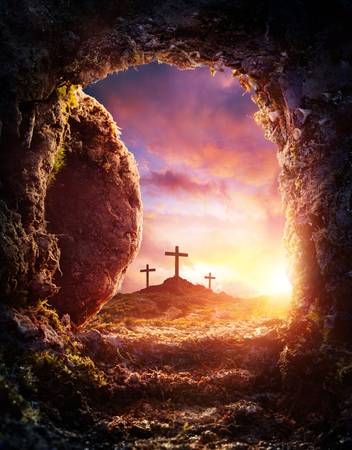
Many years ago, another man died. There was grief, stunned disbelief, and terror. The family, friends, and followers of Jesus Christ mourned. They hid. Their world was dark with despair and anguish. All these years later, we look at paintings and sculptures of Jesus suffering on the cross. But, while we shudder at the horror of all He suffered, we do not look on such pictures with fear or despair. The Cross is not a symbol of Death’s ultimate victory, but rather its ultimate defeat. Jesus didn’t stay dead. His body was buried, but He did not stay there. We celebrate, not the horrors of the Cross, but the limits of its power to steal our joy.
This is where grief meets hope. It is where the past is overwhelmed by the promise of Eternity. Christians grieve– of course we do. We love life, and we grieve to see it end. We love being with friends and family– we feel an emptiness and an ache when someone we love is “missing.” But we do NOT grieve without hope. We acknowledge the brief sting of loss. But Death loses its sting in the light of Christ’s victory. There is no lasting victory in the grave. Our time is short; we are powerless to stop death from taking us; from taking our loved ones. But Eternity beckons! Even our time on earth gives us daily reminders– the sun rises each morning; spring comes after each winter; children grow into parents, and we get to love another generation.
Even when life is hard; when grief looms large and hope seems dim– hope does not disappoint! Because Christ LIVES!
Chris was buried earlier this week– his body was buried– but he LIVES. He is healed and freed of all the pains and frustrations of this earthly life, and because of Christ’s gift of Grace and Redemption, Chris is living all that he once hoped for. Because of Christ’s great gift, many of us will someday join him in singing God’s praises, in laughter, delight, and endless joy!
Where are the heroes of old? Where are the role models? Where are the men and women of integrity? Where is Honor?
I look at images of sneering mobs, of angry masses. They protest in bright colors. They shout and wave their signs.
Where are those who mourn? Where are those who warn of danger, crying out a warning; Crying out for mercy?
Where are Isaiah and Jeremiah? Where is Ezekiel? Hosea? Where are the Apostles? Where are the evangelists?
Everyone is shouting– who is lamenting? Everyone is angry– who is repentant? Everyone is righteous in their own eyes. Yet no one is righteous– no, not one.
We have a generation worshipping comic book “gods”, And mocking the God of Creation. People who obsess over someone else’s right to eat an egg, While screaming for the right to kill their own child without guilt. Millions praying to their government for more food and better shelter While ignoring their hungry and homeless neighbors. While trying to bury Your Words and Your Peace.
And YOUR people, Lord… People who bear the name of Christ Are bragging about their blessings from You, While criticizing others and ignoring the lost. Those who honor You with their lips Refuse to cry out in surrender to You; Refuse to reach out help their neighbors.
Where are the servants? Where is the remnant of the Faithful? Where are the prophets? The truth-tellers? Where are those who mourn? Where is the Lament?
I love puzzles, puns, mysteries– I love clever plot twists in novels. Most of the time. But there is a type and degree of “cleverness” that is offensive to me. And that is the kind of clever that is meant to sting, hurt, or humiliate.
I love the old movie with Jimmy Stewart called “Harvey.” It is a silly comedy about a man who claims to see, and talk to, a six-foot tall invisible rabbit named Harvey. Jimmy Stewart’s character, Elwood Dowd, is a mostly harmless and genial man, but he is an embarrassment to his socialite sister, and a puzzlement to his neighbors and the staff at the mental institution where his sister wants him committed. The doctors are especially intrigued by Elwood, because he appears to be intelligent, rational, and agreeable– “nice”– except for the rabbit! Meanwhile, the other characters in the film are mostly uptight, stressed, angry, and unpleasant. But Elwood has an explanation. He claims that his mother always told him there were two ways to “go through life.” You could be “oh, so clever,” or you could be “nice.” Elwood has chosen “nice.” And his life– even with its crazy invisible rabbit, is more serene, more fulfilling, than the lives of those who are “smarter” and more powerful.
Such a simple line in a silly film, but that thought resonates with me, and it matches Biblical teaching, too! The Bible has much to say about people who think that they are clever. Those who are proud of their intelligence and acumen; those who are wise in their own eyes. This is not the same as being intelligent, while acknowledging that you don’t know everything. Such “clever” people tend to be cynical, snide, and sarcastic. The Bible calls them “mockers”– people who make fun of and belittle others; those who use their intelligence and quick thinking as a weapon to bludgeon and bully their way through life.
We see and hear it often on television, in government, on talk radio, or comedy routines. We hear it in conversations among groups of peers in the workplace or in social situations. There’s always at least one person who entertains others with jokes or stories that are “wicked” funny– jokes that might make you a bit uncomfortable in certain situations, because you know they are unkind, unjust, or downright offensive–even if they are funny. Jokes that get a laugh at someone else’s expense. Remarks that “burn” people with differing beliefs, opinions, or lifestyles. We sometimes even hear it in the church, with harsh remarks for those who think or worship differently from us.
Just like Elwood Dowd’s mother, God has given us a blueprint for life– we can go through life being “oh, so clever” or “nice.” We can be arrogant; overly certain that we know everything, heaping contempt on those who are struggling or who don’t see things “our way.” Or we can be humble and kind; listening to others, offering loving encouragement and counsel, rather than snide “I told you so’s”, embarrassing comparisons, or pithy quips.
The Apostle Paul, in Galatians 6, outlines how we should not only “bear our own burdens” by taking responsibility for our own strengths, weaknesses, faults, and duties, but also “bear one another’s burdens” by showing compassion and reaching out in love. In the middle of this advice, Paul warns us against deceiving ourselves, and reminds us that “God is not mocked” (v. 7)– We cannot dismiss God’s Holiness in our own life, nor can we dismiss God’s command to love our neighbor. Anyone who does mock God (and those made in His likeness!) are deceived in thinking they are clever and beyond judgment.
Recent world events have reminded me of this truth. The opening ceremony at the Paris Olympics was marred by a “clever” but offensive display. Those who organized it and put it on, “explained away” the offense, claiming it was something entirely different; that their actions were not offensive, and those who were offended were misinterpreting their intentions. Many of them are sneering at Christians, even as they “mythsplain” their mockery. But their actions weren’t just mocking Christians around the world, they were mocking Christ. And many of us Christians responded with our own angry and mocking comments, memes, and posts, calling them names, or worse. But God– and God alone– is Holy and Just. Those actions will be punished, but they will be justly punished by God Himself. In fact, if any of those who participated in that display (and any who have responded hatefully) will repent and turn from their mockery and sin, Christ Himself has already paid the price for their actions!
People can be mocked. Even Christians can be mocked. Christ can be laughed at, spit upon, and even crucified in this fallen world. But God is eternally Holy and Just. He will have “the last laugh.” No one is too clever for God. The same people who laugh at Christ will someday bow before Him in worship, acknowledging that He is the King of Kings. That same King offers His Grace to each of us.
Christ isn’t about being “clever” or smug. Even though He has the perfect right to boast. He chooses to be “nice.” He chooses Grace. He chooses Love. And THAT makes all the difference!
I don’t like paying bills. Utility bills, insurance premiums, credit cards, and taxes– property tax, income tax, even sales tax. Every month, the bills come, and the checks go. And if we don’t pay the bills on time, there is an extra fee and interest charges. Bills and fees and payment schedules are not unusual or unexpected in this world. And we pay (if and when we can) because we are honest and upright citizens. It is a duty, but not a pleasure.
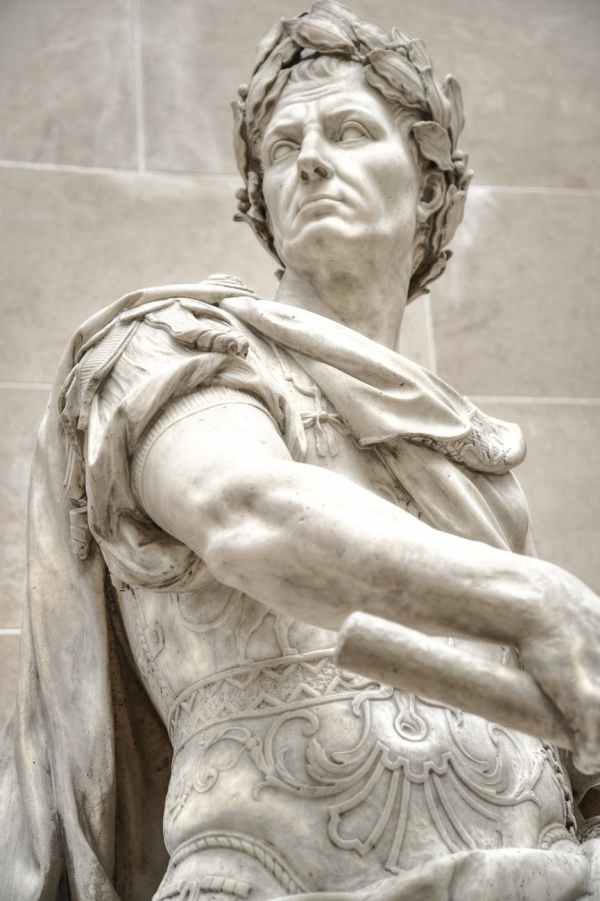
Even Jesus had to pay taxes. He was asked about it– even challenged over it. The Pharisees wanted to trap Jesus into taking a stance and offending many of His followers or running afoul of the Roman government. They asked, “Is it right to pay taxes to Caesar, or not?” (Matthew 22:17)(https://biblia.com/bible/esv/matthew/22/15-22) Of course, if Jesus said it was right to pay taxes, He would anger those who were fighting to be free of Roman oppression. Paying taxes to Caesar, in effect, legitimized Roman occupation and subjugation of the Jews. Much of the tax money was used to extend Rome’s control over the Jews, and to pay the soldiers and officials who made life miserable for Jesus’ followers on a daily basis. And it was common knowledge that many tax collectors were corrupt and cheated the people to line their own pockets, as well. The Romans worshiped countless gods and goddesses, but had no respect for the God of Israel. It was humiliating, and burdensome, and unjust to pay taxes. And yet, if Jesus said it was NOT right to pay taxes, He would be inciting open rebellion against the Roman occupation. He and His followers were be arrested and killed.
But Jesus did not fall into the Pharisees’ trap. He asked to see a common coin. He asked whose face and likeness were on the coin. “Caesar’s.” And then Jesus said, “Give to Caesar what is Caesar’s and to God what is God’s.”
I was reminded as I opened bills and wrote checks this past week, that I do NOT receive a bill from God. I owe God everything– my life, my next breath, my health, my hope of eternal life. Yet He never sends me a bill, or an overdue statement. He charges no interest, or late fees, even when I let distractions keep me from giving Him the praise and honor that is due to Him. Even when I choose to go through my day without sharing my heart’s longings with Him.
I may not like paying bills, but I do it. I “render unto Caesar,” even as I complain about taxes and interest fees. But do I “render unto God what is God’s?” And when I do, is my attitude the same as it is when paying bills? God forbid!
God never cheats; He never asks for something He doesn’t deserve. And He has given me far more than I could ever ask or imagine, through the power that is at work IN ME! God doesn’t give loans– He gives gifts of eternal value.
What can I render unto God today? Surely I can give Him praise, and share His grace and goodness with others…it isn’t impossible. It isn’t beyond my duty. It isn’t isn’t even “taxing!”
Let me just preface this by saying that I am not watching the Olympics coverage on television this year. That is not in protest of anything, nor does it reflect a keen disinterest in sports or in global events. My husband and I simply do not watch television. But I do spend time on the internet, and I follow news there. So it was with great sadness that I learned of the controversy about the opening night ceremonies and the tableau that seemed to mock “The Last Supper.” It has been with equal sadness that I have watched the angry and offended responses from Christians. I do not mean to say that the tableau was not offensive. I found it ugly. And I think it would have been both shocking and offensive to have seen it in the midst of all the other celebration.
Many of the organizers and presenters of the Opening Ceremonies have made public statements claiming that they either didn’t realize this would be offensive to many, or they didn’t mean it to be offensive. I find this difficult to believe. If the planners, organizers, participants, and crew had absolutely no idea that their tableau had any resemblance to “The Last Supper,” they I would suggest that they are woefully ignorant of European Art and Culture, or they are perhaps unaware of the number of Christians around the world. Yet some of them claim that ignorance/intolerance belong only to those who found their display offensive. They say that their only objective was to pay tribute to the ancient gods of Olympus, for whom the Olympic games are named. They claim that any resemblance to DaVinci’s mural of “The Last Supper,” or any allusion to Christianity were unintended. But they appear to be quite pleased with the furor and controversy.
While I did not see this happen in context, I do have some thoughts on the aftermath of what I have seen this week.
First, I think that Christians, while we should be offended by this display, should perhaps NOT be shocked. We live in a post-Christian, post-religious Western World. The world, especially the Western World, thrives on divisiveness, controversy, and the “shock factor” in entertainment. The tableau that was presented wasn’t just offensive to Christians (though we were likely the primary targets). It was, in its own way, offensive to the ancient Greeks, and to the spirit of the Olympic games. The Olympics are not about Bacchanalian debaucheries, orgies, or feasts of any kind. Nor are the Modern Olympics about the gods of Ancient Greece– not in the way that the Ancient Olympics were. The Modern Olympics are meant to be inclusive to every participating nation and qualifying athlete. The opening ceremonies are traditionally meant to celebrate both the shared heritage and spirit of competition among athletes, and the unique culture of the host country. This display did neither. And the organizers had to have known that. Whatever their real reasons for including this cartoonish and puerile tableau, they had nothing to do with bringing people from all nations and cultures together, or with celebrating the highlights of French culture.
Having said all that, I am somewhat disappointed in the angry responses I see from Christians. We are reacting as though Christ promised us that we would always be respected, welcomed, and esteemed. Yet we serve a CRUCIFIED Savior! How are anger, boycotts, protests, and demonstrations showing honor to Jesus or bringing glory to God? What makes us think that reacting in anger and “playing the victim” will change the minds or hearts of those who created this mess? I believe that is precisely their “point.” They see themselves as victims of God’s righteous laws, and they are reacting TO HIM in anger and rebellion. To see US react in the same way makes them feel justified in their own anger. We live in a culture of outrage– it is our job to rise above the temptation to add to the general outrage. Jesus did not lash out as He was being whipped, taunted, and nailed to His Cross. He prayed for His tormentors, instead.
And that brings me to my final point. I think we need– especially in light of these events– to be praying for the Paris Olympics. Pray for the safety of all the athletes. Pray especially for those athletes who are being booed, taunted, and threatened because of their home country, or their religious beliefs. Pray for those who are standing up for what is right, and pray for the hearts of those who are acting in evil, anger, hurt, and deception. Pray that the spirits of division and hatred will NOT hijack this world event, as they have in the past. Pray that Christians will come together to react and to reach out as Jesus Himself did– speaking the truth in love. We do not have to embrace, condone, or accept what is evil. But we must stand firm in the armor of God, rather than attack with the enemy’s weapons!
Remember, we are to run OUR race:
24-25 You’ve all been to the stadium and seen the athletes race. Everyone runs; one wins. Run to win. All good athletes train hard. They do it for a gold medal that tarnishes and fades. You’re after one that’s gold eternally. 26-27 I don’t know about you, but I’m running hard for the finish line. I’m giving it everything I’ve got. No lazy living for me! I’m staying alert and in top condition. I’m not going to get caught napping, telling everyone else all about it and then missing out myself.–1 Corinthians 9:24-27 (The Message)
What happened in Paris last week was offensive and wrong. What we do this week needs to reflect what is right and God-affirming. We don’t need to be silent. We don’t need to be victims. We don’t need to be outraged. We don’t need to be protesting. We need to be praying.
One of my very favorite bedtime stories when I was growing up was about a little bear cub. ( “Why do you love me?” by Mabel Watts) He and his mother were on a walk, and the little bear kept watching other little bears. Some were getting in trouble–running away to play in the brier patch, or climbing trees to get honey–and meeting up with bees! Little bear knew that sometimes he was like that. Other bear cubs were kind and helpful. He knew that sometimes he was like those bears. At one point, the cub was confused and asked his mother, “WHY do you love ME?” After all, he realized that he was helpless and accident-prone. Without his mother, he would be lost, hungry, and in danger. Yet his mother was always there when he needed her– even when he said he didn’t! His mother’s answer provided solid assurance– “Because you’re MY little bear!” The story book is almost impossible to find now. It is long out of print, and has been crowded out by newer books with similar titles. But for 50 years, I have cherished this story of unconditional love, because it echoes the Biblical story of God’s love for each of us.
We find many reasons to question God’s love. We find ourselves in trouble, and we are afraid to ask for help or forgiveness. After all, we have done nothing to earn it. We don’t deserve it. Even our good behavior cannot save us from our own limitations. And our bad decisions can hurt others in ways we cannot “fix.” We may have walked away from God or sneered at His care of us. We may be lost and hopeless without God’s intervention on our behalf. Why would He help? Why should He look kindly toward us?
But God’s answer is the same as that Mother Bear–You are MINE! I Love you with an everlasting love!
Even when we wander and try to do things we shouldn’t or can’t, God is near, and ready to help. He wants us to walk with Him and follow Him; He wants us to turn to Him in our need. Why? Because we belong together; we belong to HIM. And when we see others behaving badly–even when their actions hurt us–God still loves them, too. He created each one of us to walk with Him, trust Him, learn from Him, and experience His loving care.
In fact, as children of God, we should be showing the same kind of unconditional love to others. That does not mean that we condone wicked or dangerous behaviors. But we should love in such a way that people may even question it– “Why do you love me?” Instead of sharing our anger, or our own self-righteousness, what if we shared compassion and held to the truth without arrogance or disdain? What a great opportunity to share the reassurance and hope we know in Our Father’s great love!
We are a curious race, humans–we ask a lot of questions of ourselves, each other, and even of God. How did He make the universe? When will Jesus return? Who can we trust in this world? Where is Heaven? What must we do to be saved? But the majority of our questions are “Why” questions. Why did Jesus come? Why did He have to die? Why did God make snakes and mosquitoes and platypuses? Why are men and women so different? Why am I… (short/tall, fat/thin, clumsy, “odd,” misunderstood, etc.)? Why are You so mysterious? Why do bad things happen to “good” people?
I was thinking about this last question this week. I don’t have any definitive answer to that– no one I know has any better answer. God has not given us a definitive answer, either. We are to trust that His ways are wise and best and perfect, but faith and trust require–well, Faith and Trust! We know God has done good things in the past. We know He has redeemed what seemed like hopeless situations. We know His promises, and we have seen some of them fulfilled. Still, such a question can often leave us blindsided and tongue-tied.
There are many learned thinkers, philosophers, and apologists who have written whole books on this subject, but I want to just pose a couple of ideas to help us, not ANSWER the question, but understand the question a little better.
First, the question, “Why do bad things happen to good people?” is really two questions: “Why do ‘bad’ things happen?” AND “Why do they happen to ‘good’ people?” So let’s look at the questions separately.
“Why do ‘bad’ things happen?” What do we mean when we say “bad things?” There are many circumstances, events, diagnoses, and occurrences that may be called “bad.” Death is “bad.” Indigestion is “bad.” Stubbing one’s toe is “bad.” Being diagnosed with Alzheimer’s Disease is “bad.” Divorce is “bad.” Slavery and abuse are “bad.” House fires, job losses, being mugged, being stranded without heat in a blizzard, an outbreak of acne, being laughed at– all these are “bad.” But they are all different. Many “bad” things are the direct result of sin–we suffer the consequences of our own sin; we are the victims of the sins of others. The consequences of addiction can be horrific, but we often lack compassion for those who are suffering, because “they brought it upon themselves.” But what about the innocent victim of rape or child sex trafficking? Such acts leave victims traumatized and broken. Both are “bad,” but we are angered and frustrated even more when “bad” consequences also seem unjust and unfair. And what about natural disasters? Are they the result of sin, as well? The Bible suggests that they are. When God placed Adam and Eve in the Garden of Eden, they lived naked, carefree, and unafraid. Only after their sin did God place a curse on the land– Adam would now have to cultivate the land in order to get food. There would be enmity between the woman and the serpent. Eve (and all women after her) would have pains in childbirth. (see https://www.biblegateway.com/passage/?search=genesis+3%3A+14-20&version=NIV) There is no mention of hurricanes, blizzards, or earthquakes prior to the Fall of mankind, though it is speculation on my part, to say that there were none.
God has promised to make all things new. There will be a time when the consequences of Sin will be eradicated. We will not even remember the suffering we endured in life, in light of the blessings of eternity. So, though God doesn’t answer our question of why “bad” things happen, He does give us the assurance that such “bad” things do not determine our destiny, nor do they happen without His knowledge or outside of His will! We cannot understand God’s purposes in allowing us to suffer, though sometimes we may see a hint of good even in the midst of tragedy.
And God is loving and gracious in the face of our confusion and pain. We CAN ask God “Why?!” “Why me?” “Why this?” “Why now?” “Why them?” Why, O Lord!?” Many of the Psalms speak to this very question. But in the middle of his anguish, the psalmist often finds comfort and renewed strength to face the struggle, when he turns to God. Asking why is not always a sign of weak or failed Faith. Instead, it is acknowledging before God that we ache. We grieve. And we NEED HIM!”
And what about the second part of the question: “Why do (bad things) happen to ‘good’ people?” What makes a person “good?” Jesus was “Good,” And yet He questioned the rich young ruler, “Why do you call me good? No one is Good– except God alone.” (see https://www.biblegateway.com/passage/?search=Luke+18%3A18-27&version=MSG) We tend to think of the people we know and like as “good.” And we have a natural expectation that their lives should be “good” also– free of pain or struggle. But that is not realistic in this world. The actor, Michael J. Fox has been suffering for years with Parkinson’s Disease. This seems unfair and cruel. How could God let him suffer like this? But there are many thousands of people suffering from Parkinson’s Disease. Some of them are homeless addicts; some are in prison for rape or embezzlement. Is their suffering any less than that of Mr. Fox? Is it somehow less tragic or unjust?
The sad and shocking truth is that none of us “deserves” a pain-free, struggle-free life. Bad things DO happen. And they happen to people we like, and people we hate; people we judge to be “good” and people we judge to be “bad.” God does not “play favorites.” Yes, God can, and often does intervene on someone’s behalf through prayer, or for His own bigger purposes. But He does not “dish out” suffering to those He dislikes out of spite or revenge. Nor does He cause His faithful to float through life without ever tasting bitterness and grief. Jesus made many promises, but one of them was this: “in this world you will have trouble; but be of good cheer, I have overcome the world.” (John 16:33) He didn’t promise that you might have a little spot of trouble, or that you might look around and see others in trouble– He promised that we would have trouble. Not because we are “bad” or “good” but because that’s the way this world is.
I find it odd that atheists often pose this question as a way of trying to “prove” that God doesn’t exist. They pose the question as an accusation. “If there is a kind and loving God, why do bad things happen to good people?” But if they believe that there ISN’T a kind and loving God, how do THEY explain why bad things happen to good people? How do they define “good” people and “bad” things? Without a Good God, where is the expectation of good things happening to good people? Without God, there are no objectively “good” things or “bad” things happening– only random events without divine cause or purpose. You can’t blame a non-existent God for things He either caused or didn’t prevent. Such questions are meant to plant doubt in the mind of a believer, but they fail to answer the greater question– Why do Good things happen to undeserving people? Why do we sometimes find joy and peace and strength in the midst of our suffering? Why do human beings continue to Hope?
Finally– the ultimate example of God letting something “bad” happen to someone “good” can be seen in the central image of our Faith– the crucifixion of Jesus Christ. Jesus was sentenced unjustly to a torturous death and public humiliation. He was separated from God the Father, and carried the punishment for OUR sins so that WE could be reconciled to God. Even though the purpose of Christ’s suffering has been revealed to us, it doesn’t negate the agony and trauma He faced. And even HE cried out from the Cross– “My God, My God, WHY have YOU forsaken ME?!” (Matthew 27:46)
God does not answer the question of why “bad” things happen in this world. But in the crucifixion, Jesus proves to us that He shares and understands our suffering; that He has the power to overcome and redeem our traumas; and that He will hear our sincere cries of “WHY?!” He will hear when we turn toward Him, instead of turning our back on Him. He will hear our broken heart. He will heal our broken heart.
I have a song that Jesus gave me, It was sent from Heaven above; There never was a sweeter melody, ‘Tis a melody of love.
I love the Christ who died on Calvary, For He washed my sins away; He put within my heart a melody, And I know it’s there to stay.
‘Twill be my endless theme in Glory; With the angels I will sing; ‘Twill be a song with glorious harmony, When the courts of Heaven ring!
In my heart there rings a melody, There rings a melody with Heaven’s harmony; In my heart there rings a melody; There rings a melody of Love.
Hymn by Elton M. Roth (1891-1951)
My grandfather had perfect pitch–he could hear a musical note and tell you what the note was or whether it was “in tune”. He loved music and taught himself to play several musical instruments, including trombone, ukulele, auto harp, thumb harp, saxophone, violin, flute, banjo, dulcimer, trumpet, penny whistle, ocarina, and harmonica. My grandmother played piano, organ, and a host of percussion instruments.
My grandfather could hear perfect pitch, but he rarely sang. He could make wonderful music with instruments, but not with his own voice. He might have done so, but he never bothered to practice. In fact, while he could play a multitude of instruments, he never became proficient on any of them.
Prayer is accessible to anyone, as is music, but tuning and practice are required if we want to pursue prayer as a discipline and a means to develop a more harmonious relationship with God. Prayers that are out of tune can be sharp– nagging, complaining attempts to bargain with God; or they can be flat– lifeless and empty of trust and affection. Prayers that lead to growth, healing, and change are those that are “attuned” to the heart of God. What a sweet song of praise when we live in harmony with God and others– working, growing, sharing, and singing together.
I don’t have perfect pitch– I can usually hear if my voice or my flute seems out of tune with another instrument or other voices, but sometimes I need help. The same is true of my pursuit of prayer. I need help to keep in tune– a prayer journal is one tool I use. But it also helps to have a prayer group or prayer partner, a prayer list, or a book of prayer. For more ideas, see: Proactive Prayer Points and Prayer Journal.