I have a very bad habit (one among many). I tend to be competitive, and a bit of a perfectionist when I work at something. I’m never satisfied with “good enough” when I think I can do a little better. This includes shopping for bargains. I will go to great lengths to stretch a dollar; to save a few cents–outlet and discount stores, sale shelves, bargain basements–I’ve haunted them all.
But prayer shouldn’t be a “bargain basement” encounter. God is not in the business of selling. He’s in the business of redeeming. God is lavish in his Grace, and sufficient– even abundant– in his blessings.
It’s not that I should sit back and expect God to lavish me with abundant resources and comforts. But why do I hunt for the “bargains” in my prayer life? Why do I ask God for the bare minimum when I pray– “Lord, just help me get through this next hour.” “Father, help me pass this test.” “God, I need 10 dollars to get through the week.”
I’m eager to hunt for resources that I “find” at a bargain. Why am I not eager to see how God provides for my needs every day? Why is it more satisfying to work hard for what I need, than to see God come to my rescue when my efforts are not enough?
It’s not that I am asking for bad things or wrong things, or that I should be asking for so much more. But what does my attitude say about God? I say that God is Love, I say that he is Good. I say that he can do anything, and that he is gracious and merciful. But my prayer life says otherwise.
It’s time that I ask God for “my daily bread”, without expecting day-old leftovers. And, when he chooses to give me Manna, it’s time for me to see that provision for the miracle and the blessing that it is.
I know several people (myself included) who are facing stressful situations on a daily basis– some are fighting cancer, some are caring for aging parents, some have rebellious teens, some have lost jobs or are in danger of losing their home, some are fighting depression or addiction, others have lost close family members–some are facing multiple stressors every day.
Stress is a killer and a thief. It robs us of energy, time, and focus. And it isolates us– as we focus on our stressful surroundings, they begin to close in on us, hemming us in and keeping others out. We long to be stress-free–sitting on a beach or lying in a hammock or on a chaise without a care in the world– no worries, just peace. And we pray for it.
But peace isn’t the absence of stressful circumstances. I once met a man who was, in fact, lying on a chaise by a poolside, a sandy beach less than 100 feet away– palm trees and gentle breezes relieving the searing heat, icy drinks available at a whim. He had nothing to do but soak in the heat and sea air, relax, and enjoy his day. He had all the time and money he needed to find perfect peace– but he didn’t have it. He was bored, and restless, and dissatisfied with life. He couldn’t lie still, and he found no wonder in all the beauty and peace all around him.
Peace doesn’t come by denying stressful circumstances, or running away from them, either. Ask the next three people you meet how they are doing, and they will likely answer, “I’m fine.” We know they’re not really “fine”– they know that we know they’re not “fine,” yet neither of us tells or demands to know the truth. Stress isn’t contagious, but we avoid sharing it. I don’t want to hear about your stress, in case it reminds me of my own; you don’t want to share your stress in case I judge you as being weak or whiny. We learn from others around us that “success sells.” “Fake it until you make it,” as some would say.
We can’t get peace by any means in our own power– we can’t manufacture it, legislate it, demand it, buy it, trade for it, or wish it into being. In fact, the more we try to chase after it, the more elusive it becomes. Peace is a by-product of faith and trust– the result of a relationship in which circumstances are not borne or understood only by us but shared with someone all-wise and all-powerful. Our circumstances don’t need to disappear, but we must believe that they are not insurmountable or permanent, and that we are not forgotten in the midst of them.
You will keep in perfect peace those whose minds are steadfast, because they trust in you. (Isaiah 26:3 NIV)
Peace comes from knowing and sharing with the Prince of Peace. He doesn’t take away our circumstances (though he can, and sometimes will remove some of our stressors–even against our will). Most of the time, Jesus will take away our blinders, instead. He will turn our focus away from our own pain, loss, frustration, or confusion, and allow us to see Him working around us, in us, through us, in ways that put things back in perspective.
The peaceful scene I described above– the beach, the pool, the gentle breezes– I was in the same location and enjoying every minute of it. This in spite of numerous bug bites, an almost certain case of sunburn, and a very short time before I had to return to the snowy Midwest, and the normal stresses of my ordinary life. But, while I knew they were waiting for me, I wasn’t concentrating on them. And even while I enjoyed the beauty of the beach, I wasn’t focused on the sun or the sand, or my tan/burn progress. I was enjoying the memory of working with rescued children, of meeting amazing foster parents and missionaries, and of seeing what God was doing to heal and bring peace to lives that had been ravaged. I was seeing in the beauty of my short stay at the resort the promise of what God has in store for me throughout eternity. THAT will be perfect peace– not shortened by time, not diminished by restlessness or dissatisfaction, or denial.
1 Samuel 1:11 New International Version (NIV) 11 And she made a vow, saying, “Lord Almighty, if you will only look on your servant’s misery and remember me, and not forget your servant but give her a son, then I will give him to the Lord for all the days of his life, and no razor will ever be used on his head.”
Today, we get to the essence of Hannah’s prayer. And it is not a prayer that most of us would pray. Hannah asks for a son to take away her misery and show her God’s favor. But in the same breath, she promises to give her son back to the Lord forever. How many of us would ask for something so rare and precious just to turn around and give it away?
As I write this, my country, my friends, and even my family are deeply divided over the issue of abortion. Much is being made about a woman’s “right” to decide whether and when she will have a child. “My body, My choice,” is a common cry among the pro-choice crowd, while the other side points fingers and yells, “baby killer” at those women who choose to end their pregnancy. But yelling and chanting don’t change hearts or facts. A woman cannot actually “choose” to become pregnant at will. In Hannah’s case, she was in anguish over her inability to “choose” to become pregnant. In the case of a modern woman, she may be in anguish over not being able to avoid an unwanted pregnancy or avoid unwanted complications resulting from her pregnancy. She may, like Hannah, be in anguish over her inability to conceive or to carry to full term. But in any case, the idea that pregnancy and birth are simply a matter of “choice” is based on a false reality. There is an illusion of “reproductive autonomy” because of modern medicine. We have birth control that makes claims of being “safe and effective”; we have methods to increase fertility, regulate menstruation, reduce the chances of conception, and even stop the fertilization process within a day or two. But no woman can simply “choose” to become pregnant (or stop being pregnant) at will. Women cannot choose the gender of their children; they cannot guarantee the date of birth; they cannot produce a future world leader or athletic prodigy just by force of will. They cannot guarantee their child perfect health, long life, wealth, or happiness. And reproduction among human beings is never “autonomous”!
Hannah’s story seems the antithesis of abortion– here we have a woman begging for a child; she is in anguish over her inability to conceive. And God hears her cry and blesses her with a son.
But today, I want to look at Hannah in a slightly different light. I think Hannah would have a great deal of compassion for those women who suffer anguish because of their womb– women whose wombs are achingly empty; women whose wombs seem to betray them as pregnancy after pregnancy ends in a miscarriage; women who long for their womb to be home to a little girl, even as they have a house full of much-loved little boys (or vice versa); women whose wombs hold anger and bitterness because they have been the unwilling vessel of abuse, incest, and rape.
Infertility and “unwanted” pregnancy are not mutually exclusive. They are distant cousins–manifestations of a fallen world where none of us control even the circumstances of our own bodies. And it is in this context that Hannah makes an extraordinary vow.
Hannah gives birth to a son– the fulfillment of all her longings. Or is he? Hannah gets to carry him in her womb; she gets to wean him. But then she vows that she will give him up– relinquish all rights to be there when he scrapes his knee or loses his first tooth, when his voice begins to deepen and his hugs require her to stand on tiptoe. What kind of mother is Hannah? She will never have all those stories of the little “mom” moments; no memories of tucking him in after a long day, or watching him climb a tree, or run after his dad. She will never hold his hand on dark stormy nights, or ruffle his hair after it gets a new cut (in fact, she vows he will never GET a haircut).
There are moms–unsung, living in the shadows– who have made the incredible sacrifice of “giving up” their children. Sometimes by choice, sometimes by force. Some have given them up for adoption at birth. Some have lost parental rights due to divorce, incarceration, or other life circumstances. Some have had their children stolen or taken from them in tragic circumstances. Hannah was given other children after she gave up Samuel, but she never “got over” the loss of her son. No one ever does.
Which brings me back to the debate about abortion. We do not have “reproductive autonomy.” Our wombs are not just another part of our bodies. They are designed to nurture and prepare for new life. To the extent that they fulfill that design, they bring joy and pain, hope and hurt. In denying that reality and embracing the false promise of “my body, my choice”, we don’t erase the lives lost to abortion– we just bury them. And for the women who are making that choice, we must offer compassion. The pain and anguish they suffer before and after an abortion are every bit as real as that suffered by Hannah in her quest to have a son, only to give him up.
The story in the Bible about Hannah is about prayer; it is also about depression, anguish, misunderstanding, marriage, rivalry, infertility, trust, and obedience.
Yesterday, I talked a bit about the priest, Eli, and his wicked sons. It is that same Eli who becomes a surrogate parent for Hannah’s precious, promised son, Samuel.
Think about that. In all my years reading through this story, it never occurred to me that Hannah had already known about Eli’s sons and their wickedness. Hannah knew that Eli was not the best role model for her small son. She knew that she was sending her child into an environment that included corruption, injustice, and perversion. This child she had promised to “give back” to God would grow up in a family more dysfunctional and dangerous than if he had stayed with Hannah, Elkanah, and even Peninnah and his half-siblings.
The Bible does not give us all the details of either family, (https://www.biblegateway.com/passage/?search=1+Samuel+2%3A11-26&version=ESV ) but there is evidence that Elkanah was a good provider, an honest and worthy man, and a good father. Eli, on the other hand, was told of his sons’ wickedness, and, other than giving one mild rebuke, he turned a blind eye to their practices and grew fat and lazy in his service. There is no mention of a mother or motherly influence at all in Samuel’s new “foster” family. Why would Hannah surrender her maternal rights (and why would Elkanah agree to forfeit his paternal rights) to send Samuel into this hornet’s nest?
Perhaps the answer can be found just before the account of Eli’s wicked sons. At the end of Hannah’s Song (which we will examine in more detail later), we have a profound statement of faith:
1 Samuel 2:9-10 English Standard Version (ESV) 9 “He will guard the feet of his faithful ones, but the wicked shall be cut off in darkness, for not by might shall a man prevail. 10 The adversaries of the Lord shall be broken to pieces; against them he will thunder in heaven. The Lord will judge the ends of the earth; he will give strength to his king and exalt the horn of his anointed.”
Hannah was not giving Samuel to Eli to raise; she was giving Samuel to God to raise and guide and protect.
I am writing this today, not to encourage parents to absolve themselves of responsibility for training and caring for their own family, but to encourage those parents who may not be in a position to guide and protect their children. Some of us have children, grandchildren, siblings, or other young and vulnerable family members living away from our care or influence. Some are living in dysfunctional and even dangerous environments. God KNOWS. He SEES. He HEARS. We do not know, nor do we understand, why God allows innocent people to suffer. We do not know what fears or concerns Hannah and Elkanah may have had about Samuel’s upbringing. We do not know what Samuel endured under Eli’s care, or what he saw or heard in the presence of Eli’s sons. As a child, he may have been spared some of the worst of their behavior.
We do know two things, however. Hannah and Elkanah may or may not have had reason to trust Eli. He did allow them to visit each year, and he seems to have been fond of young Samuel; certainly the Bible stories I used to read in Sunday School made Eli seem like a kindly uncle. But the reality was that Samuel’s life was not in Eli’s hands–it was in God’s! Hannah and Elkanah trusted God to guide their son, even as they relished every moment they were able to spend with him. They certainly prayed for his safety and growth in wisdom as he served in the Tabernacle of the Almighty.
Secondly, we know that God can bring good out of even bad circumstances. Eli was weak and indulgent with his sons; he was warned and did nothing. He sat down on the job and faced judgment without repentance. When Samuel was grown, this pattern could have been repeated. Samuel’s own sons began taking bribes and perverting justice. Samuel was still serving faithfully, even as an old man, but his sons were not following his good example. However, when the people came to Samuel with reports of his sons’ activities and asked him to step aside and appoint a king, Samuel sought the Lord. God reassured him, and Samuel was faithful to appoint and advise Israel’s first king, Saul. God was faithful to guide Samuel’s footsteps, and to bring justice against the wicked sons of Eli.
Eli’s flawed examples of fatherhood and leadership still served as models for Samuel. Even as a child, he showed wisdom, respect, and love for his “foster father” and mentor. Hannah and Elkanah never wavered in their trust that God could and would guide their son and provide for him. Their faith wasn’t based on the knowledge that Samuel would one day become the chief priest and anoint both Saul and his successor, David. They only knew that God could be trusted.
That is not a promise that every child in a bad environment will be “safe” and rise above their circumstances to become famous or powerful. But it is reason to keep hope and faith when we feel powerless. None of Hannah and Elkanah’s (or Peninnah’s) other children are mentioned in the Biblical narrative. They may have been honest, upright citizens, successful in business or esteemed in their hometown of Ramah. Samuel’s story is not a parable–there is no promise about “giving a child back” to God and being able to expect success and fame and blessing. There is, however, a lesson here about recognizing that every child is a gift– not a reward, not a burden–our children belong to God. We should do our best to guide them, nurture them, protect them, and above all, to love them. But their destiny– including tragic circumstances and glorious opportunities–is not ours to control.
Next time, we explore another important relationship– that of Hannah and her Son.
The story of Hannah in 1 Samuel is filled with priests. Her husband, Elkanah, is of the priestly class, and regularly goes to Shiloh to offer sacrifices. Chapter one quickly mentions Hophni and Phinehas who were the resident priests there. And of course, there is Eli, their father, the High Priest at that time. Hannah has access to counselors, spiritual guidance, and men whose ancestral calling is to bring people closer to God. Yet none of them can bring Hannah out of her anguish and offer comfort.
Hophni and Phinehas are noticeably absent in this story. The mention of their names calls attention to this absence. They were supposed to be the acting priests, but they don’t interact in any way with the grieving Hannah, or her husband, Elkanah. Further reading reveals that they were very wicked and due to be judged for abusing their priestly role. https://www.biblegateway.com/passage/?search=1+Samuel+2%3A12-36&version=NIV
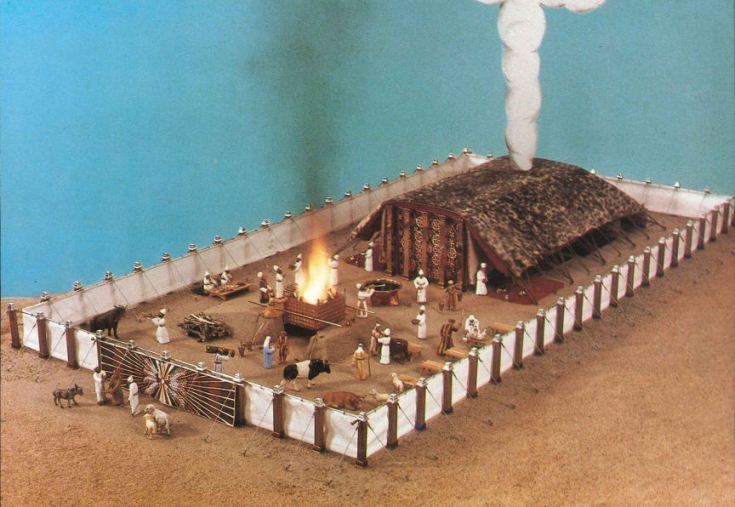
Eli himself is a somewhat indifferent priest. The first mention of him is as the father of the wicked Hophni and Phinehas. Next, we find him sitting in a chair at the doorstep of the tabernacle. He is not serving; he is not overseeing; he is not doing anything. When he first observes Hannah, he jumps to a wrong and judgmental conclusion– that she is drunk and raving. He doesn’t go over to see if he’s right in his assumption. In fact, there is no mention in the passage that he ever rises from his chair. We might gloss over this passage, without grasping the importance of this detail. Nowhere in the long lists of a priest’s duties was there an option of sitting at the door and just watching people go in and out. The priests all had duties– some were in charge of the sacrifice (as Elkanah sometimes was). Others were in charge of the lamps, the incense, the care of the utensils and tools, offering prayers, singing, playing instruments, reading from the books of the law, and keeping the tabernacle clean and in good repair. None of them required sitting. Eli isn’t busy doing the work of the Lord; he is literally sitting down on the job. In short, Eli is not a spiritual giant– he offers a standard blessing after Hannah pleads her case for not being a drunken disturber of the peace, but he doesn’t offer much in the way of true comfort or counseling. His first words to her are to “Go in peace.” The blessing seems to be almost an afterthought. Still, Hannah goes away encouraged, and comes back the next day to worship before returning home.
What can we learn from this encounter and these details in Hannah’s story?
One possible reaction is to become critical and dismissive of the clergy. I think this is the wrong reaction, but I want to address it in this context, because it can keep us from finding help and blessing if we let it. I know countless people who have walked away from the church because of one disappointing encounter with a minister, pastor’s wife, deacon, or fellow parishioner. Eli was not a stellar example of Israel’s priesthood; he was a flawed human. He had rebellious sons, and was likely depressed or anguished over his own troubles. Yet, he was still faithful to turn Hannah’s attention to the One who is always able to bring comfort and strength. Hannah could have chosen to focus on his rude and judgmental assumption about her, but she chose to focus on the hope he was able to offer. I have gotten dismissive, even bad, advice from people in the church. I have been hurt, judged, and ignored by those who are supposed to be serving God. But just as God provides grace to cover our own failures and mis-steps, He asks us to extend forgiveness and grace to those–even those who serve Him.*
Having said that, I think there is a warning here for those who serve the Lord. Eli ends his days in tragic fashion, his family legacy in ruins, because of some of the details we glimpse even in this short passage about Hannah. Eventually, her son, Samuel, will be tasked with the job of delivering the fullness of God’s judgment against Eli and his sons. Eli’s priesthood was not a cushy position of sitting at the door of God’s tabernacle enjoying an afternoon breeze. He was in charge of setting the tone of reverence and worship for the nation. His sons were corrupt; everyone knew it, including Eli, but nothing was done about it. He sat there, and let evil happen around him. Church workers, pastors, and priests who do evil and abuse their positions may get away with it for awhile, but God will not hold them guiltless. Nor will he hold those guiltless who cover up or deny the guilt of those around them. No matter how high the position, no matter how much “good” they have done, unless they repent of their actions, they will face God’s wrath over their evil acts.
Finally, we need to see Hannah’s response. Regardless of how evil the sons of Eli were, or how spineless Eli was as a parent and a High Priest, Hannah found faith– not in the priests– but in the God they served. She had seen the dedication of her husband, Elkanah. He served God with reverence, and he served his family with love and honor. She saw that Eli, even sitting down on the job, was still aware that hope and healing come from the Almighty.
I pray that today, we will be grateful to God for the faithful, imperfect servants he sends into our lives, and for his grace when we or others “sit down” on the job of serving others and showing Him the reverence He deserves.
1 There was a certain man from Ramathaim, a Zuphite from the hill country of Ephraim, whose name was Elkanah son of Jeroham, the son of Elihu, the son of Tohu, the son of Zuph, an Ephraimite. 2 He had two wives; one was called Hannah and the other Peninnah. Peninnah had children, but Hannah had none.
3Year after year this man went up from his town to worship and sacrifice to the Lord Almighty at Shiloh, where Hophni and Phinehas, the two sons of Eli, were priests of the Lord. 4 Whenever the day came for Elkanah to sacrifice, he would give portions of the meat to his wife Peninnah and to all her sons and daughters. 5 But to Hannah he gave a double portion because he loved her, and the Lord had closed her womb. 6 Because the Lord had closed Hannah’s womb, her rival kept provoking her in order to irritate her. 7 This went on year after year. Whenever Hannah went up to the house of the Lord, her rival provoked her till she wept and would not eat. 8 Her husband Elkanah would say to her, “Hannah, why are you weeping? Why don’t you eat? Why are you downhearted? Don’t I mean more to you than ten sons?”
We don’t normally spend much time studying Samuel’s father, Elkanah. Yet the story of Hannah and Samuel begins with this man. Not only that, but it begins with a lesson in his genealogy and heritage. We learn that Elkanah was from Ramathaim (a town in the hill country of the tribal lands of Ephraim). As a Zuphite, however, Elkanah (and thus his son, Samuel) were also descended from the Kohathites, and were of the Levitical priestly line.
Hannah was one of two wives of Elkanah. We don’t know why Elkanah had two wives, but we know that the other wife, Peninnah, had children; likely several (see verse 4). Hannah, however, was barren– and this was “because the Lord had closed her womb.” There is nothing to indicate that this a result of any sin on the part of Hannah or Elkanah–there is no reason given for God’s decision to keep Hannah from becoming a mother. There is also no reason to believe that Elkanah was angry or disappointed or embarrassed by Hannah’s condition. In the society of that time, a man could divorce his wife for minor offenses; in this society, barrenness would be seen as a major defect, a stigma, and grounds for divorce. Hannah faced the possibility of rejection, abandonment, and condemnation from her husband. Yet Elkanah loved Hannah, and honored her with a double portion for their yearly offering.
Even with a loving and supportive husband, however, Hannah is inconsolable. And it is here that I think many of do a disservice to Elkanah. The Bible tells us that Peninnah taunted Hannah and drove her to tears. When she would not eat, Elkanah asked some basic questions. Why are you weeping? Why don’t you eat? Why are you downhearted? and the one that always makes me cringe– Don’t I mean more to you than ten sons?
These questions always bothered me. It seemed to me that Elkanah was either clueless or in denial about the bitter rivalry going on under his very roof. And his questions seemed to underline his ignorance.
A closer look at the context, however shows that Elkanah may be more a victim of our modern cultural understanding than a victim of any deficiencies as a husband. It says on the day that Elkanah was to sacrifice– an indication that he was inside the tabernacle and on duty –that Peninnah was taunting Hannah. If Elkanah was ignorant of the torment Hannah faced, it may very well be that it was being kept from him by Hannah herself. As a woman, I’m also guilty of expecting that my husband will “pick up” on non-verbal clues, or otherwise intuitively “understand” why I am depressed, or tired, or angry. Husbands, as loving and attentive as they may be, are not mind readers, and I have been guilty of making mine play a frustrating guessing game as he seeks to offer help. Men are also more likely to start by asking questions to “get to the root” of the problem, when we are seeking comfort and understanding, before we seek a solution. Elkanah and Hannah are no different in this respect than most of us today. Hannah is not a superwoman–she cries at the party and won’t eat. Elkanah is not a superman–he can’t “fix” Hannah’s sadness, nor can he feel the total depth of her despair. Finally, Elkanah asks a question that gives us a window into his own secret anguish. “Don’t I mean more to you than ten sons?” I want to rest here for a minute. I think we tend to get caught up in the words, and miss the heart of this plea. What is he really expressing? I don’t think Elkanah is trying to exaggerate his worth, nor is he trying to minimize Hannah’s desperation. But there is a heartfelt cry to be “enough.” So many times, when we face infertility, miscarriage, or the loss of a child, we focus on the mother’s feelings of loss and emptiness. In this story, we look at Hannah as being an outsider in her own family– the wife who “can’t”–the one who is in distress. Elkanah’s question may even seem insensitive and arrogant. Listen to it again, though, and you can hear the broken heart of a man who loves his wife, even as she is pulling away and allowing her grief to consume her. “Don’t I mean more to you?” “Am I not enough to keep you from despair?” Yes, Elkanah has children with Peninnah, but he longs for happiness and fulfillment in his relationship with Hannah. The Bible never says how many children Peninnah had, but it seems clear that in Elkanah’s eyes, Hannah was worth far more than “ten sons.”
I am broken as I think of times when I have been so consumed in my own grief and “neediness” that I have pushed away those who love me most, shutting them out, and making them question their own worth.
How many times have I done the same to the Lover of My Soul?
How many times do I focus on the one thing I don’t have, or the two annoying people in my life, and ignore the blessings God has poured out? When was the last time I made an extra effort to communicate to my husband how much he DOES mean to me, instead of leaving him to wonder? How many tears have I poured out with my face turned away from my Loving Father?
Hannah’s husband asks some leading questions– they lead Hannah to collapse before the only one who can bring healing and joy. Hannah’s prayer comes from a point of being broken– far more than needing a child, Hannah needs the love and understanding her husband longs to give her, and the joy and blessing her Heavenly Father has been waiting to offer.
Elkanah’s heart is to have joy and oneness with Hannah– with or without children. God’s heart is to have a joyful and trusting relationship with you. And with me. Today, I want to be open with God about whatever is breaking my heart– even though He already knows. Hiding my hurt, wallowing in it, and saying to God, “No. You are NOT enough!” will keep me in a downward spiral. Letting God prove that He IS enough is the way forward into healing, joy, and peace.
We know the end of this story– Hannah pours out her heart to God and God responds with compassion and blessing. He opens Hannah’s womb, giving her and her husband a son who will go on to play a key role in Israel’s history and God’s story of redemption. He continues to bless Hannah and Elkanah with other children, and, hopefully, a renewed relationship of joy and commitment.
May our prayer journey today lead us toward the Love of our Good Father– whether from a place of brokenness, need, confusion, joy, frustration, or victory.
Welcome to a New Year! And everything that lies before us is shrouded in mystery. But is that a cause for fear or excitement?
That is the question that weighed heavily on the mind of Ebenezer Scrooge in “A Christmas Carol.” Scrooge carried resentment and bitterness from his past, and isolation, anger, and disdain about the present. And he greatly feared a future he could not manage or define.
After visits from the Ghost of Christmas Past and the Ghost of Christmas Present, Scrooge was left emotionally off-balance and fearing the worst. Finally, he was visited by the third mysterious spirit, the Ghost of Christmas Yet to Come. He already knew the sad fate of his friend, Jacob Marley. Would this spiritual visitor show Scrooge a dire future already fated, or merely shadows of what might be? And the Ghost delivers strange sights– predators gleefully trading in the belongings of the recently deceased, heartless business acquaintances discussing the funeral arrangements of one of their fellows, and grieving family members in the household of Bob Cratchit. But what was his own fate? Where was Ebenezer Scrooge in the Christmases yet to come?
The answer comes in a cemetery, where Scrooge sees a newly-dug grave and a stone bearing his own name!
Death always seems to come as a surprise, even when we know that we will all die someday. Our own death may haunt us, but usually from a safe distance. It will come someday. Once we are old. Once we are weak, and sick, and ready to rest. Once we have achieved our goals and fulfilled our purposes. But that’s not how death works. It comes in its own time, not ours. It comes, not as an expected closure, but as a rude interruption of our hopes and dreams.
Ebenezer Scrooge, forced to deal with his mortality, and the legacy of his past and present, realizes that life is not what we forge out of our own plans and our strength of will or our hard work. Life is a gift. But life is not a given. Life has a purpose, regardless of the purposes and goals we bring to it. And that purpose has to do with giving and receiving other gifts– generosity, hope, forgiveness, encouragement, time, fellowship, and Love.
This Ghost never speaks to Scrooge with words. Instead, he shows Scrooge a world in which Scrooge has no more chances to give or receive gifts. He has chosen to hoard his wealth, his time, and his heart– and the result is that he will die alone, unmourned, a useless shell of rotting flesh. His fear and bitterness have brought no comfort to anyone, and have left the world a colder, icier, more horrible place.
But there is hope, even in this haunting experience. Scrooge wakes from this night and realizes that he is ALIVE! The Ghost has given him a great gift– the chance to live– the chance to experience connection and hope, joy and creativity, excitement and generosity.
What will this new year bring to US? Can we face an uncertain future with hope? Can we accept the gift of Life– even with its pain and struggle– as a priceless opportunity? Can we reach out to others, even knowing that we will sometimes be rejected, betrayed, and used? Can we strive to make things a little better– in our homes, our communities, our place of work, and in the wider world?
Scrooge did, and so can we! “A Christmas Carol” does not finish with a cold gravestone– even though we must know that Scrooge has to die one day. The story ends with music and light and gaiety, as Scrooge embraces the mystery of his own future and learns to live in hope and charity with those around him.
As we step into the future, may we also embrace the Life that God has given us, the joy of sharing time with others, and the expectation of good gifts that God will continue to give us in the future. As Tiny Tim says, “God bless us, everyone!”
My prayer is that you will experience excitement as we all take the next steps– God’s spirit will light the way; God’s word will be a lamp unto our feet (Psalm 119:105). God’s glorious gift of Christmas– the coming of Christ to be our Emmanuel, our example, and our Savior–will be the carol that we sing as we travel into the unknown!
If you missed my last blog post, I’m looking at the story of A Christmas Carol, by Charles Dickens. It may not seem like a “jolly” Christmas story, or even a “religious” story, but it is “spiritual.” Ebenezer Scrooge is literally haunted by three spirits over the course of Christmas Eve. Last time, I spoke of the Ghost of Christmas Past. Today, I’d like to look at the Ghost of Christmas Present.
I know, Christmas was a few days ago– we’re currently at the cusp of New Year’s Eve, but these few days between Christmas and New Year’s Day can often feel jumbled up and run together. And, traditionally, the Christmas season is not just one day, but twelve days, stretching from December 25 to January 6. So today is still technically part of “Christmas.”
In “A Christmas Carol”, Scrooge is actually visited by four spirits. The first is the ghost of his old friend, Jacob Marley, who offers Scrooge both a dire warning, and a chance of redemption. Scrooge has already been visited by Marley, and by the ghost of Christmas past– a look at the moments and people who have shaped Scrooge’s life up to the present. Scrooge has seen both happiness and tragedy in his life, but the “light of truth” carried by the first ghost has shown how Scrooge has rejected happiness, instead embracing a life of fear, loneliness, and greed.
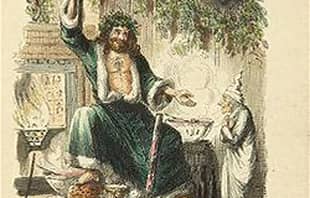
The next spirit, the Ghost of Christmas Present, focuses less of Scrooge himself, and more on the people he has ignored or rejected. This spirit shows Scrooge what he is missing by hoarding his wealth and isolating himself from the rest of the world. It is a picture that many of us would do well to study!
One of the first stops is the home of Bob Cratchit, Scrooge’s underpaid, put-upon clerk. Scrooge makes use of Bob’s time and skills, without ever showing any interest in him as a person. Scrooge is oblivious to Bob’s existence outside of the counting house. He assumes that Bob has a family, but he has no idea who makes up that family. The Ghost of Christmas Present forces Scrooge to see that Bob and his wife have several children, including a sickly and crippled son named Tiny Tim. Though they have very little money (thanks in part to Bob’s meager wages!), they have plenty of love and happiness. Scrooge fears many things that may happen, while his clerk faces very real fears that “haunt” him every day. Yet Bob does not complain, does not exhibit bitterness, and does not hide away from the world.
Next, the ghost takes Scrooge to see his nephew. Scrooge keeps his nephew at a distance because of his bitterness and fear. But in doing so, he is missing out on his nephew’s kindness, wit, and warm circle of friends. Scrooge has treated his nephew with disdain, fearing that the younger man is jealous of all his riches. But the ghost shows Scrooge that his nephew actually feels sorry for his uncle. Again, Scrooge has great wealth, but his nephew is content, and even very happy with his lower station in life. He loves his wife and enjoys friendships that make him wealthier in many ways than his uncle!
Finally, the ghost of Christmas Present shows Scrooge a sight he would never willingly see– the suffering and neediness of the poor, whom Scrooge has sneeringly consigned to death. Rather than seeing humanity, Scrooge sees only people who might drain him of his wealth– the undeserving poor who “cost more than they are worth.” The ghost reminds Scrooge of an earlier off-handed remark about helping those who would rather die than go to workhouses: “If they’d rather die, then let them do it–and decrease the surplus population!” The ghost warns Scrooge that he should be very careful in declaring who is among the ‘surplus population’. In heaven’s eyes, Ebenezer Scrooge himself might have less worth than ‘the least of these.’
And the King will answer them, ‘Truly, I say to you, as you did it to one of the least of these my brothers, and sisters you did it to me.’“Then he will say to those on his left, ‘Depart from me, you cursed, into the eternal fire prepared for the devil and his angels. For I was hungry and you gave me no food, I was thirsty and you gave me no drink, I was a stranger, and you did not welcome me, naked and you did not clothe me, sick and in prison and you did not visit me.’ Then they also will answer, saying, ‘Lord, when did we see you hungry or thirsty or a stranger or naked or sick or in prison, and did not minister to you?’Then he will answer them, saying, ‘Truly, I say to you, as you did not do it to one of the least of these, you did not do it to me.’ (Matthew 25:40-45 ESV)
Scrooge’s feelings and senses are overwhelmed by what he experiences. The present surrounds him– the sights, the smells, the laughter, the cold of a dark winter’s night, and the heat from a roaring fireplace; the stench of the docks and homeless camps, and the aromas of Christmas dinner; the colors and lights of decorations, toys, and costumes; the ringing of bells, and the singing of Christmas Carols. Once again, Scrooge can hear music and laughter, he can sense the love and compassion, but he can only participate on the periphery. The music haunts him, but it comes from others, not from his own frozen heart.
So, what happens to us in this Christmas present? Do we feel connected to the joy and gratitude, the love and hope of the season? Or are we isolated by worry, frozen in fear, enslaved by anger or greed? Christmas is often a time of great sadness and loneliness. And sometimes, the laughter and the lights seem hollow and fake. Especially in the days just after Christmas, we can feel let down, abandoned by the promise of merriment and fulfillment brought by parties and gifts and feasting and entertainment. Outside, the winter is still cold, the bills keep coming in the mail, and fears and worries cloud our days. Some of our fears are very real– disease, grief, loss, sudden changes in circumstances and relationships–Christmas lights and music alone cannot cut through the fog.
My prayer for today, and for the New Year at our doorstep, is that we would open our ears and eyes and hearts to what is around us– acknowledge that we live in a fallen and often worrisome world, but recognize that there are opportunities all around us, as well. We don’t have to isolate. We don’t have to live in constant fear. Christmas isn’t just a day; it isn’t just a season– Christmas is about Christ coming to dwell with us!
Open your ears! Listen to the music of the season– “Peace on Earth! Good Will to Mankind!” “JOY to the World! The LORD has come!” “Let Heaven and Nature Sing!” “Glory to the Newborn King!” Keep listening to the promises of God’s Word– “Never will I leave you nor forsake you!” “Lo, I am with you always!”
Open your eyes– see the wonderful opportunities to share both joy and sadness with others. Seek out the great opportunities to give and receive help and love and fellowship! See the good things that the LORD has done– the friendships and family in your life; the beauty of nature, the ‘wonder of His Love!’.
Open your heart– Receive the greatest Gift! Redemption; new birth; eternal and abundant Life! Choose life and gratitude and humility. Practice childlike faith, hope, and JOY!
Charles Dickens wrote “A Christmas Carol”– a (literally) haunting tale of greed, bitterness, and, in the end, redemption. Set in Victorian England, the story involves a miser named Scrooge, his business partner, Marley, who has been dead for seven years, and three mysterious spirits: The Ghost of Christmas Past, the Ghost of Christmas Present, and the Ghost of Christmas Yet to Come…
Scrooge and Marley
Scrooge doesn’t really hate Christmas. He considers it a Humbug– an annoying and worthless distraction from the “reality” of making money. What bothers Scrooge– what eats at him and rules his actions– is the fear of poverty and powerlessness. He avoids relationships so that he cannot be hurt or abandoned. He avoids spending money– even for common comforts like coal to heat his office–for fear that he will fall into poverty. He does not like people because he will not trust anyone enough to risk getting hurt or used.
Scrooge’s only “friend,” his former partner Marley, lived by similar principles during his lifetime. He “visits” Scrooge on Christmas Eve to warn him of the fate that awaits those who fail to realize that there is more to life than making and keeping money. “Mankind was my business. The common welfare was my business; charity, mercy, forbearance, benevolence, were all my business. The dealings of my trade were but a drop of water in the comprehensive ocean of my business!” Marley has managed to arrange for Scrooge to be haunted by memories of the past, visions of the present, and shadows of what may be in the future.
The first of these “spirits” reminds Scrooge of Christmases from his childhood and early adulthood. Some of the memories are sad– Scrooge is left to spend the holiday alone at school, as his cold and distant father refuses to show him love, mercy, or guidance. Later, Scrooge is reminded of how his decision to pursue wealth alienated the woman he could have married. But there are happier memories, too. His first boss, Mr. Fezziwig, brought happiness and a sense of camaraderie and purpose to Scrooge’s early employment. He celebrated both hard work and the joy of fellowship with his employees. Scrooge sees visions of his beloved sister and is reminded that he has a family (his sister’s son) with whom he could make and share happy memories– if only he would choose to do so.
I will write about the other visitations later, but I want to camp out here for a little bit.
What memories would the Ghost of Christmas Past bring to me? To you? Are there sad or painful memories of Christmases without loved ones? Christmases that included anger or rejection? Christmases spent with poverty, uncertainty, or sickness? Would you feel bitterness? Fear? Guilt? Regret? Or would there be nostalgia for days gone by? Longing for family members who have passed? Questions about what might have been?
It is tempting sometimes to shove our memories of Christmas past in a closet or an old trunk and try to forget them. In Dickens’ story, Scrooge ends up desperately trying to snuff out the light of Truth that the spirit is holding. He doesn’t want to remember; doesn’t want to know or deal with the pain and loss of his past.
But before we can truly live in the present, we must confront the past. We do not have to live there. Our memories– good and bad– are but shadows of the things that have been. But they can cast long and devastating shadows if we let them. Denying past pain or trauma can give us a false sense of control. Burying ourselves in work or pleasure or entertainment may feel like a solution. Being cautious and angry and cynical may seem like wisdom. We can blame others, blame ourselves, even blame God for our feelings of hurt and fear of being hurt again and again. OR we can, with the light of truth, revisit our past. We can discover the healing power of redemption and forgiveness. We can– we must– still acknowledge the pain, the injustice, the grief that lies on our past. But we also must see that the shadows of the past only fall behind us. However the past may have shaped us, damaged us, challenged us, or forged us, the present and the future can be turned in a new direction.
And that is possible because of Christmas– because of Christ!
When Scrooge first visits his past with the Ghost of Christmas Past, the first image he experiences is of his classmates from school riding in sleighs and wagons singing Christmas carols. Singing! He could not join in. As an adult he has chosen not to join others as they sing of the wonder of Christ’s birth. But the carols echo– their message endures! Christ is Born! Glory to the Newborn King!
My prayer today is that Christmas past holds some happy memories for you. But the very Good News of Christmas is that it isn’t just about the past. And our past Christmases don’t have to haunt us. Because the Light of Truth– The True Light of the World (John 1:9) –that came on that first Christmas so long ago leads the way forward!
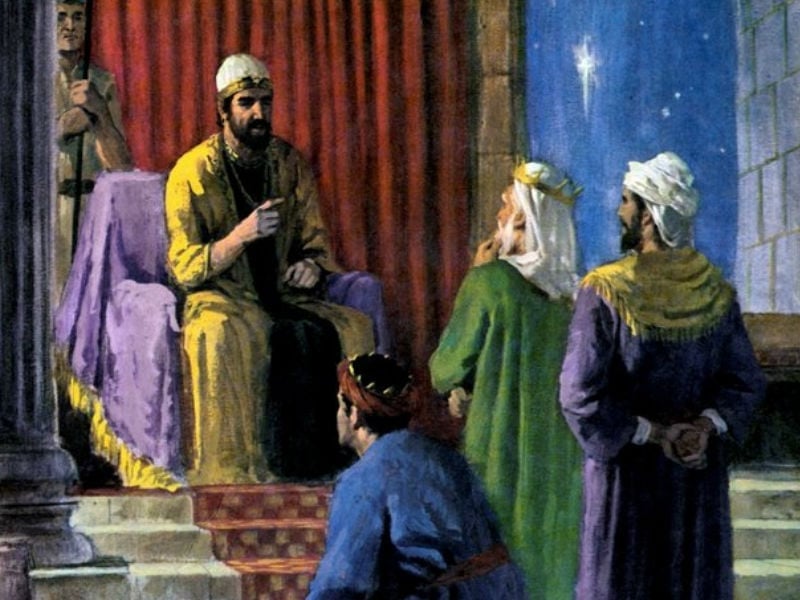
I’ve been exploring some of the themes related to the Advent. But what happened afterwards? There is a curious and violent story related to the visit of the Wise Men– before they found Mary and Joseph and the Baby Jesus, they visited the palace of the ruling King of the Jews, Herod. Herod was intensely curious about the baby– when and where the prophets said Messiah should be born. But unlike the worshipful wise men, Herod wanted to destroy this heaven-sent King; one who could pose a threat to his own power and rule.
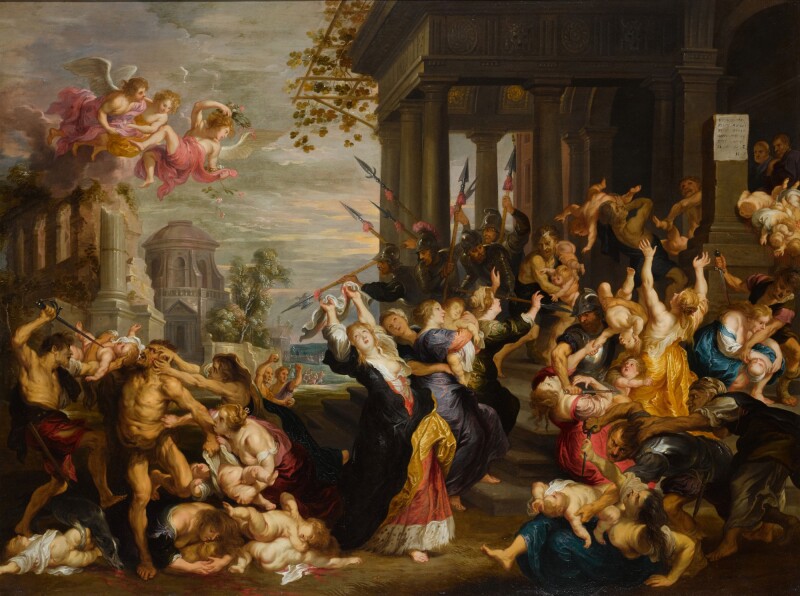
Jesus escaped Herod’s plot. Joseph had been warned in a dream, and had taken Mary and Jesus to Egypt for safety. The Wise Men, also warned in a dream, had failed to report back to Herod the information he wanted. In his anger and fear, Herod ordered the slaughter of all the baby boys in the region, up to two years old. This “Slaughter of the Innocents,” as the event is known, seems to come in direct repudiation of the message of the angels at Christ’s birth. There was no peace in Bethlehem as soldiers dragged innocent babies from their mothers’ arms and killed them. There was wailing and anguish, instead.
How could a loving and wise God allow this to happen? It was no unforeseen accident, either. This event had been predicted by the prophets hundreds of years before it happened, just the same as the prophecies about Jesus’ birth. God could have sent angels to protect Jesus from this slaughter; He could have confounded Herod’s plans and stopped the soldiers from reaching Bethlehem; He could have struck Herod dead before the plot could be carried out…so why did He let it all happen?
I don’t have any definitive answers. But I can share some opinions, based on what I’ve learned of God’s character. I don’t think God was in any way indifferent to the suffering and injustice of this tragedy. But I think there are a few lessons we can take from this strange and disturbing incident:
First, Jesus came to share a very human fate. Jesus was not spared the indignity of being born in a cattle shed and laid in a manger. His life was not supernaturally easy or safe or comfortable. It was God’s perfect will that Jesus was vulnerable to attack, and in need of protection– even when it meant fleeing His home.
At the same time, He WAS fully God, and as such, posed a danger to men like Herod. Jesus, even from birth, had an authority greater than any king or emperor who ever lived. But He did not come to earth to exercise that power over other people. Instead, He came to serve and to pour out His life for others. It was not His mission to overthrow the existing government, or to challenge rulers like Herod. It was His mission to fulfill the Law, set an example of obedience, preach the Gospel, and offer Himself as atonement for Sin.
Herod had the earthly power to do good or evil as a ruler. He had the unique opportunity to join the Wise Men in worshiping the arrival of God’s chosen one– an event that had been anticipated for hundreds of years. Yes, God could have forced Herod to bow before the Newborn King, but Herod could also have chosen wisdom over fear. We have the same opportunity to welcome Jesus as our Savior– or to wage war against Him. Jesus invites us to follow Him, but He doesn’t stop us from making the same destructive choices that Herod made.
Jesus did not come to bring a worldly peace, but an eternal “Peace that passes understanding.” Even now, after His death and resurrection, there is still war and slaughter, crime and injustice in our world. But, because of all Jesus did, and is doing in and through those who follow Him, we see that tragedies can be redeemed; hope can survive where there seems to be no hope; and death is not the final victor. I don’t understand why these particular families had to face the tragic consequences of Herod’s rage and fear and ambition. But I understand that God is bigger than Herod; and more powerful than all the chaos and pain that he caused.
The world is not at peace today. Innocent people– even babies–are hurt and killed in our world. God knows. He aches for our grief and pain. But He also knows His plans. He knows how the story ends– He knows all that has happened, and all that is happening, and all that will happen. Even in the glory of Christmas, He wants us to know that reality. Someday, Jesus will return in all of His authority and power. He won’t just end the reign of evil rulers like Herod– He will render their legacies useless. He will redeem injustices– even genocide and slaughter–and wipe out even the memory of their grief and terror.

































 Pursuing Prayer