There is no way I can give a definitive answer to the above question. In a thousand blog posts or three volumes of analysis, I could never cover all the issues this question brings up. I offer the question today for two reasons:
This question is raised in the Bible. Asaph raised it in Psalm 73 https://www.biblegateway.com/passage/?search=Psalm+73&version=ASV; Habakkuk and other prophets also asked it. Solomon pondered it in Ecclesiastes, and Job cried out against it. God is not afraid of such questions, but He doesn’t give glib answers, either. The psalmist received no immediate answer directly from God, but when he entered the sanctuary of the Most High, and considered the eternal destination of the wicked, his attitude changed. His envy, anger, and bitterness melted in a flood of awe and worship. God does not want us to be bitter, angry, or envious of the wicked; nor does He want us to be apathetic toward injustice, abuse, and inequality. There is something profoundly disturbing when we see the wicked prospering at the expense of the righteous and innocent. It should cause us to turn to God and seek His help.
That brings me to the second reason I want to grapple with this topic today. I need to! I have the tendency to want an immediate answer, and to see the wicked suffer– until I am in the presence of a Holy God. There is no wickedness that is outside of God’s justice, or of His grace. God WILL bring complete justice– in HIS time. But His primary goal is to bring redemption, restoration, healing, hope, and salvation– even to the wicked; even to ME. God’s justice is not just reserved for those I deem to be wicked and prosperous. God’s ways are not my ways. What if, in my eagerness to condemn the wicked, I miss God’s plan to change the heart of a Zacchaeus, or an Ebenezer Scrooge, or a sinful King David or arrogant King Nebuchadnezzar? No amount of wickedness can overwhelm God’s love and mercy, or His ability to make “all things work together for good” (Romans 8:28) for those who love Him and are called to serve Him.
Lord God, today I pray for eyes that see Your face, even in this broken and fallen world. May I look to see Your patience, Your mercy and Your grace, as well as Your Holiness and Justice. May I be an instrument of all these aspects of Your character as I live in Your grace today. Thank You for Your great mercy toward me, and to the promise of Eternal Life with You. Amen.
This month, I want to encourage you to let people know you are praying for them. This seems like such a simple thing, and not necessarily a way to improve one’s prayer life. After all, didn’t Jesus teach us not to brag about our praying? Aren’t we supposed to pray in private, not calling attention to ourselves? (See Matthew 6:1-15)
There are four “do’s” and a couple of “don’t’s” when it comes to telling others about praying that I want to emphasize today. Not because I have a perfect formula, but these are things I have found true in my own experience, and I think they line up with Biblical principles:
DO:
When you hear a need, pray about it. Don’t put it off; don’t promise to pray at a more convenient time. Do it now. If that means stopping in the middle of a conversation and praying with someone who is pouring out their heart– do it (assuming that it is possible). Not only is this practicing obedience to the prompting of the Holy Spirit, but it is honoring the importance and value of the other person. (see Philippians 4:6; Romans 12:12; Ephesians 6:18; others…) Showing others that their needs are important and that God cares about their needs is NOT boasting or being hypocritical. Just remember to approach with humility. Don’t be offended if they refuse in the moment; don’t use the opportunity to pray “over them”– pray beside them; pray with them; pray for their needs, not your own virtue-signaling. If you are worried about your actions being misconstrued or offensive in some way, ask first. “May I pray for you right now?” “Would you mind if we just stopped and said a quick prayer about this situation?” They can always refuse to let you pray immediately, but at least they will know you sincerely want to bring their burden before God. Also, if there is practical help you can give in the moments following, don’t hold back. Maybe their need is beyond your ability, but if you can direct them to counseling, aid from a local church group or non-profit, or offer to follow-up, you should do what you honestly can. Don’t promise beyond your ability, but don’t just pray and walk away, either.
The same goes for on-line requests for prayer. Don’t just scroll past someone’s need. It takes three seconds or less to type, “Praying”, or “I’m praying for you.” Again, if there is practical help you can offer, this is an opportunity to do so. There is no need to go overboard– but letting others know that someone “out there” is praying can be an enormous encouragement.
Be specific. Generic prayers aren’t “bad,” but they are often hasty and leave something lacking. The same goes for practical help. One of the mistakes I often make is to say, “If there’s anything I can do, give me a call.” I mean it– I want to help, and don’t know just how. But this puts the burden of asking on the person you meant to help! If you don’t know what to do– say so– but give them something solid to go on. It may be a phone number or e-mail, or an idea of a service you are able to offer–“I have Wednesday afternoons off if you need someone to drive you/go with you to an appointment.” or “If you ever want to meet for coffee…” or “I know the church has a Benevolence fund for unexpected bills and expenses. I could contact someone or give you their contact information,” etc..
Follow through! If someone asks for prayer for an ongoing concern, make a point of checking in every so often. Call, send a note or text, stop them at church and let them know you are still thinking of them and praying for them. This can also be another opportunity to offer practical help, a hug, or other form of encouragement. Often a week or two can be time enough to reveal practical steps to meet some of the smaller needs related to a big crisis or situation.
DON’T:
Say you will pray and then forget to do it. I used to be bad about this on-line. It only takes three seconds to promise to pray or to type a message about prayer, but don’t say it/send it if you aren’t going to act on it. Either stop then and there to pray about it, or stop and write it down where you will see it later and act on it! Good intentions are NOT enough to bring real encouragement and change. And good intentions do not form a disciplined and growing pursuit of prayerful living. In fact, such lost opportunities can become a barrier to our prayer life AND our relationships with others.
Break confidences. If someone asks publicly for prayer, it is fine to respond publicly that you will pray or are praying. It is NOT fine to then share someone else’s burden with ten of your other neighbors or closest friends. It is not fine to repost someone else’s request without their permission. It is not fine to publicize others’ private burdens, confessions, or pain. You may want to ask others to join in prayer, but don’t share details and names. Even if you have permission to share a prayer request, it is not for you to pour out someone else’s feelings, relationships, or struggles. This is another area in which I’ve had to learn a lot. I tend to over-share my own struggles when asking for prayer, and I want others to be concerned, so they will pray also. But it is very easy to fall into gossip, oversharing, and speculation, which has no place in prayer– and no place in my relationships! Share only those specifics that are helpful– “S______ is battling cancer. She has an appointment with her oncologist this week and would like prayer.” It is tempting to give the time and date of the appointment– and S______ may be ok with you doing this so people can be praying “in the moment.” However, she may be concerned about too many people knowing when she will or won’t be home, which might tempt a burglar. She may not want to receive a host of phone calls later that afternoon from people wanting “updates” or wanting to “cheer her up” when she is exhausted. Respect others’ privacy.
We are commanded to pray for one another (see Galatians 6:2; Colossians 4:2, etc.) And prayer is the most powerful tool we have to help those around us. Even though I recommend “practical” help along with prayer, I do not mean to say that prayer is impractical. Prayer IS practical and powerful. It should never be dismissed as “lesser than” other forms of help. But neither should it be used as an excuse not to meet needs in others ways as God gives us resources.
Making a habit of praying for others– really responding to needs immediately and faithfully in prayer– is a great way to experience its power. We will see God working through the prayers we offer– not just in the way He answers in the lives of others, but in the way He will change our hearts and minds about situations, relationships, and in growing Faith and confidence. It will train you to listen for needs, and to prepare to help. It will also train you to see needs in your own life, and make it easier to trust God with the needs in your life. You will find it easier to share your needs with others, and to accept help when you experience how much your efforts (even small ones) can encourage others. It may even encourage you to begin networking with others to meet needs and be proactive, instead of just reacting to needs after they are felt! If you are already strong in this area, be grateful for the way God is using you in the lives of others. If you are struggling in this area, I hope you will persevere. God is gracious in giving us opportunities to grow and serve!
Some fears are understandable. Some fears are even logical. Some are not. I wouldn’t say that I am “afraid” of most things. I don’t spend hours of my life being afraid of unlikely events, like being struck by lightning or choking to death on a cracker. I have a healthy fear of electricity and fire. I don’t tempt fate by walking along the edge of cliffs or hanging out of thirty-story windows (both of which are rare where I come from, anyway) . But I have two phobias– irrational fears–that plague me. The first is my fear of snakes. My fear of snakes has not ruined my life, but it has caused me to limit activities– mostly nature walks– where I might be exposed to seeing a snake. I avoid the reptile house at the zoo; I avoid visiting places where snakes are more common. I don’t like to see pictures of them; I don’t watch “snake” movies.
The second fear is more irrational and causes more problems in my daily life. I am afraid of phones. This doesn’t mean that I cannot make a phone call, or ever answer the phone. But if anyone asks about the best way to contact me, I always suggest e-mail, texts, or other forms of communication. I don’t like hearing the phone ring. I don’t like making calls. I don’t like answering calls. And it has little to do with who is on the other end. It has much more to do with the medium. I can’t see the other person’s face; I can’t predict whether or not the other person is busy or distracted; whether they want a quick answer or a lengthy talk; whether the conversation will end well or leave one (or both) of us at a loss. People call at their convenience–not at the convenience of the person at the other end. Are they in the middle of cooking dinner? Taking a shower? Having an important conversation with a spouse or child?
But if I determine never to make or receive a phone call, I will miss other important conversations– family members who live far away; business that cannot be conducted in person; appointments that need to be set up; news about births, deaths, hospitalizations, even prayers and prayer requests.
I say all this because I knew there are some people who have a phobia about prayer. They are afraid to pray– not just in public, but even privately. They fear that they will say the wrong thing, or that they will “bother” God with their petitions. Some fear that God will not hear their prayer or that they will not get an answer. Some are afraid that they will “get what they pray for”– that God will hear their prayer and answer it, but that the answer will involve change, hardship, or pain that they were hoping to avoid. Some fear that their prayers will not be “good enough;” that God will misunderstand their motives or be offended by their words or their lack of knowledge. Some people are afraid of God– that He will reject them and their prayers because of something they have done or the way they have lived in the past.
Prayer is not meant to be intimidating or difficult. It is healthy to have awe for God. Even “fear” of God– He holds the power of life and death; He cannot be fooled or mocked or bargained with; He knows everything about us, including our thoughts and our past–God is not to be trifled with, even in prayer. But God invites us to pray. He calls us to come to Him; He seeks our fellowship, no matter what we’ve done or what words we string together. There is no magical “prayer formula”– no phrases or special “religious” words or a certain ritual or routine– that we must use to be heard. God– who formed the universe and keeps it running– is never too busy or too distracted to listen to us. Even groans and whimpers are important to Him.
Don’t be “afraid to pray.” And don’t let a fear keep you from praying. Pray through the fear– draw near to God– and He has promised to draw near to you.
Many years ago, I prayed to God, that He would increase my patience. I had well-meaning people– even pastors and other Christians– who told me not to do it. They were afraid that God’s answer to such a prayer would bring difficulty– that God would answer my prayer by making me go through hard times to learn patience. And He did just that. I wanted to be married and have a family–and I spent nearly 30 years waiting and learning patience! But I would not go back and undo those years. God answered my prayer and He gave me a wonderful husband and family– in His time. Sometimes in those decades of wondering and hurting, I had pain. But I also had many blessings in singleness–opportunities I had never planned on, changes in perspective, unforeseen experiences and relationships that, I think, prepared me to be a better person and a better wife than I would have been at age 18 or 20.
My prayer for patience was something I felt strongly about– and patience is a Godly thing; it is an aspect of the fruit of the spirit (Galatians 5:22-23). I wasn’t praying for money or fame or a life without struggles. In fact– I wasn’t praying that God would “make me” patient. People who believe that my years of waiting for a husband were the direct result of my prayer for increased patience assume that God changed the circumstances of my life to force me to learn a lesson. But what if God changed my desires to match my circumstances? What if, knowing that I would marry after age 45, God put that prayer in my young and impatient heart? If I hadn’t asked for patience, would I have taken matters into my own hands and tried to “make” a family in my way and my time? Would I have experienced more pain– and brought pain to others– if I hadn’t learned patience?
God knows what we need. He knows that there WILL be trouble and hardship in our lives. And He knows that we can survive, and even thrive, in times of trouble, because He will be there with us. Nothing about prayer should make us afraid. Nothing about God’s answers should cause us not to seek His face. He loves us extravagantly; He knows us intimately; He controls and safeguards our future with perfect power.
The month of June is “Anniversary Month” in much of my family. My parents and one set of grandparents were all married on June 1st. My brother and sister both celebrate anniversaries next week, as does my one of my brothers-in-law. Marriage is in trouble in our society– many marriages are ending in divorce, while others are choosing to wait longer before making a commitment or choosing not to marry at all.
We tend to celebrate marriage as being all about feelings of love, but marriage is really about making and keeping promises. Two people stand before witnesses and take sacred oaths to be faithful, to love, honor, and cherish (and yipes! sometimes even to obey) one another for the rest of their lives. And most people who take such oaths do so with honest intent. Why, then, does it seem to be failing so often?
One of the reasons has to do with expectations. We expect the same giddy feelings of delight we have during courtship to carry us dreamily into the future. And we expect that the way we act during courtship will be the norm– the “happily ever after” fairy-tale life of story books and romance novels. We expect that we will always be the same as we are now: young, carefree, beautiful/handsome, and eager to please and be pleased by the boy/girl of our dreams… This is unrealistic. And even when we say we know better, we hang on to unrealistic expectations for our relationships, just as we do for other situations and circumstances. Even our “soulmates” can disappoint us, fail to understand us, suffer failures and setbacks, battle depression or addiction, lose their youth and good health, and even question their feelings for us.
Another related issue is that we usually take vows when we are young and our future looks bright. Circumstances can change; plans can fail. War, disease, financial ruin, the loss or miscarriage of a child or children, forced changes in living arrangements or work schedules– all can put enormous stress on a marriage.
But not all marriages crumble under the weight of unusual or unexpected circumstances. Some seem to erode slowly, even under “good” circumstances. Why?
One reason I’ve seen as I look around is a seeming inability to make and keep small promises. We make big, broad promises at a wedding– “for better or worse, richer or poorer, in sickness and in health..” “’til death us do part…” But we don’t promise to forgive him when he leaves the toilet seat up for the fifth time this week, or wait for her while she tries on every one of the six outfits she can’t decide on for the upcoming class reunion. We don’t promise to compromise on which family we will visit for Christmas each year, or what color we will have in the dining room. We think of marriage as a series of negotiations (which it IS), but ones in which one of us “wins” and the other “loses.” And if we consider that we are the “loser” in enough negotiations, we feel entitled to “break” our little promises.
Almost two years ago, my husband suffered an injury at work. He “punctured” his leg–the injury wasn’t huge, but it was deep, and on the back side of the leg, where he couldn’t see it. He knew it hurt, but thought it would heal up. Instead, it became infected. We had to go to the local wound clinic for several months, but between visits, I had to change the dressings, wash the wound, apply the various antibiotics and salves, redress the wound, etc.. David was still working full time, so the dressings would sometimes get sweaty and dirty on top of everything else. I promised to be faithful “in sickness and in health”– and that included washing out the pus-filled wound and caring for the pus-soaked dressings; it included wrapping his leg every other night for weeks. We went through hundreds of yards of gauze and anti-stick dressings, tubes of several different antibiotic salves, special compression socks, etc. Hundreds of dollars and hours later, his leg is slowly getting back to “normal.” During this same period, I was diagnosed with type 2 Diabetes. David has had to be patient with me as I learn to eat (and cook) differently. He has had to help me with glucose testing, dealing with low-sugar episodes, and put up with mood swings (even more than normal!).
And our health odyssey could be much worse– what about those who have to deal with cancer or dementia? But I think sometimes we minimize the commitment needed for the smaller, chronic conditions. The stress may be smaller, but it piles up, just the same. Our promises need to hold in the daily crises– big and small. And our promises need to hold when there is no crisis– and no adventure, either. Many marriages fall victim to “smooth sailing.” Things settle into a routine, and promises that were made to sustain the marriage in the face of “richer or poorer” fall apart in the settled comfort of middle class complacency. Vows take for “better or worse” fall apart in the “blah” and boredom of “good enough.”
Marriage is designed to be a picture of our relationship with Christ. As Christians, we are the “bride” of Christ! But we may need to review our vows and our commitment. Christ is eternally faithful; are we? In our flesh and our frail humanity, we cannot remain faithful on our own. But where are we? Have we lost our first love? Are we committed to Christ even in the midst of chronic illness or small setbacks? Are we flirting with the world because we have become “bored” with our Christian Walk? Has our joy been eroded by our failure to share our little stresses and secret sins with the Lover of our Soul?
Often, when we take a moment to remember our wedding day, we are reminded of the commitments we made, and the joy we felt on that special day. It can be bittersweet, if we have let circumstances or feelings pull us away from the one we love (or if they have moved away from their commitment). But it can be a wake-up call, as well, reminding us that promises made and promises kept are what leads to long-term joy and security. It can be helpful to take a few moments (or more) every once in awhile to remember when we came to Christ, and be reminded of the commitment we made– and the promises He has kept!
Today is Memorial Day in the United States–a day when we remember all those who have given their lives in service to their fellow countrymen and women. People decorate the gravestones of soldiers who were killed in action, they march in patriotic parades, and they hold memorial services, with military rites, prayers, and speeches.
Not everyone celebrates in the same way. Some just use the day as an excuse to have a pre-summer cookout or swim-party. Some don’t commemorate the day at all. Some people use the day to honor veterans of the armed forces, or even those who risk their lives in emergency services– EMT’s, Firefighters, Police officers, and others. Others use the day to honor their ancestors, regardless of whether they served in the military.
My husband and I fall on this end of the spectrum. We like to pay tribute to those who came before us– to those who left everything behind to start a new life as “pioneers”; those who lived through wars and diseases and struggles; those who left a legacy to our grandparents and parents–a legacy we hope to pass on. But we don’t worship our ancestors; we don’t worship the soldiers who died. We honor them, we remember their sacrifice, but we recognize that they were human, just like us. They may have died in battle or as the result of battle, but they died, just as we will. Their sacrifices may have been heroic; their efforts may have preserved freedom for us, or brought freedom to those who were oppressed. And that is what we honor. That is what we remember.
Jesus Christ was not a soldier. Yet He sacrificed His life for a purpose much greater than the honor of a nation, or the freedom of family and friends. His sacrifice opened a way for us to be reconciled with God– to be declared righteous and Holy, in spite of what we have done (or failed to do). Our best efforts may end in tragic death on a battlefield– or in a hospital bed fighting cancer or AIDS. But our best efforts end in death. His best efforts destroyed the power of Death, and offered hope to all the world.
Memorial Day comes once a year in my country. Other nations have similar days. It is important to remember those who have come before– those who have made sacrifices, and paved the way for future generations to live free. But around the world, Christians have reason to celebrate every day– to remember the death AND resurrection of our Savior that gives us eternal freedom from the sting of Sin and Death.
Before His death, Jesus gave his disciples a rite– a ceremony– to remember His death, and what it would mean in light of His resurrection. We call it Communion or Eucharist– the “body” and “blood” of Christ–consumed and memorialized each time we take it. We don’t hold parades or play Taps or plant flowers. We don’t have pool parties and barbecues. But we reflect with solemnity and gratitude on the sacrifice that conquered the grave once and for all!
I’ve been reading through the book of Job this past week. Job’s story challenges us– especially if we trust in our circumstances to confirm God’s love for us. Job was a seeming pawn in a situation beyond his control or understanding. He lost nearly everything– his cattle, flocks, all his children, and even his health. The only thing he did not lose was his nagging wife, and his faithful, but very unhelpful friends.
At first, Job’s friends seem very supportive. They stay with him, saying nothing, just offering their presence for a week! But then, they start spouting the kind of useless aphorisms and accusations that make Job’s bad situation infinitely worse. They “remind” him that good people don’t suffer–only the wicked experience pain and loss. This knowledge, they assure him, comes from their own experience, and the wisdom of the past. When Job protests that he is innocent, that his suffering is NOT because of his own wickedness, they become increasingly angry and irrational– making up accusations and heaping blame on Job for daring to “question” God.
But Job’s friends, even though they speak with confidence and sound very much like many people we hear today, are wrong. Job’s experience is real–suffering comes to the innocent, while the wicked often “get away with” their sin, living lives of ease and comfort at the expense of others. We see it in the world around us– innocent people are the targets of mass shootings, or war, or famine, or disease. Meanwhile, criminals get “off” on a technicality; decorated war “heroes” destroy entire cities; powerful tyrants bend laws and oppress the helpless.
Where is God in all this? WHO is God in all this? There are many different responses, but I want to look at three that are all present in the book of Job:
Mrs. Job: “Curse God and Die.” Some people look at evil and suffering, and they decide that God must be a fraud. Either He cannot or He will not destroy evil, or He would have done so before now. They declare with great defiance that either God does not even exist, or He must be malicious, capricious, petty, and weak.
Job’s friends: “Everyone knows that God rewards good and punishes evil.” Doesn’t the Bible say this? Isn’t this what we learned in Sunday School? Surprisingly, most of us would say, “Yes, that is exactly what I learned as a child, and it is exactly what the Bible says!” But look closer. The Bible says that “All have sinned and fall short of the glory of God.” (Romans 3:23) It goes on to say that “The Just shall live by faith” (Habakkuk 2:4 and Romans 1:17)–not their good works. God DOES reward goodness, and he DOES punish evil– but He also redeems the wicked and causes the good to go through times of trial and suffering. God is more than a two-dimensional dispenser of rewards and punishments. God’s ways are not our ways (Isaiah 55:8), and there are times that He chooses not to explain His ways “in the moment” of our suffering, or in the moments when wickedness seems to be “winning.” Unfortunately, when bad times come; when we experience pain, or watch someone else going through inexplicable suffering, if our view of God is incomplete or two-dimensional, we are left repeating the little we KNOW (or think we know) about God, and defending, not God’s character, but OUR knowledge. This is especially true if we have not been tested ourselves.
Job: “Though He slay me, yet will I trust in Him.” (Job 13:15) “I know that my redeemer lives, and that in the end he will stand on the earth. And after my skin has been destroyed, yet in my flesh I will see God;I myself will see him with my own eyes—I, and not another. How my heart yearns within me!” Job 19:25-27 Even when Job struggled with his pain and suffering–even as he defended his character to his accusing friends, Job KNEW that God was GOD. He knew all that his friends were saying ABOUT God, but he also knew God–even when he didn’t understand His actions. And after all the arguments had been made and all the “easy” answers had been spilled out, GOD did not slay Job; he did not leave him in his agony. Neither did He provide Job with detailed answers or explanations. But He redeemed the situation– Job ended up with more blessings than before. More importantly, Job ended up with a greater understanding of who God is.
When all is not well with our health, or our finances, or our safety, or our relationships, it can still be “well with (our) Soul.” God does not change, but He does ask us to trust Him, even when His ways are not our ways. God will reward good and punish evil– but it may not be in our lifetime or as we imagine. God may stay silent during times of great stress and pain, but He will not leave us! In every situation, we can trust Him.
In blogging about prayer and in keeping a prayer journal, there is one type of prayer I don’t dwell on very often. Prayers of confession and repentance are very important, but I don’t include them in my journal and I don’t spend much time analyzing them. It’s not that I want to ignore them or that I want to give a false impression that I don’t say them.
I’m a saint–but only in the sense that Christ’s blood is my atonement and my only hope of salvation. He who started the work is still working, and there’s a lot of work yet to be done. So, while I include prayers of confession and repentance in my practice of pursuing prayer, I don’t write them down or share them publicly.
Here are some of the reasons I don’t spend more time talking about confession:
Confession is not meant to be a public spectacle. It is generally private and very personal between an individual and God. Apologies may be public, and repentance may include public atonement or recompense, but those are not prayer; rather they are the actions taken in conjunction with and as a result of prayer and confession.
Confession is fundamental– it’s not a prayer option, or a stylistic preference–every one of us has sinned, and we all need to admit to our sins, bring them before the throne of God’s grace, and ask for his forgiveness. Hiding sins, denying sins, or lying about them will get in the way of all our other prayers.
Writing about past sins keeps them alive and keeps the focus on me and on my faults, rather than on God and on His Grace.
Making confession public has a tendency to devolve into gossip and self-justification. Descriptions of my sinful actions will necessarily be from my incomplete and very biased point of view. Other people can be misrepresented and hurt.
But the last reason is my favorite– I don’t waste time writing down and discussing past sins because GOD HAS FORGOTTEN THEM! Writing them down, rehearsing them, analyzing them–even analyzing how I might approach confession won’t change God’s response:
10 he does not treat us as our sins deserve or repay us according to our iniquities. 11 For as high as the heavens are above the earth, so great is his love for those who fear him; 12 as far as the east is from the west, so far has he removed our transgressions from us.
Psalm 103:10-12New International Version (NIV)
The key is that we DO confess– humbly, consistently, and with a heart of true repentance. What follows is a free and forgiven conscience, no longer weighted down or pulled off focus by guilt and doubt.
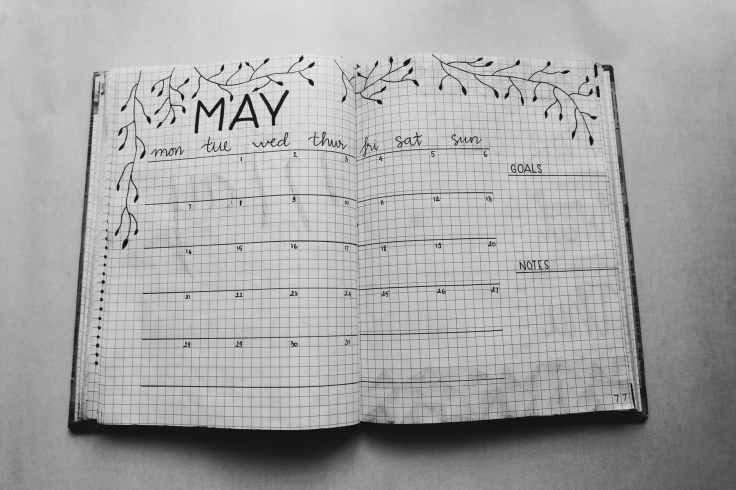
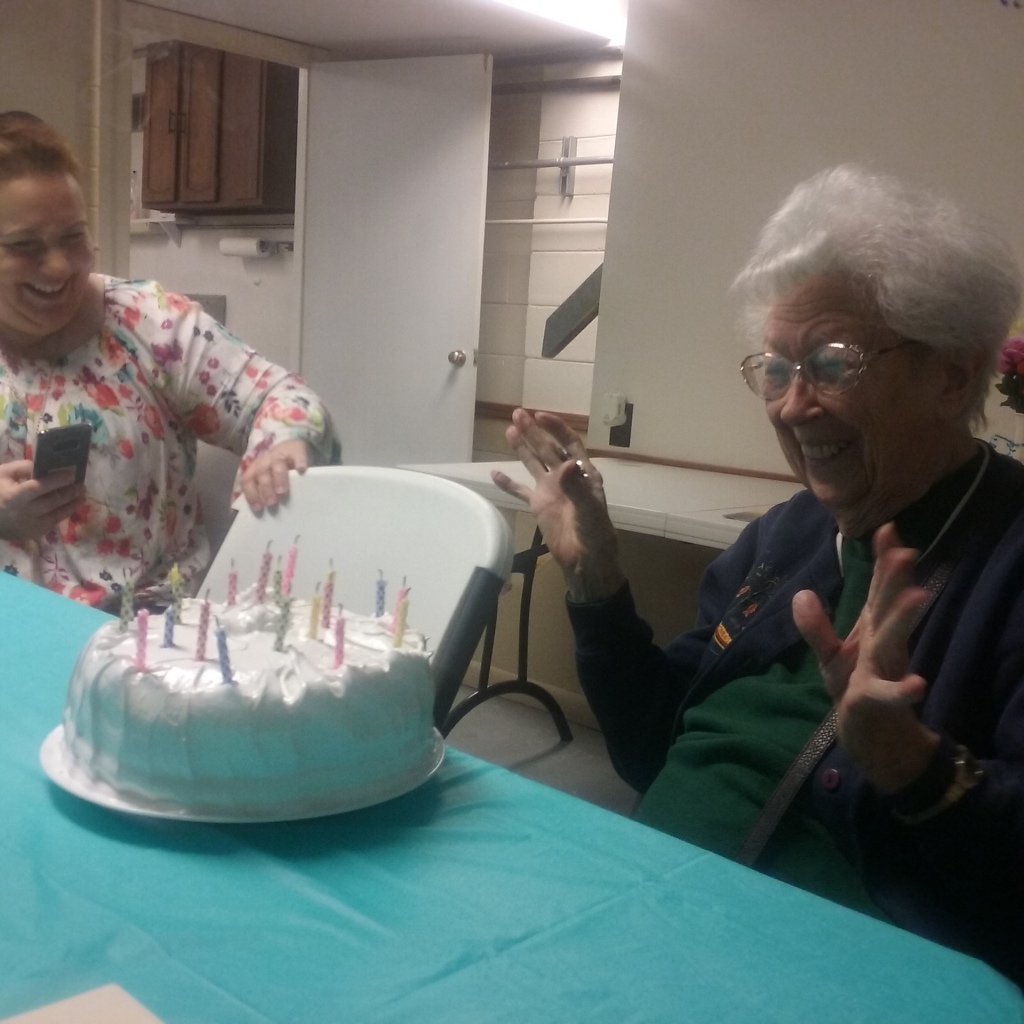
Today marks 90 years since my mother was born. She didn’t live to see this birthday; she died back at the end of February. But birthdays were important to my mother– hugely important. She never forgot a birthday. Mom was pretty sharp into her later years. She might forget someone’s name–for awhile. She might forget a few details about what happened yesterday or last year, but she didn’t forget to take her medication. She would eventually remember that name she couldn’t come up with earlier in the day. And she had an elaborate system of calendars, date books, and directories to help her remember birthdays.
Mom had a large desk calendar. Each day’s “square” was covered in her handwriting– names, numbers, etc., reminding her of birthdays and anniversaries of her relatives, friends, neighbors, and church family. If she knew your name and birthday, it was on her calendar. If she knew your age, it was on there, as well. If she knew your anniversary, it was there, too. If she knew. your birthday and/or anniversary AND your address, you received a greeting card– and it generally arrived on the exact date! Mom did this for literally hundreds of people each year.
Today hits me hard. Not because Mom made a fuss about her own birthday–even special ones like a 90th. She enjoyed getting a card or gift, or having some cake or ice cream on her birthday, but that’s not what I miss. I miss the absolute joy she had in remembering others, and in being remembered. I can still see the look of childlike glee on her face when she and a friend were both surprised with a birthday party a few years ago. She was delighted for her friend as much as for herself. I can remember her insistence that certain cards be placed in the mailbox on certain days, so that they would not arrive too early or late, but just at the right time for someone’s special day. I remember shopping with her for box after box of greeting cards. Even though she bought “in bulk,” filling a basket or cart with multiple boxes of cards, she was very choosy about them– looking over the designs and the messages inside each box. Often, she had “buyer’s remorse” about a particular box of cards: she wasn’t satisfied with the tone or the greeting. In a box with four different designs, she might send out cards with two of the designs and just leave the others untouched.
Birthdays were important to Mom because individuals were important to her. She wanted every person she knew to feel loved, remembered, and special. Because they ARE! Not just by Mom, but by the God she loved and served.
Mom loved birthdays, including her own. But Mom had another birthday. Mom won’t celebrate another earthly birthday– she won’t get any cards or ice cream today– but she is celebrating her “other” birthday today. She did not knew the exact date, but she was born into eternal life when she accepted Jesus as her savior, and that birthday has no end. It is much more important than her earthly birthday, and fills her (and all who love her) with a greater joy. I can only imagine the gleeful expression on her face at this moment that “was” her birthday, and in every moment since she went “home.” And it’s in large part due to my Mother’s witness and influence that I also have a “second” birthday. I don’t knew its exact date, though I remember it was a beautiful summer day. Later this year, I will celebrate my earthly birthday–and it will be a bit sad without Mom’s card and her smile. But I know that we will someday share much more than a cake with candles, or a greeting card or a wrapped gift.
Mom taught me to appreciate birthdays– and to share the joy of wishing others a “Happy Birthday.” And to anyone celebrating an earthly birthday today, “Happy Birthday!” But I am looking forward to the day that I can share eternity with all those who have a “second birthday” in Christ! I’ll see Mom again, but even that will pale in comparison to experiencing God’s presence and the love He lavishes on His Children!
Just think– God loves you so much that He never forgets your earthly birthday. He not only knows your birthday, He remembers the exact moment of your conception, and every moment since! He knows you and loves you so much that He wants you to have another Birthday into eternal life with Him! And that is better than any earthly birthday card, cake, gift, or party you could ever celebrate! If you have a “second” birthday, even if you don’t know the exact date, I want to wish you a “Happy Birthday” as well– today and every day!
Many years ago (never mind how many..) there was a television show called “Green Acres.” It was a comedy about a couple from New York City, who moved to a small town in the country. The husband was excited about the move– he was tired of the rat race and bustle of the city; his wife, however, was reluctant to leave all the opportunities– she missed the shops and activity.
Green Acres was one of a group of shows that both celebrated and poked fun at rural life in America in the sixties and early seventies. The shows were very popular among viewers, but were panned by critics, and cancelled by network executives, even at the height of their popularity. https://www.closerweekly.com/posts/cbs-rural-purge-mayberry-rfd-green-acres/
More than fifty years later, you can often see these shows on networks like TV Land. They are still popular among some viewers, who like the nostalgia and the gentle humor. These shows all have happy endings. They don’t involve grotesque murders, lots of foul language, preachy lectures on social issues like homelessness, domestic abuse, or drug addiction, or copious amounts of sex, violence, or nudity. They don’t talk about war and gangs, poverty or prejudice, or urban sprawl. They celebrate family, fresh air, hard work, community, truth, justice, kindness, and humility.
What does “Green Acres” (or Andy Griffith or any other old TV show) have to do with Psalm 23 and Pursuing Prayer? Not a lot, but I would like to look at the phrase in verse 2– “He maketh me to lie down in green pastures..” Not the same as “Green Acres,” but I think the green pastures of God are viewed by the world in much the same way as “Green Acres;” scorned by a small and vocal group, but quietly cherished by many others.
Our Shepherd causes us to lie down– to find rest and nourishment and refreshing– in green pastures. That doesn’t mean that He won’t lead us through times of bustling stress, struggle, anxious moments, or rugged paths. But He will make us lie down. He will cause us to stop our frantic rushing, and renew our strength in green pasture. He doesn’t offer green pastures as an “escape from reality”, but as a reminder that dealing with reality requires us to see beyond the immediate stresses of the day and listen beyond the distracting noises around us.
God’s green pastures won’t look like “Green Acres” with old tractors and fresh-mown hay. They may not look like the small town simplicity of Americana. In fact, God’s green pastures may not be places at all, but practices– spending time in Scripture, time in prayer, times in fellowship and encouragement, time in meditation, even time in service to others. You may find green pastures in the heart of a barrio, or in the quiet of a walk in the forest, or in praying as you climb a flight of stairs or fold laundry. But you will find spiritual nourishment and renewal in God’s green pastures, wherever they are and whatever they look like. https://www.biblestudytools.com/commentaries/treasury-of-david/psalms-23-2.html
God’s green pastures will have many critics, who will ask that you cancel these practices. They will call them old-fashioned, failed practices– naive, simplistic, even laughable. But as we respond to God who make us lie down in green pastures, others are watching– and taking heart. The critics in our life may be loud and insistent. It may seem like they have the power to “cancel” our rest, and pave over the green pastures to build another fast food restaurant. But others are watching in silence, longing to experience the kind of rest and refreshment they see in us– the kind that cannot come from sophisticated treatises on war or crime, or harsh critics’ disdain, or yet another trip to an upscale shop or fast food restaurant or spa. God may ask us to stay in Manhattan, or Tokyo, or Nairobi, but He doesn’t want us to live in the same way as many of our neighbors. We are to stand out and stand apart. And that will make us targets for criticism, but it will also make us shining examples!
A few years ago, I left a full-time job– a job I loved–to help my husband open up a second-hand store that also sells amateur radio equipment. Most people would look on our store as a failure–it doesn’t make a lot of money; we don’t have hundreds of sales in a week; it hasn’t made us famous or important. But it gives me the opportunity to spend time talking and listening to the customers we do have, many of whom are lonely. It gives David the opportunity to do the same. And it gives me time to pray more, spend more time in God’s word, and write and edit this blog. It has allowed me more flexibility to spend time with my family. And it has reminded me that God is our provider and protector in ways I took for granted when I drew a bigger salary and had a more prominent position. From a worldly perspective, this is a move I would never have chosen. I spend most of my days unnoticed and unpaid–hardly a recipe for worldly fulfillment. And many days, I actually miss the bustle of deadlines, the drama of staff conflicts, and the extra money in the bank. Some days I am frustrated and ungrateful and restless–God has led me to the green pastures, but I refuse to lie down and receive the rest He wants to give me. I’d rather be shopping, or running the rat race. And God may choose to make me get up and move through valleys, up hills, or over rocky paths to the next pasture. But for this season, in this pasture, He is teaching me to lie down–to be less busy about my business, and more open to His.
The world may offer us Times Square; God offers us fresh air. The world may offer us clever ways to spend our time and money– God gives us peace that passes all understanding. God’s “Green Acres” is the place to be–resting where and how our Shepherd leads us.








































 Pursuing Prayer