When God Asks a Question…

We often fear questions. We are afraid to ask questions; we are afraid of being questioned; we are afraid of asking the wrong questions or not asking the right ones. And we are often afraid of the answers, too.

Photo by samer daboul on Pexels.com

God is not afraid of our questions. In fact, He wants us to ask, to seek, and to knock (Matthew 7:7, Jeremiah 33:3, and others). God knows the answers to our questions– He even knows our motives in asking them! God may not give us the answers we expect, or answer in the manner or time we expect. But God encourages us to ask anyway, and to trust in His ability and His desire to give us what we need in the moment we most need it.

Photo by Munmun Singh on Pexels.com

God also asks questions–not because He doesn’t already know the answers, but because we can learn from the questions He asks, and the answers we give. Some of God’s questions seem self-evident; others are probing. Some are rhetorical; others are anguished. Let’s take a look at just a few, and see what we might be able to learn from them:

  • In Genesis 3, God asks some very obvious questions of Adam and Eve after they hide from him. “Where are you?” Adam and Eve had not successfully hidden from God. He knew exactly where they were and even why they were hiding. But instead of storming into the Garden of Eden with condemnation and instant judgment, God asked a simple question, giving them both the opportunity to confess, and a clear reminder of their broken relationship. There had never been a need (on either side) to ask “Where are you?” After Adam responds with the excuse of being naked and ashamed, God asks his second question, “Who told you that you were naked?” God knew the answer to this, as well, but He added a third question that forced Adam to get to the heart of the matter and tell Him the truth– “Have you eaten from the tree…?” God could have asked condemning questions– “How could you disobey me like this?” “Do you have any idea what you’ve done?!” But God isn’t asking questions to overwhelm Adam and Eve with their guilt and shame. He’s asking for truthful acknowledgment of their disobedience, so their broken relationship can begin to be repaired. God assigns punishment, but He does not bring additional questions and condemnation
Photo by Chinmay Singh on Pexels.com
  • In the very next chapter, God asks Cain a probing question, “Why are you angry? (And why has your countenance fallen?)” God knows the answer. He knows how Cain feels and what Cain is thinking. God knows it so well, that He challenges Cain to master his anger and turn his face upward (i.e. seek God’s counsel over his own emotions). We don’t like probing questions, because they reveal our selfish motives and dark impulses. But God actually WANTS us to be aware of our own tendencies–and our need for His wisdom and grace! God is not afraid of our darkest thought– He doesn’t want to expose them for our shame, but enlighten us for our own good!
  • In Genesis chapter 18, the Lord asks a rhetorical question, “Shall I hide from Abraham what I am about to do…” (concerning the destruction of the cities of Sodom and Gomorrah). God had already determined that they should be destroyed; He had no need to share this information with Abraham. But in asking the rhetorical question, God gave us a glimpse into His character (as well as a window into Abraham’s character!) God does everything with purpose. He is not willing to hide information we need, nor to waste time or energy on useless information. Imagine if we knew everything–everything!- that would happen to us for the next year? If we knew about that near miss at the intersection on May 22, or the toothache on June 2, or the “surprise” birthday party in October? But when God does choose to open a window, He gives us a chance to respond. Abraham did not choose to argue that Sodom and Gomorrah were not wicked cities, or that God had no business destroying them. His heart was driven to discover if God would destroy the innocent with the wicked. He got his answer (several times over!) And even when God did not find ten innocent people in the cities, He still offered rescue for Abraham’s nephew, Lot, and his family.
Photo by Pixabay on Pexels.com

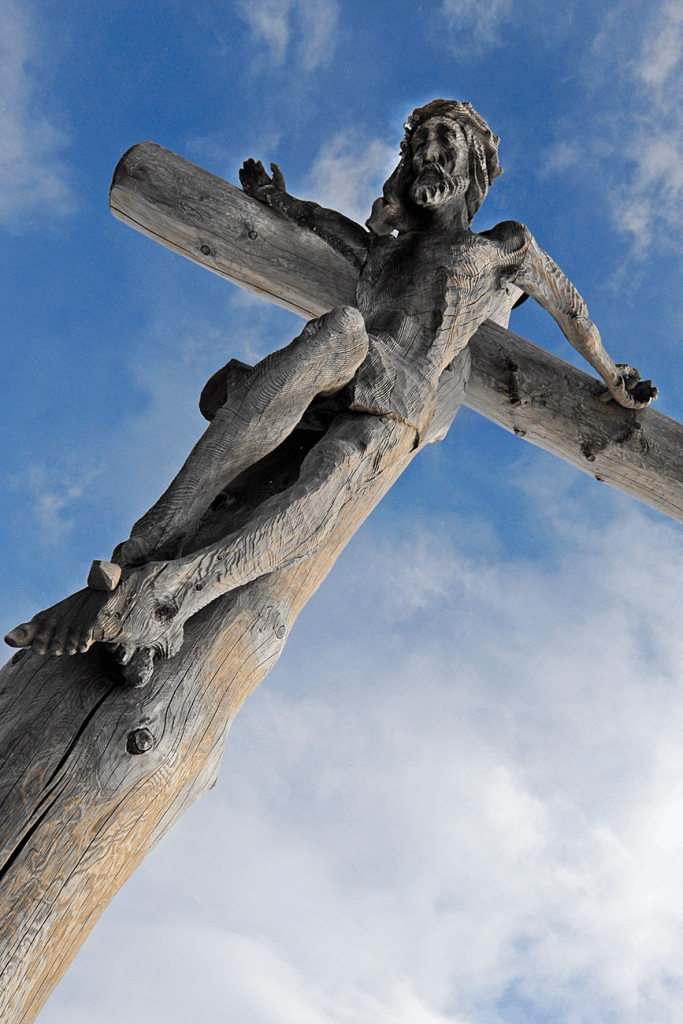
  • It isn’t only God the father who asks questions. Jesus the son asked two agonizing questions in the New Testament. While He was dying on the cross, He asked the Father, “My God, My God, why hast Thou forsaken Me?” (Matthew 27:46). Jesus knew, intellectually and spiritually, why God had forsaken him; but His question echoed the one found all the way back in the Garden of Eden– “Where ARE you?” The ultimate anguish of being separated from God’s presence was felt by God himself! The agony of loneliness that comes from sin and shame and guilt– God knows it intimately from both sides!
  • Jesus also asked and anguished question of Saul of Tarsus– “Saul, Saul, why are you persecuting Me?” (Acts 9:4) Just as God asked Cain to look carefully at his motives and emotions, so Jesus challenges Saul to reexamine his activities and ambitions. Jesus knew, of course, why Saul was hunting down those who were preaching the Good News. He knew Saul’s ambition and his zeal for the Law. He knew that it had blinded him to the truth. And in Saul’s physical blindness, Jesus could “open his eyes” to a greater ambition and zeal–to preach this same Good News to the Gentiles– the same Gospel that is opening eyes around the world to this day to see the Awesome, Eternal, Victorious, and All-Encompassing Love of God.

Today, may we ask, seek, search out, study, cry out, knock on doors, and pursue this truth–God wants to meet with us! He wants to talk to us, to listen to us, to share closeness, to increase our Joy and be joined to us in our Grief, to lift up our countenance, end our isolation, and be the ultimate answer to our questions.

Photo by Saulo Zayas on Pexels.com

God is Not On “Our Side”

Tomorrow is Election Day in the United States. It is a “mid-term” election. We will not be electing a national president, but we will be electing (or re-electing) all 435 federal Representatives to our national legislature, several Senators, some state Governors, and many state legislators. Some towns and cities will be electing mayors and council members; many school districts will be electing board members. There will also be many proposals on the ballots– in my own state, we will be voting on whether or not to change our constitution to legalize abortion, whether to change our voting laws, and whether to amend our statute on term limits for state officials.

Photo by Element5 Digital on Pexels.com

Pundits and worried voters will tell you that there is a lot at stake tomorrow. They will make it sound as though the world will end if “their” side doesn’t win–if their proposals don’t pass or their party’s candidates lose the vote count. While there IS a lot at stake in the vote, there is also a lot of hope, regardless of the outcome. No matter who “wins” or what proposals get passed, God is still on His Throne. It is God who forms nations, raises up rulers, or puts them down, and who sees the hearts and minds of all people.

Photo by Porapak Apichodilok on Pexels.com

God is not an American. He is not a Democrat or Republican. God is Sovereign over all the Earth. He does not “take sides,” in any way that we would understand. God, who promised to be the God of Abraham, Isaac, and Jacob– who promised to lead them to a land He would show them, and to establish their nation–is the same God who raised up Nebuchadnezzar to rule the Israelites during their exile. He is the same God who raised up Pharaoh, who enslaved the people of Israel, and used Pharaoh’s own stubbornness to reveal His power during the plagues and the parting of the Red Sea. God uses unlikely people to accomplish His purposes, NOT our agenda.

Photo by antonio filigno on Pexels.com

I believe that Christians have a clear duty to vote and to participate in civic matters. And I believe that Christians should be informed and critical voters, not rubber-stamping a candidate or agenda just because s/he/it “looks good.” But I also believe that Christians are to be honest people of integrity and honor, regardless of the outcome of a particular election cycle. That doesn’t mean that we can’t speak out against injustice, corruption, or deceptive campaign ads; nor does it mean that we can’t be conflicted about imperfect laws and candidates. In the final analysis, our ultimate allegiance and our ultimate trust must be found in God and in His Word. We are citizens of God’s Kingdom first, and our nation after that.

Groups, whether political or social groups, must be very careful about claiming that “God is on our side.” We must be far more concerned with whether or not WE are on GOD’S side! As individuals, are WE humble, honest, obedient, and committed to the truth? Are we working to build up our neighborhoods? Are we caring for the poor, the widows, and the fatherless among us? Are we turning a blind eye to evil in our midst, or worse, winking at corruption or excusing those in power when they abuse it in “our” favor?

Photo by Andrea Piacquadio on Pexels.com

God promises never to leave us nor forsake us (Hebrews 13:5). He promises to be by our side, all the way, all the time. But He never promised to be ON our side. It may be His will to bring judgment to our nation, our state, or our city, in the form of corruption and even failure. It may be His will to lead us through a time of hardship, chaos, and persecution. It may be His will to bring swift correction and justice where we have felt comfort and let our own moral standards grow lax. God’s will is always for us to grow, to improve, to become more disciplined in our own lives and more compassionate toward others around us. And His will is more important than our own comfort or being proved “right” over our political rivals.

Whatever God’s will is; whatever the outcome of tomorrow’s election, I pray that I will be a good citizen of His Kingdom, and a good citizen of my country. Of course, I hope that good measures and Godly candidates will prevail, but I know I can trust my Savior more than I can trust a ballot box. And His reign has no term limits!

Photo by Juhasz Imre on Pexels.com

Priorities

Photo by Miriam Alonso on Pexels.com

Get up.
Make the bed.
Shower and brush teeth.
Get dressed.
Fix breakfast– cereal, toast, orange juice.
Don’t forget to take the morning medication–Must be taken with food
And plenty of water.

Photo by Sora Shimazaki on Pexels.com

Go to work.
“How was your weekend?”
Check e-mail.
“How can I help you?”
Staff meeting. Don’t be late. Don’t forget notes.

Photo by Chan Walrus on Pexels.com

Lunch time.
Meet with an old friend.
Healthy salad. No dessert.
“We must meet up again, soon!”
Don’t forget to tip the waitress.

Photo by Oladimeji Ajegbile on Pexels.com

Back to work.
Check e-mail.
Work on report for the boss.
Take the stairs, not the elevator.

Home at last.
Check e-mail.
Check mail for bills, etc.
Pay bills, etc.
Fix dinner–or maybe get take-out from the Chinese place around the corner–no dishes!

Photo by Nothing Ahead on Pexels.com

Watch TV.
Finish the Sunday Crossword.
Brush teeth.
Get ready for bed.

Photo by Ketut Subiyanto on Pexels.com

(Pray.) Lord, help me to make prayer a priority in the days ahead.

Wake up and repeat…

Photo by cottonbro on Pexels.com

32 For the [pagan] Gentiles eagerly seek all these things; [but do not worry,] for your heavenly Father knows that you need them. 33 But first and most importantly seek (aim at, strive after) His kingdom and His righteousness [His way of doing and being right—the attitude and character of God], and all these things will be given to you also.

Matthew 6:32-33 (AMP)

“What Must I Do?”

18 And a ruler asked him, “Good Teacher, what must I do to inherit eternal life?” 19 And Jesus said to him, “Why do you call me good? No one is good except God alone. 20 You know the commandments: ‘Do not commit adultery, Do not murder, Do not steal, Do not bear false witness, Honor your father and mother.’” 21 And he said, “All these I have kept from my youth.” 22 When Jesus heard this, he said to him, “One thing you still lack. Sell all that you have and distribute to the poor, and you will have treasure in heaven; and come, follow me.” 23 But when he heard these things, he became very sad, for he was extremely rich. 24 Jesus, seeing that he had become sad, said, “How difficult it is for those who have wealth to enter the kingdom of God! 25 For it is easier for a camel to go through the eye of a needle than for a rich person to enter the kingdom of God.” 26 Those who heard it said, “Then who can be saved?” 27 But he said, “What is impossible with man is possible with God.” 

Luke 18:18-27 ESV via biblegateway.com

I love that Jesus didn’t just give pithy answers to questions, but often went in roundabout ways to explore the motives behind them. I also love how He would use others’ questions, mixed with parables, metaphors, or other figurative language to stimulate further thought. And His parables and word pictures, while short and simple, have layers of meaning that cause us to ponder deeper issues.

The “Rich Young Ruler” in the above story came to Jesus with a question. “What must I do to inherit eternal life?” Instead of answering the question, Jesus seems to get distracted by the young man’s greeting. “Why do you call me ‘Good?'” Did the young man really think that Jesus was better, or wiser, or more righteous than the religious leaders of the day? Or was he trying to flatter Jesus? Or did he think that Jesus would see him as an equal (or even superior) when he found out how righteous the ruler was? Jesus got to the heart of the greeting– “No one is good except God alone.” And therein lies the true answer to the ruler’s question, as well. There is nothing anyone can do to be “Good” enough to inherit eternal life.

Photo by Anna Tarazevich on Pexels.com

Jesus could have said this, but would the young ruler have accepted this answer? Probably not. His question betrays an assumption that he WAS good enough– that he had already done all that was required and that Jesus would surely be impressed and announce to the crowd that here was an example of someone who was worthy of eternal life. Instead, Jesus led the man through his pride by naming a few of the commandments– the very ones the ruler was so sure of. Indeed, this seemed to be exactly what the ruler was hoping to hear– proof that he had “passed the test.” Ironically, he was addressing Jesus as “Good teacher, ” but seemed to miss that fact that he was also addressing the only One who is truly Good! Jesus–God in the flesh — the very one whose death would guarantee that anyone would “inherit” eternal life. This young ruler doesn’t want Jesus to be his “Lord” and “Savior,” he just wants Jesus’s opinion.

Photo by Bryan Catota on Pexels.com

But then, Jesus pulled the rug out from under this man’s assumptions. “One thing you still lack.” One thing…I’m sure the young ruler thought it would be a fine point in the laws or traditions he know so well– some minor point that could be cleared up with a gift or a small offering. I find this a fascinating statement, because it is followed by “sell all you have and distribute to the poor…” It seems like such an oxymoronic statement. You lack one thing, therefore, you must give away all that you have. How is that possible? Because the “one thing” the rich man lacked was not an object; not something he could check off a list of “things I can do to impress the religious leaders.” This man lacked humility; he lacked a self-awareness of his own need. And he lacked the understanding of what it means to “inherit” eternal life. No one “earns” an inheritance. Even someone who is rewarded with an inheritance must trust in the goodwill of the person writing the will, and will only inherit under the terms of the will. Jesus’s “terms” were not that the man had to become destitute or spend the rest of this life as a beggar. But faced with the choice of his comfortable life in the here and now, or eternal and abundant life in heaven on God’s terms, this man chose earthly wealth and spiritual poverty.

Photo by HASSAN YAR JANJUA on Pexels.com

Almost lost at the end of Jesus’s surprising answer are the last two phrases, “and you will have treasure in heaven; and come, follow me.” This man wanted eternal life as an extension of his comfortable life on earth. He did NOT want eternal life enough to sacrifice his present comforts or his preconceived notions of “goodness.” He did not want to follow Christ– he only wanted to consult with Him.

Photo by Anna Shvets on Pexels.com

I find it uncomfortable to hear about the young ruler’s rejection of Christ. I understand the initial shock of the disciples as Jesus uses the illustration of a camel going through the eye of a needle to compare with a “rich” person coming into the kingdom of God. Wasn’t Abraham wealthy? Wasn’t Solomon rich? What about King David? If riches make it impossible to follow Christ, who can gain eternal life? Thankfully, Jesus redirects the focus– it’s not about the riches; and it’s not about what we “do”– it is God’s “Good” pleasure to give eternal life to those who choose to “follow” Him.

Photo by Tima Miroshnichenko on Pexels.com

“Good Teacher and Lord, help me to remember this lesson as I come before you in prayer. You have not asked me to ‘earn’ my inheritance. It is your gift to answer my prayers as you see fit; to be the Lord of my life; to be merciful and gracious to me; to prepare a place for me to live with You for eternity. What you ask of me is that I ‘follow’ you– that I listen to your call; that I accept Your “terms” of inheritance; that I share Your Grace and Mercy with those around me.”

Hi-Fi or Wi-Fi?

(Please note:  This is an updated post from a few years ago.  Please enjoy.)

I know by writing this, I’m dating myself a bit, but when I was younger (MUCH younger!) we used to listen to a Hi-Fi stereo system.  It was a piece of furniture, made of wood, complete with legs and fabric-covered speakers, and it had an enormous hinged cover that had to be locked into the “open” position or it would slam shut as your head and upper body was “inside” trying to adjust the settings!  It had a turn-table for records, an AM/FM radio, and even storage for albums and other gear.  It stood proudly, if awkwardly, in the living room or family room, off to the side of the other large piece of entertainment furniture, the giant television set, complete with rabbit-ear antenna.  Hi-Fi stood for “High Fidelity”, reassuring us that the sounds issuing from this box were as close as we could get to “being there” for concerts, broadcasts, and other recordings.  Our model was “old school”– there was no remote control, no way to record in any other medium (no tape deck or USB port), no “pause” or “mute” function– all the knobs and buttons and “arms” had to be operated by hand.

person holding vinyl player in shallow focus photography
Photo by Ivan Boban on Pexels.com

Today, we have “Wi-Fi”– a word that looks and sounds very much like the earlier “Hi-Fi.”  Many people think that Wi-Fi probably stands for “Wireless Fidelity.”  I looked it up– the “Wi-” does stand for wireless, meaning that information is transferred via radio waves, eliminating the need for a wire or cable connection.  But the “Fi” part does NOT stand for fidelity (or anything else, exactly).  It is simply a brand name for a particular wireless protocol See more about the definition of Wi-Fi here.   Still, wireless communications, including cell phone service and internet, has radically changed our world, making it possible to connect with virtually anyone, anywhere, any time.  It is a marvelous innovation with potential for great good.  In our world and culture of global communications, we rely on Wi-Fi or wireless connections every day.  We use them for information, entertainment, business, and social networking.  I rely on it for this blog.

person using black android smartphone
Photo by rawpixel.com on Pexels.com

When it comes to prayer, it’s important to recognize the important difference between Hi-Fi  and Wi-Fi .  Both are important, but they are not the same.

Photo by Tima Miroshnichenko on Pexels.com

High Fidelity Prayer (as I see it) is consistent, daily prayer.  Faithfully coming before God and seeking His face.  Some may use a rote prayer for grace, or bedtime prayers, matins, or other standardized prayers.  Others may set aside a daily time to pray–15 minutes in the morning, or an hour after breakfast, or even 10 minutes before bedtime.  Some people set an alarm to pray at a certain time each day.  Many even make a habit to pray with a group once or twice a week.  To some, this type of prayer may seem passe, outmoded, old fashioned–after all, if God already knows our every thought, why does it matter if we pray every day or meet with the same group?  It matters because fidelity matters– faithfulness, even in the “small” things, matters to God.

Photo by Tima Miroshnichenko on Pexels.com

High Fidelity Prayer may seem awkwardly placed in the middle of our “living room”–forcing us to take time; to make and keep a commitment; to face questions or ridicule–it may seem clunky and wooden at first, even scratchy and hard to tune.  And it depends on being “plugged in” to our power source! Hi-Fi prayer is meditative, deliberate, and worship-focused. We should be careful, however, of making Hi-Fi prayer a relic. Many Hi-Fi stereos from “my day” are now collecting dust, or being used to hold plants or books! Hi-Fi prayer must be practiced– even in an age of Wi-Fi lifestyles– if it is to do us any good.

Wi-Fi Prayer is not the opposite of Hi-Fi Prayer.  It is not “wrong”, or illegitimate.  In fact, it is great to know that we can talk to God anywhere, any time, for any reason.  Wi-Fi Prayer (again, as I see it) is spontaneous prayer that is poured out to God “in the moment”.  It can happen as you are driving or walking down the street (just don’t close your eyes!)  It can happen alone or with a group.  It can happen in response to something you overhear on a bus or a train, or read in an e-mail, or hear on the news.  It is not a substitute for Hi-Fi Prayer, but it is certainly a healthy addition to it.

photo of a woman using her smartphone
Photo by bruce mars on Pexels.com

But Wi-Fi Prayer, just like Wi-Fi communication, can be taken for granted.  Wi-Fi prayers can become “small” and “hand-held”– things we bring before God because it seems like the thing to do.  We tend to put little thought, and even less grammar, into our wireless messages; we sometimes put little thought, and even less doctrine, into our Wi-Fi prayers, relying on common phrases that sound religious, but lose meaning.  “Jesus just be with _____________ during this time”, “put a hedge of protection around ________________”, “I’m just claiming your promises, Lord.”  There is nothing “wrong” with any of these statements, but what do we really mean?  Isn’t Jesus always with us?  Why is protection always a “hedge”?  Which promises are you claiming?  Again, there is nothing wrong with any of these phrases, and we know that the Holy Spirit can understand even our deepest utterances and wordless groaning.  But just like auto-correct can mess up the simplest message, so our auto-pilot praying can mimic real communication with our Lord and Creator.  There are entire comedy routines built around this kind of praying– but it creates an uncomfortably convicting kind of laughter.  We should not be shamed out of Wi-Fi prayer, but we should also be careful not to let our prayer lives become a joke.  Thankfully, God listens to our hearts and not just our words!

Hi-Fi or Wi-Fi, prayer is a sure connection to a faithful God.

Photo by Kevin Malik on Pexels.com

On a final note, whether we have to turn down the knob or hit mute, there is another important “sound” principle of prayer– LISTEN!  There have been some voices mocking this element of prayer, claiming that those who claim to “hear” from God are hallucinating or just plain crazy.  God rarely ever speaks aloud and directly to an individual–even Jesus, while He claimed that He only did what His Father “told” Him to do– never claimed to hear the audible voice of God telling Him what to do or where to go next.  There are only a few recorded instances of anyone else “hearing” the voice of God directly throughout history.  But there are countless instances of people discerning the “voice” of God, and the leading of the Holy Spirit throughout the ages.  How?  Often through changes in circumstances, other trusted voices, new insights into scripture, or the “still small voice” of their own conscience giving confirmation.  One caveat about “listening” for the voice of God– it will NEVER lead you to contradict God’s own word or act in contradiction to His character.

We have a Hi-Fi, Wi-Fi kind of God–let’s keep in tune, log in, and listen!

Flee!

As we bid goodbye to September and enter October, we are entering the season of Halloween and horror movies. I’m not too fond of this cultural phenomenon–I don’t like horror movies, and, while I don’t mind handing out candy to kids dressed up in clever costumes, I’m not thrilled about kids and adults “celebrating” witches, vampires, zombies, etc..

Photo by Yaroslav Shuraev on Pexels.com

While I don’t watch horror movies, or read horror novels, I have noted what others have told me about them. One of the strangest phenomena they report is the seeming inability of innocent people to escape the horror stalking them. This is sometimes part of the horror and the plot, but often, the “victim” has many chances of running away– but never does! (Or they wait until it is too late.) In fact, movie-goers often report the audience will sometimes yell at the characters to, “Run!” But they simply stand, fascinated or paralyzed by fear, waiting for their doom to catch up to them. Of course, this adds to the suspense of a fictional scenario, but it sets a terrible example for real life.

Photo by Trinity Kubassek on Pexels.com

Recently, I heard an interesting and disturbing parallel in reports about real “victims” from a public safety official. He said that in various crime scenes, like those involving a violent confrontation or an active shooter, many people who could reach safety, don’t. This is because they continue to watch the horror unfolding around them. They do nothing to stop it; nothing to avoid it; nothing to protect themselves. In fact, some of them take out their phones and start filming it–creating their own “real-life” horror movie. Instead of taking common sense precautions, they seem more interested in watching the “story” unfold, as if it had no power to touch them. Normally compassionate people will watch someone else being bullied, tortured, harassed, and even killed without calling for help or protecting themselves or others who could be pulled into the violence.

Photo by cottonbro on Pexels.com

There is nothing “entertaining” about violence and evil. There may be something instructive about watching evil being defeated, or violence being stopped, but there is greater wisdom in avoiding evil and violence in the first place. Evil should not make us curious– it should repulse us, and make us want to flee. Seeing a rattlesnake coiled and hissing should not cause us to reach out and try to pet it! Watching someone waving a loaded gun around should not cause us to whip out our phone and record it for later viewing.

Photo by Daniel Reche on Pexels.com

As Christians, we are warned to “flee from temptation” in the same way we are urged to flee from danger and horror. When we know something is evil, harmful, unwholesome, corrupt, poisonous, and unholy, we are to have nothing to do with it. This is not because we feel powerless in the face of evil. God is with us in any situation. But we are to stay away from situations and relationships that threaten our ability to do what we know to be honest, compassionate, and “right.” Jesus warned His disciples to “watch and pray, that you may not enter into temptation. The spirit indeed is willing, but the flesh is weak.” (Matthew 26:41 ESV) And in The Lord’s Prayer, He prayed that we would not be led into temptation, but delivered from evil. (Matthew 6:13) Jesus wasn’t saying that we should live in perpetual fear; rather that we should make it a priority to avoid ANYTHING that would draw us away from the goodness and mercy of God. Even in our prayers, we should ask God to keep us on the path of righteousness and keep us away from temptation and failure. Common sense alone will not keep us from dangerous behaviors like flirting with sin or dabbling in danger. God will provide a way out (1 Corinthians 10:13), but how much better to avoid the need for constant rescue!

Photo by Guy Kawasaki on Pexels.com

As this season approaches, I pray that God would keep me far from the path of evil. I don’t want to be like the “victim” in a horror film, paralyzed by fear or fascination, while sin and death come stalking. Nor do I want to be the bystander, filming someone else’s pain and torture instead of seeking help and protection. The spirit indeed is willing– willing to fight against evil; willing to grapple with it; willing to learn more about it; willing even to flirt with it. But the flesh is weak and vulnerable to deception, traps, and failure.

We are not to follow after the empty promises of temptation–“thrills and chills,” titillation, “secret” knowledge, “spine tingles,” etc.. Instead, we are to seek the sure promises of a Loving God– His guiding presence, His joy, His eternal Love, and His abundant Life.

Photo by Patricia McCarty on Pexels.com

Flee temptation; Run to Jesus!

Brotherly Kindness

5-9 So don’t lose a minute in building on what you’ve been given, complementing your basic faith with good character, spiritual understanding, alert discipline, passionate patience, reverent wonder, warm friendliness, and generous love, each dimension fitting into and developing the others. With these qualities active and growing in your lives, no grass will grow under your feet, no day will pass without its reward as you mature in your experience of our Master Jesus. Without these qualities you can’t see what’s right before you, oblivious that your old sinful life has been wiped off the books.

2 Peter 1:5-9 (The Message)
Photo by Daka on Pexels.com

I’ve been taking some time to contemplate the encouragement given by the Apostle Peter in this passage. Today, I’m looking at the phrase “warm friendliness.” It is also translated as brotherly affection, or brotherly kindness. If we want to pursue Godliness (of which the pursuit of prayer is an essential part) we must look at these characteristics, and put them into practice. Last time, I looked at reverent wonder, which would seem like the acme of such a list…after all, what could be better or more important in following Christ than to live in constant awe of God’s Holiness, Majesty, and Power? Peter answers this question with the last two characteristics– brotherly kindness/warm(th)/friendliness, and generous/selfless love.

Photo by RODNAE Productions on Pexels.com

We cannot claim to follow Christ and fail to follow His example in our interactions with others. Jesus Christ was a friend of the friendless. He radiated kindness and integrity and brotherhood– even to those who despised Him. Kindness and friendship, on the surface, don’t seem to be characteristics that require faith, spiritual understanding, or deep reverence. We can be kind to animals, we can have a lot of friends, and not be a Christian– or even be particularly spiritual. But this passage is talking about a different level of warmth and friendship. It doesn’t just happen because we like interact with someone who is likable, or worthy of warmth and friendship. It comes because we have had an encounter with the author of warmth and friendship– and Love. Jesus drew others to himself by His gentle warmth, His generous spirit, His genuine good will and compassion. Those who disliked Him were often upset at His treatment of the lowly, the marginalized, the “others.” Didn’t Jesus realize how sinful or despicable they were? Didn’t He care that they had leprosy, or that they were “unclean?” But that was the point…Jesus DID know. He knew them better and more intimately than anyone. And He wanted them to know that they were loved; they were worth dying for! Not because they were “clean” or “righteous;” simply because they were created in His image and the objects of His eternal passionate love.

Once we have matured and developed the fundamental characteristics of faith and patience, understanding and reverence, it should become more natural for us to radiate kindness, gentleness, warmth, loyalty, integrity, and friendship toward others. That is not to say that we become people-pleasers, or compromise our Spiritual Understanding and Faith. Instead, it means that we speak the truth in love; that we forgive easily; that we are eager to show compassion, strength, wisdom, and encouragement–especially where they may be in short supply.

Photo by Liza Summer on Pexels.com

This world needs more warm friendship and brotherly kindness– more positive encouragement and less cold criticism; more open arms and fewer closed fists; more hope and less despair; more earnest help, and fewer patronizing handouts; more honest conversations, and fewer dismissive “easy answers.”

We know the source of the greatest warmth, friendship, help, and hope in the universe! Let’s not “lose a minute” in making it part of our day, today! Pray for your neighbors, your co-workers, your families, your enemies, and all those who need a friend. Reach out to someone with hope and affection–be the arms and hands (and feet and smile) of God to someone today. It’s the next logical expression of the awe and reverence we owe to our Creator and Savior– to embrace those He Loves so dearly!

Passionate Patience

5-9 So don’t lose a minute in building on what you’ve been given, complementing your basic faith with good character, spiritual understanding, alert discipline, passionate patience, reverent wonder, warm friendliness, and generous love, each dimension fitting into and developing the others. With these qualities active and growing in your lives, no grass will grow under your feet, no day will pass without its reward as you mature in your experience of our Master Jesus. Without these qualities you can’t see what’s right before you, oblivious that your old sinful life has been wiped off the books.

2 Peter 1:5-9 (The Message– emphasis added)
Photo by Ana M. on Pexels.com

I’ve seen lots of posts recently about the “-ber” months–September, October, November, December–and the excitement for some as this season comes ’round. September in Michigan is filled with ripening fruits and changing colors. October brings pumpkins, apple cider, and frosty mornings. November is often spent thinking of and planning for Thanksgiving– bountiful feasts and time with family. And December brings the Christmas season– snow, caroling, giving and receiving gifts, and families gathered around trees and fireplaces, sharing old memories and making new ones.

Photo by Any Lane on Pexels.com

Part of this season of summer morphing into autumn and “falling” into winter is anticipation. The first apple harvest; the first frost; the first snowfall; those eager moments of wondering what will be under the Christmas Tree…we know they will come, but when, and how?

Photo by Vlada Karpovich on Pexels.com

My birthday is at the end of November, and as a child, I always loved Thanksgiving. It meant that family would gather, and at some point, they would sing “Happy Birthday” and there would be a cake among all the wonderful Thanksgiving desserts with my name on it! Four weeks later, Christmas would come, and the same excitement filled the house. It was difficult to be patient, but I learned that everything special was worth waiting for. In fact, sometimes, the anticipation is part of what makes such times more wonderful. There is no fun in rushing through precious moments or “ruining” the surprise of what is to come; nor is there any virtue in losing passion for what is possible, just because we can’t see the outcome, yet.

The Apostle Peter gave early Christians a list of attributes and spiritual traits that they should be developing in increasing measure. One of these attributes is “passionate patience.” In other translations, it is also called “perseverance,” “endurance,” “patience,” and “strength to keep going.” I like this wording, “passionate patience,” because it reminds us that patience isn’t just passive and meek. Especially as we work on building our spiritual understanding and alert discipline, patience becomes a powerful trait– one that distinguishes Christians from those around them. Some people are marked by impatience, anger, and dissatisfaction. Others are marked with complacency and resignation. Christians are asked to be passionately patient! Our faith and hope should radiate, even as we endure trials and anticipate God’s movement in the world around us.

Photo by Ivan Samkov on Pexels.com

Jesus modeled “passionate patience” in His ministry on earth. Peter was witness to Jesus’ endurance in the face of rejection, unbelief, misunderstanding, and injustice– both to those around Him, and personal injustices. Jesus remained faithful, passionate for the truth, and compassionate toward others. He did not give in to despair, or waste His energy in anger or revenge. He did not make excuses for inaction, but He did not “burn out” in useless activities, either. He confidently did what the Father told Him to do– no more and no less.

Photo by mohsen AMERI on Pexels.com

How do I reflect “passionate patience?” When I look around me and see injustice, do I explode in anger? Do I shrug my shoulders in resignation? Do I lose faith and passion? Or do I remain positive and faithful in doing what I know to be right and speaking up for the truth? Do I spread compassion or consternation? Antipathy, anger, or aspiration? When my life circumstances are filled with pain or hardship, do I endure? Do I persevere? Do I thrive? Or do I complain? Do I remain passionately hopeful, or give in to anxiety or despair? Do I wait for God’s strength and wisdom, or do I try to “fix” things in my own power? Do I accept help and guidance when I need it, or resent others’ efforts? Do I spread hope and healing? Or do I spread doubt and gloom? Do I grow bitter or better? I’d love to say that I respond with the kind of endurance, patience, and fortitude that Peter spoke of. And sometimes, with God’s help, I have. But I have much to learn, and room to grow!

Photo by Engin Akyurt on Pexels.com

I pray that God’s spirit will help me grow in “passionate patience,” as I actively seek to follow Christ and reflect His love today.

Be Ready!

5-9 So don’t lose a minute in building on what you’ve been given, complementing your basic faith with good character, spiritual understanding, alert discipline, passionate patience, reverent wonder, warm friendliness, and generous love, each dimension fitting into and developing the others. With these qualities active and growing in your lives, no grass will grow under your feet, no day will pass without its reward as you mature in your experience of our Master Jesus. Without these qualities you can’t see what’s right before you, oblivious that your old sinful life has been wiped off the books.

2 Peter 1:5-9 (The Message–emphasis added)
Photo by Syed Qaarif Andrabi on Pexels.com

Do you plan for emergencies? Most people have some basic idea or plan for expected circumstances; a first-aid kit for home accidents; a small store of food or water; perhaps a generator in case of a power outage… But how many of us have a plan for the unexpected? Not just a vague idea of “what if…” but a plan. Some people have a stock of toilet paper and bottled water for their house or apartment, but no plan for what to do if they need to evacuate or relocate due to a flood or hurricane, or if they lose electricity for more than three days due to a storm, or if their building should catch fire.

Photo by Roger Brown on Pexels.com

On September 11, 2001, when airplanes flew into the Twin Towers in New York City, several thousand people had to be quickly evacuated from the burning buildings. There were some plans in place; most had been misplaced or forgotten. And the chaos and confusion led to mixed messages– “stay put and wait for help…”,” don’t use the elevators…”,”get out as quickly as possible…”,” the stairways are unsafe…” But the vice president for corporate security at Dean Witter/Morgan Stanley, Richard Cyril Rescorla, was prepared for the worst. He had been planning and rehearsing for years after the failed attacks in 1993. He quickly implemented his detailed plans, ushering hundreds out of offices and into the stairwells, where they descended to safety in spite of the smoke and panic. He went back several times, checking to see who else needed help and guidance. Regardless of where they worked or who they were, Rescorla came with calm reassurance and authority, sending them into the path of rescue workers who could then offer greater assistance. Rescorla himself never made it safety– as he kept going up to get others out, he became trapped and perished when the towers fell. However, his years of planning, and his dedicated efforts on that fateful day saved the lives of hundreds, if not thousands of people. (See more here: https://www.911memorial.org/connect/blog/recognizing-war-hero-who-led-wtc-survivors-safety-911 )

We may not be called on to face another disastrous day like 9/11, but we are called to be alert and ready as we follow Christ. Those who followed Christ during His earthly ministry were called disciples. The name comes from the same root as discipline. They literally “walked” with Christ. They went where He went; they ate what He ate; they slept where He slept; they did whatever He asked them to do. If we seek to follow Christ, we must be ready to live lives of alert discipline. This comes after we take our first steps of Faith, and build on our character and understanding of God’s will. Our actions should not just be spontaneously “good” in the short-term, but patterned on the need to be prepared for the kind of challenges and trials we should expect to face. Just as Jesus was prepared for those who came to challenge Him with trick questions and false accusations, we need to be prepared to be challenged, rejected, and subjected to persecution. And we need to be prepared to respond, not with haughty complacency, outraged panic, or defensive tantrums, but with calm confidence and compassion.

The Apostle Peter, earlier in his letters, urges believers to be ready to give an answer (or a reason) for the hope that they have in Christ. (1 Peter 3:15) And this should not be a knee-jerk reaction to being challenged, or a snide commentary on doctrinal matters. We should be ready to be witnesses for the Majesty, Power, Grace, and Love of God as it has been experienced in our life and the lives of those around us. God never asked us to be His defense lawyers. He asks us to be faithful witnesses–not just of the facts about Him, but about our relationship WITH Him.

Photo by Andrea Piacquadio on Pexels.com

We also need to be prepared to be relocated or evacuated from lives of comfort, complacency, and expectation, in order to GO into the world and spread the Gospel. We will not all be called to be “missionaries” in the traditional understanding of the word, but we ARE all called to be on mission– to be ready to share our hope, our resources, our time, and our love– with others, near and far.

Photo by Porapak Apichodilok on Pexels.com

Today, I pray that God would continue to teach me as I live in obedience…that I would be alert and ready to speak, to walk, and to serve where and when and how HE sends. May I be ready to usher many others to safety as I share and live out the Gospel of Christ!

Spiritual Understanding

5-9 So don’t lose a minute in building on what you’ve been given, complementing your basic faith with good character, spiritual understanding, alert discipline, passionate patience, reverent wonder, warm friendliness, and generous love, each dimension fitting into and developing the others. With these qualities active and growing in your lives, no grass will grow under your feet, no day will pass without its reward as you mature in your experience of our Master Jesus. Without these qualities you can’t see what’s right before you, oblivious that your old sinful life has been wiped off the books.

2 Peter 1:5-9 (The Message– emphasis added)
Photo by Tobias Bju00f8rkli on Pexels.com

“For my thoughts are not your thoughts,
and your ways are not my ways.”
This is the Lord’s declaration.
“For as heaven is higher than earth,
so my ways are higher than your ways,
and my thoughts than your thoughts.

Isaiah 55:8-9 (Christian Standard Bible)

I do not understand God’s ways. If I try to work it out with human understanding, I will never make sense of how God works. I don’t have His wisdom or omniscience; I don’t have His eternal perspective or omnipotence. God will never answer all of my questions; He will never reveal all of His plans or reasoning to me. He calls me to walk in Faith, not by sight (2 Corinthians 5:7) This is a stumbling block to many. It is especially frustrating for those who think they already DO know (almost) everything, and believe that they should be able to speak to God as a peer, even to be able to consult Him! I knew of a man (a convicted felon) who refused to repent of his actions. He admitted that he had done wrong, and that his prison sentence was deserved, but when challenged with how he would answer before God, he simply said–“God and I will come to an understanding.” He simply felt that if he explained “his side of the story,” God would change his immutable commandments and make an exception.

Photo by Armin Rimoldi on Pexels.com

God doesn’t need anyone to “explain” anything to Him. Nor does He “owe” any of His creation an explanation for His actions or seeming inactions. I will never understand why certain injustices are allowed to happen, and seem to go unpunished in my lifetime. I don’t understand God’s timing in my life– why my father died when he did, or why I had to wait so long to be married. But I am learning to trust that God knows every injustice, every need, every situation we face, and that He WILL make all things “right” in HIS time and in His perfect way.

Photo by Munmun Singh on Pexels.com

Spiritual Understanding has to come from the Spirit. It cannot come through our own wisdom or learning. It has to be built, not just on Faith, but on acting in Faith and walking humbly in conformity to our Good Shepherd’s example. We must become, not just “fans” of Christ, or even just students of Christ, but disciples of Christ, if we want to begin to have greater understanding. Like the apprentice, who must learn by doing, so we must learn through practice of God’s Word. We must also ASK for wisdom and understanding. (James 1:5) They are gifts, just like Salvation. We don’t earn understanding; we are granted it as we walk in obedience and faith.

Photo by Keenan Constance on Pexels.com

Today, my prayer is that I would receive insight as I learn to trust, and I would trust that God will give the wisdom I need for the day ahead– no more or less, and not a moment too late or too soon. And experience confirms that He is faithful to do just that!

Blog at WordPress.com.

Up ↑