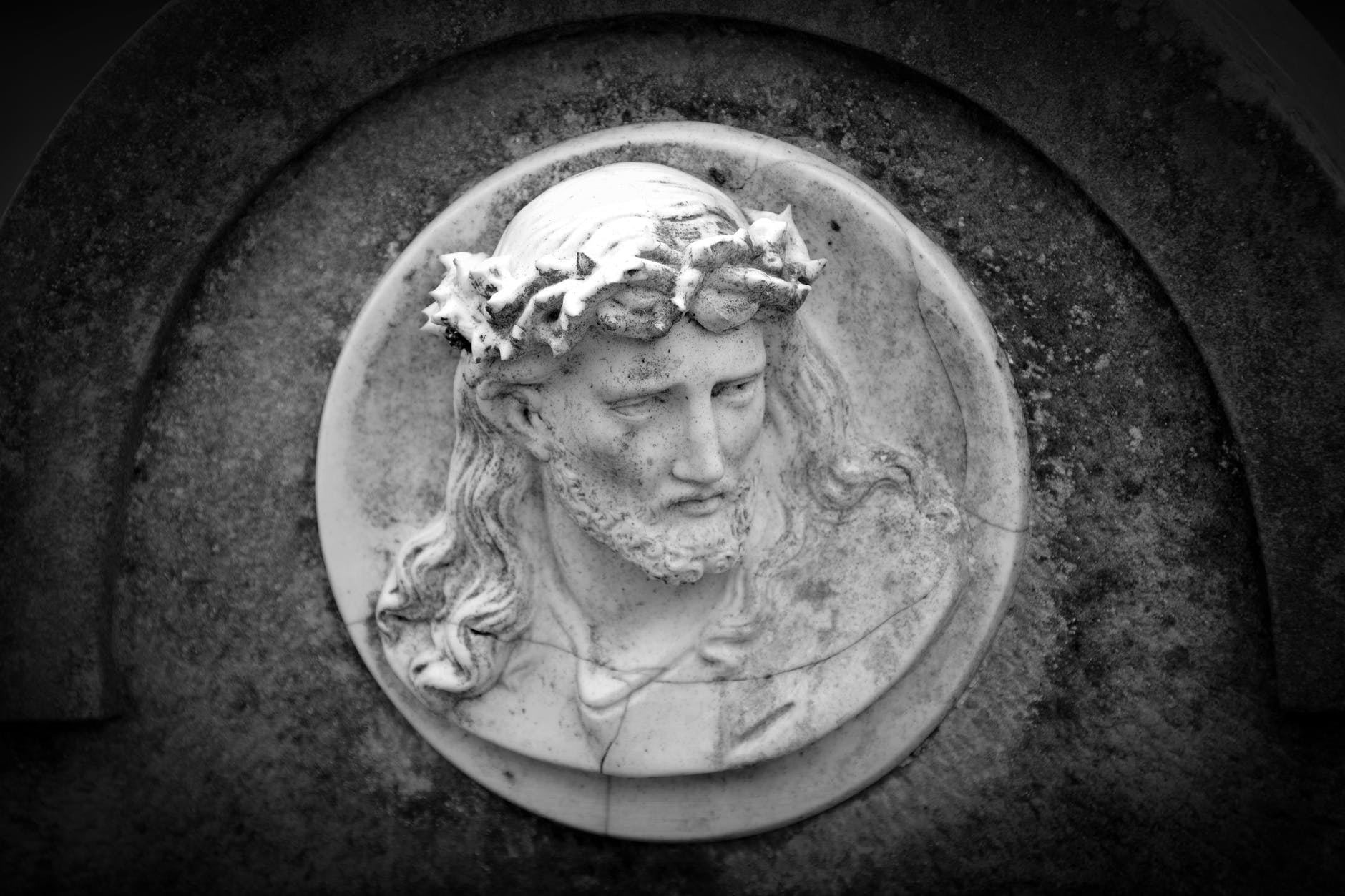
Why Have You Forsaken Me?

(Please note: This is a post from a couple of years ago, which has been updated and revised…)

Have you ever doubted? Wondered, “Where is God?” Maybe even wondered if He exists at all? And then someone came along and made you feel wicked and small for having such a thought…”How could you!?”

Photo by Paul Theodor Oja on Pexels.com

I know there are people who believe that faith is not really faith if you can have moments of doubt– that true faith never wavers, stumbles, or has tough questions. I don’t think this is Biblical, nor do I think this reflects God’s relationship with us. The Bible is full of “faithful” people who had moments of doubt.

Photo by Oladimeji Ajegbile on Pexels.com

Abraham, when told that he would become the father of many nations, believed, and it was counted as righteousness (Genesis 15:6, Hebrews 11:11, Romans 4:3, etc.) Abraham’s faith was so solid, that he was willing to sacrifice his son, Isaac, the son of God’s Promise! Yet Abraham and Sarah acted outside of absolute faith when they brought in Hagar and tried to start a family on their own. God still blessed Hagar and Ishmael, but they were not part of the fulfillment of God’s plan. And over four thousand years of bad blood between the descendants of Isaac and Ishmael are a sad reminder that Abraham did not trust God absolutely and completely.
Photo by Pixabay on Pexels.com

King David was a “man after God’s own heart.” Yet David wrote often about his feelings of being abandoned or forsaken by God. (See Psalm 10, Psalm 13, and Psalm 22 among others.) Elijah, within hours of a great victory over hundreds of angry priests of Baal, after a miraculous demonstration of God’s power and faithfulness, hid in despair and asked to die, sure that God had abandoned him to his enemies (1 Kings 19).

Photo by Alem Su00e1nchez on Pexels.com

Most telling is the statement from Jesus Himself on the cross. “My God, My God, why have you forsaken me?” (Matthew 27:45-46; Mark 15:33-34) Although He was quoting one of King David’s psalms (22:1), the words still ask a very harsh question. Did Jesus Himself doubt God’s presence or His boundless love? (I don’t think so, but it is this kind of statement that often invites condemnation from those who cannot allow for any momentary doubt of any kind.)

I don’t believe any of these moments in the Bible are accidental. I believe God wants us to know that His presence and His faithfulness do not depend on the absolute strength of our faith. I believe it is one of the reasons that Jesus spoke of faith “as small as a mustard seed” (Matthew 17:20). It is not the size or the strength of our faith that determines what God can or will do. It is the size and strength of our faith that causes US to understand what God is doing and to participate more fully with Him. And taking our momentary doubts and questions to God shows a different kind of faith– one that is strong enough to BE tested and triumph. God rewards those who SEEK Him. If we never need to seek, or ask, or knock (See Matthew 7:7), could it be that we are not trusting in Him, but in our own wisdom?

Photo by Wildan Zainul Faki on Pexels.com

Take heart! Have faith! But don’t be afraid to go through valleys of doubt, or wrestle with difficult questions. And if someone else is struggling–be willing to listen to their doubts and questions, rather than just dismissing them. God does…

Last Goodbyes

I missed posting here last Friday– we were busy planning my mom’s funeral. Mom died last week at the age of 89. We spent most of last week planning how to say our last goodbyes.

Goodbyes are never easy. And those that come with death are painful. We will miss our Mom, Grandma, Great-grandma, friend, cousin, neighbor, aunt, surrogate mom, and all the other roles she filled during her earthly life. We will miss her smile, her warm friendship, her faithfulness, her drive and passion, her energy, and her zest for life and adventure. I used to call or visit her every day. I will never again hear her voice in this life. I will never again hold her hand or share a laugh with her on this side of heaven.

But saying goodbye, for Christians, is NEVER permanent. I have said my very last goodbye to Mom, because someday, I will say “Hello!” to her again. And along with her, I will be welcomed into eternity by the One who created me and loves me even more than Mom did! No more painful partings; no more wondering when I will see her or speak to her again.

She is with so many loved ones to whom she had to say, “goodbye” over the years. And all of them are joyful and secure in the knowledge that there will be no more “goodbyes” in Heaven.

Mom was a prayer warrior, as I have said before. She prayed daily, multiple times a day, lifting up friends, relatives, and even strangers. And I will miss knowing that she is praying for me. But there is Someone Else who is praying for me daily– even constantly! Jesus sits at the right hand of the Father, making intercession for us every moment!

Photo by Daka on Pexels.com

His disciples were in anguish at the thought of having to say “goodbye.” But Jesus told them to be glad, because He would send a comforter, the Holy Spirit, to them after He went away. They said their last “goodbye” to their beloved Teacher, but He didn’t leave them alone to grieve. He left them with a mission to achieve. He also left them with a promise that He was coming back! And this time, He would bring them to their eternal home in Glory!

And Mom has done something similar. She left a legacy of caring and praying and sharing the Gospel. She left hundreds with hope and peace for their future. And now it’s important to carry the baton; to finish our leg of the race, and continue the mission that Jesus passed on to His disciples long ago; the legacy that was passed to Mom, and that she has passed on to us. Someday, all the “last goodbyes” will have been said; all the last bitter tears shed, and we will all celebrate the arrival of God’s Glory. The only thing left to bid “goodbye” will be Sin and Death, grief and mourning.

I thank God for “Last Goodbyes.” Because I know that Goodbye is never the end for those of us who know Christ. We will be sad for awhile, but our grief will be swallowed up in joy and victory!
Goodbye, Dear Mom– for now. You are safe and secure. Your prayers have been answered, and ours continue in hope and confidence. Amen!

Vending Machine Prayers

As I write this, my mom is dying. We don’t know how much longer she has, but we’ve asked for prayers as she takes this journey toward death and resurrection. These are sometimes difficult prayers to make. We don’t like to see Mom suffering, but we don’t like the thought of separation through death, either. Our initial prayer would be for complete healing. But that’s not realistic, given that Mom has heart failure and is almost 90 years old. That doesn’t mean that God cannot or would not grant total healing. But we aren’t expecting that kind of miracle when we pray today.

Photo by Andrea Piacquadio on Pexels.com

For some people, our prayers seem meaningless. One of my classmates from school reacted to my request for prayer by saying, “I just wish that prayer DID something…” I take this to mean that if we don’t get a miraculous outcome, she believes our prayers are wasted. I hope I’m misinterpreting here, but I know that this is a common criticism of prayer in tough times. It seems that every time there is a natural disaster, or a mass shooting, people who offer “thoughts and prayers” are roundly criticized for praying “instead” of “doing.” As though the two are mutually exclusive. As though prayer is an empty gesture in the face of disaster and distress. As though there is no hope, no comfort, and no help in praying.

There are others who will assert with complete confidence their belief that God will answer any prayer for a miracle, simply because they ask it “in Jesus’ Name” or because many people are praying for the same outcome. I call these kinds of prayers, and attitudes about prayer, “Vending Machine Prayers.” It is the belief that prayer must produce an immediate and positive outcome, or it is “broken” or invalid. If you don’t get what you were expecting, you must have prayed “wrong,” or didn’t have “enough” faith. Or your prayer just didn’t “work.” When someone puts money into a vending machine, and presses a button or punches in a code or pulls a knob, and they don’t get the expected item, some of them will kick the machine, or curse. Or they will try again, carefully trying to get the “right” result. Vending machines are inanimate objects designed to give a satisfactory consumer experience. If the coins or bills “jam,” if the knobs or buttons malfunction, if the product gets “stuck,” or isn’t available, the consumer feels cheated. Sometimes, they can get their money returned, but most often, they go away angry and unfulfilled.

God is not a vending machine. He is not “designed” to serve us or give us satisfaction. There is nothing we can “insert” in our relationship with God –even sincere prayer–that obligates Him to give us what we desire. God chooses to answer prayers in whatever way He knows is best for our eternal and overall well-being. God still gives miracles. I’ve seen it and experienced it. In fact, we could have lost Mom several years ago, when her heart failure put her in a similar state. God provided a miracle in the form of heart valve replacement surgery–and a cancellation that moved her surgery schedule forward before her condition was too far gone. I’ve seen people healed of cancer– and people whose prayers for healing ended in their rapid decline and death. But none of those prayers were wasted. Not one. God was working– sometimes on the sidelines, strengthening family members to deal with grief; sometimes providing testimonies to those with doubts and questions; sometimes planting seeds that would bear fruit years later in the lives of those left behind–sometimes God was working “sideways,” as He did with Mom years ago to give her several more years of life, even though she wasn’t completely healed, to grow and prepare for this next step and testify to God’s sustaining power.

God is not apathetic, and He certainly isn’t “happy” about Mom’s decline and her impending death. He shares our sufferings and our sorrows. But God knows and sees the “rest of the story!” Jesus wept over the death of His friend Lazarus, even though He knew that Lazarus would be raised back to life. Jesus was sharing the deep grief over the loss and sorrow felt by all of His friends, just as He rejoiced with them as Lazarus walked home from the tomb! (See John 11 for the whole story.) God doesn’t delight in death. He is the author of LIFE. But He is very present through every stage of life– even that last bitter taste of death we all must experience. And just as we pray for God’s miraculous presence, we pray for His guiding, comforting, and hopeful presence in ALL situations.

Prayer DOES something! Even if we don’t see immediate changes in situations; prayer changes US. It changes OTHERS. It changes our priorities and perspectives. It draws us close– to each other and to the One whose Love is Eternal and unchanging.

116 I love the Lord, because he hath heard my voice and my supplications.

2 Because he hath inclined his ear unto me, therefore will I call upon him as long as I live.

The sorrows of death compassed me, and the pains of hell gat hold upon me: I found trouble and sorrow.

Then called I upon the name of the Lord; O Lord, I beseech thee, deliver my soul.

Gracious is the Lord, and righteous; yea, our God is merciful.

The Lord preserveth the simple: I was brought low, and he helped me.

Return unto thy rest, O my soul; for the Lord hath dealt bountifully with thee.

For thou hast delivered my soul from death, mine eyes from tears, and my feet from falling.

I will walk before the Lord in the land of the living.

10 I believed, therefore have I spoken: I was greatly afflicted:

11 I said in my haste, All men are liars.

12 What shall I render unto the Lord for all his benefits toward me?

13 I will take the cup of salvation, and call upon the name of the Lord.

14 I will pay my vows unto the Lord now in the presence of all his people.

15 Precious in the sight of the Lord is the death of his saints.

16 O Lord, truly I am thy servant; I am thy servant, and the son of thine handmaid: thou hast loosed my bonds.

17 I will offer to thee the sacrifice of thanksgiving, and will call upon the name of the Lord.

18 I will pay my vows unto the Lord now in the presence of all his people.

19 In the courts of the Lord’s house, in the midst of thee, O Jerusalem. Praise ye the Lord.

Psalm 116 KJV (emphasis added)
Photo by Tima Miroshnichenko on Pexels.com

There are dozens, if not hundreds, of people praying for my Mom (and all of us who love her so very much). And probably, there are some “vending machine” prayers among them. That’s ok. God hears them all. And I am so very blessed by them all. Because prayers DO SOMETHING AMAZING. They rise to a God who sees, who hears, and who LOVES unconditionally, eternally, and perfectly! We’re actively trying to do what we can do to make Mom comfortable and seeking treatment that will ease her last days, but we depend on God’s touch, His healing, His timing, and His good will to see us all through and keep us in perfect peace.

Wealth in the Wilderness

In Exodus, chapter 16, the people of God are wandering in the wilderness of Sin (literally and figuratively!). They begin to grumble and complain about food, contrasting their current situation with their life in Egypt. Whenever I have read this passage in the past, I have assumed that the Israelites lacked food– that they were starving in the desert–and that their grumbling had some merit. After all, they are in a desert. Their complaints about water make sense. Surely, their complaints about food have the same ring of desperation.

Photo by Yogendra Singh on Pexels.com

But a few chapters earlier, and a few chapters later, we get a better picture of the true situation of these wandering bands of Israelites. As they left Egypt, they demanded from Pharaoh that they be allowed to take their flocks and herds! This would suggest that they had sheep, cows, and goats with them–meat and milk in some quantity. They may have had other animals as well– chickens, pet dogs or cats, oxen or horses. The need for water was greater– not only water for the people, but for their animals– but the complaint about meat seems to have had nothing to do with actual need. If anything, their complaint might have been about grazing land for their animals– but they never bring this complaint before the Lord. Either there was enough grass, even in the wilderness, or they had brought grain to feed their flocks. And there was grain for bread–just a few short chapters later, God gives directions for the sacrifices– sacrifices that are to involve rams, bulls, and three different types of bread, cakes, and wafers made with wheat flour!

Photo by Mariana Kurnyk on Pexels.com

The Israelites have provisions. They have taken enough food for the journey up to that point, and more. They complain, not that they ARE starving, but that they believe they will starve. God answers their complaint by sending quail– enough that they got sick of it– and bread from heaven (manna). The manna continues to fall without fail every day (except the sabbaths) for 40 years, throughout all their moving; in every location and season, on rocky mountainsides and dusty plains.

Photo by Sravan Chandran on Pexels.com

God’s amazing and miraculous provision should have produced thanksgiving and worship. Instead, the people got sick of the quail, and continued with their complaining and grumbling for an entire generation as they wandered around the wilderness.

Photo by Ken Ozuna on Pexels.com

How many times do we complain about “needs” that are not needs at all? I find myself worrying about bills getting paid, or the car making “odd” noises, or an aching shoulder. I find myself thinking back to days when I had more money or free time, and far fewer aches and pains. It is tempting to ask God for a return of “the good old days.” But God’s plan for the Israelites didn’t involve pots of meat that came with chains attached. God’s plan for my life doesn’t involve my immediate comfort, but my eternal character. And even in times when I feel like I’m wandering in the wilderness, God never leaves me. I have been poor, but I have not starved. I have been sick, but not left to die alone. I have been lost, but never abandoned.

Photo by Pixabay on Pexels.com

There is wealth in the wilderness–the riches of God are available to those who will trust Him. Like manna, God will provide what only He can, and enough to see us through each day. He doesn’t promise that we will have “pots of meat” or easy circumstances. Instead, if we open our eyes, we will see miracles of grace, showing us how much God loves us and cares for us.

Photo by Irina Kostenich on Pexels.com

God’s people complained a lot, but rarely did they celebrate God’s provision or offer thanks. May we learn from their story, and praise the God who sends quail and manna to the very ones who doubt His mercy and love!

Who’s Your Daddy?

When I was growing up, I knew three important things about my father:
I knew he loved me–and the rest of our family–faithfully and truly.
I knew he loved God–He was a man of faith, prayer, integrity, and obedience to the Word.
I knew he would do anything to protect and provide for our family.

But I also knew that my Daddy wasn’t perfect. He was not the strongest man in the neighborhood; or the fastest, or richest, or most respected. He wasn’t the tallest, or most athletic. He wasn’t a leader in local politics or a chamber group or fraternal organization. He didn’t have a string of degrees, or a fleet of fancy cars. He didn’t even have a lot of hair, or perfect teeth. But he had a gentle laugh, a deep wisdom, and a hug that made me feel safe and precious. He had a enormous heart– one that was easily touched, but firmly committed. He was humble and kind; he was loyal and brave and joyful.

Photo by August de Richelieu on Pexels.com
Photo by Abdel Rahman Abu Baker on Pexels.com

I was blessed to have such a Dad. I know people whose earthly fathers were distant, disapproving, absent, or even abusive. Earthly dads, even one like mine, are still human. They make mistakes and bad choices; they carry baggage from their own childhoods; they carry fears and failures; they fall short of our expectations, and their own hopes and dreams. And yet, we long to have a father we can trust; a father who won’t fail us, even in the little things; a father who will perfectly understand us, provide for our needs, and protect us. No matter how old we are, or how successful we may be, our need for a father’s love and approval never end.

Our mental and emotional picture of God is often shaped by our relationship with our earthly fathers. Especially if our father was abusive, it can be difficult to believe that God really loves us. After all, if God loves me, why did He give me an abusive Dad? If God can protect me, why did He allow me to go through a journey with Cancer? Or poverty? Our fallen world leads us into circumstances that cause us to doubt God’s goodness and His ability to redeem our broken past. But, while God sees our painful circumstances, He also sees things that we can’t. He sees the pain that our fathers feel in their own brokenness and inability to “fix” their own past. He sees the kind of growth and compassion that we can learn in our difficulties– lessons that we would not learn in ease and apathy.

God is a different kind of Father. He is eternally sovereign; the King of Kings, and the Creator of the Universe. There is no comparing Him with anyone else’s father– because He is the Ruler and Father of all! Yet, He wants a close loving relationship with each one of us– with me! With you! He is not just committed to doing His best to provide and protect some of us– He is fully capable of providing ALL our needs and protecting us against ALL enemies, including sin and death! For those who have grown up with a distant or abusive father, it can be difficult to hear of God as our “Father” and feel the kind of comfort and trust that we are meant to have. Yet God invites us into His very presence– ALL the time; ANYTIME. He is everything that the word “Father” was meant to be!

Photo by Juhasz Imre on Pexels.com

Someone once used the analogy of President John F. Kennedy to describe how we can relate to God as “Father.”. As President, JFK was arguably the most powerful man in the world– the leader of the most powerful nation on earth. At his command, soldiers, sailors, pilots, and even nuclear missiles, could be deployed. The stroke of his pen could sign bills into law, grant pardons, and appoint powerful positions. To enter the Oval Office and have an audience with the President was an honor reserved for rulers and generals and authorities– and his children.

There is a picture of JFK, Jr. as a small boy, peeking out of the Resolute Desk, as his father sits behind the desk conducting the business of the nation. The son had complete access to his father’s presence– access to the most powerful man on earth–his Daddy. He may not have fully understood what his father was doing, or even how important his father was– but he knew that he could spend time with his Dad.

Of course, President Kennedy was not God. He was fallible, and terribly mortal, as the nation learned to its grief. But the idea that God is distant and uncaring, or even vindictive and petty, is belied by the many Psalms and hymns and prayers throughout the ages. And the idea that God is just another “pal”, or “the man upstairs”–someone who loves us, but has no real power to command our obedience or rescue us from our enemies–is also belied by the many miracles and examples of His power in nature and in history. And unlike the exclusive nature of the relationship between JFK and his biological children, God invites ANYONE who calls on Him through His Son to be adopted as a son/daughter with the same intimate privilege of total access. https://www.biblegateway.com/passage/?search=John%201:11-13&version=HCSB (John 1:12)

So when I pray today, I’m not praying to my “Daddy” in any earthly sense. As much as my earthly Dad loved me, I am praying to someone who loves me more, and better, and perfectly. I am praying to the King of Kings, who also invites me to call him, “Abba”– “Dad.”

Consistent, Fervent Prayer

What does it look like (or feel like) to pursue consistent, fervent prayer? Is it an endless repetition of the same words? Is it mindless pleading, mixed with angst and flowing tears? Is it rehearsing the same requests over and over in an attempt to “get the right words” that will cause God to act?

No. Jesus addressed this very issue in His Sermon on the Mount, and just before He gave us a wonderful example of how we can pray:

And when you pray, do not keep on babbling like pagans, for they think they will be heard because of their many words. Do not be like them, for your Father knows what you need before you ask him.

Matthew 6:7-8 (NIV)
Photo by Tima Miroshnichenko on Pexels.com

If God already knows our needs, why SHOULD we practice consistent, fervent prayer in the first place? Because God desires to hear our heart cry. When something touches our heart– even though God already feels our sadness, pain, and fear–God wants to SHARE it in personal and intimate detail. What He does not want is for us to use prayer to try to manipulate a particular outcome, or to push our own desires and agenda ahead of His wisdom and sovereign will.

Instead, we should meet with God as our Father, knowing that He knows us, cares for us, and cares about the things that concern us. Consistent, fervent prayer is simply sharing our concerns with a loving God honestly over time.

Photo by cottonbro on Pexels.com
  • Whining and “babbling” shows that we don’t trust God’s wisdom. It’s like a toddler, who keeps saying, “Please….pretty please…pretty please with sugar on top…” “But I want it…I REALLY need it… REALLY…”
  • Saying nothing is no better. It is closing our hearts away from the one who loves us unconditionally. Sometimes, we try to over-spiritualize, saying that because God already knows our needs, we need not mention them again.
  • We need to find a middle ground. We need to be humble enough to say that we need God’s help and His wisdom, and huble enough to accept that His ways and timing are not the same as ours.

So what DOES it look like? Probably a little different for each person, but I think there are some guidelines:

Photo by Ian Panelo on Pexels.com
  • Consistent prayer means that we pray every day, throughout the day. About everything! Not just obsessively about our worries or needs, but about our joys and sorrows, as well as our questions, wonders, adoration, praise and confessions. Much like speaking with our best friends–the best ones are willing to listen to the same story about our cat even if we’ve told it twice before. They will cry with us next week as we share our continuing frustration with a rebellious teen or our parent’s journey with dementia. The difference is that God has a purpose and a plan in sharing our grief and our weakness beyond anything we can imagine. He is the “God of all Comfort” (2 Corinthians 1:3-5) as well as a God of healing.
  • Fervent prayer isn’t just anguished prayer or dramatic, emotional prayer. It is intensely humble and full of faith. The Apostle James gives an excellent example in chapter 5 of his epistle: 17 Elijah was a human being, even as we are. He prayed earnestly that it would not rain, and it did not rain on the land for three and a half years. 18 Again he prayed, and the heavens gave rain, and the earth produced its crops. (James 5:17-18 NIV) When Elijah faced the pagan prophets of Baal and Asherah, he prayed fervently, but he left the drama to the others. Elijah chided the prophets of Baal, because they prayed with raving, shouting, dancing, and cutting themselves in an effort to get Baal to hear them. Elijah’s prayer, while simple, was answered immediately and with dramatic effect. This wasn’t just a show of God’s awesome power through His chosen prophet. It was also a clear sign that Elijah was in constant communication with the One True God. He didn’t have to “get God’s attention.” He knew God was right there with Him. (See 1 Kings 18 for the whole story.)
  • Consistent, fervent prayer is part of a journey, not a destination. The same Elijah who was able to call down fire from Heaven, ran and hid in a cave and prayed to die! God wants us to pursue prayer the same way we pursue righteousness– knowing that God is the source of our wisdom and strength. He wants our anguished prayers as well as our prayers prayed in absolute trust– He wants them all!
  • I find it helpful in my personal prayer to have a journal. In it, I keep a list of people and places, concerns and requests. Each day of the week, I have a focus point for my prayers, and a list of specific people to lift up, plus a place for immediate and ongoing concerns. This does the following for me:
    • It allows me to put concerns into perspective. On Mondays, I concentrate on family and friends. That doesn’t mean that I don’t pray for my family on other days, but Mondays are focused on family and friends. On Wednesday, I concentrate on praying for my community. On Thursdays, I pray for global issues. This doesn’t preclude urgent requests or needs, but it keeps me from obsessing about some concerns at the expense of others. And it reminds me that God is the God of my family, AND my community, AND those suffering from a recent earthquake or famine.
    • A Prayer Journal gives me a place to write out my requests. Sometimes, seeing it in writing reminds me that God already knows– my concerns are written on His heart! No need to use the same words over and over again–but God may want to hear how MY heart has changed since I wrote the request. Maybe I have new information that changes my outlook. Maybe I can see how God is already working in the situation…which brings up another advantage of journaling:
    • I have a space in my prayer journal for answered prayer. Sometimes, I’m praying for someone from my church with a health issue. I can come back and write out God’s response– maybe He provided miraculous healing; maybe He took them “home.” Maybe He is causing them to travel a long road — giving them opportunities to bear witness to His faithfulness in every situation. Perhaps He is causing their family or caregivers to see Him in a new way!
    • Finally, a Prayer Journal helps me to be more consistent. I can turn to it every day for prompts and reminders of God’s love and faithfulness. God IS Fervent and Consistent– He is Faithful, and His Love is limitless. And He is the one who can teach me to be the same!
Photo by RODNAE Productions on Pexels.com

Reflections on the “Big Game”

I missed this year’s Super Bowl. For anyone who is unfamiliar with this tradition, the Super Bowl is the name given (and trade-marked– that’s why this post’s title is the “Big Game”) to the national championship game for American Football each year. The tradition is as old as I am– 57 years–and each year, it gets nearly as much hype as the World Cup (Football in most of the rest of the world!)

Photo by Joe Calomeni on Pexels.com

Though I missed watching the game, I have some reflections to share about it:

  • While it is an important sporting event for anyone interested in American Football, it is not (for most of us) a life-changing, “Super” anything. I have not watched a Super Bowl game in many years, and my life is every bit as rich and full as it was in years when I did watch. The teams come and go, the players change, and the even the most exciting plays will be largely forgotten in the coming years (except for what gets re-played on “highlights”). It is a Big game. But it is not real life, and it is not THE Big event of anyone’s life– even the players will have other events (marriage, the birth of a child, the death of a parent, etc.) that will compete with the three hours spent one Sunday in February on a football field.
  • Football is divided into two halves (four quarters, to be exact). In between the two halves is a period known as “Half Time.” This is a curious ritual. The two teams get about a half hour to rest, reflect, strategize, and regroup before the second half of the game. Meanwhile, the fans get treated to an entertainment. In high school and college football, this is usually a chance for the marching band to show off. It has a military flavor, with drums, flags, formations, and cheerleaders all getting the crowd enthused for the “home team.” But there is no “Home” team for a Super Bowl. The teams play in a neutral location. So the “halftime” entertainment is like a condensed rock concert. The entertainment has nothing to do with the game at hand, and has no clear purpose.
  • The Super Bowl is televised, and corporations, public service groups, and other interests spend millions of dollars to buy advertising rites, and millions more dollars creating what they hope will be memorable ads to be shown during this window of high visibility. Tickets for the live event are expensive, but millions of people are watching on TV from their homes, or at sports bars or special “Super Bowl” parties.
  • Super Bowl Parties are a huge “thing.” Fans spend hundreds and even thousands of dollars on special food, decorations, venues, team-related clothing and other “gear.”

I am not a big football fan, so I don’t understand a lot of the hype. I don’t begrudge anyone the fun of watching and enjoying sporting events, but I wonder about some of the emphasis placed on this event. What would happen if:

  • People spent the same kind of energy, time, or money on strengthening their family, or building up their community, or spreading the gospel?..There are “Real life” events that are far more important and urgent than a football game– especially one in which we are mere spectators–that should cause us to clear our schedule, make preparations, and keep us riveted. How many people can recall cheering on a new bride and groom, or a high school graduate or a recovering addict or a new Christian with even a tenth of the excitement they give to a groups of players they’ve never met or spoken to, for a game that has no lasting impact on their own life, their family or community?
  • Only those people who were actual football fans attended the Super Bowl or Super Bowl Parties? How many people are spending money, time, and energy on something they don’t even really care about, because of the “shiny” extras on the periphery– the snacks, the Halftime Show, being the “first” to see the newest ads, being part of “the fun”, going along with the “in” crowd?”
  • Churches, schools, charities, etc., could garner similar commitment and excitement from their members and communities? What if we could generate the same kind of money and enthusiasm to fill food banks or send relief to those impacted by hurricanes or earthquakes? What if prayer meetings and tent revivals broke attendance records? What if graduation parties and anniversary parties were as elaborate as Super Bowl Parties?
Photo by August de Richelieu on Pexels.com

Just some thoughts. As I said above, I missed the Super Bowl this year…I don’t know what I might have enjoyed, or what memories I might have had. I much prefer the memories I have of spending time with grandkids, or celebrating special birthdays with friends and family, or helping plan a graduation party for my niece and nephew, or sharing the joy of a baptism. To me, that is Super way to spend a day.

Praying “Around” My Enemies

I didn’t pray for my enemies. I didn’t pray for their health or safety. I didn’t pray for their spiritual well-being. I didn’t pray that God might show me ways to bless them, or encourage them.

Photo by Andrea Piacquadio on Pexels.com

I prayed that they would be stopped. That they would be exposed as frauds and liars. I prayed for “justice” to be done– to them. That they would be humiliated. That they would get all that they deserved.

And perhaps that is what they prayed for me, as well. That I would “see the light”, and change my mind. That I would be punished for my words and actions that didn’t agree with theirs.

I prayed “around” my enemies. I didn’t pray for them. I didn’t lift them up before the throne of grace. I didn’t pray that they would be shown mercy– I certainly didn’t pray to meet them with humility and grace…

Photo by Foss Valentine on Pexels.com

Love is patient, love is kind. It does not envy, it does not boast, it is not proud. It does not dishonor others, it is not self-seeking, it is not easily angered, it keeps no record of wrongs. Love does not delight in evil but rejoices with the truth. It always protects, always trusts, always hopes, always perseveres. Love never fails. But where there are prophecies, they will cease; where there are tongues, they will be stilled; where there is knowledge, it will pass away.

Photo by Victoria Borodinova on Pexels.com
Photo by Pixabay on Pexels.com

God, forgive me for holding bitterness and anger in my heart. I will never meet a human being– “friend” or “enemy” that you didn’t create in Your own image. You have commanded that I am to love my neighbor– even one who disagrees with me; even one who considers me an “enemy.” I cannot delight in evil, or rejoice at injustice; but I must reach out in Love and not Self-Righteousness.

What Might Have Been…

One of my favorite movies is “It’s a Wonderful Life.”  No matter how many times I watch it, it never gets old for me.

IAWLposter

Oh, I know it’s in black and white, and it’s out-of-date.  It’s politically incorrect on numerous levels, and it’s theologically incorrect, as well.  But for all that, I think it has a deep wisdom we are sorely lacking, and I think what it says about the power of prayer cannot be dismissed.

Much of the movie is spent tracing the less-than-wonderful things that happen to George Bailey.  George Bailey is the quintessential “nice-guy” who always seems to miss out–as a boy, he leaps into an icy river to save his brother’s life.  His brother is saved, but George ends up losing the hearing in one ear.  While his friends go off to college, George has to stay behind; when he finally saves enough money to enroll, he ends up having to give up his college plans to save the family business after the sudden death of his father.  He loses out on business opportunities, and keeps losing skirmishes with his nemesis, the  “scurvy spider” local magnate, Mr. Potter.  Finally, on Christmas Eve, George has had enough.  The weight of always doing “the right thing,” and watching others get ahead while he falls further behind, has taken its toll.  When his absent-minded uncle loses $8000, George faces scandal and prison after all his years of frustrating hard work in a job he hates.  After uncharacteristic angry outbursts and a short drinking binge, George is in utter meltdown.  In desperation, he prays.  It’s not an eloquent prayer, or an angry outburst.  It’s a wimpy, doubtful, squeak of a prayer, “Dear Father in Heaven, I’m not a praying man, but if you’re up there and you can hear me, show me the way…show me the way.”

ItsAWonderfulLife4.jpg

What the viewer knows, but George doesn’t, is that dozens of people he knows have all been praying for him.  We get to hear the voices of his wife, his children, his friends and neighbors, all praying simple and heartfelt prayers.  And we also know that God is at work– preparing to send an angel to help George.  But in the bar, at the end of George’s tearful and tremulous prayer, God is silent.

Not only is God silent, but George’s downward spiral continues after his prayer.  He gets punched in the jaw by a man he was arguing with earlier in the evening, and he doesn’t even have enough money to pay his bar tab.  Driving away, drunk, he runs into a tree and gets yelled at.  Reeling down the road and onto the bridge, where he intends to jump to his death, he almost gets hit by a truck.

jimmy_stewart_in_its_a_wonderful_life.jpg

While I like the sappy, happy ending of the movie, the incredible darkness and despair leading up to George’s encounter with Clarence, and the even darker “alternate universe” that George experiences are what keep me coming back to this movie– not because I’m a glutton for emotional wringers, but because George’s story is only wonderful when he gets to see it from God’s point of view.  Mr. Potter tells George that he is worth more dead than alive.  But Clarence shows George the true worth of his life, not as it might have been, but as it might NOT have been.

And so it is with our lives–all the “might-have-beens” and broken dreams and failures that weigh us down– God is NOT (as we so often picture Him) shaking His head and grumbling about our wasted potential and weakness.  And often, the people we most fear to disappoint, our family and friends, are rooting for us to stay the course– to finish the race. God wants to wipe away all the seeming failures; all the “what-if”s and the “what might have been”s and replace them with the bigger picture of “what is happening around you”, “what really IS”, and “what can be.”*

Its-a-Wonderful-life-foto.jpg

There was never anything wrong with George’s dreams of traveling the world and becoming a successful builder of skyscrapers “a hundred stories tall.”  George’s desire to have nice things for himself and his family was not evil, and, in fact, his ambition to do great things was not that different than Mr. Potter’s.  But George’s choices, while “right” were not  in his own immediate best interest.  What Clarence showed George was not “what might have been” had George made other choices in his life.  What he showed George was indeed far more wonderful– the ultimate IMPACT of George’s choices!  God didn’t “take away” George’s dreams or ruin his life.  But neither did He prevent him from making selfish choices or getting what he wanted in the moment.  George’s life wasn’t wonderful because of what happened to him– though the ending is miraculous, and George gets toasted by his hero brother as “the richest man in town.”  But what really made George’s life wonderful was that he was THERE– there to save his brother; there to fall in love with Mary; there to help and influence so many people; there to tuck his daughter into bed and “paste” the petals of her flower; even there to stand up to Mr. Potter when no one else did.

God answered George’s prayer.  And He answered the prayers of his friends and family.  But He didn’t answer in the way we would expect.  In fact, George jokes with Clarence that the answer to his prayer was getting slugged in the jaw.  But God’s answer came in the form of a childlike “angel” who struggles and questions his ability to make a difference– much like George himself.  God didn’t answer the superficial aspect of George’s prayer– He didn’t show him the way to get $8,000.  He didn’t show him the way to defeat Mr. Potter, or suddenly become more successful.  But He did show George the way to look for “what is” and “what can be”, instead of the “what might have been.”

quebelloesvivir17.jpg
  • For anyone who has lost a friend or family member to suicide–my prayer is that we too, would find comfort  and hope in the lives our loved ones lived, and not in the manner of their death.  God is gracious and loving above all that we can imagine.  Part of the hope and message of this movie for me is that, even if George had jumped at the end, his life was still wonderful in God’s eyes, just as it was to all who knew and loved him..

The Chimp and the Typewriter

I’m really not sure at all how this post relates to prayer, but it is a subject that’s been stewing in my brain for awhile, so I thought I would “write out” my thoughts.

I have long been disgusted with a certain argument used by those who discount Creation (by a supreme God with intelligent design and purpose as put forth in Scripture). Their claim of a universe that is the result of a series of random accidents is compared to a chimpanzee with a typewriter. Supposedly, given enough time, there is a possibility that the chimp could “randomly” type a masterpiece– a Shakespearean play or the text of the New Testament.. It is a very tiny probability, but, the argument goes, enough of a probability to suggest that the universe came about in a similarly unexpectedly random way. The proponents of this argument always seem to leave their chimp typing away, convinced that their argument is unassailable– that they can drop the mic, walk off stage to the thunderous applause of their peers, and sit smugly back while creationists pick up their jaw from the floor and stammer in defeat. (To further explore how this analogy works, see https://www.npr.org/sections/13.7/2013/12/10/249726951/the-infinite-monkey-theorem-comes-to-life)

I’m flabbergasted that this argument still gets any credence. It is laughable in its illogical assumptions and disregard for the complexity and wonder of Creation. AND it refutes its own basic assumption– that of randomness. Let me break it down:

Photo by lil artsy on Pexels.com
  • First their example is NOT random at all. And, once true randomness is introduced, the idiocy of the argument is obvious. What if we replace the chimpanzee with any other random animal? A hedgehog. A butterfly. A hippopotamus. A fish. What is the probability of any of THEM typing a masterpiece? None. The theory hangs on the mathematical principle of probability theory, but probability rests, not on random unknowns, but on specific factors and specified outcomes, i.e. an agent (such as a chimpanzee) with the ability to use a specific type of tool (such as a keyboard) to produce a certain outcome (such as a specific phrase or work of literature).
  • The same thing applies if we replace the typewriter. Oh, modern arguments have replaced the typewriter with a computer keyboard– in fact computer models have even been tasked with trying to figure up the most likely probability percentage of this “random” event. But what if we take away the keyboard filled with letters, and give the chimp a crayon of a ball point pen. What chance then of the simian “creating” a work of fiction or a sacred book? As soon as it becomes apparent that the “probability” of such random factors producing a specific outcome is not just tiny, but non-existent, the analogy becomes ludicrous.
  • Finally, we don’t have random literature. Generally, we have “Hamlet.” But barring that, we have “random” works by Shakespeare, or Milton, or the King James Bible. The chimpanzee doesn’t have an Arabic keyboard. It never seems to type out classic works in Chinese literature (though it “could” in theory, I suppose). What we have is a very specific example of a single creative act that “might” statistically be “produced” (see the discussion on this below) given an infinite amount of time. And it is a visual image that our brains are tricked into thinking of as a “possible” outcome of random chance.
  • But it is not just the absence of true randomness, but the absence of reality that distresses me. The proponents of this argument not only want us to assume that the chimpanzee CAN type out a masterpiece, but that it WILL type out a masterpiece. On what theoretical plane is it logical to assume that the average (or even above-average) chimpanzee will spend any length of time pounding away at a keyboard to produce literature? To what purpose? Why should it? Or that the typewriter will never “jam” or run out of ribbon; or that a word processor will never experience a “glitch” or lose power, or have enough memory to store all the “failed” attempts. Will “auto correct” kick in? At what point does reality suggest that this “random” event is not only not probable, but not logical? As one wit suggested, “A million chimps at a million typewriters will never write Hamlet, but they will break the typewriters and fling their poop.”(I found this on the internet– I have no attribution for the “quote” as it was simply included with an image of a chimp at the typewriter.)
  • And how long will this take? You can’t realistically have a single, immortal chimpanzee in this scenario. You need infinite generations of chimps (supplied with typewriters) with nothing better to do than prove an illogical “random” theory. How many humans will it take to “witness” this process? How do they determine that the outcome has been reached successfully? And they all–chimps, machinery, witnesses– have to work toward this single goal; NOT of their own free will (and not “randomly”), but enslaved to a very human need to suggest what can only be theorized.
  • This brings me to another failing of the argument. One of the reasons we still use the word “theory” when speaking of Evolution or the “Big Bang” is that they can be theorized, but never demonstrated. No one can demonstrate how a universe can be formed out of nothing, because the universe and all its materials are already here. The most one could ever do is “re-create” or “simulate” what happened “In the beginning.” Similarly, the theoretical chimpanzee (or aardvark, or whatever) will never “create” Hamlet or the book of Matthew, or Paradise Lost. At most, it might create a reproduction–by “accident” rather than earnest intent–of an already existing masterpiece. This is not Creation. It is not even imitation, in the way that “West Side Story” re-creates “Romeo and Juliet” or a new translation of St. Matthew “modernizes” the King James Version of the same gospel. If a chimpanzee successfully photocopies a page of Shakespeare, we would never suggest that it was a literary “creation.”
  • And this brings me to my last baffling observation– that the Creation of the Universe would be compared to the creation of a single artistic product, and that Art and Literature would be dismissed as mere random “occurrences,” the likes of which any monkey could produce.
Photo by Pixabay on Pexels.com

The Apostle Paul warned of this kind of futile thinking in his letter to the Romans:

18 The wrath of God is being revealed from heaven against all the godlessness and wickedness of people, who suppress the truth by their wickedness, 19 since what may be known about God is plain to them, because God has made it plain to them. 20 For since the creation of the world God’s invisible qualities—his eternal power and divine nature—have been clearly seen, being understood from what has been made, so that people are without excuse.21 For although they knew God, they neither glorified him as God nor gave thanks to him, but their thinking became futile and their foolish hearts were darkened. 22 Although they claimed to be wise, they became fools 23 and exchanged the glory of the immortal God for images made to look like a mortal human being and birds and animals and reptiles.24 Therefore God gave them over in the sinful desires of their hearts to sexual impurity for the degrading of their bodies with one another. 25 They exchanged the truth about God for a lie, and worshiped and served created things rather than the Creator—who is forever praised. Amen.

Romans 1:18-25 (NIV)

The world is filled with awesome and majestic reminders of God’s Power, His Character, His Faithfulness, His Wonder, and His Glory. God created the chimpanzee– and the kangaroo, the pineapple, the ostrich, the Milky Way, and YOU! And He created individuals with the creative capacity to invent typewriters, write sonnets, paint murals, and compose sonatas. He is a God of infinite variety, and amazing consistency. Many of those who study the origins of life on Earth– really study it, rather than trying to “figure it out,” have concluded that the factors necessary to “create” and sustain life– and more amazingly, to sustain the life we see around us in its beauty, power, and complexity–require such exquisite precision and timing that the “probability” of life on Earth (and the probability of “Earth” itself) without a supreme and purposeful Creator is beyond human calculation– and even beyond computer calculation!

Photo by Pixabay on Pexels.com

So I guess this does bring me back to prayer– We don’t pray to a theoretical “god,” but the God of Creation, and Wonder, and Majesty! Let’s remember to Praise Him today!

Blog at WordPress.com.

Up ↑