There is a story of a man who played his violin in the subway. He played a classical piece; and then another. He played for 45 minutes. Trains came and went. People rushed by. A few paused for a moment– some dropped a dollar or two in his open violin case.
The same man played his violin later that evening in a grand concert hall. He was the featured soloist in a symphony orchestra. People dressed in gowns and suits paid a couple hundred dollars each for tickets to hear him play. They sat spellbound as his music filled the air. This was the same music, played by the same man, on the same violin as before. The only difference was how people listened.
When we pray, we’re not praying to an audience of rapt listeners. We’re pouring out our heart to our Heavenly Father. And it is music to His ears! Whether we are praying through our tears in a lonely jail cell or a war-torn shelter, or praying in a grand cathedral, or on a yacht in the Mediterranean; whether we are praying in broken phrases punctuated by heartbreak, or singing praises– it is the same music to Our Father’s ears.
Others may judge our words or our lives to be worthless. Others may not bother to listen to us; they may even try to silence us or drown us out. But God is ready to listen even to our weakest whimper, or our loudest scream.
God sends us music in return– the smile of a neighbor; the sunlight breaking through clouds; that unexpected sense of His presence in the middle of the darkest night.
Are we listening? Or are we rushing to catch the next train?
I just finished reading a book about atheism– or more accurately, a book about the unreasonableness and faulty logic of modern atheism as espoused by many scientists and philosophers. https://www.goodreads.com/book/show/56614922-is-atheism-dead One of the arguments concerns the view, held by many atheists, that life exists only in the material– in other words, that only “matter” “matters.” They argue against the existence of the soul, or the uniqueness of mankind in relation to other living things. There is nothing beyond science and whatever science can explain. Therefore, there is no God. If there is no God, and we were not created in His image, they argue, then there is no Heaven or Hell, and nothing beyond what we can experience with our senses. There is no purpose for our lives; no consequences for our thoughts or actions; no higher power or authority than our own. We are simply a product of the evolutionary process and a sum of our material components. Our thoughts are simply products of brainwaves firing in a certain pattern; our emotions conditioned and triggered by no more than a series of chemical and physical reactions to stimuli.
It is not my intention to argue or take the time to explain in the same detail that was in the book I finished, but I was struck by one of the points the author made. Without a belief in the God of creation, it is illogical and inexplicable that we should be affected emotionally by ANYTHING outside of the realm of material experience and scientific study. That means that we cannot fully explain or appreciate art, music, the grandeur of the night sky, the softness and warmth of a baby’s cheek, the thrill of a perfect sunset, the memory-evoking smell of a loved-one’s perfume or after-shave…our senses should not “move” our emotions. We can analyze a piece of artwork– it’s color or composition, the balance of light and dark, or the perfection of its perspective. But we cannot explain why it is “art,” or why it “speaks” to us (or turns us off!) We can discuss sound waves and tonality in music, but we cannot explain why certain songs move us to tears or cheer our spirits. We cannot say what makes a poem “connect” to something in our psyche, such that its lines come to us almost unbidden in times of distress.
But all of this makes amazing sense in a world where God exists– a God that is the Author of Creation; of Glory; of Compassion and Wonder. God not only exists– He makes Himself known in the music of a waterfall, in the gentle fall of snowflakes, in the scent of lilacs, and in the smile of someone we love. And He has given us the ability to feel awe, and to strive to add beauty, art, and meaning to the world around us. This is unique among His creation. Birds sing; dogs romp and play; flowers bloom– but they do not fall to their knees in worship; they do not compose sonnets or build cathedrals in acts of sheer adoration. They are not moved to tears or stunned into silence by sun glinting on a spider’s web– even the spider ignores the beauty of its own functional creation.
We are fearfully and wonderfully made–and wonder-ful-ly made! Today is a great day to look and listen for God’s glorious touches all around us. And it’s a great day to reflect back to Him all the wonder and glory of Who He Is in praise!
The heavens declare the glory of God; and the firmament sheweth his handywork. Day unto day uttereth speech, and night unto night sheweth knowledge. There is no speech nor language, where their voice is not heard. Their line is gone out through all the earth, and their words to the end of the world. In them hath he set a tabernacle for the sun, which is as a bridegroom coming out of his chamber, and rejoiceth as a strong man to run a race.His going forth is from the end of the heaven, and his circuit unto the ends of it: and there is nothing hid from the heat thereof.
Yesterday at church we were challenged to share our testimony. I have shared my testimony several times, but I haven’t shared it in this space in a long while (if ever), so here goes:
When I was about 4 1/2 years old, I became a big sister. I was excited about this, but after my younger sister arrived, I had a terrible time with jealousy and resentment. She was tiny and adorable, and she had my Dad’s blue eyes (they later changed to a greenish/hazel color like mine, but everyone commented on her eyes, and never on mine). One day, filled with this resentment, I made a rather impulsive decision to poke my sister in the eye with a sharp stick. At that age, I wasn’t completely aware of the danger and damage I would have done, but I still knew it was wrong. I didn’t succeed– my mother caught me in time and got a stern talking-to about what had almost happened. Not wanting to face punishment and Mom’s anger, I burst into tears and said I was sorry. Surely a show of remorse would make everything all right. That’s how it worked on television, and it had worked for me that way in the past.
But this time was different. Mom was frightened by what might have happened, and unimpressed with my tears. She explained quite clearly that what I had attempted could have ended in disaster, and that no amount of “sorry” would have undone my action. I had to face punishment (probably less severe than I deserved, but it felt awful at the time). She also explained that she was both frightened of and disappointed in my action. She would tell my father, who would also be ashamed of my behavior. Now I was truly frightened. What if Mom and Dad never got over their disappointment? What if they stopped loving me? Not only that, but Jesus had seen everything: He knew what I had been about to do and WHY! I had learned about Jesus in Sunday School. He was kind and gentle and loved all the little children. What if He stopped loving me after He saw what I did? What if I had succeeded in hurting my sister and it could never be made right? What if I said I was sorry, and no one believed me? Even Jesus?
I can still remember the feelings of terror and shame– that kind and gentle and Holy Jesus might be disgusted with me; that my resentment and anger had separated me from Him, and that I could not “undo” it or “sorry” my way out of it. Certainly, I was coming to realize that He had (through my mom) stopped me from completing my evil plan –WHEW!– but He KNEW that I would have done it. And I wouldn’t have been sorry for my jealousy, or for my sister’s pain in that moment. Not really sorry. I recognized in that moment that I wasn’t a nice person or a good or righteous person. If Jesus loved me, I didn’t deserve it.
Mom must have seen the change in me, because she stopped and took the time to walk me through the lessons I was still learning in Sunday School. We are all sinners, and unworthy of the love and blessing of a Holy God. Yet Jesus came and offered to love us– to love us SO much that He was willing to die to remove the sting and shame of Sin and its consequences. And Jesus’ love is SO powerful that it can take a rotten, sinful heart and cleanse it completely. Mom and Dad could love and forgive me. But it would involve more than just saying, “I’m sorry.” I had to mean it. I had to choose to let Jesus take control of my resentment, and my wrong thinking, and ask Him for forgiveness. In fact, only Jesus can offer complete and everlasting forgiveness! I am not a righteous person; others can see that I am not a righteous person– yet Jesus can see me, not as I have been, but as I can be– perfected through Him! I asked Jesus to do just that– to come into my heart; to live in and through me; to renew me and change my mind and heart to be more like His.
Jesus Loves ME– this I KNOW For the Bible tells me so. Little ones to Him belong. They are weak, but He is strong!
I had sung this song many times, but now it made sense to me in an entirely new way. That was over 50 years ago, and I must admit that I have had moments of failure and embarrassment; times when I have chosen my own will and emotions over what I know to be right. I have had moments of doubting whether Jesus could still love me after things I’ve said and done. But time after time, I come back to that simple truth that Jesus, for reasons I cannot explain or fully understand, Loves Me– He Really Loves Me! His offer of forgiveness isn’t phony or conditional or limited. Not because I deserve unconditional love or a thousand “second chances.” Simply because HE LOVES ME!
And He Loves You, too! Right now, right where you are, just as you are– He Loves You! Whether you’ve never known that, or been sure of that, or whether you’ve had moments of doubt because of something you’ve said or done (or left undone or said)–Jesus Loves You! And He wants to give you a New heart and a New Life– one that is free of lingering shame and fear; one that is eternal and filled with joy and peace!
I really enjoy going to church. I love our church family. I love the sanctuary. I love singing and worship. I love the teaching from the Bible each week. I always feel welcome and comfortable and inspired. Well…almost always.
Have you ever visited a new or unfamiliar group? It need not be a church– any group that is already established, where you are visiting for the first time? It can be a very uncomfortable experience, even if the other members make an effort to be welcoming. There may be group dynamics with which you are unfamiliar; maybe there are rituals or responses that are new to you, as well. Where should you sit? Are you taking “someone else’s” spot? Are you expected to participate? At what level? Should you introduce yourself, or will you be asked to do so at some point? Will others introduce themselves?
I was thinking about all this in relation to church because of Easter service last week. As we entered, several people greeted us with “He is Risen!”, to which we responded, “He is Risen, Indeed!” But not everyone responded– some were confused. As the service started, a husband and wife introduced this phrase as a tradition, explaining the call and the expected response. They welcomed any newcomers, then they invited us to say it as a congregation. This helped make it a more comfortable experience for any visitors.
I have visited many churches over the years, and some congregations work hard to make everyone feel welcome, and even comfortable. But there is a difference between welcome and comfort. I have visited some churches where I feel welcome, but not very comfortable. The people are nice, the music is upbeat, but there is a restlessness– sometimes inside my own conscience–that makes me squirm. This can be a good thing– a movement of the Holy Spirit. But it can also be a warning that something is “off” in the worship– the focus is not on God, or the message is not true to Scripture, or there is a tension between members of the group that needs to be resolved.
I have also visited churches where I felt comfortable enough, but I did not feel welcome. I knew all the right phrases to say or the words to all the songs and hymns; the seating was soft, and the room was neither too hot nor too chilly. But I felt closed out by the other worshippers. They did not notice that I was there, and they (probably) never noticed that I did not return. No one introduced themselves or made an effort to reach out, nor did they respond when I tried to reach out to them.
How does any of this relate to prayer? Prayer can sometimes be uncomfortable– confession, supplication, confusion, and even doubt. God is not in the business of making us comfortable at the expense of our own good. Sometimes we need to be made uncomfortable in order to take needed steps to change or move ahead. Sometimes, we need to recognize our discomfort as a warning to look around and reevaluate. And sometimes, we need to be patient in our discomfort, as it is only temporary, and stretches our Faith.
But we should never feel unwelcome in the presence of God. God longs to meet with us, even in our discomfort– even at our worst! Jesus modeled this attitude throughout His ministry. He made many people uncomfortable (particularly the Pharisees!), but all were welcome to come, to listen, and to speak to Him. He took time to talk to people that were often seen as outcasts, but He was just as likely to talk to people who thought of themselves as very important. Jesus SAW people. He acknowledged them, and He valued them. As followers of Jesus, we can feel welcome, AND comforted when we come into His presence.
But even more, we should follow the example of Christ when reaching out to others. We are Christ’s ambassadors, and if we make people feel unwelcome and unwanted, they may never understand how wide and deep and immense God’s love for them really is. At the same time, we need to be reminded that others may still feel uncomfortable for their own reasons. We should make every effort to be welcoming, but we should allow for the Holy Spirit’s work as well. We should not push people away, but we should be prepared that some will choose to walk away from uncomfortable truth.
Yesterday was Easter (in parts of the world)–the celebration of Christ’s resurrection and victory over Sin and Death. We have much to celebrate. But we also have a mission. We have the assurance of eternity in Heaven, but in THIS world, Jesus warned us, “you will have trouble.” (John 16:33). We will be misunderstood, mocked, and persecuted. We will have to face the temporary consequences of living in a fallen world– anger, greed, abuse, violence, betrayal–even bad weather and natural disasters!
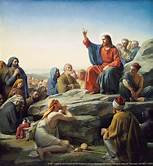
In giving the Beatitudes, Jesus turned common expectations upside-down. Blessed are the poor in spirit; blessed are the meek; blessed are those who are persecuted for righteousness’ sake… We don’t consider poverty, powerlessness, suffering and persecution blessings to be desired. Yet Jesus, the One we follow, gladly endured all of these for our sake! Notice that the “blessing” is the same here as in the first of the Beatitudes– “for theirs is the kingdom of heaven.” The Kingdom of Heaven is not reserved for those who are victorious in their own power or through force of will or extraordinary effort. But it is reserved for those who persevere in the face of evil–those who lean, and those who rest, and those who stand IN THE POWER of God.
Notice, too, that we are blessed if we are persecuted “for righteousness’ sake.” There is no blessing for suffering due to our own stubbornness or foolishness. There is no blessing for those who are persecuted for their own pride and judgmental nature and unforgiveness toward themselves or others. (see 1 Peter 3) https://www.biblegateway.com/passage/?search=1+Peter+3%3A8-17&version=CEV
We live in a culture that celebrates “victimhood.” Those who suffer injustice– even perceived of implied injustice–are considered to have a special status. Those who claim to have been offended or hurt by individuals or groups often demand recognition for their “bravery” or retribution for their suffering. This happens even among certain Christians, who claim to be “persecuted,” when they are merely suffering the consequences of their own hubris and self-righteous posturing. This is a monstrous injustice to fellow Christians who are truly suffering persecution “for righteousness’ sake.”
My prayer today is that I will emulate the example of Christ– that I will serve, humbly, willingly, sacrificially, enduring any persecution that comes as a result, and lifting up fellow Christians who are suffering, as well as their persecutors! For righteousness’ sake– for the sake of the Kingdom of Heaven.
“Blessed are those who hunger and thirst after righteousness, for they will be filled.”(Matthew 5:6) I’m looking at the Beatitudes and how they can relate to our prayer life. Today, I’m looking at the fourth in the series, shown above.
I recently found out that I am diabetic. I’m trying to lose weight and eat in ways that will help manage my body’s response to carbohydrates. And I find that when I feel hungry, I seem to crave all the wrong things! I miss pasta and chocolate and a large sized Coca Cola from the drive-thru. I don’t normally crave steamed cauliflower or unsalted nuts when I’m hungry. There’s nothing inherently wrong or “evil” about pasta, or chocolate chip cookies, or even sugary drinks. But they can crowd out the nutrients that my body needs, making me bloated and yet feeling like I didn’t get “enough” to eat. I don’t crave the nutrients– I crave the taste. I don’t hunger for the fuel my body needs; instead, I hunger for the flavors I want, or the quick burst of energy I feel from sugar and carbs.
And the same can be said for Righteousness. Most of us do not truly hunger or thirst for righteousness on our own. We crave comfort, or affirmation, or control of our circumstances. Even in our prayer life– even as we say the words, “Thy will be done”– we are usually asking for our own wishes or desires to be fulfilled. “Help me get this job.” “Change my neighbor’s attitude.” “Fix the problem…” We want to BE righteous, but our appetite leads us to compromise and complacency. The end result is that we feel unfulfilled, even resentful and restless.
Jesus promises that those who hunger and thirst after righteousness will be filled. We will not be left with the gnawing feelings of guilt and shame and regret, or left feeling unfulfilled and dissatisfied. What kind of diet will lead to this “filled” feeling? Chewing on God’s Word! Have you ever noticed how often in the Bible God uses food imagery in relation to His Word? “Taste and see that the Lord is good” (Psalm 34:8). “How sweet are Thy words unto my taste! Yea, sweeter than honey to my mouth” (Psalm 119:103) “Man shall not live by bread alone, but by every word that proceedeth out of the mouth of God” (Matthew 4:4b). And there are dozens of other examples throughout both Testaments.
When I come to prayer wanting more of God and less of my own “cravings,” it changes my perspective– and my appetite. My desire is no longer for convenience or temporary comfort, but to be closer to God– to enter into His Righteousness. My other desires start to change to align with His will. Instead of praying to get a particular job, I begin to pray that God will lead me to do my best at whatever job I have (or that I will eventually get). Instead of wanting my neighbor to change, I will begin to look for ways God wants me to change my response to my neighbor. Instead of just wanting to lose weight, I will begin praying about ways I can honor God in the way I eat (and exercise and take care of my body).
So I need to ask, “What am I really hungry for today?”
I want to spend some time this month exploring the Beatitudes and how they relate to our prayer life. Today I want to look at Matthew 5:3: “Blessed are the poor in spirit, for theirs is the kingdom of Heaven.”
How do I approach God’s throne of Grace? Do I come with a list of what I want, and what I’ve accomplished for God? Do I come reluctantly, grudgingly, holding back some part of who I am or who I have been? Do I come flaunting my self-righteousness? Or do I come empty of all but my desire to be in the Presence of my Maker?
Many people have interpreted (and misinterpreted) this phrase. Jesus does not insist that we be financially destitute, or drained of all enthusiasm or emotion. But He does require that we come recognizing our need of Him. We may not be physically needy in the moment– we may be well-fed, comfortable, or even wealthy by human standards. But we are all in need of God’s presence and His provision. On my own, I may believe that I have earned all that I seem to possess, but I cannot supply the air that I breathe, or guarantee that my health will remain perfect, or that I will be able to keep what I think I own, or force others to accept or respect me. “Man supposes, but God disposes” is an old phrase, but an accurate one.
When I approach God in prayer, no matter how rich or poor I may seem, I am dependent on God for everything. And this is true for every one of us. So I don’t approach God as someone “needier” or “less needy” than my neighbor. And I don’t approach God with any power to bargain or demand, or even to request– except that God has invited me and sought me out in His Love and Mercy!
And this is the rest of the Beatitude– “for theirs is the kingdom of Heaven.” God has opened up Heaven and invited me to walk with Him, to learn from Him, to receive His blessings, and to live with Him throughout eternity. His riches! His Glory! His Presence! Every time I pray, I trade my poverty for God’s bounty. I trade my confession for His forgiveness. I trade my helplessness for His Wisdom and Power to triumph over adversity and confusion, grief and doubt, sickness and lack.
It is when I come to Christ believing that I possess or control all that I suppose to be “mine,” that I lose the Blessing of His sufficiency and His perfection.
“Thank you, God of Mercy, and Ruler of All, for the privilege of coming to you. I come empty and spent–show me where I am holding on to something less than You, or trying to claim Your wealth as my own. Teach me to rest in the sufficiency of Your kingdom, even as I continue to serve you here on earth.”
My husband and I own a small shop. It’s actually a two-part shop, with used items, antiques and collectibles in the front, and amateur radio gear in the back. We have a few “new” radios, books, and other items, but most of our items are second-hand. This sometimes creates a problem in pricing.
New items usually come with a manufacturer’s recommended price, based on what the item costs from the factory or warehouse. Sometimes, price is based on what we pay at a wholesaler. But used items aren’t coming from a wholesaler or a factory warehouse. Often, we pick up pieces from an estate sale or another shop like ours. Sometimes, we are selling items that were salvaged or even donated.
So how do we determine a price on a used item? For that matter, how are prices determined for some of the new items that we sell? Of course there are a few guidelines:
Basic costs– what did it cost to produce the item (or procure the item)? How much for the materials? Labor? Shipping? Packaging? Also, what are the basic costs of running the store– will the sales of these items be enough to cover expenses like the light bill and rent and miscellaneous supplies as well as covering the cost to replace them?
Supply and Demand– how rare is this item? How easily can someone find a similar item at a similar price? How easily can we find more of this item (or something similar)? Do we have “too many” of the same item? Which items are selling “too fast” at a lower price?
Quality– some items involve more craftsmanship. Some contain sturdier or more expensive materials–real copper wiring, metal gears instead of plastic, silver v. silver-plate, hand-carved instead of mass-produced, etc.
“Aesthetics”–Antiques are often valued for their condition. But it varies from one piece or type of piece to another. Glass and ceramics are more valuable if they are unchipped. Old magazine ads carefully cut out and attractively framed can be more valuable than the entire magazine from which they came. Certain colors of glass are worth more than others. Wooden items that have been repainted, repaired, or refinished can actually lose value over those left in their original condition. Some items sell better with a “patina,” while others do better if they are polished and clean.
Ultimately, however, the items in our store are “worth” only what we decide, and what our customers are willing to pay for them. If we are “wrong” about the worth of an item, it may sit on the shelf collecting dust– either because we have priced it too high, or because the price is so low that a customer mistrusts our judgement about the quality of the product.
Why am I writing about this on a blog about prayer?
We have a tendency to place values on people and situations, as well as items. Sometimes, we think it “isn’t worth it” to pray about a minor problem that we face, or someone we don’t know very well, or don’t think of very highly. Perhaps we think that our requests are too ordinary, or too small, or too chronic to bring before God. Lost keys; that lingering pain in the elbow; the barking dog that keeps us up at night; the sibling that hasn’t spoken to us in 15 years–we wonder if they are worth making the effort (or continuing to make the effort).
But, in God’s economy, every person–and each moment in each person’s day–is of enormous value! God uses the small things of life to make a big impact. Every prayer that is lifted to God from a sincere heart and with even the tiniest grain of faith can have unbelievable consequences. There are hundreds of examples throughout the Bible, and hundreds of thousands of other testimonies to illustrate this truth The same is true for “big” prayers– the impossible situations– that plague us. War, famine, disease, corruption and injustice are NOT too big for God to handle. Just because they are too big for us to solve (or even understand) does not make them too big for us to pray about, or our prayers too little to make a difference.
I was reading in 2 Samuel 16 the other day. King David faced betrayal– from his son, Absolem, and also from one of his counselors, Ahitophel. David prayed– almost as an afterthought– that Ahitophel would give Absolem bad advice. And he did! But God also prompted David to send another counselor, Hushai, as a secret agent. At first, Absolem followed the advice of Ahitophel without question, and it seemed to work in his favor. But at a crucial moment, Absolem hesitated and asked for a second opinion. Ahitophel’s advice, according to the writer of 2 Samuel, was actually the better advice. But Absolem chose to follow the clever but ineffective advice of Hushai instead! David’s prayer was answered, and even when it seemed that David’s prayer “wasn’t enough,” God protected David, frustrated Ahitophel, and brought judgment and punishment to Absolem, ending in his death. There is no record of either Absolem or Ahitophel praying at all during the rebellion.
It is easy to be thankful for the really nice things that we may have– cars or homes or comforts. But it can be difficult to pour out praise for “nothing.” How often have I given thanks for all that I DON’T have?
I was looking around our shop the other day. We weren’t busy, so I had plenty of time to look around. As an entrepreneur, this should bother me. A quiet store is not earning money. But I was suddenly very grateful– grateful for the quietness and time to pray, to reflect, to take stock. Because we own the shop, I have a lot of flexibility that I did not have at my other jobs. I don’t work in the mornings, so I can do more around the house, visit my mom, do the shopping, etc., before I come to work. If something comes up, I can close the shop. I can decide when to have a sale, what items to offer, and how to arrange them. In fact, when the shop is not busy, I can write my blog! Not only that, but because we sell used and vintage items, I don’t have to worry about shelf life or expiration dates or items being trendy or passé– they’re almost all “out of style” anyway!
For several months, we had just one vehicle– which is still a great deal more than most families have– but it meant that David needed to use it for work, leaving me without convenient transportation. But we live in town– I can walk to the bank, the store, the post office, the library.. almost everywhere I really need to go during the week. NOT having a car meant that I got used to walking everywhere. Now that I have access to a vehicle, I can still choose to walk (which saves on gas!), and I am happy and grateful to be able to walk in good weather and ride in the rain.
So often, God chooses to withhold, or even take away things in our lives. He chooses to give us “nothing”—empty space, empty moments, times of need, and times of lacking. Sometimes, He does it to teach us discipline; sometimes to keep us from becoming slaves to our things or our schedules. Sometimes our emptiness is for a short season; other times, it may last for months, or even decades.
In the end, though, God never leaves us with “nothing.” God will provide for our needs– He will make a way or a provision where there seems to be no way. Not having a car did not keep me from meeting with God; not having a busy, thriving shop does not keep me from having a long list of things for which to be grateful. We have been open for almost 10 years– longer than many small businesses, especially having gone through COVID and lockdowns for two of those years! God is ALWAYS Good. He is ALWAYS Faithful. Even when I think there is “nothing” to see– God is at work.
Today, I want to pay special attention to the “nothing” in my life– to the empty spaces and lonely times that keep me aware that God fills them all to overflowing!
Last Monday, I went into the doctor’s office to get the results of my latest blood test. It had been a while since my last check up, and my doctor told me that I have developed Type 2 Diabetes. This requires that I make some changes to my diet and lifestyle– more veggies, more exercise, less pasta and fewer desserts– and pay close attention to my blood sugar levels. Every day, I have to prick my finger and get at least one drop of blood on a test strip, and feed that into a glucose meter. It takes just about a minute, and just one drop of blood, but it has to happen every day.
Millions of people around the world deal with diabetes, and I am so grateful that we caught it, and that it can be managed with these few changes. But I was surprised at how much I resented the daily “prick.” It is not painless, but it is not difficult, either. Still, I resisted, even when my husband offered marvelous support and help. I know this is part of what it will take to keep me healthy, but oh how I miss the freedom I took for granted just days ago!
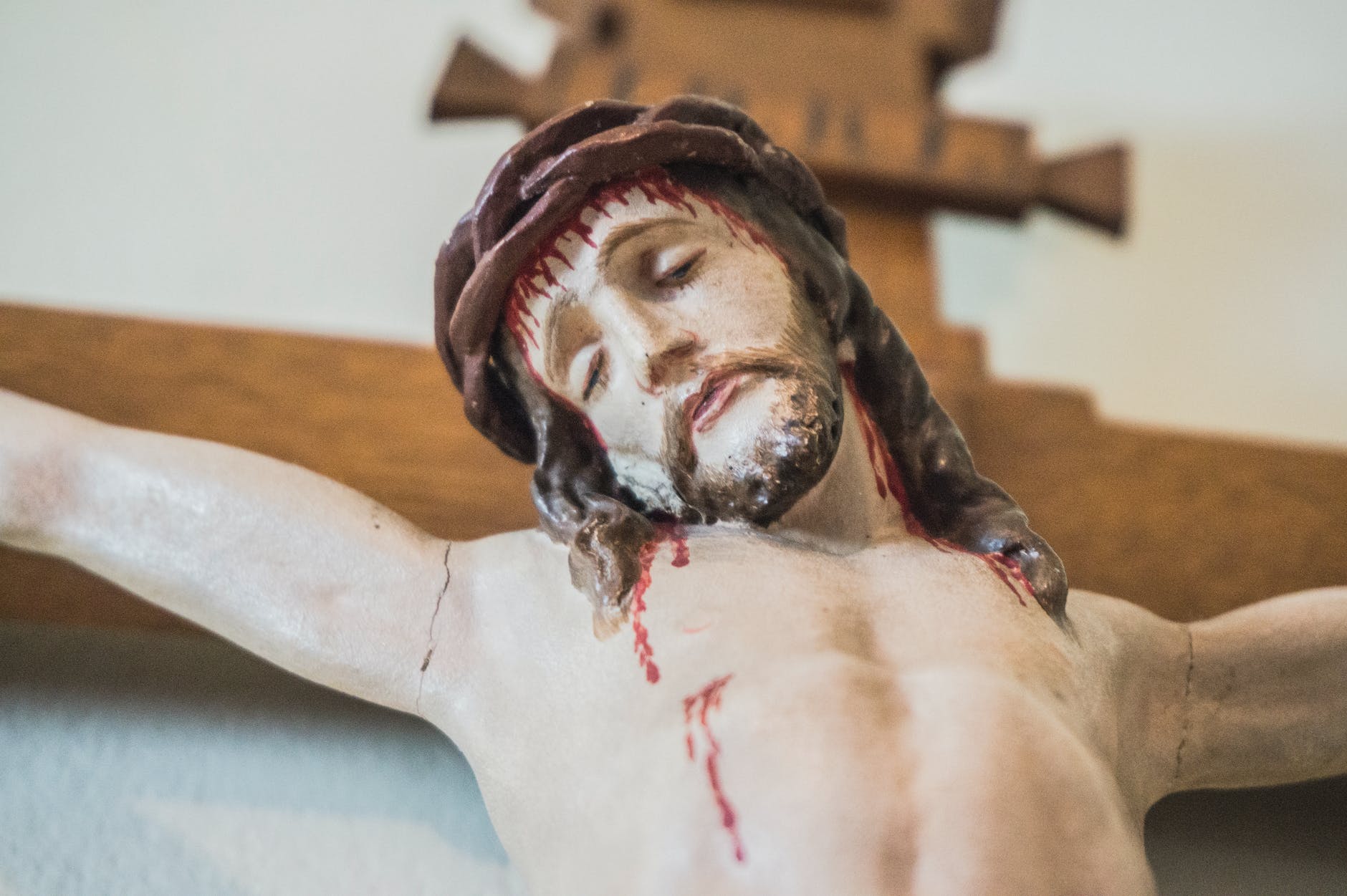
It got me thinking of the ritual sacrifices that were set up for the nation of Israel. Every day, animals were not just “pricked,” but slaughtered–their blood poured out and their flesh burned–to represent the atonement necessary for sin. Hebrews 9:22 says that “without the shedding of blood, there is no remission.” There is no way to be made right with God without the shedding of blood. And the blood of rams and lambs, while it represents the atonement we seek, is inadequate to cleanse our souls of the stain of sin. Our own blood is tainted with sin in exactly the way my blood is tainted with glucose. My blood is not only imperfect, it is unpredictable, and even poisonous, if left untreated. And even with the “shedding of blood” every day to check my glucose levels, there is no “remission”; the only way to treat my condition is to have a change– a permanent and drastic change– in my lifestyle. For Sin, there is only the shedding of perfect blood applied to my condition that can make me whole.
Though I have to shed blood every day to check on my blood sugar, I don’t have to shed blood every day for my Sin condition. But I do have to accept that Christ paid–in His perfect Blood– for my soul. He only had to do it once, but because of His sacrifice, I can be renewed every day– empowered to live the kind of life He wants me to live; empowered to grow and make healthy decisions, and righteous choices; empowered to live free of the guilt and poison of being enslaved to Sin.
With healthy choices and medication, I will be able to manage my blood sugar levels as I grow older. And I will never have to feel a “prick” or shed a drop of blood in eternity– there will be no death, and no disease! And all because of the Lamb who was willing to shed His blood for me– and for you! Not just a drop, not just another drop each day, but a once-for-all, extravagant, living sacrifice.































 Pursuing Prayer