What Would Jesus Pray?

Several years ago, it became incredibly fashionable (literally) to wear t-shirts, necklaces, and especially bracelets with the four letters, WWJD– which stood for “What Would Jesus Do?”  This was supposed to serve as a reminder that the wearer was an ambassador of the Kingdom of God, and was supposed to be a follower of Jesus, and thus should act in accordance with what Jesus would do in any given situation.  Stuck in traffic–What would Jesus do?  Presumably, we would not lose his temper, honk and scream obscenities, or rudely try to cut or push others off the road.  Tempted by the scantily clad actors and actresses in a new R-rated movie– What would Jesus do?  Presumably, he would not attend R-rated movies filled with sexual situations in the first place, or, finding himself tempted, he would leave the movie.

I think the intention was good in the beginning– even scriptural in a sense.  The Children of Israel were commanded, in Deuteronomy 6: 8 to “tie them (God’s commandments, laws, and decrees) as symbols on your hands and bind them on your foreheads.  Write them on the door frames of your houses and on your gates.”  Throughout the Bible, the patriarchs, prophets, Jesus, and the apostles, often spoke of keeping God’s Word in our hearts and on our minds as we go through our daily routines.  This short reminder should help us do just that– redirect our thoughts to the One we are to follow.  As far as it achieved that goal, it was a good thing.

The problem is that it didn’t work that way for most people.  The jewelry or the t-shirt didn’t serve as a reminder to the wearer, but as a symbol to everyone else.  “Hey, look at me!  I’m wearing a fashionable accessory with a cryptic message that lets you know that my thoughts and actions represent Jesus here on earth!”  Ironically, Jesus would have been the last person to wear such an item– not only because he wouldn’t have to ask the question (BEING Jesus, and all), but because his focus was on others–Jesus didn’t wear his heart on his sleeve, or his wrist, and he didn’t call attention to his own righteousness.  Instead, he spoke to outcasts, and touched lepers.  He acted in accordance with God’s wishes, not because he had decided what he thought God would want him to do, but because he knew who God wanted him to become.

One of the worst casualties of the WWJD craze is that many people substituted their own wisdom for a study of God’s word– in other words, they imagined what Jesus would (or might) have done, instead of learning and following what he DID.  Of course, Jesus was never stuck in a traffic jam.  But he did face demands on his time, and stressful situations.  He was never tempted by movies or internet porn, but he was surrounded by a culture that had “religious”  “temple” prostitutes, along with sexual immorality not that different from what we see today.  The Bible doesn’t give us a picture of Jesus planning and executing a strategy for specific temptations– it DOES give us specific examples of people over a long period of time who failed or triumphed over temptations, big and small, and of people who turned to God for strength to overcome temptation and grace when they had fallen.  It also gives us a picture of Jesus living a life that was perfectly pleasing to God– including a life of prayer.

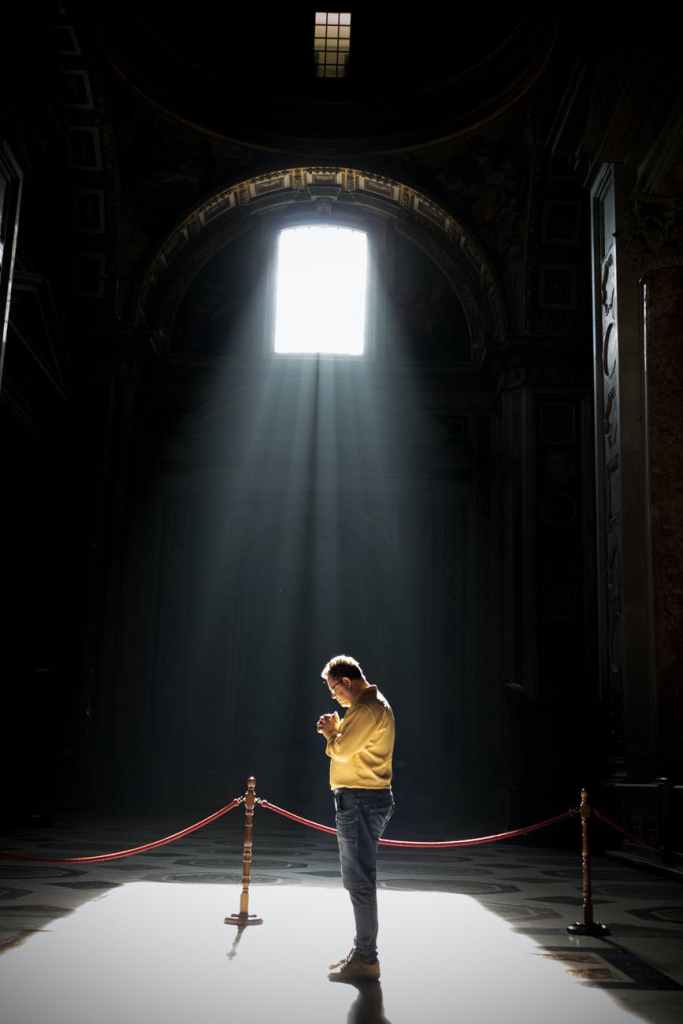
What would Jesus pray?  Look at John 17.  Look at Luke 11:1-4 or Luke 22: 39-48.  Look at Mark 14: 32-42.  There are many examples of Jesus’ prayers– prayers that pour out his heart to his Father– in faith, in pain, in grief, and in hope.  In fact, it would be appropriate to say in answer to the question, “What would Jesus do?”– Jesus would take it to God in Prayer! Look at the way He taught His disciples to pray:

“And when you pray, do not be like the hypocrites, for they love to pray standing in the synagogues and on the street corners to be seen by others. Truly I tell you, they have received their reward in full. But when you pray, go into your room, close the door and pray to your Father, who is unseen. Then your Father, who sees what is done in secret, will reward you. And when you pray, do not keep on babbling like pagans, for they think they will be heard because of their many words. Do not be like them, for your Father knows what you need before you ask him.
“This, then, is how you should pray:

“‘Our Father in heaven,
hallowed be your name,
your kingdom come,
your will be done,
    on earth as it is in heaven.
Give us today our daily bread.
And forgive us our debts,
    as we also have forgiven our debtors.
And lead us not into temptation,
    but deliver us from the evil one.
For if you forgive other people when they sin against you, your heavenly Father will also forgive you. But if you do not forgive others their sins, your Father will not forgive your sins. (Matthew 6:5-15 NIV)

Jesus did not ask the Father to give His disciples a blueprint of “Holy” activities or attitudes. He asked for fundamentals– that God’s Kingdom would come; that God would meet our daily needs; that God would forgive us as we forgive others; and that God would steer us away from temptations and evil. For everything else, Jesus directed His disciples to DO what He did, not ask what He would do. Reach out to those who are needy and hurting with love and practical help. Forgive. Tell the Truth. Worship God above all else, and go to Him in prayer.

Jesus didn’t come to earth and live his life to make us great, or successful, powerful or popular by the world’s standards.  He came to seek and to save those who were lost.  He asks us to do the same– not in our own strength or success, but in the overflow of the grace and power he has poured into us.  T-shirts and jewelry are nice, but Jesus used his life–his time, his love, his talents, his words and his actions in accordance with God’s will and God’s wise commands to bring people to himself.  Then he did what none of us could do– he fulfilled God’s law, becoming the perfect sacrifice for our sins, and conquering Sin and death.  What would Jesus do?  He DID IT!  It is FINISHED!  Our part is not to do what only God can do, but to what he has asked of us and trust him to do the rest.

bow down

This is also true in our pursuit of prayer.  I often get side-tracked in wondering if my prayers match up to what Jesus might have prayed in the same situation– and that shouldn’t be my immediate focus.  Prayer is, as I have to keep reminding myself, a pursuit.  It is a process and a journey, and an ongoing, deepening conversation with the one who loves me best.  And it is not a one-sided conversation– God answers my prayers, not just by meeting immediate needs or changing circumstances.  He speaks through his law, through the Psalms and prophets, through the Gospels and the Epistles, and through the godly wisdom of friends and counselors and ministers of his Grace.  And in doing so, he teaches me to pray.

May I stop worrying so much about the length or the style or the “worthiness” of my prayers.  May I instead listen, and learn, and continue the pursuit.

“Don’t Mess With Mister In Between”

This popular song came out in 1944, as thousands of soldiers were dying in World War 2, and millions were facing homelessness and starvation in Europe, Asia, and northern Africa. Its syncopated rhythms and upbeat lyrics helped focus minds and hearts on hope in a world torn apart by war, hatred, and despair. Further lyrics refer to biblical characters Jonah and Noah, and their experiences facing “dark” times.

The Bible gives us similar (and more specific) advice. The Apostle Paul wrote from prison to believers in hard-pressed Philippi:

Do not be anxious about anything, but in every situation, by prayer and petition, with thanksgiving, present your requests to God. And the peace of God, which transcends all understanding, will guard your hearts and your minds in Christ Jesus. Finally, brothers and sisters, whatever is true, whatever is noble, whatever is right, whatever is pure, whatever is lovely, whatever is admirable—if anything is excellent or praiseworthy—think about such things. Philippians 4:6-8 (NIV)

In other words– Accentuate the Positive and latch on to the affirmative!

To the Ephesian believers, he says:

The Old Way Has to Go (or, Eliminate the Negative):

And so I insist—and God backs me up on this—that there be no going along with the crowd, the empty-headed, mindless crowd. They’ve refused for so long to deal with God that they’ve lost touch not only with God but with reality itself. They can’t think straight anymore. Feeling no pain, they let themselves go in sexual obsession, addicted to every sort of perversion. But that’s no life for you. You learned Christ! My assumption is that you have paid careful attention to him, been well instructed in the truth precisely as we have it in Jesus. Since, then, we do not have the excuse of ignorance, everything—and I do mean everything—connected with that old way of life has to go. It’s rotten through and through. Get rid of it! And then take on an entirely new way of life—a God-fashioned life, a life renewed from the inside and working itself into your conduct as God accurately reproduces his character in you. What this adds up to, then, is this: no more lies, no more pretense. Tell your neighbor the truth. In Christ’s body we’re all connected to each other, after all. When you lie to others, you end up lying to yourself. Go ahead and be angry. You do well to be angry—but don’t use your anger as fuel for revenge. And don’t stay angry. Don’t go to bed angry. Don’t give the Devil that kind of foothold in your life. Did you use to make ends meet by stealing? Well, no more! Get an honest job so that you can help others who can’t work. Watch the way you talk. Let nothing foul or dirty come out of your mouth. Say only what helps, each word a gift. Don’t grieve God. Don’t break his heart. His Holy Spirit, moving and breathing in you, is the most intimate part of your life, making you fit for himself. Don’t take such a gift for granted. Make a clean break with all cutting, backbiting, profane talk. Be gentle with one another, sensitive. Forgive one another as quickly and thoroughly as God in Christ forgave you. Ephesians 4:17-32 (The Message)

But what does it mean when the song says, “Don’t mess with Mister In Between”? The Bible gives some advice on this as well. The Apostle James has much to say about such a man in the first chapter of his epistle. He talks about being steadfast, not doubting, not double-minded, and not swept up in temptation, blaming others, and justifying his own philosophies:

22 But be doers of the word, and not hearers only, deceiving yourselves. 23 For if anyone is a hearer of the word and not a doer, he is like a man who looks intently at his natural face in a mirror. 24 For he looks at himself and goes away and at once forgets what he was like. 25 But the one who looks into the perfect law, the law of liberty, and perseveres, being no hearer who forgets but a doer who acts, he will be blessed in his doing. James 1:22-25 (ESV)

To James, “Mister In Between” is a shadow man, a person without root or discipline, who will listen to the word of truth, but then turn back to the darkness of the world to justify inaction and/or wrong actions. Mister In Between wants to straddle the fence between sin and obedience, revenge and forgiveness, anger and patience, comfort and compassion. But that doesn’t work. Such a person lives in a false reality– one where his/her “truth” changes with each new experience or emotion, each new encounter with pleasure or grief.

Jesus Himself spoke of the dangers of living “In Between”:

Then he said to them all: “Whoever wants to be my disciple must deny themselves and take up their cross daily and follow me. 24 For whoever wants to save their life will lose it, but whoever loses their life for me will save it. 25 What good is it for someone to gain the whole world, and yet lose or forfeit their very self? 26 Whoever is ashamed of me and my words, the Son of Man will be ashamed of them when he comes in his glory and in the glory of the Father and of the holy angels… 62 Jesus replied, “No one who puts a hand to the plow and looks back is fit for service in the kingdom of God.” Luke 9:23-26;62 (NIV)

13 “You are the salt of the earth. But if the salt loses its saltiness, how can it be made salty again? It is no longer good for anything, except to be thrown out and trampled underfoot.14 “You are the light of the world. A town built on a hill cannot be hidden. 15 Neither do people light a lamp and put it under a bowl. Instead they put it on its stand, and it gives light to everyone in the house. 16 In the same way, let your light shine before others, that they may see your good deeds and glorify your Father in heaven. Matthew 5:13-16 (NIV)

We may not be in the midst of a World War (though some reading this may be experiencing war, persecution, and suffering), but we are all involved in a great Spiritual Battle. There are negative forces and philosophies warring with God’s Truth– Anger, Despair, Hatred and Vengeance, Pride, Envy, Power, Greed, and many more. We need to keep our thoughts positively turned toward “whatever is true”.. and noble and praiseworthy– we need to keep our thoughts, prayers, and actions in tune with the teachings of Jesus. We also need to “eliminate” the negativity in our lives– doubts, regrets, shame, lust, bitterness, jealousy, and empty adherence to things of this world– we need to turn our back on old ways of thinking and doing (or NOT thinking or doing) and focus on Jesus. And we need to avoid “messing” with Mister In Between– stop compromising, stop trying to straddle the fence between loving others and making them feel comfortable or superior in their sin at the cost of our own soul.

It sounds easy and jaunty to “accentuate the positive.” But it involves commitment, and the willingness to let go of the negative and the complacent that creeps into our lives. That’s my prayer for today. I hope it is yours, too.

Prayers From the Cockpit

Years ago, a decorated fighter pilot, Robert Scott, wrote a book with the title, “God is My Co-Pilot.”  It was made into a movie, and the title became a  popular phrase for bumper stickers, posters, and more.

Theatrical trailer for “God Is My Co-Pilot” –youtube

More recently, there have been several people who have spoken out against the catch-phrase, by saying something to the effect of ,”If God is your co-pilot, someone is sitting in the wrong seat!”  I mean no disrespect to Mr. Scott, the book, the movie, the bumper stickers or even the critics, but I think both sentiments kind of miss the point.

There is a much better analogy in the title of an lesser-known book by another pilot.  Pilot and high school basketball coach Floyd Eby wrote a book called “Calling God’s Tower– Come In, Please.”

51pdlJsYI0L._SX325_BO1,204,203,200_

I’m not a pilot or a coach, and I’m not claiming that Scott’s title is bad, or that Eby’s book is “better.”  Certainly, when I pray, I believe that God is always right beside me, that he hears me, and that he knows my thoughts and my heart intimately.  I think that is the intent of the co-pilot analogy, and as such, it rings true.  But God is much more than a partner, a co-pilot, or a colleague.  The danger of this thinking is that we take God for granted.  If God is my co-pilot, I won’t turn to him for help unless something is going wrong and “my way” isn’t working.

“I am the vine; you are the branches. The one who remains in me and I in him produces much fruit, because you can do nothing without me.” (John 15:5 CSB)

So what about “switching seats?”  Shouldn’t God be my pilot?  He is God and I’m not.  It is true that this represents a better view of God’s authority and sovereignty.   It is also true that God is greater, stronger, and wiser than I am.  But I think this view, though more accurate in portraying our position, gives rise to another dangerous idea– that I can sit back and be little more than a passenger, while God does all the flying.  One of the valid criticisms of modern Christianity (especially in America), is that we know about Christ, and talk about Christ, but we don’t always live for Christ.  We see the finished work of Christ as an excuse to sit back, smug and complacent about morality, evangelism, obedience, and good works.  We shout, “Jesus Paid it All!” and mumble “All to Him I Owe.”  We want to sit in the cockpit for the pretty view, but we don’t want to learn how to fly the plane.

 I know how to be brought low, and I know how to abound. In any and every circumstance, I have learned the secret of facing plenty and hunger, abundance and need. I can do all things through him who strengthens me.” Philippians 4:12-13

God has given us the privilege and the responsibility to be the pilots (or drivers, or captains) of our lives–He gives us the free will to make choices and steer our behavior or actions.  We are not helpless passengers on a fatalistic trip through this life.  He has equipped us to know the thrill of soaring and banking and flying through the clouds.  But God doesn’t leave us to fly blindly through the haze and clouds and glare.  He gives us his word, which, like a map, chart, instrument panel, or GPS system, shows us where and how we should go.  And, like the air control tower, he gives extra guidance, listens to our needs, and provides assurance as we stay tuned to him.

God also sees and knows more than we do in our cockpit.  When I’m “calling God’s Tower”, he knows all that goes on above and below, ahead and behind– he knows about the storms in the distance or the other planes scheduled to arrive or take off from the airport.  I can trust his advice, his commands, and his presence more than my own judgment or eyesight.

I want to learn how to fly; I want to soar like an eagle, and I want to come in for a safe landing at the end of my journey.  I need to keep in constant contact with God’s tower and follow His wise flight plan.

landscape-aircraft-clouds-storm-38574.jpeg


Why Ask Why?

I’ve been asking myself “why?” a lot lately in regards to this blog.  Why am I spending my time writing about prayer?  Wouldn’t I be better served to spend my time productively– making something useful, keeping the apartment cleaner, going to the gym–even spending more time in prayer instead of dissecting it and babbling on to an invisible audience?

But the truth is that I began writing this blog in response to another question, a more basic question thrown at me (not personally, but thrown out to all who believe in the power of prayer)–  “WHY?”  They weren’t asking the question because they really wanted to know my reasons for praying; instead, they wanted to make me feel ashamed and embarrassed, to doubt God’s goodness and my faith.  In fact, they weren’t asking “WHY” so much as asking “HOW”.  How can you continue to believe in God and continue praying in light of random shootings, manifest injustices, rampant corruption, and senseless tragedies?  How can you say that God is good, when people continue to get away with evil?  If God exists, where is he, and how can you just sit back and trust in him?

The fact that I DO continue to trust God doesn’t mean I don’t have questions and concerns, and even righteous anger about the state of the world and the tragedies that fill it.  The questions come pouring out, sometimes keeping me awake at night, sometimes catching me at a raw moment– and they are important questions.  To pretend that I never wrestle or struggle with the questions is to say that good and evil, justice and mercy, that God himself– none of it really matters enough to seek an answer.  God forbid!!

But there is a vast difference in asking “Why?” and challenging God by saying “How? or How come?”

pexels-photo-1027931.jpeg

Consider a small child who asks, “Why is the sky blue?”  (Don’t you just love the inquisitiveness of small children?)  “Well…” I can explain that the sky itself isn’t really blue…I can go on to talk about scientific principals– the property of light, refraction through water molecules and dust particles, and more..I can point out that the sky doesn’t always appear blue, etc.  At the end of my long and factual discourse (assuming the child hasn’t already interrupted), s/he is likely to simply shake their head and ask, “But, why?”  WHY?  Because I haven’t really answered the heart of the question.  I explained HOW, not WHY.

Now suppose I don’t feel like being pedantic, and I simply answer “Because.”  You can guess what comes next.  The child will ask, “Because WHY?”  Because “Because” isn’t a sufficiently satisfactory answer.  The child wants more; he/she yearns for more comprehension; more understanding.

As an adult, we find this kind of questioning frustrating and annoying.  I think it is because we have been conditioned to think that questions either have a “How come” explanation that sweeps away much of the wonder and mystery, or a “because” answer that leaves us unsatisfied. We are frustrated by questions to which we already have a pat answer, and we are frustrated by questions to which we have never received a satisfactory answer.

As an adult, I may well ask, “Why is there evil in the world?”  This is an important question; one I should be asking.  Experts can and will give me all kinds of “how” answers– how the brain is wired, how emotions work, how society has failed various groups of people, how political structures create oppression, how religion teaches intolerance, how poor diet or lack of sunny days … there are a million explanation of “how” evil exists or why it persists.  And many of these explanations contradict each other, so they can’t even give a conclusive answer.  But just throwing up my hands, and saying, “just because” does nothing to answer my question OR provide understanding that could help alleviate the effects of evil in the world.  “Because” communicates my powerlessness to comprehend.

BUT

Something amazing happens when I stop merely asking people for answers to these questions and start asking God.  I don’t get a magical, comprehensive, incontrovertible answer to life’s thorny questions.  God doesn’t send me a “cheat sheet” with all the “right” answers.  I’m not suddenly an expert on good and evil or what should be done to eliminate crime and disease and poverty.  I still have to wade through the “how come” explanations and use my limited judgment to decide what course of action I can take to try to make a positive difference.  And I will make some mistakes along the way.  But when GOD says, “Because”, there is an authority, a majesty, and a wisdom that can never be present in my answer.  I say “because,” because I have no more to say; no better answer.  God says, “Because,” because HE IS the answer! And the cause!  And he gives explanations in his word for many of my questions– even if I don’t like the answers!  He doesn’t explain “how come” the sky is blue–even though science can tell me the “how come.” God doesn’t have to explain the blue sky –He causes it to be blue.  “Why is the sky blue?”  God makes it so.  “But why?”  Because He is God and I am not.  God explains “how come” there is evil in the world– it’s called SIN–but he doesn’t leave it there.  “Why?”  Because we have the free will to choose good or evil.  “Why?”  Because God wants willing obedience and loving companionship with us.  “Why?” Because God is love!  “So why does he allow evil to continue?”  Because he has a plan that involves redemption and restoration and renewal.  He is the cause of this plan, he is its author and finisher.  Moreover, he is the cause of my desire to ask “why?”, to seek for a more fulfilling answer, to yearn for a solution to the very evil that prompts my questions.

pexels-photo-490411.jpeg


I won’t stop asking “why.”  Not because I don’t have any answer, or because I don’t know the answer.  It’s just that the answer is so much bigger, so much better, so much MORE than I can handle in the shortness of this lifetime. And it’s important that I not only keep asking the question, but that I keep defending the answer. Because perhaps today, or tomorrow, or every day next week, someone may ask me WHY?


1 Peter 3:14-16 English Standard Version (ESV)

14 But even if you should suffer for righteousness’ sake, you will be blessed. Have no fear of them, nor be troubled, 15 but in your hearts honor Christ the Lord as holy, always being prepared to make a defense to anyone who asks you for a reason for the hope that is in you; yet do it with gentleness and respect, 16 having a good conscience, so that, when you are slandered, those who revile your good behavior in Christ may be put to shame.


“Praying” Favorites

There is a very dangerous mindset that many Christians fall into– that somehow, God has “favorites” among His children. That He listens to and answers prayer for certain people “better” or more often than others. As someone who has pursued a lifestyle of prayer for more than fifty years, I can categorically state that this is false. Time after time, the Bible teaches us that God does NOT play favorites. He listens to each of us and loves each of us with a boundless and eternal Love!

Yet, I often hear people say, “Please pray for me. You are a prayer warrior. God will listen to you.” Is this wrong? Is it wrong to ask others to pray for us?

Of course not. And it is good to find other Christians who are devoted to praying for others. We ARE “prayer warriors!” But that doesn’t mean that God listens to any of us more than anyone else, or that some prayers are somehow better or more powerful than others.

There are three aspects of this mindset that I think are particularly dangerous:

First– we can feel that our prayers are not important; that they are not “good enough.” Satan loves to have us wallow in our inadequacies and focus on our faults and shortcomings. Maybe I have trouble finding the “right” words when I pray. Maybe I don’t feel comfortable praying aloud in a group. And I hear someone else who sounds eloquent and polished. While that may impress or intimidate me, it cannot make a difference to God! NONE of us is “good enough” to impress God! He loves to hear from each unique and precious child! If we believe that God somehow has “favorites” in prayer, we will believe that He has favorites in other areas, too. That our gifts aren’t as “holy” as someone else’s, or that our faith depends on us working harder or doing “more.” And this is idolatry–saying that God’s grace is not sufficient for Him to accept us and bless us without some extra effort on our part.

Secondly– we can feel that prayer is for “other” people. If there are special people whose prayer lives are strong, then we can let them do the “heavy lifting” of praying, while we concentrate on giving or preaching, etc.. We SHOULD develop the particular gifts that God has given us– that is true– but prayer, just like spending time in worship, studying God’s word, practicing fellowship, and showing grace, is something everyone should be practicing. The Apostle Paul compared the Christian life to being an athlete or a soldier. We are ALL in training and part of a team. Prayer is not specialized training– it is basic and fundamental to the Christian Walk.

Finally–“Prayer Warriors” are fellow workers, not specialized saints. Some people practice prayer because they have more time to do so. Many of those who are considered “prayer warriors” are widows or widowers, retired, or even bedridden. Many of us are prayer warriors for a season. When we believe that God has “favorites” in prayer, we may elevate them beyond what we should. Once again, Satan loves to have us compare ourselves with others, rather than focus on how we can each serve God.

There are some Bible verses that speak to this, and many of them, taken out of context, can reinforce the wrong mindset. For example: James 5:16 says that the “fervent effectual prayer of a righteous man availeth much.” But the context is that of people praying for one another, not a single man doing the praying. It says more about passionate and persistent prayer than any identity as a prayer warrior among other “lesser” pray-ers.

First John 5:14 says, “This is the confidence we have in approaching God: that if we ask anything according to his will, he hears us.” That applies to any of us!

“The Lord is near to all who call on him,
to all who call on him in truth.” Psalm 145:18

“Call to me and I will answer you and tell you great and unsearchable things you do not know.” Jeremiah 33:3

“Let us then approach God’s throne of grace with confidence, so that we may receive mercy and find grace to help us in our time of need.” Hebrews 4:16

“But when you ask, you must believe and not doubt, because the one who doubts is like a wave of the sea, blown and tossed by the wind.” James 1:6

“If you believe, you will receive whatever you ask for in prayer.” Matthew 21:22

There are only two things that the Bible says about “better” or more effective prayers. We must pray in FAITH, and in OBEDIENCE, (or praying within the will of God). NOTHING else is required for God to listen and respond. We are all “prayer warriors.” Prayer is part of our warfare against the enemy. And while it is wonderful to come together and know that others are praying for you, it is also important to remember that God has no favorites. His Grace, Power, Protection, and Love are equally available to anyone who asks in faith! There may be millions of pray-ers, but only one Sovereign, All-Powerful, Majestic and Loving God!

Coming Home

people taking group hug

It’s homecoming season–in small towns around the area, high school football stadiums are being turned into parade grounds as students decorate floats, dress up, rally, and prepare for a chilly Friday night game.  Hot cider, coffee, or cocoa, hot dogs, caramel apples, donuts; hats, scarves, and sweatshirts with team logos; scores of alumni in the stands to cheer on the home team and share memories of years gone by.  Young and old will cheer themselves hoarse hoping for a victory, and the band will play fight songs, as the cheerleaders jump and shout with all their might.  Fans will argue the calls of the refs, and discuss the plays and players.  Some eyes will be glued to the action on the field, while others will be looking around for familiar faces, and greeting old friends.

cheering squad on football field

Some people are more “into” sports than others, but there is a contagious excitement on Homecoming night for almost anyone.  People are stirred up; pulses are racing, hope and anticipation run high. It’s exciting. It’s cheerful. Unity, joy and energy pulsate from the stands.

What happens on Friday night should be what happens on Sunday mornings…

iphone conference keynote smartphone

Do we “come home” to church with an air of excitement and anticipation?  Do we expect victory?  Are we eagerly looking for faces in the crowd?  Discussing the “action on the field” of spiritual warfare?  Do we pray with the same enthusiasm as we use to cheer on a high school football team?  Do we even know the other members of our team?  Or have we stopped showing up for the game, expecting defeat and shame, or shrugging our shoulders– “After all, it’s just a game…” Right?

How many times have I gone to church grudgingly–tired, uninspired, out of a sense of duty, rather than with excitement and anticipation? What a difference when I see church as a battleground in God’s war over Sin and Death! When it is a privilege to worship the eternal Victory of Christ, it takes on an energy and excitement that makes me eager to greet other worshippers and fellow soldiers of the Cross. When I know that the Holy Spirit inhabits the praises of His People, I want to be part of that crowd.

agriculture architecture building church

Recently, a church in my home state was attacked. A man drove his vehicle into the church, fired several shots, and set the church on fire. It was horrific. But it was a futile act of defiance and hatred. Not because no one was hurt– several were hurt and some died. Not because it was unsuccessful– although the man had planned to be much more destructive. Not because it was an isolated incident: church attacks have been taking place for decades, and they are becoming more frequent around the world. It was futile because Christ has already won the ultimate and eternal victory over Evil.

Being a Christian is not “just a game.” It is a battlefield. And it can be dangerous and discouraging. But it is also vital and consequential– every day. Going to church should be much more exciting and important than going to a local sporting match. And no one “sits the bench” on a battlefield. We may be called to wait, or called to serve away from the battle lines, but we are all part of, not just a team, but a family.

Going to church is a weekly “homecoming” that should offer a glimpse of a much greater Homecoming– in Heaven!

Of Rocks and Rills…

beach coast coastline coconut trees

 And God saw everything that he had made, and behold, it was very good. And there was evening and there was morning, the sixth day.
Genesis 1:31 ESV
(emphasis added)

I love spending time in nature– walking, riding, or biking through woods and meadows, hills and valleys, along lakes or rivers.  God has created such beauty and majesty in every part of our world!  I grew up surrounded by woods and water– lakes, rivers, old forests and new-growth woods, with lots of farmland and meadows spread out over low rolling hills.  So it is always with wonder that I look upon mountains, deserts, rain forests and jungles, and tropical settings because they are not part of the “normal” landscape for me.  Even so, I never tire of the sites that greet me year-round–the steady breaking waves rolling in off Lake Michigan; the babbling of a small river or stream over field stone as it races down a small hill toward a pond; trees bowing and dancing in the wind just before a storm, or snow sparking across the frozen fields…

brown stair between trees

Nature is not just beautiful.  It gives us yet another way to experience God’s “nature”– his character and provision.  God is steady like a rock– strong, enduring, a safe refuge.  God is refreshing and life-giving as a river– ready to wash away aches and soothe us.  God is eternal, and his love is as vast and deep as the ocean.  God is mysterious as the forest–giving shade and cover, and concealing treasures, and ancient secrets.  God is faithful and steady as the sunrise and sunset and the pattern of the seasons. God is as open as a meadow, as pure as an ice shelf, as glorious as a desert sunset.

My husband and I recently returned from a vacation in which we drove through mountains and valleys, traced rivers and streams, and watched the rain falling gently on thirsty fields and meadows. We saw crags of ancient rock, watched happy cows resting in the shade of a copse of trees, saw herons at the edge of a small lake, and dipped our toes in a natural warm spring. We saw geese flying south for the winter, and squirrels chattering as they gathered nuts. It was beautiful, and it all spoke of a God who created variety and complexity, who cares for the land, the flowers of the field, and the birds of the air, and who calls to us through the beauty and grandeur of ordinary days in His Nature.

big wooden cross on green grass field under the white clouds

  I pray that we can experience both aspects of God’s nature today–His Sovereignty and His Creation–and praise Him for who He is and how He has revealed Himself all around us.

I Was There!

apps blur button close up

Disneyland!  Niagara Falls!  Tokyo!  Paris!  Dallas!  Machu Piccu! Sydney! Kilmanjaro! Stonehenge! NYC!  Souvenirs remind us, and declare to others, where we’ve been.  T-shirts, knickknacks, photos, post cards, and more call us to remember places we’ve visited, or even lived.  There are apps that allow you to tag, city by city, all the places you’ve ever been (if you can remember them all).  Metropolises to tiny hamlets, all can be recorded and seen by anyone else with the app.

Most of the time, when we think of souvenirs, we think of pleasant memories and planned visits.  But there is another kind of souvenir–scars, traumas, sickness, crime– that can taint our memory of a place.  It’s one thing for my husband and I to visit battlefields from the American Revolution or the American Civil War– it is quite another for a veteran to visit a battlefield where he took a shell to the stomach and had to be carried out still under enemy fire, or for someone to return to a war-torn village they once called home.

As humans, we can only be in one geographic location at any one time.  We can watch live footage of events around the world, but we cannot participate in or experience them in the same way.  But God can. He is beyond space and time. He has no limitations. And there is one way we join with Him to “be there” from miles away, any time.  We can pray.  I can pray for people I’ve never met; I can pray for many people at once.  And I can feel the power of others’ prayers even when I am otherwise alone. It’s one of the mysterious and glorious ways that God allows us to join with Him in His Work and in His Nature. We are never alone. Others may be far away physically, but through their prayers, and through God’s power, they are with us wherever we go!

close up photography of brown and yellow toy figure

More importantly, we can be reassured that God is ALWAYS there–He has promised never to leave us or forsake us. He needs no jet or GPS, no visa or key, to reach us wherever we are.  And he needs no souvenirs to remind Him of His visits with us, or of the beauty (or disaster) in which we live. God didn’t just promise us He would think about us (see Psalm 139:16-17https://www.biblegateway.com/passage/?search=psalm%20139&version=ESV), but that He would be with us always and everywhere (see Psalm 139:7-12https://www.biblegateway.com/passage/?search=romans%208%3A%2038-39&version=ESV) and that nothing can separate us from Him (Romans 8:38-39).

bryce canyon canyon clouds dawn

I love looking at souvenirs, but far more, I love the memories that can’t be captured by a keyring, or a T-shirt, or a small statuette.  I love the memories of smiles, and warm hugs, meals shared, and tears spilled.  And I love the stories that remind me that even if I’ve never set foot in a particular village or city, through prayer, I was There!

Where will you go today?


Just a Second…

A few years ago, I published a blog entry called Just a Minute… , which spoke of an effort to get everyone to spend one minute each day praying for their country.  I think this is a good idea, and I hope many people are doing it. The world needs more prayer, and more people coming together to pray!

four men seated on rocks facing mountain

While corporate prayer is a valuable exercise, and setting aside a particular time to pray with others (whether in person or in spirit) is also a great idea, the thought of a short, minute-long prayer seems inadequate, sometimes.  I suppose (indeed I hope) that most people spend more than a minute in prayer if they take this challenge.  It’s easy to do– there are a LOT of things to pray for!

sign open

But it struck me as I reviewed this earlier post that God is above, and beyond, time.  A single minute can be as rich and telling of our relationship with him as an entire hour.  And scheduling a particular time to pray is beneficial to us, but it is immaterial to our Father.  He doesn’t keep “office hours.”  There is no need for an “open” sign at the throne of grace– it never closes.  God is never unavailable, or “more” available.  It only takes a split second for us to recognize his omnipresence, and connect to it.

There is no need for us to wait for Sunday, or a High Holy Day, or a certain hour to pray.  And our prayers may only last a few seconds or a minute– “God, I need help!”  “Thank you, Jesus!”  “God, please help my neighbor today.”  There is no need to wait until a crisis or miracle, either.  We can pray about things that may seem insignificant to others, but God is honored when we share our thoughts with him first, and throughout the day.

It is wonderful to spend long hours alone with God– when we have the opportunity, and when we have made time to honor him above all.  But he is always present.  Even in chaos and crisis, we can take a split second to remember the one who calms the storms.

time lapse photography of road during golden hour

Two Women

Based on Proverbs 9

photo of women taking picture

“Let all who are simple come in here.”

Two women, so alike in some ways–
Both attractive and energetic,
Both young and vivacious.

But

One has prepared a table; the other has prepared her bed,
One talks of virtue and honor; the other whispers secrets.
One requires commitment; the other promises no strings.
To enter either door is to be changed.

architectural design architecture brick wall bricks

A man entered the door of the wise woman.
He was simple, uncomplicated, straightforward;
A man of few words, but noble heart.
He ate at her table, put his boots outside the door–
Carried her over the threshold.
Time passed, children came.
They added on to the house.
Put in a garden; got a dog.
Others took note.
There were gatherings–
Holidays, barbecues, reunions.
The house was a home.
He never looked back.

man standing beside his wife teaching their child how to ride bicycle

Years later, the man died.
His neighbors and family all spoke
Of his honesty, integrity, and wisdom.
His wife mourned and was comforted.
He was the father of three,
The grandfather of seventeen.

adult affection baby child

Another man entered the door of the foolish woman.
He was simple, uncomplicated, straightforward.
A man of few words, but a yearning heart.
He ate her food and drank her wine; slept in her bed–
Wallowed in her perfumed sheets.
He laughed at her coarse jokes,
Reveled in her catfights with the other girls,
And the stares of other men.


He bought her jewelry.  She bought him a car.
They lived the dream: parties and vacations;
Dancing ’til dawn and no responsibilities.
They forgot to pay the bills; they wrecked the car.
Others took note and shook their heads.
Time passed.


She moved in with someone else.
He moved into a hotel.
There were other women
And other hotels.
There were neighbors, friends–
Cars, jobs, bright lights and
Stolen pleasures.
But he was never the same.

woman holding ceramic mug while smiling photo

Years later, the man died.
His neighbors and friends
Spoke of the loss
In passing, over a beer.
The woman had almost forgotten him.
When someone brought up his name,
She said, “Such a simple, stupid man.
I wonder what ever happened to him.”

“Let all who are simple come in here.”


Blog at WordPress.com.

Up ↑