The English word “life” has only four letters, but the central two form another word– “If.” Life is all about making choices–and facing the consequences of those choices. Often we focus on those circumstances over which we seem to have no choice–I didn’t “choose” to be born, to be born female, to be born into the family or community where I grew up. I didn’t choose to be short, I didn’t choose the color of my eyes or skin or hair (though my hair color has changed as I get older!)
But those are circumstances– they are not my LIFE. My life is made up of thoughts, feelings, actions, attitudes, decisions, and interactions with others. The color of my eyes, my lack of stature, or my family name does not determine my attitude or my inner beliefs or the way I treat others. Who I am is determined by the choices I make– to be proud, to believe that I am superior (or inferior) to others; to choose hope and courage or to wallow in worry and despondency; to make the most of my time, or to waste it; to envy others or be grateful for all that I have; to obey or defy; to take care of my body or make unhealthy life choices; to be a good steward or be wasteful and destructive; to show love or to withhold kindness; to forgive or to hold a grudge; to seek God for his love and mercy, or to blame God for every challenge I face. Every choice (and its consequences) is woven into the fabric of my earthly life– every reaction to bad circumstances, every investment in future goals, every moment spent “just vegging”, every secret habit I continue to indulge..
The word “if” can hold great promise or regret– we can get lost in speculating, “if only…” or we can try to bargain with ourselves or with God, “if…then.” God gives us life, and He gives us “if”– the freedom to choose how we will react to our circumstances; freedom to choose how we will live our lives; the freedom to seek Him; the freedom to serve Him (or not) with all the unique gifts and passions He planted in each of us.
Life is filled with “ifs”– good and bad. “If’s” are conditional and have consequences. God’s love is not an “If.” It is unconditional, eternal, and immeasurable. Accepting it, however is conditional–it is the greatest “if” in the center of our life!
Lord, help me make good choices– choices that reflect the love and mercy You have shown; choices that bring You honor and glory. Thank you for making the choice to send Your only Son, that whoever (including me) believes in Him should have everlasting life!
There are at least two great songs and one movie with the title, “P.S. I Love You.” The idea comes from a letter– one in which the writer wants to make sure that “I Love You” are the last three words on the page– the lasting impression for the letter’s recipient.
The Bible is many things– a history, a book of laws, a narrative of God’s dealings with humankind–but it is also a love letter. Scattered throughout the lists of generations, the poetry, the prophecies, the gospels, and yes, the letters to churches, are expressions of love. God begins by creating a beautiful garden, creating Adam in his own likeness, and creating a suitable helper from Adam’s side. He gives them everything they need to live and enjoy everything around them–He even comes to walk and talk with them!
God rescues the nation of Israel from slavery and cruelty in Egypt, and guides them in the wilderness for 40 years–providing food and water, even preserving their clothing and shoes, so they have no lack!
God punishes the rebellious nation, sending them into exile– but He gives them promises, and even in the worst of their punishment, He speaks words of love and healing and reconciliation.
God sends the ultimate Word of Love in His Son– who loves, heals, forgives, and serves, even to the point of dying! And in the death and resurrection of Jesus, this love is extended to everyone who will accept Him.
Finally, God promises an end to death and rebellion–eternal reconciliation and life with Him who loves us best. His love letter ends with a glorious P.S.:
22 Then the angel showed me the river of the water of life, as clear as crystal, flowing from the throne of God and of the Lamb 2 down the middle of the great street of the city. On each side of the river stood the tree of life, bearing twelve crops of fruit, yielding its fruit every month. And the leaves of the tree are for the healing of the nations. 3 No longer will there be any curse. The throne of God and of the Lamb will be in the city, and his servants will serve him. 4 They will see his face, and his name will be on their foreheads. 5 There will be no more night. They will not need the light of a lamp or the light of the sun, for the Lord God will give them light. And they will reign for ever and ever… 16 “I, Jesus, have sent my angel to give you this testimony for the churches. I am the Root and the Offspring of David, and the bright Morning Star.” 17 The Spirit and the bride say, “Come!” And let the one who hears say, “Come!” Let the one who is thirsty come; and let the one who wishes take the free gift of the water of life… 20 He who testifies to these things says, “Yes, I am coming soon.” Amen. Come, Lord Jesus. 21 The grace of the Lord Jesus be with God’s people. Amen. (Revelation 22:1-5; 16-17; 20-21.)
Even when God sends punishment, or stays silent in the face of our immediate questions, He never stops saying “I Love You.” I. LOVE. YOU!
Lord, may I take time today to read your love letter. May I savor Your words and may I take the time to read Your Post Script– and respond to Your Eternal and Fathomless Love! Amen!
It rained all day. It was gloomy and wet. All my plans were ruined. I got nothing done. What a wasted day.
Instead of working in my garden, I stayed inside. My daughter was restless and whiny. I was distracted and had a headache. I ended up making hot dogs for dinner, instead of a roast. I snapped at the dog. I didn’t finish my “quiet time,” and I blew off my Bible study. I made a couple of phone calls and “liked” about a dozen Facebook posts. I wasted the entire day.
Yesterday was different. I worked in the garden, bought a brand new outfit at half price, did Bible study, and two loads of laundry before noon. I baked a pie and made a new casserole for dinner, walked the dog and got in 4000 steps, took my daughter to dance class, and got all my “fall” decorations up in the family room and the porch.
Today was my favorite day! Even though it was rainy, Mommy and I got to spend the whole day together! Yesterday, she was so busy, she barely noticed I was here. She didn’t even smile back when I got out of dance class. I tried to tell her about our new dance, but she was on the phone the whole ride home. She was busy, busy, busy! Today, she was grumpy about the rain, but she made hot dogs! My favorite. She read me a story, too. I know she wasn’t feeling too well, because she made me take a nap, even though it was to early for nap time. She even yelled at Daisy about the noises she made– she made the same noises yesterday, and Mom didn’t even notice! It was so silly, but it was still my favorite day!
Pamela called me today. I haven’t spoken with her in ages. It was so nice to get caught up. It really made my day. I haven’t been at church lately, and I didn’t even realize how much I miss the people there. When my kids grew up and left, I felt the loss, but now that Bud is gone, it’s so much worse. I spend so many of my days alone. They seem like wasted days, sometimes. But today was different. After talking with Pamela, I thought maybe I should call Jason– not to ask for anything, just to tell him I love him. Turns out he was having a rough day at work, but didn’t want to “bother” his mom. We didn’t talk long, but it left us both feeling better. It rained most of the day, but the sun came out for a little bit…it was a good day.
Colossians 3:17 English Standard Version (ESV)
17 And whatever you do, in word or deed, do everything in the name of the Lord Jesus, giving thanks to God the Father through him.
Some days bring rain, and gloom, and loneliness, headaches, and heartaches. But no day is wasted in which we can touch another’s heart, share the love of Christ, and set our minds on all the Good that God has in store for us!
I love reading the 23rd Psalm (among many others). I love the picture of the Lord as my shepherd– the green pastures, the still waters, the anointing oil, dwelling in the house of the Lord forever. It is comforting. But there is also the part about walking in the valley of the shadow of death, fearing no evil, and sitting in the presence of my enemies–I tend to gloss over those parts.
The truth is, much of our life is spent somewhere in between. We journey through hills and valleys, in sunshine and shadow, and there are times of green pastures and still waters, but sometimes we are in a dry season or wading through troubled waters. We face stress, chaos, unexpected obstacles, and swirling doubts.
Jesus was no stranger to troubled waters. In His life on earth, He faced stormy seas– at least once in the bottom of a wave-tossed boat, and again when He walked on water to reach His disciples late at night. (Matthew 14:22-33; Mark 4:35-41, etc.) In each case, Jesus could have stilled the waters sooner, or forbidden the winds and waves to cause any trouble. This is often what we pray for– for God to keep us away from the shadow of death, from the stormy seas, from the trials and hardships we wish to avoid.
Often, God answers those prayers by keeping us from trouble and hardship. Sometimes, He sends friends, counselors, and sweet reminders from His word to build a bridge over rapids or whirlpools or provide light and song on our journey. Other times, He answers our prayers by staying with us through even the darkest and loneliest of valleys, through the raging storms, the unanswered questions, and the waves of doubt. Sometimes we can look back and see how and why God chose to take us by the narrow winding path or through the churning waves. But even when He is silent, He is still there– reaching out to lift us when we fall, or carry us when we can’t go on.
Lord, help me to follow you, even when the way seems dark or the storms rage. Help me to look up from the troubled waters and see you–ready to swim alongside, or lift me up and bring me to safety. Help me to help build bridges and throw life-lines when needed. And help me to remember that you have promised seasons of still waters and green pastures, as well. Whatever comes this day, may I listen for the voice of the Good Shepherd and Savior. In Jesus’ name, Amen.
My husband and I recently celebrated our anniversary. We married late– I became a bride at nearly 47 years of age. I spent most of my childhood and adulthood “preparing” to be a bride–I learned how to cook and sew and keep house with the goal of becoming a wife and mother. I saved items in a “hope” chest– collecting dishes and linens, candles, books–items I thought would help fill our home. After several years, I had quite a collection! Even so, when the time came, I found there were several things I still needed to learn, prepare, collect, and even change as David and I began our life together. And it wasn’t just me– David also made a lot of preparations and sacrifices to ensure that we could begin our lives in safety and relative comfort.
And marriage requires learning, and adjusting, and growing after the wedding, too. So even though we are still happily married after seven years, and even though I spent years before preparing to be a wife, I am still learning and we are still growing in our love for each other and for God.
Jesus compares our eternal life to a marriage. He has paid the “bride price”– redeeming us to belong to Him. He has gone ahead to “prepare a place” for us (John 14: 1-4). Our response should be to prepare for our eternal future with Him! In fact, our marriages should be a reflection and a model of Christ’s relationship with His Bride, the Church.
As we live out our lives, learning and preparing to spend eternity with God, there are (at least) two things to remember:
Don’t “go it alone”– God uses the imagery of weddings and marriages for good reason– He wants us to live in communion, unity, and togetherness for eternity. To try to live independently, grow, learn, and act independently, is to work outside of God’s plan. Insisting on the “perfect” mate– one that will never challenge you to grow–or bailing out at the first sign of conflict may be signs of trouble in our relationship with God. That doesn’t mean that we can’t grow or learn outside of earthly marriage– nor does it mean that marriage alone can teach us all God wants us to learn about relationships. But it does mean that relationships should be more than just superficial interactions, and working through relationship struggles can often teach us about God’s steady and enduring love, and help us develop our own capacity to love wisely and well. Heaven has many “rooms” or “mansions”, but it doesn’t have hideaways and solitary confinement!
Preparation must be a priority–imagine getting engaged and doing nothing to prepare for a wedding! No date or time, no venue, no dress, no invitations or guests, no menu, no vows?! And worse– no plan for the marriage–no idea where to live, no furniture, no discussions on how to rear children, pay bills, manage the household expenses, plan for the future?! Yet many of us become Christians and do little or nothing to prepare for our future eternal life with Christ! We spend no time reading His word, seeking His face, or learning about His character. And we spend no time investing in relationships with people who will be our neighbors for eternity– or inviting others to join us for the most important wedding in history!
I have wonderful pictures and memories of a wedding day seven years ago–how much more wonderful to prepare for the ultimate wedding day!
I gave that fellow a piece of my mind! I let him know how wrong he was, how backward, how ill-informed. And he just wouldn’t see reason. He had the nerve to call me hateful, judgmental, and “toxic!” Doesn’t he understand? He is selfish, rebellious, arrogant, and “lost.” I was just trying to give him a warning. If he doesn’t repent, he will end up in Hell. I was good enough to spend my valuable time trying to set him straight, and all I got for it was abuse! Well, you know what they say, “Hate the sin, love the sinner.” At least I tried.
I gave that woman a piece of my mind! I let her know how judgmental and backward and hateful she is. Who is she to tell me what to think? She called me a sinner and told me I was going to Hell– and then she wants me to thank her for it?! She was completely unreasonable. Why would I want to spend time with someone like that? People like her are what’s wrong with this world. They talk about love, but only if you act and think exactly like them– what kind of “love” is that? What a hypocrite!
Christ’s Example of Humility 2 So if there is any encouragement in Christ, any comfort from love, any participation in the Spirit, any affection and sympathy, 2complete my joy by being of the same mind, having the same love, being in full accord and of one mind. 3 Do nothing from selfish ambition or conceit, but in humility count others more significant than yourselves. 4 Let each of you look not only to his own interests, but also to the interests of others. 5 Have this mind among yourselves, which is yours in Christ Jesus, 6 who, though he was in the form of God, did not count equality with God a thing to be grasped, 7 but emptied himself, by taking the form of a servant, being born in the likeness of men.8 And being found in human form, he humbled himself by becoming obedient to the point of death, even death on a cross. 9 Therefore God has highly exalted him and bestowed on him the name that is above every name, 10 so that at the name of Jesus every knee should bow, in heaven and on earth and under the earth, 11 and every tongue confess that Jesus Christ is Lord, to the glory of God the Father. Lights in the World 12 Therefore, my beloved, as you have always obeyed, so now, not only as in my presence but much more in my absence, work out your own salvation with fear and trembling, 13 for it is God who works in you, both to will and to work for his good pleasure. 14 Do all things without grumbling or disputing, 15 that you may be blameless and innocent, children of God without blemish in the midst of a crooked and twisted generation, among whom you shine as lights in the world, 16 holding fast to the word of life, so that in the day of Christ I may be proud that I did not run in vain or labor in vain. 17 Even if I am to be poured out as a drink offering upon the sacrificial offering of your faith, I am glad and rejoice with you all. 18 Likewise you also should be glad and rejoice with me.
Philippians 2:1-18 English Standard Version (ESV) (www.biblegateway.com) Emphasis added.
I had no idea what to write tonight, so I started thumbing through an old hymnal. A song title caught my eye– just a glance, and I turned the page, but it wouldn’t leave my mind. “Have You Any Room for Jesus?” it read. It’s an old hymn; one I don’t know, and have never sung. But there it was, and I had to turn back through the pages and look again. It’s not the sort of song we sing in our modern worship services– it’s an invitational hymn, meant for evangelistic meetings– it has little appeal to those who already consider themselves “saved”, and little appeal to those who see worship as a constant celebration, without any “awkward” conviction, confession, or heart-prodding that might make us sober and thoughtful.
And as I read it, I was struck by the absence. The words are “old-fashioned,” “melodramatic,” “quaint.” They are plaintive and urgent, and they are foreign to our modern churches.
Have you any room for Jesus, He who bore your load of sin? As He knocks and asks admission, Sinner, will you let Him in?
Room for pleasure, room for business– But for Christ, the Crucified, Not a place that He can enter In the heart for which He died?
Room for Jesus, King of Glory! Hasten now; His Word obey. Swing the heart’s door widely open; Bid Him enter while you may.
Sing to the Lord Hymnal– publisher and copyright unknown
We tend to be very critical of such sentiments–we don’t want to be addressed as “Sinner.” We shy away from the image of Christ knocking at the door, waiting for us to invite Him in. We want the aftermath– Jesus sitting with us in the “room” HE has prepared for us in Heaven. Without the knocking, and the waiting, and the mundane obedience. I say this critically (and after my last post, too!), but I say it with conviction of my own shortcomings in this area.
When I was a young girl, our family had a print hanging on the wall in our house. It was a common sight in many homes, as I recall, the image of Jesus standing at the door of a small house or cottage, and lifting His hand to the knocker. But that print has been criticized– the “Jesus” is “too white.” The door is not “consistent with doors Jesus would have seen in his earthly life.” The entire scenario is inconsistent with the image of Jesus that modern culture presents– Jesus “hanging out” with rough and tumble commoners at the park or marketplace, or marching in the streets seeking justice for the poor and marginalized, or “Super” Jesus riding on the clouds coming to reward the faithful and punish the wicked.
We don’t preach a gentle Jesus who knocks at the door and “asks admission.” We don’t give altar calls and urge people to “bid Him enter while you may.” We wear Jesus jewelry, and play contemporary Christian music as we drive around in cars with “Christian” messages stuck to the bumper, and boast about all the “amazing” things God has done for US. Jesus is “cool”– He doesn’t have to knock on our door and ask for admission.
But this is exactly how He came when He was here for His earthly mission. He was born in a stable because there “was no room” (Luke 2:7) in any of the inns at Bethlehem. He had no home of his own; “nowhere to lay his head” (Matthew 8:20). He asked for water from the woman at the well (John 4), and He invited Himself to the home of Zacchaeus (Luke 19: 1-10). And it is Jesus himself who offers the invitation in Revelation: “Behold, I stand at the door and knock..” (Revelation 3:20).
Why, then, have so many of us stopped singing songs like this? When did we stop recognizing ourselves and those around us as “sinners” who need to “swing the heart’s door widely open”? And not just once; we should be heeding the call to make “room” in our hearts and lives daily to meet with the One who bore our “load of sin.”
Lord Jesus, may I answer Your gentle knock– may I clear out the boxes of business and packages of pleasures that clutter my daily life and crowd out my time with You. May I invite You in–to talk with You, listen to You, learn from You, and enjoy Your presence every day! And help me make room to invite others to know the peace, fellowship, and salvation that You offer.
Amazing grace! How sweet the sound That saved a wretch like me! I once was lost, but now am found; Was blind, but now I see. ’Twas grace that taught my heart to fear, And grace my fears relieved; How precious did that grace appear The hour I first believed. Through many dangers, toils, and snares, I have already come; ’Tis grace hath brought me safe thus far, And grace will lead me home. The Lord has promised good to me, His Word my hope secures; He will my Shield and Portion be, As long as life endures. Yea, when this flesh and heart shall fail, And mortal life shall cease, I shall possess, within the veil, A life of joy and peace. The earth shall soon dissolve like snow, The sun forbear to shine; But God, who called me here below, Will be forever mine. When we’ve been there ten thousand years, Bright shining as the sun, We’ve no less days to sing God’s praise Than when we’d first begun.
timelesstruths.org Amazing Grace, lyrics by John Newton
As I write this, a massive hurricane looms in the Atlantic Ocean, devastating the Bahamas, and threatening several major cities along the southeastern coast of the United States. There is much fear, danger, and distress for people living in these areas, for their families, and for compassionate people watching helplessly from a distance. What can anyone DO in the face of such raw power and destruction? What hope or comfort can we offer?
There are many questions we cannot answer in times like this– we can offer no definitive explanation why hurricanes form, how they behave, why they change courses, grow, shrink, or when or where they will make landfall. There are many actions we cannot take– we can’t stop a hurricane, or shift its course, weaken it or make it go away (though scientists and others have been trying for decades). We cannot provide immediate “fixes” for the damage that hurricanes (or other weather emergencies) leave behind.. roads and houses take time to rebuild; fields and forests must be replanted; families must heal and grieve.
What we can offer seems, on the surface, to be insufficient and condescending– we offer prayers, reassurance that God sees and knows and cares, we say, “trust in God and His promises.” And many sneer at such “gifts. God doesn’t promise to steer the hurricanes away from our loved ones, or our own villages or cities or islands. God doesn’t promise that we won’t experience disaster, fear, pain, or grief. God doesn’t promise us days of sunshine with never a cloud, or storm or loss.
What God DOES promise is Grace– not comfort, not ease, not happiness– something mysterious, undeserved, and unexpected. God’s grace is sufficient– it is enough– through ANY and EVERY circumstance when we ask for it. ENOUGH–never lacking, never too much for us to use, but just right for His good purpose and our best interest in learning to know Him.
Grace doesn’t take away the storms of life; it allows us to experience victory in, through, and in spite of the storms. Grace makes us strong enough, brave enough, wise enough, healthy enough, kind enough, rich enough, and “good enough” to get to the next step in our journey. It may fall short of what we expect, or envy, or dream of for ourselves, but it is never too little to be useful. God’s economy is not about bigger and better, grander or “more.” Because “More” is never “enough”– there is never enough money to buy a longer life; there is never enough strength to defeat heartache and loneliness; never enough goodness to eradicate the injustices of a hundred wicked generations. Bad things will happen. Loved ones will be wounded or killed. Homes and roads and villages will be destroyed. But God is faithful to comfort us, strengthen us, sustain us, and give us a new vision, a new hope, and a new life. Only God is big enough, rich enough, strong enough, and wise enough to do “exceedingly abundantly above all that we ask or think” https://www.biblegateway.com/passage/?search=Ephesians+3%3A20-21&version=NKJV. The amazing part is that He sends us the Grace we need to be part of the unfolding story–just what we need, just when we need it most– not because of anything we have done, but because of His great compassion.
Grace doesn’t take away the storms of life– this may seem unfair and cruel. God, even a loving God– allows us to weather storms, even to be broken and crushed by them. But God also brings blessing, renewal, healing, comfort, hope, and a renewed sense of purpose, compassion, and vision. These things often come only after the storm. Storms can bring us to a point of fear and despair, or to faith and dependence. Grace is a gift–God won’t force us to acknowledge or accept His Grace. We can choose to tremble at the storm’s approach, or rage, or try to run away. But God’s offer means we never have to face the storm alone.
Grace won’t take away the storms in our lives– and it won’t make us foolishly fearless in the face of hurricanes. But it can relieve our fears and give us the courage and wisdom to face even the fiercest trials in life; even the fiercest storms that rage. And isn’t that an Amazing hope?! Our prayers may seem small; our hope may seem insignificant– because we are not “enough” . But we serve a God and pray to a God who holds the future in His hand. Our prayers are held in the same hands– our faith is in the one who is more than “enough” to face the storm and relieve our fears.
The Bible is full of names. Some we know well– Adam, Eve, Abraham and Sarah, Joseph, David, Moses, Mary and Joseph, Jesus, John, Peter, Paul, Mary Magdalene. Others are less familiar–Nimrod, Eli, Darius, Deborah, Ezekiel, Jezebel. Some are just unbelievable– Keren-Happuch, Maher-shalal-hash-baz, Basemath, Abishag, Shammuah, Pallu…you get the idea.
But sometimes, the Bible seems to get carried away with names. Take the lists of genealogies and “begats” found in Genesis, Matthew, and Luke. Endless names of fathers and sons, tribes, and descents. They can be boring to read; even mind-numbing. But there is also important information included in these lists, if you just take the time to look closely. https://christinprophecy.org/articles/those-boring-begats/
Similarly, in places like Exodus and Leviticus, 1 Samuel, 1 Chronicles, Ezra, and Nehemiah, and elsewhere, there are extensive lists of those who were leaders of clans and families, workers who helped build (or rebuild) the temple and walls of Jerusalem, those who served in the tabernacle, and those who were among the heroes of King David’s army. In the New Testament, there are lists of people in Paul’s letters– greetings, rebukes, side-notes and requests meant for various people who are never mentioned again. Why include what amounts to a post-script in Holy Scripture?
It turns out that many of these names give us valuable clues about development of the nation of Israel– how the tribes settled and spread out; how they interacted with each other and with the surrounding nations. The names in Ezra and Nehemiah help us connect the returning exiles with their ancestors (and confirm the extent of the destruction of entire clans and families in the fall of Jerusalem). The names in the New Testament show a picture of the early Church– how it spread, who joined the early believers, and where they came from.
What does all this mean to us hundreds of years later? It show us:
God’s plans are detailed and inclusive–The Biblical writers did not have to include so many names– they could simply have condensed the story to say that Abraham had hundreds of descendants; that the tabernacle was built; that many people returned to Jerusalem to rebuild the temple and walls, and that the early Church grew rapidly. But God wanted names included (even the strange ones) so generations of readers would see the scope and detail of God’s unfolding plan. These were real people– individuals–cherished by God and worth including in the Biblical narrative.
The Bible is more than a series of mythical adventures or allegories. Many of the names (of people and places) in the Bible have been confirmed in historical and archaeological records– even those that were thought to be “wrong.”
God’s plans are universal. The Bible lists include names from various nations and cultures– Jewish names, Egyptian, Ethiopian, and Babylonian, Roman and Greek names, the names of tribes and clans that spread throughout the Earth. God knew them all. God watches over us all.
Each of us has an important role to play in the ongoing story of God’s grace. Our names may not all end up in the pages of Scripture, but our names can be in the Lamb’s Book of Life. God knows the name of every person who has ever existed! He doesn’t call us by the name of our younger sister, or get confused by our nickname or birth/adopted name– He knows us intimately like no one else ever will!
Names are important. None is more important than the Name that is above all Names– Jesus. Messiah, Christ, Savior, Immanuel. His is the Name that saves. Let’s call on Him today!
3 Acknowledge that the Lord is God. He made us, and we are his— his people, the sheep of his pasture.
Psalm 23 New King James Version (NKJV) The Lord the Shepherd of His People A Psalm of David. 23 The Lord is my shepherd; I shall not [a]want. 2 He makes me to lie down in [b]green pastures; He leads me beside the [c]still waters. 3 He restores my soul; He leads me in the paths of righteousness For His name’s sake. 4 Yea, though I walk through the valley of the shadow of death, I will fear no evil; For You are with me; Your rod and Your staff, they comfort me. 5 You prepare a table before me in the presence of my enemies; You anoint my head with oil; My cup runs over. 6 Surely goodness and mercy shall follow me All the days of my life; And I will [d]dwell in the house of the Lord [e]Forever. Footnotes: Psalm 23:1lack Psalm 23:2 Lit. pastures of tender grass Psalm 23:2 Lit. waters of rest Psalm 23:6 So with LXX, Syr., Tg., Vg.; MT return Psalm 23:6 Or To the end of my days, lit. For length of days
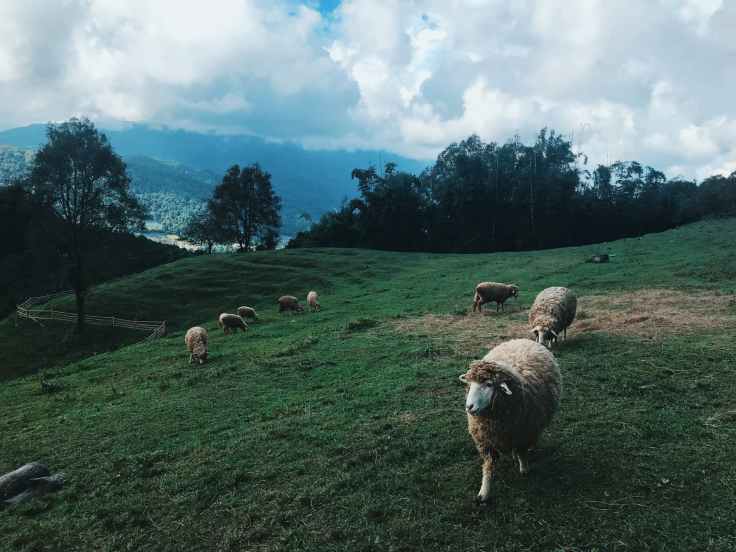
The Bible is filled with imagery of sheep and shepherds. Growing up, I lived in the countryside, but we never raised sheep, and I had little experience with livestock of any kind. We had one neighbor who had sheep, however, and he shared a lot of insight into why we should pay attention to what sheep can teach us about ourselves, and our God.
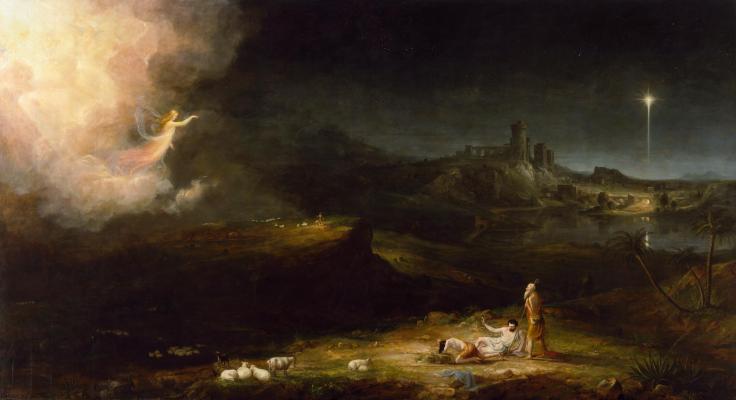
Not only does God use the imagery of sheep and shepherds, He uses examples throughout the Bible of actual sheep and shepherds. Abraham, Isaac, Jacob, the sons of Jacob, David, and the prophet Amos– all were shepherds. When the Messiah was born, the first announcement went to shepherds in the fields, keeping night-watch over their flocks!
Jesus used stories of sheep and shepherds in his parables, as well. There is a lot to understand, and I am not qualified to teach anyone about shepherding, but there are several wonderful principles that don’t require a lot of in-depth knowledge:
Sheep NEED a shepherd. There are breeds of mountain sheep that live independently, but the Bible stories speak of domesticated sheep…they are “high maintenance” animals– they need food and water, shelter, protection, and a lot of guidance and supervision! We NEED God–He understands our situations, our weaknesses, and our strengths, far better than we do. He knows the future; He has a plan, and He provides all that we need. We may not see the road ahead–we may not see the green pasture or the still waters where He wants to lead us–but He IS the WAY, the truth, and the life (John 14:6), and we can trust Him to get us there.
Sheep need to be sheared. Left unsheared, the sheep’s wool will become matted, filthy, and a potential source of danger and disease. The sheep cannot get rid of its wool on its own. However, once the old wool is sheared off, the sheep is clean, and new wool can grow. Not only does God provide for our immediate needs, He provides for our renewal and growth–physical, emotional, and spiritual growth. Sometimes, that means we need to be “sheared” of habits, people, or situations that have become “matted”, and filthy. We haven’t even noticed the change, and we don’t see the danger. God wants to free us from the “baggage” we accumulate, and help us experience new growth.
Sheep depend on others to stay safe, healthy, and fed–there may be “lone wolves”, but there are no “lone sheep”. God will bring us into “flocks”. We learn to eat together, travel together, rest together, live together, and follow our shepherd’s voice together. Trying to be a “lone sheep” makes for a lot of trouble!
Shepherds make great sacrifices to care for their sheep– they provide, protect, rescue, heal, guide, and clean their sheep. A good shepherd is watchful, faithful, caring, and gentle, even as s/he must be strong, brave, and fiercely protective, risking their lives (or even giving their lives) for their flocks. Jesus, our Good Shepherd, knows each one of us intimately– He knows how to heal and guide us. He wants us to recognize His voice above all others, and to stay close to Him. He died to redeem you and me!
May we trust our Good Shepherd today, and every day. May we spend time acknowledging Him as our loving and faithful Shepherd, and call out to Him– in praise, in adoration, in supplication, and in loving gratitude.

































 Pursuing Prayer