Praying to Win

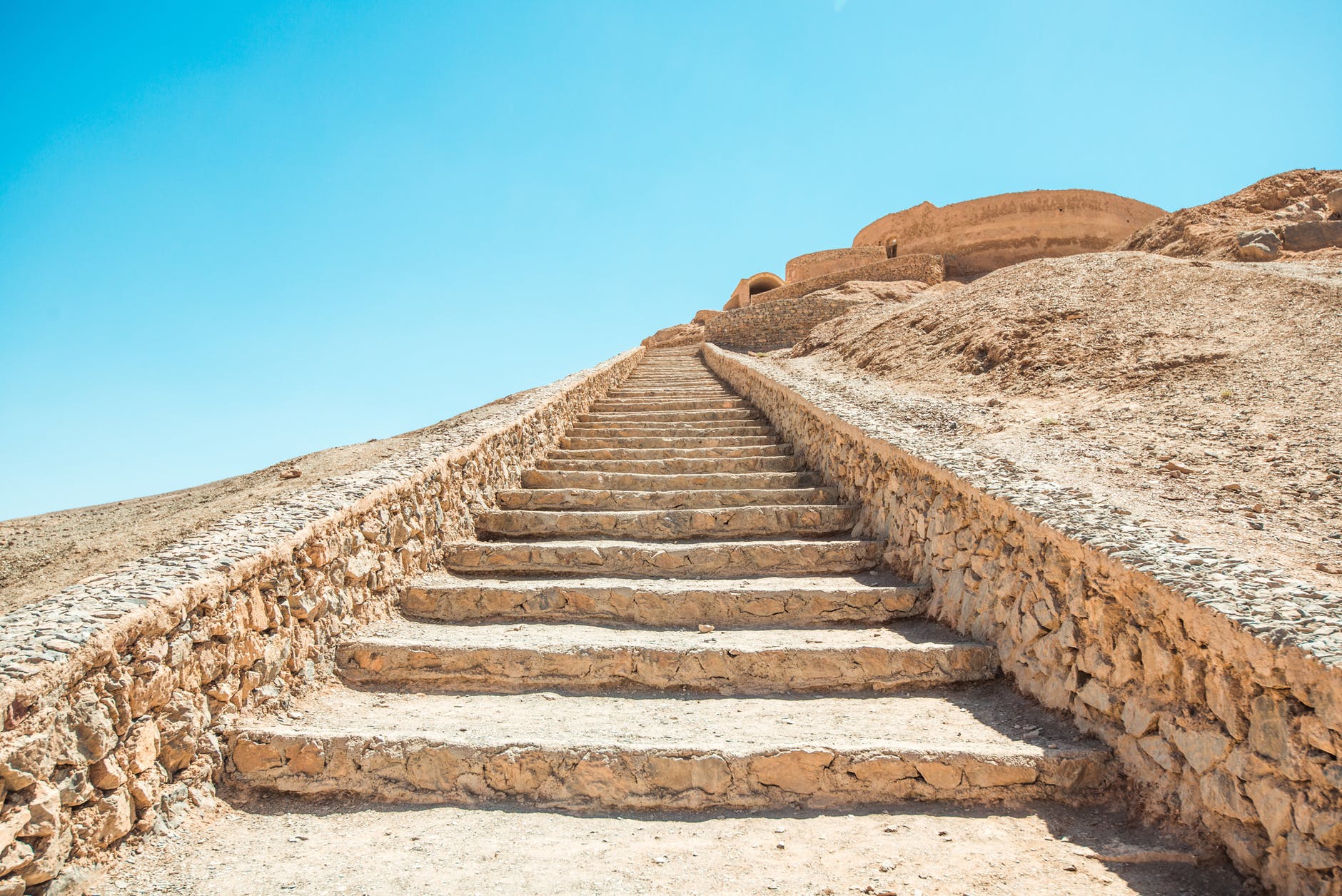
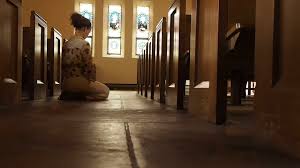
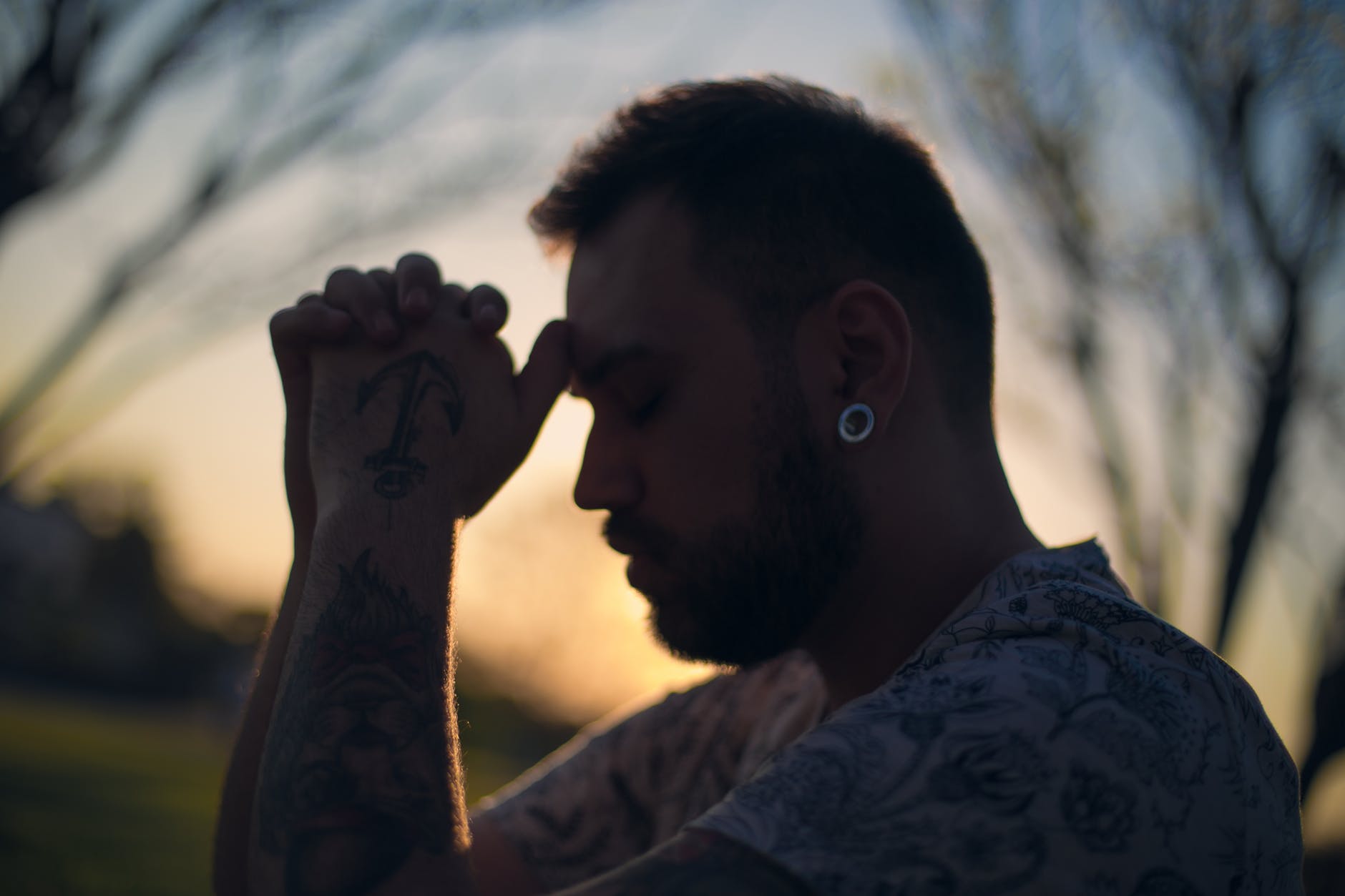
Have you ever watched a sporting event–a real nail-biter–and prayed for your team to win?  Do you wonder if God is concerned about Little League or High School Basketball, or which team wins the Superbowl?  And what about the parents and coaches on both teams praying to him–one side has to “lose”–how does God answer such prayers?  DOES he answer such prayers?

While the Bible doesn’t give us a specific answer, I think there are some general principles that apply.  When teams prepare for a big game, they may talk about their desire to win, they may study their opponents, assess their own strengths and weaknesses, and give themselves pep-talks about winning, but they don’t practice winning– they practice playing their best, improving those areas where they are weakest, and working to bring their best on game day.  They don’t pray to win by default or by bad sportsmanship.

The apostle Paul uses athletic analogies for the Christian life– he talks about running the good race, fighting the good fight, and working to be worthy of the prize.  But he doesn’t direct Christians to pray that God gives us a victory.  Instead, he points out that the greatest victory– that over sin and death– has already been won!  We don’t fight the battles wondering if our victory or loss will turn the tide of the war.  We fight in the hope of strengthening our fellow warriors and bringing our victorious Savior more glory and honor.

This holds true in other areas as well.  In politics, we fight to win, but not in desperation or despair, knowing that if we lose this battle, God is not defeated or even surprised by the outcome.  Even in situations of corruption, despotism, and chaos, God can raise up leaders, topple evil powers, and bring renewal and revival.  In war, we fight to win, we fight to defend what we know to be right; but even if we lose the battles, we don’t lose faith.

God doesn’t always give us “wins.”  He doesn’t guarantee that we will never face setbacks or disappointments.  In fact, sometimes we need to “lose.”  We need to lose our selfish ambition, our pride, our drive to compare ourselves with others, our envy and greed, and our failure to submit to God’s best plan.

We pray for victory, but more than victory at any cost, we pray for God’s will to be victorious– for his strength to be shown even in and through our own weakness.  We pray for victory on God’s terms– which may mean a painful loss today, and grieving for the night, but joy that comes in the morning.  Great teams, great nations, great leaders– are not forged in continuous expectation of easy victory.  Sometimes we learn more and become greater by learning from our failures.

Let’s not just pray to win– let’s pray to be more than conquerors (Romans 8:37)!

pexels-photo-415571.jpeg


The Road to Hell…

I started down the boulevard,
Freshly paved, smooth and gleaming,
Its lanes clearly marked and a gentle rise
Toward a glorious horizon.

New construction sites caught my eye;
Here was progress– here was the future!
I drove on, excited in my new course,
Dreaming of destiny and fulfillment.

view of city street
Photo by IKRAM shaari on Pexels.com

Gradually, the scenery changed.
Construction gave way to abandoned projects:
Half-finished high-rises, silent storefronts,
Driveways leading nowhere, weedy parking lots.

Now the road, so smooth at the beginning,
Twisted and turned without purpose.
Gravel and broken pavement lined with
Abandoned cars and broken glass.

white and black house painting
Photo by Pixabay on Pexels.com

Frightening thoughts intruded–
I had seen no open stores, no gas stations,
No houses, or other cars for miles.  I was alone.
There were no crossroads; no places to turn around.

The road that had begun with so much promise
Was now a rutted path going nowhere.

photography of railway
Photo by MESSALA CIULLA on Pexels.com

I woke up in a cold sweat– it had been a dream.
More– it had been a warning.

I had “good intentions” for my journey.
But the easy road, the appearance of future success
Had lured me away from the path marked with suffering
And paved with ancient truths.

I had packed no maps, ignored the GPS, and trusted to “instinct”
To lead me, not to a fixed destination, but to “discovery.”

I drifted back to sleep, and dreamed that I was back at the beginning.
Roads branched out all around me.
The gleaming new boulevard no longer held any appeal.
But now I studied the other roads.

aerial photo of buildings and roads
Photo by Aleksejs Bergmanis on Pexels.com

There were so many; roads leading to “enlightenment”;
Roads offering “fame” and “immortality”;
Narrow paths promising “mysticism”;
Superhighways advertising “happiness.”

Off to the right, there was a tiny filling station–
The old fashioned kind, with a service man.
He offered to fill my tank, but then he said,
“They all end up in the same place, you know.”

abandoned business classic dirty
Photo by Pixabay on Pexels.com

I looked up into his eyes–eyes that held in them
The wisdom of the ages and boundless love.
“Enter in at the narrow gate…”
“I am the way, the truth, and the life…”
“This is the way, walk ye in it…”

He turned and walked through the back door
And I followed him down a sunlit path,
Up a small rise, and into glory.

landscape photo of pathway between green leaf trees
Photo by Skitterphoto on Pexels.com

“The Willing Suspension of Disbelief”

It’s been nearly 45 years since I first heard this phrase, but it has resonated with me ever since.  Samuel Taylor Coleridge wrote of it over 200 years ago, speaking of how readers interact with literature, especially when it contains fantastical or supernatural elements.  Our high school English teacher and drama coach, Mrs. Barr spoke of it not only in the context of literature but in the context of the theater.  In fact, in all art, the artist depends on at least some willing suspension of disbelief on the part of his/her audience. 

 In visual art, we must believe that a few strategic blobs of color, or carefully shaped pieces of marble or wood have captured something timeless and true about a single moment in time– that movement and emotion and life can be held immortal on a canvas or a statue or a tapestry.  We must suspend our disbelief that paint, or wood, marble or stone exists only as itself– in the artist’s capable hands, mere matter transcends its ordinary form to touch our very soul.   In music, we can hear, in the well-played notes of an instrument, the sounds of birds, the falling rain, the crashing of thunder, the marching of armies, or the buzzing of bees.  Music doesn’t just touch our ears, it can touch our souls. Shakespeare also alluded to this in a comical way: “Is it not strange that sheep’s guts should hale souls out of men’s bodies” (Much Ado About Nothing– Act II, Scene 3) We can listen to a symphony without being moved, but in the willing suspension of disbelief, we can be transformed and inspired by notes on a page and breath being blown into wood or brass or fingers or bows being drawn over “sheep’s guts”.

 In literature or in the movies, we must suspend our disbelief that mythical creatures, aliens, monsters, and talking animals live among us as a normal occurrence– for the duration of the story…Dragons must be vanquished, Fairy Godmothers must be allowed to help poor Cinderella to the ball, and The Raven must repeat his ominous line, “Nevermore.”  Frodo must hide from orcs and Nazgul in order to reach the Fires of Doom and destroy the One Ring. Charlotte must spin her wordy webs and Papa Bear must exclaim, “someone has been sitting in my chair.”  As children, we shed our disbelief readily and enter into the story, falling in love (or having nightmares about) imaginary characters. As adults we become cynical, and lose some of our ability to enter into imagination and other-wordly realms.

I was recently reminded of this concept of the willing suspension of disbelief in two different contexts– loss of Faith, and the deception of the internet– including “fact checking” and AI.  Very different experiences, but I think they both tie in.

First, in the loss of Faith.  I know so many people, family, friends, even strangers, who write passionately about their loss of Faith.  Oh, they don’t call it that.  They have other terms, other catchphrases– they talk about their “Deconversion” or their “Awakening”.  They are too smart, too savvy, too enlightened to give credence to Faith in Jesus, or in any “god” or divine being.  After all, they cannot see “Him” or “it”; they cannot prove His existence (they can’t prove His non-existence either, but that’s another story). Believing in God, they claim, is the same as believing in fairy tales.

And yet…Keats once posited, “Beauty is truth, truth beauty– That is all ye know on earth, and all ye need to know” (Ode on a Grecian Urn).  Earlier in his poem, he also says, “Heard melodies are sweet, but those unheard are sweeter;  therefore, ye soft pipes, play on; not to the sensual ear, but, more endear’d, pipe to the spirit ditties of no tone…”  There is an acknowledgement that we do not just exist in a physical plane, but in a world of metaphysical marvels– memory, hope, and yes, even “fairy tales”.

Of course, we know that there is no Cinderella– no “happily ever after” in this world.  Life is not a fairy tale story.  But our lives ARE stories– we have a beginning and an end.  We want to find a purpose, a reason for being who we are, where we are, and even when we are.  We search for our “true” identities.  We dream dreams and harbor hopes.  We battle evil forces– the demanding boss, the annoying neighbors, blizzards and tornadoes, cancer…And we believe very strongly in concepts of justice and injustice, fairness and unfairness, goodness and evil–metaphysical concepts.  We long to be understood, accepted, “seen,” and loved (ever after!).  And we must suspend our disbelief in the face of evil to search for the good.  We must suspend our disbelief in our own worth to make choices that preserve our health and develop our latent talents.  Indeed, we must believe and cherish what we do NOT see or have never experienced, or we will be crushed by our (often temporary) realities.  When cynicism and disbelief BECOME our belief system, we become the living dead.  Oh, we can continue doing “good” things without believing in God; we can espouse a code of “good living”, we can take care of our bodies and emotions within a framework of humanism and self-esteem.  But we will not experience the fullness of Truth, or Beauty, or majesty, that lives in Faith.

Loss of Faith represents, what I would call an “unwillingness” to suspend disbelief, or a tendency to cling to only that which can be experienced on a physical plane. But there is another danger– that of an “unwilling” suspension of disbelief–believing things that are deceptive, because they are presented as “truth.” This includes such things as “fake news” on the internet, “fact checkers” who tilt the truth and “throw shade” on inconvenient or uncomfortable truths, and AI-generated stories meant to “create” truth  where none exists.

I would like to say that I am immune to such things; that my knowledge and dependence on truth cannot be subjected to manipulation.  But that is not always true.  I see a touching story on Facebook about a young person who is missing– please spread the word– only to find out that the post is several months out of date.  I see a meme that accuses one political big-shot or a celebrity or even a corporation or business of being corrupt, unfair, evil, etc., and I am outraged– until I realize that the original post was generated by a person or group that is completely unknown to me.  I don’t know their true experience, or their motivation in spreading this information (or false information).  It MAY be true, it MAY be completely false, but it is most likely somewhere in between– not nearly as bad as portrayed, or as every bit as bad as other politicians, celebrities, or companies who aren’t mentioned in the meme or article.

Outrage— especially outrage that is deliberately and manipulatively generated– is the suspension of not just disbelief, but of discernment. We immediately judge.  We immediately feel our blood pressure rise, our cheeks flame, and our breathing accelerate.  We become passionately angry, but we also become instantly indignant and self-righteous.  I would never I cannot tolerate… But what have we done on a smaller scale? Are we SO innocent? Do we have the authority to judge based on a single article or photo?

But it is not just outrage that can be deliberately and manipulatively generated.  AI and bad actors on the internet and other media sources can also manipulate our hopes, our disappointments, and our beliefs in what has happened and what is happening around us.  Stories appear online that sound authentic, narrated by well-modulated voices (many of which seem familiar), telling us that this event took place and changed someone’s life, or that this celebrity has finally “spilled the dirt” about beloved co-stars who died a couple of decades ago.  Others purport to give “wise words” from aging actors or writers or recently dead corporate gurus.  We suspend our disbelief, or our suspicions, because we trust the voice or the photoshopped picture.  We choose to believe the worst of people we already dislike.  We choose to believe only the best of people we like.  If a stranger came up to me on the street with a story like this, I would be suspicious.  Who are they? Why are they telling me this?  Why should I trust them?  But we suspend our disbelief if we see it in print with what looks like credible photos and when narrated by what we assume to be a credible voice.  If we bother to look at the source, even that seems credible– I may not have heard of this news service, but it has the word “news” in its heading…

We put our Faith in things seen– even if they are false, while we hold truth and beauty to be suspicious, because we have lost the ability to hope and trust in something beyond our own wisdom and personal perceptions.  

We need dreamers and artists and writers who see truth and beauty in the universal and metaphysical realities of faith and hope and majesty.  And we need people with the discernment to disbelieve what strangers claim to “show” and “tell” us with their clever manipulations.

Both Faith and “the willing suspension of disbelief” depend on the Will.  We have to make choices in what we are willing to believe and how far we are willing to search for the truth– both in what we can see, and in what we cannot.

Knock…


Matthew 7:7-12 New International Version (NIV)

Ask, Seek, Knock

“Ask and it will be given to you; seek and you will find; knock and the door will be opened to you. For everyone who asks receives; the one who seeks finds; and to the one who knocks, the door will be opened.

“Which of you, if your son asks for bread, will give him a stone? 10 Or if he asks for a fish, will give him a snake? 11 If you, then, though you are evil, know how to give good gifts to your children, how much more will your Father in heaven give good gifts to those who ask him! 12 So in everything, do to others what you would have them do to you, for this sums up the Law and the Prophets.

I have heard many sermons using this passage, and the sermons always focus on our (active) end of the directive–Ask!  Seek!  Knock!   But what does this passage say about God?

God is omnipresent, and He has revealed Himself in creation, and through the lives of His people.  But God is also reserved– He does not give us all the answers; He doesn’t spoil us by catering to our every wish; He keeps certain things behind closed doors.

ancient antique architecture building

“Knock, and the door will opened to you.”  There is no mention of a key or key card, a pass code, or any need for ID– just knock.  God will open the door.  I imagine thousands of (figurative) doors in my life– opportunities, blessings, challenges, relationships– each beckoning.  But the doors cannot be opened from the outside.  I can strain and push, yell and shake my fist at the closed door in front of me, kick at it, even try to break it down.  But if I knock, the door will be opened.

This doesn’t mean that I have no choices or free will as I go along.  I can find other hallways, roadways, even freeways on which to travel.  And there are opportunities along those paths and roads that are not waiting behind a door.  But just like the questions we need to ask, and the quests for which we seek, the closed doors cause us to make a choice– will we knock or walk on?  Will we try to open the door in our own power, or knock and let God open the door from His side?

person standing between two buildings

Ask, seek, knock– God desires that we take steps toward Him.  He will not walk away, or reject those who sincerely desire His presence.  He will not give us “bad” gifts– though He allows us to walk through “the valley of the shadow of death”, He will not leave us there with no comfort or hope.  He will not “lock us out” of His goodness or His Grace.  In fact, HE stands at the door and knocks– waiting for US to open the door, as well.

woman wearing sleeveless dress

Someone may say– “I turned away from the door, walked down my own path, and now I’m trapped behind a wall of doubt and guilt and bad choices.  There are no doors left for me”.  Jesus stands ready to change all that.  There are no walls or dungeons He cannot enter– He will make a door, if that’s what it takes– just ask!  You may have to climb over some of the debris, but He will pull you up and over any obstacle you can imagine.

Someone else may say, “I have prayed and prayed, and God hasn’t opened the door for me…”  I don’t have an “easy” answer for you, and I don’t want to give a canned response– God isn’t a “one size fits all” God– His ways are good, but they are not always comprehensible.  I can only give an example from my own life.  I prayed for years that God would “open the door” for me to be married and have children.  I met several wonderful men, some godly, others just really nice guys who don’t follow Jesus.  I could have fallen into, or schemed my way into a marriage or sexual relationship with one of them– I could have tried to get pregnant for years before I found out I was barren.  I might have made a marriage work, might have adopted children, might have…But I kept knocking on THE door– the one that God set before my heart and soul– the door that called me to enter and be close to Him– to do it His way or not at all.  For over 25 years I knocked– sometimes faintly and with fear that the door would stay closed– sometimes with a sort of desperation.  And one day, the door opened– God’s door, God’s way.  I have no doubts or regrets about knocking at that door, or waiting for it to be opened from God’s side.  I had imagined what was on the other side of that door–what I have received is perfectly sufficient, even as it is totally different from what I imagined.  I never had children of my own– but as I waited for God’s timing, He led me to work with hundreds of children who blessed my life beyond description.  And in waiting, He led me to opportunities I would never have had if the door had opened in MY timing.  All I can say is this– God led me to desire something worthy and good and to His Glory.  I believed it was marriage and family–but even if I were still unmarried today, I would not stop praying; not stop knocking; not stop trusting in God’s goodness and His wisdom for my life.

inside of an abandoned building

Another may say, “I knocked on a door, and God opened it, but it only brought me pain and misery.”  Once again, I don’t have a quick or easy answer for you, and there is no answer that will magically take away pain and misery.  I don’t want to invalidate or deny your experience, and I don’t want to claim that I know why God has allowed you to go through such an experience.  I would only challenge you to be like Jacob, who wrestled with God and would not let go until he got a blessing.  I don’t know why God withholds some answers and allows pain that seems needless and senseless.  And even though I know of many instances where God has brought resolution and healing out of tragedy, I also know that it doesn’t erase all the tears and questions.  My own experience brought years of depression, bitterness, and isolation even as it brought incredible growth and opportunity– I still have memories that bring tears and painful thoughts–but I know that healing is possible, and I still believe that God is “good”– I believe that God is with us even in our pain and sorrow.  I believe that Jesus suffered greatly, not only on the cross, but throughout His earthly life– He faced rejection, betrayal, frustration, misunderstanding, hatred, bigotry, injustice, loneliness, homelessness, poverty, hunger, and more.  Pain is intense, but it is not eternal.  Evil is real and it is miserable, but it is not victorious.

Keep knocking.  Your door may seem like the ultimate barrier, but God wants to open it for you.

ancient architecture brick brick wall

Seek…

Matthew 7:7-12 New International Version (NIV)

Ask, Seek, Knock

“Ask and it will be given to you; seek and you will find; knock and the door will be opened to you. For everyone who asks receives; the one who seeks finds; and to the one who knocks, the door will be opened.

“Which of you, if your son asks for bread, will give him a stone? 10 Or if he asks for a fish, will give him a snake? 11 If you, then, though you are evil, know how to give good gifts to your children, how much more will your Father in heaven give good gifts to those who ask him! 12 So in everything, do to others what you would have them do to you, for this sums up the Law and the Prophets.

I used to own a small retail shop, and I came to recognize at least three different types of shoppers.  There are the browsers– they had no clear idea of what they were looking for, and they spent their time looking at items and chatting.  They may have ended up buying items, but they were just as likely to pick up an item, consider it, and then cast it aside if something else caught their eye, or their friends were ready to leave.

various containers in store

Then, there were the lookers.  They would pick up certain items, look at the price, look at the color and size, hold it up, try it on (if it can be worn); they may even ask their friends’ advice.  They had a particular need or desire, and they were looking for an item that would suit– or at least come close.

But the seekers– look out!  They marched in, came right up to the counter and asked a host of specific questions.  “Do you have_______________?”  They had a description of the item they were seeking– size, color, brand or label–often very specific and they insisted that nothing else would do.  If I assured them that I did not have that item in stock, they turned tail and walked away.  If I said that I had something similar, they may have let me bring it out for inspection–reluctantly– but one glance was all it took for them to make up their minds.  If I suggested something else, they were likely to shake their head(s) and walk away.  They may have come back in a week or month, or even the next year, looking for the same item, or something else, but they came with the same pulsing energy, and excitement.  Price was generally no object.  The fact that I didn’t have the item they were looking for did not diminish their excitement or desire to find “that one item” that brought them through my door. They may have walked out with nothing, but I was treated to several minutes of description of a special item: what made is special, how long they had been looking, all the close-calls and “might-have-beens.” I learned a lot about antiques and collectibles I had never heard of before our encounter!

person woman eyes face

We live in a world of browsers– in fact, our search engines/internet information-gathering applications are called “browsers”.  We enter a keyword, the application brings back dozens or thousands of possible sites, and we “browse” through our options until we find one that seems to give us the information we want or need.  This is fine if we are looking for general information.  It becomes frustrating if we are looking for an exact website, unless we know its domain name or URL.

gray laptop computer near journals

In pursuing prayer, and “seeking” a closer relationship with God, sometimes, I stoop to browsing– I’m not really seeking His face, just looking around for encouragement or validation or a vague warm, fuzzy “feeling”.  God is a rewarder of those who seek Him.  Earnestly, diligently, fervently.  We are not called to browse idly, but to seek boldly.

I used to work with teens.  Sometimes I would organize a scavenger hunt, or a treasure hunt.  Teams would form, clues or lists would be given, along with a time limit.  Students would run, climb, dig, crawl, scamper, push, sweep, turn things over, and under, and all around–all in the pursuit of a clue or an item for a game.  How much more might we see God’s response if we brought this kind of energy and passion to our prayer life?

person looking searching clean

I think I have some seeking to do…

Ask…


Matthew 7:7-12 New International Version (NIV)

Ask, Seek, Knock

“Ask and it will be given to you; seek and you will find; knock and the door will be opened to you. For everyone who asks receives; the one who seeks finds; and to the one who knocks, the door will be opened.

“Which of you, if your son asks for bread, will give him a stone? 10 Or if he asks for a fish, will give him a snake? 11 If you, then, though you are evil, know how to give good gifts to your children, how much more will your Father in heaven give good gifts to those who ask him! 12 So in everything, do to others what you would have them do to you, for this sums up the Law and the Prophets.

I’m really bad about asking for help.  I don’t mind asking for advice or opinions– I can listen and take the advice or ignore it; accept someone else’s opinion or not.  But asking for help puts a certain obligation to accept whatever help is given.  It also announces that you have a need; that you are struggling and can’t do “it” on your own.  This is especially true in situations where we are embarrassed to admit to shortcomings, inabilities, or perceived failures.

background conceptual contemporary creativity

Asking is difficult for most of us.  Not just because we must swallow our pride and admit to a need, but because we must hope that whoever we ask will be willing or able to meet that need.  Asking becomes more difficult when we don’t know who we can trust.  Admitting weakness to someone who is kind is a small risk–it may bruise our pride, or cause the other person to pity us.  Asking for help from someone who is deceitful, arrogant, incompetent, or abusive is a recipe for disaster.

Sometimes, we are afraid to ask for help because we sense that there is no help to be given.  We wallow in despair, thinking all is lost or hopeless.  But fear and despair are not wise counselors–they cannot help us out of our problems; they can’t even see beyond the current chaos or the next panic.  Sometimes, we are too proud to ask someone else to do what we feel we should be able to do– others can manage, others can triumph “on their own”– not realizing that they had help along the way, or that they need help in other areas where we are strong.

girl in pink jacket on wooden bridge in the forest

And sometimes, we don’t want the kind of “help” that is offered.  We want help to stay in our comfort zone, even if it means bondage to addiction, or losing an opportunity that comes only with hard work or sacrifice.  We want someone to lie to us, keep us comfortable, or flatter us, when our greatest need is someone to challenge us, coach us, and give us the truth, even when it stings.  In fact, if we have grown lethargic, entitled, and arrogant, we won’t ask for help– we will demand a lesser form of help that enables us to stay as we are and not help us become who we were meant to be.

sky sunset person silhouette

So consider this as you pray today– the God of the Universe– creator of galaxies and microcosms, ruler of eternity, the God who hears every sigh of every human on the face of the planet and knows who made it and why, the God who gave His only Son to fulfill the law and restore your soul–this God is waiting for you to ASK Him for help, for guidance, for wisdom, for your daily needs, for forgiveness that only He can give completely.  And He promises to give good gifts– joy, peace, hope, love.  He will not scorn us in our need– He already knows it, Why are you waiting?
What I Didn’t Pray…

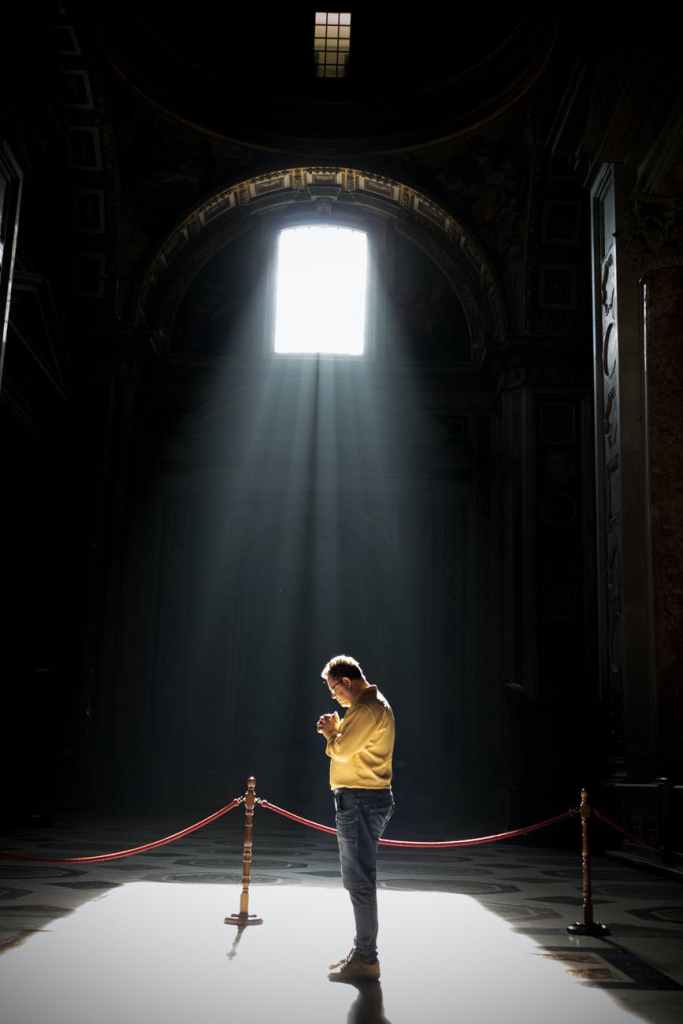
Today, I prayed.  I thanked God for Who He Is, and I lifted up those who are sick or needy.  I thanked Him for my family and friends, for the freedom to worship without fear, for His faithfulness in providing food and shelter and comforts.  I asked Him for wisdom to guide me through the new week; that I would say and do things to bring Him honor and glory.

It was a nice prayer.  A safe prayer.

I didn’t cry out my unworthiness, nor did I boldly rejoice in His Holiness, laid over me by His son’s blood.  I didn’t plead with Him on behalf of the lost and suffering.  I didn’t rage at the continued injustice and evil I see around me.  I didn’t spend precious hours listening as He whispered assurances to my soul.  I didn’t worship in the splendor of His Lovingkindness.

I got up from prayer, feeling mildly better– I had done my duty.  I had spoken with God…or spoken AT Him…I left feeling unchanged.

I sat down to write this blog on prayer.  God forgive me for thinking I have more to say to an unseen readership than to You, my Creator!

Forgive me.

That Voice in Your Head

Most days, I post about Pursuing Prayer from the “praying” end…how do I pray, what attitude do I have about praying, why do I pray, etc.

Today, I want to explore the “responding” end…how do I know when God is answering my prayer, or what he’s asking me to do in response to his will?  While I don’t have a complete answer, I do want to share some wisdom– some from experience and some from Biblical principles and others’ testimony.
Isaiah 55:8-9 English Standard Version (ESV)

For my thoughts are not your thoughts,
    neither are your ways my ways, declares the Lord.
For as the heavens are higher than the earth,
    so are my ways higher than your ways
    and my thoughts than your thoughts.

God moves in a mysterious way, His wonders to perform. He plants his footsteps in the sea, and rides upon the storm. William Cowper

It often surprises people to learn that “God works in mysterious ways” is not actually in the Bible.  God’s ways are NOT our ways, and his thoughts are not our thoughts, but his answers to prayer are not always obscure and unknowable.  God does not delight in vexing us and making us guess and second-guess his will.  It would be easy if God always answered our prayers with a flashing neon sign that gave a simple, one-sentence directive– “Take two aspirin and call me in the morning.”  “Click your heels together and say, ‘There’s no place like home.'” “Hakuna Matata.”  But pithy platitudes and easy answers are not God’s way, either.  God created each of us as a unique reflection of his divine image– his answers will be uniquely designed to fulfill his will and meet our deepest needs, not always in ways we expect or understand.

pexels-photo-942317.jpeg

So how do we discern God’s will when there is no neon sign or simple answer to our prayers?  Here are a few guiding principles:

  • God will NEVER answer your prayer by contradicting himself or compromising his holiness.
    • God will not answer your prayer for money by giving you an opportunity to cheat or steal.  He will not answer your prayer for a husband by throwing you into the arms of someone else’s.
    • Just because God doesn’t send a lightning bolt or physically stop you from doing something doesn’t mean that he has given his OK.  If he ALLOWS you to sin, that doesn’t mean that he APPROVES of your sin or that it is his answer to your prayer.
    • God will never ask you to do harm to yourself or others as an answer to your prayer.  Vengeance, sacrifice, atonement, and retribution are the province of God alone.  I believe that God asks us to be vigilant in defense, and allows us to take up arms in defense, but to initiate a feud, to seek personal vengeance, or to act out vigilante justice is to flout both God’s authority and the authority of the powers God has set in place over us.
  • God MAY use circumstances or people to answer your prayer.  But the same principle above applies– circumstances that lead to sinful actions are NOT God’s answer to your prayer; people who advise you to do what you know is contrary to God’s holiness are not sent from God– no matter how appealing the prospect, no matter how powerful the person or persons.  That being said, God may choose to use the most unlikely of persons or events to bring about a resolution to your need–LET HIM!  Don’t judge a gift by the size, the shape, or the wrapping paper!

gift-made-surprise-loop-39006.jpeg

  • God may use time to answer your prayer.  I prayed for a husband from the time I was a young girl– I married at age 46.  Waiting doesn’t mean that God has forgotten about you; it doesn’t mean that you aren’t worthy of an answer or ready for an answer– sometimes your answer isn’t ready for you!  There are two caveats I want to share from my own experience of waiting for an answer:
    • Don’t give up!  God knows the desires of your heart– but keep praying anyway.  Well-meaning people will say awful, hurtful things– that you aren’t praying enough, or praying the “right” way; that you must be hiding un-confessed sin; that you need to try some other way to get what you want, or to hurry God along.  In my case, I had people trying to fix me up, suggest dating services, remind me that my “clock” was ticking (it was broken, but they didn’t know that), or suggest that it just wasn’t God’s will that I marry, and I should pray for him to take away the desire for a husband.  Listen to folks like this (if you must) with half an ear and less than 10% of your heart– let them cause you to re-examine your heart and your desires, but don’t let them cause you to give up or doubt God.  That was not their intention, but it can often be the result of their ill-considered words.
    • Do the next right thing.  Doing nothing while you wait for the perfect answer gets you nowhere.  Wringing your hands and pacing gets you nowhere.  God wants our trust and our obedience.  As we wait for more specific direction, we need to trust that doing the next right thing IS the RIGHT thing to do.  This was the hardest lesson for me, but the one I most needed to learn.  So while I waited, I moved ahead step-by-step.  I made a lot of friends, gained a lot of experiences, and learned about marriage by watching the examples of others (both good and bad).  I got involved working with children, first as a secondary teacher, and then as a librarian.  I got to spend nearly thirty years of my working life surrounded by young people.  I got to laugh with them, love on them, mentor them, dream with them, discipline them, and cry over them (and send them home).  I didn’t just “settle for” a single lifestyle– I learned to embrace it.  I learned to be grateful for the wonderful opportunities I had as a single woman, and to anticipate the changes that marriage would bring, should it come along.  I learned that marriage should be a means to an end, not the end itself– that marriage done right is not about my growth and fulfillment; not even about his growth and fulfillment; but about OUR growth together and toward Godliness.
  • Trust “that voice in your head”– (not the one that speaks out loud and gets you strange looks!) –but your God-given conscience, and the guidance of the Holy Spirit.  “That still, small voice” is often the most personal way God speaks to us.  In my own life, it was taking the risk to leave a career I loved (teaching) to reach for a deeper dependence on God.  I left the security of my teaching position for three part-time jobs (at one point), no health insurance, and a move to a new community where I knew virtually no one.  I had other choices, other more appealing options, chances to reconsider.  I wasn’t being pushed out of teaching–in fact, I left just as my options at the school were opening up for bigger and better things.  Yet I felt compelled to leave.  I had no safety net waiting– I ended up in libraries, but that wasn’t my original plan.  There were many people counseling me to reconsider– and their reasons were compelling.  But as I stood firm, other voices came along to encourage me.  I believe they were sent by God to confirm that this risk was from him and for my good.
  • Don’t trust “that voice in your head”–No, I’m not trying to confuse you or contradict what I just said.  But this is another caveat (see above).  We are told to “test the spirits”, and sometimes, that voice in your head is NOT the Holy Spirit.  In the case I mentioned above, I had to follow all the other principles of discerning God’s will.  In my case, leaving teaching did not violate God’s holiness or come about because I wasn’t willing to follow God’s leading–I wasn’t leaving teaching to try my hand at a get-rich-quick scheme, or because I had lost my desire to work with students, or had lost faith in God’s sovereignty in my life.  God DID use circumstances and people to confirm my decision and help me grow through the experiences that followed.  God used time to help me transition from schools to libraries, and prepare me for other opportunities, including short-term missions trips and marriage.  I can’t even begin to list all the ways I tested and examined what I felt God was leading me to do before I made the leap.  That much testing may not always be necessary, but we need to be careful not to rely on our own understanding (Proverbs 3:5-6), but to Trust in the Lord with all our hearts.  He WILL direct our paths when we do that.

pexels-photo-618955.jpeg

  • Finally, Pray for it– pray for discernment, for wisdom, for strength to do the right thing!  Won’t God DO IT!

“Now I Lay Me Down…”

We used to teach children to say bedtime prayers by rote:

Now I lay me down to sleep;
I pray the Lord my soul to keep.
If I should die before I wake,
I pray the Lord my soul to take.

prayermotherdaughter

I don’t actually remember praying this exact prayer at bedtime– partly because it seemed morbid and conjured the stuff of nightmares more than peaceful rest.  Thankfully, my parents taught me more about praying than just this little prayer.  We learned the Lord’s Prayer, and to lift up our friends and family to God’s care.  We prayed for family stationed far from home, family members who were ill or suffering in some way, and for neighbors and classmates we cared about.  We prayed for missionaries and the people and places that called them far away.  We prayed for our nation and leaders. And we prayed confession, and thanksgiving, and worship, and intercession.

cheetahs-cubs-two-together-162318.jpeg

But I was reminded of this old prayer when I watched a video our aunt sent us the other day.  It was a short documentary about a nature photographer who spent over 18 months building up trust with a wild cheetah in order to get “close up” shots of her in the wild– hunting, eating, resting, bathing.  All was going well, until she disappeared on him.  Several months later, a park ranger located her– and her five newborn cubs! The photographer knew he was taking a huge risk, but he drove his jeep (known to the mother cheetah) and went to the area where she was now caring for her young.  He got out of the jeep and sat down in the grass nearby.  Mother cheetah was nervous, but she did not attack.  Hoping this was a good sign, the photographer did the unthinkable– he lay down in the grass, helpless, to show that he was not a threat.  As he moved from the sitting position, the mother cheetah stood up and watched.  As he lay sprawling on the ground, she too lay down, letting her cubs know that they were free to explore.  They came over to the photographer– they bit at his toes, climbed all over him, and let him pet them and poke at them with his finger.  He never sat up, lifted his head, or played rough with them.  He never grabbed them by the nape or spoke.  When they got tired of “the new thing” and returned to their mother, the photographer was able to sit up, move close to the family, and take some incredible photos of the whole group.

animal animal photography big cat carnivore

Why did this remind me of a child’s prayer?  The photographer kept saying in the voice-over that it was all about trust– he was patiently building a relationship with this single cheetah for over a year and a half, showing her that he could be trusted.  And he was rewarded by her reaction when he signaled that he wanted to be close to her cubs.  His act of lying down and essentially putting his life in the balance caused her to respond with a similar act showing her trust was complete.  And her act of trust signaled to her cubs that this “new thing” was safe to approach– he could be trusted.  Gaining her trust was a matter of life and death for the photographer. A mother cheetah in the wild can run faster than a sports car and kill without a second thought to protect her young.

But she lay still and rested in her trust of this man.

How often do we “lay down” in our trust of God– stop brooding, worrying, fidgeting, and fighting to make sense of things, to build a safety net, to get ahead, to keep up with the neighbors, to feed our dreams and aspirations?  The Psalmist in Psalm 23 says, “He makes me to lie down in green pastures…”

high angle view of lying down on grass

Trust isn’t just about lying down and resting– we are commanded to “Go” to “run the race” and to “stand firm in the faith”.  But what would it look like if people could see followers of Christ at rest in the certainty of God’s provision and power?   What if we opened our eyes to see God patiently building a relationship with us, waiting for the day that we would trust Him enough to enter our daily life?  How much more might our children learn to trust God if they saw parents who followed God’s cue to lie down in peace and hope, instead of scurrying around trying to do God’s work in their own (used up) energy?   What if, instead of praying with a morbid expectation of dying, we lay down to sleep, knowing that our soul is eternally safe, and that our future is secure and blessed because of the One who hears our prayer?

man person cute young

“Now I lay me down to sleep;
I know the Lord my soul will keep.
If I should live another day,
He then will light my every way!”

Declaration of Dependence

Today, America marks the 249th anniversary of the signing of the Declaration of Independence. In it, colonial leaders listed several reasons why they no longer held allegiance to the British Crown. Many of their reasons involved abuses by the King or by Parliament in relating to their colonial citizens. Taxation without representation; passing unjust laws; requiring people to quarter (feed and house) soldiers who often harmed and cheated them; refusing to hold the soldiers accountable for their offenses– even murder; refusing to allow the colonials to trade with other nations, etc. But there was something more.

We hold these truths to be self-evident, that all men are created equal, that they are endowed by their Creator with certain unalienable Rights, that among these are Life, Liberty and the pursuit of Happiness.–That to secure these rights, Governments are instituted among Men, deriving their just powers from the consent of the governed, –That whenever any Form of Government becomes destructive of these ends, it is the Right of the People to alter or to abolish it, and to institute new Government, laying its foundation on such principles and organizing its powers in such form, as to them shall seem most likely to effect their Safety and Happiness.

In drafting and ratifying these words, the founders of the United States did something unique. They did not just establish an independent government; they established a model for both independence and dependence IN government. Government is not independent of certain inalienable rights, nor of the Creator of those rights. Governments are not the highest authority in the land. Governments are instituted and derive their power, not by their own actions and decisions, but from the consent of the governed. Governments DEPEND on their ability and willingness to serve the people.

Of course, there are wicked and improper governments, and Britain’s rule in 1776 was not the worst example of tyranny or despotism the world had ever seen. The United States has not always lived up to the ideals and principles of the Declaration of Independence. Less than a century after the Declaration was adopted, the United States was engulfed in a war that tested its ideals. The nation was divided by the issue of slavery. Nearly half of the states still practiced slavery, meaning that hundreds of thousands of people were being treated far worse than the “rebellious” colonists of previous generations. Our nation as a whole was not delivering on its promised declaration that “all men are created equal” or that they were endowed by their creator with rights to “life, liberty and the pursuit of happiness”.

But when our nation has remembered its Dependence– our need for God and our need to care for the safety and opportunity for those under our jurisdiction–remarkable things have happened. The union was “saved.” Voting rights were not just extended but enshrined in our Constitution. Americans joined the fight in Europe and around the world on more than one occasion to secure rights for people who were being oppressed, tortured, and even exterminated. The “Promise of America” draws people from diverse nations and cultures and stands as a model for the rest of the world.

Sadly, today, many here in the United States want Independence from America. Our culture has devalued life, exchanged liberty for conformity, and traded the pursuit of happiness for indulgence and selfishness. We want to be independent of responsibility– to our families, to our neighbors, to our nation, and to God. We do not want a government that protects those rights that are endowed; instead, we want a government to give us assumed “rights” that are really permissions to defy God’s laws. We want to be free to redefine morality, escape the consequences of our own poor choices, and feel virtuous without pursuing virtue.

What will happen to our country if this trend continues? On the eve of celebrating our 250th year, we may be on the brink of falling apart. Issues like abortion, immigration, health care mandates, and transgenderism threaten to divide our country, just as slavery did over 150 years ago. Americans are divided on political, economic, religious, and cultural issues. We can’t seem to agree on what we mean by “rights, ” “freedom,” or “pursuit of happiness.” We can’t even seem to define what a “woman” is or decide how many genders to fight for. Everyone wants to speak out, but no one seems willing to listen– except to find another point of disagreement. We are no longer “united” states– we are warring factions in a series of culture wars.

But what happens when American Christians declare our Dependence on God and on His Word? Many around us have declared their independence from God’s laws–even to the point of denying His existence. Many people live in a self-imposed despotism; they are enthralled by a false “freedom” from morality, reverence, and even common sense. But Christians– wherever they live– are called to submit to the authority of Christ above all. We depend on Him– not on our customs, not on our history, not even on the words of the Declaration of Independence. And we are to lean on God, not on our own understanding or our superior morality or our ability to shout louder than the next person! Our Freedom comes through Christ alone!

True “freedom” comes from dependence, not independence. When we depend on Christ’s finished work on the Cross, we are free from the weight of Sin and the power of Death. When we depend on God’s wisdom, we find understanding. When we depend on God’s guidance and discipline, we gain freedom from guilt and shame. When we depend on God’s power to channel our emotions and energy, we find purpose and joy.

Today, I declare my utter dependence on God– on the Salvation He provided through Jesus Christ, and on the power of His Holy Spirit to lead me through this life. I am glad to be an American, but my ultimate citizenship is in Heaven. The “promise of America” is a good thing: the promise of Heaven is glorious and life-changing!

Blog at WordPress.com.

Up ↑