God Is Not Dead, Nor Doth He Sleep..

It was almost 160 years ago, during the darkest days of America’s Civil War, that Henry Wadsworth Longfellow wrote a poem “Christmas Bells” that would become the Christmas Hymn, “I Heard the Bells on Christmas Day.” His son had been badly wounded in battle; his wife had died just a few years earlier, and the nation was in ruins and chaos. No one knew how much longer the war would continue or what the final outcome would be; Longfellow did not know if his son would live, or if he would be paralyzed for life. As he listened to the bells of Christmas ringing from church towers, he poured out all his doubts and fears in verse. Yet he concluded, “The Wrong shall fail, the Right prevail, with peace on earth, good-will to men.”

Christmas is not just a celebration of “comfort and joy” that comes from tinsel and lights, cozy fires, or gifts under brightly lit trees. Christmas is about Hope in times of darkness. It is about promises kept; prophesies fulfilled, victory assured, even when it looks as though the Enemy has the upper hand.

It is horribly tempting in troubled times to wonder and question God’s ways– does He hear? Does He see? Is He asleep? Does He exist? How can a “good” God allow such suffering and pain? And like Longfellow, we listen to our circumstances, and they seem to drown out the message of Christmas– “For Hate is strong, and mocks the song of peace on earth, good-will to men.” The cannons of yesteryear may have been replaced with 24-hour news cycles or Facebook news feeds, with protests and terrorist attacks; war and political corruption; social tensions and economic turmoil, but the noise is still the same. There is hatred, deceit, destruction, and doubt in our world–it was present during the Civil War; it was present during the Roman occupation at the time of Christ’s birth. But that birth brought a singular hope– one that has become so familiar, and so casual as to be almost forgotten amidst the immediate urgent noises of the day.

Photo by Perchek Industrie on Pexels.com

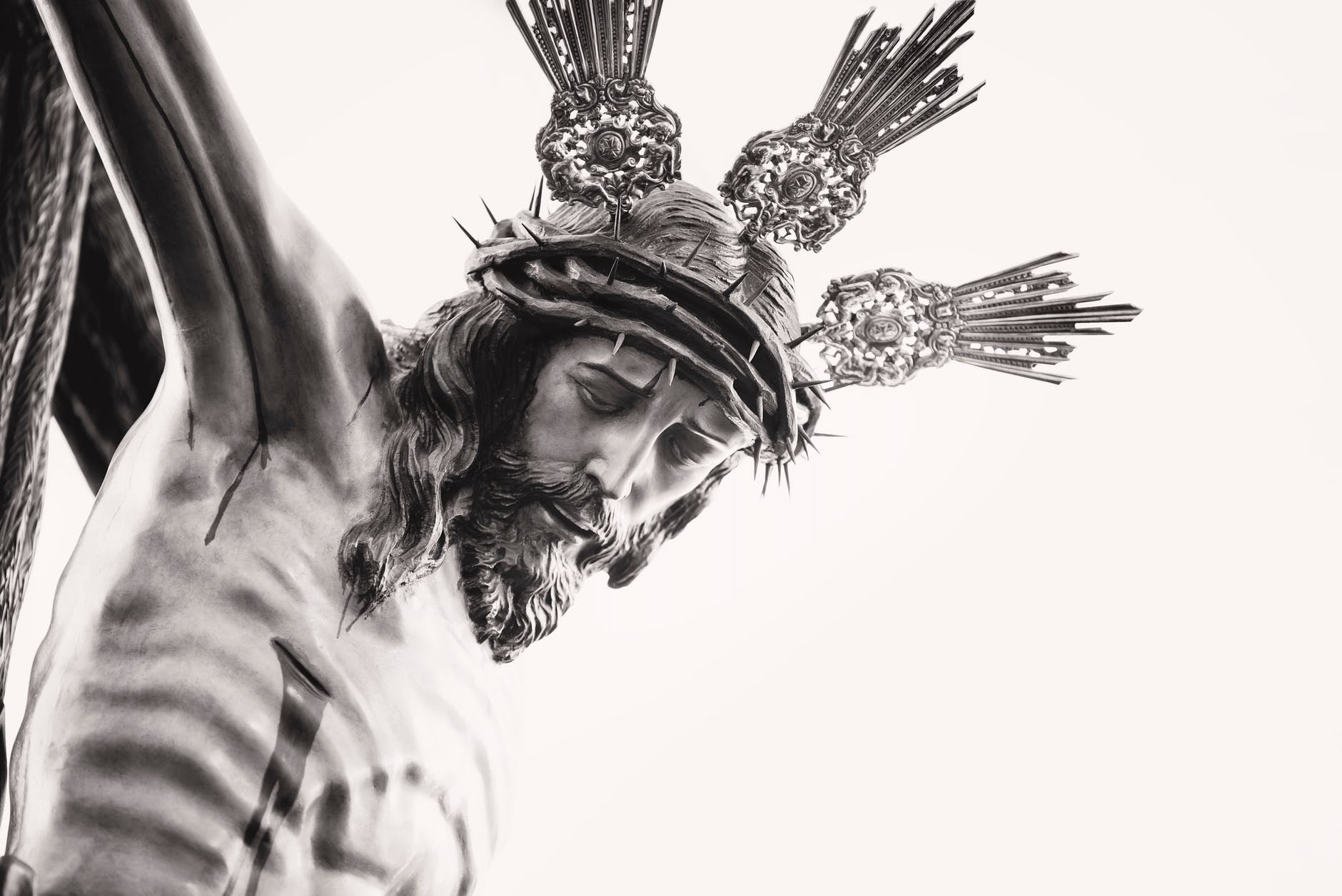
The trappings of Christmas sometimes hide the very Glory of Christ’s Advent. God CAME. He LIVED AMONG US. He was humble. He felt the cold and heat of long days and nights; his feet got dirty from walking. He laughed and cried. And, He DIED. He felt agony and shame and fear as he gasped for breath, naked and bloody and facing sneers and anger from the crowd. But God IS NOT DEAD–He conquered death; He rose again victorious. And He did it so that our suffering is not in vain– our suffering is not the end of our story.

GOD IS NOT DEAD. Hope is not in vain. Nor does He sleep–even in the silence of our lonely nights, even in the noisy chaos of life in 2023–God has not stepped off His throne; He has not turned His back on mankind. “The Wrong shall fail–” though it may seem strong and strut arrogantly through the streets, shouting and threatening–God is the final authority. Nothing is hidden from Him. He sees every injustice, every secret sin; He hears every lie, every twisted truth, every deceit. And He has no favorites– there is no excuse, no “religious” exemption– ALL have sinned, and all will be held to account.

EXCEPT– because of that one birth and death and resurrection–the debt is already paid. “The Right (shall) prevail with peace on earth, good-will to men.” For those who listen beyond the noise of battle, the bells of Christmas ring “more loud and deep” with the hope and joy and strength that overcome our pain and struggle. Longfellow found that truth– and I’m so glad he shared it. I hope his words will continue to remind us to listen through this season for the true message of Christmas.

Photo by Pixabay on Pexels.com

Let Heaven And Nature Sing!

Christmas is so much bigger than just us. That struck me afresh as I was listening to Christmas Carols earlier this week. It is more than just preparing our individual hearts, as crucial as that is, to accept the wonder and miracle that the God of the Universe would empty Himself of all His Royal Prerogative; all His Glory, to become, not just a human being, but a baby! To grow up among His flawed and rebellious creation; to know hunger and exhaustion; to wait in lines, to obey His “elders.”

His coming was not just a quiet birth in the night– though it was that, too. Such a paradox. His birth split the heavens, and divided all time into “before” and “after.” And yet, it went unnoticed by so many people crowded into Bethlehem that night. People living outside of Judea had no idea (other than some wise men from the East) that their King and Savior; their Creator and Redeemer, had just burst into history and humanity with a tiny mewling cry and covered in placenta.

But the Heavens knew! Angels marveled and shouted His Praise! Rocks and hills thrummed with the joy of it. The oceans may have danced, mountains skipped, trees cheered, frosty air molecules jumped up and down, and the stars– the suns of millions of galaxies– laughed in delight! For this was Their Savior, too! Jesus came to redeem all of creation–to fulfill God’s perfect plan!

Photo by Felix Mittermeier on Pexels.com

How can this be? After all, we still have earthquakes and tidal waves; we still have forest fires and smog. Nature is still unpredictable and untamed. And yet, Christ’s coming was the sign that the “groaning” of all creation would certainly come to an end. The promise was true! The Hope of Heaven, the Light of the World, the Word of God, was HERE. Living ON the earth. Able to climb a tree, step into (or walk on top of) the water, breathe the scent of flowers, and look up at all the stars He Himself had placed in the reaches of space. Able to enjoy– as He meant for US to enjoy– all the bounty of the Earth. 

And this same Savior has prepared another place– one that is already perfect and needs no redemption, no taming or saving or reclaiming–for those who put their Trust in Him. This tiny Babe, held in the arms of an ordinary girl in a grubby little stable in a tiny corner of the world He holds in His own arms. He is Lord of ALL Nature– that we can see on the Earth, and that which awaits us in a New Heaven and a New Earth!

Christmas is bigger than you and I. It is bigger than our lights and traditions. It is bigger than all of history. Bigger than the night sky; bigger than all we can imagine or dream. Because Christmas is the Advent of Christ– the one who encompasses everything. Let ALL Heaven and Nature Sing! Let the Angels announce His Glory! And let us Repeat the sounding JOY!

Father, I marvel at your Creation. I marvel at your desire to enter into it; to teach us how to have Joy in our journey through it. And I bow in Awe that You would include me in the bigger picture of eternity. Help me to carry this marvel into each moment, as I seek to Honor You and Enjoy the Wonder of Your Nature– both Your Creation, and Your Character! Amen!

When Half-Spent Was the Night

‘Tis the season for Christmas Music– hymns and carols, ancient songs and modern tunes celebrating the Advent and Birth of the Lord Jesus. Joyful, passionate, somber, or even a bit silly, such music can lighten our spirits, and remind us of the incredible gift of God– Emmanuel–His very presence among mankind.

Christmas lyrics often use wonderful imagery to retell this amazing story. The Bible accounts tell of shepherds, angels, wise men, and stars– the songs give us the immediacy of a dark night– “silent”, “still”, “earth as hard as iron; water like a stone”, “a midnight clear”, “half-spent was the night”…

Most of us live in a world that rarely gets so dark. If we live in a town or city, we are surrounded by street lights, security lights, even night-lights in the hallway. Even so, we have a feeling for how the midnight and early morning hours seem darker, colder, quieter, and more dreary than any other time. And there is a significance in remembering that Jesus came to earth in the midst of literal and metaphorical darkness, “when half-spent was the night.”

Photo by Alex Fu on Pexels.com

God is Omnipresent– it is not as though God leaves us when all is merry and bright– but His presence is often most keenly sought, and unexpectedly found, in darkness and distress. When all seems bleak, cold, and hopeless, Jesus comes silently, small and fragile as a baby, bringing light, hope, joy, and peace. He comes when the night is “half-spent”– when the darkness is deepest, the silence weighs heaviest, and the cold is most bitter; when hope and light seem lost.

Jesus’ Advent came after four hundred hears of silence. Prophets, such as Isaiah, Zechariah, and Micah, had spoken of Messiah rescuing Israel from captivity. But the years had passed, and Rome ruled the Jewish people with an iron fist. God had stayed silent, and hope seemed remote. Rome would continue to rule the world for another four hundred years. But when Messiah arrived, He didn’t come to break the power of Rome. He didn’t come at the end of that particular “night”; rather, He came when the night was “half-spent.” He came gently, quietly, and humbly. He came to deliver Israel from something much darker, colder, and deadlier than a foreign occupation. Jesus, through His life and death and resurrection, came to deliver Israel, and the rest of the world, from the power of sin and death.

All the promise of deliverance and salvation that came in the middle of that bleak night so long ago, remains for us to celebrate– even in the middle of our “half-spent” nights.

We may not see the dawn in the middle of our struggles. We may not hear the angels singing or feel the warmth of the new day coming. But because of this “Rose e’er Blooming”, we can rejoice. We can find hope and peace in the present night, knowing that Emmanuel is with us! Like a lamp in the night, He will stay with us as we travel through the present darkness. After all, “Thy WORD is a lamp unto my feet and a light unto my path.” (Psalm 119:105) Jesus is the Living Word of God, and thus, our living light!

With the Poor, and Mean, and Lowly..

During this season, many of us spend time decorating–we add lights, candles, sparkling ornaments, and fragrant trees–we make our houses and yards festive and bright. And it is appropriate to do so, as we are preparing to celebrate the Light of the World, and the joy of Immanuel– God With Us.

But it is also good to remember that God did not enter a world cleaned up, decorated, adorned, and prepared for Him. Jesus was born in a stable. Angels celebrated; prophets dreamed; the faithful waited and watched; but the rest of the world was distracted by a census, crowded streets, rude and grumpy neighbors, taxes, cold nights and endless bad news. There was no Advent preparation for Jesus’ birth– no candles or Christmas carols, no glittering lights or shiny tinsel, no shopping sprees or holiday parties. In fact, Jesus arrived in a world that was much like what we see on the news– chaotic, messy, frustrated, angry, and sad.

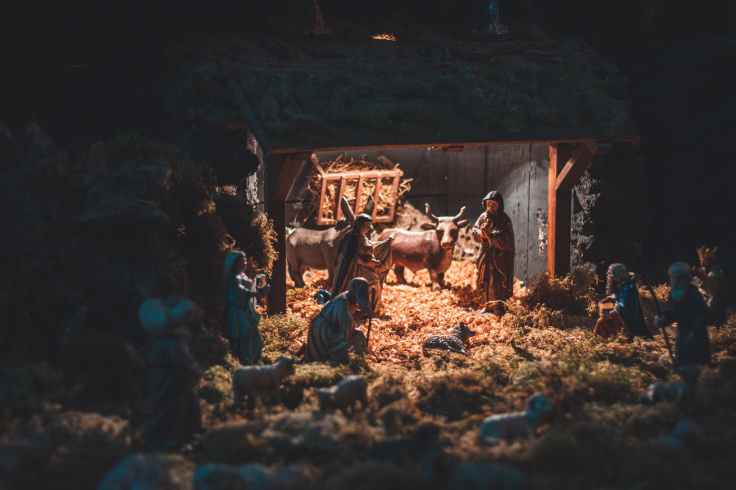
This season, some of us will put up elaborate mangers with beautiful figurines–robed Wise Men, earnest Shepherds, and the Holy Family; a few animals, and an angel or two– all clean and shiny and serene. In reality, it was likely crowded, noisy, dirty, smelly, and cold. The Shepherds and Wise Men were not there at the same time, and the angels were not present at the stable.

It seems obvious to say, but it’s important to remind ourselves that Jesus himself never celebrated Christmas. He never sang carols about His own birth; He never counted down the days on an Advent Calendar; He never decorated a Christmas Tree, or enjoyed a plate of Christmas cookies. Instead, He spent His life among the poor, the mean, and the lowly. He entered the lives of beggars and lepers and outcasts–and He brought light into their world. The Lord of all creation, who created galaxies of glittering stars, who commanded armies of angelic hosts–walked on dusty roads and had no home to decorate. He fed the hungry, healed the sick, and showed compassion to those who were possessed by demons.


This Advent season, as we decorate and prepare our homes for a warm and merry Christmas, may we remember to live among the poor, the mean, and the lowly. This year, it may seem difficult, but it is not impossible to share hope and joy with those who need it so desperately. May we prepare our hearts as well as our hearths to accept the Light of the World. And may we reflect it into the world around us– more than ever!

Holy God, you came in humility and compassion. You lived to serve, and you died to save. Show me how to love and serve in this season of darkness and fear, just as You did so long ago, that those living in darkness may experience more than just holiday tinsel and glitter. Amen.

Where Are the Altars?

In the Biblical books of the prophets (Isaiah, Jeremiah, Ezekiel, etc.), there are many references to altars and sacrifices–both the ones built to honor Jehovah God, and those designed for idols.

Israel and Judah were guilty of building thousands of altars and shrines to false gods. Some of them were found even inside the Holy area of God’s own temple! As part of God’s judgment, He repeated that He would no longer accept the empty sacrifices of His people–He would no longer hear their prayers, unless they repented.

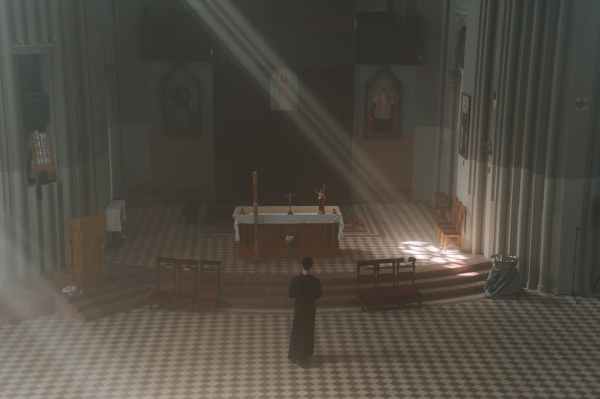
I read these words and wondered– Where are our altars today? When I was a child, many of the older churches had what we called an Altar. It was usually a raised platform, with a podium for the minister, and possibly a “host table” for communion. My childhood church also had a small table that held a large Bible. Sometimes, the platform would have a railing around the edge, with a couple of stairs on either side. And, while many churches “passed the plate” for offerings, some had a special plate on the railing of the altar, where people would march up and place their offerings for the week. There it would sit for the rest of the service–random dollar bills of random denominations in random states of being crumpled, folded, and worn, along with checks, and, sometimes even coins. All of them brought forward and placed on the altar.

In many churches, the altar was where congregants would come to receive communion. The most important church events happened “at the altar.” Weddings, baby dedications, Bible readings and sermons, even funerals– all happened at the altar.

And often, we would have an “altar call.” The pastor, or a guest evangelist would urge people from the congregation to meet at the altar– to repent, to receive forgiveness, to be renewed and refreshed as we offered ourselves to God. There we were– random denominations of people, in random stages of obedience or rebellion, all answering the call to follow Christ as Lord. Some stayed there for a few minutes, praying silently. Others might be there for an hour, crying out, trying to find the words to express pain, guilt, or gratitude and awe, that GOD would meet with US there! Sometimes, we would form small groups to pray and give encouragement; sometimes we would disperse, too moved to speak at all. The Altar was the focus of the service– the place where God met with us; where He received our worship and our offerings; where we were challenged and made ready for spiritual battle.

Today, many churches have stages, like any large theater or event center. There is no railing, but there are hundreds of spotlights and fog machines. There is no podium for the pastor–just a headset and maybe a small stand for notes. Sometimes, the pastor reads from a teleprompter. Often, he or she is joined by a full band or orchestra, and dozens of singers, actors, or other assistants. No one from the congregation approaches the stage– why would they get up from their comfortable reclining padded seat? No one even “needs” to bring a Bible– the sermon text is printed out on the giant screens hanging above the stage. Our worship is comfortable, and entertaining. Many of us don’t even go to a church building, anymore. We can livestream worship services, or watch from a satellite location. We don’t even have to change out of our pajamas! And we feel blessed, and filled with excitement to be part of something dynamic and spiritually uplifting.

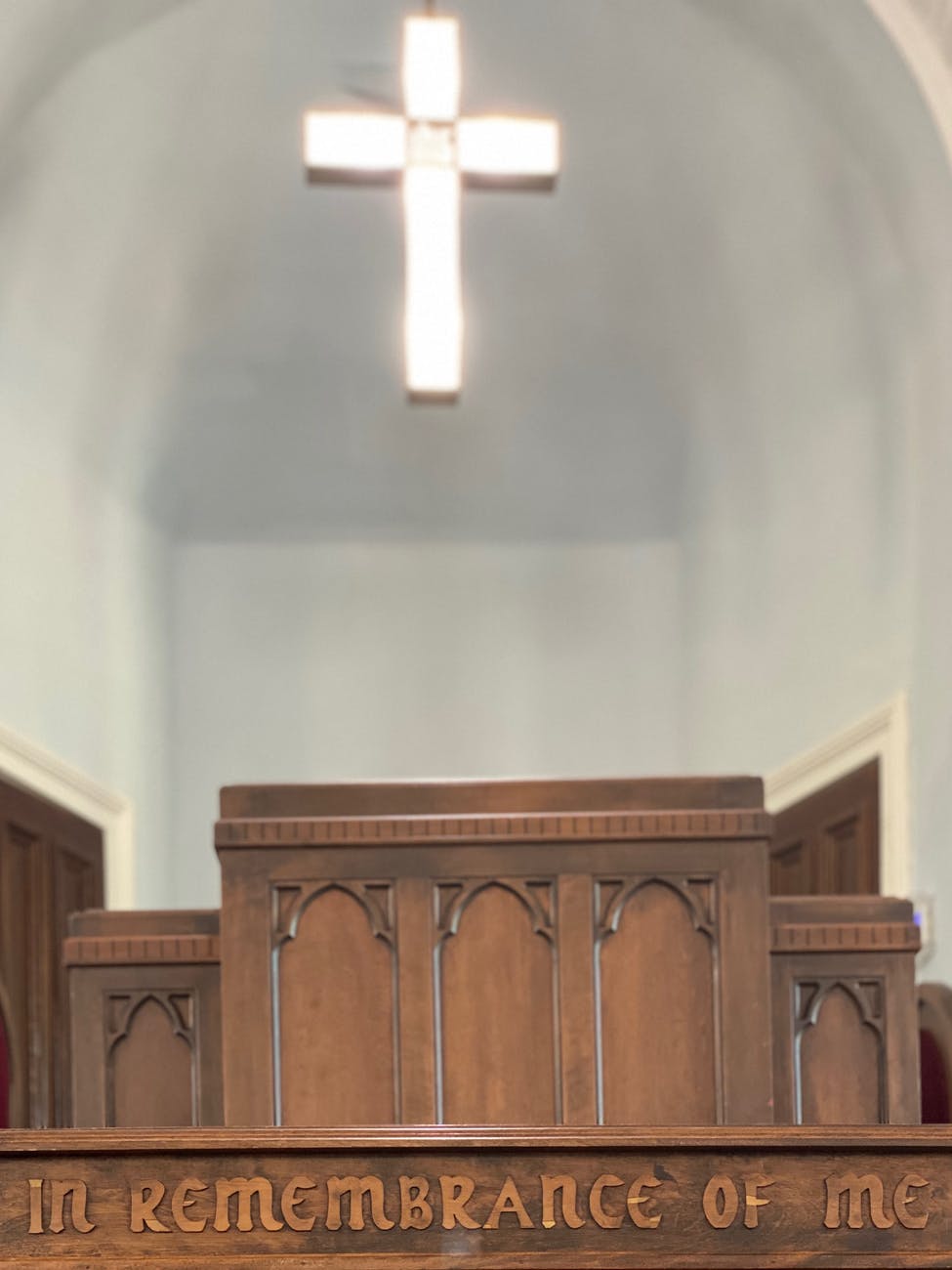
But we have no altars. There is no place for someone to lay their offering before God; no place to meet with Him in repentance or revival. There is no place to remind us of sacrifice and atonement. Oh, to be sure, many churches have a large cross on display somewhere. Some even have the “host table” for communion– somewhere in the wings, just in case–but the concept of an “altar” has all but disappeared from churches in the West. It is an anachronism–something ancient and uncomfortably part of the distant mists of tradition.

I miss the altar. I believe God misses it, too.

Sometimes It Causes Me to Tremble.

Have you trembled, lately?

I have to admit, this is not a reaction I enjoy. I want to meet with God in prayer, feeling loved, confident, and joyful. And I know that God is sovereign, awesome, and powerful…but I want to revel in the goodness of redemption and the hope of glory, not tremble in fear or awe.

Yet, we are told to do both throughout scripture. I can’t really have one without the other. I cannot accept God’s love without acknowledging His awesome Holiness and the horror of His suffering and death. Without Jesus’ willingness to go to the cross, and His triumph over death, I would have no hope beyond this life, and no reason to expect Goodness in this life.

Today, I need to tremble– to see and acknowledge the awful wrath of God, fully and horrifically borne by Jesus on the cross. God did not send His Son to tidy up an uncomfortable or embarrassing “slip” on the part of one man. Jesus bore the weight of the Holocaust and the nightmares of genocide, terrorism, abortion, plague, war, and famine throughout the ages. Jesus paid the price of slavery, and sex trafficking, and human sacrifice committed over centuries and millennia of hatred and abuse. Jesus faced the punishment justly deserved by billions of acts of rebellion and rejection by people He had lovingly created. And He did it so that you (and I) could be held guiltless and allowed to enter the courts of praise.

Someday, we will see Him face-to-face. Yes, it will be joyful, and glorious. But it will also be cause for trembling. To see perfection, righteousness, Holiness, and Love, and yet see the One who was “pierced for our transgressions, and crushed for our iniquities…”

Isaiah 53 (NIV) via Biblegateway.com

There is little glory in momentary happiness or small victories. But when we stop and tremble at His Majesty, we arise with joy unspeakable, and true worship!

..And Love Your Neighbor as Yourself

How can I please God? What does He require of me? I’ve been exploring the most basic answer to this question by looking at Jesus’ answer to the related question, “What is the greatest of all the commandments?” (See Matthew 22: 34-40) Jesus quoted from Deuteronomy (6:5) as He gave His two-part answer– Love God with all your heart, soul, and mind, and Love your neighbor as yourself! He went on to say that ALL of the commandments and laws hang on these two concepts.

So today, I want to look closer at the last of these– Love your neighbor as yourself. In another gospel, we see that Jesus is challenged to clarify, “Who is my neighbor?” https://www.biblegateway.com/passage/?search=Luke%2010%3A25-37&version=NIV When we want to justify ourselves, or narrow the letter of the law, we often stall obedience by seeking to “clarify” God’s commands. Jesus’ words are broad, but perfectly clear– Love your neighbor as yourself–love the next person you meet; the person closest to you, as if they were YOU.

This doesn’t give us room to reject anyone or exclude anyone from our love, compassion, or respect as a child of God. Nor does it give us the right to live someone else’s life, or take away their God-given free will to think and act for themselves. I have been guilty of both offenses, and I don’t think I am alone.

Two of the great mistakes we make in failing to “love our neighbor” come through fear and pride. In the story of the “Good Samaritan,” we see two examples of a priest and a Levite, who fail to show love to their fellow Jew. They act in fear– fear of being the next victim, perhaps, but also fear of being inconvenienced or pulled away from their plans and purposes, and fear of being “defiled.” How many times do I let fear keep me from reaching out? How often do I fear that people, even God, will think less of me for associating with those who need help? Yet Jesus was known for interacting with sinners, lepers, and other outcasts. How can I act differently, and please God more than His own son?

The other great mistake I have made is to “love” out of pride. Sometimes, I think I have more wisdom, or more material wealth, or greater skills, and that it is my right to “help” my neighbor in my own way and at my own convenience. I think I know how they should live, what they should do, and what they need– more than they do; sometimes even more than God knows! But I cannot love where I am not willing to be humble. This is true with God, and it is equally true with others.

That doesn’t mean that I love others best when I let them take advantage to my harm or to their own harm. And it doesn’t mean that I must agree with them completely or deny what I know to be right. But it means that I must value their well-being and worth in God’s eyes as equal to (and often greater) than my own. It makes me feel good to “fix” someone else by fixing their circumstances, or demanding that they accept my help, but their greater need may be to take control of their own circumstances and attitudes. My need to be “right” or “righteous” or “charitable” needs to take a back seat to whatever their greater need may be. I need to listen more than I speak; wait when I would rather act (or vice versa); to take direction rather than give it; and to give advice rather than orders.

The Apostle Paul spoke at length about love:

13 If I speak in the tongues of men or of angels, but do not have love, I am only a resounding gong or a clanging cymbal. If I have the gift of prophecy and can fathom all mysteries and all knowledge, and if I have a faith that can move mountains, but do not have love, I am nothing. If I give all I possess to the poor and give over my body to hardship that I may boast, but do not have love, I gain nothing. Love is patient, love is kind. It does not envy, it does not boast, it is not proud. It does not dishonor others, it is not self-seeking, it is not easily angered, it keeps no record of wrongs. Love does not delight in evil but rejoices with the truth. It always protects, always trusts, always hopes, always perseveres.

1 Corinthians 13: 1-7 NIV (via biblegateway.com)

I can “care” about others; I can be generous; I can be knowledgeable; I can volunteer, and make sacrifices; I can “feel” deeply, and empathize with others– and still NOT love them. Conversely, I can disagree with them about a number of things, including their life choices, political views, and spending habits, and still love them as Christ loves them. I can love those who like me, or ignore me; those who hate me, as well as those who love me back. But I cannot do this in pride or in my own emotions and thoughts. This kind of love can only be sustained by the source of true Love– God Himself.

This is why it is so important to learn from Jesus’ example. His perfect Love casts out fear and pride, and allows us to see others (and ourselves!) in the proper perspective.

Heart, Soul, and Mind..

Jesus was asked many trick questions by people who wanted to discredit him during His ministry. One such query involved all the many commands of the law. “Which is the greatest?” With so many commandments, laws, rituals, and traditions, it would be difficult to pick just one. Which is more evil– lying, stealing, murder, idolatry?

But Jesus didn’t skip a beat. 37 Jesus replied: “‘Love the Lord your God with all your heart and with all your soul and with all your mind.’ 9Matthew 22:37 NIV) Jesus was actually quoting from Deuteronomy (Deut. 6:5), when God was giving instructions to the people of Israel before they entered the Promised Land. Of course, Jesus, as part of the Triune Godhead, was actually present for these instructions– in fact, as the WORD of God, He may have been the very one speaking the same words hundreds of years before!

The first three of the Ten Commandments all involve this concept. “Thou shalt have no other gods before Me”–don’t give your soul (your very essence) to someone or something else ahead of Yahweh. “Thou shalt not make unto thee any graven image”–don’t give your heart to worship anyone or anything that is created; instead, worship your Creator. “Thou shalt not take the Name of the Lord your God in vain”–don’t use your mind to devalue and defame the Sovereign Lord.

God is Sovereign. He is Supreme. And He IS Love– it is not just something He chooses to do. Love is part of God’s essence, and it cannot live and thrive without Him.

But this brings up two questions: If God IS Love and He created us, why must he “command” us to love Him? This is one of the great arguments people try to use to deny God’s Sovereignty, His Goodness, even His existence. A Good, Wise, Sovereign, All-powerful God should not need to command love and worship from His creatures, should He? And, if He “commands” love and obedience, how can we truly love Him? We can fear Him, obey Him, be ruled by Him, but none of that sounds like Love.

In theory, such questions seem daunting. But we have dozens of real-life examples of how such commands work. Every nation (and principality, and even every household) has rules and laws directing us how to behave and demanding respect for certain values. “Don’t sass your parents.” “Don’t deface or defile sacred spaces.” “Don’t litter!” We find it distinctly unsettling when we see children treating their parents with disrespect, malice, even abuse. Or when we hear of people whose hatred leads them to burn places of worship, or defile gravestones in a cemetery, or commit treasonous acts that lead to the slaughter of hundreds of innocent neighbors or fellow-countrymen. The planet groans under the strain of people who dump their trash in rivers or streets, or wantonly start wildfires or kill helpless animals.

God does not “command” our love out of weakness. He could DEMAND abject obedience–overrule our will; punish without delay or hope of mercy; force us to act as robots or machines–but He desires us to Love Him freely. His command is for OUR good–when we choose to seek Him, follow Him, Love Him in ever greater measure, we grow to be more like Him–Loving Him teaches us what Love is really all about!

The Law itself, the “command,” is NOT what pleases God or makes us Love Him. God’s purpose is not that we become ritualistic, legalistic, or weak-willed. He wants us to be joyful and live abundant and productive lives. But left to our own devices and our own “wisdom,” we will not achieve any of this. In fact, even with the law and commandments, we will still fall short. God’s love is such that He gave us an impossible command– love Him with our entire heart, soul, and mind– and then, He provided the only Way to make it possible.

Photo by Pixabay on Pexels.com

It IS possible to love God with all our heart, soul, and mind. It doesn’t require that we become hermits or ascetics, wasting away in a cave or mountaintop, starving ourselves and crying out day and night. It does require that we recognize that He is God, and we are not. It requires that we accept His mercy for the times we have strayed. It requires that we seek His counsel, and His correction.

We need to love Him with our heart–draw near to Him in worship and thanksgiving.

We need to love Him with our soul–trust Him to direct our lives, now and in the future.

And we need to love Him with our mind–learn to listen to His words, and to meditate on them; to think more about the things of God, and less about the things of trivial and temporary import.

Prays Hymn…

“Praise Him, Praise Him, Jesus our Blessed Redeemer…”
“Here I am to Worship. Here I am to bow down. Here I am to say that You’re my God…”

Have you prayed a hymn lately? Or maybe meditated on a single phrase from a recent worship chorus at Church? Music is often a language unto itself, and can be a great tool for prayer. Recently, I spoke of praying scripture. This is very similar, and in fact, many of the Psalms are both prayer AND scripture. There is something about music that can transcend words alone to communicate our thoughts, emotions, and even memory as we pray.

Just like praying scripture, there is also a temptation to use music to substitute for prayer, and we should seek to avoid that. But in general, music can be a great inspiration and addition to our pursuit of prayer. I find that hymns reach back through my memory to pull out great truths of faith that I can pray back to God, while newer worship choruses often capture emotions, including both praise and confession. At times, I have even used secular music, including love songs and the blues, to tap into emotions that I want to share with the One who loves me eternally and cheers me when no other can.

King David is the quintessential “singer/prayer” in the Bible, and his Psalms are wonderful to use. Many of them are still being put to new music and can be sung, as well as read or recited. But there are thousands of hymns, songs, choruses, cantatas, operatic masses, chants, raps, and more that can be presented as prayer. How?

  • Use whatever method fits you best– use the radio, an MP3, streaming service, CD, etc., to play a song, or sing it a capella; if you are a musician, you can play the song on your instrument and sing along or think of the lyrics as you play.
  • Go through one verse of the song over and over– or one line or phrase that has a particular meaning. Meditate on it before the one who inspired it. “A Mighty Fortress is our God…A Mighty Fortress are you, God… A bulwark never failing… NEVER failing…”
  • Do a “mash up” as you are singing one song another one may come to mind. Create a medley of personal worship. Some songs might even run into each other!
  • Don’t be afraid to add dance or movement. Clap along. Lift your hands. Sway.
  • If you are having trouble getting started, find a book of hymns or songs, or tune the radio to a station that plays good music.
  • Make up a song from your heart! Reach back into your memory for a children’s chorus (if you grew up in church). Change the lyrics to “redeem” a classic rock song (it sounds strange, but it is not impossible for most tunes!)
  • Make a joyful noise!– Don’t worry if you are not a great singer. God listens to your heart!


Tips for Praying Scripture

At least once each month, I want to give some practical tips I have learned that have improved my pursuit of prayer over the years. Today, I want to talk about praying scripture.

On its surface, praying scripture just means reading or saying Bible verses back to God. Of course, some Bible verses or passages lend themselves to this practice, while others do not. (Lists of genealogies in the Chronicles come to mind…) Sometimes, it requires that we change a pronoun or verb tense, or otherwise personalize the scripture, but we are echoing God’s “Word” back to Him in an act of worship. We may be echoing God’s literal words, or repeating words of worship spoken centuries earlier. Some examples:

“Lord, in the beginning YOU created the heavens and the earth”…(from Genesis 1:1)
“Give praise to the Lord, proclaim his name;
    make known among the nations what he has done.
Sing to him, sing praise to him;
    tell of all his wonderful acts.
Glory in his holy name;
    let the hearts of those who seek the Lord rejoice.
Look to the Lord and his strength;
    seek his face always.” 1 Chronicles 16:8-11

Create in me a pure heart, O God,
    and renew a steadfast spirit within me.
Do not cast me from your presence
    or take your Holy Spirit from me.
Restore to me the joy of your salvation
    and grant me a willing spirit, to sustain me.
(Psalm 51:10-12)

“On my bed I remember you; I think of you through the watches of the night” (Psalm 63:6)

“Search me, God, and know my heart; test me and know my anxious thoughts. See if there is any offensive way in me and lead me in the way everlasting” (Psalm 139: 23-24)

Now to YOU who are able to do immeasurably more than all we ask or imagine, according to Your power that is at work within us, to You be glory in the church and in Christ Jesus throughout all generations, for ever and ever! Amen. (taken from Ephesians 3:20-21)

There are some benefits of doing this, but also some pitfalls. First the benefits:

  • Praying scripture can help us when we just don’t know what to say. Sometimes, we are so burdened or so exasperated, or so overwhelmed with emotion, that our words are swallowed up. But a remembered passage of scripture may allow us to speak our emotions in a way that our own words cannot. Sometimes, scripture will give us a focus that we lack, allowing us to put aside distracting thoughts, as well.
  • Praying scripture can help us memorize or review scripture. It can be helpful to read scripture aloud as a prayer, or even repeat key verses as prayer. Sometimes, we will be studying scripture and it speaks to us in a way that causes us to stop and pray it back.
  • Praying scripture can keep our prayers grounded. When we are tempted to pray selfish, momentary requests, scripture reminds us of God’s majesty, sovereignty, and timeless nature. Scripture magnified God and puts our petty worries and desires in their proper perspective.
  • In a group setting, praying scripture can help others focus better, or inspire them to remember another scripture passage that relates to what you have just prayed!

There are many other benefits of praying scripture, but there are also a few pitfalls:

  • Beware of using scripture as a substitute for your own thoughts and concerns. It is powerful to pray the Bible as it relates to your own worship and emotions, but God doesn’t want to hear only the echo of His words– He wants to hear them coming from your heart, as well as your lips. The ancient prophets warned against those who used a form of worship that lacked conviction and submission to His will.
  • Don’t feel bad when you say a prayer that does not contain a direct scriptural quotation– praying scripture is a tool and a guide, not a ritual or requirement. Don’t feel arrogant or superior when you DO pray scripture– it is a tool and a guide, but it does not make your prayer more effective or more Godly than an earnest prayer without a scripture reference.
  • Don’t “cherry-pick” scripture to pray in a way that is out of context or goes against the overall flow of scripture. Two of the most overused and misused scripture passages are Romans 8:28 and Jeremiah 29:11. They are both verses of promise and encouragement, and certainly can be used in prayer. But in context, they are meant to encourage those who are in the midst of anguish and despair, NOT promises to make life carefree or answer a selfish desire for an immediate good outcome.

If you have never (or rarely) tried praying scripture, I hope you will incorporate this tool into your pursuit of prayer. Whether you use a print Bible, scroll through a list of verses on line, or draw upon memory, you will find God’s words to be uplifting, convicting, encouraging, and wholly sufficient as you pour out your heart to your Maker. And if you already use this practice, I hope these tips will help you remember to use scripture wisely and appropriately as you pursue and practice a closer walk with God.

Blog at WordPress.com.

Up ↑