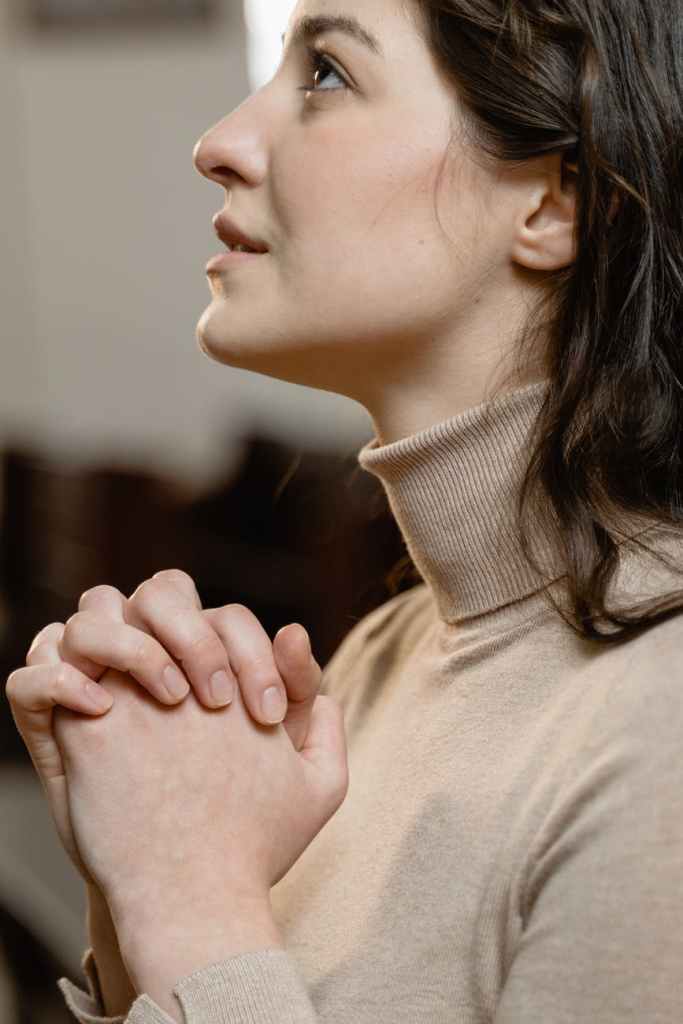
This morning, I woke up inside– protected from the rain and wind and cold. I woke up in a bed. I woke up with blankets for my body and a pillow for my head. I woke up, and moved my head, my hands and feet, arms and legs. I sat up and wiggled my toes. Thank You!
Photo by u0414u0438u0430u043du0430 u0414u0443u043du0430u0435u0432u0430 on Pexels.com
This morning, I woke up to hear my husband’s breathing. I woke up to the knowledge that I am not alone. I woke up to the knowledge that I am loved. I felt safe and comforted. Thank You!
This morning, I woke up knowing that even if I had none of the things I just mentioned, that I still have reasons to Thank You– Things I take for granted; things I haven’t even noticed; things I have not yet seen. Thank You for who You are. Thank You for Your Faithfulness; Your Majesty; Your Sovereignty. Thank You for the beauty of sunsets and snowflakes; for the seasons and the centuries; for family and friends; for triumphs and even for the tears that sometimes come my way. Thank You that you are greater, and deeper, more powerful and more tender than all that I know or imagine.
Christmas Eve–people around the world will be celebrating the birth of Jesus Christ. Some will meet for evening and midnight candlelight services tonight. Others will begin celebrating tomorrow morning. Some will celebrate with great solemnity; others with great festivity; some, like the monks chorus above, with laughter and frivolity. Even amid continuing pandemic travel and gathering restrictions, families and individuals will celebrate with music, gift-giving, phone calls, small gatherings, reading Bible passages about Jesus’ birth, feasting, sharing memories, and praying. There are only a few occasions throughout the year that can be said to be nearly universal, but Christmas comes close. Even where it is not celebrated as a cultural phenomenon, complete with tinsel and trees, lights and decorations, it is celebrated by the faithful who thrill with joy at the reminder that God Himself chose to come live with people He created– that He came to share in their day-to-day triumphs and struggles; so much so that He chose to share in our fate: Death. GOD cried out in hunger. GOD shivered with cold, and felt exhaustion. GOD suffered shame and misunderstanding and abandonment. GOD felt agony and struggled to breathe as blood and sweat ran down His brow and into His eyes. And by His coming, and suffering, and dying, HE brought us life and hope, eternal joy and peace! It is the very greatest reason to celebrate– bigger than national holidays or seasonal festivals; bigger than cultural differences and vast distances; bigger than mere tradition or historical remembrance.
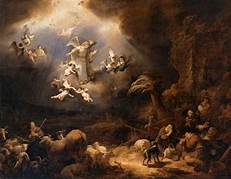
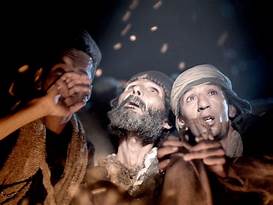
For many, this Christmas will be bittersweet– we have suffered greatly; some of us are still reeling from loss and grief. Others are living with fear and confusion about the future. In many ways, our situation is not so different from that first Christmas in Bethlehem. We feel “taxed” by events and circumstances. The world seems dark and dreary and cold. More than ever, we need to listen for the song of the Angels– for “good news of great joy, which shall be to all people.”
And, maybe more than ever in our lifetime, we need to be like the shepherds–eager to seek out the gift of the newborn Savior; Eager to embrace the wonder of Emmanuel; eager to share the hope we find at the manger. Hallelujah! Unto US a child is given; unto US a son is born! (Isaiah 9:6)
I’ve been writing a lot about Advent and Christmas lately, rather than focusing on Pursuing Prayer. But they are part of the same whole. I pursue a life of prayer precisely because Jesus came in the flesh and lived and died and rose again. I believe in the power of prayer because Jesus modeled how to pray– even as He faced betrayal and death. I believe in the gift of prayer because Jesus prayed for me long before I was ever born (see John 17). I pursue prayer with confidence because Jesus keeps His promises.
15 When the angels went away from them into heaven, the shepherds said to one another, “Let us go over to Bethlehem and see this thing that has happened, which the Lord has made known to us.” 16 And they went with haste and found Mary and Joseph, and the baby lying in a manger. 17 And when they saw it, they made known the saying that had been told them concerning this child.
Luke 2:15-17 (ESV)
Go! Tell It on the Mountain! The ancient prophets foretold it. The Angels brought the news to the shepherds, who told it to their neighbors: Jesus, the Christ, is born! He is here among us! God in the flesh! What amazing and glorious news! This same Jesus told parables, shared prophecies, and spoke the Truth– and taught His disciples to do the same! Through the centuries, witnesses have spoken words of hope, healing, and salvation to the next generation, taking the Word as they spread throughout the world.
In the beginning was the Word, and the Word was with God, and the Word was God…And the Word became flesh and dwelt among us, and we have seen his glory, glory as of the only Son from the Father, full of grace and truth.
“Good Christian, fear, for sinners here the silent Word is pleading..”
What Child is This?
Jesus, who spoke the universe into existence, came into His own creation in silence as a newborn baby. The angels announced His coming; the shepherds spoke of Him; the Wise Men came to honor Him. But His arrival was just the beginning. In His ministry, He would speak words that echo through the centuries– words of hope; words of warning; words of life and salvation. And He challenges us to speak as well– to share the Gospel; to be His witnesses to the uttermost parts of the earth (see Acts 1:8).
Our words matter. Our words have power– power to build up, and power to destroy. We have opportunities each day to speak Truth, Hope, Joy, Peace, Compassion, Love…or to stay silent. And we must be careful to speak the truth– even when it is inconvenient, unpopular, or risky. We must not compromise by speaking pleasant platitudes or ignoring danger. Truth is not always pleasant–Jesus’s words were not always welcomed; not always comforting. But they brought healing where it was most needed, and hope where there was darkness.
And more than words must go out into the world– Jesus didn’t sit in a comfortable corner of a bistro waiting for the hurting and hopeless to come to Him and hear His words. He climbed mountains and crossed lakes; He traveled from town to town; He shared meals and participated in the Synagogue services; He touched lepers and spoke to outcasts. Today, we have amazing opportunities to spread the Good News–technology and media; the ability to meet others in person (COVID permitting!) or via Zoom or Skype or even cell phone; and, in many places, the freedom to speak without fear.
The Word came down at Christmas. Let’s make sure the Word goes out this Christmas– the Savior has arrived! He is Christ, the Lord! Joy! Peace! Hope! Celebration! Go! Tell it on the mountaintops and in the valleys and across the seas!
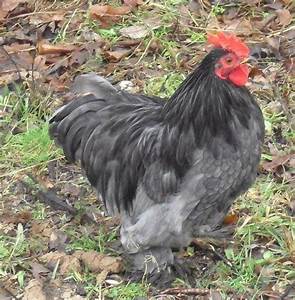
My paternal grandmother was born in Shanghai. But not the Shanghai most people think of. Not a great Eastern city of importance, but a tiny settlement called Shanghai (or Shanghai Corners) in southwestern Michigan. It doesn’t have a post office; it’s not even listed on most maps. And it wasn’t named directly after the great Chinese city– it was named after a breed of chicken (most likely the breed now known as Cochin)!
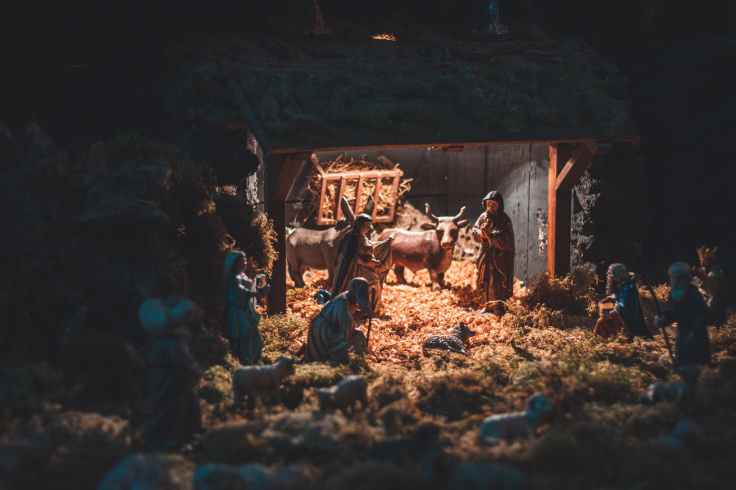
Jesus wasn’t born in Jerusalem. He wasn’t born in Rome or Athens, or New York City or London or Johannesburg or Tokyo. Jesus was born in Bethlehem. It wasn’t as small as Shanghai Corners, Michigan, but it wasn’t a city of great importance, wealth, or industry. And yet, it was the place where history would be reshaped. Our modern calendar divides into what happened before that night in Bethlehem and what came after. More than two thousand years later, no event has been able to displace it as the pivotal event of recorded history.
And this division wasn’t caused by a revolution, or a series of wars. It wasn’t shaped by disaster or plague, victory or catastrophe. It came silently with the birth of a single baby, wrapped in strips of cloth and placed into a makeshift bed. But all the years revolve around that single birth. All the great triumphs of history– the moon landing, the invention of the printing press, the conquests of Alexander the Great, the building of the Sphinx–all are placed in the context of the arrival of God in human form. God stepped into the limits of human history, and the timeline was permanently altered. Before His appearance, prophets and seers looked forward. After His arrival, history looks back. But His birth is the focal point; the period. The end of the Beginning and the beginning of the End.
The hopes of all the ancients–shrouded in mists and wonder– were given flesh and bones. The fears– dark and amorphous– were blinded by the light of His Presence.
What hopes and fears are we carrying today? Our hopes have a name– Jesus; Emmanuel! Our fears have nowhere to hide from His power. And this wondrous gift, while it first arrived in the little town of Bethlehem, reaches around the entire Earth– to Shanghai, and Shanghai Corners; New Delhi, and St. Petersburg; Dallas and Buenos Aires; Cairo and Caraballo; Los Angeles and Lagos; and thousands of small towns in between.
We have entered the season of Advent, and as we prepare our hearts for the coming of the Christ Child, one of the first steps should involve quieting our hearts.
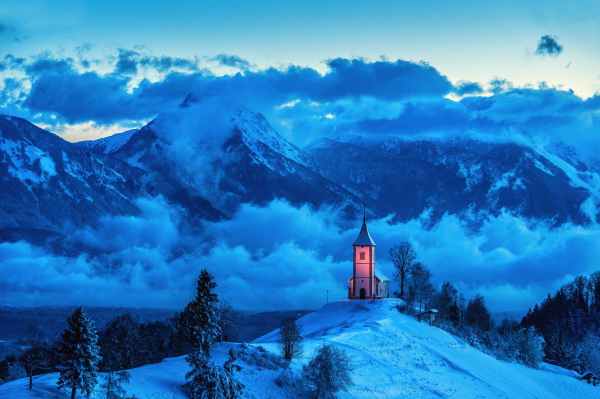
This can be difficult in the daily noise and bustle around us– particularly in this season! We have filled Christmas with sparkle and glitter; the ringing of bells and endless songs about reindeer and jolly fat men and decorated trees. But this is NOT Christmas– not yet. The bright lights of Christmas, the joyful songs of the angel hosts, all need a proper context. And that means a cold, dark night more than 2000 years ago. It means an emptiness. A heavenly silence that stretched over 400 years. Silence from heaven; silence in the earth; silence in the soul.
In silence, we ponder. We wait. We anticipate–perhaps even dread– what may come. What will God say when He finally speaks again? Will it be judgment–severe, holy, deserved, undeniable? Will it be condemnation? Will it be that final pronouncement of God’s Holy Sovereignty, and our utter failure to measure up?
The joy of Christmas comes, not because of seeing light shows and snow glistening on trees, or listening to jingle bells and laughter. It comes from knowing that God’s Word is Peace! It is reconciliation and restoration. It is Freedom and Victory over Sin and silence and eternal Death! It is not first felt in the blaring of anthems and resounding of carols. It is in the soft cooing of new Life coming into a dark and silent world. Of everlasting love being wrapped in rags and gently laid in straw.
God delights in turning earthly things upside-down. And so He comes to us, not with fanfares and regal procession, but in stillness and gentleness, in the middle of a dark and silent night.
Yesterday was Thanksgiving across the U.S. Many families enjoyed a large dinner, surrounded by family or friends. Traditionally, this dinner might include turkey (or ham or both!), vegetables and fruits (potatoes, sweet potatoes, green beans, baked beans, corn, squash or some kind of greens, cranberries or cranberry sauce, apples or fruit salad), dressing, stuffing, rolls, and/or bread, and some dessert, such as pumpkin pie, pumpkin roll, apple pie, or cake. It’s a holiday which focuses heavily on food and eating.
Because of this, it is also a holiday that carries the risk of food poisoning. Turkey and other meats, if not cooked properly or long enough, can make people sick. So can leftovers that are left out too long or not stored properly after the big meal.
But there is another kind of poison that can ruin Thanksgiving. It may not make us immediately physically ill, but it is not less dangerous. It is the poison of ingratitude. Like salmonella or other types of bacteria, ingratitude can be invisible. It can hide, waiting to attack without warning, causing everything to have a bitter aftertaste. It may cause violent reactions, such as rage, or lie dormant, causing depression, apathy, or a general dissatisfaction. And just like food poisoning ruining a holiday built around food, ingratitude is a natural problem to have during a time set aside for thankfulness.
One of the most insidious forms of this holiday poison comes through comparisons–we gather to be near family we love, only to compare ourselves with them. Which one is happier? Wealthier? More popular? More intelligent? Better looking? Is the host’s house nicer than mine (or is my house “good enough”)? Did I work harder? Did my contribution to the meal taste “better”(or was it passed by– again)? Why am I still sitting at “the kids’ table?” The list is endless of the petty grievances that we allow to overwhelm our intentions to be thankful and live in peace. Someone says something to “push our buttons,” or they seem to ignore us completely.
Another form of holiday poison spreads from person to person–complaining, venting, sounding off, moralizing, criticizing, blaming…what began as a thankful, joyful gathering becomes a snake pit of biting, poisonous talk. And we react. We take the bait, become defensive, get sucked into that political discussion we vowed to avoid, or we revisit old wounds we thought we had put behind us.
But unlike food poisoning, bitterness and ingratitude are choices. We can’t always choose our circumstances, nor can we choose what others say or do. But we DO choose our reactions and our attitudes. I can blame someone else’s anger or selfishness for my bitterness, but they didn’t MAKE me succumb to their poison. I can compare myself to others and feel arrogant or inept, but no one forces me to live someone else’s life or measure up to their circumstances.
God has given each of us life and breath, and a purpose. Some of His gifts to us are universal and exactly the same for each person. He has given us each 24 hours in each day; He gives sunshine and rain, day and night, and air to breathe. But some of his gifts are unique to each individual. Our response should be to open our unique gifts, so we can enjoy them and use them, NOT waste time coveting someone else’s gift when we have neglected even to open our own.
I wish I could say that “holiday poison” was easy to avoid– it’s not. It is human nature to grumble and whine and wish for what we do not have. But it IS possible to get healing. It starts with humble confession. We DO wish for what we do not have–and the more we deny and try to bury our failings, the more susceptible we are to the poison they can bring. If we confess our feelings of inadequacy, our desire to have “more” or “better” in life, we can turn to God freely and let Him give us a better perspective. Suddenly, we “see” blessings where we used to see burdens, we can see hope where once there was only grief, and we see opportunities where we only saw obstacles before.
Transformed Humble Able to do “all things” through Christ No longer slaves to Sin Known by our Love for each other Fruitful Upheld in the power of His Love
I am very thankful for my refrigerator. It’s used…we picked it up at a garage sale a couple of years ago. It still works well, except for the ice maker and water dispenser. But it has plenty of space, and it keeps things cold and/or frozen, as needed. Right now, we have some milk and plenty of eggs, cheese, and some leftovers, a jug of water getting chilled, some celery, and some fish thawing out for dinner later this week. There are also some random jars of condiments– catsup, mustard, mayonnaise, horseradish sauce, some diced garlic, a few pickles, and some jam. There are things that probably wouldn’t need to be refrigerated, but there they sit, nice and cold, ready if we need them. There are even a few leftovers that need to be taken out of the fridge and thrown out. Even the refrigerator can only preserve food for so long. There is a freezer, as well. It contains meat and veggies, and some blueberries I froze from earlier this summer. It is nearly full, and that’s another thing to be thankful for.
For the past few weeks, I’ve been going through notes left by my great-grandmother. She was born before people had such luxuries. She started her married life with a cellar. Later, she had an icebox. Before she died, they had gotten an electric refrigerator, but it didn’t look much like mine. It was small, and had a small freezer, but it had to be defrosted regularly, and it didn’t have special drawers for vegetables or meat. Reading about her life has made me conscious of how easy my life is in comparison. I’m grateful for modern appliances, and conveniences– even as I often take them for granted. The stove, the microwave, the slow cooker (Crock Pot), the rice steamer, a food processor; they all save time and effort as I work in the kitchen. I still wash the dishes by hand, but even that is made easier with non-stick fry pans and plenty of hot water from the tap. My great-grandmother had to pump her water from the well and heat it over the fire!
I’m not only thankful for what is IN my refrigerator, though. I am thankful for what’s ON it. I have dozens of magnets– some homemade, others souvenirs from various travels– here in Michigan, out West in Washington and Oregon, from the Dominican Republic, etc.. And each magnet holds something precious– photos of my grandkids, of nieces and nephews, of families serving on the mission field; drawings, Bible verses, business cards from favorite restaurants, memo pads, and inspirational quotes. It’s almost impossible to find the original surface of the fridge under all those important reminders! This is deliberate. The Bible tells us to keep His word in our hearts– to memorize it, and talk about it daily with our family.
4 Hear, O Israel: The Lord our God, the Lord is one. 5 Love the Lord your God with all your heart and with all your soul and with all your strength. 6 These commandments that I give you today are to be on your hearts. 7 Impress them on your children. Talk about them when you sit at home and when you walk along the road, when you lie down and when you get up. 8 Tie them as symbols on your hands and bind them on your foreheads. 9 Write them on the doorframes of your houses and on your gates.
It’s “just” a refrigerator. But it is also a place of worship and thanksgiving and remembrance. Every time I open the door, I can be reminded of God’s power, love, and mercy; how much God has done for our family, and how we’ve been blessed. I am reminded of dear people, and reminded to lift them up in prayer. I am convicted of my need to be a better steward of the food and other resources we have been given. And I fill its shelves and drawers with love in the form of good food to share with my husband, and with our friends and neighbors. That refrigerator has been the repository of pies and deviled eggs, of fruit salads and 7-layer salads, of barbecued chicken and leftover corn pudding, and a hundred other dishes meant for family meals, potlucks, and simple dinners with my husband. At times, the shelves have been a little bare, but never empty. God provides! He blesses! He sustains!
Wilt Thou forgive that sin where I begun, Which is my sin, though it were done before? Wilt Thou forgive those sins through which I run, And do them still, though still I do deplore? When Thou hast done, Thou hast not done, For I have more. Wilt Thou forgive that sin by which I have won Others to sin? and made my sin their door? Wilt Thou forgive that sin which I did shun A year or two, but wallowed in a score? When Thou hast done, Thou hast not done, For I have more. I have a sin of fear, that when I have spun My last thread, I shall perish on the shore; Swear by Thyself that at my death Thy Sun Shall sine as it shines now, and heretofore; And, having done that, Thou hast done, I have no more.
A Hymn to God the Father John Donne, 1623
John Donne
I enjoy studying the poetry of John Donne. https://www.biography.com/writer/john-donne Even though he lived 400 years ago, he wrote about very timeless and personal topics. Donne lived during a time of religious tumult and persecution. Born into a Catholic family, he later converted to Anglicanism and became a powerful preacher, as well as a poet, and lawyer. Throughout his life, he wrestled with deep theological questions of sin, guilt, redemption, and death. Yet he did so with wit, humor, and passion. The poem above, written during a long illness and near the end of his life, is filled with puns on his last name, Donne. Would God’s redemptive work ever be “done” in “Donne?” He struggles with the knowledge that his sins, having been forgiven, must be forgiven again and again. Does God never say, “Enough! I am done!?” What about stubborn sinful habits? What about sins that have led others to sin? What about last-minute, unconfessed sins?
The real question is, “How sufficient is God’s Grace?” Does God sprinkle out Grace sparingly on each sinful act, or does Christ’s blood cover All? Do our stubborn, habitual acts of rebellion pile up to a point where God cannot forgive? Having forgiven us once, twice, seventy times seven– is there a limit to His willingness to pour out Mercy? Theologically, the Bible is clear. The answer is a resounding, “NO.” God will not withhold His Grace from those who have sought it. God will never be “Done” with “Donne.” Nor will He be “done” with any of us who have chosen to follow Him. But in his all-too-human logic, Donne jokingly suggests that though God “hast” done/Donne, He “hast not” done/Donne. In other words, while Donne “belongs” to God– he has confessed his sins, and eagerly seeks to follow Christ, he still wrestles with fears that his small sinful acts prove that God does not fully “have” him– that He still lives separated from God.
But the final sin of the poem is fear– fear that somehow, at the last, Death will prevail, and Donne will “perish on the shore,” rather than be taken into Heaven. He pleads that Christ’s blood (“Thy Sun/Son”) will be sufficient; that God’s promise of eternal life will indeed hold true, and that the work of salvation is indeed “done.” In the end, the poet hopes that “Thou hast Donne.” And he must trust that God’s promises will hold, for “I have no more.” Donne cannot stop death, he cannot do anything to save himself from sin, but he can be “done” with worry and trust in “Thy Sun/Son.”
Photo by Samuel Theo Manat Silitonga on Pexels.com
I am strangely encouraged by Donne’s poem. We all have moments of questioning and niggling doubts. And even though we “Know” the truth, our fears and emotions can play tricks on our mind. But Donne, even while putting such doubts and fears on paper, takes them to the Source of Hope. This is not a poem of accusation or despair. It is an honest and passionate desire to hear God’s calm assurance. And it is part of a long tradition that runs through the Bible. Jacob literally wrestled with an angel of the Lord (Gensis 32), Moses argued with God about going back to Egypt (Exodus 4), David questioned God (Psalm 10); even Jesus asked God, “Why have you forsaken me?” (Matthew 27). But in our doubts and questions, God’s still, small voice echoes, “I will never leave you nor forsake you.” (Hebrews 13:5), “My Grace is sufficient for you.” (2 Corinthians 12:9), and “Neither height nor depth, nor anything else in all creation, will be able to separate us from the love of God that is in Christ Jesus our Lord.” (Romans 8:39).
God’s work is ongoing, but it is also “done”– it is complete, whole, sufficient, and eternal. And even if we occasionally wonder and even question, we can choose to rest in His promises. Just as the poet concluded, if God “hast” done/Donne, “I have no more”– he needed to have no other fear of sin or sin of fear. And through Donne’s poetry, God’s assurance is being passed on– the work continues to be “Donne!”
As I look out the window today, I see an array of autumn colors–yellow, red, orange, green, brown, and even purple leaves against a vibrant blue sky. Autumn is full of changes; changing leaves, changing temperatures, changing wardrobes. I love living in an area where the seasons change dramatically. I don’t always like the drama, however. We’ve had warm days, wet days, cold days– sometimes all three in the same day! But I do like the variety– snow in the winter, colorful leaves in the fall, new life in spring, and summer trips to the beach or the shady woods.
It isn’t only the weather or the trees that change. The times are changing– literally–we will be turning our clocks back this weekend, “falling back” to conventional time after several months of “daylight savings time. Our neighborhood is changing–the bank down the street just changed its name, and a couple of new businesses are opening, as a couple others close. We are experiencing life changes. My husband and I are in the “autumn” of life– feeling the slow creep of age, in good ways and bad. We enjoy spending time with our kids and grandkids, nieces and nephews, as they embark on new adventures and challenges of “becoming.” We don’t enjoy the aches and pains and slower pace we now find ourselves adopting, but we appreciate the wisdom of life lived and learned. We have aging parents who are facing their own decisions, many of which will involve us in one way or another.
God watches over all these changes. He sees them, orders them, anticipates them. God is the master of renewal, redemption, and restoration. God can move mountains, heal diseases, restore relationships, and raise the dead! And, unless we allow God to change our very nature and give us new birth through His Son, we will miss the greatest change of all.
But God never changes. The same God who formed me in my mother’s womb is the God who will be with me as I take my last earthly breath. The same God who formed the oceans and spoke galaxies into being is the God who whispered frost onto the grass this morning. This God is faithful through every season of the year and every season of life. I will not wake up tomorrow to find that there will be no more winter or spring seasons, or that the grass has all turned purple, or that God’s word is no longer true and powerful. And there will never be a time when I cannot trust God’s Sovereignty, His Mercy, or His Love. God’s promises are eternally sure; His Faithfulness is everlasting; and His power is limitless. God will never quit; He will never grow tired; He will never be “confused” about the road ahead; He will never resort to “plan B.”
Very soon, the colorful leaves will fall, the morning frost will be replaced with snow and ice, and my fall jacket will have to give way to my winter coat and gloves. In time, my gray hair will turn white, and my wrinkles will multiply. Someday, my great-grandchildren may find my name carved on a stone and wonder what I sounded like or what kind of person I was. But God will still be the same as He was in the days of Noah, and King Solomon; the same God who watched the fall of the Roman Empire, the horrors of the Holocaust, and the first Moon landing. That’s the God who hears my prayers– and yours. He can be trusted. He is faithful.
The steadfast love of the Lord never ceases; his mercies never come to an end; they are new every morning; great is your faithfulness. “The Lord is my portion,” says my soul, “therefore I will hope in him.”

























 Pursuing Prayer