We live in an angry world, filled with outrage, entitlement, bitterness, hurt, and arrogance. Everywhere we look, someone is giving someone else (sometimes everyone else) a “piece of their mind.” And those who do are often lauded and celebrated. Pundits, critics, “talking heads,” columnists, “expert” opinion-makers (recognized or self-appointed)– all make careers out of sharing their opinions, their theories, expertise, or knowledge. They may be clever, intelligent, even entertaining; they may be popular, intimidating, or impressive in their range of knowledge. I may agree with their opinions, and share their conclusions or beliefs. But I should be careful not to become “puffed up” with knowledge.
Knowledge puffs up but love builds up. The man who thinks he knows something does not yet know as he ought to know. But the man who loves God is known by God. 1 Corinthians 8:1-3
It is very tempting– VERY tempting– to join in this practice of verbal tongue-lashing. To show off our superior knowledge or our righteous opinions. To win arguments and create “mic-drop” moments.
Meeting anger with anger, sarcasm with sarcasm, and pride with pride is natural. But it is not God’s way. God calls for us to have peace of mind– to have a mind that can see and hear the reality of our fallen world but respond in an unnaturally loving and gracious manner given to us by the Holy Spirit. We are to speak words of peace, to walk in humility, and to love our neighbors as ourselves.
Our words can be powerful– for good or evil. We can speak peace and goodwill, harmony, and love into a world that is drowning in hateful comparisons, disdain, selfishness, malicious gossip, idle chatter, and careless opinions. Words can uplift, encourage, heal, and strengthen. Words–even quiet words– can stem the tide of malice and bring light and hope.
And it is not just what we pass on to others with our words– we become what we speak! When we speak arrogance and self-righteousness, we become (and remain) self-righteous and arrogant. When we speak love and joy, peace and patience, trust and truth, we become more peaceful, joyful, patient and trustworthy.
Jesus– the Word of God– often used a quiet sentence to bring hope, reassurance, and blessing to people in need. Jesus felt anger– and He had every right to speak HIS opinion and HIS omniscience when He was tested and unfairly questioned. But He chose to be patient. His answers were not laced with malice and sarcasm, but they silenced His critics, and served as lessons for others who were listening. What a great example for us!
What might happen if we spent less time giving a “piece of our mind” and more time spreading “peace of mind” in our world?
A priest, a Baptist minister and a rabbit go to a pub for lunch. The hostess meets them at the door with a message. “Today, we are helping a local blood bank. Your lunch is free if you donate a pint of blood.” All three agree to donate blood in exchange for a free lunch. The hostess asks each one in turn for his blood type. The priest says, “I believe my blood type is A negative. The minister says, “It’s been a long time, but I seem to remember that I am AB positive.” Finally, she turns to the rabbit. “I was supposed to be a Rabbi, so I must be a Type O!”
I love puns, and like many puns, the humor in this one comes from a grammatical or spelling error. Something in the story is almost, but not quite, as it should be. It is a good thing to be able to laugh at small mistakes. But what happens when things are terribly wrong? It’s not funny at all. It’s devastating, confusing, and frightening. We want answers. We want the situation “fixed.” We want to find out what went wrong, why it went wrong, and who is responsible.
California is burning as I write this. Thousands of acres destroyed; hundreds of homes and businesses reduced to ashes; thousands of people left homeless. Where is God in these fires? When an innocent child is abducted, raped, mutilated and left for dead, where is God? Where is God amid the unrest in Mozambique, where typhoons and political unrest have caused so much havoc? Where was God when the hurricane and storm surge displaced tens of thousands of people in North Carolina, Tennessee, and Georgia less than six months ago? Where is God in the war-torn regions of the world, where innocent families are being terrorized by bombing raids and invading armies? Where was God when millions were dying of COVID just a few short years ago?
I’d love to say that I have an answer. One that is comfortable, unassailable, logical and easy to understand. But I don’t. The “glib” answer is that God is on His Throne, omnipotent and all-wise. And He is. He is not to “blame” for personal tragedies or for sweeping disasters. Sometimes, God intervenes in miraculous ways to “save” us from certain death, “accidents,” or even attacks. But often, He chooses not to do so. And I have no explanation, no all-encompassing, deeply soothing answer for those who are left suffering.
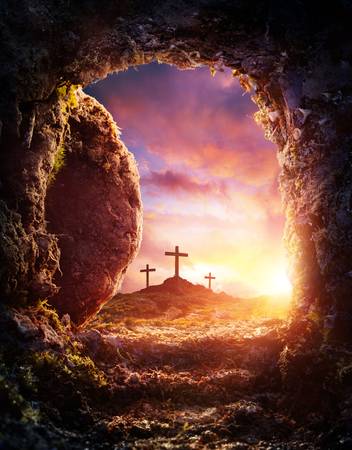
What I do know is this: God is a redeeming God. He is a God who can and often will turn tragedy into triumph. And even if, in such cases, the triumph is often bitter-sweet. This is a God who created mankind, knowing we would reject His goodness and go our own way. This is a God who took a single faithful man (Abraham) and made him the father of many nations– some of whom are still at war to this very day. This is a God who did not spare His Only Begotten Son, but allowed Him to go through a sham trial, be falsely convicted, and die a painful, publicly humiliating death. And then, Christ arose!
What does that mean for someone whose son or daughter is still dead after five (or 25) years of grieving? For someone who lives every day with the trauma of having been raped or abused as a child. It does not give immediate comfort. It does not take away the sting of injustice, pain, and questioning. But it is the promise of redemption– that just as Christ rose victorious, He will cause the pain and grief of the past to disappear in the Joy and Wonder of Eternity with Him. He WILL bring ultimate and complete justice, and it will be perfectly overwhelmed with mercy, grace, and freedom from the past.
It may seem slow and painful, but it WILL happen. Those who have suffered; they will laugh again. Those who are drowning in the senselessness of their own sorrow will experience healing and have answers to their questions. Those areas of the world where suffering is so great in the present– they will recover. Trees and gardens will grow again. Houses will be rebuilt. And yes, there will still be disasters and devastation in our lifetime, and in the years to come– UNTIL THAT DAY. That day when Christ returns to make all things new. Whatever hurts and griefs we carry now, they will be overtaken by joy and healing. No more fires, no more floods, no more war, no more disease, no more “mistakes.”
I don’t know why God allows us to suffer now. I’ve heard some philosophers try to explain, and they have many “good” reasons:
Suffering often leads to growth and necessary change. Suffering produces resilience and develops character. Suffering teaches us that there are consequences to our selfish and sinful actions. Suffering often brings people closer together and brings out the best in us as we offer help and hope and encouragement. Suffering teaches us to be compassionate toward others in their suffering and grief. Suffering contrasts with joy, helping us to appreciate what is truly good in our lives.
These are not bad answers. But they are not complete. They are not “enough.” And I think that’s part of God’s plan. God doesn’t want us to live life on autopilot. He doesn’t give us “easy” answers– just like He doesn’t give us a life without any purpose or challenge. He doesn’t want us to focus on having all the answers. He wants us to learn from each other, depend on one another, and ultimately to trust that He knows best. It’s not an easy lesson to learn. But if we stay in pursuit of Prayer, and closeness to God, it’s a lesson well worth struggling through.
And sometimes, we can learn to laugh at life’s “typos” and other little mistakes as we travel this life.
I’m very grateful for all the many blessings that God has given me– for Salvation, most of all. But God has blessed me with family, health, freedom, and so many other wonderful things. But there are several things God didn’t give me. Some of them are things I wanted (or thought I needed!) Others are things I never even imagined.
God didn’t give me a pony when I was younger. God didn’t give me blonde hair. God didn’t give me the genetics to be 5’9″ tall, athletic, and thin– I never became a ballerina or a model. God didn’t make it possible for me to study in France my junior year of college like I had wanted. God didn’t see fit to make “Mr. Right” fall in love with me in high school or college. God didn’t give me children to raise. God didn’t let my father live long enough to walk me down the aisle when I finally got married. And I never won the lottery (probably because I don’t play!– but still…)
It’s very human to look around and see what others have that we might desire– things that God did not choose to give us; even things that God has taken from us–and feel resentment, envy, and even anger. But we rarely look at those things others have that we would NOT desire. And we rarely look back and see how things we thought we wanted would not have been good for us, or how God removed things from our lives–even good things–for a better purpose. Sometimes, we cannot know or understand such things this side of heaven. But it might be a good practice once in awhile to look back and see what God DIDN’T give us– and thank Him for His wisdom and provision!
God allowed me to get chicken pox as a child– but He didn’t let me get Polio, or Diphtheria, Scarlet Fever or Whooping Cough. God didn’t give me blue eyes like my dad– but He didn’t give me Dad’s color-blindness, either. God prevented me from going on a date with one cute and popular boy who asked me out in high school. And the one in college. And the one I worked with. But God delivered me to my husband a virgin, and free of the guilt and shame of a string of failed relationships. God took my father at age 68. But He healed my father after a heart attack at age 50 (the reason I never got to study in France). We had and “extra” 18 years with Dad, and while Dad was sick most of the last years of his life, we didn’t have to see him suffer years of pain, misery, and helplessness. And about that semester in France? Some of my friends went that year– and they were plagued by injuries, nationwide strikes, and other issues. God knew what I wanted in each case; He also knew what was best for me.
A couple of years ago, I was diagnosed with Diabetes. God did not “give” me Diabetes. (That’s another mistake we often make.) God gives good gifts. (James 1:17) But we live in a fallen and imperfect world. Disease, injustice, pain, and heartache are part of this world. Someday, God will redeem the world and put an end to all of these, but for now, there is no guarantee that God will keep us in perfect health or happiness. So, I’m Diabetic. I’m not grateful because I have the disease, but I am grateful for so many things related to it. I am grateful that I live in a time when treatments are both available and accessible. I am grateful that I was diagnosed, rather than suffering a coma or dying without help. I am grateful that I have access to healthful foods and the ability to exercise– two things necessary to keep the Diabetes under control. I am grateful that I lived for so many years without the disease. I am grateful for a supportive husband and family members who help keep me motivated. And I am grateful that nothing about having Diabetes changes IN ANY WAY God’s love for me, and His plans to give me eternal life in Him!
Are there things, people, or situations in your life that God DIDN’T give you? Healing that was denied, or blessings withheld? Hurtful things that He allowed to happen in your life? That He took away from your life? God doesn’t want us to pretend that all is perfect in our world. He knows the pain of NOT getting what we wanted, and the agony of losing what we did want. But He also knows the joy that we haven’t yet experienced– the joy of renewal; the joy of restoration; and the joy of completion.
God didn’t give me a pony– nor the hard work of caring for it, or the heartbreak of losing it. God didn’t let me date the popular boy– but He gave me a man of gentleness and integrity. God didn’t give me children to raise, but He gave me grown children, and grandchildren to love. God didn’t “give” me the semester in France, but He did give me opportunities to meet people from France. He gave me opportunities to use the French language I studied– in Florida, Texas, and even the Dominican Republic! God didn’t let my father walk me down the aisle at my wedding. But He allowed Dad and David to meet and even know each other– years before we were married. God didn’t give me perfect health here on Earth– but there will be no disease or death in Heaven.
Thank you, God, for all that you have given me– even Diabetes–and for all that you have allowed to shape my life. Help me see You in every detail of my life– the pleasant, the painful, the difficult, and the mysterious– and to praise You in every circumstance. Thank you for today, and for all the plans you have for it, and for me. Thank You for being You!
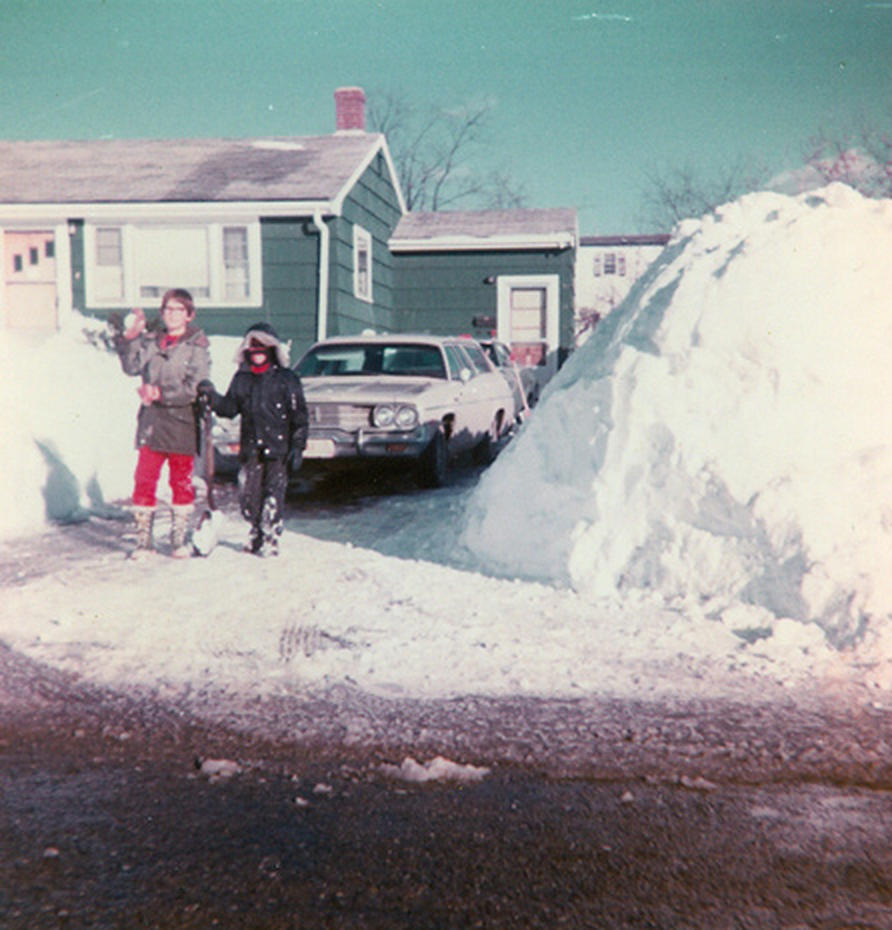
It’s winter here in Michigan. The season of snow. I’m old enough to remember the infamous snowstorm of 1978. I remember, because it began on the Sunday before we were to return to school from Christmas Break. I imagine many children were praying for a snow day to extend the time they had to enjoy their new Christmas toys and games. But we got far more than we bargained for! In fact, the snow drifts were so high and so long that the Road Commission had to send front end loaders to finish digging out our section of road! We were walled in with snow drifts towering over 8 feet, and 15 or more feet where the roads dipped. I know that’s not spectacular in other areas of the northern great plains and Michigan’s upper peninsula, but around here, that was a snow-pocalypse of epic proportions! We were snowed in for an extra week of “Christmas Break” that year.
Stock photo from CBS News from 1978
We haven’t gotten that much snow in several years– at least not all at once. But it doesn’t take much for snow to pile up into drifts that can slow down and even stop traffic for a bit. And it seems that the smaller and lighter the snowflakes the faster and easier they drift.
I’m not sure why I’ve been thinking about snowdrifts today, but as I did, I was reminded of how prayer can be like snow. Imagine each person’s prayer over a certain issue or for a certain person as a single snowflake. Now imagine that each of those prayer requests “drift” together as they rise toward Heaven. Your simple and sincere prayer, mingled with those of many others, and magnified by the working of the Holy Spirit–suddenly, there is a massive drift!
Each prayer is SO important! Each heartfelt thought and spoken word; each awkward attempt to find the “right” words…God gathers them up like glittering jewels or sparkling snowflakes.
I confess that I often think of my prayers as being tiny and unimportant, but God is the master of multiplying small things. Think of what Jesus did with five loaves and two fish! Remember how He used David’s five small stones to slay a giant. He used 300 of Gideon’s men to defeat an army, and He used 12 committed disciples to change the world! My prayers– Your prayers–ARE important. God has storehouses of snow (see Job 38:22), and I believe He also collects and cherishes all the prayers of His people. I also believe that He keeps the prayers we send from one day to another, piling them into drifts as well. So, it is important never to give up praying. Just because we haven’t seen the answer yet, it doesn’t mean that God isn’t listening or is unwilling to act. It may be that we can’t see the “dip in the road” where our prayers are still piling up!
Let’s keep praying today as if we were children praying for a “snow day!”
Near the end of 2020, my mother took a bad fall and broke her hip. Because of COVID, we were not allowed to visit her while she was recuperating. Thankfully, she had her cell phone and was able to make and receive phone calls. My mom was a very independent sort, but she loved to be “in the know” about all that was happening in the neighborhood and among our family members– births, deaths, hospitalizations, relocations, etc.. But, for all her interest in “what’s new,” Mom was completely computer-illiterate. She didn’t text, she didn’t have e-mail, and she knew nothing of social media. She relied on her phone and her desk calendar and notepad. Being trapped in a nursing home for six weeks was torture for her, even though she needed to recover and do physical therapy there. I tried to call her every day, and each time, she would ask, “Do you have any news?”
Sometimes, I had “news” for her; someone had tested positive for COVID, or a new baby had been born. But most days, I had to tell her– “I just called to say I love you, and I’m thinking of you.” And I could “hear” her smile on the other end of the line as she replied, “well, that means a lot. I just love to hear your voice.”
I don’t know why, but it struck me the other day how often we pray about circumstances– we “call” on God because we have “news”– situations that we want to bring to His attention– as if He didn’t already know! We pray because we want to lift up someone who is ill or suffering; we pray because we need to make a confession and ask forgiveness; we pray because we are facing an unknown future, and we desire God’s guidance and wisdom. Other times, we pray because we have a specific praise or thanks to offer. These are all legitimate reasons to reach out to God in prayer, and we certainly SHOULD pray in all circumstances, but how often do we call on God just to say, “I love you and I am thinking of you!” In fact, how often do we take the time to disconnect from social media and all the other distractions of our day to really focus on spending time with God?
Mom went back in a nursing home a couple of years after her first fall…she fell again and broke her other leg! So, I called her nearly every day– with or without “news.”
I marvel that God is every bit as eager to hear from me– even me– every day, “just because.” I’m so glad that I had the ability to talk to Mom; to hear her voice–and yes, even to share the “news.” She has been gone almost two years now, but what precious memories of our time together on the phone! How much greater my joy that I can talk to my creator; that I don’t have to worry about a busy signal or dropped call; that I can read His words to me any time of day; that His presence–even though I can’t see Him or hear His voice–follows me everywhere. And that He sends special people to call me, or text, or e-mail– “just because.” And no matter how I feel about my circumstances, God is so very glad to hear from me. And you!
This isn’t a hymn, but the music was running through my head as I wrote this. How often to we hear a ballad or a love song, and suddenly realize that God sings love songs over us?! (See Zephaniah 3:17!)
I’m late writing this post today. The new year is unfolding faster than I had planned, and I come to this day unprepared.
But that’s kind of the idea behind Epiphany. We focus so much on preparation during the Advent and Christmas season that the season which follows can be lost in the shuffle of “getting back to normal.” Even at the historical birth of Christ, there was a real focus on everyone “getting back to normal” after the hustle and bustle of the census and the travel-weariness it generated. Very few people were focused on “Christmas” because Jesus was still considered one small child in a land of thousands of others. There were no Christmas traditions, no trees to un-decorate, no gift wrapping to put away for next year, no leftover cookies to finish eating. And then, twelve days after the glorious events of Christmas Eve and Christmas Day we celebrate Epiphany.
Also known as Kings’ Day, or Twelfth Night, this is the date we celebrate the arrival of the Magi (Kings or Wise Men) who traveled to Bethlehem to see the newborn King of the Jews. They did not arrive at the same time as the shepherds, and the account in Matthew has them visiting Mary, Joseph, and the Baby in a house. We must assume that Joseph found better accommodations for his family as the rush of census-taking waned, and yet he wanted somewhere safe to stay while the baby was still so small. The Magi came unannounced, unexpected, and “late” in the story.
The word “Epiphany” means a revelation or manifestation of something supernatural. The shepherds had gone through an epiphany when the angels appeared to them in the fields and told them to go to the manger on Christmas Eve. But the Magi, who had been following the star for months, finally had their Epiphany upon seeing the young child several days or even weeks after His birth. We don’t know that it was actually on the twelfth day after Jesus’ birth, but at some point, the Magi arrived at their destination and saw God in the Flesh! And their lives would never “get back to normal!” And their visit was a revelation to Mary and Joseph as well. The Kings brought expensive gifts of Gold, Frankincense, and Myrrh. They also brought the revelation they had received about the threat of Herod and the need to leave Bethlehem. If Mary and Joseph thought the worst was over, they were shocked into action by the warning of the Magi.
And yet, we celebrate this moment in time, this further revelation that a tiny baby was going to change everything. This knowledge that the Wise Men of Old held, and we can hold today– an encounter with Jesus is a revelation of the supernatural–this baby is GOD in the FLESH, GOD with US, GOD living AMONG us, GOD dying FOR us, GOD who will RETURN to REIGN over us. Nothing will ever be “normal” after such an encounter!
And I hope that can be said for all who read this– that we have encountered the Messiah; the Holy Son of God and Son of Man–and we have been forever changed! There is no end to the season of wonder and delight; there is no need for bright lights and tinsel-topped greenery, and no need to put away the joyful trappings of what His arrival really means.
Epiphany should “sneak up” on us– any day, anywhere–it should amaze us and surprise us with Holy wonder as we encounter the reality of “Emmanuel–God with Us!” And it should cause us to respond with prayers. Not only joyful prayers and prayers of thanksgiving, but prayers in our weariness, prayers in our anticipation of days to come and trials to face. Just like the Wise Men, we may have a long and even difficult journey in 2025. But at the end of it we will encounter God– not as a sweet baby in the manger but as our Lord, as well as our constant companion, our champion, and our heart’s desire!
Our Father, Who art in Heaven, Hallowed be Thy Name. Thy Kingdom come. Thy will be done In Earth as it is in Heaven. Give us this day our daily bread, And forgive us our trespasses As we forgive those who trespass against us. And lead us not into temptation, But deliver us from evil. For Thine is the kingdom, The power, and the glory, Forever and ever, Amen
Jesus taught His disciples to pray when He was on Earth. It is a simple prayer, and it is meant to be used as a guideline.
As we enter a new year, we discard many of the “old” things in our lives, but I’d like to take a close look at how this “old” prayer can breathe newness and vitality into 2025.
Our Father— When we pray, we are praying to a very personal God; one who loves us each intimately. But we are also praying to the God who loves our neighbor, and our “enemy.” He is OUR Father. We can, indeed we must pray for others as we would pray for ourselves. And we must see God as our Father– the one who has both Love for us AND Authority over us. He is not removed from us, but He is not listening for us to dictate to Him what He should do.
Who art in Heaven–Yes, Heaven seems far removed from Earth, and God remains removed from us in the sense that we cannot see him with our eyes or hear him with our ears. But God IS in Heaven– He sits on the throne; He reigns; He rules, now and forevermore. God is not trapped here on Earth; he’s not just passing through on His way to some other galaxy; some other reality. He IS and will always be accessible, glorious, all-knowing, and all-powerful over all that we can ask or imagine (see Ephesians 3:19-20)
Hallowed be Thy Name–The very first three of the Ten Commandments all deal with the Holiness of God and the Sacredness of His Name. When we lose sight of WHO HE IS– when we think of Him as “the man upstairs,” or any other image that fails to acknowledge HIS awesome and majestic Holiness, we lose the very power of prayer. Prayer is not powerful because of WHAT we pray or who we pray for, or even in relation to who WE are in relation to God–it is powerful because of His Name, and His Character, and His Authority.
Thy kingdom come–We have a tendency to pray for the kingdom WE want; the outcomes we want; the visions that we have. Prayer is about more than that– it is about being willing and eager to listen for the outcomes GOD has planned, for HIS kingdom, HIS plans, HIS timing, HIS justice, HIS healing, HIS mercy, and HIS final word.
Thy will be done in Earth as it is in Heaven— Earth, and all the systems we know on earth, are broken and tainted by Sin. When we pray, we pray for something we have not ever experienced fully– that we would know God’s perfect peace; perfect fulfillment; perfect righteousness. Often our prayers are limited by what we know, including the brokenness of our own visions and desires. Prayer should take us beyond those limitations. We need to be open to what HE can do, even when it doesn’t match our expectations.
Give us this day our daily bread— What if we were content to let God give us, not what we want, or wish, but what we NEED for each day? Just enough strength and healing to get through one day of Chemo treatments; just enough peace to deal with the uncertainties we face in the next 24 hours; just enough grace to witness to our co-worker, without expecting an immediate positive response? At the same time, what if we are open to God providing enough “daily bread” to feed 5,000! God is sovereign to give us according to the NEED He sees.
And forgive us our trespasses as we forgive those who trespass against us. When we pray this– REALLY pray this– we must examine our motives for prayer and our actions toward others. Do we want God to forgive us in the same manner and to the same degree that we forgive others? This should be a transformative prayer every time we say it.
And lead us not into temptation but deliver us from evil— Jesus never said that God tempts us, such that we should have to ask Him not to. But we are likely to walk straight into temptation if left to our own devices. We need God to lead us away from temptation and protect us– deliver us– from the evil that we will encounter in this broken world. There is a deeper prayer here, as well. We tend to think of temptation and evil coming from various people that we encounter. The prayer here is not to protect us from other people, or the influence of others, but to lead us away from our own desires and protect us from Evil. It may help us with forgiveness (above) when we remember that our true enemy is not an individual person, but the Evil working in them.
For Thine is the Kingdom, and the Power, and the Glory Forever and Ever— We must be careful not to pray for our own kingdom (selfish desires) our own power (separate from God), or our own glory. God wants to know what is in our heart, and He wants to see our heart being discipled and shaped into an accurate reflection of His humility, His mercy, and His Love– that how His Kingdom operates!
AMEN!–“May it be so.” Our prayers, like our lives, are not perfect. We have not achieved or imagined all that we “should” pray for. God’s Grace is sufficient to cover when we ask for more (or less) than God has planned for us. Our spirit should trust that God will continue the work He is doing to make us more like Him as we pursue His will and His Kingdom (see Philippians 1:6)
This year, we will be tempted to try many “new” things. Some will be good for us; others may not be in our best interest. I hope that this year, we will grow in our pursuit of prayer– that we may find new ways to draw close to God in prayer. But let us not abandon the fundamentals that are included in this “old” and dear prayer of our Lord Jesus.
Today is New Year’s Day. And for most of us, nothing is really that much different than yesterday. Some of us have the day off from work; others don’t. Some of us will begin new ventures this year; others won’t. But we face January first with expectation and hope. Why?
There is something about looking forward. Sometimes, it can fill us with dread– especially if we imagine the worst or have some reason to expect a dire outcome or consequence for one of our past actions. But most of the time, we look forward to a new year with some level of confidence and even eagerness. We make plans, promises, and resolutions. We fill in calendar pages and make appointments in our planners. We dream about goals and accomplishments we hope to fulfill by this time “next” year. And hope makes us happy.
What makes you happy and gives you hope today? Is it your career? Your family? The savings you have in the bank? Is it your ability to make things happen? Or your past success in planning for the future?
What if 2025 brings disaster– to you personally, or to the world around you? What if the economy fails? What if war comes to your town (if it hasn’t already!) What if this is the year you face Cancer? Can you still have hope? Can I still wish you a “Happy New Year?”
We don’t know what this year will bring. But we CAN know the timeless and eternal Hope that is in Jesus Christ. Even if we face uncertainty, grief, struggles, pain, loss, injustice, or misery. We may not find “happiness” in this year, but we can find joy and peace that surpass all understanding (see Philippians 4:7).
How can we do this? The Apostle Paul tells us in the very same passage to “be careful for nothing.” (see v. 6) That doesn’t mean to be careless, but rather not to try to control all the variables and circumstances in our life. Instead, we are to take everything–EVERYTHING– to God in prayer. So every day of 2025, we can offer up the day, the night, and all that happens within them to a loving God who KNOWS our future. He not only knows what will happen TO us; He knows what can happen THROUGH us, AROUND us, FOR us, and WITHIN us! He knows what resources we will need, and how those resources can be made available. He knows what is truly best for our growth, fulfillment, and joy. That doesn’t mean that we won’t have to suffer or that we won’t have questions and even some doubts. And it doesn’t mean that we sit back and do nothing. But we can do our best to step out in Faith, knowing that God can redeem even our mistakes– if we let Him.
There is one other part of the Apostle Paul’s directive–Gratitude. We can be thankful, even in the midst of pain and suffering, frustration and grief. Not because we are suffering, but because we are NEVER alone, and NEVER forgotten. God’s plans may involve suffering, but they never end there. Just as we turned the page on 2024, God will one day make ALL THINGS NEW.
Someday– and it could happen in 2025 for all we know– we will be ushered into something completely new. Not a new year, a new decade, a new millennium, a new epoch, a new age, or a new phase, but a completely new Heaven and Earth.
And THAT’S a Happy New worth hoping for, waiting for, and being thankful for. Right now, and every day of 2025!
We are saying goodbye to another year–It hardly seems like we’ve already reached the end of 2024. Time seems to travel faster each year, even though I know I have the same amount of time each day. But it feels like I keep running out of time! At some point, 2025 will “run out” of its designated time. We live in a world limited by time and space.
But God lives outside of earthly time and space– He rules them, bends them, and contains them in His sovereignty. I often write about the omnipresence of God– that He is everywhere. In fact, the only place He is NOT is Hell; and He’s even visited there, once… But God is also omnipresent in time. He IS the God of Abraham, Isaac, and Jacob– always, and all at once, along with being the God of everyone who has ever called and will ever call upon His name to put their trust in Him. God IS in the past; He is ever present, and He is ALREADY in the future, acting and overseeing His plans and purposes.
With the birth of Jesus Christ, God did not step out of time– instead, He inserted Himself into time and space and obeyed the limits He Himself had placed. He came exactly when He had determined, exactly where, and exactly how He had planned. And the same is true of His death and resurrection. His death on the cross was not a moment too soon, and not a single second overdue. Yet, Jesus was at the mercy of the very time and space He had created. Just like us, He was limited to being in one place at a time, and limited to the circumstances around Him.
Nothing shows this better than the story of Lazarus (John 11). A close friend of Jesus, Lazarus became mortally ill. Word was sent to Jesus so He could come immediately and heal Lazarus, but He delayed in coming. He delayed for two days, continuing to work where He was before going to help friend. He knew that Lazarus would not survive. By the time He arrived in Bethany, Lazarus had not only died, but had been buried. Both of Lazarus’s sisters greeted Jesus with the same rebuke–” If you had been here, my brother would not have died…” The God who is everywhere, always, was limited by His physical form, and had to walk to Bethany. He could not continue to work in one area, and be in Bethany at the same time. Nor could He stop time and space so the Lazarus’s sickness could “wait” for Jesus’s arrival days later. But the Sovereign, Omnipresent God had not “run out of time” to save His friend. Even in His human form, in His “inability” to get to Bethany “in time,” Jesus was acting according to His Sovereign plan. He brought Lazarus out of the grave! He was “there” in all of His power and mercy. And He was precisely where and when He needed to be!
As we enter a new year, it comes with limitations–12 months, 52 weeks, 365 days, and so on–we can’t see what will happen, or where we will be in March or September. It may seem that God is “late,” or “absent” in our circumstances. We may be tempted to stop praying when we don’t see immediate answers. We may, like Mary and Martha, be tempted to scold the very author of Life when we don’t get the answer we want when we want it.
This year, let us remember that God is beyond time and space. This allows us to trust that He can and will do what is best, when it is best. It also allows us to trust that God can make the most of OUR time as we trust it to Him. We may be limited to 24 hours a day, but we serve a God who can stretch and bend time, and supplement even our smallest efforts and resources with the endless riches of His Grace!
Yesterday was Boxing Day– a day for boxing up the Christmas decorations and finding places for all the gifts we received on Christmas Day. Traditionally, this includes donating things that we do not need or sharing some of our gifts with those who did not receive gifts on Christmas. Not everyone does this on December 26. Some people will exchange gifts on January 6. Some have already donated gifts to others to receive on or before Christmas. Many families leave their decorations up past the New Year; but most people are ready to put away all the trappings of Christmas and move on to other things– last minute cleaning, New Year’s resolutions, looking ahead to changes.
There is a sadness about putting away the lights and tinsel, candles and manger scenes. There is a melancholy that comes with taking down the lights, putting away all the ribbons and greeting cards, the candles and such. We have waited so long for now the wait has ended. And there is something about wrapping up Baby Jesus and putting Him in a box to sit on a shelf for most of the year that seems to mock the very celebration of Christmas. Jesus CAME! Not just for a day; not just as a newborn. Jesus didn’t come to sit on a shelf in the attic, carefully wrapped in paper waiting for His next birthday. He LIVED. He GREW. He LOVED. Jesus, and the message of His life, death, and resurrection cannot be contained in a box. It cannot be relegated to a shelf. Jesus is not just the baby of Christmas. He is the Lord of Life, the Light of the World, the teller of Parables, the Lamb of God, and the Risen Messiah!
But in another way, Boxing Day is completely appropriate for the season. Jesus came to be “regifted” and “passed on” to those in need! Jesus did not stay in the manger; the angels did not camp out with the shepherds; the wise men returned to their homes after giving their gifts. Life goes on! And it IS appropriate to put away the baby Jesus and focus on what comes next– Jesus living out His life and His mission; Jesus preparing for His Ministry, as well as preparing for the Cross and His Resurrection. Jesus returning to Heaven, where He is “hidden” until His coming again.
Today, my prayer is that we will not hide Jesus on a shelf or in a box, but “hide” Him in our hearts as we prepare for the coming year. And, just as we celebrated the Miracle of His first coming, that we would continue in a spirit of Advent as we await His Return! Let us prepare for OUR mission– to share the Gospel and spread Joy and Peace to others, whether with gifts, encouraging words, or just making connections and listening. May we anticipate with wonder and excitement the work He is doing even now among His Disciples and Followers, and the coming Fulfillment of His promises to make all things new!
As we put away the lights, and take down the ornaments, may we save the warm glow of remembering– He Has Come! He is Here WITH Us! Emmanuel! May we let Him shine Through us in the days to come, spreading Hope and Joy and Peace. And may we look forward to the day when we won’t need to unwrap Jesus from a box on the shelf– He will be our very present Source of Light, our King and Ruler, Forever, AMEN!





































 Pursuing Prayer