Every year, I try to read the Bible from cover to cover…a little each day, beginning with Genesis on January 1, and ending with the last of Revelation on December 31. So yesterday, I finished the last verse of Revelation 22– AMEN! And today’s reading begins with “In the beginning…”
Once again, I will read the Bible as a cycle– “beginning” to “AMEN.” But the Bible, like most other books doesn’t really have a beginning and an end. Things happen “before” the beginning, and things happen after “the end.” The Bible tells us of the beginning and the end of our created earth. But where Genesis begins with darkness and void, Revelation ends with light and joy and victory! ”They all lived happily ever after…”
And I am reminded that God’s character shines through every page of His Word. He makes all things new! He creates! He redeems! He Blesses!
As we go into a new year, we can take great encouragement from the message of the Bible. Every year– every day, and even every moment–is filled with God’s presence and His promise of eventual renewal and redemption. We face an uncertain year in terms of human achievement and “progress.” War, famine, economic collapse, natural disasters, disease, heartbreak, and death– all are possibilities and even probabilities in our fallen world. But the Bible teaches that our problems, as enormous as they seem to us, are not outside of God’s power to redeem and redress.
His plan is to recreate, rejuvenate, and replenish. All our relationships; all our ambitions; all the landscapes of all our dreams– will one day be reshaped. All the terrors and tribulations of Sin and Death will be vanquished. There will be no more need for fear or distrust or even cautious optimism. It will be NEW– not just “new and improved”, but new and perfected! Whatever we pray for in the coming year, we can know that God will bring situations full circle from tragedy to eventual triumph. It may not happen today; it may not happen this year or even in this lifetime. But God keeps His promises from “the beginning” to the Final “AMEN!”
And on this first day of a New Year–let’s rejoice that God is the God of all New Things; the Maker of All Good and Perfect Gifts; the God who is able to do exceedingly abundantly above all that we ask or imagine (see Ephesians 3:20-21)!
We’re are approaching the end of another year. It’s time to finish old projects, close out budgets, put away the old calendars, and get ready to start writing a new year in our planners and checkbooks. As we prepare for a “new” year, we set new goals, start new projects, and think ahead to what “will be.”
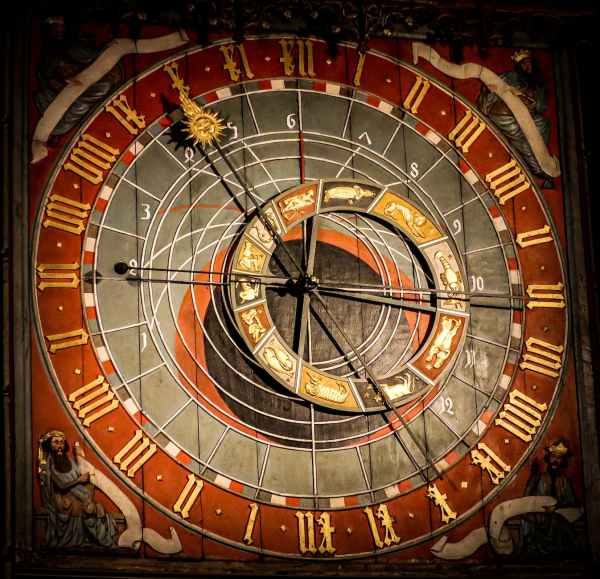
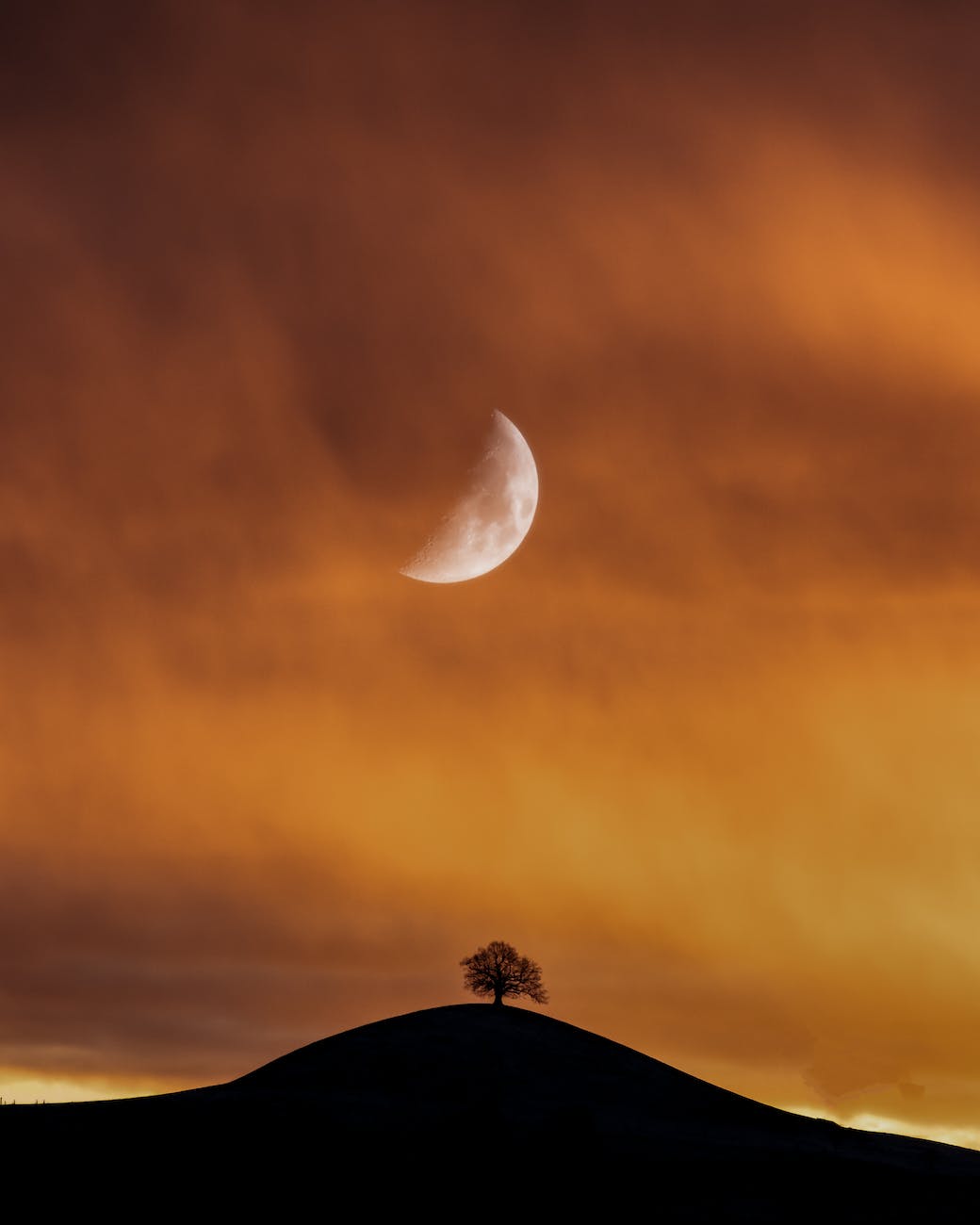
But, if you think about it, New Year’s Day will just be another day in a new week. The week actually begins on Sunday, regardless of when January first falls. We will go to sleep– possibly after midnight–and wake up just as we’ve done all the days of the past year, and all the days to come in the “new” year. Time is cyclical, as well as chronological. Time doesn’t go backward, but neither does it stop and “start over” when we complete a weekly cycle or at the end of a month, or year, or even a millennium. It just keeps repeating the natural cycles of day and night, moon cycles, and yearly orbits around the sun.
Yet, New Year’s Eve and New Year’s Day are important reminders about the nature of Time. God created the cycles of time– days and weeks, months and years–even though He exists outside of the boundaries of time. And God created the world with a beginning, and an “end.” As humans, we exist within these boundaries. Our years have beginnings and ends; our lives here have a beginning and an end, as well, even if the rest of the world keeps cycling around our short time on this planet.
New Year’s Eve reminds us of our own mortality. We need to be aware of the brevity of life, and the value of our time. We will come to an end. We will “run out” of time. Our plans and actions need to be accomplished in the time we have left. We may see the dawn of the new year, and of the year after that– but we do not know the moments and days we have left in our earthly lives.
But New Year’s Day also reminds us that God has NO end! His mercies are new EVERY morning, every week, and every new year! New Year’s Day reminds us that we can break old cycles and start fresh. We can look forward, instead of always looking back at past mistakes and regrets. And we can rely on God to continue to sustain us through days and weeks and years as they come and go.
Someday, we will be enter eternity. Time will no longer limit us. There will be no deadlines or endings for our dreams and activities. We will never “run out” of time. And we will never face an end of our access to God’s goodness and His Presence.
That is true today, at the “end” of this year, and it will be equally true in a few days, in the “new” calendar year. The calendar may change, but God never will! And we will never “run out” of time to spend with Him– if we have trusted Him for Salvation. What a wonderful thought as we “close out” one year and step into the unknown future of another!
Now faith is confidence in what we hope for and assurance about what we do not see. 2 This is what the ancients were commended for.3 By faith we understand that the universe was formed at God’s command, so that what is seen was not made out of what was visible… 6 And without faith it is impossible to please God, because anyone who comes to him must believe that he exists and that he rewards those who earnestly seek him.
Faith is essential to prayer. Not only is it essential that we know the truth, we must depend on it. Those who lift up general prayers to some unknown “force” in the universe have no real hope that their prayers will be heard, instead of bouncing around among the planets in silent expectation. We pray to a God who sees, hears, loves, and works among us. And He will answer our prayers– in His way, in His time, and to our ultimate benefit.
That does’t mean that we must blindly believe everything we hear about God, or that we must agree exactly with everyone else who claims to believe. None of us has ever seen God face-to-face, nor can we claim perfect knowledge. But there are certain truths that do not change– God is GOD; creator, ruler, unchanging and Holy. God is who He says He is, not who someone speculates or imagines Him to be. God is mysterious, but He is “Knowable”–we see His character in the natural world, and we can see His reflection in the people around us who are all created in His image. Most of all, we have the testimony of Jesus Christ and of all who have followed Him and been transformed by Him. To all who earnestly seek Him, He has given us His Word, and His Spirit to guide us. And God is Good. Even though nature (and human nature) has been tainted and twisted by sin, God remains true to His own goodness. Even in the hard times, when God seems distant–especially when He seems distant–faith looks beyond our present circumstances, and the taunts of our enemies, to remind us of God’s providence, His Power, and His promises. Our present trials and calamities are not beyond His ability or His willingness to turn to good purpose, and they do not compare to the promises God has given.
Faith is essential to prayer, but so is faithfulness. Prayer is part of a growing relationship with our Maker. And like any relationship, it must be maintained. God is eternally faithful, but we are not–not in our own power or in our own will. And our faith, without faithfulness (in prayer, in devotion, in our everyday thoughts and actions) will wither and die. The same thirst we have for prayer in the valleys of life should be present when we reach the mountaintops. The same need we have to cry out for help should be the need we feel to cry out in praise. This will not happen without discipline, developed by daily seeking His face.
As we approach a new year, we can make many plans and resolutions– let one of them be to strive for faithfulness, especially in our pursuit of prayer. We know it is the right thing to do. And our faithfulness is not just for us. It blesses the heart of the One who was faithful even unto death. And it shines as an example to those around us– inspiring some to faith, and others to renewed faithfulness.
Finally, let’s also resolve to move forward a step each day, remembering that “The steadfast love of the Lord never ceases; his mercies never come to an end; 23 they are new every morning; great is your faithfulness. (Lamentations 3:22-23 ESV)
God’s mercies are new every morning. And our resolve should be renewed every morning. It is God’s faithfulness that allows us to work toward greater faithfulness. We will not keep our resolutions in our own power, nor will we keep them by remaining stuck in our past failures.
Let’s embrace the coming new year as an opportunity to stretch our faith muscles, grow in faithfulness, and move forward in mercy!
“Let every heart prepare Him room, And Heaven and Nature sing!”
from “Joy to the World”, by Isaac Watts
I cleared a space in my living room for a tree. I placed a Nativity set on our newly-cleaned mantle place.
I found a cozy nook to wrap all the Christmas gifts, And I used candles and decorations to fill all the empty space.
I cashed in my Christmas club money to buy the gifts For friends and family.
I set aside money to buy stamps for Christmas cards And to give to charity.
I cleared my schedule and made time for All the extra running this Holiday season.
For parties and shopping with friends; For Church and family–all excellent reasons!
But it wasn’t until I made time and space for the Babe– God come to Earth as a baby Boy–
It wasn’t until I let go of all of “it” for “HIM,” That my heart was transformed with Unspeakable Joy!
Christmas has room for bells and lights, For carols, and cookies, and festive nights.
Christmas has room for laughter and presents. But it isn’t really Christmas without HIS PRESENCE.
“Let every heart prepare Him room” this year. Let every heart be filled with true cheer.
Let us Adore Him–far and wide– This Savior who was born; who died
And rose victorious over the tomb! Who entered our world in a Virgin’s womb,
The one who came to save the human race; The one who is filled with “redeeming Grace!”
May Christmas Day, and ALL our days Be filled with Wonder, Joy, and Praise!
Today, as we celebrate the coming of Jesus Christ into the world, let us remember that He came into a world that wasn’t prepared. There was no room in the inn. There was no baby shower, anticipating the arrival of a long-expected birth. In fact, His birth came without all the trappings that we have added to the Holiday. I love all the wonder of the Christmas Season– all the lights and songs; gathering with family, and friends, Advent services and Christmas Eve candlelight vigils, gifts and cookies, Christmas movies and Christmas cards– I could go on for pages!
But the heart of Christmas comes quietly and simply; when we step back from all the glitter and activity and take in the absolute wonder that the God of the Universe stepped into all the limitations of His Creation– a world of time and space, dirt and disease, broken hearts and broken bodies–and He did it for YOU and for ME. He had to be fed and changed–the ruler of Nations!–and placed in a manger to lie in all the helplessness of infancy. He had to walk wherever He wanted to go. He had to eat and sleep and wait in lines and wash away the dirt and sweat of His exertions. He had to listen to the foolish arguments and explain Himself to critics whose very souls He had lovingly created. And He let them condemn Him unfairly and kill Him in the most painful and humiliating way they could dream up.
Christmas is about Joy bursting into a world that was NOT prepared for it. It is about the inextricable link between suffering and celebration; between seeking and being sought out; between salvation and sacrifice.
Our Joy at Christmas cannot be manufactured by songs or gifts or entertainments. It can’t even be found in rituals and traditions. But when Jesus finds room in our meditations, our relationships, and our lives, Joy is the overflow.
May we all find Joy this Christmas– whether or not we prepared in advance; whether or not we checked off all the items on our “to-do” lists; whether we can afford all the trimmings and decorations; even if we are crying out in the darkness– may the Joy of Christmas burst upon us, just as Jesus burst upon a weary world so long ago!
It’s that season of the year, when several companies have their annual “Christmas Parties.” Some companies, in an effort not to offend any of their employees, investors, etc., have stopped calling them “Christmas” parties– they are “holiday” parties or “year-end” celebrations. In fact, at one place I worked, they stopped having any parties for the employees, claiming it was a “bad look” to “waste” money on such nonsense! Bah, Humbug!
But company Christmas/Holiday parties have a tendency toward the silliest and least meaningful ways of celebrating what this season and its holidays are all about. Often, the festivities involve a cash (or open) bar, some sort of anonymous gift exchange– white elephant or “secret Santa” with a spending limit of $5 or $10 dollars, and an ugly sweater contest.
And there is an entire industry predicated on the modern tradition of the “ugly” holiday sweater. Garish, loud, often bedecked with pom-poms, tinsel, or even battery-operated flashing lights, such sweaters can cost a minor fortune. They get worn once a year (twice if you have to go to a second party with a spouse, friend, or as a chaperone). And, while I don’t want them banned, I think they represent some of the worst excesses of our modern first world. They serve no higher purpose than to draw attention to bad taste and mock the core values of Christmas, Hanukkah, and other seasonal holidays. They are about tacky and fleeting entertainment, at the expense of higher virtues.
I’m not trying to be a Scrooge or a Grinch. The holidays should be a time of joy and laughter. But is a tacky sweater really the best we can come up with? Is it in the top ten best ways to enjoy a season of miracles, love, light, giving, and hope? (I feel the same way about the focus on drinking– waking up hungover and sick; not being able to remember the end of the party– how is this “fun?”)
In our effort to have “Christmas” without “Christ” or Hanukkah without miracles; in our efforts to erase God from the celebrations of HIS goodness, we have created a level of fake celebration that echoes the story of “The Emperor’s New Clothes.” We’re walking around with ugly sweaters, each more elaborately ugly than the one before, considering it a triumph to be the biggest fool in a forest of foolishness.
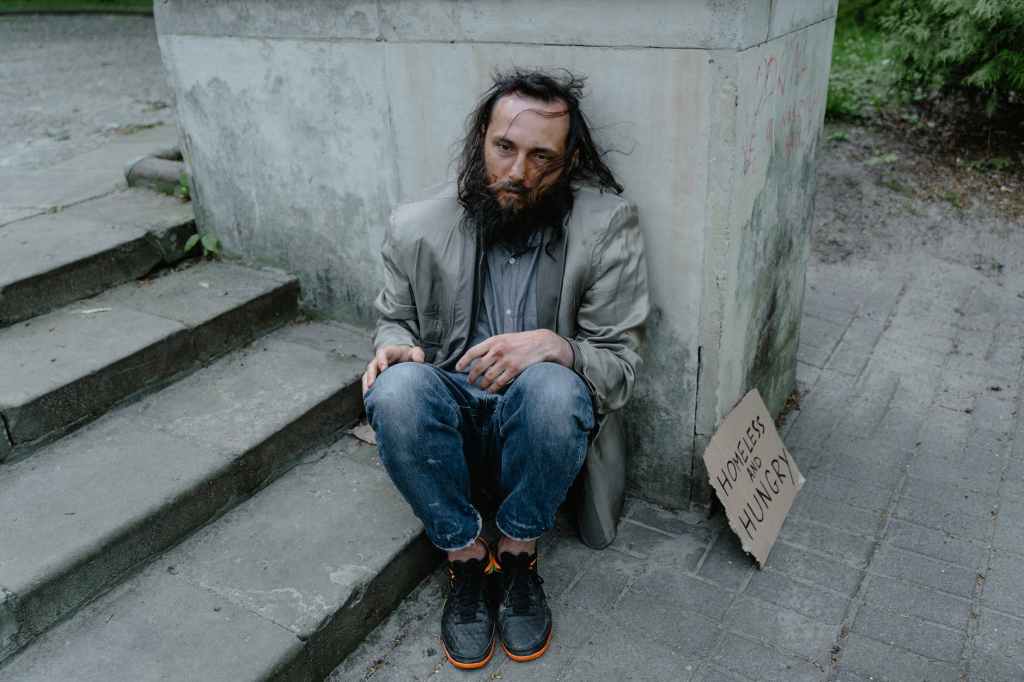
Imagine giving that ugly Christmas sweater to someone who was homeless and had no warm clothes. Would it make you laugh to see someone in those circumstances wearing your once-a-year indulgence? Would your ugly sweater bring hope and healing to those who are refugees this season? Do you wear it when no one else can see it? The sweater isn’t about the season. It really has nothing to do with the meaning of the Holidays. It’s about impressing people with your willingness to stand out; your ingenuity in finding an uglier sweater than anyone else; it’s about YOU.
What would happen if, instead of an ugly sweater contest, seeing who can drink the most before passing out, or a white elephant exchange of worthless gifts, companies celebrated with worthwhile activities– building community ties, honoring achievements, or maybe even reflecting on miracles in our midst? What if our celebrations were less about empty amusements and more about reflecting on what is genuinely worth celebrating–health, friendships, family, hope, and purpose? They might be less amusing, but they might also be more memorable and meaningful.
There’s nothing “wicked” about ugly sweaters or white elephants– but they are becoming symbols of the kind of “Christ-less” Christmas that offers mild entertainment, but no hope for the dark days of a long winter. They are some of the symbols of excessive economic wealth in the midst of emotional and moral poverty. Naked and empty entertainment, pretending to offer light and satisfaction, but settling for glitter and gluttony.
Today, I’m going to wear a sweatshirt to keep warm, and I’m going to spend some time with my family– building memories that will last much longer than last season’s ugly sweater! And I will spend some time thanking God for the sweatshirt, my grandkids, and for the incredible gift of His Son–the real meaning of this season of love, gifts, miracles and hope–our real reason for celebrating Christ-mas!
It was almost 160 years ago, during the darkest days of America’s Civil War, that Henry Wadsworth Longfellow wrote a poem “Christmas Bells” that would become the Christmas Hymn, “I Heard the Bells on Christmas Day.” His son had been badly wounded in battle; his wife had died just a few years earlier, and the nation was in ruins and chaos. No one knew how much longer the war would continue or what the final outcome would be; Longfellow did not know if his son would live, or if he would be paralyzed for life. As he listened to the bells of Christmas ringing from church towers, he poured out all his doubts and fears in verse. Yet he concluded, “The Wrong shall fail, the Right prevail, with peace on earth, good-will to men.”
Christmas is not just a celebration of “comfort and joy” that comes from tinsel and lights, cozy fires, or gifts under brightly lit trees. Christmas is about Hope in times of darkness. It is about promises kept; prophesies fulfilled, victory assured, even when it looks as though the Enemy has the upper hand.
It is horribly tempting in troubled times to wonder and question God’s ways– does He hear? Does He see? Is He asleep? Does He exist? How can a “good” God allow such suffering and pain? And like Longfellow, we listen to our circumstances, and they seem to drown out the message of Christmas– “For Hate is strong, and mocks the song of peace on earth, good-will to men.” The cannons of yesteryear may have been replaced with 24-hour news cycles or Facebook news feeds, with protests and terrorist attacks; war and political corruption; social tensions and economic turmoil, but the noise is still the same. There is hatred, deceit, destruction, and doubt in our world–it was present during the Civil War; it was present during the Roman occupation at the time of Christ’s birth. But that birth brought a singular hope– one that has become so familiar, and so casual as to be almost forgotten amidst the immediate urgent noises of the day.
The trappings of Christmas sometimes hide the very Glory of Christ’s Advent. God CAME. He LIVED AMONG US. He was humble. He felt the cold and heat of long days and nights; his feet got dirty from walking. He laughed and cried. And, He DIED. He felt agony and shame and fear as he gasped for breath, naked and bloody and facing sneers and anger from the crowd. But God IS NOT DEAD–He conquered death; He rose again victorious. And He did it so that our suffering is not in vain– our suffering is not the end of our story.
GOD IS NOT DEAD. Hope is not in vain. Nor does He sleep–even in the silence of our lonely nights, even in the noisy chaos of life in 2023–God has not stepped off His throne; He has not turned His back on mankind. “The Wrong shall fail–” though it may seem strong and strut arrogantly through the streets, shouting and threatening–God is the final authority. Nothing is hidden from Him. He sees every injustice, every secret sin; He hears every lie, every twisted truth, every deceit. And He has no favorites– there is no excuse, no “religious” exemption– ALL have sinned, and all will be held to account.
EXCEPT– because of that one birth and death and resurrection–the debt is already paid. “The Right (shall) prevail with peace on earth, good-will to men.” For those who listen beyond the noise of battle, the bells of Christmas ring “more loud and deep” with the hope and joy and strength that overcome our pain and struggle. Longfellow found that truth– and I’m so glad he shared it. I hope his words will continue to remind us to listen through this season for the true message of Christmas.
As the Christmas season approaches, people are decorating their homes– wreaths, Christmas Trees, lights, gingerbread houses, manger scenes, elves and reindeer, candles and more. And along with the sights and sounds and tastes, the air is redolent with the scents of the season.
Scents evoke memories and emotions deeper than any of our other senses. We can close our eyes or ears to unwanted stimuli, but it’s difficult not to breathe in the spicy air filled with cinnamon or cloves, or ignore the scent of pine or scented candles filling the room.
There was no gingerbread, or evergreen tree, or clove orange in the stable where Jesus was born so long ago– no candles or air fresheners to cover the other scents of animals and afterbirth. But when the wise men arrived to worship the infant King (which may have been a couple of weeks or even months later), they brought gifts, and two of the three were spices– Frankincense and Myrrh. They were precious spices, with medicinal and healing properties, and were also used in embalming– symbolic of Jesus’s future life and death. Oddly enough, their fragrances are reminiscent of citrus and pine, two scents we commonly associate with the Christmas season. https://www.history.com/news/a-wise-mans-cure-frankincense-and-myrrh
God never wastes details. The Bible is full of them– lists of names, detailed instructions for the construction of the Tabernacle and Temple, references to various places, animals, trees, events– seemingly unimportant, sometimes even distracting–but all of them have a purpose. The gifts of the Wise Men (or Kings) were costly, prophetic, and worthy of a newborn king. But they were also physical gifts. The Bible never tells us how the gifts were eventually used– Did Joseph and Mary use the gold to help pay for their flight to Egypt? Did Mary save the frankincense and myrrh to use for Jesus’s burial? We don’t know. But the spices would have kept their scent for a long time, releasing their fragrance whenever the jars or containers were opened. And they reveal something about both the recipient and the givers.
God reveals Himself to us in many ways– and He appeals to all of our senses. Our worship of and fellowship with Him should do the same. We may not have access to frankincense or myrrh (though they have increased in popularity and are readily available from dealers in essential oils), but the Bible tells us that WE are a fragrance– our worship, our obedience, our sharing of the Gospel with others.
14 But thanks be to God, who in Christ always leads us in triumphal procession, and through us spreads the fragrance of the knowledge of him everywhere. 15 For we are the aroma of Christ to God among those who are being saved and among those who are perishing, 16 to one a fragrance from death to death, to the other a fragrance from life to life. Who is sufficient for these things?
Above all, our prayers are said to be incense– a pleasing aroma before the throne of heaven:
The Lamb Takes the Scroll (Revelation 5:1-10 CSB)
5 Then I saw in the right hand of the one seated on the throne a scroll with writing on both sides, sealed with seven seals. 2 I also saw a mighty angel proclaiming with a loud voice, “Who is worthy to open the scroll and break its seals?” 3 But no one in heaven or on earth or under the earth was able to open the scroll or even to look in it. 4 I wept and wept because no one was found worthy to open the scroll or even to look in it. 5 Then one of the elders said to me, “Do not weep. Look, the Lion from the tribe of Judah, the Root of David, has conquered so that he is able to open the scroll and its seven seals.”
6 Then I saw one like a slaughtered lamb standing in the midst of the throne and the four living creatures and among the elders. He had seven horns and seven eyes, which are the seven spirits of God sent into all the earth. 7 He went and took the scroll out of the right hand of the one seated on the throne.
The Lamb Is Worthy
8 When he took the scroll, the four living creatures and the twenty-four elders fell down before the Lamb. Each one had a harp and golden bowls filled with incense, which are the prayers of the saints. 9 And they sang a new song:
You are worthy to take the scroll and to open its seals, because you were slaughtered, and you purchased people for God by your blood from every tribe and language and people and nation. 10 You made them a kingdom and priests to our God, and they will reign on the earth.
This season, as we revel in the scents of the season and remember the gifts given to the infant Emmanuel, let us present Him with the gift of fervent prayer and enthusiastic praise. He is Worthy!
Christmas is so much bigger than just us. That struck me afresh as I was listening to Christmas Carols earlier this week. It is more than just preparing our individual hearts, as crucial as that is, to accept the wonder and miracle that the God of the Universe would empty Himself of all His Royal Prerogative; all His Glory, to become, not just a human being, but a baby! To grow up among His flawed and rebellious creation; to know hunger and exhaustion; to wait in lines, to obey His “elders.”
His coming was not just a quiet birth in the night– though it was that, too. Such a paradox. His birth split the heavens, and divided all time into “before” and “after.” And yet, it went unnoticed by so many people crowded into Bethlehem that night. People living outside of Judea had no idea (other than some wise men from the East) that their King and Savior; their Creator and Redeemer, had just burst into history and humanity with a tiny mewling cry and covered in placenta.
But the Heavens knew! Angels marveled and shouted His Praise! Rocks and hills thrummed with the joy of it. The oceans may have danced, mountains skipped, trees cheered, frosty air molecules jumped up and down, and the stars– the suns of millions of galaxies– laughed in delight! For this was Their Savior, too! Jesus came to redeem all of creation–to fulfill God’s perfect plan!
How can this be? After all, we still have earthquakes and tidal waves; we still have forest fires and smog. Nature is still unpredictable and untamed. And yet, Christ’s coming was the sign that the “groaning” of all creation would certainly come to an end. The promise was true! The Hope of Heaven, the Light of the World, the Word of God, was HERE. Living ON the earth. Able to climb a tree, step into (or walk on top of) the water, breathe the scent of flowers, and look up at all the stars He Himself had placed in the reaches of space. Able to enjoy– as He meant for US to enjoy– all the bounty of the Earth.
And this same Savior has prepared another place– one that is already perfect and needs no redemption, no taming or saving or reclaiming–for those who put their Trust in Him. This tiny Babe, held in the arms of an ordinary girl in a grubby little stable in a tiny corner of the world He holds in His own arms. He is Lord of ALL Nature– that we can see on the Earth, and that which awaits us in a New Heaven and a New Earth!
Christmas is bigger than you and I. It is bigger than our lights and traditions. It is bigger than all of history. Bigger than the night sky; bigger than all we can imagine or dream. Because Christmas is the Advent of Christ– the one who encompasses everything. Let ALL Heaven and Nature Sing! Let the Angels announce His Glory! And let us Repeat the sounding JOY!
Father, I marvel at your Creation. I marvel at your desire to enter into it; to teach us how to have Joy in our journey through it. And I bow in Awe that You would include me in the bigger picture of eternity. Help me to carry this marvel into each moment, as I seek to Honor You and Enjoy the Wonder of Your Nature– both Your Creation, and Your Character! Amen!
Christmas is a time of joy and light. But the time of Advent is often a time of somber reflection. We remember a time we have never known– a time before the coming of Christ the Messiah– a time before the mysteries of Heaven were revealed and before the victory of Salvation was accomplished. Advent reminds us of the spiritual darkness that existed before God, in human form, in humble obedience, and in sacrificial love, became the Light of the World, and the Hope of All Nations.
Before the bells rang, and the angels sang; before the kings brought gold and the shepherds ran to tell the news; before there were Christmas Carols, Christmas decorations, or Christmas pageants– there was solemn silence, fear, dread, and waiting. God had been silent. The prophets had been silent. The world had grown hard and cold.
Jesus stepped out of the unfathomable glory of the Highest Heaven– surrounded by armies of angels all worshiping Him and ready to do His bidding. In an instant, He became a helpless fetus inside a helpless young woman, a subject of the Roman Empire, and at the mercy of her culture. Her fiance could have repudiated her; her parents could have disowned her; her community could have had her stoned to death, along with her unborn child. No one, even those who were anticipating the arrival of a Christ, was expecting this tiny baby growing inside the womb to change the course of history.
He was born in obscurity, in ignominious squalor. He was the Lord of All Creation, wrapped in rags and laid in a feeding trough in an overcrowded city at tax time. There were no bells or carolers, no glittering trees or festivals of lights, no sounds of joy and celebration– not in that manger in Bethlehem. Instead, there were strangers pushing and shoving, shouting, and snoring in the inns and houses and streets, being watched by soldiers and pickpockets alike, as they made their way through narrow, unfamiliar streets and tried to lock out the worry and danger and dread. There may have been silence in the fields and valleys outside of town, but not near the stable where Jesus was born. No. The “silence” we sing about during Advent is the silence inside our own hearts– a call to “be still,” and know that this baby we celebrate is God Incarnate. He is the One to whom every knee will one day bow, and every tongue confess that He is LORD.
In the stillness and silence of Advent, in the darkness lit only by candles and faint hope, we being to understand the contrast. We re-imagine what came before the joy and hope and eternal clouds of witnesses shouting, “Holy, Holy, Holy!” We remember the days and years before the angels sang, and the star danced across the night sky– before the shocking crucifixion and the glorious resurrection of this still unborn Savior.
Let us spend these days of Advent preparing our hearts for the true wonder of Christmas. It doesn’t come in the wrapped packages under a festive tree, or in the feasting with friends or family. It doesn’t come with sirens and parades, or speakers at the mall blaring out favorite tunes. It doesn’t come in the majesty of a Cathedral ringing with the voices of a choir and organ. It comes when the silence and darkness of our sin and dread are pierced with the overwhelming glory of God With Us– Emmanuel is coming! But for now, for these moments, Let All Mortal Flesh Keep Silence.
“O come, all ye faithful, joyful and triumphant, O come ye, O come ye to Bethlehem!”
“Come to Bethlehem and see Him whose birth the angels sing; come, adore on bended knee Christ the Lord, the new-born King.”
“O little town of Bethlehem, how still we see thee lie! Above thy deep and dreamless sleep the silent stars go by. Yet in thy dark streets shineth the everlasting light; the hopes and fears of all the years are met in thee tonight.”
“Come!” It echoes in our Christmas Carols; it echoes throughout Jesus’ ministry. It thrums and courses through the prophets and into the Revelations, “Amen, Come Lord Jesus!”(Revelation 22:20)
Christmas is all about coming– the coming of the Christ Child; the coming of the angels to shepherds; the coming of the shepherds to see the newborn King; the coming of the Wise Men. And we are bidden to “come” to Bethlehem and share in the joy and wonder of God coming to be our Emmanuel– God With Us.
But the journey to Bethlehem is not as easy or a joyful as one might imagine. Bethlehem is crowded. It is dark and dreary. It is not “silent” as the hymns make out. It is noisy, dirty, and filled with people who “aren’t from around here.” There is no room here. There is no joyous welcome. There is not enough to eat, what with all the out-of-town travelers; shelves are bare, while garbage is piling up in the streets. Tempers are high, and patience is low.
“Come to Bethlehem.” At this moment, Bethlehem is caught in the chaos and struggle of war. Hospitals are in danger. People live in fear and violence. There is no peace and quiet– no silent streets or glorious angels in the sky– only the light and noise of rockets. We may not be able to physically travel to Bethlehem at the moment, but we can focus our prayers on the Middle East– to the hurting people in Israel and in Gaza– to earnestly pray for truth and peace there. We may not be able to travel back in time to Bethlehem, but we can travel across town to help our neighbors who need encouragement; we can step out of our safe and comfortable lives to share light in the dark regions of today’s world. And we can “Come” to prayer– to lift up those who are hurting, to ask for strength and courage to help, to own our own limitations and emptiness.
“Come to Bethlehem.” At this season, we are tempted to stay where it is cozy and familiar; or to travel somewhere warm and welcoming. We want the joy and peace of the Christmas Season to come to us! But we are bidden to come to Bethlehem, with its crowded streets and suspicious strangers; its unfamiliar alleys and rude Roman officials. We are bidden to come and share this message of peace where there IS no peace. We are asked to come where there is need and darkness and fear– to spread the Good News, not to sit on it.
“Come to Bethlehem.” Are we avoiding our own “Bethlehem?” Are there places we could visit to spread light; places we’re being called to, or places where we should go to “be counted,” but we refuse to come? Are there people we can encourage? Ways we can share hope and help– if we are willing to come away from our own comfort and (manufactured) joy?
Perhaps we long to hear the angels shouting “Glory to God in the Highest!” (Luke 2:14) But if we won’t “come” to Bethlehem, we may miss their song. We may miss seeing the message of Christmas if we insist that it comes to our pleasant palace, instead of seeking the Babe in the Manger of the Little Town of Bethlehem.
“Come to Bethlehem and See.” “Come, Let us Adore Him!” “Come!”

































 Pursuing Prayer