Hannah and Her Husband

There was a certain man from Ramathaim, a Zuphite from the hill country of Ephraim, whose name was Elkanah son of Jeroham, the son of Elihu, the son of Tohu, the son of Zuph, an Ephraimite. He had two wives; one was called Hannah and the other Peninnah. Peninnah had children, but Hannah had none.

3 Year after year this man went up from his town to worship and sacrifice to the Lord Almighty at Shiloh, where Hophni and Phinehas, the two sons of Eli, were priests of the Lord. Whenever the day came for Elkanah to sacrifice, he would give portions of the meat to his wife Peninnah and to all her sons and daughters. But to Hannah he gave a double portion because he loved her, and the Lord had closed her womb. Because the Lord had closed Hannah’s womb, her rival kept provoking her in order to irritate her. This went on year after year. Whenever Hannah went up to the house of the Lord, her rival provoked her till she wept and would not eat. Her husband Elkanah would say to her, “Hannah, why are you weeping? Why don’t you eat? Why are you downhearted? Don’t I mean more to you than ten sons?”

We don’t normally spend much time studying Samuel’s father, Elkanah. Yet the story of Hannah and Samuel begins with this man. Not only that, but it begins with a lesson in his genealogy and heritage. We learn that Elkanah was from Ramathaim (a town in the hill country of the tribal lands of Ephraim). As a Zuphite, however, Elkanah (and thus his son, Samuel) were also descended from the Kohathites, and were of the Levitical priestly line.

Hannah was one of two wives of Elkanah. We don’t know why Elkanah had two wives, but we know that the other wife, Peninnah, had children; likely several (see verse 4). Hannah, however, was barren– and this was “because the Lord had closed her womb.” There is nothing to indicate that this a result of any sin on the part of Hannah or Elkanah–there is no reason given for God’s decision to keep Hannah from becoming a mother. There is also no reason to believe that Elkanah was angry or disappointed or embarrassed by Hannah’s condition. In the society of that time, a man could divorce his wife for minor offenses; in this society, barrenness would be seen as a major defect, a stigma, and grounds for divorce. Hannah faced the possibility of rejection, abandonment, and condemnation from her husband. Yet Elkanah loved Hannah, and honored her with a double portion for their yearly offering.

Even with a loving and supportive husband, however, Hannah is inconsolable. And it is here that I think many of do a disservice to Elkanah. The Bible tells us that Peninnah taunted Hannah and drove her to tears. When she would not eat, Elkanah asked some basic questions. Why are you weeping? Why don’t you eat? Why are you downhearted? and the one that always makes me cringe– Don’t I mean more to you than ten sons?

These questions always bothered me. It seemed to me that Elkanah was either clueless or in denial about the bitter rivalry going on under his very roof. And his questions seemed to underline his ignorance.

A closer look at the context, however shows that Elkanah may be more a victim of our modern cultural understanding than a victim of any deficiencies as a husband. It says on the day that Elkanah was to sacrifice– an indication that he was inside the tabernacle and on duty –that Peninnah was taunting Hannah. If Elkanah was ignorant of the torment Hannah faced, it may very well be that it was being kept from him by Hannah herself.
As a woman, I’m also guilty of expecting that my husband will “pick up” on non-verbal clues, or otherwise intuitively “understand” why I am depressed, or tired, or angry. Husbands, as loving and attentive as they may be, are not mind readers, and I have been guilty of making mine play a frustrating guessing game as he seeks to offer help. Men are also more likely to start by asking questions to “get to the root” of the problem, when we are seeking comfort and understanding, before we seek a solution. Elkanah and Hannah are no different in this respect than most of us today. Hannah is not a superwoman–she cries at the party and won’t eat. Elkanah is not a superman–he can’t “fix” Hannah’s sadness, nor can he feel the total depth of her despair.
Finally, Elkanah asks a question that gives us a window into his own secret anguish. “Don’t I mean more to you than ten sons?”
I want to rest here for a minute. I think we tend to get caught up in the words, and miss the heart of this plea. What is he really expressing? I don’t think Elkanah is trying to exaggerate his worth, nor is he trying to minimize Hannah’s desperation. But there is a heartfelt cry to be “enough.”
So many times, when we face infertility, miscarriage, or the loss of a child, we focus on the mother’s feelings of loss and emptiness. In this story, we look at Hannah as being an outsider in her own family– the wife who “can’t”–the one who is in distress. Elkanah’s question may even seem insensitive and arrogant. Listen to it again, though, and you can hear the broken heart of a man who loves his wife, even as she is pulling away and allowing her grief to consume her. “Don’t I mean more to you?” “Am I not enough to keep you from despair?” Yes, Elkanah has children with Peninnah, but he longs for happiness and fulfillment in his relationship with Hannah. The Bible never says how many children Peninnah had, but it seems clear that in Elkanah’s eyes, Hannah was worth far more than “ten sons.”


I am broken as I think of times when I have been so consumed in my own grief and “neediness” that I have pushed away those who love me most, shutting them out, and making them question their own worth.

How many times have I done the same to the Lover of My Soul?

How many times do I focus on the one thing I don’t have, or the two annoying people in my life, and ignore the blessings God has poured out? When was the last time I made an extra effort to communicate to my husband how much he DOES mean to me, instead of leaving him to wonder? How many tears have I poured out with my face turned away from my Loving Father?

Hannah’s husband asks some leading questions– they lead Hannah to collapse before the only one who can bring healing and joy. Hannah’s prayer comes from a point of being broken– far more than needing a child, Hannah needs the love and understanding her husband longs to give her, and the joy and blessing her Heavenly Father has been waiting to offer.

Elkanah’s heart is to have joy and oneness with Hannah– with or without children. God’s heart is to have a joyful and trusting relationship with you. And with me. Today, I want to be open with God about whatever is breaking my heart– even though He already knows. Hiding my hurt, wallowing in it, and saying to God, “No. You are NOT enough!” will keep me in a downward spiral. Letting God prove that He IS enough is the way forward into healing, joy, and peace.

We know the end of this story– Hannah pours out her heart to God and God responds with compassion and blessing. He opens Hannah’s womb, giving her and her husband a son who will go on to play a key role in Israel’s history and God’s story of redemption. He continues to bless Hannah and Elkanah with other children, and, hopefully, a renewed relationship of joy and commitment.

May our prayer journey today lead us toward the Love of our Good Father– whether from a place of brokenness, need, confusion, joy, frustration, or victory.


Who was Hannah?

*Note: This is a repost of a series I did seven years ago. I have edited and added details since the first posting.

The Bible is an amazing book. It is a single narrative, but it is made up of several stories– even several different types of literature. There are stories that seem straightforward; others are clearly meant as parables or metaphors; still others are prophetic visions. Hannah’s story fits the first category. Hannah is to be understood as a real person living in a real time and place in history. She is also representative of a particular situation–she is childless in a society where a woman’s value is measured in her ability to bear children. She is loved by her husband but taunted and harassed by her husband’s other wife. She is consumed by grief and frustration. In our own time, she would likely have been diagnosed as clinically depressed.

I don’t know about anyone else, but I have a tendency to see Hannah through the rosy lenses of her eventual triumph. I know the end of the story. God answers her prayer, and her son, Samuel, becomes the last great judge of Israel. She makes an amazing sacrifice, sending her son away to live and learn at God’s temple, where she visits him once a year. But God gives her other children to comfort her. Her tormentor and rival, Peninnah, is silenced as Hannah’s grief and struggle turn to joy. I indulge her grief, because she “prays her way through it”, and gets the happy ending I think we all long for.

But Hannah’s story isn’t just about the outcome, and it isn’t a parable meant to show that earnest prayer will always result in getting what we desire. Hannah’s happy ending is not a guarantee or a promise for anyone else who suffers from grief or infertility (or both). I know this from experience, as I was barren. I wanted children; I prayed for the chance to have children. And while I now have stepchildren, they were adults before I married their father. I have step-grandchildren, but they just call me by my first name– they have other “grandmas” and “nanas”. I never had the opportunity to rock a little one to sleep or hear my own toddler call me “Mama.” And while our society doesn’t place the same value on childbearing as Hannah’s, nor use motherhood as a determiner of a woman’s worth, I know the sorrow of watching other women enjoy (or sometimes endure) the miracle of giving birth and nurturing their own offspring, knowing that it will never happen for me.

So, I’d like to take a closer look at Hannah– not as one of the “heroines” of the Bible, but as a woman in distress. And I’d like to focus on the others in her story. God doesn’t waste details, even if we don’t always understand why they are included. I think there are several hidden lessons in this story, and they reside in details we often skim or throw aside in the pursuit of the very real truth that God answers prayer.

To prepare for this journey, here is the text of Hannah’s tale:


1 Samuel 1 New International Version (NIV)
The Birth of Samuel
There was a certain man from Ramathaim, a Zuphite from the hill country of Ephraim, whose name was Elkanah son of Jeroham, the son of Elihu, the son of Tohu, the son of Zuph, an Ephraimite. He had two wives; one was called Hannah and the other Peninnah. Peninnah had children, but Hannah had none.
Year after year this man went up from his town to worship and sacrifice to the Lord Almighty at Shiloh, where Hophni and Phinehas, the two sons of Eli, were priests of the Lord. Whenever the day came for Elkanah to sacrifice, he would give portions of the meat to his wife Peninnah and to all her sons and daughters. But to Hannah he gave a double portion because he loved her, and the Lord had closed her womb. Because the Lord had closed Hannah’s womb, her rival kept provoking her in order to irritate her. This went on year after year. Whenever Hannah went up to the house of the Lord, her rival provoked her till she wept and would not eat. Her husband Elkanah would say to her, “Hannah, why are you weeping? Why don’t you eat? Why are you downhearted? Don’t I mean more to you than ten sons?”
Once when they had finished eating and drinking in Shiloh, Hannah stood up. Now Eli the priest was sitting on his chair by the doorpost of the Lord’s house. 10 In her deep anguish Hannah prayed to the Lord, weeping bitterly. 11 And she made a vow, saying, “Lord Almighty, if you will only look on your servant’s misery and remember me, and not forget your servant but give her a son, then I will give him to the Lord for all the days of his life, and no razor will ever be used on his head.”
12 As she kept on praying to the Lord, Eli observed her mouth. 13 Hannah was praying in her heart, and her lips were moving but her voice was not heard. Eli thought she was drunk 14 and said to her, “How long are you going to stay drunk? Put away your wine.”

15 “Not so, my lord,” Hannah replied, “I am a woman who is deeply troubled. I have not been drinking wine or beer; I was pouring out my soul to the Lord. 16 Do not take your servant for a wicked woman; I have been praying here out of my great anguish and grief.”
17 Eli answered, “Go in peace, and may the God of Israel grant you what you have asked of him.”
18 She said, “May your servant find favor in your eyes.” Then she went her way and ate something, and her face was no longer downcast.
19 Early the next morning they arose and worshiped before the Lord and then went back to their home at Ramah. Elkanah made love to his wife Hannah, and the Lord remembered her. 20 So in the course of time Hannah became pregnant and gave birth to a son. She named him Samuel, saying, “Because I asked the Lord for him.”

Taken from biblegateway.com

Lord, help us to read this story with new eyes. Help us to see how you work even in difficult circumstances and with imperfect people to bring hope and wisdom and salvation to a fallen world.

Next time: Hannah and Her Husband

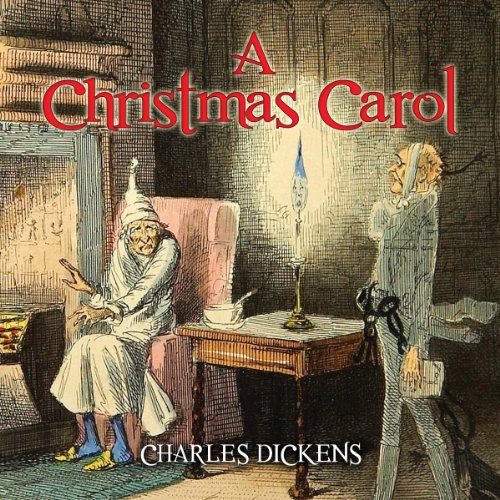
The Ghost of Christmas Yet to Come

Welcome to a New Year! And everything that lies before us is shrouded in mystery. But is that a cause for fear or excitement?

That is the question that weighed heavily on the mind of Ebenezer Scrooge in “A Christmas Carol.” Scrooge carried resentment and bitterness from his past, and isolation, anger, and disdain about the present. And he greatly feared a future he could not manage or define.

After visits from the Ghost of Christmas Past and the Ghost of Christmas Present, Scrooge was left emotionally off-balance and fearing the worst. Finally, he was visited by the third mysterious spirit, the Ghost of Christmas Yet to Come. He already knew the sad fate of his friend, Jacob Marley. Would this spiritual visitor show Scrooge a dire future already fated, or merely shadows of what might be? And the Ghost delivers strange sights– predators gleefully trading in the belongings of the recently deceased, heartless business acquaintances discussing the funeral arrangements of one of their fellows, and grieving family members in the household of Bob Cratchit. But what was his own fate? Where was Ebenezer Scrooge in the Christmases yet to come?

The answer comes in a cemetery, where Scrooge sees a newly-dug grave and a stone bearing his own name!

Death always seems to come as a surprise, even when we know that we will all die someday. Our own death may haunt us, but usually from a safe distance. It will come someday. Once we are old. Once we are weak, and sick, and ready to rest. Once we have achieved our goals and fulfilled our purposes. But that’s not how death works. It comes in its own time, not ours. It comes, not as an expected closure, but as a rude interruption of our hopes and dreams.

Ebenezer Scrooge, forced to deal with his mortality, and the legacy of his past and present, realizes that life is not what we forge out of our own plans and our strength of will or our hard work. Life is a gift. But life is not a given. Life has a purpose, regardless of the purposes and goals we bring to it. And that purpose has to do with giving and receiving other gifts– generosity, hope, forgiveness, encouragement, time, fellowship, and Love.

This Ghost never speaks to Scrooge with words. Instead, he shows Scrooge a world in which Scrooge has no more chances to give or receive gifts. He has chosen to hoard his wealth, his time, and his heart– and the result is that he will die alone, unmourned, a useless shell of rotting flesh. His fear and bitterness have brought no comfort to anyone, and have left the world a colder, icier, more horrible place.

But there is hope, even in this haunting experience. Scrooge wakes from this night and realizes that he is ALIVE! The Ghost has given him a great gift– the chance to live– the chance to experience connection and hope, joy and creativity, excitement and generosity.

What will this new year bring to US? Can we face an uncertain future with hope? Can we accept the gift of Life– even with its pain and struggle– as a priceless opportunity? Can we reach out to others, even knowing that we will sometimes be rejected, betrayed, and used? Can we strive to make things a little better– in our homes, our communities, our place of work, and in the wider world?

Scrooge did, and so can we! “A Christmas Carol” does not finish with a cold gravestone– even though we must know that Scrooge has to die one day. The story ends with music and light and gaiety, as Scrooge embraces the mystery of his own future and learns to live in hope and charity with those around him.

As we step into the future, may we also embrace the Life that God has given us, the joy of sharing time with others, and the expectation of good gifts that God will continue to give us in the future. As Tiny Tim says, “God bless us, everyone!”

My prayer is that you will experience excitement as we all take the next steps– God’s spirit will light the way; God’s word will be a lamp unto our feet (Psalm 119:105). God’s glorious gift of Christmas– the coming of Christ to be our Emmanuel, our example, and our Savior–will be the carol that we sing as we travel into the unknown!

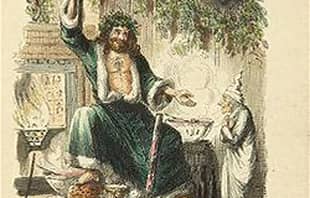
The Ghost of Christmas Present

If you missed my last blog post, I’m looking at the story of A Christmas Carol, by Charles Dickens. It may not seem like a “jolly” Christmas story, or even a “religious” story, but it is “spiritual.” Ebenezer Scrooge is literally haunted by three spirits over the course of Christmas Eve. Last time, I spoke of the Ghost of Christmas Past. Today, I’d like to look at the Ghost of Christmas Present.

I know, Christmas was a few days ago– we’re currently at the cusp of New Year’s Eve, but these few days between Christmas and New Year’s Day can often feel jumbled up and run together. And, traditionally, the Christmas season is not just one day, but twelve days, stretching from December 25 to January 6. So today is still technically part of “Christmas.”

In “A Christmas Carol”, Scrooge is actually visited by four spirits. The first is the ghost of his old friend, Jacob Marley, who offers Scrooge both a dire warning, and a chance of redemption. Scrooge has already been visited by Marley, and by the ghost of Christmas past– a look at the moments and people who have shaped Scrooge’s life up to the present. Scrooge has seen both happiness and tragedy in his life, but the “light of truth” carried by the first ghost has shown how Scrooge has rejected happiness, instead embracing a life of fear, loneliness, and greed.

The next spirit, the Ghost of Christmas Present, focuses less of Scrooge himself, and more on the people he has ignored or rejected. This spirit shows Scrooge what he is missing by hoarding his wealth and isolating himself from the rest of the world. It is a picture that many of us would do well to study!

One of the first stops is the home of Bob Cratchit, Scrooge’s underpaid, put-upon clerk. Scrooge makes use of Bob’s time and skills, without ever showing any interest in him as a person. Scrooge is oblivious to Bob’s existence outside of the counting house. He assumes that Bob has a family, but he has no idea who makes up that family. The Ghost of Christmas Present forces Scrooge to see that Bob and his wife have several children, including a sickly and crippled son named Tiny Tim. Though they have very little money (thanks in part to Bob’s meager wages!), they have plenty of love and happiness. Scrooge fears many things that may happen, while his clerk faces very real fears that “haunt” him every day. Yet Bob does not complain, does not exhibit bitterness, and does not hide away from the world.

Next, the ghost takes Scrooge to see his nephew. Scrooge keeps his nephew at a distance because of his bitterness and fear. But in doing so, he is missing out on his nephew’s kindness, wit, and warm circle of friends. Scrooge has treated his nephew with disdain, fearing that the younger man is jealous of all his riches. But the ghost shows Scrooge that his nephew actually feels sorry for his uncle. Again, Scrooge has great wealth, but his nephew is content, and even very happy with his lower station in life. He loves his wife and enjoys friendships that make him wealthier in many ways than his uncle!

Finally, the ghost of Christmas Present shows Scrooge a sight he would never willingly see– the suffering and neediness of the poor, whom Scrooge has sneeringly consigned to death. Rather than seeing humanity, Scrooge sees only people who might drain him of his wealth– the undeserving poor who “cost more than they are worth.” The ghost reminds Scrooge of an earlier off-handed remark about helping those who would rather die than go to workhouses: “If they’d rather die, then let them do it–and decrease the surplus population!” The ghost warns Scrooge that he should be very careful in declaring who is among the ‘surplus population’. In heaven’s eyes, Ebenezer Scrooge himself might have less worth than ‘the least of these.’

 And the King will answer them, ‘Truly, I say to you, as you did it to one of the least of these my brothers, and sisters you did it to me.’ “Then he will say to those on his left, ‘Depart from me, you cursed, into the eternal fire prepared for the devil and his angels. For I was hungry and you gave me no food, I was thirsty and you gave me no drink, I was a stranger, and you did not welcome me, naked and you did not clothe me, sick and in prison and you did not visit me.’ Then they also will answer, saying, ‘Lord, when did we see you hungry or thirsty or a stranger or naked or sick or in prison, and did not minister to you?’ Then he will answer them, saying, ‘Truly, I say to you, as you did not do it to one of the least of these, you did not do it to me.’ (Matthew 25:40-45 ESV)

Scrooge’s feelings and senses are overwhelmed by what he experiences. The present surrounds him– the sights, the smells, the laughter, the cold of a dark winter’s night, and the heat from a roaring fireplace; the stench of the docks and homeless camps, and the aromas of Christmas dinner; the colors and lights of decorations, toys, and costumes; the ringing of bells, and the singing of Christmas Carols. Once again, Scrooge can hear music and laughter, he can sense the love and compassion, but he can only participate on the periphery. The music haunts him, but it comes from others, not from his own frozen heart.

So, what happens to us in this Christmas present? Do we feel connected to the joy and gratitude, the love and hope of the season? Or are we isolated by worry, frozen in fear, enslaved by anger or greed? Christmas is often a time of great sadness and loneliness. And sometimes, the laughter and the lights seem hollow and fake. Especially in the days just after Christmas, we can feel let down, abandoned by the promise of merriment and fulfillment brought by parties and gifts and feasting and entertainment. Outside, the winter is still cold, the bills keep coming in the mail, and fears and worries cloud our days. Some of our fears are very real– disease, grief, loss, sudden changes in circumstances and relationships–Christmas lights and music alone cannot cut through the fog.

My prayer for today, and for the New Year at our doorstep, is that we would open our ears and eyes and hearts to what is around us– acknowledge that we live in a fallen and often worrisome world, but recognize that there are opportunities all around us, as well. We don’t have to isolate. We don’t have to live in constant fear. Christmas isn’t just a day; it isn’t just a season– Christmas is about Christ coming to dwell with us!

Open your ears! Listen to the music of the season– “Peace on Earth! Good Will to Mankind!” “JOY to the World! The LORD has come!” “Let Heaven and Nature Sing!” “Glory to the Newborn King!” Keep listening to the promises of God’s Word– “Never will I leave you nor forsake you!” “Lo, I am with you always!”

Open your eyes– see the wonderful opportunities to share both joy and sadness with others. Seek out the great opportunities to give and receive help and love and fellowship! See the good things that the LORD has done– the friendships and family in your life; the beauty of nature, the ‘wonder of His Love!’.

Open your heart– Receive the greatest Gift! Redemption; new birth; eternal and abundant Life! Choose life and gratitude and humility. Practice childlike faith, hope, and JOY!

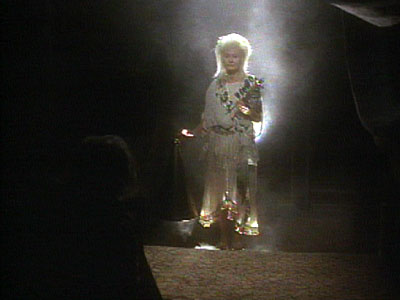
The Ghost of Christmas Past

Charles Dickens wrote “A Christmas Carol”– a (literally) haunting tale of greed, bitterness, and, in the end, redemption. Set in Victorian England, the story involves a miser named Scrooge, his business partner, Marley, who has been dead for seven years, and three mysterious spirits: The Ghost of Christmas Past, the Ghost of Christmas Present, and the Ghost of Christmas Yet to Come…

Scrooge and Marley

Scrooge doesn’t really hate Christmas. He considers it a Humbug– an annoying and worthless distraction from the “reality” of making money. What bothers Scrooge– what eats at him and rules his actions– is the fear of poverty and powerlessness. He avoids relationships so that he cannot be hurt or abandoned. He avoids spending money– even for common comforts like coal to heat his office–for fear that he will fall into poverty. He does not like people because he will not trust anyone enough to risk getting hurt or used.

Scrooge’s only “friend,” his former partner Marley, lived by similar principles during his lifetime. He “visits” Scrooge on Christmas Eve to warn him of the fate that awaits those who fail to realize that there is more to life than making and keeping money. “Mankind was my business. The common welfare was my business; charity, mercy, forbearance, benevolence, were all my business. The dealings of my trade were but a drop of water in the comprehensive ocean of my business!” Marley has managed to arrange for Scrooge to be haunted by memories of the past, visions of the present, and shadows of what may be in the future.

The first of these “spirits” reminds Scrooge of Christmases from his childhood and early adulthood. Some of the memories are sad– Scrooge is left to spend the holiday alone at school, as his cold and distant father refuses to show him love, mercy, or guidance. Later, Scrooge is reminded of how his decision to pursue wealth alienated the woman he could have married. But there are happier memories, too. His first boss, Mr. Fezziwig, brought happiness and a sense of camaraderie and purpose to Scrooge’s early employment. He celebrated both hard work and the joy of fellowship with his employees. Scrooge sees visions of his beloved sister and is reminded that he has a family (his sister’s son) with whom he could make and share happy memories– if only he would choose to do so.

I will write about the other visitations later, but I want to camp out here for a little bit.

What memories would the Ghost of Christmas Past bring to me? To you? Are there sad or painful memories of Christmases without loved ones? Christmases that included anger or rejection? Christmases spent with poverty, uncertainty, or sickness? Would you feel bitterness? Fear? Guilt? Regret? Or would there be nostalgia for days gone by? Longing for family members who have passed? Questions about what might have been?

It is tempting sometimes to shove our memories of Christmas past in a closet or an old trunk and try to forget them. In Dickens’ story, Scrooge ends up desperately trying to snuff out the light of Truth that the spirit is holding. He doesn’t want to remember; doesn’t want to know or deal with the pain and loss of his past.

But before we can truly live in the present, we must confront the past. We do not have to live there. Our memories– good and bad– are but shadows of the things that have been. But they can cast long and devastating shadows if we let them. Denying past pain or trauma can give us a false sense of control. Burying ourselves in work or pleasure or entertainment may feel like a solution. Being cautious and angry and cynical may seem like wisdom. We can blame others, blame ourselves, even blame God for our feelings of hurt and fear of being hurt again and again. OR we can, with the light of truth, revisit our past. We can discover the healing power of redemption and forgiveness. We can– we must– still acknowledge the pain, the injustice, the grief that lies on our past. But we also must see that the shadows of the past only fall behind us. However the past may have shaped us, damaged us, challenged us, or forged us, the present and the future can be turned in a new direction.

And that is possible because of Christmas– because of Christ!

When Scrooge first visits his past with the Ghost of Christmas Past, the first image he experiences is of his classmates from school riding in sleighs and wagons singing Christmas carols. Singing! He could not join in. As an adult he has chosen not to join others as they sing of the wonder of Christ’s birth. But the carols echo– their message endures! Christ is Born! Glory to the Newborn King!

My prayer today is that Christmas past holds some happy memories for you. But the very Good News of Christmas is that it isn’t just about the past. And our past Christmases don’t have to haunt us. Because the Light of Truth– The True Light of the World (John 1:9) –that came on that first Christmas so long ago leads the way forward!

Peace on Earth?

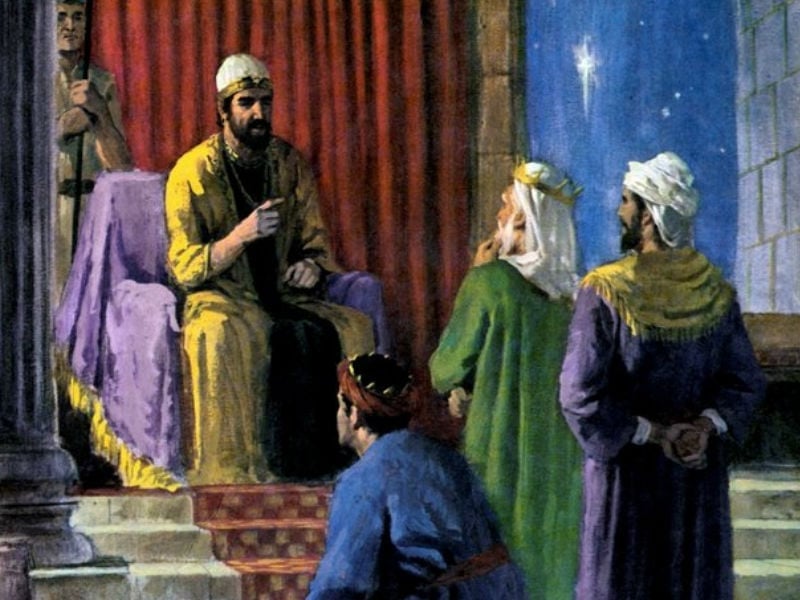
I’ve been exploring some of the themes related to the Advent. But what happened afterwards? There is a curious and violent story related to the visit of the Wise Men– before they found Mary and Joseph and the Baby Jesus, they visited the palace of the ruling King of the Jews, Herod. Herod was intensely curious about the baby– when and where the prophets said Messiah should be born. But unlike the worshipful wise men, Herod wanted to destroy this heaven-sent King; one who could pose a threat to his own power and rule.

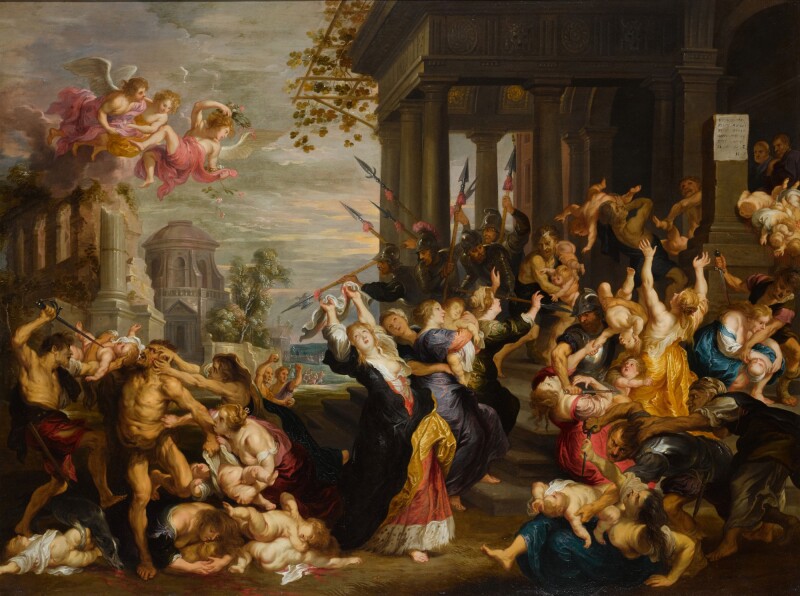
Jesus escaped Herod’s plot. Joseph had been warned in a dream, and had taken Mary and Jesus to Egypt for safety. The Wise Men, also warned in a dream, had failed to report back to Herod the information he wanted. In his anger and fear, Herod ordered the slaughter of all the baby boys in the region, up to two years old. This “Slaughter of the Innocents,” as the event is known, seems to come in direct repudiation of the message of the angels at Christ’s birth. There was no peace in Bethlehem as soldiers dragged innocent babies from their mothers’ arms and killed them. There was wailing and anguish, instead.

How could a loving and wise God allow this to happen? It was no unforeseen accident, either. This event had been predicted by the prophets hundreds of years before it happened, just the same as the prophecies about Jesus’ birth. God could have sent angels to protect Jesus from this slaughter; He could have confounded Herod’s plans and stopped the soldiers from reaching Bethlehem; He could have struck Herod dead before the plot could be carried out…so why did He let it all happen?

I don’t have any definitive answers. But I can share some opinions, based on what I’ve learned of God’s character. I don’t think God was in any way indifferent to the suffering and injustice of this tragedy. But I think there are a few lessons we can take from this strange and disturbing incident:

  • First, Jesus came to share a very human fate. Jesus was not spared the indignity of being born in a cattle shed and laid in a manger. His life was not supernaturally easy or safe or comfortable. It was God’s perfect will that Jesus was vulnerable to attack, and in need of protection– even when it meant fleeing His home.
  • At the same time, He WAS fully God, and as such, posed a danger to men like Herod. Jesus, even from birth, had an authority greater than any king or emperor who ever lived. But He did not come to earth to exercise that power over other people. Instead, He came to serve and to pour out His life for others. It was not His mission to overthrow the existing government, or to challenge rulers like Herod. It was His mission to fulfill the Law, set an example of obedience, preach the Gospel, and offer Himself as atonement for Sin.
  • Herod had the earthly power to do good or evil as a ruler. He had the unique opportunity to join the Wise Men in worshiping the arrival of God’s chosen one– an event that had been anticipated for hundreds of years. Yes, God could have forced Herod to bow before the Newborn King, but Herod could also have chosen wisdom over fear. We have the same opportunity to welcome Jesus as our Savior– or to wage war against Him. Jesus invites us to follow Him, but He doesn’t stop us from making the same destructive choices that Herod made.
  • Jesus did not come to bring a worldly peace, but an eternal “Peace that passes understanding.” Even now, after His death and resurrection, there is still war and slaughter, crime and injustice in our world. But, because of all Jesus did, and is doing in and through those who follow Him, we see that tragedies can be redeemed; hope can survive where there seems to be no hope; and death is not the final victor. I don’t understand why these particular families had to face the tragic consequences of Herod’s rage and fear and ambition. But I understand that God is bigger than Herod; and more powerful than all the chaos and pain that he caused.

The world is not at peace today. Innocent people– even babies–are hurt and killed in our world. God knows. He aches for our grief and pain. But He also knows His plans. He knows how the story ends– He knows all that has happened, and all that is happening, and all that will happen. Even in the glory of Christmas, He wants us to know that reality. Someday, Jesus will return in all of His authority and power. He won’t just end the reign of evil rulers like Herod– He will render their legacies useless. He will redeem injustices– even genocide and slaughter–and wipe out even the memory of their grief and terror.

Then, He Smiled at Me…

The story of “The Little Drummer Boy” is nowhere in the Bible. It is very unlikely that such an event ever took place. Yet it has become a classic Christmas song. I think it is easy for us to identify with the singer– a poor boy who wants to honor the Baby Jesus, but has no gift to offer. What he does have– a drum and the ability to play it– he offers gladly. He asks permission of Mary and she nods her consent. But the highlight of the song is when the Baby Jesus smiles His approval.

At Christmas, we welcome a Christmas card-picture perfect stylized Baby Jesus, who smiles, never cries, charms all the animals of the stable, and merits the singing of angels choirs among the heavens. But we have a tendency to leave Him in the manger, where He can be a tiny miracle; a gift from God, bringing hope of peace on earth, and teaching us to give gifts and celebrate life.

Somewhere along the way, our picture of Jesus tends to change. The adult Jesus is kind, wise, compassionate, and even passionate– but He is a man of sorrows. This is not “wrong” theology– the Bible describes Him as a man of sorrows; one who was despised and rejected by His own people, and condemned to die by those He came to save (see Isaiah 53). But we don’t tend to think of Jesus smiling, His eyes crinkled in a grin, dimples appearing as He delights in sharing time with us. Yet this is also Biblical (see Zephaniah 3:17).

What an amazing image– Jesus, a radiant smile on His face as He listens to our prayers; a grin of delight as we speak words of encouragement to our family members and joyful greetings to those we meet throughout the day! Jesus smiling as we take out the garbage (without grumbling!); Jesus laughing along with us as we share treasured memories (or make new ones) with our kids; Jesus listening to our confession and responding with a warm smile of forgiveness and compassion; Jesus smiling as we sing along (maybe even a little off-tune) with one of our favorite songs on the radio, or tap our fingers on the steering wheel, or bob our head along with the rhythm, oblivious to onlookers!

We pray to the very Lord of the Universe– but He is not a stern and joyless God. Jesus wept while He was on earth (John 11:35)–but He also laughed, and ate, and hugged, and sang, and ran, and danced for joy! And He is no less joyful in Heaven as He watches over us. He delights in our smallest triumphs. He cheers us on in our battles every bit as enthusiastically as a fan cheering on his favorite sportsperson. And when we stumble, He is there with the kind of smile that welcomes us to get up and fall into His arms.

There is only one thing we must do to experience His radiant and glorious smile– “Come!”

Imperfect Parents

When I was very young, I liked to believe that my parents were perfect– at least as close to perfect as people could be. When I was a teen, I realized that my parents were NOT perfect. In fact, it seemed that I knew much better than they did, and much more as well! With time, I’ve come to realize that they did the very best they could with what they had and what they knew. They were never perfect, but they were good parents, and I’m very thankful for them.

Jesus had imperfect human parents. Mary, though chosen by God to bear the Savior of the World, was not chosen because she was already perfect. But she was willing, and she was obedient. She did not become perfectly righteous in her own obedience, though. Jesus was HER Savior, too! Mary and Joseph did the best they could with what they had and with what they knew. But they still managed to “misplace” their own son at least once that we know of (see Luke 2:41-52). Such an incident today might be grounds for Jesus to be removed from his home and placed in foster care. Jesus had very good earthly parents, but even they made mistakes.

But Jesus also had a Heavenly (and perfect) Father– God. Jesus was both the Son of God and the Son of Man– completely Divine, and completely human.

As we travel through the Advent season, it is good to remember that the same Jesus who called on His perfect Father, is the same Jesus who taught us to pray, “Our Father.” Not all of us have had “nearly” perfect human parents, but ALL of us can call on a perfect Father in Heaven. Jesus came to earth, not just to die for our sins, but to show us how to relate to this Divine and Holy Father. We can call on Him in our need; we can call on Him with our sorrows and agonies, as Jesus did in the Garden; we can call on Him when we are alone; we can call on Him in a crowd; we can listen and obey His voice; we can please Him! We can trust in God’s faithfulness through every moment of every day, every step in our journey, and every valley we must face.

Jesus wasn’t created, as we were– He was “begotten” of the Father–“born of” the Father, in the way we are born of our parents’ DNA. (see John 3:16, John 1:18, and Psalm 2:7) And this relationship is eternally existing– “Ere the Worlds began to be” and throughout all of time. It is not a relationship that can ever be dissolved or altered. Jesus will never “become the parent,” nor will God cease to be the Father. Though He is equal in divinity and power, and equally worthy of our praise, Jesus will always act in accordance with the Father’s will– never against it or in His own separate motivation.

It is difficult to understand, that Jesus always exists, yet He was “born” at a particular time in history and “lived” only 33 years as “one of us.” We see time as being linear– everything has a “season” or a time of beginning and end. Not so with Jesus. As a human, He had an experience of “life” similar to ours– days and nights, weeks and months, festivals and birthdays, growth spurts and hormones, toothaches and hugs and laughing so hard His sides ached.

The Advent of the Christ was not the “beginning” of the Christ–only His arrival at that particular experience in time as we know it. Yet this arrival was so unique, so miraculous, so spectacular, that all of our human time is divided into “before” and “after” that single event. We don’t divide time by human achievement (i.e. Before the moon landing/after the moon landing or before the invention of the printing press, etc.) or by natural phenomena (before the last Ice Age or after the eruption of Vesuvius). Time centers on the single act of God’s begotten son arriving as a helpless baby in the middle of an otherwise ordinary night.

Mary and Joseph were mere mortals, ordinary human parents entrusted with fostering and caring for the very incarnation of their Divine Creator. They were imperfect. But they were guided, empowered, and held fast by the very God growing up as a child in their midst.

And when they “misplaced” their son? He was, as expected, not “lost,” but merely visiting His “Father’s house.” He could not have been safer. They need never have worried or felt ashamed.

This season can be difficult for families– some of us have hurtful memories of our childhood with imperfect parents. Some of us are overwhelmed by guilt or frustration as the imperfect parents of our own children. May this season bring us renewed hope and joy in our unshakeable, unbreakable relationship to our perfect Heavenly Father, through the gift of His only Begotten Son. We can rejoice and feel secure– Evermore and Evermore!

Let Every Heart Prepare Him Room


Joy to the world, the Lord is come!
Let earth receive her King;
Let every heart prepare Him room,
And heav’n and nature sing,
And heav’n, and heav’n, and nature sing.
Joy to the earth, the Savior reigns!
Let men their songs employ;
While fields and floods, rocks, hills, and plains
Repeat the sounding joy,
Repeat, repeat, the sounding joy.
No more let sins and sorrows grow,
Nor thorns infest the ground;
He comes to make His blessings flow
Far as the curse is found,
Far as, far as, the curse is found.
He rules the world with truth and grace,
And makes the nations prove
The glories of His righteousness,
And wonders of His love,
And wonders, wonders, of His love.

Joy to the World– words by Isaac Watts

Advent is a time of preparation– joyful preparation. It is an oxymoron to say it, but it is a time when we remember with anticipation. It is a time once again to prepare our hearts for the arrival of an event that happened over two thousand years ago. Each year, we look backward to look forward! And we prepare as though it were all happening anew– the announcement of the angels, the travels of Mary and Joseph and their arrival in Bethlehem, the wise men following a star..

And we prepare for this year’s festivities– the gifts, the food, the decorations, the invitations and greeting cards, programs and parties, caroling and shopping…But in the midst of it all, hopefully, we prepare our hearts to be rekindled, reawakened to the wonder– beyond the star and angels and virgin birth–the wonder that God would ransom the lost, break the chains of sin and death, redeem the fallen and weary world, and pour all of his Glory into the frail cries of a newborn baby. All the rest of the preparation is meaningless if we don’t prepare to be overwhelmed again by the “glories of His righteousness, and wonders of His love.”

“Lord, may our hearts be prepared to accept the wonder and joy of this season. May we have new hearts for the wonders of your great Love for us– that you would humble yourself to live among fallen men and women, and die to set them free. That you would rise triumphant, so that we need not fear death. Thank you for this indescribable gift. Once again, let Earth receive her King with joy as all of heaven and nature sing!”

Be Not Afraid

Have you ever anticipated something so wonderful, that, when the time came, you were almost afraid of it? Afraid that the anticipation would exceed the wonder of the actual event? Afraid that the wonder would be eclipsed by some unforeseen tragedy? Afraid that your dreams were too big? That you could never deserve such happiness or blessing?

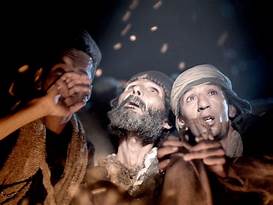
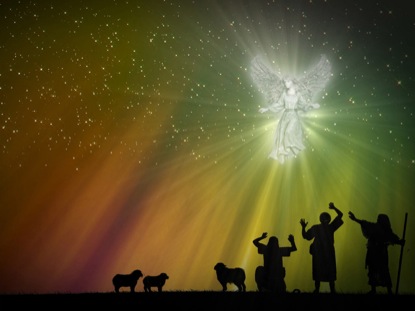
 That night there were shepherds staying in the fields nearby, guarding their flocks of sheep.  Suddenly, an angel of the Lord appeared among them, and the radiance of the Lord’s glory surrounded them. They were terrified– but the angel reassured them. “Don’t be afraid!” he said. “I bring you good news that will bring great joy to all people. The Savior—yes, the Messiah, the Lord—has been born today in Bethlehem, the city of David!  And you will recognize him by this sign: You will find a baby wrapped snugly in strips of cloth, lying in a manger.” Suddenly, the angel was joined by a vast host of others—the armies of heaven—praising God and saying
 “Glory to God in highest heaven,
    and peace on earth to those with whom God is pleased.”
When the angels had returned to heaven, the shepherds said to each other, “Let’s go to Bethlehem! Let’s see this thing that has happened, which the Lord has told us about.” 
They hurried to the village and found Mary and Joseph. And there was the baby, lying in the manger. After seeing him, the shepherds told everyone what had happened and what the angel had said to them about this child. All who heard the shepherds’ story were astonished, but Mary kept all these things in her heart and thought about them often. The shepherds went back to their flocks, glorifying and praising God for all they had heard and seen. It was just as the angel had told them.” Luke 2:8-20 NLT (Emphasis added)

The shepherds on that first Christmas were terrified– their ordinary night had been shattered by the appearance of an angel of the LORD. And that was only the beginning! The angel announced the birth of Messiah– Christ, the LORD– in the nearby village of Bethlehem. And then an angelic host– a vast army– of angelic beings chose to worship in the skies that, just moments before, had been dark, still, and lonely.
“Fear not!” “Be not afraid!” Through the terror and overwhelming glorious radiance came a calm voice. “I bring good tidings of great joy!” “..shall be to ALL people…” “PEACE on earth!” “Christ is Born!”

The fulfillment of centuries of longing was finally here. The central hope of the entire nation of Israel had arrived. And the angel left no doubt that the shepherds were welcome, even commanded, to GO and see this miracle with their own eyes. The Biblical account says that they did go– but it also says they stopped to discuss it first. They talked it over and decided to face the mixture of thrilling joy and weak-kneed trembling. Could it really be?! The Messiah! Here and now! But…a babe? Wrapped, not in robes of glory, but in swaddling cloths? And…lying in a manger? Surrounded by sheep and donkeys? What if this was a cosmic hoax? What if there was a mistake? Would they be disappointed? Ashamed? Turned away because of their lowly status?

“Be Not Afraid!” The shepherds talked it over. How could they NOT go and see? What if the news was true?! And in going, they became the first ordinary witnesses of the most extraordinary birth in history! They came. They saw. They believed! And they worshipped.

And then, they shared their experience with others. They went back. They probably shared the news first with the sheep, rehearsing how they would spread the fantastic tale to those who still lay sleeping. But they may also have shouted it in the streets, waking up all the neighbors with the joyous news. The Bible doesn’t give us details. But it does tell us that they went back with joy and gladness. And conviction–“It was just as the angel had told them.” Nowhere in the Bible story did they show any more fear. They had no doubt. The wonder of Christ’s birth was everything they had been told to expect, and more!

This Christmas, we look back at the shepherds, and we try to recapture the wonder of that Holy Night, and the visit of the angels, and the discovery of a tiny Savior in a manger. And we will have the opportunity to celebrate, just as the shepherds did.

What will be our response to His coming? Will we spend this season glorifying a praising God? Will we “astonish” our neighbors as we tell about the Savior’s birth, and His subsequent death and resurrection? Will we heed the angel’s calming tones to “Be Not Afraid” as we encounter the Messiah? As we go “back to (our) flocks” and fields and daily life?

I pray that we will “consider well” this Christmas how “our good God” gave us His “beloved Son”– born in a humble manger, willing to die a humiliating death He did not deserve so that we could be free from the curse of Sin and Death. And may we pray for the courage and conviction to live out and speak out the Joy and Glory of His coming!

Blog at WordPress.com.

Up ↑