Searching for the “Oh!”

I like to play Scrabble, and other word games. Sometimes, in order to make a certain word in Scrabble, you need to wait for an opportunity and a particular tile. It can be very frustrating to play when you have only consonants or only vowels. You need both to make most words. Vowel tiles are not worth as much as the consonants. And so most players tend to discount them. After all, if someone else has made a word, you can use the vowel from their word to make yours– sometimes. But sometimes, you really need a vowel in the right position to make your word. Sometimes, you need a particular vowel. The other day, I was hoping for an “o.” Instead, I had four “i”s! I could try to make use of the vowels I had, or lose a turn and trade in my “i”s for other letters– which might all be consonants!

Photo by Pixabay on Pexels.com

Life is not a game of Scrabble. But there are times when we are looking for something to help make sense of life. It seems like whatever “hand” we’ve been given adds up to nonsense. We need an “o” to make it work. Deep down, though, I think most of the time, we really need an “OH!” We need to look beyond whatever we have, and see the wonderful things God has already done in and around and through us.

As I was driving to my doctor’s appointment the other day, it was hazy and cool for late June. It could have felt depressing or even oppressive. But I was listening to a song on the radio. The singer pointed out that God’s goodness, His Mercy, and His artistry are all around us in nature– the sky, the singing of birds, the colors of the sunrise or sunset, the majesty of trees or mountains, the comfort of a gentle rain–and suddenly, I found my “OH!” moment. Recent rains had brought a newer, deeper shade of green to the leaves, and had caused the corn and beans in the fields to begin springing up. The haze could not hide all the life and growth going on all around me. God’s magnificence was there for anyone to see.

Sometimes, I try to substitute an “I” for the “Oh!” Instead of focusing on the SON, I fall into SIN. When I look at what I have done, or the plans or dreams I have, it can fall short. I can’t make the stars shine. I can’t create a forest, or sing a song more beautiful than a babbling brook through a meadow of flowers. My best efforts with “i” aren’t worth much. But, OH!, what God can do! OH! What God has done! And it’s this same God who loves me and knows my name!

Are you having a “hazy” day? Are you looking around for something? Something clear, and beautiful, and worthwhile? Maybe, if you have an old Scrabble game, you could put an “o” tile in your pocket or purse to remind you to see the “OH!” all around you today!

20 For since the creation of the world God’s invisible qualities—his eternal power and divine nature—have been clearly seen, being understood from what has been made, so that people are without excuse. 21 For although they knew God, they neither glorified him as God nor gave thanks to him, but their thinking became futile and their foolish hearts were darkened.

Romans 1:20-21 (NIV)

…Cry With the Saints

Several years ago, singer and songwriter Billy Joel created some controversy with a song he wrote, called “Only the Good Die Young.”  The song was about a young man trying to convince a young catholic girl to give up her virginity.  Many were offended by some of the lyrics, and by the general tone of the song, which was sacrilegious; sneering at the notion of sexual purity and waiting for marriage.  One of the lines in the song says, “I’d rather laugh with the sinners than cry with the saints..The sinners are much more fun.”

Full lyrics here

It may seem that way to many– Christians (along with many Jews, Muslims, and others who are sincere and spiritually-minded) seem stern and sober in comparison to free-living, fun-loving heathens.  Why should this be so?  Shouldn’t those who are closer to God experience more Joy and happiness than those who do not know Him?  Why are saints and prophets so often shown crying, wailing, and weeping bitter tears?

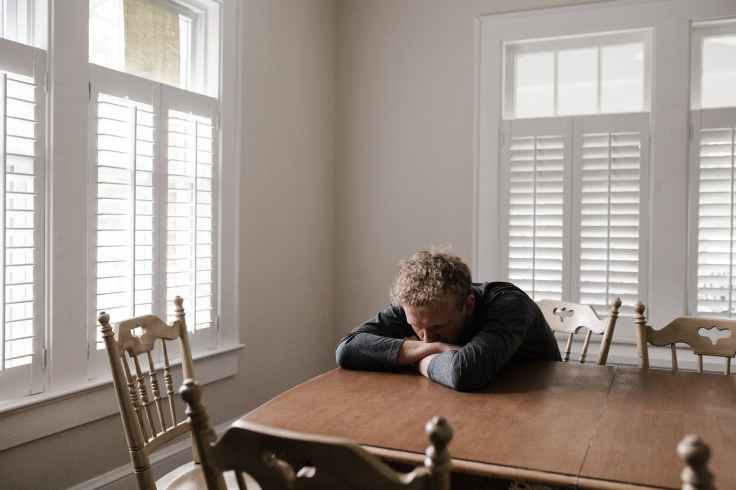
man wearing gray sweater in selective focus photography
Photo by Segopotso Makhutja on Pexels.com

The author of Ecclesiastes (assumed to be King Solomon) writes:

Ecclesiastes 7:1-6 (Revised Standard Version)

A good name is better than precious ointment;
    and the day of death, than the day of birth.
It is better to go to the house of mourning
    than to go to the house of feasting;
for this is the end of all men,
    and the living will lay it to heart.
Sorrow is better than laughter,
    for by sadness of countenance the heart is made glad.
The heart of the wise is in the house of mourning;
    but the heart of fools is in the house of mirth.
It is better for a man to hear the rebuke of the wise
    than to hear the song of fools.
For as the crackling of thorns under a pot,
    so is the laughter of the fools;
    this also is vanity.

This doesn’t mean that God wants His people to be depressed, hopeless, and constantly weeping.  But God DOES want us to be aware and to see the world as it really is– fallen, chaotic, filled with needless suffering and injustice.  Why?  Because He calls us to think about the consequences of our actions, and also to have compassion for those who are hurting.  It may be more “fun” to ignore the consequences of sin and to “live it up” if you are young and healthy, but it is not at all true that “only the good die young.”  Death comes unexpectedly and randomly– taking both good and evil, both wise and foolish.  The difference is that fools get cut off and caught off-guard.  The consequences of their actions find them unprepared and filled with regret or bitterness and pain– all of which might have been prevented if they had not ignored reality.

silhouette of graves
Photo by Micael Widell on Pexels.com

I think the song DOES have a message to Christians–while we shouldn’t be fools chasing after fleeting pleasures that leave a large wake of pain and regret and filling our lives with empty laughter, we should not “die young” in the way of the Pharisees of old.  Jesus called them “white-washed tombs” for good reason.  Their “goodness” came from self-righteousness and piety.  They shunned sinners, and chased others away with their long lists of rules and disdain for anyone who didn’t keep up appearances.  Such “saints” never cry– they are more likely to crow about their own “goodness” with dry eyes and closed fists.  Jesus attended feasts and parties with the sinners– but his heart was not for the “fun”  they were having.  It was for them– for their lost souls.  Jesus wept!  Jesus wept for the loss of his friend Lazarus; he wept over Jerusalem; he even wept tears of blood in the Garden of Gethsemane!

ancient art black and white close up

The “Good” have many reasons to cry– millions of innocents suffer needlessly every day–abuse, slavery, genocide, abortion, bigotry, war, starvation, murder, theft, addiction, homelessness, disease, natural disasters, man-made disasters, and more fill our world.  People waste time angrily shaking their fists at Heaven or at governments, but so much of the suffering is a direct result of sinful actions on the parts of individuals.  In my own country, in my own lifetime, over 50,000,000 babies have been aborted–without legal consequence, but with a terrible consequence on the soul of our nation.  If we could shed one tear for each life lost it would equal over 660 gallons of water (here’s how I got that number  )– just one tear for each life, and those are only the abortions that have been recorded in the past 45 years in the U.S.  If we were to shed a tear for every broken marriage, every rape, every life lost to addiction, suicide, murder, or war, every violent assault, every broken promise, every lie, or every corrupt deed in our world over the past 50 years, we could fill an ocean!  The power of tears, or of any running/falling water is so great, it could generate electricity to light the nations! ( Here’s an interesting article on the power of a drop of water!)

waterfalls near gray paved road surrounded by green leaf trees during daytime

I would far rather “cry with the saints.”  But more than that, I would rather pray with the saints, and arise from both to work with the saints–the power of tears pales in comparison with the power of God’s mercy and grace!

IF

If is a very short word, but it can cause a lot of trouble in our thoughts and prayer life. It seems harmless enough, but it can be very corrosive.

  • “If” is generally a speculative word. We waste precious time and energy on things that didn’t or haven’t happened. What if my circumstances were different? Why didn’t I get that promotion “if” I could have gotten it? What if I had made other choices in my past? Would I be in a different place now? Could I have a “different” life? What if something happens to my health? “If” seems to promise a lot of possibilities, and lead to a lot of pointless questions, but it delivers nothing concrete.
  • “If” is a conditional word. If…then… This is not always a bad thing, but it can warp our thinking about higher things, like God’s Love and Forgiveness. Sin and its consequences are conditional. IF we sin, there are consequences. Some of God’s promises have conditions– “If we confess our sins, He is faithful and just to forgive us our sins…” (1 John 1:9) But God’s love is not an “if”– it is constant and unwavering. His forgiveness is not based on whether we have earned it, or whether we go to the “right” church or say the “right” things. God’s promises are based on HIS eternal character and faithfulness. Nor is God’s truth conditional. It does not change or depend on our feelings or the opinions of our neighbors.
  • “If” takes our focus away from the present. We spend time wondering “what if..” about the future, or “if only..” about our past. And “if” is passive about the present. It causes us to focus on fear of the future and regret about the past, instead of action and accountability in the present.
  • “If” only has two letters, but the first one is “I.” I don’t spend much time asking “if” someone else made the right choices (unless I’m judging them, which is also wrong), or if something good or bad will happen to my neighbors. “If” usually focuses on MY wants, MY fears, MY past, MY circumstances.
Photo by Alex Green on Pexels.com

“If” doesn’t have to hurt our prayer life or take over our thoughts, but it must be kept in check. The Bible has a lot to say about letting the “ifs”, “what ifs”, and “if onlys” take over our thinking:

Matthew 6:25-28
Isaiah 35:4
John 14:27
Jeremiah 17: 7-8
Luke 12:28-30
Psalm 59:16
Philippians 4:6-7

Photo by Magda Ehlers on Pexels.com

The Bible also uses the word “if” to focus our minds and prayers on action and on God’s promises:

John 8:36
2 Chronicles 15:2
Romans 13:7
Proverbs 23:15
John 13:35
Deuteronomy 4:29
Romans 8:31
Psalm 139:7-8

Photo by Mary Taylor on Pexels.com

There is a lot of power in that little word, “If.” If only we learn how to tame it!

The Longest Day

Today is the Summer Solstice. In the Northern Hemisphere, it marks the “longest day” of the year. However, today will have exactly the same number of minutes and hours as any other day. The difference is the amount of sunlight/daylight hours, as opposed to hours of night/darkness. And even this varies by where we live in relation to the equator. Those who live close to the equator will see little difference today– those near the North Pole will not see the sun dip below the horizon at all.

In some ways, today is NOT the longest day of my year. One of the longest days for me so far this year was the day my mother died. Even though it was February, when the days are “short,” that day was filled with questions, emotions, and obligations. Time seemed to stand still for a while, as we took in the reality that she had left us to go Home, and then time seemed to expend for all the aftermath of death. Who needed to be called and contacted? What would we need to do in the coming days and weeks to plan a funeral, notify authorities, pay bills and close accounts, etc.? How would we notify family and friends without “missing” someone? Each tick of the clock seemed to bring new thoughts and emotions.

I was thinking about time recently. We are still busy cleaning up Mom’s house and settling her estate. Days seem to pass quickly now, as we have deadlines, and much work to keep us busy. I’m glad for the extended daylight hours, but I’m also tired! Most days– even longer days!– I feel like I’m falling behind. And I find many hours are “wasted” on unimportant things; inconsequential things. Will I spend my time today any differently or more efficiently than any of the “shorter” days to come?

The Bible says a lot about time. (https://www.openbible.info/topics/time) We are creatures bound by time. We have a beginning and an end; we have a limited life span. And we do not know those limits. We cannot break the bonds of time to live longer lives, or to live our lives in the distant past or future. That is the “stuff” of science fiction and daydreams. We cannot bargain for more time, whether we are thirty and diagnosed with cancer or ALS or another terminal illness, or we are ninety-two and long to reach our centennial birthday. Even our individual days are dictated by the march of time. We cannot live our days backward. We cannot stop the clock or stretch out a certain hour over any other. Instead, we must make the most of every minute; every day that we are given.

But we were not created just for one short lifespan. Our bodies will wear out and die, but our spirits were created for eternity. There will be no “longest” or “shortest” days in Heaven or Hell. There will be no sunsets, no endings or “do-overs”, no deadlines. For the Christian, this is a great comfort. My Mom has said her last “Goodbye.” She never has to worry about deadlines, unfinished tasks, or “putting off until tomorrow..” My grieving is over a temporary loss; a brief “au revoir”, rather than a gaping chasm of eternal separation.

But there will be a very different “longest day” for those who do not choose Christ in this life. And that day will be one of endless darkness, endless despair. There will be no sunrise, no rest, no refreshment or renewal, no “tomorrow.” Today, I pray that we would “number our days” in this life (Psalm 90:12), and put them to good use. I pray that I would reflect God’s love to those who are living in the shadow of that endless darkness. I pray that the Holy Spirit might shine a light (through me and through others) that would draw people to Him.

There will be many hours of light today, but the days will grow shorter. The seasons remind us that time on Earth is fickle and fleeting. May we live wisely in this “longest” day of the year!

Evidence of Things Not Seen

*Note: This was originally posted in August of 2021.

Now faith is the substance of things hoped for, the evidence of things not seen. For by it the elders obtained a good testimony.

Hebrews 11:1-2 NKJV via Biblia.com

And without faith it is impossible to please him, for whoever would draw near to God must believe that he exists and that he rewards those who seek him.

Hebrews 11:6 ESV via biblegateway.com
Photo by Aaron Burden on Pexels.com

Prayer is an act of faith. Whether a prayer of confession, adoration, thanksgiving, supplication, or a combination of all these types, we pray to an invisible God. We do not see Him, but we acknowledge that He exists, and that He hears us when we pray. We also acknowledge that He forgives sins, is worthy of our adoration and thanksgiving, and that He cares about our needs and desires.

Photo by Luis Quintero on Pexels.com

Faith is defined by the writer of Hebrews as “the substance of things hoped for, the evidence of things not seen.” There are many who scoff at this type of faith, claiming it is “blind faith.” Because we cannot see God, because we do not hear Him audibly, because we cannot touch Him–they claim that our faith is nothing more than wishful thinking or delusion. But our faith is actually “evidence” of God’s existence– not because we make a claim to believe, but because we act on and live out our belief. One brief prayer whispered in panic is not compelling, but a lifetime of praying and faithfully acting on the belief that God listens and responds–that is evidence that commands attention.

Photo by 3Motional Studio on Pexels.com

Sometimes, we become so familiar with the ancient stories of the Bible, that we discount the very real faith shown by the “elders.” Noah didn’t build a rowboat or even a trading ship– he built an Ark to withstand a flood he could not have imagined. Abraham left his home to go to a land God would show him– he had no map, or any way of knowing what awaited him. He lived as a nomad in tents the rest of his life. But what about his life before? He didn’t begin as a nomad and a wanderer. And there was nothing to suggest that he would ever become the patriarch of an entire nation/many nations. The shepherd boy, David, was told that he would someday be king. Yet he put himself in mortal danger several times, and refused to challenge King Saul in order to claim the crown. Daniel was certainly aware of the danger he was in over the course of his service to foreign kings, yet he stood firm in his convictions, when common sense would have had him compromise to keep his position (and his life!).

Faith (and praying in faith) doesn’t always some easily. We are bombarded with images and sounds that suggest that God does NOT exist, or that He does not listen or respond. I have prayed many times for people to be healed of cancer, only to see them die. I have days filled with stress or frustration, when my prayers seem to go unheard. Does this mean that my faith is void, or based on nothing more than a vapor?

Photo by Merlin lightpainting on Pexels.com

No, because faith is the evidence, not of the things I am seeing or experiencing now, but of things unseen. My perspective is narrow and distorted. I may see my friends’ deaths as the “end.” I may see my temporary trials as impossible obstacles and heavy burdens. I may see my past as a prison, trapping me in the bad choices I have made, or the hurts I have suffered. Faith is the evidence that such things, while they are real, and devastating, are not the entire picture, or the final word. Faith is the evidence that life is worth celebrating, even on the “bad” days. Faith is the evidence that God is bigger than injustice, or disease, or heartbreak, or death.

Photo by Anna Tarazevich on Pexels.com

Faith isn’t “proof” of God’s existence for those who will not believe. But it is strong and solid evidence for those who are searching. When I pray for someone else’s health, I am not ordering God to do what I want. If He doesn’t answer with immediate or total healing, it is not because I don’t have enough faith or because He just doesn’t listen to me. Buy when I lift others up in prayer, I am acting on the promise that God will listen and act according to His perfect and sovereign character. I have seen miracles of healing; I have also seen miracles in suffering and even death. “Things not seen” often includes things outside of my knowledge or perspective– things that I can only see after I take steps of faith that take me out of my limited vision.

Photo by ZaetaFlow Sec on Pexels.com

As I write this post, I’m having one of those “bad” days– frustrating, filled with stress and pain. And not just my own– I’ve had several friends and family members who are dealing with death, disease, job loss, broken family issues, and more. Two of my childhood classmates died within a week of each other earlier this month, while three families in our church are dealing with hospitalizations and a death. And that isn’t even covering the crises in Afghanistan, Haiti, Tennessee, and elsewhere– floods, persecution, earthquakes and hurricanes, upheaval, and more. Those are the things we see. Faith is not blinding ourselves to those realities. It is choosing to believe that there is much more that we do not see–that God is in control, and that He is capable of redeeming and restoring even the mess that surrounds us.

I sat down to write this post, and had to stop–my faith was taking a beating. But I prayed. I listened for that still, small voice that led me to revisit Hebrews 11. I phoned a friend. Small steps of faith, but God is faithful. He gave my faith a booster shot. He can do the same for anyone who comes to Him in faith.

A Prayer For Fathers

Photo by Pixabay on Pexels.com

We are approaching Father’s Day. It is a day of celebration for many people, but it can also be a day of sadness for others. This year will be a milestone for our family, as my father passed away 25 years ago; and yet–we are preparing to celebrate the birth of my grand-nephew’s first child. This will make him a father, my nephew will become a grandfather, and my brother will become a great-grandfather! My husband is a father and grandfather, and so are three of his brothers. We also have brothers, brothers-in-law, nephews and cousins who are great dads. So we really have a lot to celebrate!

Fatherhood– the kind we celebrate– is more than just contributing genetic material to a new life, or claiming a child on an income tax statement, or showing up once in awhile for major events. Fatherhood involves sacrifice. It requires wisdom and patience. It involves ongoing commitments, and the tough love that says, “No” because it’s the right thing, rather than the easy thing to say. Fatherhood requires a man to be a teacher, provider, protector, defender, coach, and disciplinarian. It also requires humility, and grace, encouragement and sometimes tears. In addition, fatherhood requires prayer. No father is perfect, and no father can do all that he needs to in his own power. Fathers need our support and encouragement, our grace, and our prayers.

Photo by Kaysha on Pexels.com

It is tempting to label our fathers. I have known “good” fathers. And I have known fathers who have abandoned or even abused their responsibilities, causing trauma, anguish, and hurt to their families, lasting for generations. My own father wasn’t perfect, but he was a “good” father. He was a man of humor and integrity, faithful, honest, loving and humble; a man of faith, and a man of honor. My father-in-law was the same. They left wonderful legacies of wisdom, hard work, and quiet strength. But I know of other fathers who have ruined the lives of their children (as well as their own lives) through fear, selfishness, addictions, abuse, anger, greed, and pride. Father’s Day can cause regret, envy, and bitterness in the hearts of many fathers and children alike. Many people would like to forget about their fathers on Father’s Day. Some don’t even know how to celebrate– they’ve never seen or heard from their father; some don’t even know his name!

Photo by Ketut Subiyanto on Pexels.com

But Father’s Day is not only for “good” fathers. It is a time to honor those who have been faithful, but it is also a time to reach out to those who need help. Good fathers are needed! And “bad” fathers need to be called out– not indulged or ignored, but held, guided, rehabilitated, or even incarcerated, for the good of their children. Hurting boys often grow up to be hurtful fathers. Hurting girls often end up in hurtful relationships. Hurtful fathers often struggle with their own baggage of hurt and disappointment from past generations, without knowing how to change. Fathers need more than a “day”, a cook-out, or another tie. They need a mission and a purpose; they need respect and forgiveness; they need encouragement and accountability.

My prayer today is that this Father’s Day can be a day of honor AND of healing for fathers and their children. I pray that struggling fathers will be encouraged and strengthened; that hard-working, faithful fathers will see the rewards of their efforts and find hope to keep going; that absent and apathetic fathers will wake up to the challenge and the gift of fatherhood; that broken fathers will find help and healing for themselves AND for their families; that hurting sons and daughters will find the grace to move beyond the pain of unmet expectations and abuse to become better men and women.

Photo by Anna Shvets on Pexels.com

All that I pray for is made possible because we have a Heavenly Father– a perfect, loving, eternally wise Father– who loves us through our struggles and our pain. He knows our every need, sees our every tear, and hears our every prayer. He is ready to be our coach, our provider, our healer, our disciplinarian, and our protector. No matter our experiences or how we feel about our earthly fathers, or about being a father, we can trust Him to be all that we need. Our Heavenly Father will never abandon us, reject us, abuse us, or despise us. He will comfort, encourage, uplift, and guide us– now and forever. All we need to do is pray and accept Him for all that He is!

Hidden Among the “Baggage”

I am always drawn by the stories in the Bible. Stories of ordinary and extraordinary people used by God– sometimes in spite of themselves–to rescue others, to teach others, to serve as examples, and to show how God wants to interact (or discipline) those He loves.

Photo by Tima Miroshnichenko on Pexels.com

One such person was a man named Saul, son of Kish. Of all the young men of Israel, God chose Saul to be their first king. This was a mixed blessing for the nation. In asking for a human king, they were saying that the did not want to be “ruled” by God or His prophets. God warned Israel through the prophet Samuel that they might come to regret having a human king. They were rejecting the pattern established by God under Moses, and asking for a system of leadership that matched the surrounding nations. This would make it easier to make treaties, do business, and interact with neighboring countries, but it would also bring some of the same problems (succession, power struggles, greed, etc.) that plagued all the other monarchies and empires around them. The choice of Saul reveals not only God’s character, but the character of Israel. God chose a man from one of the least of the families of the least of the tribes of Israel. Saul’s father, Kish, was a man of some power and wealth, but his family line was one of younger sons of younger sons. God often chooses the “least” among us to lead. He is not a respecter of rank or birth, wealth or experience. However, God also chose Saul as a man who “looked” the part. Saul was “head and shoulders” taller than others. He was good-looking and well-educated. Wasn’t this exactly was Israel wanted in a king?

Photo by fabio.tsu on Pexels.com

On the day Samuel called a great assembly to publicly anoint the new king, lots were cast to show God’s choice. Among the 12 tribes of Israel, the tribe of Benjamin was chosen– the youngest of the sons of Jacob, and the smallest of the tribes. A lesser family among the tribe was then selected. Finally, the choice was narrowed down to Saul, son of Kish. But Saul could not be found! A search ensued, and he was eventually found– hiding among the baggage! The tallest man in the kingdom– the one who already had been confirmed as God’s choice– tried to hide from his own coronation! And it was God who revealed Saul’s hiding place and forced him to face his exaltation!

The ongoing story of Saul’s reign as king is filled with both triumph and tragedy. Time and again, Saul tries to “hide” behind excuses. He fails to obey God’s command, but blames his weakness on others. God takes away His favor, and His spirit leaves Saul, who descends into paranoia, anger, and madness.

But today, I want to look at the idea that Saul thought he could hide “among the baggage.” (1 Samuel 10:22) Other translations say he was “among the stuff” or “among the supplies.” Saul did not run away from the assembly altogether; he did not reject his role. Yet he tried to hide from the gravity and responsibility of kingship. In many ways, this shows good qualities of humility and an understanding of his own limitations. Saul’s problem wasn’t that he thought he was “born to be king.” Saul wasn’t born to be king– it was an honor thrust upon him. Saul’s problem was that he wasn’t prepared to let God rule through him. Saul would be the titular King of Israel. But who would be the King over Saul’s own life and heart? Saul, like the nation he ruled, ended up rejecting God’s rule. He tried to follow the letter of the law, and the traditions of his people, but he did not always choose to follow the God who had created them, nor did he humble himself to accept God’s correction.

Photo by Pixabay on Pexels.com

We may not be chosen for a position of leadership. But what responsibilities are we hiding from today? Are we surrounding ourselves with baggage? Do we hide in the busyness of our hobbies or our job? Do we cover ourselves with “obligations” that leave us drained to no real purpose? How many hours do we spend hiding in chit-chat, or watching television, or shopping, or daydreaming? How many times are we volunteering to work with strangers in order to avoid spending time with difficult relatives or neighbors? How often do we offer up the sacrifice of generic worship instead of the sacrifice of a teachable spirit?

Saul had many gifts, which he used to strengthen his nation and expand its territory. He had the opportunity to do even more great things for God and for Israel. But he is mostly remembered for his failures– his defiance of Samuel’s orders and excuses about disobedience; his ongoing murderous pursuit of his anointed successor, David; his consultation in the dead of night with the witch of Endor; his ignoble death in battle… We too, have opportunities to do great things with God’s help and in His power. We cannot hide forever among the “stuff” of life. God will reveal our hiding places– to others, even if we don’t acknowledge them!

Today, I pray that I will come out from behind the baggage of my everyday activities, and be available for God’s good purposes!

Photo by Munmun Singh on Pexels.com

Please see these other links for more commentary:
https://jentezenfranklin.org/daily-devotions/what-are-you-hiding-behind#:~:text=%E2%80%9CHe%20is%20hiding%20among%20the%20baggage.%E2%80%9D%201Sa%2010%3A22,tackling%20the%20job%20God%20appointed%20you%20to%20do.
https://www.thekingdomcollective.com/spurgeon/sermon/3322/

Dust in the Wind

Several years ago, there was a popular song lamenting that, “all we are is dust in the wind.” The song evokes a feeling of hopelessness– we are weak, small, and helpless as dust in the wind. It speaks of impermanence, brevity, sadness, and despair in the face of forces greater than ourselves, and offers a warning not to “hang on” to earthly vanities.

The Bible speaks to this –God told Adam in the Garden of Eden that he would die and return to the dust from which he was formed (Genesis 2:7 and 3:19). Abraham was told that his seed would be “like the dust of the earth;” spread out across the earth and unable to be counted. The book of Job is filled with images of dust and ashes, as Job, homeless and afflicted, sits covered in them, talking of his life and death, and the emptiness of loss.

Photo by Skitterphoto on Pexels.com

But there are surprisingly few references to dust in the New Testament. Jesus tells his disciples to visit cities, and where the people will not listen, the disciples are to leave and “shake the dust from (their) feet” as a testimony against them (Matthew 10:14; Mark 6:11; Luke 9:5)

There are two aspects of dust I want to look at today. First, as the song suggests, dust is carried along by the wind. It has no permanence, no weight, no importance, no resistance, and is swept away by a chance wind, or by design with a broom or dust cloth. Dust is not cherished, but discarded. But dust is not destroyed by the wind– it is carried, lifted, moved, and dispersed, but not destroyed. The dust of today will be somewhere else many generations from now, and the dust that settles on our floors, tables, and under the bed may have been blown there from thousands of miles and centuries away! In just such a way, our lives– fragile and brief, leave traces of words spoken, kindnesses shared, and sacrifices made, that live long after our bodies return to ashes and dust. There is an amazing glory in a mote of dust carried by the stillness into a beam of sunlight. It sparkles and dances and drifts in a graceful spiral, suspended in light and air. And there is glory in a life lived in the light, seeking stillness and grace, being carried by the slightest whisper of God’s eternal love.

Secondly, dust that is not in motion, not in the light, IS discarded, unwanted, corrosive, and dead. There is no glory in layers of accumulated dust covering the beauty of an antique dresser or building up in the corner of a room. Dust that is NOT carried on the wind sits, worthless and destructive. It gets absorbed into an unsightly pile of sad, dead matter, and it sits– going nowhere, doing nothing. We shake it off, brush it off, wash it off, sweep it away, and get rid of it.

Photo by Darius Krause on Pexels.com

Dust comes from death– dead skin cells, dead plant and animal matter–and I think there is a very real reason it is mentioned so often in connection with sin, sickness, unbelief, judgment, and death (though not in all cases). God does not want to leave us unmoved and dead– He wants to bring us to glory and give us new life in Him. We are dust in the wind– but that is not all we are. Instead, it is what we are for a brief moment in time– being carried to a new destination, or sinking and settling into despair.

Photo by Анна Васильева on Pexels.com

I pray that we will be lifted up in prayer and faith today, to dance in the light of God’s glorious grace, and carry our mote of glory and grace to wherever God my send us.

Why Do the Wicked Prosper?

There is no way I can give a definitive answer to the above question. In a thousand blog posts or three volumes of analysis, I could never cover all the issues this question brings up. I offer the question today for two reasons:

Photo by Wendy van Zyl on Pexels.com
  1. This question is raised in the Bible. Asaph raised it in Psalm 73 https://www.biblegateway.com/passage/?search=Psalm+73&version=ASV; Habakkuk and other prophets also asked it. Solomon pondered it in Ecclesiastes, and Job cried out against it. God is not afraid of such questions, but He doesn’t give glib answers, either. The psalmist received no immediate answer directly from God, but when he entered the sanctuary of the Most High, and considered the eternal destination of the wicked, his attitude changed. His envy, anger, and bitterness melted in a flood of awe and worship. God does not want us to be bitter, angry, or envious of the wicked; nor does He want us to be apathetic toward injustice, abuse, and inequality. There is something profoundly disturbing when we see the wicked prospering at the expense of the righteous and innocent. It should cause us to turn to God and seek His help.
  2. That brings me to the second reason I want to grapple with this topic today. I need to! I have the tendency to want an immediate answer, and to see the wicked suffer– until I am in the presence of a Holy God. There is no wickedness that is outside of God’s justice, or of His grace. God WILL bring complete justice– in HIS time. But His primary goal is to bring redemption, restoration, healing, hope, and salvation– even to the wicked; even to ME. God’s justice is not just reserved for those I deem to be wicked and prosperous. God’s ways are not my ways. What if, in my eagerness to condemn the wicked, I miss God’s plan to change the heart of a Zacchaeus, or an Ebenezer Scrooge, or a sinful King David or arrogant King Nebuchadnezzar? No amount of wickedness can overwhelm God’s love and mercy, or His ability to make “all things work together for good” (Romans 8:28) for those who love Him and are called to serve Him.
Photo by Pixabay on Pexels.com

When tempted to dwell on this question, there are some wonderful alternatives. See some of the links below.

https://billygraham.org/decision-magazine/march-2013/when-the-wicked-flourish/

https://bible.org/seriespage/lesson-7-what-do-when-evil-prevails-malachi-217-36

https://www.desiringgod.org/messages/job-the-revelation-of-god-in-suffering

https://www.ou.org/torah/machshava/the-god-papers/righteous-suffer-wicked-prosper/

https://www.biblestudytools.com/bible-stories/bible-story-of-zacchaeus.html

Lord God, today I pray for eyes that see Your face, even in this broken and fallen world. May I look to see Your patience, Your mercy and Your grace, as well as Your Holiness and Justice. May I be an instrument of all these aspects of Your character as I live in Your grace today. Thank You for Your great mercy toward me, and to the promise of Eternal Life with You. Amen.

Photo by Munmun Singh on Pexels.com

“I’m Praying For You!”

Each month, I want to give some practical suggestions on ways we can better pursue a lifestyle of prayer.

Photo by Tima Miroshnichenko on Pexels.com

This month, I want to encourage you to let people know you are praying for them. This seems like such a simple thing, and not necessarily a way to improve one’s prayer life. After all, didn’t Jesus teach us not to brag about our praying? Aren’t we supposed to pray in private, not calling attention to ourselves? (See Matthew 6:1-15)

There are four “do’s” and a couple of “don’t’s” when it comes to telling others about praying that I want to emphasize today. Not because I have a perfect formula, but these are things I have found true in my own experience, and I think they line up with Biblical principles:

DO:

  • When you hear a need, pray about it. Don’t put it off; don’t promise to pray at a more convenient time. Do it now. If that means stopping in the middle of a conversation and praying with someone who is pouring out their heart– do it (assuming that it is possible). Not only is this practicing obedience to the prompting of the Holy Spirit, but it is honoring the importance and value of the other person. (see Philippians 4:6; Romans 12:12; Ephesians 6:18; others…) Showing others that their needs are important and that God cares about their needs is NOT boasting or being hypocritical. Just remember to approach with humility. Don’t be offended if they refuse in the moment; don’t use the opportunity to pray “over them”– pray beside them; pray with them; pray for their needs, not your own virtue-signaling. If you are worried about your actions being misconstrued or offensive in some way, ask first. “May I pray for you right now?” “Would you mind if we just stopped and said a quick prayer about this situation?” They can always refuse to let you pray immediately, but at least they will know you sincerely want to bring their burden before God. Also, if there is practical help you can give in the moments following, don’t hold back. Maybe their need is beyond your ability, but if you can direct them to counseling, aid from a local church group or non-profit, or offer to follow-up, you should do what you honestly can. Don’t promise beyond your ability, but don’t just pray and walk away, either.
  • The same goes for on-line requests for prayer. Don’t just scroll past someone’s need. It takes three seconds or less to type, “Praying”, or “I’m praying for you.” Again, if there is practical help you can offer, this is an opportunity to do so. There is no need to go overboard– but letting others know that someone “out there” is praying can be an enormous encouragement.
  • Be specific. Generic prayers aren’t “bad,” but they are often hasty and leave something lacking. The same goes for practical help. One of the mistakes I often make is to say, “If there’s anything I can do, give me a call.” I mean it– I want to help, and don’t know just how. But this puts the burden of asking on the person you meant to help! If you don’t know what to do– say so– but give them something solid to go on. It may be a phone number or e-mail, or an idea of a service you are able to offer–“I have Wednesday afternoons off if you need someone to drive you/go with you to an appointment.” or “If you ever want to meet for coffee…” or “I know the church has a Benevolence fund for unexpected bills and expenses. I could contact someone or give you their contact information,” etc..
  • Follow through! If someone asks for prayer for an ongoing concern, make a point of checking in every so often. Call, send a note or text, stop them at church and let them know you are still thinking of them and praying for them. This can also be another opportunity to offer practical help, a hug, or other form of encouragement. Often a week or two can be time enough to reveal practical steps to meet some of the smaller needs related to a big crisis or situation.

DON’T:

  • Say you will pray and then forget to do it. I used to be bad about this on-line. It only takes three seconds to promise to pray or to type a message about prayer, but don’t say it/send it if you aren’t going to act on it. Either stop then and there to pray about it, or stop and write it down where you will see it later and act on it! Good intentions are NOT enough to bring real encouragement and change. And good intentions do not form a disciplined and growing pursuit of prayerful living. In fact, such lost opportunities can become a barrier to our prayer life AND our relationships with others.
  • Break confidences. If someone asks publicly for prayer, it is fine to respond publicly that you will pray or are praying. It is NOT fine to then share someone else’s burden with ten of your other neighbors or closest friends. It is not fine to repost someone else’s request without their permission. It is not fine to publicize others’ private burdens, confessions, or pain. You may want to ask others to join in prayer, but don’t share details and names. Even if you have permission to share a prayer request, it is not for you to pour out someone else’s feelings, relationships, or struggles. This is another area in which I’ve had to learn a lot. I tend to over-share my own struggles when asking for prayer, and I want others to be concerned, so they will pray also. But it is very easy to fall into gossip, oversharing, and speculation, which has no place in prayer– and no place in my relationships! Share only those specifics that are helpful– “S______ is battling cancer. She has an appointment with her oncologist this week and would like prayer.” It is tempting to give the time and date of the appointment– and S______ may be ok with you doing this so people can be praying “in the moment.” However, she may be concerned about too many people knowing when she will or won’t be home, which might tempt a burglar. She may not want to receive a host of phone calls later that afternoon from people wanting “updates” or wanting to “cheer her up” when she is exhausted. Respect others’ privacy.

We are commanded to pray for one another (see Galatians 6:2; Colossians 4:2, etc.) And prayer is the most powerful tool we have to help those around us. Even though I recommend “practical” help along with prayer, I do not mean to say that prayer is impractical. Prayer IS practical and powerful. It should never be dismissed as “lesser than” other forms of help. But neither should it be used as an excuse not to meet needs in others ways as God gives us resources.

Photo by Luis Quintero on Pexels.com

Making a habit of praying for others– really responding to needs immediately and faithfully in prayer– is a great way to experience its power. We will see God working through the prayers we offer– not just in the way He answers in the lives of others, but in the way He will change our hearts and minds about situations, relationships, and in growing Faith and confidence. It will train you to listen for needs, and to prepare to help. It will also train you to see needs in your own life, and make it easier to trust God with the needs in your life. You will find it easier to share your needs with others, and to accept help when you experience how much your efforts (even small ones) can encourage others. It may even encourage you to begin networking with others to meet needs and be proactive, instead of just reacting to needs after they are felt! If you are already strong in this area, be grateful for the way God is using you in the lives of others. If you are struggling in this area, I hope you will persevere. God is gracious in giving us opportunities to grow and serve!

Blog at WordPress.com.

Up ↑