I was thinking earlier this week about a past friendship– one that involved pain, abuse, and struggle. While we have moved on, and I hope we have both found peace and closure, there are still memories, both good and bad. The past has a way of popping up at odd moments, and sometimes, it pops up in pain.
Prayer isn’t really about the past. What’s past is gone– but it can be redeemed. That is the Good News of the Bible. God is about redeeming our past, and transforming our present and future. When Jesus prayed, and when He taught His disciples to pray, He never mentioned the past. So what do we do with the past when it comes to prayer?
While I don’t have any complete or definitive answer to that, I do have a few thoughts:
Don’t wallow in the past. If Jesus has redeemed you, He has redeemed your past as well. Rejoice and be thankful for this incredible gift! We can’t erase the past, but we don’t have to keep living there.
Focus on the present, and give both your past and your future into His hands. It’s easy to say, and to write, but it takes time and effort and the work of the Holy Spirit to continue to do this. It’s a daily task!
If you are still bothered by aspects of your past, ask for wisdom to do the following:
Pray for wisdom to learn from the past–both your mistakes, and situations you have had to face.
Pray for courage to face the past– to apologize, to make atonement, or to rebuild relationships where possible, and the courage to let go of situations you cannot “fix.”
Pray for those people and situations that were part of your past–acknowledge them, and lift them up before God’s Throne of Grace.
Pray for release from lingering feelings of guilt, and lingering temptations to return to past behaviors and/or toxic relationships.
The past can be powerful in shaping our present and future. God knows this, but He wants to remind us that He is MORE powerful! That doesn’t mean that we will sail through the present, or that we won’t carry scars from our past. But those scars are not the whole of our story, any more than the grave is the end of it.
He who was seated on the throne said, “I am making everything new!” Then he said, “Write this down, for these words are trustworthy and true.”
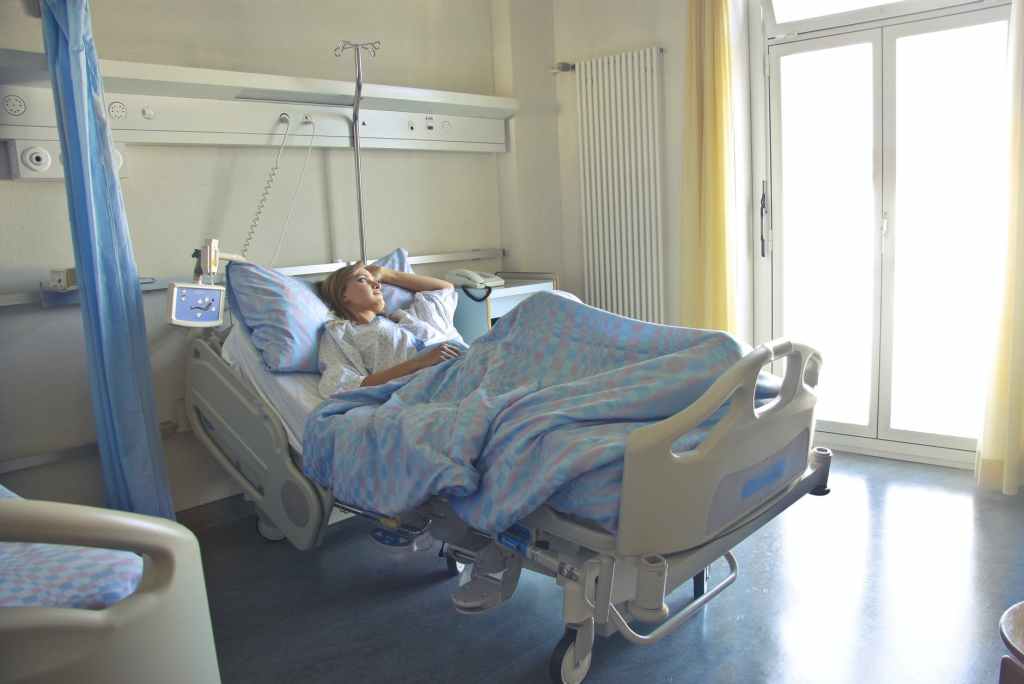
The past two weeks have been just a bit chaotic for our families. My mother fell and broke her femur, near her hip–not the hip she broke over a year ago, but the other one! Less than twenty-four hours later, my mother-in-law fell–and broke her femur. Each mom ended up in a different hospital for surgery, and in a different rehabilitation facility, located nearly fifty miles apart. Last week, two members of our extended family died on the same day in the same city; their funerals were a day apart in two different parts of the city, but handled by the same funeral home. On the day of the first funeral, we found out that another member of the family died. That same night, our toilet broke. Water poured into our upstairs bathroom, soaking the floor, running into the next room, and dripping down to the floor below. In the middle of all this, I slipped on the ice, fell hard, and bruised my ribs.
Where was God in all this? He was right there in every situation. God doesn’t disappear when the going gets tough– He is steady, sure, and faithful.
Neither of our moms suffered a concussion or any other major damage from their falls. They were able to get treatment and surgery, and they are receiving care and therapy. And, while this is something we might have taken for granted at one time, it is something for which we praise God, because it could have been much more tragic in both cases.
We live close enough to both moms that we have been able to help and visit (where we can because of continuing COVID restrictions). Though the facilities are fifty miles from each other, neither is fifty miles from our home. Also, both moms are able to receive phone calls, and we are able to receive updates from the staff at each place.
We have close families, and wonderful neighbors and friends– we are not alone in caring for our moms or grieving our loved ones, and there is a network of prayer, support and concern that staggers my imagination! I cannot imagine trying to navigate this without help– again, this is something we might take for granted, but God has been in the details long before any of this happened. Our families, friends, and neighbors represent dozens of church bodies from around the country and the world, as well as a significant group close to home– how marvelous that God allows us to work together as a body in every situation.
Though we have lost three family members in rapid succession, all three were believers! All three left a legacy of faith, love, and hope. We mourn their loss, but we also celebrate their lives with joy and not regret.
David HATES plumbing, but he knew what to do to fix the toilet. The damage from the flooding was minimal, all of our towels are freshly laundered, and the toilet works again!
My fall could have resulted in ANOTHER broken femur– or a broken arm, concussion, etc.. While it hurts to sneeze or yawn or blow my nose, at least it doesn’t hurt to breathe, and I can move and go about my day, cautiously, but normally.
God allows difficult things to come into our lives– and I don’t have any definitive answer for WHY we have been experiencing so many trials all at once. But I can say this:
Trials make us stop and look and question– and that can be a good thing. God is big enough, wise enough, and sovereign “enough” to handle our tears, our fears, our weakness, and our momentary doubts. In fact, it is in recognizing our limitations that we can focus more on God’s limitless grace and boundless love!
Trials bring us closer to each other. Our chaotic couple of weeks are just a drop in the bucket among all the other problems of the world, but so many wonderful people have called or sent messages of hope and encouragement over the past two weeks, my heart is bursting– not with the pain, but with joy and gratitude.
Trials teach us patience (see my post on “Be Careful What You Pray For.”) The toilet breaking was my low point this past week– even though it did not directly touch on our health or a loved one. But God sent friends and angels to remind me that this was a very minor problem– even among all the others– and that God was “flushing” away some unnecessary angst if I would just let it go!
There is nothing that takes God by surprise– nothing that causes Him to pause and wonder, “what happens next.” I can praise God in the hospital as I watch my mom cry in pain. I can praise God when my husband finds his mother “alive” (when he couldn’t be sure). I can praise God when I’m flat on my face on the ice, winded and sore. I can praise God when toilet water is soaking my socks. I can praise God when I hug cousins who have lost their parents to cancer or dementia, or age, knowing that God is with us every moment, in every tear, every hug, every shared memory, and every hope that our loved ones now experience what we will also know someday.
I’m ready for 2022 to calm down a little bit. But if it doesn’t, I’m also ready to be broken again– whether through broken legs, broken toilets, or broken hearts. God is in the business of repairing and restoring broken things and broken people. And no one does it better!
Today, I am choosing to be thankful for snow. I don’t really like driving in it, or shoveling it, but there are some wonderful things about snow. God made it– in fact, the Bible says He has storehouses full of it (Job 38:22)! So what are some of the wonders of snow?
Snow acts as a natural insulator of soil, roots, and underground bulbs and plants. When temperatures plummet, the snow acts as a blanket, protecting all that lies below ground.
Snow– especially new-fallen, clean snow, reflects light and brightens the landscape. With less natural sunlight, this is very important, not just for plants, but for people. Physical and mental health is enhanced when we get adequate amounts of light. Visibility is also enhanced– even at night!– when there is a snowy ground-cover.
Snow is a better way to add moisture to the air and ground in winter–when winter rainfall freezes, it is much heavier and more dangerous than snowfall.
Snow can be fun! Skiing, sledding, making snowmen, and snow forts– it’s not just fun for children.
Snow can be good for business! Ski resorts, plowing services, parks with cross-country ski trails, and many others depend on snow.
Snow accumulates– especially in mountainous regions– and refreshes rivers and lakes as it melts in the spring. Running water from snowmelts feed brooks and streams, and replenishes underground springs and wells as it seeps in. In this way, God gently wakes up mountainside forests and glens, turning them from white (or gray) to vibrant green.
Snow is beautiful! (Especially if I don’t have to drive in it or shovel it.) It glistens on the bare tree branches and settles in mounds on the fields. It sparkles in the moonlight and glories in the sunrise. It delights us as it dances on the air, swirling and hovering and settling on our eyelashes or fingertips, only to melt away like a dream. We hear often about the marvel of snowflakes– each one is completely unique in its design and makeup. We may even take it for granted– especially after a particularly large snowstorm! But God chooses to lavishly pour out His creativity and love into each tiny flake that falls to the ground and melts with a mere breath. How much more does He pour out His love on each one of us!
God uses snow as a metaphor for His forgiveness. See Psalm 51:7, Isaiah 1:18. “Snow” white is considered pure, radiant, and refreshing. In just such a way, God can take our failures and mistakes, and replace them with His righteousness, making us pure, radiant, and able to be refreshed and to offer refreshment to others!
I’ve written a number of times about my prayer journal. In it, I pray for individuals and individual requests, as well as praying for communities and regions each day of the year. I also use what I call “Prayer Points” for each day of the week. These are broad topics– The Church, Family and Friends, Government and Politics, Community and Services, Global Health (Healthcare, Diseases, Ecology, etc.), Business and Economy, and Cultural Issues. Often, these broad topics will lend themselves to specific needs or requests (which may overlap items in my prayer journal), but there are also times when the topics seem generic and almost overly broad. I use them anyway.
It isn’t because I have any influence over such broad categories– but because God does! And I need to be reminded of that every day. God loves to hear our specific requests– heart cries and urgent needs–even bad hair days and misplaced keys. But He also loves to hear us acknowledge that “all the world” belongs to Him; that He is sovereign over our nations, our culture, His Church, our families, etc. He has authority over world economies, including all the factors we worry about– drought and famine, production, distribution, wealth (or lack thereof). He has the power to overthrow corrupt governments and bring justice. He has the power to defeat disease, and restore forests and rivers; to meet our financial needs, and to save marriages.
Moreover, He knows best in all these situations– even when I know next to nothing! My efforts to change society or fix the planet will be puny, and based on my limited knowledge and experience. Even my outlook on my own small community is limited– I don’t know all the individual people, organizations, or companies that make up my small town. I trust that God, however, knows each teacher, garbage collector, city worker, police officer, fire fighter, mail carrier, nurse’s aid, day care provider, physical therapist, food service worker, accountant, paralegal, banker, and shopkeeper (and all the other valuable members of my community)– AND He knows the number of hairs on each of their heads! It revolutionizes the way I think and the way I pray each day.
Imagine what can happen when we pray this way collectively! Imagine the way it can change our outlook, and our actions. I can be saddened by the state of our culture or the breakdown of families. But I have a Mighty Father who has both the wisdom and the power to redeem them! I know I can trust God with everything– large and small. But it is easy to take that for granted, or to “know” it only in the abstract. Keeping prayer points where I can see them and use them daily helps me to live out the truth that I already know.
So this morning, instead of worrying about our business or the larger economy, I will lift them up into the arms of One who can really make a difference! And I will pray for smaller and more personal requests– those in the hospital or grieving a recent loss; those who are discouraged; those who are celebrating birthdays or anniversaries, promotions or new opportunities; those who are lost, and those who have misplaced their keys (again).
Have you ever been part of something– some project or task– SO monumental and far-reaching that you wonder whether your efforts made any difference? Did you end up with “grunt” work– a seemingly insignificant part of the larger project that left you with lots of questions and very few (or no) answers? Something so tiny that most people would never even know if you did it?
A couple of years ago, I took a temporary job as an enumerator for the U.S. Census Bureau. I was part of a vast team of workers who conducted “follow-up” visits, mostly to addresses that had not responded by April 1. I was excited, and a bit apprehensive; after all, the Census is a pretty big deal. These names and numbers will be part of our nation’s collective history. As someone who loves doing genealogy, the Census is invaluable for discovering information about my family history– names, ages, locations, occupations, origins and ethnicities, and so much more can be learned from Census records.
However, I soon discovered that most of my job consisted of traveling to out-of-the-way locations, and knocking on the doors of empty houses, or trying to find addresses that no longer existed. “Non-response follow-up” usually involves checking on rentals, second homes, vacation homes, and homes that have been vacated, condemned, or even demolished in the years since the previous census. It is a lonely and often frustrating exercise in trying to find what “isn’t,” rather than counting what “is.” Each day, I was given a new list of locations (including some I had already visited without success). But I was commissioned by the U.S. Government to trace each address on that list to the best of my ability, and, wherever possible, to get information about anyone who might have been in residence at that location on April 1.
Sometimes, I was able to get an interview, and document names and ages, or correct information that had been collected earlier. But much of what I did will never be included in the final Census report for 2020. My name will not appear and I will receive no recognition for my efforts(unless as a footnote with the thousands of others who did the same thing). I did get paid for my work, for the time I spent traveling and knocking on doors. And some interviews were not just fruitless, but bordered on abusive. Homeowners were annoyed, or even outraged when I showed up. They had sent in their Census form– for their primary address! Worse yet, there were some times when I showed up after ANOTHER enumerator had come– I had been sent to follow-up on the follow-up! But I was under strict orders about where to go, when to go, what to say (or not say), how to report on each interview (or non-interview). I was under a commission. I took an oath, and I followed orders, just like being commissioned in the military. Looking back, I feel good about the experience. I served my country, and I learned a great deal about the local geography, AND about human nature. For every cranky homeowner, there were others who were friendly and helpful. At the time, though, I often felt drained and dazed at the end of a shift.
As Christians, we are also commissioned. We are to go into all the world and preach the gospel, making disciples of every nation, teaching and baptizing, and being witnesses for Christ. (Matthew 28:16-20/Mark 16:15-18, etc.) Our commission is not to force everyone around us to become Christians, or to demand that they respect us or our message (that is the work of the Holy Spirit– our job is to go and to be witnesses, disciple-makers, teachers, encouragers, and helpers). And part of our commission is to pray–fervently and consistently– to pray for our nation and its government officials (1 Timothy 2: 1-2); to pray for believers around the world, especially for those under persecution (Hebrews 13:3), to pray for those who persecute, ridicule, or despise us (Luke 6:28; Matthew 5:44), to pray for, and interact with grace toward, those who have rejected Christ (Colossians 4:5-6), to pray for the healing and restoration of others (James 5:13-20).
At times, we may not feel like praying for certain people or situations. We may not understand why God allows for corruption in our government or for neighbors to mock our faith or treat us unfairly. We may not understand why some of our prayers seem to be more about what “isn’t” that about what is. We may not understand why God sends us, where God sends us, or when God sends us to go, to act, and to pray. But God IS listening. He knows our every thought, and He sees every need– not just our needs, but the broader needs of our community and our world. May we be faithful with the commission we have been given. It’s a much bigger deal than any Census!
Prayers are made up of different ingredients–worship and adoration, confession, requests and supplication, thanksgiving, even questions..
Sometimes what we pray for, and the “finished product” of what God chooses to do don’t look or taste the same. But if we don’t “follow the recipe,” sometimes we end up with a disaster. Sometimes our thoughts and prayers are like adding a cup of salt, where we were supposed to add a cup of sugar! God knows the difference, and He adjusts accordingly!
There are many different “cooking” methods for prayer. Some prayers need to simmer–they take time and dedication; others “sizzle”– they are more immediate and urgent. There are even “raw” prayers– tortured cries of the heart. Some prayers are “cock pot” prayers– we give the matter to God and let it stew for quite awhile, only to see results much later.
Some prayers involve “heat”–we are either in hot water, or we are in a pressure cooker; maybe we’re half-baked! God doesn’t always turn down the heat– He knows just the right temperature for each situation, and He also knows when to remove us from the heat!
When I was a young woman, I prayed for patience. Several well-meaning friends and family tried to tell me that this was a mistake. “Be careful what you pray for,” they said. It was their belief that, if I prayed for patience, God would send situations into my life that would force me to be patient. God doesn’t “give” patience, they warned–He merely teaches us to be patient.
I wanted more patience, in preparation for marriage and children; I wanted to be a patient wife and mother. But I was unprepared for this reaction of others. DON’T ask God for something good? Isn’t patience (long-suffering) one of the attributes listed as the “Fruit of the Spirit?”(Galatians 5:23-24) Why should I hesitate, or fear to ask God for something that will help me serve Him better?
Looking back, I suppose some of those same friends and family might say, “I told you so!” I’m sure they wanted a happy and easy future for me– one that didn’t include some of the challenges that I have had to face. And in their eyes, I was “tempting fate” to draw attention to my lack of patience. On the surface, it probably looks like that’s exactly what happened. I never had any children; I didn’t marry until I was in my mid-40s, and I have learned patience in many areas through many challenges.
But that’s just one perspective. What if I hadn’t prayed that prayer? Would God have let me drift through life without “needing” more patience? Would I have “avoided” the years of loneliness and lack of children? Would I have married and had a family and lived happily ever after without having to learn patience? Would my life have been totally different? Or would my circumstances have been the same, except that I never would have learned patience–never sought to become more patient during the same trials and challenges? What kind of life might I have had WITHOUT patience?
During the years that I was single, I worked full-time in youth-oriented jobs– teaching and serving in the youth department at a library. I learned patience by disciplining teenagers, cleaning up after toddlers, answering the same questions twenty times a day, and dealing with obstinate parents! I suffered with my students when one of their classmates died; and when it happened again the next year. I agonized with my student who chose to keep her baby after those close to her wanted her to have an abortion. And I rejoiced with her when she brought her son to visit me a year later. I suffered the frustration of parents whose children were rebellious, or had learning issues, or had been diagnosed with autism or ADHD. But I also endured the long nights when I had no little ones to tuck in or talk to (and learned to be thankful for the nights I didn’t have to deal with fever and sickness, or arguing–again– about the rules of the house!) But in the course of my work, I connected with hundreds of children and teens. They were never “mine” to hold or scold or say, “I love you”, but they touched my life, and I hope that I touched theirs as well. I didn’t choose my career path knowing that I would never become a “mom.” But I needed (and learned) patience in the process. I learned patience in the years I spent single–and I learned to appreciate my husband in ways I wouldn’t have as a young woman.
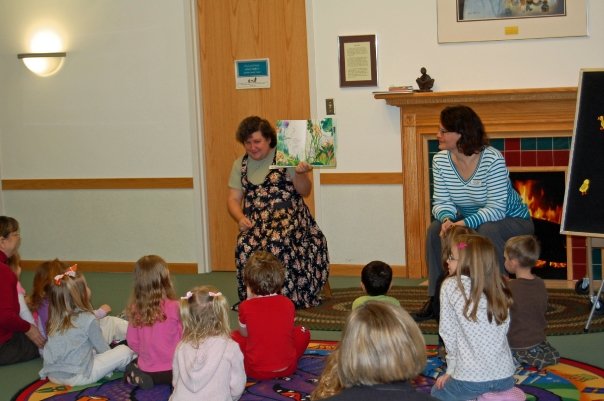
Story hour at the library c. 2009.
There IS some truth to the phrase, “Be careful what you pray for.” When we pray, we should pray for things that align with His will– like wisdom, patience, courage, or peace. We should not pray for things that contradict His will– instant popularity, wealth without work, or relationships or circumstances that dishonor Him. We should also be prepared for God to answer in the way He deems best–which may not look or feel like what we desired. It was His best for me not to marry young or have children of my own. He has since blessed me with a wonderful husband and step-children and grandchildren. But He might have chosen not to. And I would still thank Him for the life I have led. It’s been fantastic. I’ve met amazing people, had amazing opportunities, and traveled to wonderful places. I don’t feel like God ever “punished” me for asking for patience– instead, I feel that He has more than answered my prayer. That doesn’t mean that I have learned to be perfectly patient in every situation (just ask my husband!) But God is eternally good and faithful to give us what is in our best interest– if we ask, AND if we trust His answer more than our expectation. (see Hebrews 11:6; John 17; 1 Peter 5:7)
Don’t be too afraid or too proud to ask God for any good thing. God will not only give you what you need, He will be with you every step of the way as you learn and grow, and develop into the person He wants you to be!
1 In the beginning was the Word, and the Word was with God, and the Word was God. 2 He was in the beginning with God. 3 All things were made through him, and without him was not any thing made that was made. 4 In him was life,and the life was the light of men. 5 The light shines in the darkness, and the darkness has not overcome it, 10 He was in the world, and the world was made through him, yet the world did not know him. 11 He came to his own, and his own people did not receive him. 12 But to all who did receive him, who believed in his name, he gave the right to become children of God, 13 who were born, not of blood nor of the will of the flesh nor of the will of man, but of God.14 And the Word became flesh and dwelt among us, and we have seen his glory, glory as of the only Sonfrom the Father, full of grace and truth.
I memorized this passage as a child. And one part of this passage stands out to me today, because the wording of the verse has not changed, but our cultural reading of it has changed a bit. I remember churches, and evangelists, using the phrases like, “Have you accepted Jesus Christ as your personal Savior (or Lord, or Lord and Savior)?” “Are you ‘born again?'” “Have you asked Jesus into your heart?”
I know in certain circles these phrases are considered “old fashioned”, “evangelical”, and even offensive. Some of us don’t identify as Christians anymore– many of us prefer the term, “Christ-followers.” “Born-again” Christians are seen as hypocritical, overbearing, judgmental, and intolerant– even violent! And there are individuals and groups who give evangelical Christianity a “bad name” by their behavior.
Evangelicals have a reputation for putting people’s backs up, and putting people “on the spot.” They want to know, “have you GOT Jesus?” As though Jesus is a product and you either own Him or you’re missing Him. Can you get Jesus at the corner store? Do you “get” Him the same way someone “gets” a virus? Is He infectious? Can you sell Him? Lose Him? Trade Him away?
The Apostle and Gospel writer, John, was an evangelical. He was keenly concerned that His readers, friends, listeners– basically everyone he met, GOT Jesus. He wasn’t trying to sell a product, force a certain doctrine down others’ throats at the end of a sword, or offend those he met. But he DID want to make sure that people didn’t miss out on the GLORY, the incredible WONDER, the eternal GIFT of LIFE that had lived and walked and dwelt among us.
Today, there are many who claim to “follow” Christ– they have great respect for His teachings; they want to live a “good” and even “righteous” life just as Jesus did; they believe He was a great role model. But they haven’t “received” Him. They believe what they have heard about Him; they believe “in” Him, but they don’t believe “in His Name.” Truly becoming a “follower” of Christ is to become a “Christian”– willing to be called by His name and identified with Him. Not just as a wise teacher or a gentle soul, but as a sacrifice–despised and rejected, misunderstood– and obedient even unto death. Not just the physical death of a martyr, but the social death of an outcast, the death of selfish dreams and worldly success through compromise, the loss of relationships, property, status, freedom… John knew all of this first-hand. He was standing by during the trial and crucifixion of Jesus Christ. He watched as his brother and friends were beheaded, tortured, crucified upside-down, and driven into hiding. He spent the end of his life in exile for the privilege of being a “Christian.”
Calling oneself a Christian, or a Christ-follower, or “born again,” doesn’t mean anything in and of itself. I can call myself a doctor, or an artist, or a prophet. I may have studied medicine, or created a painting, or made a prediction and be completely hypocritical. I may end up giving a bad name to myself, and causing people to be cautious about other doctors, artists, or prophets. That doesn’t make THEM hypocritical, and it shouldn’t cause them to stop doing what they do well. What matters is not what I say I am, or even what others say about me, but what and who I demonstrate that I am. I want to let my words and actions declare my relationship to Christ. At times, I would like to avoid the ridicule and misunderstandings. I’d like to be able to distance myself from the “bad examples,” but, like John, I long to testify to the GLORY of the one I follow and trust, more than I want to justify my own self at the expense of others. Yes, there are some “fake” Christians, and some who are sincerely wrong in how they attempt to live– and if someone were to catch me in a bad moment on a bad day, and show only that moment to the world, I would be counted among them– but my goal is not to ask if others have a perfect track record, or if they know all the right Bible verses or even if they have the “right” answers. My goal is to ask, ” Have you GOT Jesus?” “Do you KNOW Him– not just about Him?” When you pray, are you praying to an aloof idea or to a personal Savior? If He called you, would you answer, or let it go to voice mail? Would you scroll through and “like” His social media posts, or would you actually DO what He said?
Jesus came. He walked among ordinary people. Crowds “followed” Him, hanging on His parables, excited about His healings, and impressed by His miracles. But very few of them actually became His disciples and “received” Him. But to those who did, like John, He gave them the privilege to be called Children of God– not because they were smarter or wiser or more righteous in their own knowledge or efforts, but because they were made new, “born” again, and transformed by their relationship with Him. May that be so for all of us!
This morning, I woke up inside– protected from the rain and wind and cold. I woke up in a bed. I woke up with blankets for my body and a pillow for my head. I woke up, and moved my head, my hands and feet, arms and legs. I sat up and wiggled my toes. Thank You!
Photo by u0414u0438u0430u043du0430 u0414u0443u043du0430u0435u0432u0430 on Pexels.com
This morning, I woke up to hear my husband’s breathing. I woke up to the knowledge that I am not alone. I woke up to the knowledge that I am loved. I felt safe and comforted. Thank You!
This morning, I woke up knowing that even if I had none of the things I just mentioned, that I still have reasons to Thank You– Things I take for granted; things I haven’t even noticed; things I have not yet seen. Thank You for who You are. Thank You for Your Faithfulness; Your Majesty; Your Sovereignty. Thank You for the beauty of sunsets and snowflakes; for the seasons and the centuries; for family and friends; for triumphs and even for the tears that sometimes come my way. Thank You that you are greater, and deeper, more powerful and more tender than all that I know or imagine.
Pursing prayer sometimes leads to taking prayer for granted. Prayer becomes a habit; a daily activity; even a task to check off the list. But prayer is so much more. Prayer is a lifeline; a divine mystery. I can’t explain how prayer “works.” But I know from experience that it transcends the words I speak and the emotions I feel as I pray. I’m not praying to “a higher power” or an abstract “spiritual being.” I pray to the One who created me, and the One who loves me more than I can even comprehend.
More than that, I am praying to the One who oversees the universe, and all the inhabitants thereof. There is something powerful and mysterious about prayer. I was reminded of that just recently, when I asked for prayer for my mother, who fell and injured herself. She is 88 years old, and very frail. She is also beloved by many in her family and community. Within minutes of posting a very general request for prayer, several dozen people had responded– some with a simple message of “praying” or “sending prayers.” The next day, I was more specific, and again, dozens of people responded within minutes– “praying for your mother,” “prayers for healing,” etc.. Suddenly my prayers became more confident and hopeful. And I was reminded of all the prayers I lift up each day–those “daily prayers” that sometimes seem like little tasks. They are unique, personal, and important– not just to me, but to many others.
I shared recently about praying for others’ requests. This is also a privilege. In a mysterious and divine way, when we pray for others we join in God’s work of bringing hope, healing, and love to others. I can pray for others (and they can pray for me) regardless of where I am, or what my situation may be. I cannot always DO something, or BE somewhere. I can always pray. And where I can act, prayer often sharpens and directs my actions to be more effective.
If you’ve ever tried to help in the aftermath of a disaster (as a member of the general public and not an emergency worker or someone deployed to help), you know it can be frustrating. If you’ve ever been caught in a disaster zone, you know it can be frightening AND frustrating. People do their best to help and offer hope, but in times of chaos and lack of communication, people can be left behind and resources can be misdirected or spoiled before they can get to those who need them most. Prayer never gets misdirected. It never goes unanswered or forgotten; it is never a wasted effort. God is faithful. His ways may be difficult for us to understand, but they are not warped, doomed, or limited in any way.
There is great comfort in that reality. Sometimes, we just need to be reminded of how powerful and necessary our prayers are. God loves to hear them. He loves to answer them. He loves to use them for His glory and our wholeness. What a privilege to carry EVERYTHING to God in prayer!






























 Pursuing Prayer