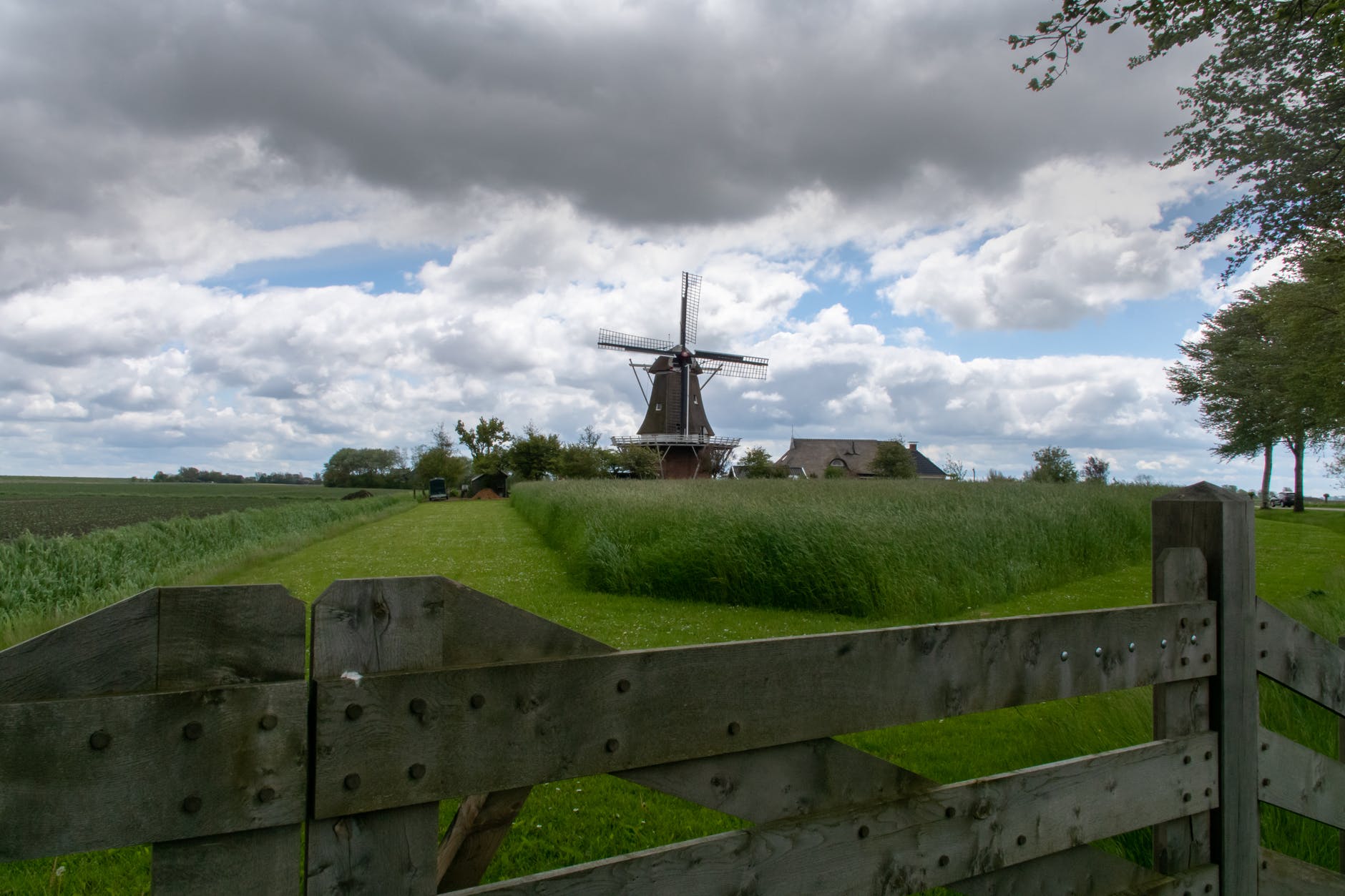
My paternal grandmother was born in Shanghai. But not the Shanghai most people think of. Not a great Eastern city of importance, but a tiny settlement called Shanghai (or Shanghai Corners) in southwestern Michigan. It doesn’t have a post office; it’s not even listed on most maps. And it wasn’t named directly after the great Chinese city– it was named after a breed of chicken (most likely the breed now known as Cochin)!
Jesus wasn’t born in Jerusalem. He wasn’t born in Rome or Athens, or New York City or London or Johannesburg or Tokyo. Jesus was born in Bethlehem. It wasn’t as small as Shanghai Corners, Michigan, but it wasn’t a city of great importance, wealth, or industry. And yet, it was the place where history would be reshaped. Our modern calendar divides into what happened before that night in Bethlehem and what came after. More than two thousand years later, no event has been able to displace it as the pivotal event of recorded history.
And this division wasn’t caused by a revolution, or a series of wars. It wasn’t shaped by disaster or plague, victory or catastrophe. It came silently with the birth of a single baby, wrapped in strips of cloth and placed into a makeshift bed. But all the years revolve around that single birth. All the great triumphs of history– the moon landing, the invention of the printing press, the conquests of Alexander the Great, the building of the Sphinx–all are placed in the context of the arrival of God in human form. God stepped into the limits of human history, and the timeline was permanently altered. Before His appearance, prophets and seers looked forward. After His arrival, history looks back. But His birth is the focal point; the period. The end of the Beginning and the beginning of the End.
The hopes of all the ancients–shrouded in mists and wonder– were given flesh and bones. The fears– dark and amorphous– were blinded by the light of His Presence.
What hopes and fears are we carrying today? Our hopes have a name– Jesus; Emmanuel! Our fears have nowhere to hide from His power. And this wondrous gift, while it first arrived in the little town of Bethlehem, reaches around the entire Earth– to Shanghai, and Shanghai Corners; New Delhi, and St. Petersburg; Dallas and Buenos Aires; Cairo and Caraballo; Los Angeles and Lagos; and thousands of small towns in between.
We have entered the season of Advent, and as we prepare our hearts for the coming of the Christ Child, one of the first steps should involve quieting our hearts.
This can be difficult in the daily noise and bustle around us– particularly in this season! We have filled Christmas with sparkle and glitter; the ringing of bells and endless songs about reindeer and jolly fat men and decorated trees. But this is NOT Christmas– not yet. The bright lights of Christmas, the joyful songs of the angel hosts, all need a proper context. And that means a cold, dark night more than 2000 years ago. It means an emptiness. A heavenly silence that stretched over 400 years. Silence from heaven; silence in the earth; silence in the soul.
In silence, we ponder. We wait. We anticipate–perhaps even dread– what may come. What will God say when He finally speaks again? Will it be judgment–severe, holy, deserved, undeniable? Will it be condemnation? Will it be that final pronouncement of God’s Holy Sovereignty, and our utter failure to measure up?
The joy of Christmas comes, not because of seeing light shows and snow glistening on trees, or listening to jingle bells and laughter. It comes from knowing that God’s Word is Peace! It is reconciliation and restoration. It is Freedom and Victory over Sin and silence and eternal Death! It is not first felt in the blaring of anthems and resounding of carols. It is in the soft cooing of new Life coming into a dark and silent world. Of everlasting love being wrapped in rags and gently laid in straw.
God delights in turning earthly things upside-down. And so He comes to us, not with fanfares and regal procession, but in stillness and gentleness, in the middle of a dark and silent night.
Yesterday was Thanksgiving across the U.S. Many families enjoyed a large dinner, surrounded by family or friends. Traditionally, this dinner might include turkey (or ham or both!), vegetables and fruits (potatoes, sweet potatoes, green beans, baked beans, corn, squash or some kind of greens, cranberries or cranberry sauce, apples or fruit salad), dressing, stuffing, rolls, and/or bread, and some dessert, such as pumpkin pie, pumpkin roll, apple pie, or cake. It’s a holiday which focuses heavily on food and eating.
Because of this, it is also a holiday that carries the risk of food poisoning. Turkey and other meats, if not cooked properly or long enough, can make people sick. So can leftovers that are left out too long or not stored properly after the big meal.
But there is another kind of poison that can ruin Thanksgiving. It may not make us immediately physically ill, but it is not less dangerous. It is the poison of ingratitude. Like salmonella or other types of bacteria, ingratitude can be invisible. It can hide, waiting to attack without warning, causing everything to have a bitter aftertaste. It may cause violent reactions, such as rage, or lie dormant, causing depression, apathy, or a general dissatisfaction. And just like food poisoning ruining a holiday built around food, ingratitude is a natural problem to have during a time set aside for thankfulness.
One of the most insidious forms of this holiday poison comes through comparisons–we gather to be near family we love, only to compare ourselves with them. Which one is happier? Wealthier? More popular? More intelligent? Better looking? Is the host’s house nicer than mine (or is my house “good enough”)? Did I work harder? Did my contribution to the meal taste “better”(or was it passed by– again)? Why am I still sitting at “the kids’ table?” The list is endless of the petty grievances that we allow to overwhelm our intentions to be thankful and live in peace. Someone says something to “push our buttons,” or they seem to ignore us completely.

Another form of holiday poison spreads from person to person–complaining, venting, sounding off, moralizing, criticizing, blaming…what began as a thankful, joyful gathering becomes a snake pit of biting, poisonous talk. And we react. We take the bait, become defensive, get sucked into that political discussion we vowed to avoid, or we revisit old wounds we thought we had put behind us.
But unlike food poisoning, bitterness and ingratitude are choices. We can’t always choose our circumstances, nor can we choose what others say or do. But we DO choose our reactions and our attitudes. I can blame someone else’s anger or selfishness for my bitterness, but they didn’t MAKE me succumb to their poison. I can compare myself to others and feel arrogant or inept, but no one forces me to live someone else’s life or measure up to their circumstances.
God has given each of us life and breath, and a purpose. Some of His gifts to us are universal and exactly the same for each person. He has given us each 24 hours in each day; He gives sunshine and rain, day and night, and air to breathe. But some of his gifts are unique to each individual. Our response should be to open our unique gifts, so we can enjoy them and use them, NOT waste time coveting someone else’s gift when we have neglected even to open our own.
I wish I could say that “holiday poison” was easy to avoid– it’s not. It is human nature to grumble and whine and wish for what we do not have. But it IS possible to get healing. It starts with humble confession. We DO wish for what we do not have–and the more we deny and try to bury our failings, the more susceptible we are to the poison they can bring. If we confess our feelings of inadequacy, our desire to have “more” or “better” in life, we can turn to God freely and let Him give us a better perspective. Suddenly, we “see” blessings where we used to see burdens, we can see hope where once there was only grief, and we see opportunities where we only saw obstacles before.
Transformed Humble Able to do “all things” through Christ No longer slaves to Sin Known by our Love for each other Fruitful Upheld in the power of His Love
I am very thankful for my refrigerator. It’s used…we picked it up at a garage sale a couple of years ago. It still works well, except for the ice maker and water dispenser. But it has plenty of space, and it keeps things cold and/or frozen, as needed. Right now, we have some milk and plenty of eggs, cheese, and some leftovers, a jug of water getting chilled, some celery, and some fish thawing out for dinner later this week. There are also some random jars of condiments– catsup, mustard, mayonnaise, horseradish sauce, some diced garlic, a few pickles, and some jam. There are things that probably wouldn’t need to be refrigerated, but there they sit, nice and cold, ready if we need them. There are even a few leftovers that need to be taken out of the fridge and thrown out. Even the refrigerator can only preserve food for so long. There is a freezer, as well. It contains meat and veggies, and some blueberries I froze from earlier this summer. It is nearly full, and that’s another thing to be thankful for.
For the past few weeks, I’ve been going through notes left by my great-grandmother. She was born before people had such luxuries. She started her married life with a cellar. Later, she had an icebox. Before she died, they had gotten an electric refrigerator, but it didn’t look much like mine. It was small, and had a small freezer, but it had to be defrosted regularly, and it didn’t have special drawers for vegetables or meat. Reading about her life has made me conscious of how easy my life is in comparison. I’m grateful for modern appliances, and conveniences– even as I often take them for granted. The stove, the microwave, the slow cooker (Crock Pot), the rice steamer, a food processor; they all save time and effort as I work in the kitchen. I still wash the dishes by hand, but even that is made easier with non-stick fry pans and plenty of hot water from the tap. My great-grandmother had to pump her water from the well and heat it over the fire!
I’m not only thankful for what is IN my refrigerator, though. I am thankful for what’s ON it. I have dozens of magnets– some homemade, others souvenirs from various travels– here in Michigan, out West in Washington and Oregon, from the Dominican Republic, etc.. And each magnet holds something precious– photos of my grandkids, of nieces and nephews, of families serving on the mission field; drawings, Bible verses, business cards from favorite restaurants, memo pads, and inspirational quotes. It’s almost impossible to find the original surface of the fridge under all those important reminders! This is deliberate. The Bible tells us to keep His word in our hearts– to memorize it, and talk about it daily with our family.
4 Hear, O Israel: The Lord our God, the Lord is one. 5 Love the Lord your God with all your heart and with all your soul and with all your strength. 6 These commandments that I give you today are to be on your hearts. 7 Impress them on your children. Talk about them when you sit at home and when you walk along the road, when you lie down and when you get up. 8 Tie them as symbols on your hands and bind them on your foreheads. 9 Write them on the doorframes of your houses and on your gates.
It’s “just” a refrigerator. But it is also a place of worship and thanksgiving and remembrance. Every time I open the door, I can be reminded of God’s power, love, and mercy; how much God has done for our family, and how we’ve been blessed. I am reminded of dear people, and reminded to lift them up in prayer. I am convicted of my need to be a better steward of the food and other resources we have been given. And I fill its shelves and drawers with love in the form of good food to share with my husband, and with our friends and neighbors. That refrigerator has been the repository of pies and deviled eggs, of fruit salads and 7-layer salads, of barbecued chicken and leftover corn pudding, and a hundred other dishes meant for family meals, potlucks, and simple dinners with my husband. At times, the shelves have been a little bare, but never empty. God provides! He blesses! He sustains!
We’re coming up to Thanksgiving in the U.S. next week. Many families will sit down to sumptuous meals–turkey with dressing/stuffing (depending on what region you live in), pumpkin pies, sweet potatoes, corn, beans, rolls or muffins, salads, mac and cheese, casseroles, cranberry sauce, and more. Some will settle in front of big screen televisions to watch American football, and parades crowded with giant balloons and marching bands. Some will have modest gatherings with family and friends.
And the following day– Black Friday– they will rush to malls and giant box stores to take advantage of the spectacular sales. People will buy hundreds of dollars worth of Christmas gifts, all with the satisfaction that they might have spent a lot more if they had not braved the crowds and the 4 a.m. opening times (some will begin shopping on Thanksgiving Day for the “head start.” Others will stay comfortably and safely indoors and spend their money shopping on-line).
All of this costs money, of course. But for many Americans, it is not a real pinch to celebrate Thanksgiving. And we will say “Thanks,” and count our many blessings. We will also give. Charities and organizations are already taking donations. We can give $10 at the store to help buy meals for the hungry. We can buy small gifts to be sent overseas or to be given to the children of those in prison, or those who are homeless. We can buy coats (or hats or mittens, etc.) for those who have none. These efforts cost some money, too.
But how much of these efforts comes from true “thankfulness” and how much from other sources– pride or guilt or a sense of duty? For what am I truly grateful at Thanksgiving? Thankful that I have so much? Thankful that I have the power to help others? Thankful that I have the day off to go shopping?
It is easy for some of us to be thankful and generous–in our own eyes. I can give with the click of a button, and money I barely know I have is taken from my bank account and deposited in the account of a charity I may know very little about. I never have to see the people who are helped, and I never have to see what they have suffered or how my gift makes a difference. In fact, I don’t really have to see whether my gift even arrives where I imagine or does what the charity has promised. Some organizations are more transparent than others, and more reputable or honest than others, but I can feel good just by giving. In some cases, I can “make a difference” without any cost at all– just “like” a certain site, or fill out a survey. I can “give” without even giving!
In recent years, however, I have been surprised by those who have tried to make me feel bad about giving. They are not angry because I have not given, or have given very little, or given to dishonest charities. No. One lady was outraged that I should give to an organization that sends toys, hygiene items, and school supplies to needy children in countries around the world. What caused her outrage? Three things–the toys were “too American”–the instructions were printed in English, or they were “frivolous” toys like jump ropes and “matchbox” sized cars and trucks. Also, some of the boxes and wrapping were printed with cartoon-like children, which she felt were “racist” in their depiction. Finally, the spokesperson for the organization had been portrayed by the media as narrow-minded and “hateful” toward the issue of gay marriage. Her solution: she was never going to give to such an organization. She was urging people to give to groups that were providing livestock, instead. Here, she felt, was a useful gift. Chickens, goats, cows–these were gifts that would truly make a difference. And such gifts can and do make a difference– in rural areas, where there is space and enough grass or other food to sustain such animals. Her gift will have little impact on a child living in Nairobi, or Tegucigalpa, or Kosovo. I am glad she has the means and the desire to give and to help. And the organizations who provide such gifts are worthy–I mean no disrespect to any of them. But giving should be a joyous outpouring of love and thankfulness, of compassion and humility. If that means helping a rural community get milk and meat, that’s wonderful. If it means sending a stuffed animal, some silly socks, and some soap and washcloths to Lebanon, that’s great, too. Even if I don’t like the wrapping paper…
My point is that a lot of our “giving” has become more about virtue signaling than joyously sharing with others to meet their needs. It costs a lot more in money to send a goat to Peru. But it may cost a lot more in time and energy to spend a day serving meals at a homeless shelter, or volunteer to rebuild in a community hit by a tornado or hurricane. And even though there may be a monetary cost to some of our gifts, in some ways, our “giving” costs us nothing. Not just little or nothing in dollars and cents, but little in emotion or thought or effort. There is nothing personal, or heartfelt, or sacrificial about some of our giving.
During the reign of King David, there are many instances of celebration and thanksgiving. But there are also stories of heartbreak, loss, and repentance. In one of these incidents, King David angered God by taking a census. His conscience caused him to ask God’s forgiveness and ask what could be done to take away the guilt. God sent the prophet Gad to give David three choices, but David left it in God’s hands. God sent a vicious plague that swept toward Jerusalem. When the angel of death reached the threshing floor of a man named Araunah the Jebusite, God told him to stop. David could actually see where God had stopped the plague, and immediately went to buy the threshing floor, so he could build an alter and sacrifice to the Lord in repentance and in thanksgiving for God’s mercy.
King David had plenty of money. He also had authority, and the respect of his people. Araunah offered to give David not only the field, but the oxen to make the sacrifice. As the king, David could have taken the land and oxen– he could even have demanded them of Araunah. But David paid for it all, saying that he would not give to God that which had cost him nothing.
In this season of giving, it can be tempting to measure the value of our gift by the monetary cost, or by the value WE receive from giving. But true giving should involve a willing and joyful sacrifice of our pride and our time. Sometimes, this may mean NOT giving a toy or a goat–it may mean giving an apology, or a second chance, or being willing to give up a turkey dinner or a shopping trip, in order to visit a shut-in, or spend some much needed time on our knees.
Having said that, there are plenty of things we can give that cost us “nothing”–smiles, a warm welcome, a listening ear, reaching out for reconciliation, and most of all, a heart-felt “Thank You.” Sometimes, these gestures cost us nothing– sometimes, they are a sacrifice. But they are gifts that really make a difference.
6 Humble yourselves, therefore, under the mighty hand of God so that at the proper time he may exalt you, 7 casting all your anxieties on him, because he cares for you.
1 Peter 5:6-7 (ESV)
I grew up hearing the verses above, especially verse 7– it was a memory verse in Sunday School and Bible School. It was the subject of many a sermon. I have known these verses most of my life. But I started thinking about them differently in the last week or so. The verses haven’t changed. Even in different translations, the familiar words are almost the same..”cast your cares:” “give your worries;” “cast your anxieties…” “ON HIM.” Over the years, those words created an image of me handing over a bundle, or passing off a heavy coat into the waiting arms of Jesus. There is nothing wrong with this image, but I think there is more to this verse.
Peter–the author of this Epistle, was a fisherman. And one of the things I’ve learned being married to a man who loves to fish is that the “cast” is very important. No fisherman simply drops a line or a net into the water at random. Instead, he or she takes aim and hurls the net or line away from themselves and the boat (or dock or fishing platform). A good cast is intentional, directional, and takes commitment. And then, the fisherman, having made the cast, waits. Sometimes, it may take several “casts” before the fisherman gets a good “catch.” But a bad cast– or an impatient caster who can’t wait, but reels in and casts without intention– rarely gets good results.
I’m afraid I’ve learned more about fishing in the past few years than I have about trusting God in a lifetime. All too often, I try to bring my cares and worries to God in pieces and parts, in short bursts and limp tosses. I do not “cast” my cares on Him– I try to hand over those bits I know I can’t handle, and explain away the rest. Or I try to drop my net close to the boat. And if I don’t get an answer on the first “cast,” I give up, and reel all my cares back in, or wear myself out with fruitless prayers about the same worries, as if God didn’t hear or couldn’t understand them the first eight or nine times!
Casting our cares is more than just “handing” them over to God. We can hurl them, fling them, throw them, and toss them into the sea of His compassion and wisdom. As often as necessary, as desperately as necessary, as committed to getting rid of them as a fisherman is committed to getting a big “catch.” And we can trust that, at the right time, and in the right way, God will send us the “catch”– maybe not what we expected or imagined, but what He knows is best.
Fishing trip (with our daughter and some of our “catch.”)
Peter was a fisherman. After he walked with Jesus, he became a “fisher of men.” He learned how to “cast” all his cares on the one who performed miraculous deeds– walking on water, feeding the five thousand, raising the dead–even helping Peter and his friends catch fish! I’ve learned a lot about fishing. It’s time I learn more about “casting” my cares on my bountiful Father!
25 Jesus said to her, “I am the resurrection and the life. The one who believes in me, even if he dies, will live. 26 Everyone who lives and believes in me will never die. Do you believe this?”
Jesus knew Lazarus was already dead when He set out for Bethany. He knew of the illness in time to save His friend. Yet He delayed. By the time He arrived, Lazarus had been dead four days, and was already buried. What comfort could He offer the grieving sisters? What could He say to explain His delay and seeming unconcern?
This year, we lost a lot of friends, neighbors and family members. Many others were suffering. We prayed for them all– we prayed for healing; we prayed for miracles. And God performed some miracles– people who were on life support and people with “incurable” cancer were released from the hospital and pronounced “healed.” But others died, even with all our prayers. And even more died suddenly before we could even seek God’s favor and healing.
We mourn the loss of these loved ones. We miss their presence at gatherings; we miss their laughter, their wisdom, their “life” in our midst. But we do not mourn like those without hope. (1 Thessalonians 4:13) Death cannot separate us from God, nor can it separate us from any of His family.
This is more than just “keeping” someone alive in our memory. There is a sure hope that we will be reunited– that we will “receive back” those who have passed on (and others will receive us after our own deaths). What does this mean? I don’t expect those who have died this past year to be resurrected in their old physical bodies or walk out of the grave as Lazarus did. But I have the assurance that they are “alive” in spirit, and that we are all part of God’s eternal plan to be together with Him forever.
That’s an amazing promise for the future, but it also impacts the present as I face my current grief. I don’t just remember loved ones “as they were.” I can look forward to knowing them “as they will be.” The many wonderful memories I have of our time here will be eclipsed by the wonderful moments to come! And it gets even better–those who died when I was young; those who died before I was even born–we will be “reunited” as well.
This brings up another question– what about those who are not “saved?” We grieve now for them, but won’t we be missing them for eternity? I can’t give a definitive answer to that question, but I can say that there is a comfort that transcends all that we know in this life. God can redeem our memories and our emotions, including grief. Jesus came to defeat Death and Sin. His work of redemption continues, but the Victory is already won. If you are struggling with grief in this season, I pray that God will help you “receive back” your dead– that your heart would be at peace as you remember and give thanks for the moments you shared. Let God’s promises and His comfort flood your heart. And remember that God’s compassion is to share your grief as well as your joy. Jesus wept when He came to Bethany– even though He knew that Lazarus would live again! He comforted Martha and Mary in their grief BEFORE He raised Lazarus. He can do the same for each of us.
I have a lot of unfinished projects–scrapbook pages, crafts, stories I began writing, closets I started cleaning out..some projects were abandoned due to waning interest; others due to distractions or other more urgent tasks. A few of the projects I can pick up and continue (if I choose). Others must be discarded or started over again. I began each task with good intentions, but some proved to be more complicated than I anticipated. Their very presence reminds me that I bit off more than I could chew.
Sometimes, it feels like I am an unfinished project– because I am! While I still live, I continue learning and (hopefully) growing more like Christ. But every day I am reminded (as with my unfinished projects around the house) that I have a long way to go. And I occasionally wonder if God will get tired of me and set me aside– lose interest or just decide His efforts will be more rewarding somewhere else. And yet, Paul assures me that I will never be abandoned or left “undone”–God always– ALWAYS– finishes what He starts. And His finished project are always perfect.
And what is true in my life is true in the lives of others, and in the wider world. We may not see the way forward. It may seem as though things or people around us are falling apart. But God sees the end from the beginning. And He works — sometimes in mysterious ways–to bring all things to their appointed end.
There are two “caveats” to the above statements:
“He who began a good work in you…” God created all of us in His glorious image, but He has not begun a good work in those who have not trusted Him to do so. It is God’s desire that all of us should reach perfection, and that none should perish. However, the Bible is very clear that not all of us will seek to be reborn, reshaped, redeemed, and reconciled to God.
“…at the day of Jesus Christ.” We will not be perfected in “our” time, but in God’s. We will be tested, refined, purified, stretched and shaped, but what we will be “has not yet been revealed” (1 John 3:2) We should pray for continued growth; we should humbly submit to the renewing of our minds and hearts through the work of the Holy Spirit, but we should not consider that we have reached perfection or that we have learned all there is to know.
I am so glad that I serve a God who will never tire of me, or find me “too much” to handle. And I am so glad I can fall on His grace and mercy when I fail in my tasks (or fail to complete them). God isn’t finished with me yet– but by His Grace, He will not leave me incomplete or lacking in any good thing!
“Peter, do you love me?” Three times asked. Three times answered. (See John 21) Once for each time Peter had denied his Lord. You’d think the lesson had been learned. But when Peter had a vision filled with food that he refused to eat, it took another three times before he got the message.(Acts 10) We could say that Peter was consistently stubborn. But maybe Peter is not so different from us.
Fear not. Do NOT be afraid. Be strong and courageous. The Bible is filled with such messages. Over and over, God’s people need reminders to look beyond fear and find faith. Go and preach the Gospel. Go out into all the world. Go make disciples. Love one another. Love your neighbor. Love your enemies. Pray without ceasing. Run the race. Don’t give up. Ask. Seek. Knock.
God is not annoyed or afraid of repetition. He uses it when speaking patiently to us. He welcomes it from us in prayer. Sometimes, I feel like I’m “nagging” God about certain things. After all, He already knows my needs, so why am I bringing the same request for the 19th time this month? Except God not only knows about my need, He knows my tendency to get discouraged and distracted. God doesn’t need to hear my request again, but He wants to hear me ask. More than that, He wants to hear me ask with confidence, knowing that He HAS heard and WILL provide– in ways and times I cannot know.