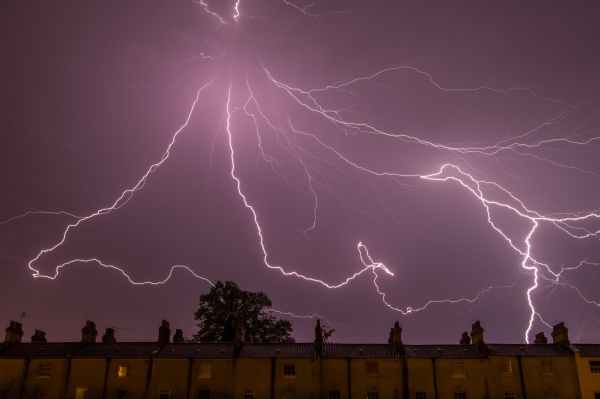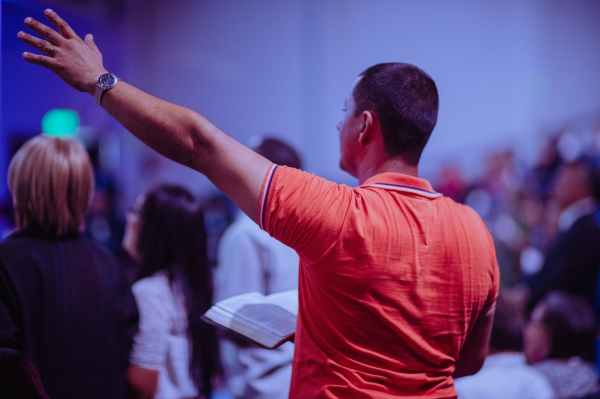
I’ve been reading through the books of Genesis lately, and I was struck anew by the story of the Flood. God caused it to rain for 40 days and 40 nights, and the floods raged for 150 days (See Genesis 7). But the description of the flood does not focus only on rain– instead, it talks about God opening the “springs of the great deep and the floodgates of Heaven” (v. 11).
There are some who argue that before this time, there had been no rain on the earth (see Genesis 2: 5-6). The Bible is not clear whether there was rain after Adam and Eve were expelled from the Garden of Eden, but it appears that rain was unnecessary in the wonderful Garden itself. God had provided rivers and springs to provide water, and there were mists that rose and settled. If this was still so in Noah’s time, then the falling rain would have been terrifying in itself. Things that fall from the sky can inspire both fear and praise.
Rain is generally considered a blessing–we need rain in its season, in showers of good quantity, to water crops, provide nourishment for trees and soil, and to replenish springs, pools, lakes, etc. And rain is part of the water cycle…moisture evaporates and rises (like the mists of old) into clouds, where it is held in storage until it rains back down to the earth. Water is a resource, but it is meant to be replenished, renewed, and reused. “New” water is not created, so much as recovered from steam or taken from its current source.
Not so with God’s blessings and His mercies. They are “new every morning.” (Lamentations 3:22-23) He sends them down like rain or snow, letting them fall in refreshing showers, reminding us that even when we are separated from God, He still loves us, watches over us, and delights to lavish His gifts on us.
God sends rain–God sends blessings. Whether we feel blessed often depends on where WE are. Are we safe in the Ark? In a house built on the solid rock of faith and dependence? Or are we living in perilous ignorance of God’s power to save and sustain us?
Throughout the story of Creation, a certain phrase gets repeated– “And God saw that it was good..” God’s purpose and will are always to see the good. At the end of the creation process, God saw that it was “very good.” He placed mankind in a garden filled with goodness, peace, safety, plenty, and promise– a garden filled only with Good.
The one tree that was forbidden to mankind was the Tree of the Knowledge of Good AND Evil. Humans chose to know and see and experience evil in an effort to be “like God.” We still recognize Good; but now we are surrounded by evil– lies, greed, hatred, selfishness, bitterness, addictions, compulsions, disease, destruction, and death. We cannot go back to the beginning. We cannot just close our eyes and deny, ignore, or excuse evil in our midst. And we cannot control the consequences of our evil choices. We cannot stop death or reshape the past.
But we must make the choice to look for the Good– to look to the author and creator of all that is good, and true, and noble, and holy. It can be very difficult to do. The voices of this world will continuously call out all that is bad– all our past hurts and present difficulties; all our guilt and shame; everything that is ugly, diseased, unjust, lop-sided, dying, and ruined. And our knowledge of good AND evil will tempt us to justify evil means to “good” ends…
God, who sees the end from the beginning, has looked through time and space, and pronounced His creation “Very Good.” God who redeems and resurrects, renews and transforms, has promised to make all things new in His time. God not only has the knowledge of Good and Evil– He has the power over both. Our efforts to find Good on our own will end in heartache, failure, guilt, and shame. God knows we cannot redeem our own actions, let alone the legacy of evil we’ve inherited from the past. But the Good News is that He has done it for us! Just as He saw that everything was “Good” in the Garden of Eden, He sees the end result of His redemption– and it is “Very Good.” We don’t have to keep trying and failing to achieve what only God can do. We DO have to trust in God’s ability and His willingness to keep His promises!
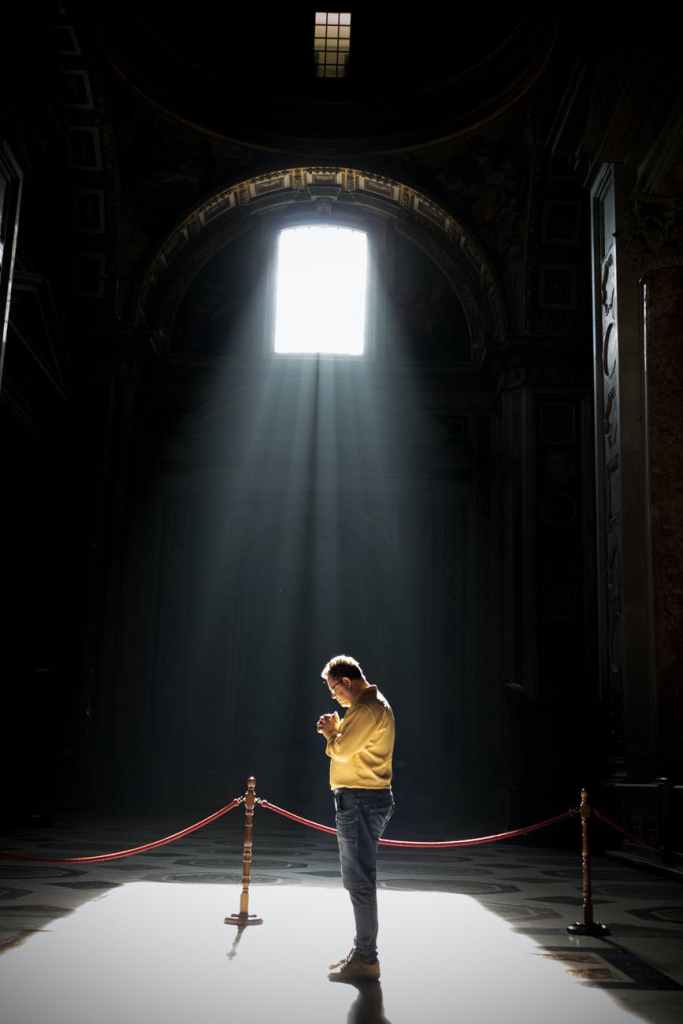
Through prayer, we carry all that is wrong to the One who can make it all “right.” And, through prayer, we praise God for all the Good– the good that God has created in the past; the good that we choose to see in the present; and the good He has promised that we cannot yet see.
I’ve been reading about Joseph in Genesis. He was the favored son of Jacob (Israel), and he was a dreamer. His dreams were spectacularly unpopular with his older brothers, and got him into a world (or a well) of trouble. (See Genesis 37)
Joseph’s dreams were sent to him from God…they weren’t just wishes or imaginings. But they were grand. Joseph had a dream that all his brothers (represented by bales of wheat) bowed down to him. Later, he dreamed that his entire family would bow down to him. He was just 17, and full of the arrogance of youth. His jealous brothers were so outraged, they plotted to kill him. When an easier opportunity arose, they sold him into slavery, instead. (See Genesis 39-45)
Joseph’s dreams seemed to mock him when he arrived in Egypt as a slave. And after spending years building up a sterling reputation with his master, his dreams were dashed again. Falsely accused and unable to defend himself, Joseph ended up in prison. Who would ever bow down before a convict and a slave?
Joseph could have become bitter and angry. He could have given in to the frustration of serving those who were willing to let him do all the work and take on all the responsibility, while they got all the credit. But Joseph dared to dream– not the dreams of an arrogant 17-year-old, but the dreams of an honest and God-fearing man. He dreamed that his actions and attitudes mattered– even as a slave; even as a prisoner. He dreamed that God could and would rescue him and vindicate him. He dreamed that God had a purpose for his life– one that depended on Joseph being the best man he could be.
The Bible never records Joseph having visions and dreams in Egypt. But because Joseph had experienced grand dreams as a youth, he was sensitive to the dreams of others. He could have ignored the dreams of Pharaoh’s cup bearer and baker in prison. He could have sneered and laughed at their dreams. He could have told them all about his much grander dreams of old. Instead, he was ready to ask for God’s wisdom to help others interpret THEIR dreams. And in doing so, God gave Joseph the miracle of a dream fulfilled. Along the way, Joseph received life lessons in patience, humility, responsibility, management, integrity, and leadership. Joseph’s brothers–coming to seek grain!– bowed down to him, just as he had once dreamed they would. But they didn’t bow to him as a kid brother; they bowed before Pharaoh’s agent and the second-most powerful man in the entire known world. They bowed before a men who held the kind of power none of them had ever dreamed of. They bowed before a man they might have killed– except for God’s plan. Joseph was sent ahead, trained in the art of management, and perfectly placed to save thousands of lives.
Sometimes our lives seem like a waste– all our dreams have been shattered, either by circumstances or by our own bad choices. But God can take our most cherished dreams and redirect them into something amazing. He has a purpose for your life. It may not seem grand, like Joseph’s youthful dreams, but in God’s hands, it may have an enormous impact. Some days, it may seem like we’re living through a nightmare, but God writes the ending– and He’s already there!
*Warning– The following poem is a work of fiction. The first part of this post is meant to reflect emotions that may be associated with depression and suicide. The represent things I have heard, and some things I have said…
Do not ask me, “How are things going?” Things go on around me. Things happen at me. Things are not going– of if they are, I am not going with them…
Do not ask me, “Are you ok?” I will say, “Sure, everything’s fine.” Not because it is; not because I am, and Not because I care whether you believe me. It is what I will say because it gives you permission To feel good about asking, without actually having to Share the pain and fog and futility of my honest answer.
Do not ask me, “How are you doing?” I am not doing– not much of anything. I live surrounded by unfinished tasks– Stacks of unwashed dishes and piles of dirty laundry; Unpaid bills and unopened mail. I forget to eat or brush my teeth; I have trouble finding the energy to remember how to Smile, use polite words, look up, function…
How do I pray for someone like this? How do I pray AS someone like this?
Depression is devious and deadly. It impacts thousands of lives, and takes thousands of lives each day. It is easy enough for me to say, “Snap out of it!”, or to blame the person who chooses to think and act negatively. After all, attitude is a choice. We choose to look at the positive or negative in life, and no one else can choose for us what to think or how to feel.
What we can choose– all of us– is to turn our focus on God and away from the negative. I cannot rescue someone else from their own emotional demons; I cannot save myself with “positive” thoughts. I CAN cry out to the one who loves me more than I love myself– even on my best days–that HE would transform my thinking, and bring light into the darkness of those who cannot see past the fog and mire of their own gloom.
And I can stop asking the surface questions– “How are you?”– prying and digging without being prepared for the raw ooze and festering pus that comes with honesty. Those questions may be well-meant, but they often come without context or conviction. They can become a polite way of skirting the obvious– we EXPECT the reassurance that everything is fine; and when it isn’t, we feel obligated to come up with a quick cure for a problem we haven’t fully diagnosed.
Depression is scary– both for those who experience it and those who encounter it in someone else. Ignoring it, covering it up, or trying to force it into the background doesn’t help. Nor does it help to wallow in it, trying to micro-manage it or hyper-spiritualize it.
The same God who listened to Elijah begging to die just after his momentous victory over 450 prophets of Baal (1 Kings 19: 1-14); the same God who listened to David in exile, Jonah from the belly of the whale, Moses in the midst of rebellion and exhaustion, and Job from the ash heap– He listens to us in our weariness, our grief, our confusion, and our depression. This is the same God who Himself experienced the agony of Gethsemane (Mark 14:32-42), and expressed a soul “overwhelmed with sorrow to the point of death.”
If you are struggling with depression, even if you question whether God is listening, you can still pray. God will never ask, “Are you ok?”– He already knows. Moreover, He already knows the best that He has for you.
If someone you know is struggling with depression, PRAY! But don’t stop there. When Elijah was depressed, God sent food and water. When Moses was struggling with the entire nation of Israel in the wilderness, God sent food and water– and wisdom from Moses’ father-in-law. Practical help, positive reminders, and consistent care DOES make a difference. I cannot begin to tell how many times a random smile or compliment has helped stem the tide for me. Someone I haven’t seen in awhile who doesn’t just jump in asking how I’m doing, or how I’m feeling, but instead comments that it is good to see me–someone who admits that they have struggled, and found grace and healing– someone whose primary goal is not to “check up on me,” or “fix me,” but rather to interact and connect and to be “present” with me.
Losing someone to suicide is horribly painful, and it is tempting to carry a load of guilt and unanswered/unanswerable questions. PRAY! And then PRAY some more! God won’t send easy answers; He won’t take away the pain of loss; though He will provide healing and grace. But God will do as He has promised– to BE with us, no matter what, and to give us a peace that passes all understanding. God never punished the people in the Bible for feeling depressed, or for crying out in despair. God didn’t tell them to “Snap out of it,” or to “Get over it.” But neither did He coddle it. He did not rescue those, like King Saul, who fell on their own swords rather than falling on their knees.
Please pray– but don’t ignore practical help. Even simple steps, like taking a shower, paying attention to sleeping, eating, and drinking habits, making sure you move/exercise/stretch throughout the day, can help. Ask for and accept help– true help–and beware of asking for “substitute” help that will enable you to continue with unhealthy thinking and behavior.
I keep a prayer journal. In it, I like to write the names of people I know and pray for– family, friends, neighbors, etc. For every day of the year, I have a list of people who are celebrating birthdays or anniversaries (if I know about them). And I also have a space where I list specific requests related to health or suffering, needs, grieving, and more.
But many times, I also get generic or “unspoken” requests–no names or specific details. And for every day of the year, I also have a place or region– a city, state, province, nation, continent, ocean, desert–for which I pray. Sometimes, this can be awkward. I don’t always know for whom I am praying, or for what outcome…should I pray for peace?..prosperity?..courage?..the weather?..the government?..
So what is the point? Why not stick to more “focused” prayer? Why not pray for those things with which I am most familiar? Most comfortable? Most able to make or see a difference?
Because God calls us to pray. And He calls us to pray both for those people and things we know well, and those we can only hope to trust to Him. I don’t have to know WHY I am praying for Albania (beyond the fact that it is on tomorrow’s page of my prayer journal). I don’t have to know who lives there, or what the needs are. I don’t have to know, because God knows, and I am trusting HIM to know the who and the why, the how and the when.
The other day, I was reading in Genesis– the story of Noah, and the Ark. The Bible introduces Noah by giving us a genealogy: a list of the descendants of Adam through to Noah. And there is a curious side story about Nephilim, and giants, and wickedness. But there is something noticeably missing. The women’s names. Even in the story of Noah that follows, Noah and his sons are named. But not the wives…we know they are there in the Ark. We know they were saved from the flood. We know they were crucial to the survival and future of mankind, but there are no names. At other times throughout the Bible narrative, there are seemingly endless lists of names of people we are likely to forget–names like Peninnah (1 Samuel 1:2), Unni (1 Chronicles 15:18), Shelumiel (Numbers 10:18), Palal (Nehemiah 3:25), Tryphena (Romans 16:12), or Onesiphorus (2 Timothy 1:16).
Names are important to the Lord. He knows each and every person’s name before they are even born. He knows the number of hairs on each person’s head (even the ones that used to be there!). But it is not necessary for US to know every name, every need, or every situation in order to lift it before our omniscient and loving Father.
So I will continue to pray for the nameless and the unknown. I will lift up unspoken and unformed requests to the God I DO know.
Another reason I continue to pray for the nameless is that it keeps my focus outward. One of the drawbacks of the modern and post-modern world is that the “smaller” our world becomes, the smaller our focus. I can connect, via internet, to people around the globe. I can look up statistics for any country or region; I can see news reports and video uploads in real time from nearly every corner of the world. But it can be frightfully easy to turn my focus on myself and those immediately around me, to the exclusion of those whose names don’t show up on my “friends” list, or those whose faces get lost among the thousands of videos, and Facebook Posts, and Instagram shots. It can be deceptively easy to depend on what I can “know” from a computer screen, and not to depend on what God knows to be true.
Let’s open our hearts and minds to pray for the nameless among us– near and far. They are not nameless to God, and they are precious in His sight. And somewhere, someone may be praying for “nameless” people in our nation, or city, or region– US!
This year is winding down, and many people are ready to say, “Amen!” It was a difficult year for many, one filled with upheaval, disease, uncertainty, and fear. We are ready to say, “Goodbye, and Good Riddance!”
But when we pray, and we say, “Amen,” it doesn’t just mean “the end,” or “goodbye”. Amen means, “let it be so” or “so be it.” It doesn’t just mean that we are finished speaking to God for the moment. It means that we are giving God the final word– we are turning over all our thoughts, our requests, our praises, our worries, and our questions to God and leaving them in His capable hands.
And so it is with the year 2020. We are not sending 2020 on its way, attempting to bury its memories or remove it from history. Even in the pain and uncertainty, there were blessings, and lessons learned this year. But it is time to say, “Amen!” Even so, Lord Jesus, let it be as YOU will. Whatever losses, whatever struggles, whatever blessings we have faced this year, let it be to Your Glory and Honor. And let us accept and even embrace the new year, not just for its difference from the past, but for the plans and purposes You have already put in place. Finally, let us be thankful for the year you have given, and the fact that you have been with us every step of the way, no matter how steep or slippery the road. AMEN!
God is faithful. He is steady, and kind, and good– no matter what temporary circumstances we face. Nothing that happened this past year took our Lord by surprise. Nothing escaped His notice. He did not turn His face away; He did not make a mistake, or forget any of His promises. His timing and His ways may not be the same as ours, but His purposes are eternal and eternally perfect. We can rest in peace and confidence because He is Sovereign and Holy and His mercy endures forever! (see Psalm 136).
I know several people who had a very Merry Christmas this year. Some of them flew to exotic locations and spent Christmas on the beach, or in a big city with lights and dozens of family members. Some of them spent a cozy Christmas in a cabin with roaring fires and glittering snow-covered trees, eating sumptuous meals and unwrapping expensive gifts.
But most of the people I know spent a Christmas that wasn’t “post-card” perfect. Some of them were alone in a small apartment with no presents and no heat. Some were working at a job they hate because they had no other option. Some were grieving loved ones lost in the past months. Some of them are facing economic mountains– debt, job loss, medical bills or taxes they cannot pay, no money for rent or groceries… Some are battling cancer or alcoholism, anger, or fear. Some are estranged from their families, or separated from loved ones because of COVID, or deployment, or divorce. And some are facing persecution, starvation, homelessness, disease, or war.
Christmas comes, whatever our circumstances– and so does the Christ Child. Jesus didn’t come to the earth to bring us all “better” circumstances or worry-free holidays, but to deliver us from eternal death, and equip us to endure the circumstances we face in life. Jesus himself came in chaotic and stressful circumstances, and He came, knowing that He would face rejection, hatred, injustice, and death on a cross.
There are millions of people who spent a “Merry” Christmas and missed the whole point. Some of us indulged in a gift-giving frenzy that left others in the cold. Some of us allowed envy, fear, greed, or bitterness to color our Christmas. In the process, many of us lost sight of the true gifts of Christmas– Peace, Joy, and Goodwill. In fact, “His divine power has given us EVERYTHING we need for a godly life through our knowledge of Him who called us by His own glory and goodness.” (2 Peter 1:3)
And these gifts are not temporary, like earthly Christmas gifts. They are always available, and they never break, expire, or grow dim. My prayer for this year(and the year to come) is that we all may find–and share!– these eternal and astounding gifts, this “inheritance that can never perish, spoil, or fade…kept in heaven for you” (1 Peter 1:4)
Christmas Day may not always be merry in this life, but because of Christmas we can face an eternity that will never disappoint, and we have a living Hope that can carry us through even the darkest hours!
Every year, we celebrate the birth of Emmanuel– God With Us. It is amazing to consider the Love of God that brought Him from His Heavenly throne to a lowly manger stall, the King of Glory contained in the tiny body of a sleepy infant.
But we should be careful not to miss the rest of the story. As wonderful as it is to think that God would love His creation enough to visit among us, to “taste” life as a human, the story gets gloriously magnified as Jesus leaves the manger to enter a ministry. Jesus didn’t just live among us, He healed, taught, laughed, formed friendships, and served among people– many of whom scoffed, scorned, and rejected Him and His message.
And His message was this: God wants– in fact He passionately yearns– to restore the relationship WE have broken. Jesus didn’t come to “taste” human life– He came to GIVE His life as a sacrifice for those who didn’t deserve it, to extend forgiveness to those who had no right to ask for it. The Holy and Perfect God became the guilt and shame of Sin, so that we could be reconciled to Him. He accepted the penalty of Death, so that we could be given eternal life.
This miracle of reconciliation can be difficult to understand. I sometimes get “stuck” in the weight of my past–I know that Christ offers forgiveness, but I sometimes act as though the penalty hasn’t been removed; only suspended. But that’s not what Jesus taught. Like a leper cured of leprosy, I am clean–no scars, no stains, no relapse–all traces of my disease removed. In this world, I will still feel the sting of the consequences of Sin– betrayal, sickness, injustice, even death. But death is no longer my destiny; it is a temporary rest stop on my way HOME.
Jesus didn’t come to “taste” human life; He came to “taste” death– and He came to destroy its power, so that we could know true Life, and live it to the fullest!
Jesus was born in obscurity– yet he was also born during a Census year…
 And it came to pass in those days that a decree went out from Caesar Augustus that all the world should be registered. 2 This census first took place while Quirinius was governing Syria. 3 So all went to be registered, everyone to his own city. 4 Joseph also went up from Galilee, out of the city of Nazareth, into Judea, to the city of David, which is called Bethlehem, because he was of the house and lineage of David, 5 to be registered with Mary, his betrothed wife, who was with child. 6 So it was, that while they were there, the days were completed for her to be delivered. 7 And she brought forth her firstborn Son, and wrapped Him in swaddling cloths, and laid Him in a manger, because there was no room for them in the inn.
This is a Census year in the U.S. (something that has largely been forgotten in the wake of the COVID pandemic.) I actually worked for the Census Bureau for a few weeks this year, doing follow-up interviews for addresses which had not responded for various reasons. Census taking is much different now than it was in Jesus’ day. I had a script, and a smart phone, and several different forms to fill out or hand out to explain what we were doing–one form contained information in at least 14 different languages, and all of them had phone numbers and web addresses where people could “respond” electronically without ever leaving the comfort of their living room, let alone traveling over dangerous hills and trying to find room at crowded inns. I was the one who had to travel– mostly around my small town and within a 20-mile radius. One interview required me to travel 100 miles; another required me to utilize my ability to speak and understand Spanish. Otherwise, the interviews were simple and straightforward. Except when they weren’t.
“Everyone Counts,” the Census Bureau told us, and I did my best to get names and ages for everyone at every address I visited. But many of the addresses were abandoned buildings– even demolished. Others were summer homes or vacation rentals–I had to be careful not to count the same people twice! Often, I could tell that people were living at the residence, but either they weren’t home at that time or they would not come to the door. Some houses required several attempts before I got any response, and it wasn’t always positive or cooperative.
I imagine the scene in Bethlehem, though lacking the technology and ease of travel of our modern age, wasn’t so very different. There were people who wanted to do their civic duty; those who were annoyed at the inconvenience and general bureaucratic chaos; those who hated the Roman Government and everything it represented; and some who just wanted to get it all over with and go back to “normal life.”
We know that Joseph was called up to go to Bethlehem because is was his ancestral home. And we know that Joseph would have been counted as the head of the household. But is it possible that Jesus was counted in that census? That he was numbered among his people and with his family? That the God of all creation became a simple hash mark among thousands of others that year? “Jesus, son of Joseph of Nazareth.” “Infant son.” “Male child.” Jesus was counted. But He was also lost in the shuffle; discounted and ignored.
10Â He was in the world, and the world was made by him, and the world knew him not. 11Â He came unto his own, and his own received him not.
John 1:10-11 (KJV via biblegateway.com)
This season, it’s easy to feel left out, discounted, passed over. This year, especially, it can be lonely and discouraging as we look out on the world from lockdown, or look at faces covered by masks, unknown or unrecognizable. It’s easy to feel that no one sees us. Rest assured, Jesus knows what it is like to get lost in the numbers. He knows what it is to be discounted and misunderstood, rejected, and scorned.
And He knows exactly who you are and who I am– better than we know ourselves! We count! Not because of who we are, but because He is the creator and author of all life. No matter where you are, no matter who has rejected you in the past, no matter how dark and grim things look– God sees you; God loves you; God has taken you into His count. He doesn’t need a census count to find you, and you can’t get “lost” or hide in the crowd.
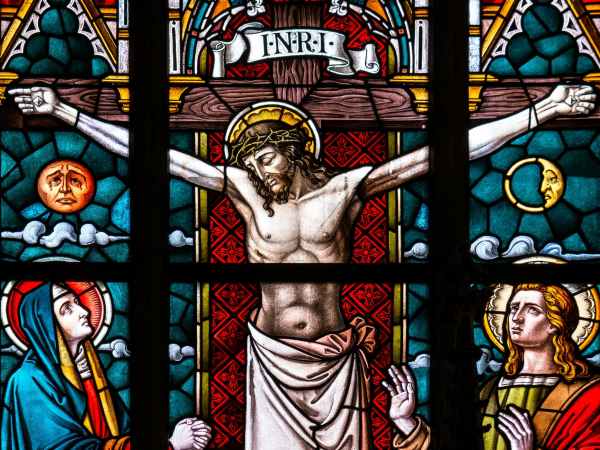
Joseph and Mary traveled dark and dangerous roads to reach Bethlehem before the birth of the Baby Jesus. The wise men made a long journey to see the newborn king. The entire nation of Israel spent more than 40 years wandering in the wilderness. Abraham, Jacob, Jonah, the Apostle Paul…there are many tales in the Bible of long journeys to unknown destinations and unknown outcomes.
Traveling can be exciting and adventurous, but it can also be filled with detours, setbacks, and hardships. Traveling means being away from our comfort zone, our “safe” place– even if our “safe” place isn’t really safe. Travel often means going into the unknown, especially if we travel alone or travel against our own will. Where does this road lead? Who will I meet along the way? Where will I stay at night? Will I get lost? Will I get delayed? What if I get sick or hurt or attacked? Will I find my way back home? Can I feel safe in a new home, among unknown people and circumstances?
Jesus was born “away from home.” The first people to greet him were not grandparents or giddy relatives or neighbors, but shepherds– unnamed in scripture, unknown to his parents. In fact, the Bible doesn’t say much about Jesus being close to an extended family– his own small family always seemed to be on the move! Later, Joseph was told to take Mary and the child to Egypt; another long and unexpected journey, another long and winding road.
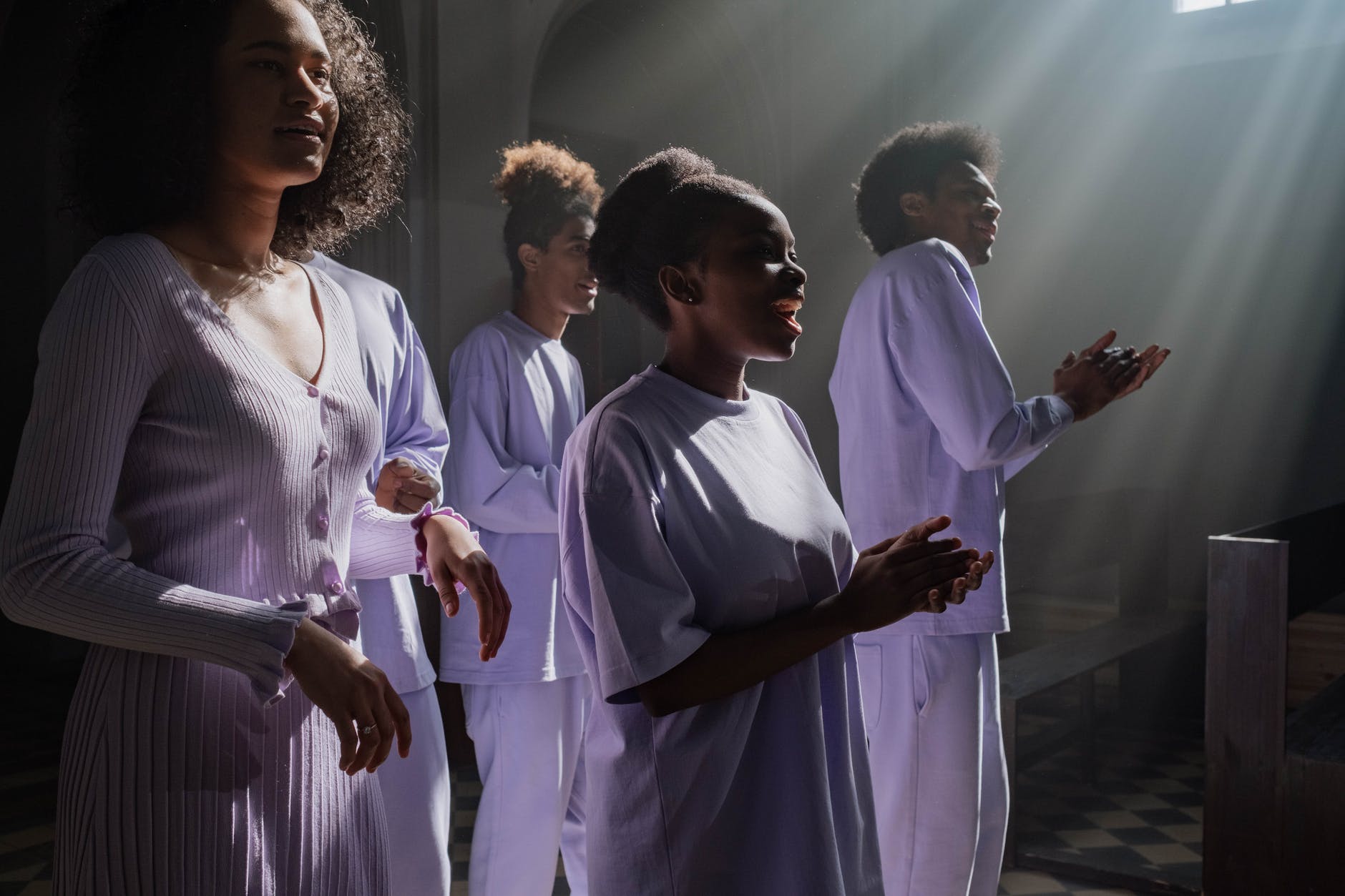
As an adult, Jesus was also “on the road” for much of his ministry. Long dusty roads leading to Galilee, or Jerusalem, Jericho, or Bethany.
At times, it can seem like our “roads” in life are long, winding, dusty paths leading to strange new places– lonely, rambling trails or busy superhighways taking us where we don’t always want to go. But we don’t need to fear traveling– even if we have to walk through the “valley of the shadow of death,” God is always with us. Just as He was with Mary and Joseph on the long road to Bethlehem, where there was no room for them in the inn. Just as He was with Jesus on the lonely path in the Garden of Gethsemane. Just as He was with Jonah in the belly of the big fish!
As we await the Advent of the Christ Child this year, it is likely that most of us have been on a long and winding road. Though many of us have been prevented from physical travel to foreign lands, we’ve traveled on an emotionally and even spiritually exhausting road in 2020. Chaos, corruption, COVID, elections, “executive orders”, economic collapse, lock-downs, lawlessness, and loneliness–we seem to have traveled a lot of miles, and most of them have been perilous and unfamiliar. But God has a plan, and a destination. The journey may not make sense right now; it is not the journey we would have planned; not the journey we would have chosen. But let us follow it to Bethlehem– to the Manger– to the Cross– and finally, HOME!