I don’t think it’s any accident that God placed Adam and Eve in a garden, or that Jesus used so many farming metaphors in his teachings. There are a lot of Biblical lessons to be learned in gardening and farming–lessons about living, about relationships, and, of course, about prayer.
Start by preparing the soil. No good crop comes from randomly throwing seeds up in the air and leaving them untended. We cannot expect our lives to produce peace, love, patience, and joy if our hearts are hard, unbroken, and unable to accept God’s mercy, wisdom, conviction, and discipline. We cannot expect friendships or family ties to grow without time, effort, and vulnerability. And prayer requires faith and a sincere desire to meet with God–to listen, learn, and draw near. https://www.biblegateway.com/passage/?search=Hosea+10%3A12&version=ESV See also https://www.biblestudytools.com/bible-stories/parable-of-the-sower.html
Plant seeds! It seems almost too basic to list, but how many of us (and I count myself) have a tendency to hold on to our faith, to the wonderful promises of God, to the grace He has given, to the love we should be sharing with others? How many opportunities do we lose because of fear, busyness, or self-interest over the interests of others? Today will soon be yesterday– it will never return to give us another, better chance to make a difference. Small steps taken are better than grand plans that never come to fruition! ” Whatever you do, work at it with all your heart, as working for the Lord, not for human masters.” Colossians 3:23 Pray boldly, pray deliberately, pray consistently.
Seek (and give) nourishment. Just as seeds and plants need light and water, we need to take in the nourishment of scripture, meditation, prayer, and fellowship. We need to spend time with the one who is “the light of the world”, and “the living water”. Even so, we will experience seasons of drought and shadow. We need fellowship with others who can keep us in touch with the true source of light and life– and we need to be there for others in their time of need.
Expect a harvest–but expect some surprises, too! God’s ways are not our ways (https://bible.knowing-jesus.com/topics/God~s-Ways-Beyond-Human-Understanding) God often chooses to answer our prayers or alter our circumstances in ways that defy or exceed our expectations. God never answers our prayers only to gratify us in the moment– His plans are mysterious and eternal. They are also righteous and perfect and just.
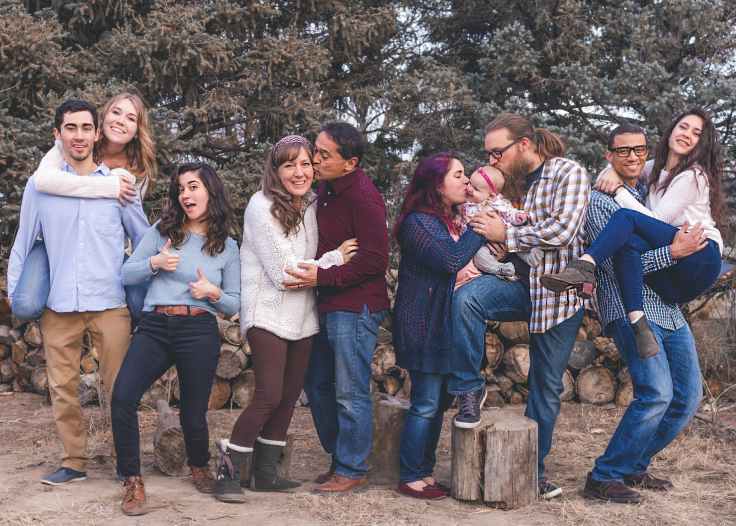
Do your friends pray? Do you pray for your friends and neighbors? Do you pray with your friends? Prayer is often seen as a private and very isolated activity– just you talking to God. But prayer is much more. Prayer can bind people together in a common purpose. It can encourage and embolden others as we pray together, share burdens and blessings, and seek God’s wisdom on their behalf.
Conversely, when our friends don’t pray, or discourage us from spending time in prayer, we can become weak and lose the fullness of joy that comes from a rich prayer life. When Jesus walked among us, He spent time with people– sinners, self-righteous religious leaders, friends, and strangers alike. And He often went away and alone to spend time in prayer. But He also made a habit of taking a few key friends with Him; friends who would “watch and pray” when others might have distracted Him with their questions or doubts. Throughout the Bible, there are numerous examples of others who sought out friends and companions to join them in prayer.
There is a lot more I could write about this concept today, but I think it is more important to act on it. I have a journal full of names, places, and situations that require prayerful attention– people battling cancer or depression; cities facing riots and economic upheaval; families in the midst of divorce or other crises. And I have friends who share my concerns and who can join me in praying (even remotely) for them.
If you have friends who pray– connect with them and pray for and/or with them today. If you don’t– pray that you will find companions who will come alongside you as you make this journey to pursue a life of prayer. Look for opportunities to join a group– in person, or on-line–that shares prayer requests (and answers to prayer!) Best of all, pray to and with Our Father, who will never leave us or forsake us, who always listens, and who has given us the constant companion of the Holy Spirit to strengthen and encourage each of us.
One of the reasons I began a blog about prayer over eighteen months ago was in reaction to a scathing op-ed article about prayer written in the wake of a mass shooting. Well, here we are again. Two highly publicized (and several “smaller”) mass shootings occurred over the last week in the U.S., and the outrage and anguish is overwhelming and completely understandable. The senseless violence and subsequent loss of life stops us in our tracks. Why? Why would anyone do this? How? How could this happen? In the wake of such evil, millions of people rush to distance themselves from such evil; many of them resort to angry protests and calls for action. Many point their fingers at this leader, that group of people, that philosophy, that industry–any entity (other than oneself) that can be held responsible and made to “pay.” Many offer earnest condolences for the families of the victims– often with the phrase “thoughts and prayers.”

But what good are any of these responses? Nothing we say or do can turn back time and undo the events of the past week. No amount of protesting, legislating, avenging, or moralizing will guarantee that everyone lives in peace and safety as long as evil lurks in human hearts– whether by vigilante gun violence, war, terror attacks, economic and political unrest, rioting, looting, domestic violence, brutality, assault, murder, or suicide. “Banning” guns (or “assault weapons”, “military-style” weapons, etc.) sounds like a sensible action to take, but it is not practical in the face of evil people who will not follow the law, and corrupt governments who will not enforce the law, or worse, who use their power to oppress their own citizens.
Finding, and even punishing a scapegoat may make us feel morally superior and bring a false sense of closure, but it will not break the cycle of anger, hatred, injustice, or lack of respect that is at the root of violence.
But there is something equally repugnant about hearing the phrase “thoughts and prayers”, no matter how earnestly it may be expressed, in the wake of inhuman tragedy. The “thoughts and prayers” of strangers have no warmth, no solidity, no promise, and no strength. They are wisps and vapors of selfish and graceless bystanders, who want to ward off the evil that has befallen someone else. They are nothing more than a pseudo-spiritual appeasement offered to the nameless, faceless fates.
And the greater tragedy is that such empty phrases, expressed as reactions to great evil, cheapen the very real power that should be found in the pursuits of thinking/meditating and praying.
Prayer is not a knee-jerk reaction to bad news. It is not a gesture meant to signal to others that you are beyond the touch of whatever forces have just hurt someone else, or that by your thirty second of piety you can alter the consequences of a catastrophe or change the course of the future.
Where were the “thoughts and prayers” of others two weeks ago? Where will they be tomorrow or next week? What quality of “thoughts and prayers” go out to the families of victims whose names we have not even bothered to learn? Such superficial public expressions, sent with seven teary-eyed and five or six high five/praying hands emojis, mean very little to anyone except the sender. They change nothing from the past, and offer nothing going forward.
I am as guilty of this kind of meaningless virtue-signaling as anyone. I want to feel as though I can, by such empathetic expressions, encourage and strengthen those who have been touched by horror, tragedy, survivor’s guilt, trauma, grief, etc. But I can’t. Nor can my anger, frantic attempts to “fix the world”, or brilliant analyses of all the root causes of violence prevent the next bombing, drive-by shooting, hijacking, arson, political uprising, or disappointing election result. I cannot change the hearts or minds of those with whom I disagree. I cannot “make” a better world.
But that is why I write this blog. It is through a lifestyle of prayer– real prayer, difficult and sometimes agonizing prayer, joyful and grateful prayer, pleading and gut-wrenching prayer, consistent and obedient prayer–that I engage with the only One who CAN bring hope, justice, change, renewal, and salvation to this world. And it is through a lifestyle pursuit of prayer–daily seeking God’s face, asking for His wisdom, accepting His mercy when I fail, reflecting on His character, acting in obedience–that He can change me. That power, that hope, and that renewal is available to ANYONE who will ask. It sustains us when tragedy strikes, and it empowers us to offer far more than empty “thoughts and prayers”– it causes us to pray, not just after a tragedy, but unceasingly– not just for our own comfort and safety going forward, but for the well-being of our enemies, not just for those who look like us or think like us, but for those who scream at us and tell us to stop already with the “thoughts and prayers!” That power causes us to seek peace where there is hatred, justice where we find corruption, and humility when we are surrounded by narcissism.
And if we are not doing those things– if we are not tapping into that power– we should be taking a closer look at those “thoughts and prayers” we are hiding behind.
The prophet Jeremiah lived in violent times. His city was besieged by the Babylonians, and his king was a prisoner in his own palace. God had sent messages of judgment and punishment for the entire nation. Jeremiah prayed diligently, and spoke out against the injustice, pride, and idolatry all around him. In response, he was arrested, beaten, thrown into a pit, and abandoned. God even told him to stop praying for his countrymen, because they were unwilling to accept the truth about their condition, or prepare for the punishment to come. But in the middle of the violence and bad news, God offered hope and promises of restoration, justice, renewal, and peace. He also gave this warning to Jeremiah, that he should stand firm– he should, by his example of consistent obedience and hope– influence others, NOT let himself be influenced by the anger and arrogance of those around him.
Lord, I need to stop offering cheap thoughts and empty prayers that do nothing to honor You and little to help others. Give me the strength and grace to stop reacting to tragedy by reflecting the anger and self-righteousness around me. YOU are my hope, and the best hope I can offer to anyone else. Help me to serve others in truth and love, not judge them, dismiss them, or honor them above You. Help me to seek and stand for justice that is consistent with Your character and Your word, even if I stand alone.
I wanted to take a break from writing about Biblical characters and their prayers to revisit an important aspect of our prayer journey. Prayer can be formal, informal, structured, rote, spiritualized, meditative…it can be done silently, in tongues, standing, kneeling, or prostrated. It can be public or private. But it should continue throughout our days and years– it should be a natural and vital part of every day, permeating every event and activity.
That doesn’t mean, of course, that we stop everything we’re doing and spend our lives in constant bowed-head, closed-eye prayer or reciting psalms and hymns instead of working, driving, eating, sleeping, and interacting with other people. But it does mean having a “prayer attitude”– an awareness that God is everywhere with us and closer than our next breath, ready to communicate with us– a readiness to share our every thought, and listen for God’s gentle whispered response.
I was reminded of this in a strange way just today, when my cell phone started ringing while I was working at church. Cell phones are everywhere these days, and that can be a great thing, or a curse. For many of us, the cell phone is within arm’s length 24 hours a day. Anyone with our number can contact us at any time. Likewise, we can whip out the phone to call, text, take photos, or check email any time during the day or night.
Today, when my cell phone rang, I ignored the call. I was busy with something I considered far more important. In fact, I was disappointed in myself for leaving the ringer “on,” instead of putting the phone on “vibrate” or “mute” mode. But I had to make a choice– leave what I was doing to answer the phone, ignore the call altogether, let the caller leave a message for me to deal with later, or answer the phone and try to do two tasks at once. I don’t like being interrupted by my cell phone, but I carry it with me, because I don’t want to be without the ability to call for help or to get an important message.
We don’t think of carrying our cell phones as an impossible burden. Each day we make choices to use this tool (for better or worse) to keep in touch with family, friends, clients, business contacts, and much more. Sometimes, we resent the way it intrudes on our life and other times, we let it get in the way of our life! In fact, we could (and some of us remember when we had to) get along without cell phones (and internet, and other technologies), but most of us choose to carry our phones wherever we plan to go. Why then, do we not choose to “carry” an attitude of prayer the same way?
God wants to be closer than our cell phone– there with us as we go through our days– ready for us to call on him, or “vibrating” to get our attention when He has a word for us. We don’t always have to be staring at our phone to have it handy. Just having it with us can make us feel more secure and confident as we face an uncertain situation. Similarly, having an attitude of “prayerfulness” will make us more aware of His presence as we face uncertain circumstances.
But we have to make sure that we don’t “mute” the Holy Spirit’s guidance in our lives, or let our prayer life get “drained” by busyness or lack of connection to power sources, like the Bible and Christian fellowship. Nor should we take the power of prayer for granted, grabbing it and stuffing it in our pocket or purse out of habit, without understanding that it is an amazing treasure and a lifeline.
Prayer is so much better than any cell phone, of course. God is never too “busy” to answer our call. There is no need for “cell towers” to get good reception. There are no monthly fees, connection fees, telemarketing schemes, “robo” calls or “phishing” scams. Prayer can’t get a cracked case or get “out of range”, or become obsolete after several years! And God wants us to carry on with our other tasks as we carry Him with us! We can lift up another person even as we are speaking with them or getting a text message from them. We can raise a prayer of thanksgiving even as we get the test results we were hoping for (or ask for strength when the results are what we feared). We can ask for forgiveness even as we become aware of our sin. We can ask for extra grace even as we are dealing with that difficult customer, or patient, or student.. God is always on the other end, waiting to listen and be part of the ongoing conversation of our lives!
For a blog about prayer, I’ve been spending a lot of time doing Bible study on the character of Jacob. But I think there is a huge connection. The stories in the Bible are powerful and important, not because of the human characters, but because, in them, we see how God interacts with a variety of His created people. And that can help us as we come to God in prayer.
When we begin to understand that the “heroes” of the Bible are often ordinary people who encounter Almighty God, we see that little has changed in the course of history. God still chooses to bless and challenge ordinary people– for their own good, and as a witness to others.
In today’s world, we often reverse the importance of the characters in our own stories. Christians talk about “my God” or “our God”, as though God belongs to us or serves us. But the Bible doesn’t speak in those terms. God is not “Jacob’s God” or “Solomon’s God” or “Queen Esther’s God,” or even “Israel’s God.” Instead, He is the God of Abraham, Isaac, and Jacob– the God of Israel. He is pre-eminent. God exists, rules, creates, and acts on His own terms, not ours. And He exists, rules, and acts universally. No person, group, or nation can claim that God blesses them because of who they are or what they have done. Thus, there is no African God or Caucasian God or Chen Family God, or Jean’s God, or Muscovite God, etc. There is only One God– but He wants to be the intimate and personal God of every person on the African continent, and in Moscow, and everyone named Shirley, Clarence, Chen, Smith, Martinez, or Klein. He invites each of us into a personal relationship, but He remains Holy and Unchanging and Sovereign.
The very same God who wrestled with Jacob wants to be your best friend. He also wants to be your King and Lord of your life. When we pray to “the God of Jacob”– we are not praying to “Jacob’s God”. We are praying to the very passionate lover of our soul. He just happens to be the same God who loved Jacob enough to take him through a series of adventures many centuries ago; the same God who promised never to leave him; the same God who blessed him and preserved him and made him the father of a great nation. Just think of what He’s waiting to do for and through you!
The Bible is not a series of stories about super heroes, though it is often taught that way in Sunday School. Instead, it is the story of ordinary, flawed and hurting people who encounter a Holy and Majestic God. Jacob is one such person, and nearly half of the book of Genesis revolves around Jacob’s families– his parents and brother, his father-in-law’s household, and his own wives and children, extending to his grandchildren and even great-grandchildren.
Jacob grew into a man of great integrity and wisdom–a man of power and influence, wealth and consequence. But he was far from perfect, and his family caused him no end of headaches and heartaches. From the bickering and rivalry of his wives and their servants, to the violent clashes of his many sons, Jacob knew very little peace.
It is important to note that, while the “God of Jacob” protected him, blessed him, and gave him a new name, He did not make life smooth and comfortable for him. We are not given great insight into Jacob’s parenting style, but we know that he had a favorite son, Joseph, and that his favoritism caused resentment among the others . Unlike his own father, though, Jacob interacted with all his sons, giving them each responsibilities and training them to work together. On his deathbed, he had blessings for each son that tied in to his strengths and weaknesses. We know that Jacob was highly respected by his sons, and that in the end, they did not disperse and lose contact with each other, but lived together in the land of Goshen in Egypt– even after the time of the famine that drove them there.
Even in a family of blessing, there will always be some level of dysfunction, struggle, hardship, and pain. Favoritism, discord, envy, resentment, unforgiveness– it all starts in families among flawed people living in a fallen world.
So often, we try to present ourselves and our families “in our Sunday best”– we want people to be impressed by our show of piety or “good manners” or “problem-free” family life. We pretend that we never argue, never harbor bitterness, never have tantrums or meltdowns or sarcastic “episodes”. God is not looking for picture perfect families…He is looking for families who are honestly and earnestly seeking Him.
Surely, after his encounter with God, Jacob changed. He was a better man than before. But he was never the “perfect dad”, the “perfect husband”, or the “perfect man.” And his family wasn’t a model of decorum and harmony. But God did not turn his back on this dysfunctional family. He did not disown Jacob or cancel all the blessings He had promised. Instead, he solidified the promise he had made to Jacob’s grandfather and father, creating in Jacob’s sons the twelve tribes that would make up the nation of Israel. Just as Jacob’s family wasn’t perfect, the nation of Israel was never perfect– it still isn’t. But God has chosen to pour out His grace on imperfect people throughout history– it’s His specialty!
If you are experiencing disharmony or even angry clashes with family members– take heart and hope from reading about Jacob’s trials and triumphs. Remember to take your pain, resentment, hurt and worry to “the God of Jacob.” God was with Jacob through all his many struggles, including the heartaches of “losing” his favorite son, losing his beloved wives, suffering during the famine in Canaan, having to move to Egypt in his old age, and watching his sons struggle with their own families and trials. Out of each struggle, God brought renewal, hope, rescue, and promise. And remember, God will not abandon you (or your children) because your family experiences disharmony or you have wayward family members. Others may pass judgment on appearances, but God sees the heart– He’s in the business of fixing that which is dysfunctional– not promoting those who hide behind a “perfect” facade.
It is fascinating to study the life of Jacob. His story is rich with contradiction and confrontation. But it is also a magnificent story of God’s grace, protection, and redemption.
We’ve spent a lot of time discussing Jacob’s relationship with Laban, his uncle/father-in-law, and a man who made Jacob’s lies and duplicity look like child’s play. (See https://pursuingprayer.blog/2019/07/01/jacob-meets-his-match-part-one/ and https://pursuingprayer.blog/2019/07/03/jacob-meets-his-match-part-two/ ). While Jacob learned a lot from this stormy relationship, God was not finished putting Jacob to the test. As Jacob moved his family away from Laban, bringing them to their new home in Canaan, he encountered his estranged brother, Esau. (See https://pursuingprayer.blog/2019/06/28/jacob-the-brother-of-esau/). But, just before the encounter, Jacob encountered someone else. https://www.biblegateway.com/passage/?search=Genesis+32%3A22-32&version=ESV He wrestled all night with “a man”, and he refused to let go until he received a blessing. “The man” touched his hip joint, so it was wrenched out of its socket, and gave him a new name, Israel. When Jacob asked the man’s name, he returned with a strange question: “Why do you ask my name?” He never answered Jacob’s question, but he didn’t need to. Jacob acknowledges that he wrestled with God– he met him, spoke to him, and grappled with him face-to-face– and his life was not only spared, but blessed!
I love this story of Jacob, and it gives me a great deal of hope for many reasons:
Jacob got a new name. This is significant throughout the entire Bible. Whenever someone gets a new name, it indicates that he/she has a new nature, a new future, a new relationship with God. Jacob was named for all the worst of his character attributes– he literally came out of the womb grabbing his brother’s heel, and his name means “heel-grabber” and “cheat”. But his new name, Israel, turns all of that on its head–Jacob “grabbed” hold of God and would not let go! He “struggled” with God, and God promised to be with him in all his struggles; to protect him, to bless him, to be on his side. When we come to Christ in faith, we may not get a new name, but we get a new nature, and a new relationship with God. Christ promises to be our advocate– he will struggle with us, uphold us, strengthen us, and bless us–all we need to do is grab hold of the grace that is offered!
God met with Jacob where he was– literally and figuratively. Sometimes, we meet someone who “struggles”– with every thing and everyone. Jacob had contentious relationships with nearly everyone in his life. He was accused, abused, cheated, hated, passed over, fought over, lied to, and aggravated. God didn’t come to him in glory and splendor– he came and wrestled with Jacob–down and dirty, gritty and unannounced. And when Jacob hung on and kept fighting, God let him. He even “cheated” by putting his hip socket out of joint to end the match. God could have showed up and overwhelmed Jacob with his glorious presence. He could have visited him as he did Abraham–stopping by for a meal and a visit. He could even have appeared in another dream. But he knew Jacob from the inside-out– he knew Jacob’s character and temperament; he knew Jacob’s fears and deepest needs. He grappled with a grappler, twisting and turning in sweaty combat. And when it was over, Jacob KNEW his God. He knew that God would not let go– would not send him away, would not let him sneak away in the middle of the night, would not destroy him. Instead, this God would hold him, struggle WITH him, and bless him afterward. I think we often forget that God is not just Holy and Awesome; he is not just a God who loves in a vague and universal way. God is very personal and intimate. He will engage with our doubts, our fears, our high-spirited, strong-willed natures, and he will embrace us with all the fierceness of death–even death on a cross.
God’s timing doesn’t always make sense, but it is always perfect. Jacob was leaving horrible situation, on the eve of a difficult confrontation with his brother, and, ultimately, on a difficult journey to reconciliation with his father. God didn’t need to give Jacob a pep talk, or a list of do’s and don’t’s. He gave him a new name and a new blessing to replace the past hurts and inspire Jacob to build a new life. Jacob was able to face his brother and father with renewed confidence that God would see him through.
Finally, it is in this story that God literally becomes “the God of Jacob” in a personal and profound sense. God still longs to be the God of __________”– fill in the blank with your own name! If you have been wrestling with God or against God, or just avoiding God, let this be the day that you receive the blessing of God’s grace. It’s yours for the asking. And likely, it will be less painful than Jacob’s encounter!
In the last post, we looked at how Jacob worked for 20 years for his corrupt father-in-law. Jacob has changed from the scheming young man who cheated his brother, lied to his father, and was sent away for his own safety. But that’s not the end of the story…
After 20 years of keeping Laban’s flocks, establishing his family, playing referee to his squabbling wives, and dealing with Laban’s greedy and capricious nature, Jacob is ready to leave. But we have a couple of curious incidents yet to explore in this relationship. In Genesis, chapter 30 https://www.biblegateway.com/passage/?search=Genesis+30%3A25-43&version=NIV we are given a detailed plan by Jacob to develop and increase his flocks. Jacob outlines part of his plan to Laban, and Laban agrees. Jacob’s flocks will be speckled and spotted, while Laban’s will be “pure.” On the surface, it looks like Laban is getting the better end of the bargain, and, as Jacob points out, there will be no way he can “cheat” by claiming Laban’s animals as his. But Jacob’s plan has a couple of twists and turns.
As Jacob follows his plan, he ends up with the strongest and best of the flocks, while Laban’s flocks are weaker. Once again, Jacob uses a clever scheme to advance at the expense of someone close to him. At the beginning of chapter 31, we see the result– Laban and his sons are angry and resentful– they feel they have been cheated, and plan to retaliate. Jacob leaves in the middle of the night with his wives, children, and livestock, planning to return to his father in Canaan. Jacob explains to his wives that his “plan” was inspired by a dream in which God told him what to do to increase his flocks and then told him to return home. https://www.biblegateway.com/passage/?search=Genesis+31%3A4-13&version=NIV
But is Jacob telling the truth? Has he really changed, or is this just another case of Jacob using his wits to get what he wants?
The Bible doesn’t give us direct confirmation, but indirectly, the story seems to back up Jacob’s statements. Though the Bible says that Jacob “deceived” his father-in-law by sneaking away in the night, and not telling him that he was going, it never says that he deceived Laban by separating the flock as he did, or by preparing to return to Canaan. Furthermore, when Laban pursues Jacob, God warns him in a dream to say nothing to Jacob (advice he quotes, but doesn’t actually take)! Laban also confessed (back in chapter 30) that, via divination, he has learned that he was blessed on account of Jacob.
Why am I taking time to dissect this relationship between Jacob and Laban a second time? What else can we learn from this story?
I think there is a great lesson about deception, and how it often backfires. But just as powerful, I think there is a lesson about how God looks beyond our actions to see our heart.
Laban was not only Jacob’s father-in-law– he was also Jacob’s uncle. They shared similar character traits– both were ambitious, clever, and driven to take advantage of any “edge” that might be to their advantage. God did not “choose” Jacob because of any of this– but neither did he condemn him for any of it. Instead, God appeared to Jacob, and Jacob responded in awe, worship, and obedience. God didn’t change Jacob’s nature; his drive to succeed, his innovation, his ambition. But he did change Jacob’s heart–Jacob didn’t leave his uncle in ruins, in spite of the treatment he and his family (Laban’s own daughters and grandchildren!) had received. Jacob used his cleverness to build a strong flock, but he also used it to prove to his uncle that he was not the liar or thief he had been labeled back in Canaan. Jacob listened to God in formulating his plans– both his clever plan to build the flock, and the plan to return home.
Laban, on the other hand, had seen the hand of God at work blessing him on account of Jacob. Years before, he had seen the hand of God leading his sister, Rebekah to be Isaac’s wife. He had seen how God had blessed his daughters. He even saw that his ill-treatment of Jacob, Leah, and Rachel led to a loss of God’s blessing. But at no time is there any evidence that Laban ever acknowledged God, worshiped Him, thanked Him, or obeyed Him. https://www.biblegateway.com/passage/?search=Genesis+31%3A14-55&version=NIV
In their final encounter, Laban accuses Jacob of theft and duplicity– Jacob confesses that he fears Laban, but then, he gives him a blistering rebuke. Laban’s response is a feeble argument that all Jacob has belongs (or should belong) to him– Laban! “All you see is MINE” (emphasis added). He also claims (even after God tells him to say nothing to Jacob) that he has the power to hurt Jacob. Laban is a controlling user– a bully and a manipulator. Laban is a powerful man who is ruthless in using that power to get what he wants. But all that power is not enough to challenge God– the same God who blessed Laban because of Jacob; the same God who warned him not to act against Jacob. The real power does not belong to Laban or to Jacob. Jacob has been learning this lesson–Laban never will. The most he learns is that Jacob will no longer be under his control and submit to his corrupt authority.
Perhaps you have been in a relationship with someone who is controlling and manipulative. Perhaps they have convinced you that they have all the power to keep you enslaved to their manipulation. There are two essential truths you need to remember:
God sees you. He sees the injustices done to you– and your response to them. He sees your heart– even when it is breaking under the weight of oppression. He asks that you trust HIS power and HIS timing as you are going through this deep valley. Abusers thrive on clever lies– that you can’t make it without them; that no one else will help you, love you, believe you…; that their actions are in your best interest…even going so far as saying that they are making sacrifices for you and that you “owe” them. Don’t let their lies overwhelm God’s truth–
God desires you to submit to HIM. Even when the road is tough and we don’t understand circumstances, God is making a way for you, just as He did for Jacob. God allowed Jacob to grow his flocks in spite of Laban’s crooked ways– He allowed Jacob to be both the agent of Laban’s success and the instrument of Laban’s downfall. Submission to God does NOT mean abject submission to an abuser or a manipulator. If God has shown you a way of escape (even running away without warning) or shown you a way to flourish under harsh circumstances– listen and obey!
The Biblical patriarch, Jacob, is known for many things– He was the son of Isaac and Rebekah, and grandson of Abraham. He was the brother of Esau. He cheated and/or schemed his way into taking both the blessing and birthright that belonged to his older brother. For this, he was sent away to live with his Uncle Laban, and told to choose a wife from among his extended family.
Jacob’s life took a dramatic turn when he left his small (but slightly dysfunctional) family behind to begin this new chapter. Growing up, Jacob had been the quiet one, the one who stayed around the house. This was no longer an option. Jacob faced a long journey, and years of work to establish his own family and career. On the way to Paddan Aram and the house of Laban, Jacob had his first encounter with God– the vision of “Jacob’s Ladder” at the place he would call “Bethel.” There, God confirmed his promise to establish Jacob, increase his family, and bless all people through him. No longer was Jacob a second son with only his wits to help him succeed (or cause trouble)– God had promised to be with him and watch over him wherever he may go! https://www.biblegateway.com/passage/?search=Genesis+28%3A10-22&version=NKJV
With that promise and the hope of finding a welcome, Jacob arrived at the well where his uncles flocks were watered. Jacob would take over the work of herding and watering the many flocks of Laban. He worked for the first month without wages–setting a dangerous pattern. After the first month, Laban “generously” offered to pay Jacob, and even let Jacob set the terms! Jacob demanded no monetary wages; he wanted only to marry his beautiful cousin, Rachel, with whom he was deeply in love.
Seven years pass– Jacob has worked for almost nothing but the food he has eaten, and the promise of marriage with the daughter of Laban. And in a scene that seems strangely familiar, Jacob is presented with a feast, and his promised blessing– his wife. But Laban tricks him, substituting one daughter for another. Instead of Rachel, Jacob is bound to her sister, Leah.
When Jacob confronts his new father-in-law, he is given an excuse– tradition says the older daughter must be married first. Laban had seven years to explain this to Jacob, seven years to “break the bad news”, seven years to offer Jacob an alternative. Yet Laban chose to deceive his nephew and use his love for Rachel to get seven years of cheap labor. Worse, he chose to string Jacob (and Rachel) along for another seven years. The Bible gives us a clue as to one ulterior motive of Laban– Leah had “weak” or “delicate” eyes. It is possible that she had been rejected by other men or deemed ineligible for marriage. Without a prospective husband, Leah will be dependent on her father for life. But married to Jacob, Leah becomes one less responsibility for Laban. https://www.biblegateway.com/passage/?search=Genesis+29%3A14-30&version=NIV
Laban gambles his daughters’ fate on Jacob’s character. Jacob could have cast Leah aside easily and forced her to return to her father’s house a ruined woman. He could have treated her as a servant, rather than a wife– he could have beaten her or “given” her to someone else. And Jacob could have decided Rachel was not worth another seven years of labor, or that he could not trust Laban to keep his word. He could have walked away. He could have taken his anger and frustration out on Leah or on the flocks. He could have returned to his father and started another family quarrel.
But this Jacob is not the same as the one who left Canaan. He serves another seven years, marries Rachel, and then works yet another six years for flocks to call his own. All the time working for a man who is greedy, deceitful, capricious, unjust, selfish, and oppressive. He doesn’t complain, doesn’t rebel, and doesn’t cheat, lie, sabotage or steal from this horrible boss and indifferent father-in-law. Instead, he shows that he has been transformed from the young Jacob who caused so much trouble for his brother and father back home.
May we choose to submit today to the God of Jacob, and remember that His promise to Jacob extends to all who trust Him– He will not leave us; He will see us and be with us wherever we go!
The Biblical story of Jacob and Esau has long baffled readers and scholars alike. I don’t pretend to have the answers to some of the tough questions it poses, but I’d like to take a close look at some of them.
Esau and Jacob were twins–the only sons of their parents–born just minutes apart. Yet their personalities, their destinies, and their relationships with God and others could not have been more different.
We spent the last post covering some of Jacob’s character flaws– his early years involved scheming and “cheating” this twin of his. Jacob’s life and actions are the focus of the story, after all. He is the one God chose to establish the nation he promised to Jacob’s father and grandfather. But why Jacob and not Esau?
In many ways, this story echoes that of the very first brothers in the Bible. God chose Abel’s sacrifice over his brother’s. We are not given an obvious reason why Cain’s sacrifice was unacceptable– or why Abel’s was. In this case, God does not give Rebecca a reason why her boys would fight throughout their lives or why the elder son would serve his younger brother. At one point, the Bible even says that God “loved” Jacob and “hated” Esau! So we are left with a big question–Does God play favorites? Does He give His favor capriciously? If so, why bother to worship, serve, and obey Him if, in the end, He has already chosen who will be blessed?
We may never have a full explanation of God’s ways– we are told that they are not our ways; that they are higher and wiser than our ways–but there are several things I want to consider that may shed some light.
God is timeless. He lives beyond the boundaries of linear time, and he sees the end from the beginning. As we read through the story of Jacob, we see his progression, and the changes he makes as he matures and as he encounters the great God of his fathers as it unfolds in time. His beginning shows little promise, but God already sees Jacob as Israel, as the father of twelve tribes of people, as the ancestor of Moses, of King David, and of the coming Messiah. He sees all of this before Jacob is even born! It is part of His eternal plan that Jacob, the cheater, the underdog, the “lesser” brother should become all of these things.
God sees inside the human heart. Esau’s character is not fully shown in this Biblical story, but we get a few clues: 1) Esau despised his birthright– he was flippant about his inheritance, trading it for a bowl of stew. 2) Esau took foreign wives who caused his parents distress–this detail may almost escape the modern reader. We do not tend to live with our extended family, but it was (and in some cases still is) common to the society in which Isaac lived. Esau did not consider his parents when bringing foreign women into the family. They had different customs and different gods. And Esau didn’t learn from the first two wives..when Rebecca commented on the Hittite women, Esau married a daughter of Ishmael, a woman likely to resent her father’s rival (remember Ishmael was banished on account of his resentment of Isaac!) 3) Esau plotted his brother’s death. His anger and resentment over the lost blessing caused him to plot murder. Jacob was sent away, not only to find an acceptable wife, but to keep him safe from his brother’s vengeance. Even though the two brothers later met in peace (Genesis 33), the meeting was filled with tension and the brothers were never close. 4) There is not one indication in the Bible that Esau ever sought the God of his fathers—no mention of him praying, offering a sacrifice, or acknowledging God. In fact, the sons and descendants of Esau (Edom) would attack and fight with the nation of Israel for centuries to come, finally being conquered and forced to serve the descendants of Jacob. https://www.jewishvirtuallibrary.org/the-edomites
God does not “love” or “hate” in the same way that we do. God’s love is universal and eternal. God loves even those who reject, mock, and hate him. So when God says, “Jacob have I loved, and Esau I have hated”, He is not talking about his feelings for individuals (see https://www.biblegateway.com/passage/?search=Malachi+1%3A1-5&version=NIV and https://www.biblegateway.com/passage/?search=Romans+9%3A6-16&version=MEV). Rather, He is talking about how He shows mercy. Jacob and Esau were real people, and God blessed both of them, and built both of them into great nations. But God showed mercy and favor on Israel for keeping his commandments, while destroying the nation of Edom because of its continuing wickedness. (God eventually showed wrath on the nation of Israel as well, sending its people into exile because of their unfaithfulness!) Even in their destruction, both nations retained a remnant and their peoples exist to this day.
God did not abandon Esau. When Jacob finally reconnects with his older brother, Esau is the head of a mighty army. Esau’s sons became the heads of tribes and kings of Edom. God allowed Esau to prosper and grow strong. But Esau never sought God; Edom never showed humility, wisdom, or reverence–only arrogance, might, and hatred. God shows mercy to those who don’t deserve it, and grace to those who desire it, but He will not allow injustice and arrogance to go unchecked forever.
God’s grace is a gift–Jacob didn’t deserve to be favored; but neither did Esau, or Isaac, or Abraham. Nor do any of us. https://www.biblegateway.com/passage/?search=Romans+3%3A9-18&version=ESV Not one of us has earned God’s blessing. God chooses to love us even in our sin, and chooses to give us the Grace to return and receive His blessing!