

Praying and Waiting

I write a lot about praying. I believe in the power of prayer. But I am often challenged by people who say, “God helps those who help themselves.” The power of prayer is not found in the people who pray but in the God who answers. And sometimes, those answers take time and require patience.

I’ve had prayers that were answered almost before I finished saying, “Amen!” But there are other prayers that tested my patience and my faith; prayers for which I’m still waiting for a definite answer; prayers that were answered with a final and unexplained, “NO!”

But some of the most amazing moments in my life have been the ones where God “showed up” at just the right (and seemingly last) moment. The time that we needed a certain amount of money to pay bills– and it showed up almost to the penny! Or that time I prayed about the teaching position. I lost out to another, more experienced candidate and spent much of the year doing substitute teaching in another county. And then, without warning, the school called to ask if I would consider coming back on probation for the same position I had lost out on– the teacher they had hired had developed significant health issues, and they needed a permanent sub for the end of the year. I was able to prove my worth, restoring order and bringing the classes back on track– I stayed for seven more years!

Waiting is not easy or pleasant. When I was almost five, I had a chance to go to kindergarten– My birthday is in November, and the school would allow “young fives”– students who would turn five before December 1st could interview for a chance to be accepted in the current year’s kindergarten. My parents considered it. I desperately wanted to go to school. But I had some lingering health issues from early childhood, and my parents worried that I would be susceptible to viruses and injuries. So, they held me back. I can still remember the ache of watching the school bus pass by my house– the humiliation of having adults ask if I was in school and having to answer, “not yet. I got held back.” It was like a badge of failure in my mind. “Not ready. Not healthy enough. Not good enough.” Years later, I can say that my parents made the best choice they knew how, and it worked out just fine for me. I loved school. I loved my classmates and teachers. And I had more time to be with my baby sister before I spent every day at school. I was older when I made decisions about college and career. I was more mature.
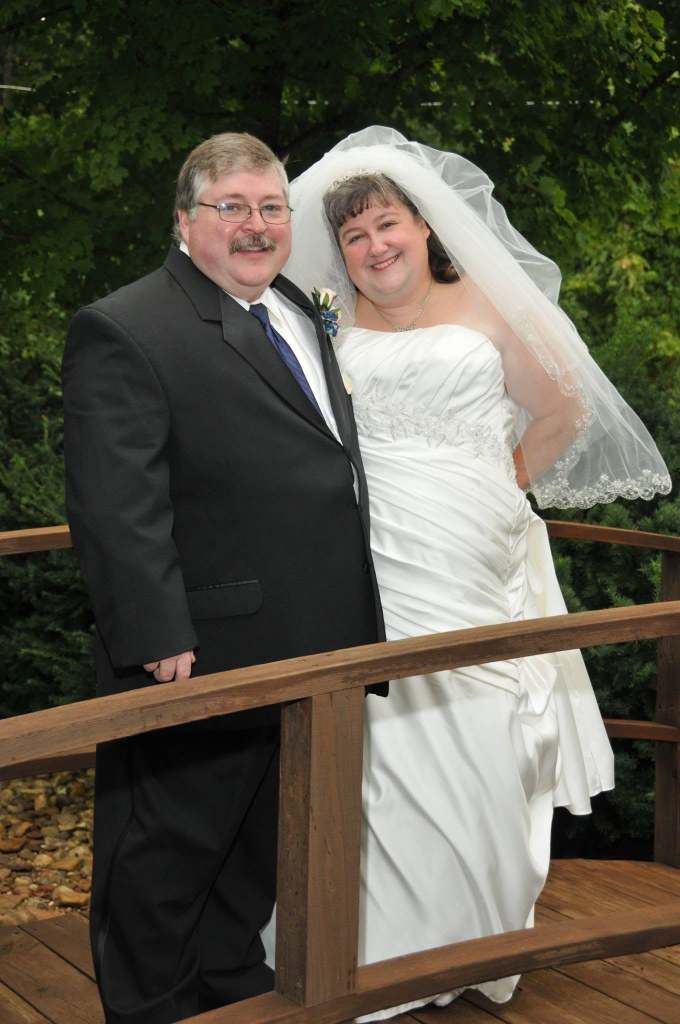
I waited a long time for a husband. I prayed for decades about marriage. And always, the answer seemed to be, “Not yet!” No explanation. No insight into whether I ever would be married. But in the waiting, I grew as a teacher and librarian. I found out that I could not have children of my own. I learned to manage on my own, and also how to reach out for help when needed. And I developed habits of Bible Study and Prayer that have become precious to me. My marriage is a fulfillment of patient waiting and listening to God’s voice, instead of making impatient and rash choices and shutting out the lessons along the way. Oh, and those children I could never have? I never had them. But I ended up with stepchildren and grandchildren who bless my life with love, laughter, and excitement.

God’s best is worth waiting for! I can testify to this on many levels. God doesn’t help “those who help themselves.” They literally “help themselves!” But God blesses those who wait patiently for Him. He doesn’t just show up at the last minute. He stays beside us in the waiting, He encourages us along the way, and He rejoices with us when we see the end from the beginning.

For more, see the following verses (and their context!):
Isaiah 40:31, Lamentations 3:25, Micah 7:7, Psalm 130:5, Romans 8:25, Psalm 40:1, Isaiah 49:23, 2 Peter 3:9, Psalm 27:13…

“I Would Prefer Not To..”

Years ago, our high school class read a classic short story by the American author, Herman Melville. Bartleby the Scrivener tells the story of an unusual clerk– one who begins as a good worker, efficient and conscientious, but ends up dying in prison, hopeless, ruined, and broken. His tragic downward spiral begins one day when the lawyer for whom he works asks him to examine a short document. This is a commonplace request, much like asking a writer to proofread her final draft before submitting it to the editor. However, Bartleby responds by saying “I would prefer not to.” The startled lawyer decides not to force the issue, and gives the task to someone else.

Bartleby’s refusal to do what is expected of him escalates until he no longer does ANY work. He refuses to work, refuses to leave the office, and refuses to eat. He isn’t angry or violent, but he remains defiant until the very end.

So it is with us when we are living in sin and rebellion against God. It may start out small– some little habit or attitude. We know it is wrong, but instead of obeying God’s word, we calmly say, “I would prefer not to…” not to tell the truth, not to turn away from porn, not to help my neighbor, not to agree with God about my behavior.

8 The Lord is merciful and gracious,
    slow to anger and abounding in steadfast love.
He will not always chide,
    nor will he keep his anger forever.
10 He does not deal with us according to our sins,
    nor repay us according to our iniquities.
11 For as high as the heavens are above the earth,
    so great is his steadfast love toward those who fear him;
12 as far as the east is from the west,
    so far does he remove our transgressions from us.

Psalm 103:6-12 (ESV)

God is patient. He is gracious and kind. He does not treat us as our offenses deserve. He gives us the chance to repent. He offers forgiveness. But every time we say to God, “I would prefer not to,” we get a little more like Bartleby– isolating ourselves, wasting our potential to be all that God created us to be, growing more defiant and more rebellious, until we waste away into a prison of our own making, and, finally, death.

One of the things that makes Melville’s story so disturbing is that the narrator keeps trying to explain away Bartleby’s defiance–perhaps he is having trouble with his eyesight and doesn’t want to admit it; perhaps he was traumatized at a previous job; maybe there is a reason for his passive aggression. But in all of his attempts to understand, the narrator cannot save Bartleby from prison and death.

Understanding sin cannot change us. Excusing sin does nothing to stop its consequences (see Romans 6:23). No one killed Bartleby, yet he died because he “would prefer not to” do the things he needed to do to live. His small act of defiance, which starts out singular and almost heroic (after all, who wouldn’t like to tell the boss, “I would prefer not to,” every once in awhile?), sounds innocuous. Such a little thing to refuse. Surely God would not punish us for so small a thing…until one small thing leads to another…and another; a bigger rebellion; a numbing complacency; loss of perspective; a heart of stone; isolation; starvation; imprisonment; death.

What am I refusing to do for God today? What am I refusing to give up? Refusing to admit? Refusing to listen to? Am I excusing myself? Do I tell myself I am not in rebellion because I have been polite in my refusal to obey? Do I comfort myself that my rebellion is really just a matter of “preference,” and will not be consequential? That God’s Holiness is less important than my comfort or convenience?

Many people coast through life in the belief that God is SO merciful and SO loving that He can’t also be Holy and Just– that His commands are really suggestions; that His wrath is mythical; that our own wisdom is sufficient for living a “good” life and pleasing Him. But God isn’t concerned about whether we live a “good” life– He wants us to have an abundant life– filled with joy and peace, love and relationship, both now and forevermore. In fact, He would “prefer not to” punish us. He is not “willing” (i.e. desirous) that any should perish (2 Peter 3:9), but that everyone would some to repentance. That doesn’t mean that He won’t punish those who refuse to obey Him, or those who refuse to turn from their rebellion and trust Him; only that He will continue to give us the opportunity to recognize our need for forgiveness.

10 If you keep my commandments, you will abide in my love, just as I have kept my Father’s commandments and abide in his love. 11 These things I have spoken to you, that my joy may be in you, and that your joy may be full.12 â€œThis is my commandment, that you love one another as I have loved you. 13 Greater love has no one than this, that someone lay down his life for his friends. 14 You are my friends if you do what I command you. 15 No longer do I call you servants, for the servant does not know what his master is doing; but I have called you friends, for all that I have heard from my Father I have made known to you.

John 15:10-15 ESV– taken from biblegateway.com

God has made it possible for us to be more than servants. We don’t have to respond to God as Bartleby responded to his boss– though God has the ultimate authority to demand our loyalty and obedience. Through Jesus, we are sons and daughters and friends! When God gives us commands, like “Love one another,” they are still commands. But His heart is that we should trust that all of His commands are righteous, life-giving, and in our eternal best interest. But some of us are still saying, “I would prefer not to.”

Blog at WordPress.com.

Up ↑