We live in a wonderfully diverse world, filled with unique individuals. One thing that defines us to our families, neighbors, and friends, is our name. Names can be tricky–some are difficult to pronounce, or spell. Some names are shortened or changed to form “nicknames.” Others are changed by circumstances, like adoption or marriage. Some names are common to several people, or shared as “namesakes” of others, or shared between generations, calling for additions, like “Jr.,” or “the elder” or “the fourth.” Some people reject the name they were given at birth, preferring to use an alias, or going through a legal process to change it. Some names have become symbolic, or stereotyped, famous, or infamous, or iconic.
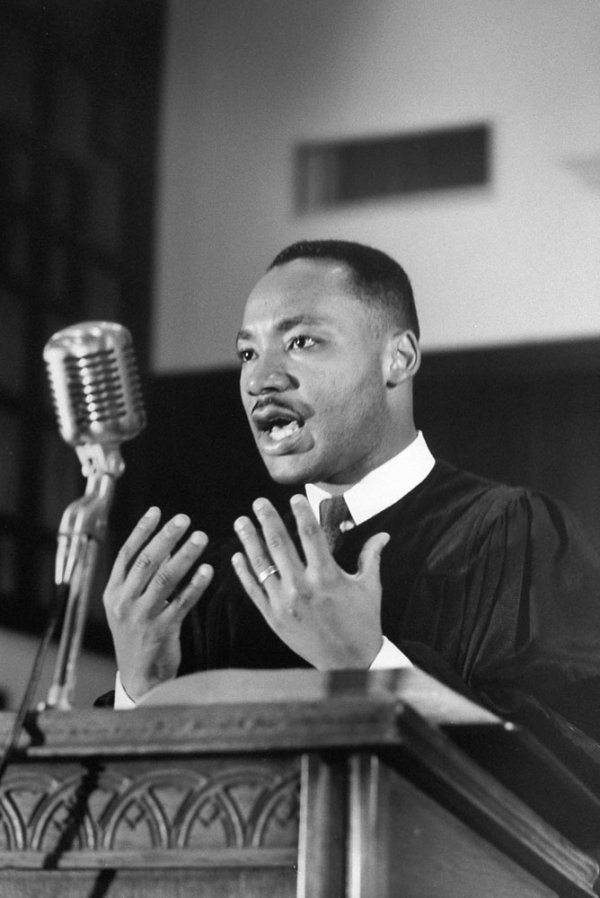
Civil Rights activist Rev. Dr. Martin Luther King Jr. gesturing during sermon at Ebenezer Baptist Church. (Photo by Donald Uhrbrock//Time Life Pictures/Getty Images)
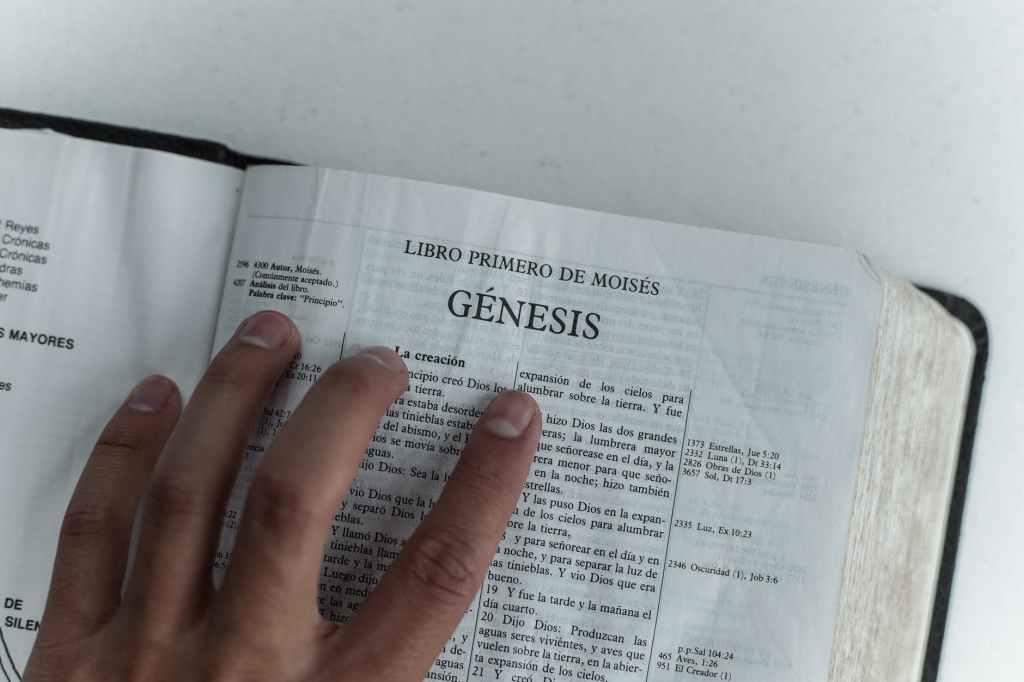
Even though many of us may share a common first name, or surname, (or even both), our name still represents who we are–it becomes a symbolic representation of all that makes us unique– our personality, our history, and our character. And it’s not just people who carry names. We name rivers and mountains, cities, houses, farms, cars, products, pets, works of art…the list goes on. It is deep in the human soul to name things. This is a God-given desire. All the way back in the second chapter of Genesis, God brought all the beasts of the air and land to Adam, to see what name he would give them. Adam and Eve chose the names for their sons– names with very personal meanings. Names are important and carry power; they should never be taken lightly.
God recognizes each one of us by name. The prophets Isaiah and Jeremiah both refer to God calling them before they were even born! Before the great judge Samuel even knew how to recognize God’s voice, God called him by name. God often changes names– Abram to Abraham, Jacob to Israel, Saul of Tarsus to Paul, the disciple Simon to Peter (or Cephas). One reason God changes names is to show His power to transform people and give them, not just a new name, but a renewed nature and spirit.
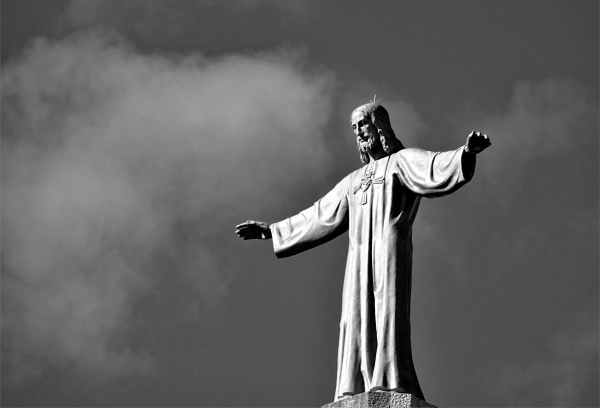
And when we talk to God, whose very name is sacred, He allows us to call on Him through the Name He gave to Himself/His Son– Jesus. There are many boys and men who carry this name, but when we pray in the name of Jesus, we are referring to the one and only Begotten Son of God the Father; the Jesus of the Trinity; Jesus the Virgin-born Messiah. HIS name is above all other names. There is power in every ordinary name, but THIS name carries eternal, sovereign, immeasurable power. It encompasses His holiness, His compassion, His wisdom, His goodness, His faithfulness, and His Love. There is no other name by which we are saved; no other name by which we can be made new. It is not a name to be taken lightly or in vain. It is a name to be honored, cherished, and exalted. JESUS. The name above all names!
Do you ever feel invisible? One of the common complaints among depressed people is that they feel as if no one sees them. “No one would notice if I just disappeared..” “No one really notices me…I just fade into the background.” “I always get passed over; pushed aside; ignored…” “Everyone just seems to look right through me. It’s like I don’t even exist.”
Hundreds of years ago, Hagar, the slave girl of Abraham’s wife, Sarah, believed herself to be abandoned and alone. She had been used by her mistress as a pawn in a scheme to give Abraham a son. Hagar was able to do what Sarah could not (get pregnant by Abraham), and she let it go to her head. But she was still a slave. When Sarah complained to her husband, Abraham reminded her that she still had power over Hagar. Sarah used that power to mistreat Hagar, causing her to run away into the wilderness. But God was watching. The “angel of the Lord” not only saw Hagar– he found her beside a spring and called out to her by name. He asked why she was in the wilderness, and then gave her a promise– that her descendants would become too numerous to count! In response, she gave God a name– El-Roi– “the god who sees me.”
The Bible is filled with stories of people–sometimes warriors and kings, but often ordinary, even lowly, people: slaves, younger siblings, nameless servants–who are seen and chosen by God for His Glory, to play a special role in history. God sees them all; He knows them all by name (even if their names are not recorded in the Bible!) He knows each person’s strengths and weaknesses; He knows everyone who will cross their path, how their story began, and how their story will end.
We can take great comfort in knowing that God sees us. There is nothing hidden from Him– when we are slighted or mistreated; when we are the ones wronging others…He knows our thoughts and emotions. He knows our strengths and weaknesses (better than we know ourselves!) He understands– even when we don’t–what’s happening in and around us. God sees us exactly as we are– and He already knows all that we can become! Hagar could see that she was a pawn. She could see herself giving Abraham a child when Sarah had not. But God didn’t see her as “just” a slave girl or “just” a pregnant woman. He saw her her as a young woman in distress; as a woman with unique hopes and dreams, aches and disappointments; and as the ancestress of millions upon millions of people– unique people, each one loved and seen and known intimately by their creator. He saw her as someone worthy of being found and called and reassured. And even though God sent her back into a difficult situation, He kept His eyes on her, and came to her rescue again years later.
On days when you feel invisible, or forgotten– when it seems that no one would notice your absence– remember Hagar’s experience with El-Roi– “The God who Sees.”
I have known some excellent fathers– including my own father and my husband. Fathers who do their best to provide for, pray for, protect, and prepare their families. Fathers who show patience, perseverance, wisdom, and selflessness.
But I know this isn’t the case for everyone. I have also known some wicked fathers– fathers who are physically, verbally, and mentally abusive toward their wives and children. Fathers who abandon their responsibilities, and leave behind a legacy of need, chaos, anger, and despair.
Throughout the Bible, God is portrayed as a Father. Not as a “man”– Jesus took on flesh and became a man– but the Triune God exists as Father, Son, and Spirit. God has all the characteristics of a perfect father. God also embodies all the characteristics of a good mother. But there is something about Fatherhood that God particularly wants us to learn and understand.
When God chose Abram for His special covenant, Abram’s name meant “exalted father.” But Abram was childless. God chose someone whose name had no meaning (or an ironic meaning), and changed it– not a lot–he added an “ah”, so that Abraham’s name meant “father of many” or “father of multitudes.” I don’t think it was any accident that God chose a man named “Abram,” or that He changed his name only slightly. God chose Abraham, not because he was a father, but so that he could become a father– to many! It was as a father (to Isaac, but also to Ishmael and all his other sons and descendants) that Abraham was exalted and revered.
But Abraham was not a perfect father– far from it! God gave us the story of Abraham, and drew attention to Abraham to help us learn the importance of GOD as our Father. Abraham was willing to give up his heir– the son of God’s promise– because Abraham was a “son” of God before he was a father to Isaac. https://www.biblegateway.com/passage/?search=Genesis+22&version=NIV
Even though I have known some excellent fathers, I know of only one who is perfect. And He isn’t someone else’s father, that I should be envious, or discouraged. He isn’t only “my” father, that I should be smug. He isn’t my father by birth, that I should make little of His sacrifices or His promises– they are not given out of duty or a sense of genetic obligation. He is OUR Father– He invites all of us to become His children. He lavishes love and grace, sheds tears and aches, sacrifices and pursues, rejoices and grieves– for and with every soul.
When Jesus taught His disciples to pray, He wasn’t giving them a rote prayer to memorize, but a pattern. https://www.crosswalk.com/faith/prayer/the-lords-prayer-be-encouraged-and-strengthened.html If you look through the Gospels at Jesus’ other prayers you will see it–He always begins by addressing His Father. For the group of disciples, He began with “Our Father.” Jesus, who could have claimed sole son-ship, made it clear that He (as Son with the Father and Spirit) desires this amazing relationship– more than power, more than honor, more than life! And God the Father is not a man or a mere mortal– He is Holy, Perfect, Eternally Loving and Eternally Sovereign!
I’m continuing to explore the life of Lot in the Biblical story of Genesis. Lot, the nephew of the Biblical patriarch, Abraham, chose to live near, and then in, the wicked city of Sodom. His circumstances have made him wealthy, but they have also made him a pawn and a victim of greed and war all around.
When we left Lot (see Friday’s entry), he had been rescued by his uncle Abram (later renamed Abraham), along with all his possessions, after being kidnapped from Sodom. This might have been a good time for him to move on with his life, make a fresh start, and get away from the wars and wickedness surrounding him. But he didn’t. Nor does he seem to have had any kind of positive impact on his neighbors and friends. The Bible doesn’t mention whether or not Lot joined in any of the wicked behavior of his fellow Sodomites, but he seems to have turned a (mostly) blind eye to it.
The Biblical narrative leaves Lot for a few chapters, to concentrate on the life of Abraham, the changing of Abram’s name to Abraham, the birth of his son, Ishmael, and the promised coming of Isaac. But at the end of chapter 18, the LORD speaks to Abraham about the impending destruction of the cities of Sodom and Gomorrah:
17 The LORD said, shall I hide from Abraham what I am about to do, 18 seeing that Abraham shall surely become a great and mighty nation, and all the nations of the earth shall be blessed in him? 19 For I have chosen him, that he may command his children and his household after him to keep the way of the LORD by doing righteousness and justice, so that the LORD may bring to Abraham what he has promised him.” 20 Then the LORD said, “Because the outcry against Sodom and Gomorrah is great and their sin is very grave, 21 I will go down to see whether they have done altogether according to the outcry that has come to me. And if not, I will know.” 22 So the men turned from there and went toward Sodom, but Abraham still stood before the LORD. 23 Then Abraham drew near and said, “Will you indeed sweep away the righteous with the wicked? 24 Suppose there are fifty righteous within the city. Will you then sweep away the place and not spare it for the fifty righteous who are in it? 25 Far be it from you to do such a thing, to put the righteous to death with the wicked, so that the righteous fare as the wicked! Far be that from you! Shall not the Judge of all the earth do what is just?” 26 And the LORD said, “If I find at Sodom fifty righteous in the city, I will spare the whole place for their sake.” 27 Abraham answered and said, “Behold, I have undertaken to speak to the Lord, I who am but dust and ashes. 28 Suppose five of the fifty righteous are lacking. Will you destroy the whole city for lack of five?” And he said, “I will not destroy it if I find forty-five there.” 29 Again he spoke to him and said, “Suppose forty are found there.” He answered, “For the sake of forty I will not do it.” 30 Then he said, “Oh let not the Lord be angry, and I will speak. Suppose thirty are found there.” He answered, “I will not do it, if I find ththirty there.” 31 He said, “Behold, I have undertaken to speak to the Lord. Suppose twenty are found there.” He answered, “For the sake of twenty I will not destroy it.” 32 Then he said, “Oh let not the Lord be angry, and I will speak again but this once. Suppose ten are found there.” He answered, “For the sake of ten I will not destroy it.” 33 And the LORD went his way, when he had finished speaking to Abraham, and Abraham returned to his place.
The Bible is not explicit in describing the evil that occurred in Sodom and Gomorrah. But two things stand out in this passage. The LORD speaks of “the outcry” against these two cities and the gravity of their “sin.” Some people have suggested that there is a single egregious sin– “sodomy”– that roused God’s especial judgment. Certainly, in chapter 19 (https://www.biblegateway.com/passage/?search=Genesis+19&version=NIV) the men of the city demand that Lot’s “guests” be brought out so they can have sex with them. Lot offers his virgin daughters, but the men refuse and become so violent that the “guests” have to intervene. However, a parallel story is reported later in the Old Testament, this time in the city of Gibeah in the region of Benjamin. (https://www.biblegateway.com/passage/?search=Judges+19&version=NIV) And, while judgment is delivered to the city, it is not singled out for especial judgment by fire from heaven.
Whatever the evil in Sodom, it included rape, sodomy, and likely human trafficking and human sacrifice (see the end of Genesis 14, where the king of Sodom offers Abram all the material spoils of war, in exchange for all the people). It was not just the evil of sexual promiscuity or occasional violent practices, but something that caused an enormous “outcry” from victims, and possibly even angelic messengers reporting on the level of depravity, destruction, and oppression involved. Yet Lot lived there for years, raising his family, going about his business, and ignoring or excusing the evil all around him. There is no record of him making any positive difference, any positive contribution; no record of Lot doing anything to stand out from among his neighbors.
And when judgment comes, it is swift and terrible. The Angelic messengers must drag Lot and his family away from their home and possessions. They urge him to flee into the mountains, but he balks and asks to be allowed to flee to the small town at the edge of the destruction. (More about this at a later time…) Lot has lost almost everything of value– he ends up bankrupt; materially, and spiritually. Lot is a vacant shell of a man–fearful and snivelling, weak and empty.
What evil occurs in our neighborhoods today? What are we doing to alleviate it? Combat it? Excuse it? Enable it? If God were to bring judgment to our city or country, would He have to send angels to drag us out of the fire? Would he find even 10 righteous people on our block? In our apartment complex? God didn’t find 10 righteous people in Sodom…In fact, the Bible doesn’t say that he found ANY! Lot and his daughters were spared, but the stench of Sodom and Gomorrah lingered in this family to their ruin.
Lot’s legacy is one of emptiness, loss, and depravity. But there is one bright spot, which we’ll look at next time. God is slow to anger, and rich in mercy. His redemptive plan will include even Lot with all his flaws and weakness. And it extends to each of us, regardless of where we’ve lived, or what we’ve experienced. God didn’t find any righteous people in Sodom; He knew He wouldn’t! More than once the Bible tells us “there is no one righteous; not even one; there is no one who understands; there is no one who seeks God. All have turned away, they have together become worthless; there is no one who does good, not even one.” (Romans 3:10-12; Psalms 14:1-3, others…) God’s plan is not to find people who are already righteous– His plan is to rescue people like Lot; people like US! And His plan is to include us in the rescue effort, too.
I spent part of last year taking a closer look at some of the figures of the Old Testament. This week, I’d like to take a closer look at one of the lesser figures of Genesis: Abraham’s nephew, Lot.
We tend to focus on the teachings of Jesus, and the writings of the apostles in the New Testament. We should. But we should not neglect the lessons to be found in these ancient stories. They have a “lot” to teach us about human nature, and about God’s response to it. They are rich with characters, patterns, metaphors, and foreshadowing.
We first meet the character of Lot, along with his family, at the end of Genesis 11: 27 This is the account of Terah’s family line. Terah became the father of Abram, Nahor and Haran. And Haran became the father of Lot. 28 While his father Terah was still alive, Haran died in Ur of the Chaldeans, in the land of his birth. 29 Abram and Nahor both married. The name of Abram’s wife was Sarai, and the name of Nahor’s wife was Milkah; she was the daughter of Haran, the father of both Milkah and Iskah. 30 Now Sarai was childless because she was not able to conceive. 31 Terah took his son Abram, his grandson Lot son of Haran, and his daughter-in-law Sarai, the wife of his son Abram, and together they set out from Ur of the Chaldeans to go to Canaan. But when they came to Harran, they settled there. 32 Terah lived 205 years, and he died in Harran. (Genesis 11:27-32 NIV, taken from http://www.biblegateway.com)
When I was reading this passage the other day, I was struck by something I never noticed before, and have never heard in any sermon or Bible study–Lot’s mother is never mentioned, and there is a strong implication that Lot’s parents were never married. The text merely says that Haran became the father of Lot, and that he died. The next sentence, however, says that both his uncles married– and it names their wives. The Bible does not state explicitly that Lot was illegitimate, or that he never knew his mother, but if that is the case, it makes certain things about his life stand in sharp contrast. And, though it says Haran died while his father was still alive, we don’t know how long he was a part of his son’s life. Lot is part of a family, but his position is not well-defined. He is a grandson, and a nephew, but he has no parents or siblings, and he is not adopted or named as an heir by either of his uncles. (Even before Abraham becomes a father, his “heir” is a servant named Eliezer of Damascus, not his nephew– see Genesis 15:1-3) He travels with his grandfather, and then “moves about” with Abraham (Genesis 13), but doesn’t seem to be a part of Abraham’s household. Instead, he is raised by his grandfather, who seems to have given him his father’s portion of the inheritance. Lot isn’t abandoned by his father’s family, but he is not embraced, either.
Lot seems almost to be included in this family history by chance. And, indeed, his name connotes chance and happenstance. People cast lots, play the lottery, and talk about their “lot in life.” Lot, much like his name, seems to depend on chance as he travels through life. His birth is mysterious and obscure, but he has connections to a great and wealthy family. He has great success in building his flocks and herds, enough that the “land could not not support (he and Abraham) while they stayed together” (Genesis 13:6a), but he doesn’t seem to be able to stay out of trouble. He gets used as a pawn in a territorial war (Genesis 14), and must be rescued by his uncle, only to return to the wicked city of Sodom. Angels must drag him out of the city to rescue him again, when God decides to destroy both Sodom and Gomorrah for their wickedness. Bitter and pouting, Lot becomes a pawn for his own daughters in the aftermath of his rescue, ending his days as a footnote in history, as the ancestor of two of Israel’s fiercest enemies– the Moabites and Ammonites.
Why is the story of Lot woven into the chronicles of Abraham? What can we learn from his character and life story? How does Lot play a part in the genealogy of Jesus?
I’ve challenged myself to learn more–may I pray that you might do the same? Nothing about Lot’s story is written without some purpose–let’s search out what a “lot” God has to share with us in the life of this one man.
The Biblical patriarch, Jacob, is known for many things– He was the son of Isaac and Rebekah, and grandson of Abraham. He was the brother of Esau. He cheated and/or schemed his way into taking both the blessing and birthright that belonged to his older brother. For this, he was sent away to live with his Uncle Laban, and told to choose a wife from among his extended family.
Jacob’s life took a dramatic turn when he left his small (but slightly dysfunctional) family behind to begin this new chapter. Growing up, Jacob had been the quiet one, the one who stayed around the house. This was no longer an option. Jacob faced a long journey, and years of work to establish his own family and career. On the way to Paddan Aram and the house of Laban, Jacob had his first encounter with God– the vision of “Jacob’s Ladder” at the place he would call “Bethel.” There, God confirmed his promise to establish Jacob, increase his family, and bless all people through him. No longer was Jacob a second son with only his wits to help him succeed (or cause trouble)– God had promised to be with him and watch over him wherever he may go! https://www.biblegateway.com/passage/?search=Genesis+28%3A10-22&version=NKJV
With that promise and the hope of finding a welcome, Jacob arrived at the well where his uncles flocks were watered. Jacob would take over the work of herding and watering the many flocks of Laban. He worked for the first month without wages–setting a dangerous pattern. After the first month, Laban “generously” offered to pay Jacob, and even let Jacob set the terms! Jacob demanded no monetary wages; he wanted only to marry his beautiful cousin, Rachel, with whom he was deeply in love.
Seven years pass– Jacob has worked for almost nothing but the food he has eaten, and the promise of marriage with the daughter of Laban. And in a scene that seems strangely familiar, Jacob is presented with a feast, and his promised blessing– his wife. But Laban tricks him, substituting one daughter for another. Instead of Rachel, Jacob is bound to her sister, Leah.
When Jacob confronts his new father-in-law, he is given an excuse– tradition says the older daughter must be married first. Laban had seven years to explain this to Jacob, seven years to “break the bad news”, seven years to offer Jacob an alternative. Yet Laban chose to deceive his nephew and use his love for Rachel to get seven years of cheap labor. Worse, he chose to string Jacob (and Rachel) along for another seven years. The Bible gives us a clue as to one ulterior motive of Laban– Leah had “weak” or “delicate” eyes. It is possible that she had been rejected by other men or deemed ineligible for marriage. Without a prospective husband, Leah will be dependent on her father for life. But married to Jacob, Leah becomes one less responsibility for Laban. https://www.biblegateway.com/passage/?search=Genesis+29%3A14-30&version=NIV
Laban gambles his daughters’ fate on Jacob’s character. Jacob could have cast Leah aside easily and forced her to return to her father’s house a ruined woman. He could have treated her as a servant, rather than a wife– he could have beaten her or “given” her to someone else. And Jacob could have decided Rachel was not worth another seven years of labor, or that he could not trust Laban to keep his word. He could have walked away. He could have taken his anger and frustration out on Leah or on the flocks. He could have returned to his father and started another family quarrel.
But this Jacob is not the same as the one who left Canaan. He serves another seven years, marries Rachel, and then works yet another six years for flocks to call his own. All the time working for a man who is greedy, deceitful, capricious, unjust, selfish, and oppressive. He doesn’t complain, doesn’t rebel, and doesn’t cheat, lie, sabotage or steal from this horrible boss and indifferent father-in-law. Instead, he shows that he has been transformed from the young Jacob who caused so much trouble for his brother and father back home.
May we choose to submit today to the God of Jacob, and remember that His promise to Jacob extends to all who trust Him– He will not leave us; He will see us and be with us wherever we go!
Throughout the Bible there are stories of people –sometimes rather ordinary and even deeply flawed people–who end up in extraordinary and miraculous situations. I spent some time exploring Hannah, and her journey through barrenness and into motherhood. I’d like to go back several generations to look at the intriguing character of Jacob.
Jacob often appears as an adjunct character– son of Isaac, and grandson of the patriarch Abraham, he seems to be something of a mis-step in God’s promise to build a nation and bless the world. Jacob seems to bumble through life– the second son, living in the shadow of a heroic older brother; a cheap con-artist, whose deception rips his family in two; a sly cheat who finally meets his match in a dishonest and conniving father-in-law; a beleaguered husband and father, juggling two feuding sisters, their two servants, a dozen warring sons, a tragic daughter… It would be easy to confuse this Bible story with a modern TV sitcom or reality show about dysfunctional family life.
Yet… Jacob, like his grandfather, Abraham, saw God face to face, even wrestling with him on one occasion. God gave Jacob the vision of a stairway leading to Heaven; God gave Jacob his blessing, independent of the one from Isaac; he chose Jacob over Esau to carry on the line of patriarchs; God gave Jacob a new name– Israel– which became fixed as the name of God’s people. Generations later, King David prayed to and worshiped “the God of Jacob” as a refuge. Jesus even referred to His Father as the “God of Abraham, Isaac, and Jacob.”
What makes Jacob stand out? Why does nearly half of the book of Genesis cover the years of Jacob’s life? I want to spend some time in the coming days to look a bit closer at this flawed man, how God revealed aspects of His own character in his dealings with Jacob, and how knowing Jacob better can help us as we pray to “his” God (and ours).
When we look around at all the beauty God created (see yesterday’s post:https://pursuingprayerblog.wordpress.com/wp-admin/post.php?post=1206&action=edit ), we also see the ugliness of a fallen world. What God created, he proclaimed “Good.” That goodness still exists, but it is tainted and polluted by sin. God has the authority and the right to destroy it all (and us along with it!); instead, he chose to redeem it. God’s promise to do this has been playing out from the very beginning.
God did not strike Adam and Eve– He allowed them to age, and reproduce, and live out their lifespan–but He did keep his promise that they would have to die (see Genesis 3). God kept his promise to Noah, to save his family from a worldwide flood (Gensis 6-9). He kept his promise to Abraham, to bring him to a new land and give it to his descendants– though the promise was made when Abraham as childless and wandering in the wilderness (Genesis 12-25). God kept his promise to Abraham’s descendants, to bring them back to the land he had promised them (Exodus–Joshua).
God kept his promises to Israel– promises of blessings and of curses, of retribution and revival. God chose King David, and kept many promises to him about his dynasty, the building of the temple, and the coming of a kingly redeemer in David’s line of ancestry (2 Samuel-1 Kings). He kept his promises given through the prophets concerning the exile and return to Jerusalem.
In this season, we celebrate all the many promises God made and kept regarding the coming of our Savior (Matthew-John). Just as God’s creation is “good,” so too are His promises– they are sure and true. God’s promises reveal His nature–He is Just, He is Kind, and He is Omnipotent. What He says, He can and will accomplish.