They have healed the wound of my people lightly, saying, ‘Peace, peace,’ when there is no peace. Jeremiah 8:11(ESV)
While people are saying, “There is peace and security,” then sudden destruction will come upon them as labor pains come upon a pregnant woman, and they will not escape. 1 Thessalonians 5:3 (ESV)
Peace I leave with you; my peace I give to you. Not as the world gives do I give to you. Let not your hearts be troubled, neither let them be afraid. John 14:27 (ESV)
I have said these things to you, that in me you may have peace. In the world you will have tribulation. But take heart; I have overcome the world.” John 16:33 (ESV)
4 Jesus answered: “Watch out that no one deceives you. 5 For many will come in my name, claiming, ‘I am the Messiah,’ and will deceive many. 6 You will hear of wars and rumors of wars, but see to it that you are not alarmed. Such things must happen, but the end is still to come. 7 Nation will rise against nation, and kingdom against kingdom. There will be famines and earthquakes in various places. 8 All these are the beginning of birth pains…21 For then there will be great distress, unequaled from the beginning of the world until now—and never to be equaled again. Matthew 24:4-8; 21 (NIV)
One of the prophetic names given to Jesus in the book of Isaiah is “Prince of Peace” (Isaiah 9:6). And yet, Jesus did not bring an end to the Roman occupation of Judea while He walked the earth. He did not end slavery or war or oppression. He did not bring the kind of “peace” that most of us look for even today. We live in a world of war, dissention, upheaval, and chaos. There is hatred, injustice, slavery, abuse, and oppression, and none of the efforts to bring peace in our world have succeeded in wiping out any of these evils. In the nearly 2000 years since His crucifixion and the rise of the Christian Church, these evils have remained. Great strides have been made over the years– slavery is officially outlawed in many areas of the world; human rights have been codified. Humanitarian efforts have greatly decreased the number of people who die of starvation and disease, homelessness and exposure to the elements. But there are thousands, and indeed hundreds of thousands of people around the world who are refugees from their home countries, who are denied human rights, who live in fear of bombing raids and terrorist attacks.
Where is the Peace?
Jesus spoke freely of the tribulations His followers through the generations would face. He never promised us a world without any trouble. He promised that, in this life, we WILL have trouble. And it will increase over time. People will grow suspicious, hateful, and cold. Nations will rise up against other nations; families will be divided in such a way that one’s greatest enemies will be their closest relatives! Wars and natural disasters will intensify. And ONLY Christ’s return will stop any of it. Human efforts may make a difference for a short while, or make a small difference for a long while, but nothing we can do, single-handedly or as a human race, will deliver us from the evil that lives in the human heart. In fact, we often delude ourselves into thinking that we can change the world on our own; we seek to force our plans on others “for their own good,” little knowing that we may be sowing the seeds of bitterness, backlash, and revenge.
Jesus Christ is the Prince of Peace. He will administer perfect peace and justice when He returns. And in the meantime, He offers us an inner peace that passes all understanding. We can experience peace as bullets whip around us; as we are being misunderstood, mistreated, and abused; as we face injustice and oppression. We can do this because Jesus gave us the example. He did not fight back or even complain as He was arrested, falsely accused, sentenced, and executed. He did not seek to force everyone to accept His rightful claims. He did not even protest the unjust treatment of His people by the Romans.
What He did instead was to focus on God’s mission– He interacted with those who were suffering; He healed the sick; He brought comfort to those who were grieving. He brought sinners to repentance and sought to make peace between individuals and God. Jesus is the Prince of real and lasting Peace– not just peace in “our time” or peace for a generation, but eternal and everlastingly joyous Peace. This is the kind of peace that sees trouble and tribulation for what it is– temporary and transformational. Suffering can make us bitter or better, and Jesus shows us how to experience the latter. When we protest instead of pray, we forfeit that peace. When we pray, we gain wisdom in how to stand firm against injustice without losing our own peace and perspective.
These are not peaceful times, but we can still experience peace, hope, trust, endurance, joy, and light in the days ahead, thanks to our Prince of Peace.
“There is a fountain filled with blood Drawn from Immanuel’s veins; And sinners plunged beneath that flood Lose all their guilty stains.” William Cowper
I love old hymns. So often, they express Biblical truths in simple purity, or in soaring poetry, that captures both the imagination and the memory.
Recently, I was listening to a radio broadcast of a sermon about mercy. It was a wonderful sermon, and the pastor talked about the richness and wideness of God’s mercy and lovingkindness in various situations– when we face injustice, pain, loss and grieving, guilt, and even when we are unaware of it throughout our life (Psalm 139:16-17) From the womb to the tomb, we live in the Mercy of God– God extends His Mercy and Grace for as long as we are alive to call out for it, accept it, and receive it. More than that, His Mercy and Lovingkindness endures forever (Psalm 136).
Later that day, I was doing housework– I had dirty dishes to wash and laundry to do. And there were stains! I have plastic dishes that I used to heat up leftovers in the microwave, and some of those leftovers had tomato-based sauce or cinnamon or turmeric. The dishes have a film of red or brown or yellow that didn’t come out, even when I washed and soaked them. A few of the stains will eventually fade away, but some of them will never come out. I also have clothes that are stained. David and I still wear them around the house, but there are paint stains, ink stains, oily stains, and mustard stains that didn’t come out the first time I washed (or the second or third time!)
As humans, we all have stains of one type or another. We try to hide them; we try to scrub them; we try to cover them up. Some of our stains are external and visible– scars or blemishes, imperfections and disabilities, worn or tattered “second-hand” clothes, missing teeth, poor posture, obesity, being “too” short or tall–things that people notice right away. Other stains are deep inside– guilt, shame, fear, anger, hatred, bigotry, envy, arrogance, hopelessness, depression, broken-heartedness, loneliness– we try to hide them by isolating, covering up, pretending that all is well, or denying the extent of our brokenness.
I was touched by the sermon about how God’s Mercy reaches us in all of these circumstances. The Bible is full of examples of God’s Mercy and its transforming power. But the words of this old hymn came to my mind, and a deeper realization swelled as I sang them quietly in my own heart: “And sinners plunged beneath that flood LOSE ALL THEIR GUILTY STAINS!”
I spend time washing and scrubbing at stains– silly mistakes, accidents, upsets– and even if I am successful, I can often point out where the stains were or find the last vestiges of them on an old shirt or a white plastic bowl. But I don’t “LOSE” stains. I don’t have the power to make stains totally disappear– especially stubborn ones like ink and oil. But the stains I worry about most– guilt, pain from my past, worry about how others might judge me– these stains are all in my doubting mind. In God’s Mercy, THEY DON’T EXIST! That doesn’t mean that others WON’T still judge me, or that I won’t still remember old hurts. But God WON’T! Their power is broken. God has removed them as far as the east is from the west (Psalm 103:12-14)
Sin leaves stains in our lives– even if the sin wasn’t ours to begin with. That person who bullied me in third grade– that left a stain. The way I reacted– that probably left a stain, too. When I nearly died as an infant– that wasn’t my sin, or even my parent’ sin. But it left a stain because I was born into a world where we have disease, defects, and disasters. I have Diabetes. Part of that “stain” can be blamed on things I ate, and lifestyle choices I made. Part of that is genetic. There are people who live with abuse, injustice, chronic pain, and lasting heartaches. And God’s Mercy didn’t stop any of that from staining their lives.
But the “fountain…drawn from Immanuel’s veins” is powerful enough, and God’s Mercy is amazing enough to make those stains disappear. In this life, I still have to deal with diabetes, fatigue, misunderstandings, and my own sinful lapses. People still struggle with cancer, poverty, war, and doubt. But the stains won’t follow Christians into eternity. There won’t be any vestiges of uncleanness; there won’t be any memory of the hurts and losses we suffered during this lifetime. Christ’s blood is powerful enough, and His Mercy vast enough to make the effects of sin DISAPPEAR!
A priest, a Baptist minister and a rabbit go to a pub for lunch. The hostess meets them at the door with a message. “Today, we are helping a local blood bank. Your lunch is free if you donate a pint of blood.” All three agree to donate blood in exchange for a free lunch. The hostess asks each one in turn for his blood type. The priest says, “I believe my blood type is A negative. The minister says, “It’s been a long time, but I seem to remember that I am AB positive.” Finally, she turns to the rabbit. “I was supposed to be a Rabbi, so I must be a Type O!”
I love puns, and like many puns, the humor in this one comes from a grammatical or spelling error. Something in the story is almost, but not quite, as it should be. It is a good thing to be able to laugh at small mistakes. But what happens when things are terribly wrong? It’s not funny at all. It’s devastating, confusing, and frightening. We want answers. We want the situation “fixed.” We want to find out what went wrong, why it went wrong, and who is responsible.
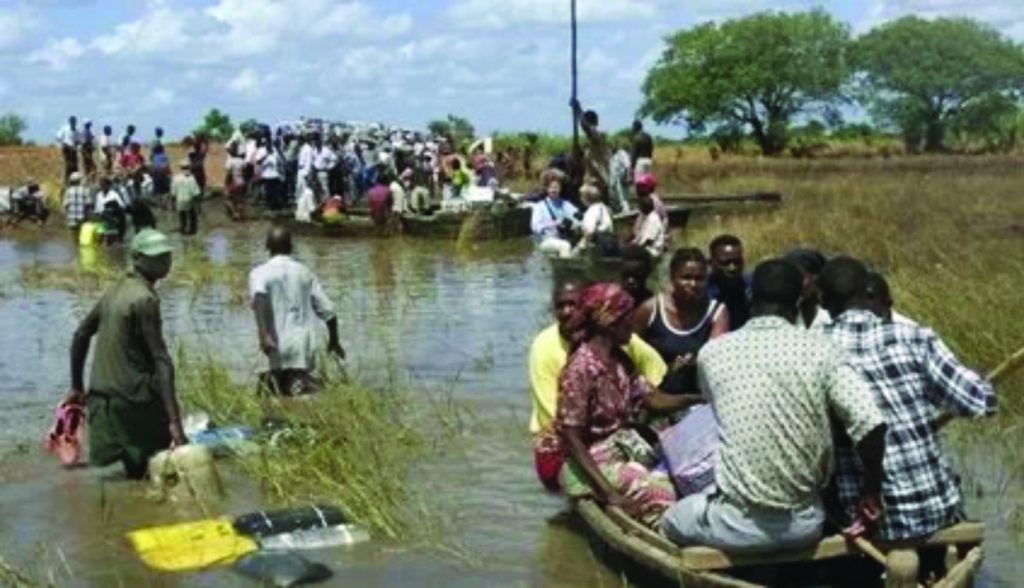
California is burning as I write this. Thousands of acres destroyed; hundreds of homes and businesses reduced to ashes; thousands of people left homeless. Where is God in these fires? When an innocent child is abducted, raped, mutilated and left for dead, where is God? Where is God amid the unrest in Mozambique, where typhoons and political unrest have caused so much havoc? Where was God when the hurricane and storm surge displaced tens of thousands of people in North Carolina, Tennessee, and Georgia less than six months ago? Where is God in the war-torn regions of the world, where innocent families are being terrorized by bombing raids and invading armies? Where was God when millions were dying of COVID just a few short years ago?
I’d love to say that I have an answer. One that is comfortable, unassailable, logical and easy to understand. But I don’t. The “glib” answer is that God is on His Throne, omnipotent and all-wise. And He is. He is not to “blame” for personal tragedies or for sweeping disasters. Sometimes, God intervenes in miraculous ways to “save” us from certain death, “accidents,” or even attacks. But often, He chooses not to do so. And I have no explanation, no all-encompassing, deeply soothing answer for those who are left suffering.
What I do know is this: God is a redeeming God. He is a God who can and often will turn tragedy into triumph. And even if, in such cases, the triumph is often bitter-sweet. This is a God who created mankind, knowing we would reject His goodness and go our own way. This is a God who took a single faithful man (Abraham) and made him the father of many nations– some of whom are still at war to this very day. This is a God who did not spare His Only Begotten Son, but allowed Him to go through a sham trial, be falsely convicted, and die a painful, publicly humiliating death. And then, Christ arose!
What does that mean for someone whose son or daughter is still dead after five (or 25) years of grieving? For someone who lives every day with the trauma of having been raped or abused as a child. It does not give immediate comfort. It does not take away the sting of injustice, pain, and questioning. But it is the promise of redemption– that just as Christ rose victorious, He will cause the pain and grief of the past to disappear in the Joy and Wonder of Eternity with Him. He WILL bring ultimate and complete justice, and it will be perfectly overwhelmed with mercy, grace, and freedom from the past.
It may seem slow and painful, but it WILL happen. Those who have suffered; they will laugh again. Those who are drowning in the senselessness of their own sorrow will experience healing and have answers to their questions. Those areas of the world where suffering is so great in the present– they will recover. Trees and gardens will grow again. Houses will be rebuilt. And yes, there will still be disasters and devastation in our lifetime, and in the years to come– UNTIL THAT DAY. That day when Christ returns to make all things new. Whatever hurts and griefs we carry now, they will be overtaken by joy and healing. No more fires, no more floods, no more war, no more disease, no more “mistakes.”
I don’t know why God allows us to suffer now. I’ve heard some philosophers try to explain, and they have many “good” reasons:
Suffering often leads to growth and necessary change. Suffering produces resilience and develops character. Suffering teaches us that there are consequences to our selfish and sinful actions. Suffering often brings people closer together and brings out the best in us as we offer help and hope and encouragement. Suffering teaches us to be compassionate toward others in their suffering and grief. Suffering contrasts with joy, helping us to appreciate what is truly good in our lives.
These are not bad answers. But they are not complete. They are not “enough.” And I think that’s part of God’s plan. God doesn’t want us to live life on autopilot. He doesn’t give us “easy” answers– just like He doesn’t give us a life without any purpose or challenge. He doesn’t want us to focus on having all the answers. He wants us to learn from each other, depend on one another, and ultimately to trust that He knows best. It’s not an easy lesson to learn. But if we stay in pursuit of Prayer, and closeness to God, it’s a lesson well worth struggling through.
And sometimes, we can learn to laugh at life’s “typos” and other little mistakes as we travel this life.
We are a curious race, humans–we ask a lot of questions of ourselves, each other, and even of God. How did He make the universe? When will Jesus return? Who can we trust in this world? Where is Heaven? What must we do to be saved? But the majority of our questions are “Why” questions. Why did Jesus come? Why did He have to die? Why did God make snakes and mosquitoes and platypuses? Why are men and women so different? Why am I… (short/tall, fat/thin, clumsy, “odd,” misunderstood, etc.)? Why are You so mysterious? Why do bad things happen to “good” people?
I was thinking about this last question this week. I don’t have any definitive answer to that– no one I know has any better answer. God has not given us a definitive answer, either. We are to trust that His ways are wise and best and perfect, but faith and trust require–well, Faith and Trust! We know God has done good things in the past. We know He has redeemed what seemed like hopeless situations. We know His promises, and we have seen some of them fulfilled. Still, such a question can often leave us blindsided and tongue-tied.
There are many learned thinkers, philosophers, and apologists who have written whole books on this subject, but I want to just pose a couple of ideas to help us, not ANSWER the question, but understand the question a little better.
First, the question, “Why do bad things happen to good people?” is really two questions: “Why do ‘bad’ things happen?” AND “Why do they happen to ‘good’ people?” So let’s look at the questions separately.
“Why do ‘bad’ things happen?” What do we mean when we say “bad things?” There are many circumstances, events, diagnoses, and occurrences that may be called “bad.” Death is “bad.” Indigestion is “bad.” Stubbing one’s toe is “bad.” Being diagnosed with Alzheimer’s Disease is “bad.” Divorce is “bad.” Slavery and abuse are “bad.” House fires, job losses, being mugged, being stranded without heat in a blizzard, an outbreak of acne, being laughed at– all these are “bad.” But they are all different. Many “bad” things are the direct result of sin–we suffer the consequences of our own sin; we are the victims of the sins of others. The consequences of addiction can be horrific, but we often lack compassion for those who are suffering, because “they brought it upon themselves.” But what about the innocent victim of rape or child sex trafficking? Such acts leave victims traumatized and broken. Both are “bad,” but we are angered and frustrated even more when “bad” consequences also seem unjust and unfair. And what about natural disasters? Are they the result of sin, as well? The Bible suggests that they are. When God placed Adam and Eve in the Garden of Eden, they lived naked, carefree, and unafraid. Only after their sin did God place a curse on the land– Adam would now have to cultivate the land in order to get food. There would be enmity between the woman and the serpent. Eve (and all women after her) would have pains in childbirth. (see https://www.biblegateway.com/passage/?search=genesis+3%3A+14-20&version=NIV) There is no mention of hurricanes, blizzards, or earthquakes prior to the Fall of mankind, though it is speculation on my part, to say that there were none.
God has promised to make all things new. There will be a time when the consequences of Sin will be eradicated. We will not even remember the suffering we endured in life, in light of the blessings of eternity. So, though God doesn’t answer our question of why “bad” things happen, He does give us the assurance that such “bad” things do not determine our destiny, nor do they happen without His knowledge or outside of His will! We cannot understand God’s purposes in allowing us to suffer, though sometimes we may see a hint of good even in the midst of tragedy.
And God is loving and gracious in the face of our confusion and pain. We CAN ask God “Why?!” “Why me?” “Why this?” “Why now?” “Why them?” Why, O Lord!?” Many of the Psalms speak to this very question. But in the middle of his anguish, the psalmist often finds comfort and renewed strength to face the struggle, when he turns to God. Asking why is not always a sign of weak or failed Faith. Instead, it is acknowledging before God that we ache. We grieve. And we NEED HIM!”
And what about the second part of the question: “Why do (bad things) happen to ‘good’ people?” What makes a person “good?” Jesus was “Good,” And yet He questioned the rich young ruler, “Why do you call me good? No one is Good– except God alone.” (see https://www.biblegateway.com/passage/?search=Luke+18%3A18-27&version=MSG) We tend to think of the people we know and like as “good.” And we have a natural expectation that their lives should be “good” also– free of pain or struggle. But that is not realistic in this world. The actor, Michael J. Fox has been suffering for years with Parkinson’s Disease. This seems unfair and cruel. How could God let him suffer like this? But there are many thousands of people suffering from Parkinson’s Disease. Some of them are homeless addicts; some are in prison for rape or embezzlement. Is their suffering any less than that of Mr. Fox? Is it somehow less tragic or unjust?
The sad and shocking truth is that none of us “deserves” a pain-free, struggle-free life. Bad things DO happen. And they happen to people we like, and people we hate; people we judge to be “good” and people we judge to be “bad.” God does not “play favorites.” Yes, God can, and often does intervene on someone’s behalf through prayer, or for His own bigger purposes. But He does not “dish out” suffering to those He dislikes out of spite or revenge. Nor does He cause His faithful to float through life without ever tasting bitterness and grief. Jesus made many promises, but one of them was this: “in this world you will have trouble; but be of good cheer, I have overcome the world.” (John 16:33) He didn’t promise that you might have a little spot of trouble, or that you might look around and see others in trouble– He promised that we would have trouble. Not because we are “bad” or “good” but because that’s the way this world is.
I find it odd that atheists often pose this question as a way of trying to “prove” that God doesn’t exist. They pose the question as an accusation. “If there is a kind and loving God, why do bad things happen to good people?” But if they believe that there ISN’T a kind and loving God, how do THEY explain why bad things happen to good people? How do they define “good” people and “bad” things? Without a Good God, where is the expectation of good things happening to good people? Without God, there are no objectively “good” things or “bad” things happening– only random events without divine cause or purpose. You can’t blame a non-existent God for things He either caused or didn’t prevent. Such questions are meant to plant doubt in the mind of a believer, but they fail to answer the greater question– Why do Good things happen to undeserving people? Why do we sometimes find joy and peace and strength in the midst of our suffering? Why do human beings continue to Hope?
Finally– the ultimate example of God letting something “bad” happen to someone “good” can be seen in the central image of our Faith– the crucifixion of Jesus Christ. Jesus was sentenced unjustly to a torturous death and public humiliation. He was separated from God the Father, and carried the punishment for OUR sins so that WE could be reconciled to God. Even though the purpose of Christ’s suffering has been revealed to us, it doesn’t negate the agony and trauma He faced. And even HE cried out from the Cross– “My God, My God, WHY have YOU forsaken ME?!” (Matthew 27:46)
God does not answer the question of why “bad” things happen in this world. But in the crucifixion, Jesus proves to us that He shares and understands our suffering; that He has the power to overcome and redeem our traumas; and that He will hear our sincere cries of “WHY?!” He will hear when we turn toward Him, instead of turning our back on Him. He will hear our broken heart. He will heal our broken heart.
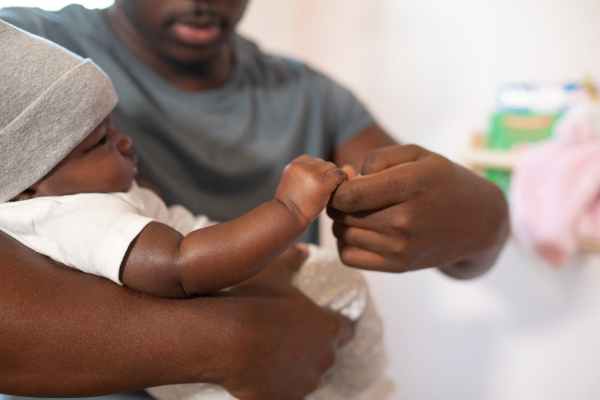
We are approaching Father’s Day. It is a day of celebration for many people, but it can also be a day of sadness for others. This year will be a milestone for our family, as my father passed away 25 years ago; and yet–we are preparing to celebrate the birth of my grand-nephew’s first child. This will make him a father, my nephew will become a grandfather, and my brother will become a great-grandfather! My husband is a father and grandfather, and so are three of his brothers. We also have brothers, brothers-in-law, nephews and cousins who are great dads. So we really have a lot to celebrate!
Fatherhood– the kind we celebrate– is more than just contributing genetic material to a new life, or claiming a child on an income tax statement, or showing up once in awhile for major events. Fatherhood involves sacrifice. It requires wisdom and patience. It involves ongoing commitments, and the tough love that says, “No” because it’s the right thing, rather than the easy thing to say. Fatherhood requires a man to be a teacher, provider, protector, defender, coach, and disciplinarian. It also requires humility, and grace, encouragement and sometimes tears. In addition, fatherhood requires prayer. No father is perfect, and no father can do all that he needs to in his own power. Fathers need our support and encouragement, our grace, and our prayers.
It is tempting to label our fathers. I have known “good” fathers. And I have known fathers who have abandoned or even abused their responsibilities, causing trauma, anguish, and hurt to their families, lasting for generations. My own father wasn’t perfect, but he was a “good” father. He was a man of humor and integrity, faithful, honest, loving and humble; a man of faith, and a man of honor. My father-in-law was the same. They left wonderful legacies of wisdom, hard work, and quiet strength. But I know of other fathers who have ruined the lives of their children (as well as their own lives) through fear, selfishness, addictions, abuse, anger, greed, and pride. Father’s Day can cause regret, envy, and bitterness in the hearts of many fathers and children alike. Many people would like to forget about their fathers on Father’s Day. Some don’t even know how to celebrate– they’ve never seen or heard from their father; some don’t even know his name!
But Father’s Day is not only for “good” fathers. It is a time to honor those who have been faithful, but it is also a time to reach out to those who need help. Good fathers are needed! And “bad” fathers need to be called out– not indulged or ignored, but held, guided, rehabilitated, or even incarcerated, for the good of their children. Hurting boys often grow up to be hurtful fathers. Hurting girls often end up in hurtful relationships. Hurtful fathers often struggle with their own baggage of hurt and disappointment from past generations, without knowing how to change. Fathers need more than a “day”, a cook-out, or another tie. They need a mission and a purpose; they need respect and forgiveness; they need encouragement and accountability.
My prayer today is that this Father’s Day can be a day of honor AND of healing for fathers and their children. I pray that struggling fathers will be encouraged and strengthened; that hard-working, faithful fathers will see the rewards of their efforts and find hope to keep going; that absent and apathetic fathers will wake up to the challenge and the gift of fatherhood; that broken fathers will find help and healing for themselves AND for their families; that hurting sons and daughters will find the grace to move beyond the pain of unmet expectations and abuse to become better men and women.
All that I pray for is made possible because we have a Heavenly Father– a perfect, loving, eternally wise Father– who loves us through our struggles and our pain. He knows our every need, sees our every tear, and hears our every prayer. He is ready to be our coach, our provider, our healer, our disciplinarian, and our protector. No matter our experiences or how we feel about our earthly fathers, or about being a father, we can trust Him to be all that we need. Our Heavenly Father will never abandon us, reject us, abuse us, or despise us. He will comfort, encourage, uplift, and guide us– now and forever. All we need to do is pray and accept Him for all that He is!
When I was growing up, I knew three important things about my father: I knew he loved me–and the rest of our family–faithfully and truly. I knew he loved God–He was a man of faith, prayer, integrity, and obedience to the Word. I knew he would do anything to protect and provide for our family.
But I also knew that my Daddy wasn’t perfect. He was not the strongest man in the neighborhood; or the fastest, or richest, or most respected. He wasn’t the tallest, or most athletic. He wasn’t a leader in local politics or a chamber group or fraternal organization. He didn’t have a string of degrees, or a fleet of fancy cars. He didn’t even have a lot of hair, or perfect teeth. But he had a gentle laugh, a deep wisdom, and a hug that made me feel safe and precious. He had a enormous heart– one that was easily touched, but firmly committed. He was humble and kind; he was loyal and brave and joyful.
I was blessed to have such a Dad. I know people whose earthly fathers were distant, disapproving, absent, or even abusive. Earthly dads, even one like mine, are still human. They make mistakes and bad choices; they carry baggage from their own childhoods; they carry fears and failures; they fall short of our expectations, and their own hopes and dreams. And yet, we long to have a father we can trust; a father who won’t fail us, even in the little things; a father who will perfectly understand us, provide for our needs, and protect us. No matter how old we are, or how successful we may be, our need for a father’s love and approval never end.
Our mental and emotional picture of God is often shaped by our relationship with our earthly fathers. Especially if our father was abusive, it can be difficult to believe that God really loves us. After all, if God loves me, why did He give me an abusive Dad? If God can protect me, why did He allow me to go through a journey with Cancer? Or poverty? Our fallen world leads us into circumstances that cause us to doubt God’s goodness and His ability to redeem our broken past. But, while God sees our painful circumstances, He also sees things that we can’t. He sees the pain that our fathers feel in their own brokenness and inability to “fix” their own past. He sees the kind of growth and compassion that we can learn in our difficulties– lessons that we would not learn in ease and apathy.
God is a different kind of Father. He is eternally sovereign; the King of Kings, and the Creator of the Universe. There is no comparing Him with anyone else’s father– because He is the Ruler and Father of all! Yet, He wants a close loving relationship with each one of us– with me! With you! He is not just committed to doing His best to provide and protect some of us– He is fully capable of providing ALL our needs and protecting us against ALL enemies, including sin and death! For those who have grown up with a distant or abusive father, it can be difficult to hear of God as our “Father” and feel the kind of comfort and trust that we are meant to have. Yet God invites us into His very presence– ALL the time; ANYTIME. He is everything that the word “Father” was meant to be!
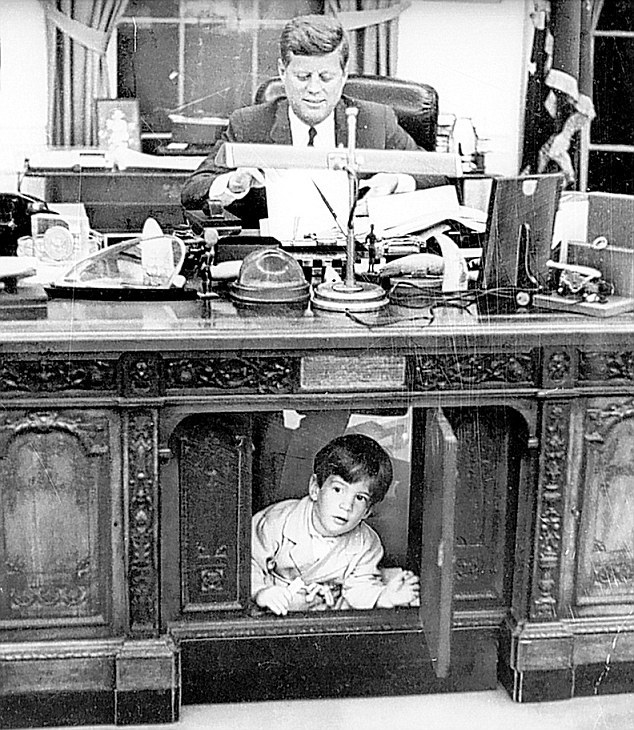
Someone once used the analogy of President John F. Kennedy to describe how we can relate to God as “Father.”. As President, JFK was arguably the most powerful man in the world– the leader of the most powerful nation on earth. At his command, soldiers, sailors, pilots, and even nuclear missiles, could be deployed. The stroke of his pen could sign bills into law, grant pardons, and appoint powerful positions. To enter the Oval Office and have an audience with the President was an honor reserved for rulers and generals and authorities– and his children.
There is a picture of JFK, Jr. as a small boy, peeking out of the Resolute Desk, as his father sits behind the desk conducting the business of the nation. The son had complete access to his father’s presence– access to the most powerful man on earth–his Daddy. He may not have fully understood what his father was doing, or even how important his father was– but he knew that he could spend time with his Dad.
Of course, President Kennedy was not God. He was fallible, and terribly mortal, as the nation learned to its grief. But the idea that God is distant and uncaring, or even vindictive and petty, is belied by the many Psalms and hymns and prayers throughout the ages. And the idea that God is just another “pal”, or “the man upstairs”–someone who loves us, but has no real power to command our obedience or rescue us from our enemies–is also belied by the many miracles and examples of His power in nature and in history. And unlike the exclusive nature of the relationship between JFK and his biological children, God invites ANYONE who calls on Him through His Son to be adopted as a son/daughter with the same intimate privilege of total access. https://www.biblegateway.com/passage/?search=John%201:11-13&version=HCSB (John 1:12)
So when I pray today, I’m not praying to my “Daddy” in any earthly sense. As much as my earthly Dad loved me, I am praying to someone who loves me more, and better, and perfectly. I am praying to the King of Kings, who also invites me to call him, “Abba”– “Dad.”
23 So if you are offering your gift at the altar and there remember that your brother has something against you, 24 leave your gift there before the altar and go. First be reconciled to your brother, and then come and offer your gift.
Why do we find it so difficult to be reconciled? We crave God’s forgiveness, but we withhold our own toward our neighbors, or family members. We let anger and bitterness keep us apart. We let pride keep us from doing what we know is right in God’s eyes.
I speak from conviction. I have been estranged from a cousin of mine. Years have passed since we’ve spoken. We argued about something, and simply stopped talking. I tell myself that I have nothing for which to apologize–that’s just the way things ended. And my life is far less stressful since we’ve stopped talking. I do not “hate” my cousin, or feel bitter toward her. In fact, I tell myself that I only wish her the best– I just don’t want to be involved in her life, or have her involved in mine.
I know this is not what God wants. I know I should get in touch, and reassure her that “we’re okay”. Yet I am afraid to reach out and re-establish contact. Not because she poses any sort of physical threat, but she threatens my pride and my comfort. I find her difficult to talk to; difficult to understand. We have different ideas about boundaries and expectations–I find her “needy,” and she finds me “aloof.” I don’t think time will have made our relationship “easier.”
But God finds her precious in His sight– and worthy of my effort to reconcile our relationship. That doesn’t mean that I must allow her to manipulate me or abuse my emotions, or that I must demand that she be someone she is not to make me more comfortable. But it does mean that I may be embarrassed or inconvenienced at times. I need to be willing to listen, even when it is difficult, and so speak, even when it seems like I’ve said the same thing before. And it means that I must learn to set healthy boundaries and insist on them– not to shut her out as I have been doing, but to keep our relationship balanced and safe for both of us.
God puts a great premium on our willingness to be reconciled to one another. So much so, that Jesus told His listeners in the Sermon on the Mount, that if they were ready to bring an offering, and they remembered that someone had something against them, that they should leave their offering– unoffered– and go be reconciled first. Being at odds with others puts us at odds with their Creator and the One who loves them. Whenever possible, we should seek to reconcile. Broken relationships are sometimes a reflection of our relationship with Him. It hinders our prayer life, as well as our witness to the Power of God to redeem and reconcile the world around us.
God is aware that we are sinful people. And there are some relationships that are absolutely toxic. Reconciliation and forgiveness are NEVER about allowing another person to continue to abuse or manipulate you. Especially if this involves physical or sexual abuse. Forgiveness is not the same as accepting someone else’s manipulation or abuse. God, and only God, can redeem us and make us a new creation. Some relationships cannot be fully “reconciled” in this life. But “letting go” is not the same as “locking out” or “running away.” We must let others know that God can do what we cannot–He can restore broken relationships. He can make all things new.
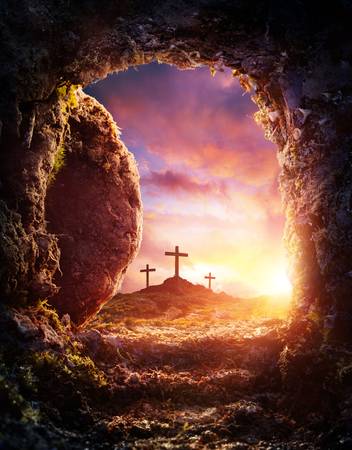
Today is a reminder of violence. “Good Friday” is filled with reminders of torture, injustice, and brutal death on a cross. There is almost nothing about this day that suggests “Peace.” And yet, it is because of this day, and this cruel and violent death, that WE can have peace with God. Jesus made peace for us by suffering at the hands of corrupt and brutal men. He could have fought back. He could have called down legions of angels to avenge each cut and bruise He suffered. With a breath or a single word, He could have slain the entire Roman Empire, freed the nation of Israel, and claimed victory and “peace.” He could have avoided the violence of beatings and death. He could have appealed to Pilate, who already was inclined to release Him. He could have argued with the Sanhedrin, or said whatever they required to secure His pardon and avoid the cross. He could have run away in the Garden, and stayed hidden and given up His ministry for safety and “peace.” But He didn’t. He didn’t fight back, He didn’t argue, He didn’t plead. He healed the ear of one of His arresting officers. He welcomed one of the thieves crucified next to Him into the Kingdom of God. He made provision for His mother’s well-being. He forgave those who accused Him and crucified Him–even from the Cross!
Jesus said that those who make peace will be called the children of God. Not those who seek peace– those who make peace. There is a difference. We tend to seek peace through avoidance. We isolate, insulate, hibernate and alienate, all in attempting to find peace. We avoid conflict. We avoid attachments that might cause us heartbreak or betrayal. Even in our prayers (and I’m speaking from personal experience), we ask for peace without pain or involvement. We want God to shower us with peace and protection, but we don’t ask for the courage or the strength to “make” peace.
Making peace involves reaching out, taking risks, being willing to suffer misunderstanding, conflict, and injustice. It means that we will “take up our cross” and be willing to die to our own comfort and safety for the sake of Christ. That does not mean that we are to be combative, aggressive, abusive, or contemptuous. But, like Jesus, we are to stand firm, even as we offer open arms to those who disagree with us, mock us, even persecute us. True peace is a gift–first from God, and passed on to others who do not deserve it. It is a gift of Grace and Love. The Children of God should be makers of peace, not avoiders of conflict. We need to meet violence and aggression with strength of purpose and positive action. And that should be reflected in our prayer life as well.
Earlier this week, my mother celebrated her 88th birthday. Mom has survived more than most people can imagine. She was born in 1933, during the worst years of the Great Depression. She survived hunger and poverty, near-homelessness, and insecurity in her earliest years, despite my grandparents’ best efforts to provide for their family. She survived the upheaval of World War 2, when her father left to serve in the Navy and her mother worked long hours in a factory. She and her sister had to take on most of the housework.
As a teenager, mom fell madly in love with a young man who convinced her to drop out of high school and become his wife. Her romantic dream quickly turned into a nightmare of abuse, heartbreak, fear, and starvation. Though he loved her, her husband could not control his own inner torments. He drank heavily and was very controlling. He insulted her, isolated her from family and friends, forbad her from going to church, and he sometimes punched her. By the age of 19, she was anemic, weighed less than 100 pounds, and had just miscarried twins– partly because she had been denied access to pre-natal care; partly because she had been beaten and malnourished. But she survived, and went on to have a healthy pregnancy, mostly because her husband was drafted and sent to Korea.
Mom survived divorce, something to which she had always been opposed, for the sake of her son. She survived the threats against herself and her young boy. She survived all the court dates and new responsibilities. She survived working 10-hours days, six days a week, at a butcher shop, cutting, grinding, and packing up meat, so she could provide for her young son.
Mom remarried at age 30. Shortly before her marriage, she had found a better job; one with better pay and shorter hours. Shortly after her marriage, on her way home from work, she was involved in a horrible accident. She had a head injury, broken ribs, and a broken collarbone. She began suffering from headaches. She suffered another miscarriage. But she survived, and went on to have me and my sister, both healthy deliveries. She had stopped working to be home with us, but she was involved in multiply volunteer opportunities through church and in the community. But her headaches were debilitating, and with them came depression.
Mom survived many dark days of pain and doubt. Though she was socially active, it took a great deal of energy and will to force herself to get out and keep going. Her doctor gave her medication for depression, and, thankfully, he carefully monitored what she took and whether it was effective. The headaches did not diminish, and mom treated them with massive doses of Anacin and other pain relievers.
In her 50s, mom developed more health problems. She developed arthritis. She had a hysterectomy, and had to have her gall bladder removed. In her 60s, mom had cataract surgery. Then she had to watch as her husband’s health deteriorated, and she lost him just after their 35th anniversary. She survived, and had to adjust to widowhood. In her 70s, she had more surgeries– she lost part of her thyroid, and nearly died. She had surgery to “undo” some of the damage from her earlier hysterectomy. She was diagnosed with bone density issues, which caused a curvature in her spine. In her 80s, she developed a heart condition. She had to undergo heart surgery and have a pacemaker. She could have died, but she didn’t. She developed a series of infections from one of her earlier surgeries, and had to use a cane to walk because of the bone density and spine curvature. She was diagnosed with macular degeneration, meaning that she is slowly going blind.
Last fall, during the height of the COVID crisis, Mom fell and broke her hip. She was in a hospital where there were COVID cases, and she was transported to a rehab facility that had 4 COVID cases. By the time she left to come home, she was one of only 4 who had NOT developed COVID at that facility! She continues to go to outpatient rehab twice a week, and now has to use a walker, instead of just a cane, to provide balance and stability when she walks. She no longer drives, and has trouble reading, due to the macular degeneration. But she survives.
I say all of this, not because my mom is tougher, or luckier than other folks; not because she is more worthy of life than those who have not survived such struggles, and not because her life is more tragic than anyone else’s. I say this because my mother is a woman of prayer.
Last week, for Mother’s Day, we took my mom to her local church. She no longer drives, and she rarely gets out because of her health issues. But she wanted to be in church that Sunday. The very first hymn they sang that day was “Love Lifted Me.” And I cried. That was the song she had used, fifty years ago, to rock me to sleep as a child. Sometimes, she would sing it out. Sometimes she would just hum the tune as she rocked me. She was often crying as she sang– exhausted, depressed, worried, or haunted–but those words imprinted themselves in my young mind: Love lifted me. Love lifted me. When nothing else could help– Love lifted me.
My mother wasn’t just singing those words, she was praying.
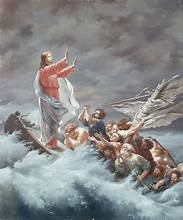
Mom has lived out those words. Crying out to “the Master of the Sea,” Mom has been lifted up time and again. She has been a prayer warrior, knowing that her prayers rise to the One who loves her best of all; the One who holds her destiny and her redemption in His hands. No matter her circumstances, she can sing, knowing that love will continue to lift her, and carry her through.
The story of Hannah in 1 Samuel is filled with priests. Her husband, Elkanah, is of the priestly class, and regularly goes to Shiloh to offer sacrifices. Chapter one quickly mentions Hophni and Phinehas who were the resident priests there. And of course, there is Eli, their father, the High Priest at that time. Hannah has access to counselors, spiritual guidance, and men whose ancestral calling is to bring people closer to God. Yet none of them can bring Hannah out of her anguish and offer comfort.
Hophni and Phinehas are noticeably absent in this story. The mention of their names calls attention to this absence. They were supposed to be the acting priests, but they don’t interact in any way with the grieving Hannah, or her husband, Elkanah. Further reading reveals that they were very wicked and due to be judged for abusing their priestly role. https://www.biblegateway.com/passage/?search=1+Samuel+2%3A12-36&version=NIV
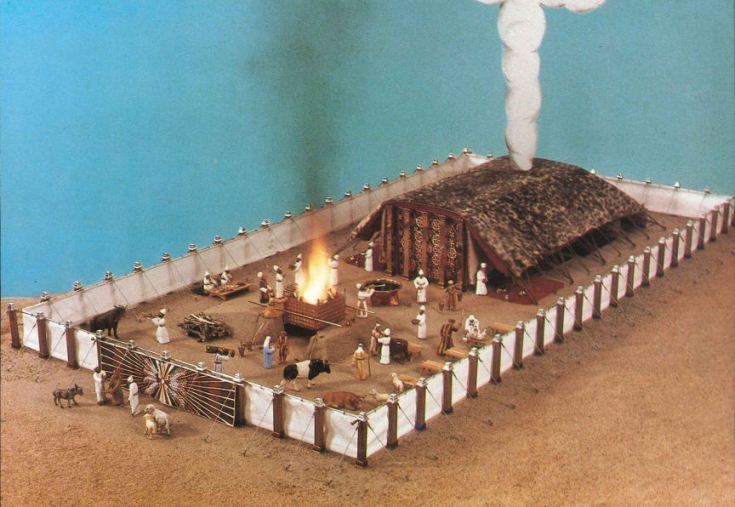
Eli himself is an indifferent priest. The first mention of him is as the father of the wicked Hophni and Phinehas. Next, we find him sitting in a chair at the doorstep of the tabernacle. He is not serving; he is not overseeing; he is not doing anything. When he first observes Hannah, he jumps to a wrong and judgmental conclusion– that she is drunk and raving. He doesn’t go over to see if he’s right in his assumption. In fact, there is no mention in the passage that he ever rises from his chair. We might gloss over this passage, without grasping the importance of this detail. Nowhere in the long lists of a priest’s duties was there an option of sitting at the door and just watching people go in and out. The priests all had duties– some were in charge of the sacrifice (as Elkanah sometimes was). Others were in charge of the lamps, the incense, the care of the utensils and tools, offering prayers, singing, playing instruments, reading from the books of the law, and keeping the tabernacle clean and in good repair. None of them required sitting. Eli isn’t busy doing the work of the Lord; he is literally sitting down on the job. In short, Eli is not a spiritual giant– he offers a standard blessing after Hannah pleads her case for not being a drunken disturber of the peace, but he doesn’t offer much in the way of true comfort or counseling. His first words to her are to “Go in peace.” The blessing seems to be almost an afterthought. Still, Hannah goes away encouraged, and comes back the next day to worship before returning home.
What can we learn from this encounter and these details in Hannah’s story?
One possible reaction is to become critical and dismissive of the clergy. I think this is the wrong reaction, but I want to address it in this context, because it can keep us from finding help and blessing if we let it. I know countless people who have walked away from the church because of one disappointing encounter with a minister, pastor’s wife, deacon, or fellow parishioner. Eli was not a stellar example of Israel’s priesthood; he was a flawed human. He had rebellious sons, and was likely depressed or anguished over his own troubles. Yet, he was still faithful to turn Hannah’s attention to the One who is always able to bring comfort and strength. Hannah could have chosen to focus on his rude and judgmental assumption about her, but she chose to focus on the hope he was able to offer. I have gotten dismissive, even bad, advice from people in the church. I have been hurt, judged, and ignored by those who are supposed to be serving God. But just as God provides grace to cover our own failures and mis-steps, He asks us to extend forgiveness and grace to those–even those who serve Him.*

Having said that, I think there is a warning here for those who serve the Lord. Eli ends his days in tragic fashion, his family legacy in ruins, because of some of the details we glimpse even in this short passage about Hannah. Eventually, her son, Samuel, will be tasked with the job of delivering the fullness of God’s judgment against Eli and his sons. Eli’s priesthood was not a cushy position of sitting at the door of God’s tabernacle enjoying an afternoon breeze. He was in charge of setting the tone of reverence and worship for the nation. His sons were corrupt; everyone knew it, including Eli, but nothing was done about it. He sat there, and let evil happen around him. Church workers, pastors, and priests who do evil and abuse their positions may get away with it for awhile, but God will not hold them guiltless. Nor will he hold those guiltless who cover up or deny the guilt of those around them. No matter how high the position, no matter how much “good” they have done, unless they repent of their actions, they will face God’s wrath over their evil acts.
Finally, we need to see Hannah’s response. Regardless of how evil the sons of Eli were, or how spineless Eli was as a parent and a High Priest, Hannah found faith– not in the priests– but in the God they served. She had seen the dedication of her husband, Elkanah. He served God with reverence, and he served his family with love and honor. She saw that Eli, even sitting down on the job, was still aware that hope and healing come from the Almighty.
Hannah’s response to Eli, and the God he served so imperfectly, deserves another look– one we will take in the next post.
I pray that today, we will be grateful to God for the faithful servants he sends into our lives, and for his grace when we or others “sit down” on the job of serving others and showing Him the reverence He deserves.