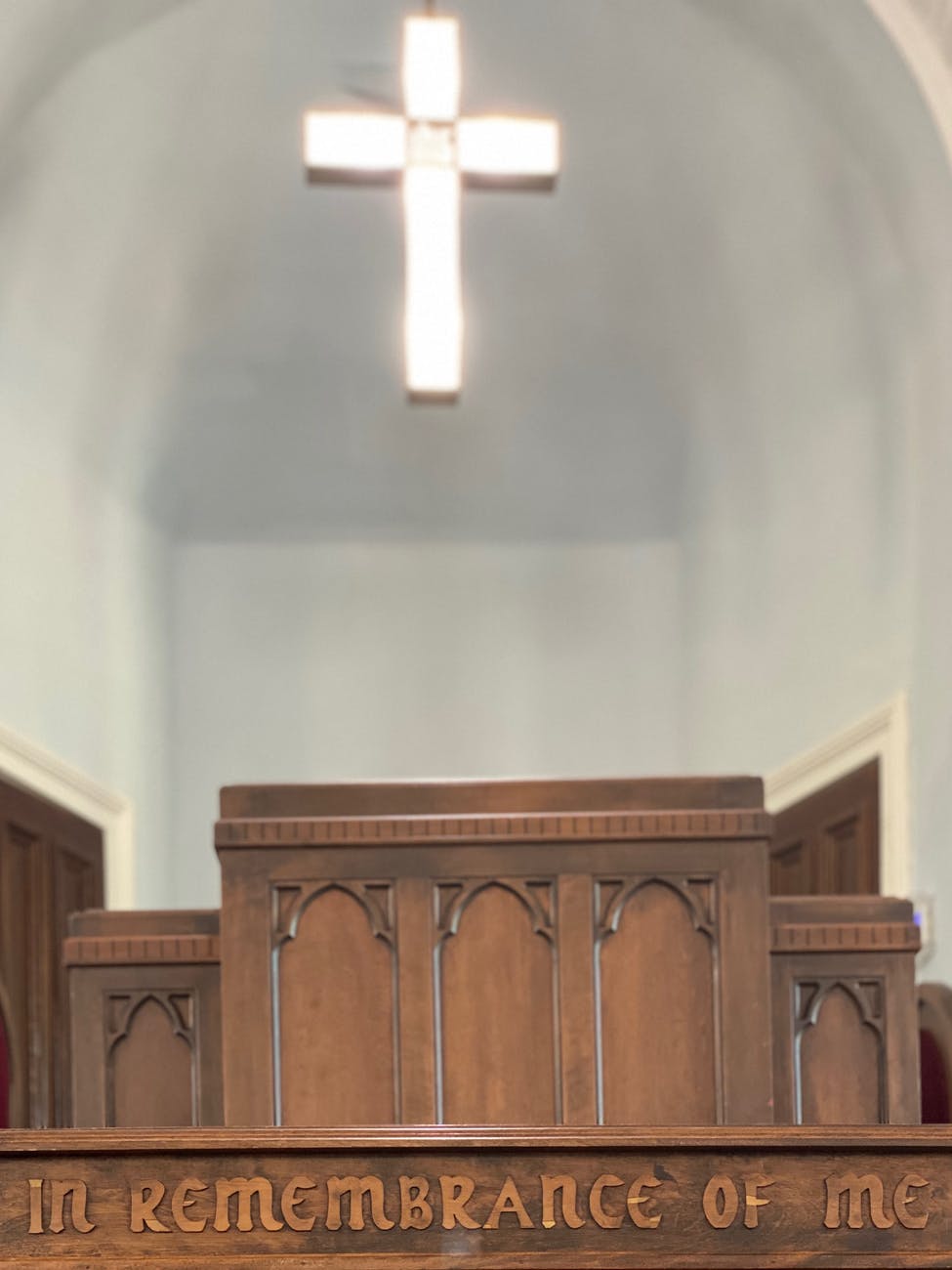
Thirst

My church is offering several fitness challenges this month. I’m working on two of them, walking, and “water.” Walking seems self-explanatory–the challenge is to walk more, with more focus, etc.. We get daily updates with great tips on walking safely, facts on the benefits of walking (as opposed to running or strength-training), and additional challenges for focus, finding a walking partner, and more. My job is largely sedentary, so even though I try to walk around somewhat at work, I enjoy the challenge of finding ways to get more steps/more time spent walking each day.

The “water” challenge seems a bit harder to explain. In fact, when I signed up, I got a message saying something like, “Congratulations! You signed up for the one fitness challenge that doesn’t involve fitness!” But I am finding the water challenge to be both physically and spiritually enriching. The challenge is to drink “enough” water. Seems easy, right? But it turns out that I haven’t been drinking enough water each day. And the effects are subtle, but dangerous– everything from dry skin to constipation; damage to the kidney and liver (who knew?), sluggishness and fatigue, weight gain, “brain fog,” irritability, muscle cramps, and more, https://steptohealth.com/consequences-drinking-little-water/#google_vignette Of course, all of these symptoms can be caused by other factors, but drinking more water can help alleviate many of them without medications or more extreme treatments. It IS possible to drink too MUCH water during the day, but most of us have the opposite problem. Why are we depriving ourselves of something so crucial to our health?

In my case, one of the leading reasons I wasn’t drinking enough water is that I simply wasn’t thirsty. I work indoors in a temperature-controlled environment. I don’t do heavy manual labor. I don’t work up a sweat. And it simply didn’t occur to me to drink at regular intervals. I would drink water or sugary drinks with meals, or when I “felt” thirsty, and when I developed diabetes, I cut out the sugary drinks– without replacing them with the same amount of water!

I have been challenged this month to drink eight ounces of water each hour for eight hours of my day– a total of 64 ounces, or a half-gallon! I make sure at least some of the water contains electrolytes, which help keep me from deficiencies in key minerals like potassium and magnesium (see more info here: https://microsoftstart.msn.com/en-us/health/ask-professionals/in-expert-answers-on-Electrolytes/in-Electrolytes?questionid=9toqf9mo&type=condition&source=bing_expertqna_ac ) It may sound easy, but I have to remind myself to drink, even if I don’t feel thirsty; even if I’m “busy” with something else. At first, there were “uncomfortable” side effects– I had to use the restroom more often, for starters. And I didn’t feel the positive side effects right away. But over two weeks in, I’m seeing some real benefits. I still use the bathroom more frequently during the day, but less frequently at night! I wasn’t expecting that! And I’m developing a rhythm in my water intake that keeps me from feeling “empty” in the mid-afternoons, when I am tempted to snack, which has helped me lose a little weight–by drinking more! Combined with the walking challenge, I am finding myself with more energy and a brighter outlook, especially in the mornings.

So what does all this have to do with Pursuing Prayer?

Well, the Bible talks a lot about water– a LOT– and about thirst. Not just a thirst for water, but a spiritual “thirst.”

Blessed are those who hunger and thirst for righteousness, for they will be filled. (Matthew 5:6)

Behold, the days are coming, declares the Lord GOD, when I will send a famine on the land— not a famine of bread or a thirst for water, but a famine of hearing the words of the LORD. (Amos 8:11)

Just as we can fall into the bad habit of ignoring our body’s need for water, we can ignore our soul’s need for communion with God. We can neglect reading Scripture, or spending time in prayer and meditation, and it can lead to serious side effects.

I don’t always “feel” like praying. I don’t always have a natural “thirst” for reading the Bible (I fell asleep this morning reading in 1 Chronicles…) But when I DON’T take time to read or pray, I have even less “thirst” for it– even though my need is still as great or greater!

We can’t spend all our lives on our knees and ignoring our daily tasks. We can’t always carve out hours or days to spend in meditation and Bible study. There are seasons of life where we will remain “thirsty” for a while. But let’s be vigilant to create habits that help us stay both physically and spiritually healthy.

One of the ways we were challenged in the first week of the month was simply add one glass of water to our routine each day. Even if we weren’t drinking a lot of water, just one glass more would help. Let me offer a similar challenge to pray “one more prayer” each day. If you normally pray in the morning or evening, add a “prayer break” to your afternoon. Treat it just like a coffee break (or water break?!) Add a prayer of thanks as you pull in the drive after the work day or after a trip to the grocery store. Write out a prayer request and tape it to the bathroom mirror to remind you to lift up one extra prayer today.

Let’s get thirsty! After all, Jesus Himself is the “Living Water.” He will satisfy!
Where Are the Altars?

In the Biblical books of the prophets (Isaiah, Jeremiah, Ezekiel, etc.), there are many references to altars and sacrifices–both the ones built to honor Jehovah God, and those designed for idols.

Israel and Judah were guilty of building thousands of altars and shrines to false gods. Some of them were found even inside the Holy area of God’s own temple! As part of God’s judgment, He repeated that He would no longer accept the empty sacrifices of His people–He would no longer hear their prayers, unless they repented.

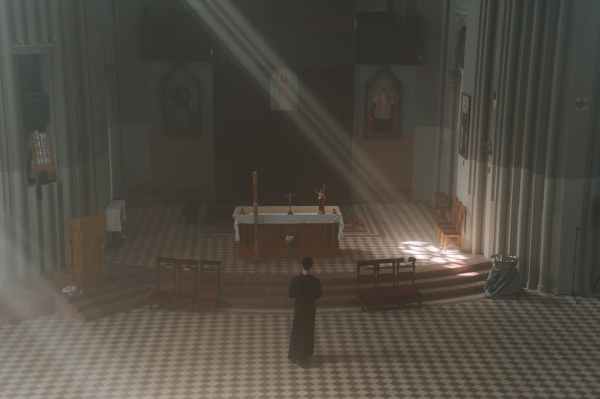
I read these words and wondered– Where are our altars today? When I was a child, many of the older churches had what we called an Altar. It was usually a raised platform, with a podium for the minister, and possibly a “host table” for communion. My childhood church also had a small table that held a large Bible. Sometimes, the platform would have a railing around the edge, with a couple of stairs on either side. And, while many churches “passed the plate” for offerings, some had a special plate on the railing of the altar, where people would march up and place their offerings for the week. There it would sit for the rest of the service–random dollar bills of random denominations in random states of being crumpled, folded, and worn, along with checks, and, sometimes even coins. All of them brought forward and placed on the altar.

In many churches, the altar was where congregants would come to receive communion. The most important church events happened “at the altar.” Weddings, baby dedications, Bible readings and sermons, even funerals– all happened at the altar.

And often, we would have an “altar call.” The pastor, or a guest evangelist would urge people from the congregation to meet at the altar– to repent, to receive forgiveness, to be renewed and refreshed as we offered ourselves to God. There we were– random denominations of people, in random stages of obedience or rebellion, all answering the call to follow Christ as Lord. Some stayed there for a few minutes, praying silently. Others might be there for an hour, crying out, trying to find the words to express pain, guilt, or gratitude and awe, that GOD would meet with US there! Sometimes, we would form small groups to pray and give encouragement; sometimes we would disperse, too moved to speak at all. The Altar was the focus of the service– the place where God met with us; where He received our worship and our offerings; where we were challenged and made ready for spiritual battle.

Today, many churches have stages, like any large theater or event center. There is no railing, but there are hundreds of spotlights and fog machines. There is no podium for the pastor–just a headset and maybe a small stand for notes. Sometimes, the pastor reads from a teleprompter. Often, he or she is joined by a full band or orchestra, and dozens of singers, actors, or other assistants. No one from the congregation approaches the stage– why would they get up from their comfortable reclining padded seat? No one even “needs” to bring a Bible– the sermon text is printed out on the giant screens hanging above the stage. Our worship is comfortable, and entertaining. Many of us don’t even go to a church building, anymore. We can livestream worship services, or watch from a satellite location. We don’t even have to change out of our pajamas! And we feel blessed, and filled with excitement to be part of something dynamic and spiritually uplifting.

But we have no altars. There is no place for someone to lay their offering before God; no place to meet with Him in repentance or revival. There is no place to remind us of sacrifice and atonement. Oh, to be sure, many churches have a large cross on display somewhere. Some even have the “host table” for communion– somewhere in the wings, just in case–but the concept of an “altar” has all but disappeared from churches in the West. It is an anachronism–something ancient and uncomfortably part of the distant mists of tradition.

I miss the altar. I believe God misses it, too.

Two or More

10 If one falls, the other pulls him up; but if a man falls when he is alone, he’s in trouble.11 Also, on a cold night, two under the same blanket gain warmth from each other, but how can one be warm alone? 12 And one standing alone can be attacked and defeated, but two can stand back-to-back and conquer; three is even better, for a triple-braided cord is not easily broken.

Ecclesiastes 4:10-12

At least once each month this year, I want to write about practical ways to develop our Pursuit of Prayer. Today, I want to focus on seeking out a partner or prayer group.

There are many benefits of adding corporate or communal prayer to our lives. Most of our prayers will take place between just ourselves and God. We may pray during our quiet time, early in the morning, or just before bedtime. Our prayers may be short or long; full of joy or sorrow; silent or even mumbled. But when we pray with at least one other person, the following should happen:

  • We should be more focused. It may sound shallow or presumptuous, but praying aloud in front of a “human” audience has a tendency to keep us focused on the words we use and the thoughts we are sharing. And, while we can fall victim to the temptation to show off our eloquence, or say what we think others want to hear, we can also be sharpened by the reality that God AND others are listening! Have you ever “caught” yourself praying without really “hearing” your own thoughts? Sometimes, prayers can become rote or stale. We can pray on “automatic pilot”– repeating requests or phrases without really meaning them. Praying aloud in front of others won’t necessarily stop that from happening, but it should make us more focused.
  • We should learn from the prayers of others. Listening to others pray gives us insight into THEIR thoughts and hearts. It can also give us insight into how others communicate with the Father. Sometimes others have knowledge of issues and requests of which I am unaware or unburdened. Sometimes, they have a different way of relating to the Father– not “better,” but different in perspective or experience. I have been startled, convicted, encouraged, and emboldened by listening to the prayers of my brothers and sisters in Christ. And there is a “flip-side” to this, namely
  • We should allow others to learn from our prayers. I know many people who feel their prayers are somehow “inferior.” They use simple words, or their words don’t flow smoothly. They are ashamed to pray in public. And yet, thousands have been inspired and humbled by so-called “simple” prayers. They teach faith and humility; trust and caring; and even courage and strength. If everyone’s prayers were the same, or if everyone’s prayers were about their own abilities or eloquence, they would lose much of their power– because prayer is not about US; it is about God working THROUGH us.
  • We can agree in prayer. As one of us prays aloud, the other(s) can pray along silently in agreement. This may seem like a simple truth, or a trivial point, but it is not. Prayer, like the rest of our life, is meant to be done in communion with others–we are not meant to be solitary and self-sufficient. There is exponential power in communal prayer, as we come together in agreement on various issues. It is one of the reasons that so many revival experiences begin with a small group of people who pray fervently. This isn’t just a metaphysical phenomenon. Hearing others pray about the things weighing on my heart encourages me to keep praying when I am alone again. Hearing others pray with the same heart encourages my faith and resolve. Hearing others agree in prayer may even plant a seed that wasn’t there before. Conversely, hearing others pray may cause me to reevaluate my own thinking, or help us better hear faulty thinking and disagreement over certain issues, causing us to seek resolution and truth over long-held but unquestioned beliefs. Praying aloud can help bring us closer toward unity!

  • Our prayers become more powerful. “Where two or three are gathered…” Matthew 18:20 says that where two or three are gathered together in my (Jesus’) name, he will there in the midst of them. This verse is often taken out of context. It does NOT mean that Jesus will ONLY be with groups of two or more. Jesus promises never to leave or forsake ANYONE who puts their trust in Him. Others have taken this promise (along with its preceding verse) to mean that where two or three people pray together, Jesus is obligated to give them whatever they ask for. This is also misleading. Jesus is with us, not to give us a particular outcome or answer, but to guide us into truth and faith. It means that Jesus is with each person, AND with everyone who gathers together in HIS name. His presence is magnified; His power is magnified (if such a thing is possible…) Just as in the passage in Ecclesiastes, the power of a united group– even a small group of two or three PLUS JESUS– cannot be over-emphasized. Remember the story of Shadrach, Meshach, and Abednego? Satan does not worry when Christians gather together to protest or complain. It warms his heart to see a small group of Christians come together to gossip, boast, or argue. But he shudders when Christians meet together in Faith to pray! It is much more difficult for him to distract, distort, and discourage us when we pray together–for each other, with each other, beside each other!
  • We become more accountable. This happens best when we meet regularly for prayer with another/others. It doesn’t have to be daily or even weekly, but when we meet consistently, we challenge one another to be faithful, active, and accountable in our prayers and in our living. I pray more often alone when I pray more often with a friend or group! I pray with more focus and purpose. I pray more intentionally.

If you don’t have a regular prayer partner or prayer group, I encourage you to seek out a friend or a group of people who will meet regularly. Even if it is not a “Prayer” group– it may be a Bible Study group, a group of friends meeting for lunch once a month, or a neighbor who carpools or commutes with you. Make prayer part of your friendship or group on a regular basis.

As Far as the East is From the West..

In blogging about prayer and in keeping a prayer journal, there is one type of prayer I don’t dwell on very often.  Prayers of confession and repentance are very important, but I don’t  include them in my journal and I don’t spend much time analyzing them.  It’s not that I want to ignore them or that I want to give a false impression that I don’t say them.

arrogant

I’m a saint–but only in the sense that Christ’s blood is my atonement and my only hope of salvation.  He who started the work is still working, and there’s a lot of work yet to be done.  So, while I include prayers of confession and repentance in my practice of pursuing prayer, I don’t write them down or share them publicly.

Photo by Mikhail Nilov on Pexels.com

Here are some of the reasons I don’t spend more time talking about confession:

trueconfessions
  • Confession is not meant to be a public spectacle.  It is generally private and very personal between an individual and God.  Apologies may be public, and repentance may include public atonement or recompense, but those are not prayer; rather they are the actions taken in conjunction with  and as a result of prayer and confession.
  • Confession is fundamental– it’s not a prayer option, or a stylistic preference–every one of us has sinned, and we all need to admit to our sins, bring them before the throne of God’s grace, and ask for his forgiveness.  Hiding sins, denying sins, or lying about them will get in the way of all our other prayers.
  • Writing about past sins keeps them alive and keeps the focus on me and on my faults, rather than on God and on His Grace.
  • Making confession public has a tendency to devolve into gossip and self-justification.  Descriptions of my sinful actions will necessarily be from my incomplete and very biased point of view.  Other people can be misrepresented and hurt.
  • But the last reason is my favorite– I don’t waste time writing down and discussing past sins because GOD HAS FORGOTTEN THEM!  Writing them down, rehearsing them, analyzing them–even analyzing how I might approach confession won’t change God’s response:

10 he does not treat us as our sins deserve
    or repay us according to our iniquities.
11 For as high as the heavens are above the earth,
    so great is his love for those who fear him;
12 as far as the east is from the west,
    so far has he removed our transgressions from us.

Psalm 103:10-12 New International Version (NIV)
  • The key is that we DO confess– humbly, consistently, and with a heart of true repentance.  What follows is a free and forgiven conscience, no longer weighted down or pulled off focus by guilt and doubt.
pexels-photo-941693.jpeg

Blog at WordPress.com.

Up ↑