Prayer and Politics

At the risk of alienating several family members and friends, I feel I need to make the following statement:  The United States of America is not, has never been, and will never be a “Christian Nation.”  I am not saying this in disparagement of my homeland– I’m not suggesting it is an irreligious nation.  But I think the term “Christian Nation” gets used presumptiously to suggest that America is uniquely righteous, or immune from criticism or judgment.  America is not a theocracy, and it is not a bastion of Christian virtue.  We are a nation “under God”, but not a nation that recognizes God as its supreme ruler.  Our government, while based on principles handed down through centuries of Judeo-Christian practice, is built around documents written by and for the people of this nation, independent of their adherence to that practice or to those doctrines.  1st Amendment and Religion

Our government does not sponsor Christian churches, nor does it require its citizens to belong to a particular religion or religious group in order to enjoy its rights, freedoms, and protections.  We do not have federal laws that punish those who believe other tenets or practice other faiths that do not fall under the Judeo-Christian umbrella.  Our courts may limit the practice of religion (including Christianity) when it conflicts with a “compelling”  governmental interest, such as public safety.  And our citizens who are practicing Christians are not united in how they apply Christianity to politics, and vice-versa.  Our members of Congress are not elected based on their adherence to a religious practice, and our leaders are not required to be clergy (the very thought is pretty laughable to most of us in today’s political climate!).  America is designed to be a nation that practices one of the most basic tenets of the Bible–that humans have the gift of Free Will, and the right to use it.

Having said all that, I also want to be clear that the Judeo-Christian tradition has played and (for now) continues to play an enormous role in our laws, societal construct, and civilization.  I’m not here to ignore that or dismiss it as unimportant.  My goal is to point out that prayer and politics should not be conflated or equated–prayer is not and never has been the equal of political thought or action–prayer is always superior!

As Christians, not only in America, but anywhere in the world, we are called upon to live worthy of Christ and his Gospel.  That doesn’t mean burying our heads in the sand or staying silent in the face of evil and injustice– we should be engaged in our communities, and in our civic responsibilities.  But it also doesn’t mean that we protest, promote, plot, and proceed politically in our own power or wisdom.  We are commanded to pray for those in leadership and authority– those we voted for and those we didn’t!  We are commanded to submit to those same authority figures, to show them honor and respect, even if we are opposed to their policies and seeking to reverse those policies.  We are commanded to live (as much as it depends on us) in peace with our neighbors, to love our enemies, and bless those who curse us.   Our patriotism and our political expression must be in line with, and submit to, our commitment to follow Christ.  To show contempt or hatred for our nation and its leaders is to show contempt for the God who is sovereign over them.  But that same God will not excuse us for turning a blind eye to sin and corruption, or worse yet, covering it up or calling it righteousness.  Our prayers, both personal and political, need to be based in truth and love.

sunset-summer-flag-america.jpg

Even as we live in tumultuous times, we are commanded to pray.  In relation to our nation and our society, I think there are at least four important things to keep in mind:

  • Our real citizenship is in Heaven.  Praying for our nation, its leaders, its laws, etc., is in line with Scripture; worshiping our nation, its leaders, its laws, etc., is idolatry.
  • Our neighbors, our nation, our world– they won’t change because we enact a new law, win an election, change the economy, or wipe out war.  People, nations, and societies will change because they have had an encounter with Jesus Christ, and they have been transformed by his Grace.  Are they seeing HIM in our actions, our Facebook and Twitter feeds, our interactions on the street; are they hearing HIM in our conversations; are they overwhelmed by HIS grace when they meet us?  Pray that God will help us be faithful in the small things.  Our actions speak louder than our words– and that includes the words of our prayers!
  • God’s ways are not our ways–we need to be careful that we are not praying for (and demanding, and offering on our part) a quick compromise, a superficial spirituality, and a cheap grace that substitutes for a deep and lasting revival.  Don’t ask God to “fix” the world and then wonder why he sends the repairman to your door, or recruits you to scrub toilets!
  • We are in a battle, but it is not with people and it is not going to be won by playing politics–we must learn to identify the real enemy, so we can put on the correct armor and reach for the right weapons.  Our shield is not the flag– it is Faith.  Our sword is not a clever argument– it is the simple truth of the Gospel.  Victory has already been declared.  Remember to rejoice when we pray for our nation and our world– the Lamb has Overcome!

Prayer connects us to the power of the King of Kings and Lord of Lords, whose banner over us is Love.

jesus-christ-good-shepherd-religion-161289.png

Paltry Prayer

A couple of days ago, I wrote about “Little Prayers.”  I believe God hears our prayers about the so-called “little things.”  But I think there is a type of prayer that is not “little”, but “paltry.”  What’s the difference?  “Paltry” doesn’t just imply little or trivial, it connotes something meager and petty.  And I think we waste a lot of time on it.

Paltry prayer is generic and insubstantial.  It’s like the horrible small talk at a social event one doesn’t want to attend, but feels obligated to show up at, because it’s expected.  When we throw up a prayer, but we really don’t want to get “real” before God, we’re offering crumbs instead of a sacrifice; face-time, instead of intimate conversation.

There are times when we cry out in desperation; we have no words or fleshed-out thoughts, only groans.  That’s not what I’m talking about.  I’m talking about the times when we want to reassure ourselves that we’re one of the good guys– that our plans and wishes have God’s stamp of approval–without actually risking God’s authoritative answer.  “God, help me to do your will today,” sounds like a great prayer, but do we really mean what we’re saying?   Or are we really asking God to approve of our own will  and plans as we go through the day?

I’m especially concerned that we are offering paltry prayers in regards to evangelism and revival.  We want it to come– we want God to send a fresh wave of revival to our communities, our country, and our world– but let it begin and end without making us too uncomfortable, too aware of our own need for confession, forgiveness, or change.  We want our neighbor to be saved– without the pain of witnessing and being laughed at or ostracized.  We want to be emboldened to witness, but we don’t want to be humbled into listening.  We want to be blessed; we don’t want to be tested.


I get very discouraged sometimes, when I realize that my own prayers have been paltry.  But there is good news– the same loving Father that wants deeper conversation with me is endlessly forgiving, encouraging, and loving.  And I am not alone in offering meager conversation or selfish complaints before His throne.

wakerocks

Jonah (yes the “Big Fish” guy of the Bible) was a prophet– a very successful one, except for the episode with Nineveh.  Not only did Jonah run as far from Nineveh as a ship could take him; he basically committed suicide to avoid doing God’s bidding.  When his shipmates are in a panic, Jonah demands that they throw him in the sea.  This is not as a result of consulting with God, nor does the Bible suggest that it is at God’s command.  The sailors continue to panic at the thought of throwing Jonah overboard, and are astonished when the storm stops as Jonah sinks toward the ocean floor.  If not for the fish, Jonah would have drowned.  God sent the fish to save Jonah, but there is nothing to suggest that Jonah had any idea of being rescued. However, from the belly of the fish, Jonah lifts up a poetic prayer, in which he sings the praises of the God who spared his life.   He marvels at his rescue and restoration, and vows to go back to Nineveh and fulfill his destiny.  His prayer strikes all the “holy” notes one would wish to see, but I would contend that this is, at its heart, a paltry prayer– sincere in the moment, but not the prayer of a man fully transformed by his near-death experience.

Fast forward to the fourth chapter of the book of Jonah.  Nineveh has heard Jonah’s message about God’s wrath and impending judgment; the people have had a miraculous change of heart, and God has agreed to spare them from destruction (for a time– the Ninevites went back to their old habits and were eventually destroyed).  Imagine if the late Billy Graham had held a rally in Moscow or Tehran or Los Angeles and the ENTIRE CITY had repented?!  This is success beyond imagination.  But we don’t find Jonah grateful and poetic as he was at the end of chapter two– instead, he is hateful and bitter, and praying for death!  God causes a small vine to grow and provide some shade for Jonah as he sits and sulks, but then he sends a worm to chew up the vine so it withers.  Jonah is more heartbroken at the loss of the vine then he was over the possibility of the destruction of an entire city.  Jonah’s story doesn’t end in triumph, but in triviality.

Prayer is a great opportunity to pour out our hearts before God– but it also reveals the content and character of our hearts.  If our prayers are paltry and our hearts shallow, God will often humble us.  But he will also rescue us from our own sinfulness and sulking, and give us all that we need to finish victoriously.  The book of Jonah is a great cautionary tale– let’s learn from it, today.

sea-beach-storm-tree.jpg

What can we do to make our prayers less “paltry” and more proactive?  Check out the suggestions on the attached pages of this blog, or look online for prayer groups and prayer sites that offer constructive ideas.

Making Waves

Yesterday, students across the nation walked out of class to protest the school shooting that took place a month ago in Florida.  Many have hailed this as the beginning of a new movement; others have decried it as a stunt.  I’m not here to debate the merits of this particular action or even what it may or may not represent.  What I do want to look at is how and why groups are using various methods to “make waves” in our world.

What does it mean to “make waves?”  According to the online urbandictionary.com, it means:  to cause a disturbance, or to create a situation where chaos or controversy will surface

The underlying assumption is that there is a deceptively calm surface that requires a disturbance– that chaos or controversy are already present, and bringing them to the surface is necessary to prevent more tragic results.

If you live near a large lake or the ocean, you may have watched waves in action.  Waves can be powerful, and even tragic, in their own right.  Storm surge waves and tidal waves have been known to decimate coastal areas; even normal wave action can erode shorelines and pull unwary swimmers under the surface.  But waves also serve good purposes– they polish the stones and wash up treasures onto the beaches.  They prevent stagnation.  They help move small creatures that dwell in the sand and shallow waters.

One thing about waves that sometimes passes unnoticed– waves may change in size or power, but they are constant– rolling in and out unvaried in their rhythm from day to day and year to year.  In this sense, no one “makes” waves, except the creator, who started that rhythm and set the boundaries for the lakes and seas.  Instead, we attempt to create bigger, more powerful waves, or make waves where none were before– puddles, or swimming pools, perhaps.  At some point in our lives, we WILL make waves– but what kind, and to what purpose?

waves

My point is not that we shouldn’t try to be agents of needed change in our world– but we should examine the positive and negative consequences of our wave-making.  Are we pushing something to the surface that needs to be seen or discovered?  Are we pulling something under the surface to drown it out?  Are we eroding a foundation, or carving out a new coastline?  Also, are we being consistent in our wave-making?  Are we hoping for a single tidal wave of chaos, or a constant churning action that brings lasting change.

Of course, since this blog is about prayer, I would suggest that prayers are also like waves– each one breaking in its turn, but constantly rolling, churning, and moving forward, bringing things, both large and small, to the shore.  Prayers have a constant rhythm and a subtle roar that masks their full impact.  Prayers, like rolling waters,  intermingle, push each other forward, dance, and rise, and fall with the winds and storms of life, and roll back to rise up again.
Not all prayers are like waves– not all waves are like prayer.  but  shouldn’t we want to make waves in tune with God’s purposes?  Waves answer to God– he can both calm them, and stir them into wild fury; walk on them, or hold them back.

I pray that our prayers and our actions would be consistent with God’s rhythm; that we would embrace changes and actions that bring him honor.

Praying for Peace

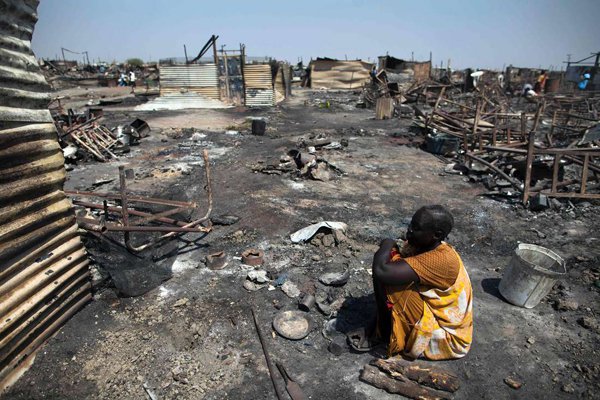
A few years ago, I was introduced to a man from South Sudan, who had come to the U.S. for a missions conference.  Earlier in the evening, he had shared a report on conditions in his region– all the horrible details you dread hearing–displaced families, homeless refugees, orphaned children, shortages of food, clothing, shelter, blankets, and medicine, constant fear of being attacked by one side or another in the ongoing conflict.  Throughout his report, he emphasized the sovereignty of God, and his hope that he and his team could continue to help those most in need.  As I got a chance to speak directly to “Robert” *, I told him that I would pray for peace to come to his region.  I was shocked when he stopped me.  “Please don’t pray for peace,” he told me.  “Pray instead that God would give us the resources and the strength to be faithful and to keep helping.”

south sudan

Then he explained.  It wasn’t that he didn’t want peace to come, but he wanted me to pray for whatever God willed for his region.  The Kingdom of God, not earthly peace, was his highest priority and his greatest urgency.  Because of the circumstances of war, people were desperate.  Their world had been turned upside-down, and they were in great need.  But war had also opened up opportunities– not only opportunities to help those in need, but opportunities to show the Love of Christ as it had never been known to the people there.  The people who were coming to refugee camps were meeting, sometimes for the very first time, people from other villages, other cultures, and other faiths– people they had considered enemies.  Suddenly, they were seeing these enemies as fellow sufferers, fellow human beings with the same injuries and losses, needs and longings as themselves.  They were also “seeing through” some of the lies they had believed about “the others” in their midst.  Their circumstances were desperate, but their biggest need was for hope and help.  Help was coming from around the world– United Nations’ agencies, The Red Cross, Doctors Without Borders, and several Christian relief and medical organizations.  These groups had been kept out during peacetime and even in the early stages of fighting.  Not only were they able to help with immediate relief; they were able to provide medical care for victims of AIDS, and childhood diseases, care that had long been denied.  Along with practical help, though, these groups were providing hope– hope to rebuild, hope in the midst of despair and chaos, hope of eternal life and a relationship with God.

“Robert” was not saying that he didn’t long for peace, or that peace would be a bad thing for the people of South Sudan.  Of course not.  But the greatest need was not for an immediate end to fighting– it was for the kind of peace that only God can bring.  As far as I know “Robert” is still working with refugees and displaced families in South Sudan.  The work is difficult and often heartbreaking.  Resources are stretched, and chaos still haunts the land.  But progress is coming– slowly, but surely.  Lives are being changed, reclaimed, and renewed.   And I pray that he and his team are being strengthened and encouraged even as their circumstances continue to be desperate.

pexels-photo-752473.jpeg

I share this story because I am still learning that Prayer isn’t about what I want or think is best; it isn’t about getting my way, or asking for the easy “fix” or the happy ending.  It’s about seeking God’s will, His way, His answer, His timing, and His grace.  Suffering, whether we are experiencing it or hearing about it, reminds us that we live in a fallen and dying world.  We long for peace.  We long for healing.   We long for rest and comfort and happiness.  But in this world, there will be trouble and injustice, death and disease, pain, suffering, betrayal, and unanswered questions.  We don’t understand God’s timing, his plan in allowing innocent people to suffer the cruelties of war or poverty.  And if we are living in peace and comfort, it makes us feel guilty and even fearful– why them and not us?  When might we face unexpected hardship?  So we ask God to remove all the discomforts, the struggles, the pain.  It is not wrong to want healing and peace and all the other good things– we should seek justice and mercy and peace and joy.  But we also need to recognize that God may choose to bless us in unexpected ways through our hardships and agonies.  And he may be calling some of us to take action– to be His hands and feet– to reach out with the resources he has given us to help others.  He doesn’t love those others less; he doesn’t love us more– he loves to see us love each other in His name!

God’s ways are not my ways; his timing isn’t the same as mine– it is better.  It is perfect. In the end, there will be peace in South Sudan.  There will be Peace on Earth. There will be healing and justice, and peace and joy.  There will be answers for all the questions, and happy endings.   But in the meantime, may God give all of us the strength and resources to help those in need, the faith and discipline to keep going in the midst of chaos, and the wisdom to make peace and spread love wherever and whenever we can.


*Because “Robert” is a Christian worker in an area of intense persecution, his true identity is being protected.  Please pray for all those who are risking their lives and livelihoods to live, work, and worship as Christians throughout the world.  And be thankful if you live in an area where you risk little or nothing to proclaim the name of Jesus Christ.

Blog at WordPress.com.

Up ↑