What Did You Say?

Every once in a while, I like to check an app that counts the words I use on Facebook.  The end result is a cloud full of words that people see when they read my posts.  (You can see my most recent one above.)

Sometimes, I like the cloud– I love to see it filled with words like Love, People, God, Prayer, Joy, Peace, Thankful, etc.  I’d like to think that this is how I always look and sound.  Of course it isn’t.  I don’t always speak encouragement and love on people.  Sometimes, I complain and rehearse negative self-talk, or I explode and rant about bad drivers, rude customers, constant bills, and more.  Checking on my word count may not keep me from using negative words altogether, but it does show me patterns I may not be seeing or hearing on my own or from my friends.

pexels-photo-211816.jpeg

My prayer life acts in this same way–especially as I journal about my prayers.  I can look back through my prayer journal, and see patterns in prayer requests, notes, and even answers to prayer.  Sometimes, I see patterns of struggle–desperation, need, frustration.  Sometimes, the pattern is steady; other times it is a roller coaster of ups and downs.

It’s important to spend a little time periodically getting feedback like this.  Why?  Because what we actually say (and pray) may be very different from what we think we have said.  Jesus was very careful about words:

Matthew 12:35-37 English Standard Version (ESV)

35 The good person out of his good treasure brings forth good, and the evil person out of his evil treasure brings forth evil. 36 I tell you, on the day of judgment people will give account for every careless word they speak, 37 for by your words you will be justified, and by your words you will be condemned.”

Mark 10:17-18 English Standard Version (ESV)

17 And as he was setting out on his journey, a man ran up and knelt before him and asked him, “Good Teacher, what must I do to inherit eternal life?” 18 And Jesus said to him, “Why do you call me good? No one is good except God alone.

Paul is also careful to distinguish between words:

Romans 5:7-8 English Standard Version (ESV)

7 For one will scarcely die for a righteous person—though perhaps for a good person one would dare even to die— 8 but God shows his love for us in that while we were still sinners, Christ died for us.

I include the last two examples because they both refer to “Good” people.  I want people to see God’s goodness in me.  But idle or careless words and habits can show up in my thought life, my prayer life, my on-line life, and my face-to-face conversations.  In attempting to show how “good” I am (self-righteousness), or how clever I am (even at someone else’s expense), or how__________________________________ (daring, popular, hard-working…you get the idea) I am, it compromises all that I want my life to say about God, and all that He is waiting to say through me.

cheaptalk

Words matter– whether in praying or blogging or commenting on someone else’s post.  I pray that I am making mine count!

Great Expectations

Earlier this week, the Duke and Duchess of Cambridge (otherwise known as Prince William  and Kate Middleton), welcomed their third child.  As with most royal births, there was a lot of fanfare and speculation well in advance of the actual delivery.  Early tabloid reports hinted at twins; bookmakers were figuring odds for delivery dates, names– even what the Duchess would be wearing as she brought the newborn outside for his first “sighting”.  As of the writing of this blog, the name has yet to be announced, which is cause for more speculation and anticipation.

pexels-photo-50632.jpeg

Preparing for a newborn is exciting, and filled with certain expectations.   We imagine what the baby will look like, what kind of personality s/he will have, all the wonderful discoveries to be made. But we need to be careful not to let our expectations become idols.  There’s nothing wrong with hoping for good outcomes, but it can be dangerous to get locked into a particular expected outcome.  Children surprise us (in good ways and other ways) be being themselves, and not who or what we expect them to be.

pexels-photo-185934.jpeg

When we pray, we sometimes come with certain expectations–that God will answer in a certain way or on a certain timeline.  This is not the same as having faith.  Faith says that God will hear our prayer; that he knows best, and that he will act in accordance with his own love and mercy.  It doesn’t mean that he will give us what we want when we want it, or that he will give us what makes us comfortable and happy.  His answers may seem difficult or even painful to accept– certainly not what we were expecting.  When he chooses to answer in ways that don’t meet our expectations, we wonder why.  When he chooses to say “wait,” or even, “no,” we may feel cheated and even resentful, instead of thankful that our prayers are heard by a loving God.  Often, we have built up such expectations of what “the best” should look like that we miss the real miracle God is giving us instead.

pexels-photo-236287.jpeg

Worse, there are times when our expectations reveal a lack of faith or a lack of understanding of God’s ways.  We pray for peace, but what we really want is ease and comfort.  Peace– real peace– is often revealed in times of stress, hardship and loss!  We don’t want stress; we don’t pray for stress, but stress and hardship are going to come into our lives at some point.  Praying for peace won’t bring stress, any more than not praying will keep it away!  We expect the peace to come without the battle; we expect the growth to come without the growth pains; we expect to win the race without having to run!

Sometimes we won’t even pray for what we really want or need because we expect that God will “test” us or give us difficult circumstances if we ask for certain things (like patience or peace).  We see God as some sort of cosmic con artist, who teases us with the promise of good things, only to laugh as we suffer.  But this is a wrong view of God.  God doesn’t play games or “trick” us by giving us hardship when we ask for healing, though it may feel like it at the time. Suffering and hardship are not the gifts of God– his amazing gift is the ability to redeem even the worst of circumstances and bring joy and rest and peace that passes any expectation, any dread, or any understanding we have.  Often, our very desire for extra patience, peace, and joy are opportunities for us to learn more about God’s grace–and more about ourselves.

Life seldom meets our expectations–God is waiting to exceed even our wildest dreams!  Don’t just pray expecting something good might happen.  Pray expecting God to SHOW UP!


Making Waves

Yesterday, students across the nation walked out of class to protest the school shooting that took place a month ago in Florida.  Many have hailed this as the beginning of a new movement; others have decried it as a stunt.  I’m not here to debate the merits of this particular action or even what it may or may not represent.  What I do want to look at is how and why groups are using various methods to “make waves” in our world.

What does it mean to “make waves?”  According to the online urbandictionary.com, it means:  to cause a disturbance, or to create a situation where chaos or controversy will surface

The underlying assumption is that there is a deceptively calm surface that requires a disturbance– that chaos or controversy are already present, and bringing them to the surface is necessary to prevent more tragic results.

If you live near a large lake or the ocean, you may have watched waves in action.  Waves can be powerful, and even tragic, in their own right.  Storm surge waves and tidal waves have been known to decimate coastal areas; even normal wave action can erode shorelines and pull unwary swimmers under the surface.  But waves also serve good purposes– they polish the stones and wash up treasures onto the beaches.  They prevent stagnation.  They help move small creatures that dwell in the sand and shallow waters.

One thing about waves that sometimes passes unnoticed– waves may change in size or power, but they are constant– rolling in and out unvaried in their rhythm from day to day and year to year.  In this sense, no one “makes” waves, except the creator, who started that rhythm and set the boundaries for the lakes and seas.  Instead, we attempt to create bigger, more powerful waves, or make waves where none were before– puddles, or swimming pools, perhaps.  At some point in our lives, we WILL make waves– but what kind, and to what purpose?

waves

My point is not that we shouldn’t try to be agents of needed change in our world– but we should examine the positive and negative consequences of our wave-making.  Are we pushing something to the surface that needs to be seen or discovered?  Are we pulling something under the surface to drown it out?  Are we eroding a foundation, or carving out a new coastline?  Also, are we being consistent in our wave-making?  Are we hoping for a single tidal wave of chaos, or a constant churning action that brings lasting change.

Of course, since this blog is about prayer, I would suggest that prayers are also like waves– each one breaking in its turn, but constantly rolling, churning, and moving forward, bringing things, both large and small, to the shore.  Prayers have a constant rhythm and a subtle roar that masks their full impact.  Prayers, like rolling waters,  intermingle, push each other forward, dance, and rise, and fall with the winds and storms of life, and roll back to rise up again.
Not all prayers are like waves– not all waves are like prayer.  but  shouldn’t we want to make waves in tune with God’s purposes?  Waves answer to God– he can both calm them, and stir them into wild fury; walk on them, or hold them back.

I pray that our prayers and our actions would be consistent with God’s rhythm; that we would embrace changes and actions that bring him honor.

Praying for Peace

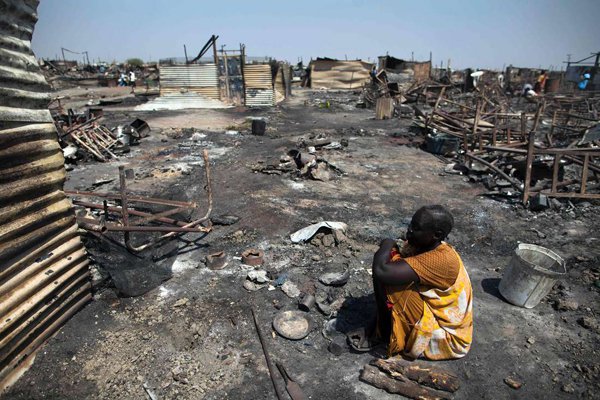
A few years ago, I was introduced to a man from South Sudan, who had come to the U.S. for a missions conference.  Earlier in the evening, he had shared a report on conditions in his region– all the horrible details you dread hearing–displaced families, homeless refugees, orphaned children, shortages of food, clothing, shelter, blankets, and medicine, constant fear of being attacked by one side or another in the ongoing conflict.  Throughout his report, he emphasized the sovereignty of God, and his hope that he and his team could continue to help those most in need.  As I got a chance to speak directly to “Robert” *, I told him that I would pray for peace to come to his region.  I was shocked when he stopped me.  “Please don’t pray for peace,” he told me.  “Pray instead that God would give us the resources and the strength to be faithful and to keep helping.”

south sudan

Then he explained.  It wasn’t that he didn’t want peace to come, but he wanted me to pray for whatever God willed for his region.  The Kingdom of God, not earthly peace, was his highest priority and his greatest urgency.  Because of the circumstances of war, people were desperate.  Their world had been turned upside-down, and they were in great need.  But war had also opened up opportunities– not only opportunities to help those in need, but opportunities to show the Love of Christ as it had never been known to the people there.  The people who were coming to refugee camps were meeting, sometimes for the very first time, people from other villages, other cultures, and other faiths– people they had considered enemies.  Suddenly, they were seeing these enemies as fellow sufferers, fellow human beings with the same injuries and losses, needs and longings as themselves.  They were also “seeing through” some of the lies they had believed about “the others” in their midst.  Their circumstances were desperate, but their biggest need was for hope and help.  Help was coming from around the world– United Nations’ agencies, The Red Cross, Doctors Without Borders, and several Christian relief and medical organizations.  These groups had been kept out during peacetime and even in the early stages of fighting.  Not only were they able to help with immediate relief; they were able to provide medical care for victims of AIDS, and childhood diseases, care that had long been denied.  Along with practical help, though, these groups were providing hope– hope to rebuild, hope in the midst of despair and chaos, hope of eternal life and a relationship with God.

“Robert” was not saying that he didn’t long for peace, or that peace would be a bad thing for the people of South Sudan.  Of course not.  But the greatest need was not for an immediate end to fighting– it was for the kind of peace that only God can bring.  As far as I know “Robert” is still working with refugees and displaced families in South Sudan.  The work is difficult and often heartbreaking.  Resources are stretched, and chaos still haunts the land.  But progress is coming– slowly, but surely.  Lives are being changed, reclaimed, and renewed.   And I pray that he and his team are being strengthened and encouraged even as their circumstances continue to be desperate.

pexels-photo-752473.jpeg

I share this story because I am still learning that Prayer isn’t about what I want or think is best; it isn’t about getting my way, or asking for the easy “fix” or the happy ending.  It’s about seeking God’s will, His way, His answer, His timing, and His grace.  Suffering, whether we are experiencing it or hearing about it, reminds us that we live in a fallen and dying world.  We long for peace.  We long for healing.   We long for rest and comfort and happiness.  But in this world, there will be trouble and injustice, death and disease, pain, suffering, betrayal, and unanswered questions.  We don’t understand God’s timing, his plan in allowing innocent people to suffer the cruelties of war or poverty.  And if we are living in peace and comfort, it makes us feel guilty and even fearful– why them and not us?  When might we face unexpected hardship?  So we ask God to remove all the discomforts, the struggles, the pain.  It is not wrong to want healing and peace and all the other good things– we should seek justice and mercy and peace and joy.  But we also need to recognize that God may choose to bless us in unexpected ways through our hardships and agonies.  And he may be calling some of us to take action– to be His hands and feet– to reach out with the resources he has given us to help others.  He doesn’t love those others less; he doesn’t love us more– he loves to see us love each other in His name!

God’s ways are not my ways; his timing isn’t the same as mine– it is better.  It is perfect. In the end, there will be peace in South Sudan.  There will be Peace on Earth. There will be healing and justice, and peace and joy.  There will be answers for all the questions, and happy endings.   But in the meantime, may God give all of us the strength and resources to help those in need, the faith and discipline to keep going in the midst of chaos, and the wisdom to make peace and spread love wherever and whenever we can.


*Because “Robert” is a Christian worker in an area of intense persecution, his true identity is being protected.  Please pray for all those who are risking their lives and livelihoods to live, work, and worship as Christians throughout the world.  And be thankful if you live in an area where you risk little or nothing to proclaim the name of Jesus Christ.

Blog at WordPress.com.

Up ↑