Prayer in the Cyber Age

I attend a weekly prayer meeting at our church. A small group of us meets one morning a week to share prayer concerns, pray for our pastors and church workers, missionaries, community members in need, etc. It usually lasts just about an hour. On a “good day,” we have about seven people.

I grew up in a small rural area, and our little country church had a weekly Wednesday evening prayer service. On a “slow night,” we might have seven people. Sometimes, we had thirty or more (nearly half the church congregation)! They lasted about an hour and a half. When I was in college, we had groups that met once a week for prayer. It wasn’t always the same group, but it met at the same time, and, again, we sometimes had as many as thirty in attendance– for prayer. Often, we met in a dorm room, so it was cramped, and many of us were sitting or kneeling on the floor. Once, we had a fire drill, and my feet had “fallen asleep” and I had to be helped as we walked to the exit!

I don’t say this to disparage our current small group, but to point out some of the differences between life in the 1970s, 1980s and today. My current church has activities every Wednesday evening, and much larger attendance than the little country church ever attained. And prayer is still a small part of the Wednesday evening programming. Prayer is encouraged in small groups, individually, and we pray during service. But sustained time set aside for prayer– what the old hymn refers to as “Sweet Hour of Prayer”–in a group setting is becoming more of a rarity.

There are many reasons for it– some good, some not so good.

On the “good” side, it must be noted that corporate prayer today has expanded far beyond the traditional in-person prayer meeting. Prayer can be skyped, group-chatted, zoomed, and conference-called. Prayer can be “hosted” in one location, with satellite groups around the world praying in real time together. In such ways, thousands, and even millions of people can be joined in prayer. This is an amazing development!

And, along with such developments, prayer has become far more global, and far more immediate. I can receive a text or e-mail notifying me of a prayer request from nearly anywhere in the world, and know that I am joining with a host of other Christians when I stop and take a few moments to pray right then.
So what’s the “downside” of cyber prayer?

Speaking as one who has lived the experience of meeting with the same people at a dedicated time over many years specifically to pray, I have observed the following benefits:

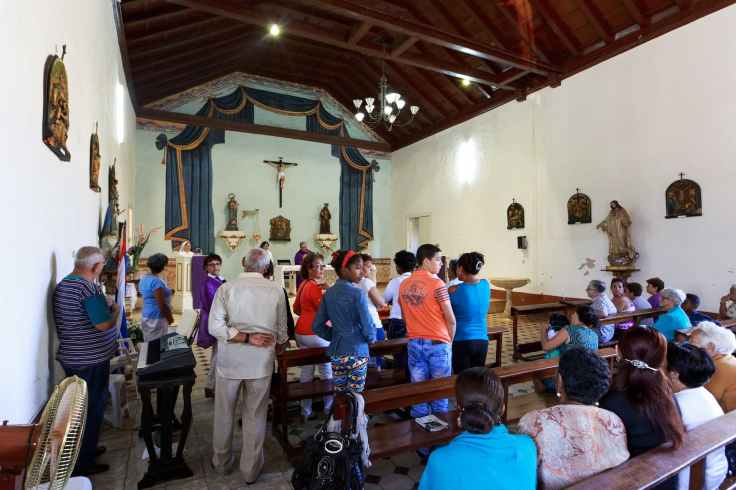
In-person prayer meetings offer a more intimate time of fellowship, compassion, and service. I’m not just seeing other people on a screen, reading a text message, or even filling an auditorium seat as part of a huge “movement”– I’m sitting in a circle, breathing the same air, hearing the same hum of the furnace or fluorescent lights, the sound of others breathing, sighing, or even crying quietly around me. Sometimes, I’m holding another person’s hand, or giving them a hug. I am not just among fellow believers, I’m with family. We get to know one another in a deeper way. I know their families, their personal struggles and victories. I learn the rhythm of their prayers, and the issues closest to their hearts– and they know mine! And that can be a scary thing at first– building the kind of trust that intimate fellowship demands. But it pays off a thousand-fold!

In-person prayer meetings are also focused in a different way. Cyber prayer usually focuses on a specific need– sometimes an immediate, or even temporary issue. In-person prayer focuses on the long term discipline of praying. I have prayed with groups over years for lost relatives or unresolved health issues. And while that may seem depressing to read about, in practice it teaches patience, and deepens faith. As a group, we see God’s answers develop according to HIS timing and HIS plan. Sometimes, we see issues resolved quickly; other times, we see how God strengthens us in our trials; and still other times we see God do surprising and miraculous things just as we’ve almost given up hope. And there are some answers we may never “see.” But, primarily, we are not praying for an outcome– we are praying as a pursuit of Christian living; developing a life of prayer, faith, and obedience. We spend much of our time in prayer lifting up requests, but we also spend much of our time in praise, worship, adoration, confession, and thanksgiving– because prayer is a holistic pursuit.

Which brings me to another benefit, one that may not seem obvious at first. Meeting consistently and weekly for prayer is a habit. It builds a character of faithfulness and true compassion like very little else I’ve encountered. God can “show up” wherever two or three are gathered (see Matthew 18:20), and because God is beyond time and space, He can be present in a church meeting room, in cyberspace, or in outer space! But we are temporal. We have to learn patience, hope, and faithfulness. We learn to be trustworthy of the feelings and confidences of others by sharing our hearts. We learn to serve by the practice of serving those around us over an extended period of time. We learn patience by waiting on the Lord, stopping our busy, deadline-driven, goal-oriented lifestyle to make time for the development of our faith.

Finally, in a post-COVID society, sustained, regular, corporate prayer is also sustained, regular, corporate fellowship. We live in an increasingly isolated society. With more people on the earth than ever before, we are more lonely, depressed, anxious, and self-absorbed than ever before. Even in Church! Many people attend service regularly, but still feel unconnected and uninvolved. And others get “involved” in every activity, often burning themselves out trying to “outdo” themselves (or others). Activities that promise fellowship can sometimes fall “flat” in the face of social expectations. We attend, hoping to “get something” out of an experience. We want to be entertained, challenged, encouraged, uplifted, etc. But often, our expectations are not met. We don’t feel included, or we feel overwhelmed. We imagine we are being compared to others (or we do the comparing!), and feel that we fall short. We don’t know enough, do enough, are not “enough.” And we give up. We give up on the church, on other Christians, on God.

Committing to attend a weekly prayer meeting pulls us “out of ourselves.” We learn to pray for the needs of others. We learn to share our own needs and allow others to pray for us. We learn to be transparent and authentic. We learn to forgive.

Prayer is amazing– in any form. Communicating with the God of the Universe is an unspeakably miraculous opportunity, made possible BY God, THROUGH God, for OUR benefit. Prayer in the cyber age is diverse, global, immediate, and effective. But let’s consider the blessing of old-fashioned Prayer Meetings, and not forsake the practice of meeting together (see Hebrews 10:25) , in person, with no other goal than to spend a sweet hour in prayer!


Dust in the Wind

Several years ago, there was a popular song lamenting that, “all we are is dust in the wind.” The song evokes a feeling of hopelessness– we are weak, small, and helpless as dust in the wind. It speaks of impermanence, brevity, sadness, and despair in the face of forces greater than ourselves, and offers a warning not to “hang on” to earthly vanities.

The Bible speaks to this –God told Adam in the Garden of Eden that he would die and return to the dust from which he was formed (Genesis 2:7 and 3:19). Abraham was told that his seed would be “like the dust of the earth;” spread out across the earth and unable to be counted. The book of Job is filled with images of dust and ashes, as Job, homeless and afflicted, sits covered in them, talking of his life and death, and the emptiness of loss.

Photo by Skitterphoto on Pexels.com

But there are surprisingly few references to dust in the New Testament. Jesus tells his disciples to visit cities, and where the people will not listen, the disciples are to leave and “shake the dust from (their) feet” as a testimony against them (Matthew 10:14; Mark 6:11; Luke 9:5)

There are two aspects of dust I want to look at today. First, as the song suggests, dust is carried along by the wind. It has no permanence, no weight, no importance, no resistance, and is swept away by a chance wind, or by design with a broom or dust cloth. Dust is not cherished, but discarded. But dust is not destroyed by the wind– it is carried, lifted, moved, and dispersed, but not destroyed. The dust of today will be somewhere else many generations from now, and the dust that settles on our floors, tables, and under the bed may have been blown there from thousands of miles and centuries away! In just such a way, our lives– fragile and brief, leave traces of words spoken, kindnesses shared, and sacrifices made, that live long after our bodies return to ashes and dust. There is an amazing glory in a mote of dust carried by the stillness into a beam of sunlight. It sparkles and dances and drifts in a graceful spiral, suspended in light and air. And there is glory in a life lived in the light, seeking stillness and grace, being carried by the slightest whisper of God’s eternal love.

Secondly, dust that is not in motion, not in the light, IS discarded, unwanted, corrosive, and dead. There is no glory in layers of accumulated dust covering the beauty of an antique dresser or building up in the corner of a room. Dust that is NOT carried on the wind sits, worthless and destructive. It gets absorbed into an unsightly pile of sad, dead matter, and it sits– going nowhere, doing nothing. We shake it off, brush it off, wash it off, sweep it away, and get rid of it.

Photo by Darius Krause on Pexels.com

Dust comes from death– dead skin cells, dead plant and animal matter–and I think there is a very real reason it is mentioned so often in connection with sin, sickness, unbelief, judgment, and death (though not in all cases). God does not want to leave us unmoved and dead– He wants to bring us to glory and give us new life in Him. We are dust in the wind– but that is not all we are. Instead, it is what we are for a brief moment in time– being carried to a new destination, or sinking and settling into despair.

Photo by Анна Васильева on Pexels.com

I pray that we will be lifted up in prayer and faith today, to dance in the light of God’s glorious grace, and carry our mote of glory and grace to wherever God my send us.

Cautious or Courageous?

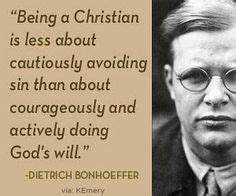
Being a Christian is less about cautiously avoiding sin than about courageously and actively doing God’s will.

Dietrich Bonhoeffer

Dietrich Bonhoeffer was a German pastor and writer who ended up sacrificing his life as he protested the Nazi regime in his homeland. Many of the things he wrote are uncomfortable for modern Christians to read. Sometimes, we want to coast along, joyfully celebrating our own Salvation, and ignoring the evil around us. After all, the ultimate victory is already won in Christ, isn’t it?

I write a lot about the power of prayer. And I stand behind what I write. But a life of prayer and Bible Study that doesn’t result in actively living out and spreading the Gospel is a life of lukewarm and selective obedience. This is not to say that we should skitter around trying to earn our Salvation with random acts and self-righteous crusades. But we must have the courage to “come out of the closet” as Christians in a dark and unfriendly world.

Photo by Pavel Danilyuk on Pexels.com

What does this look like? Does it mean wearing a badge or getting in people’s faces with “the Truth.” Perhaps. But mostly, it means every day living out the kind of love and truth that Jesus demonstrated. Jesus didn’t march in protests, hand out pamphlets with convicting messages, or start arguments to humiliate atheists in front of crowds. But He didn’t back down in the face of arguments and tough questions asked by His opponents. He ate with sinners– but He didn’t wink at their sin, or send them away reassured that they were “good enough” to please God. He went where God sent, spoke God’s Truth, and DID God’s work.

Jesus wasn’t a writer; He wasn’t a professor of Theology, or an elected official. The Pharisees were constantly frustrated with His lack of “credentials.” But their frustration came because Jesus spoke with the kind of authority they could never achieve– Jesus was authentic. He spoke, not from cold and lofty intelligence, but from wisdom and love. And Jesus didn’t just speak. He served. He listened. He lived out all that He spoke. He “courageously and actively” DID the will of the Father.

Jesus prayed and studied scripture. Jesus spent time alone communing with the Father. He spent time in rest. He spent time being social with His family and friends. But in every activity, He wove in the Truth of God’s word. And crowds followed Him. They wanted to listen, even as He spoke uncomfortable truths. And some of them came to love Him. Others came to hate Him, and even kill him.

We can’t be true followers of Christ and not risk being mocked, and hated. We WILL be misunderstood, laughed at, persecuted, ignored, and inconvenienced. We should not invite this with obnoxious or arrogant behavior. But we must not shrink away from it when it comes at us, or try to avoid it by being silent in the face of evil and injustice.

One of the recent charges leveled against Christians is that we meet evil with “thoughts and prayers” but little action. We must be wise and careful with such charges. Often, the taunt is thrown at us in an effort to get us to take a specific, ungodly “action” INSTEAD of praying. But we must honestly examine ourselves and ask what Godly actions SHOULD I be taking to make a difference? What actions should I be denouncing as ungodly, even if they are popular and seem to be “right?” And what must I do to defend the power of prayer in the face of ridicule?

Photo by Mikhail Nilov on Pexels.com

One of the other charges leveled against Christians is that we are “intolerant.” Again, we need to be wise and careful in answering this charge. Are we quick to judge others, while giving ourselves a “pat on the back” for merely avoiding a particular sin or sinful lifestyle? What is if about our life and work that makes others see us as “intolerant?” Are we exclusive and prejudiced in our interactions? Or are we humble in presenting the truth of God’s word? Do we speak from a need to defend our own actions or from a desire to help others? Are others offended by our words and actions, or by the truth of God as it convicts them?

Photo by Ketut Subiyanto on Pexels.com

I pray today that I would be courageous and active in LIVING the Christian life, and not merely writing about it.

The “Curse” of Proverbs 31

If you are a woman who has grown up “in the church,” you are probably familiar with Proverbs 31. It is the chapter about a virtuous woman. She is the role-model that is held up for young girls and older women alike. And she is, like Mary Poppins, “practically perfect in every way.” She gets up before the sun, stays up late into the night–always busy, always productive; she never slows down. She never has a bad hair day, never loses her temper, never forgets to pack a lunch or fold the laundry. She never nags, never scolds, never pouts, and never has to raise her voice.

Photo by Andrea Piacquadio on Pexels.com

It helps that she has serving girls to do her bidding, and has her own business. She appears to be independently wealthy and active, yet she has time to raise children who “rise up and call her blessed,” and satisfy her husband, who “lacks nothing of value.”

I would love to say that I am just like that woman. Most days, however, I feel nothing like her. I don’t have money to buy a new field. I don’t get up before the sun and my hands are not eager to work. I don’t make and sell linen garments. No one is running around calling me “blessed” or singing my praises… I can never measure up to this woman. I feel cursed.

Photo by Andrea Piacquadio on Pexels.com

But a closer reading of this chapter makes me think again.

While the woman described in this chapter is a model to emulate, she is not the norm. Nor is she the standard to which I must adhere to “earn” my way into God’s good graces. Indeed, God’s Mercy is the richer and His Grace more precious for knowing that I cannot “measure up.”

Instead of using Proverbs 31 to beat myself up for not being perfect (or using it to discourage or intimidate others), I need to learn from it. Here are a few things I’m hanging on to as I read through it this week:

Photo by Luis Quintero on Pexels.com
  • “She brings him (her husband) good, not harm…” (v. 12) What are some ways I can bring good, not harm, into my home and marriage? How can I listen more, nag, less, be more available, and otherwise show love and care? I won’t be perfect, but I can look for ways to improve!
  • “She works with eager hands..” (v. 13) “She sets about her work vigorously…”(v. 17) I may not be spinning wool or flax in the early light; I may not have serving girls to order, but I have hands and work to do throughout the day. How can I do a better job of seeing chores as opportunities, rather than oppression and drudgery? How can I bring a greater sense of purpose to my tasks? I may not have serving girls, but I have appliances–am I “ordering” them properly by taking care of them, instead of just taking them for granted? And am I grateful for their help?
  • “She opens her arms to the poor and extends her hands to the needy…” (v. 20) What can I do to “give” more–donate, volunteer, provide hospitality and encouragement? How can I keep in mind that during various seasons of life the “poor” and “needy” may be in my own home and family–children or grandchildren needing nourishment and discipline; parents needing care and support…How can I be more available to those outside of my home, or during my work hours? Can I send an e-mail or make a call to offer encouragement? Can I share a recipe with a friend, or invite them to come with me shopping or to church? Can I make time to pray with a neighbor? Can I clean out a closet and donate clothes or linens?
  • “She speaks with wisdom, and faithful instruction is on her tongue..” (v. 26) What a challenge!? What is “on my tongue?” Gossip? Criticism? Complaining? Idle chatter? Do I speak too much? Do I remain silent when I could offer needed instruction, encouragement, or correction? Do I speak with gentleness and compassion? With conviction and truth?
Photo by Andrea Piacquadio on Pexels.com
  • “…she does not eat the bread of idleness..”(v27). Ouch! Everyone needs to rest– even the seemingly indefatigable woman of Proverbs 31! But am I becoming “fat” on leisure time? How much time to I waste on distractions and entertainment that could be put to better use?
  • “Charm is deceptive, and beauty is fleeting, but a woman who fears the Lord will be praised..” (v30) I may strive to be an “accomplished” woman– someone who is poised, talented, successful in business and society, with a picture-perfect house and garden, children on the dean’s list or the winning sports team; I can be will-traveled and well-educated, someone who seems to “have it all”–and still NOT be a woman of noble character. God isn’t impressed by my clothes or my achievements; He doesn’t give me credit for being “better” than my next door neighbor, or having the best kitchen on the block; God will not love me any more for being more successful or productive than anyone else. If my house is cluttered, my hair is untame-able, my kids have public melt-downs, and I don’t belong to the “in” club; if my business fails, my car is rusty (or I don’t have one), and my husband and I wear second-hand clothes, God still sees my heart. I can still be a woman who fears, trusts, and serves the Lord– one who is loved, accepted, and even “praised” by the One who matters most!
  • Finally, I can Pray to become a woman/wife of noble character (v.10), striving for good habits, rather than fretting over and wallowing in bad ones. I can trust God’s willingness and ability to transform my life and my attitudes. In fact, I am reminded of a seemingly unrelated portion of scripture from Philippians:

8-9 Summing it all up, friends, I’d say you’ll do best by filling your minds and meditating on things true, noble, reputable, authentic, compelling, gracious—the best, not the worst; the beautiful, not the ugly; things to praise, not things to curse. Put into practice what you learned from me, what you heard and saw and realized. Do that, and God, who makes everything work together, will work you into his most excellent harmonies.

Philippians 4:8-9 (The Message)
Photo by Tima Miroshnichenko on Pexels.com

I need to spend less of my time worrying about getting things “done”, than getting them done God’s way! I don’t need to fear the “curse” of Proverbs 31– failure to measure up to a model– instead, I need to see the opportunity to become a woman after God’s own heart– one who accepts God’s help and wisdom to become the woman HE wants me to be. I pray that God will give me the chance to develop–and help others–today and each new day.

Blog at WordPress.com.

Up ↑