“‘Holy, holy, holy| is the Lord God Almighty, who was, and is, and is to come.” Revelation 4:8b (NIV)
Not so much a name of God as a description of His Character, the word Holy means “sacred, separate or set apart, morally blameless; complete; whole; lacking nothing; worthy of worship.” God is Holy. There is no force, no person, no entity who can rival God or be a peer of God. Satan is not God’s equal. Sin, death, evil, none of these can successfully oppose God, or cause Him to stumble or challenge Him. God is Supreme– Alone in His Power and Glory and Sovereignty.
I pray to a Holy God. I pray with the guidance of His Holy Spirit. I follow Christ, who demonstrated Holiness in human form during His time on earth. Sinless perfection, He walked among sinful men and women, healing, teaching, and showing perfect Love and Mercy.
We live in a world that constantly questions this aspect of God. How can a Holy God allow people to suffer injustice, doubts and struggles, and even death? Surely, this is a mistake! God must have failed at some point, or we would live in a perfect world.
God doesn’t make mistakes! And sometimes, that is a concept that can be difficult to fully comprehend. Yes, we know God is “good.” And we know He is powerful. But He is so much more than that. He is without guilt, without doubt, without confusion, without failure. When I see and experience injustice or disease, disappointment, misunderstanding, exhaustion, grief–these are not from God. They come from a fallen world in rebellion against our perfect maker.
Except we once did! Adam and Eve lived in the Garden of Eden, and God provided for their every need. They didn’t need clothing– it never got cold, and the insects, animals, and plants posed no threats. They didn’t need the Law, because they walked with God and knew only good. They didn’t need jobs or houses, money or banks, governments, medicine, dictionaries, alarm clocks or Wikipedia. God didn’t sin– they did. And God didn’t get caught by surprise by the Fall– He already had planned for mankind’s redemption. God didn’t fail. He was, is, and will always be Holy.
This also means He is always “wholly” sufficient for our every need. Even the needs to be understood and to be rescued from our own failures. God, who is Holy, sent His Holy Son to live IN our fallen world– to taste OUR failure, and to set things right. Whatever we suffer now is not God’s “fault,” and it has already been made right in His perfect plan. He understands our temporary pain and suffering differently than we do, because He sees the finished product– our renewal, redemption, and “perfection” in Him!
So I am very thankful today for the Holiness of God. It is something I cannot fully understand until I experience it first-hand, but I can trust in it, put my hope in it, and LIVE in the promise of it, even when I stumble, fail, and struggle.
Are you ever afraid to pray? Afraid that God will not hear, or worse yet, that God will hear but reject your prayers?
The Bible has much to say about fear and our worship of God and in our conduct before God. We are supposed to have a healthy “fear of the Lord.” After all, God is Sovereign. He holds absolute power over life and death, both in this life and throughout eternity! We should have the kind of awe and respect we have for one whose power is so great. We fear forces of nature, such as fire, floods, earthquakes and tornados. We should be afraid of God’s power in relation to our own. But what does this mean in relation to prayer? Does fear have any place in our pursuit of prayer?
So we have come to know and to believe the love that God has for us. God is love, and whoever abides in love abides in God, and God abides in him. By this is love perfected with us, so that we may have confidence for the day of judgment, because as he is so also are we in this world. There is no fear in love, but perfect love casts out fear. For fear has to do with punishment, and whoever fears has not been perfected in love. We love because he first loved us.
1 John 4:16-19 (ESV)
The “fear of the Lord” has to do with God’s power and authority to punish sin. We live in a fallen, sinful world, and we are fallen, sinful people. Our natural response is that of Adam and Eve in the Garden of Eden– to hide from God, and try to avoid His righteous judgment against us. Those whose consciences have been seared will lose this healthy and natural fear– they will be proud in their defiance against God. They will say that God is not sovereign or Holy; that He does not have the power to judge them; that they can “bargain” with God about their eternal destiny– they will even deny His very existence. Others will claim that God is Holy, but not “Good.” They claim that He is disposed to judge harshly; that He is vindictive and without mercy; that He demands too much of us. On the other end of the spectrum, Christians and others can become so disposed to seeing God as their friend and advocate that they forget His awesome Holiness and Power. Christians have no reason to be afraid of God, but we have every reason to stand in AWE of Him!
The Truth of God, as revealed in Jesus Christ is that God is LOVE– perfect and everlasting Love! While He has the power and the authority to judge, it is His desire to lavish mercy on us! Such love should compel us to run TO God, rather than run away from Him! We fall on our knees in worship and adoration, not in abject terror.
So what could still cause us to be afraid to pray?
Perhaps we are still in sin, or we have strayed back into sin. Christ has already paid the penalty for Sin– it has no real power over the believer who “abides in God.” But it still has the power to draw us away from God and damage our relationship so long as we hide it, refuse to confess it, or repent of it. Even as we know that Christ has paid the price for our Sin, we also know that we need to abide in His Love to grow into a more perfect relationship with Him.
Perhaps we are holding on to old patterns of thinking and old guilt. Satan is an accuser. Even after we have confessed our sin and received God’s forgiveness, Satan will try to keep us enslaved to our guilt and shame. He will try to bring it to mind, or have others treat us with condemnation or condescension, so that we feel unforgiven or unlovable. We need to follow the advice of the Apostle Paul:
So here’s what I want you to do, God helping you: Take your everyday, ordinary life—your sleeping, eating, going-to-work, and walking-around life—and place it before God as an offering. Embracing what God does for you is the best thing you can do for him. Don’t become so well-adjusted to your culture that you fit into it without even thinking. Instead, fix your attention on God. You’ll be changed from the inside out. Readily recognize what he wants from you, and quickly respond to it. Unlike the culture around you, always dragging you down to its level of immaturity, God brings the best out of you, develops well-formed maturity in you.
God’s love is PERFECT. But our love is not. Sometimes we are praying, not out of love, but out of duty or even selfish motives. We pray for God to give a green light to our wants and desires and plans, rather than listening for His wisdom and grace in our situation. We pray for God to “change” that person who annoys us or persecutes us, rather than praying for God’s blessing on them, and listening to the ways He may want to “change” us! Sometimes we cannot see the wisdom of an outcome we don’t like, and we are afraid of the unknown path we must take– even with God’s continued presence by our side.
We don’t have to be afraid to pray. But when we feel apprehensive, it may be a sign that we NEED to pray–honestly telling God what He already knows and asking for the grace and wisdom to listen to what He so lovingly wants to tell us.
Therefore, since we have a great high priest who has passed through the heavens—Jesus the Son of God—let us hold fast to our confession. For we do not have a high priest who is unable to sympathize with our weaknesses, but one who has been tempted in every way as we are, yet without sin.Therefore, let us approach the throne of grace with boldness, so that we may receive mercy and find grace to help us in time of need.
We often fear questions. We are afraid to ask questions; we are afraid of being questioned; we are afraid of asking the wrong questions or not asking the right ones. And we are often afraid of the answers, too.
God is not afraid of our questions. In fact, He wants us to ask, to seek, and to knock (Matthew 7:7, Jeremiah 33:3, and others). God knows the answers to our questions– He even knows our motives in asking them! God may not give us the answers we expect, or answer in the manner or time we expect. But God encourages us to ask anyway, and to trust in His ability and His desire to give us what we need in the moment we most need it.
God also asks questions–not because He doesn’t already know the answers, but because we can learn from the questions He asks, and the answers we give. Some of God’s questions seem self-evident; others are probing. Some are rhetorical; others are anguished. Let’s take a look at just a few, and see what we might be able to learn from them:
In Genesis 3, God asks some very obvious questions of Adam and Eve after they hide from him. “Where are you?” Adam and Eve had not successfully hidden from God. He knew exactly where they were and even why they were hiding. But instead of storming into the Garden of Eden with condemnation and instant judgment, God asked a simple question, giving them both the opportunity to confess, and a clear reminder of their broken relationship. There had never been a need (on either side) to ask “Where are you?” After Adam responds with the excuse of being naked and ashamed, God asks his second question, “Who told you that you were naked?” God knew the answer to this, as well, but He added a third question that forced Adam to get to the heart of the matter and tell Him the truth– “Have you eaten from the tree…?” God could have asked condemning questions– “How could you disobey me like this?” “Do you have any idea what you’ve done?!” But God isn’t asking questions to overwhelm Adam and Eve with their guilt and shame. He’s asking for truthful acknowledgment of their disobedience, so their broken relationship can begin to be repaired. God assigns punishment, but He does not bring additional questions and condemnation
In the very next chapter, God asks Cain a probing question, “Why are you angry? (And why has your countenance fallen?)” God knows the answer. He knows how Cain feels and what Cain is thinking. God knows it so well, that He challenges Cain to master his anger and turn his face upward (i.e. seek God’s counsel over his own emotions). We don’t like probing questions, because they reveal our selfish motives and dark impulses. But God actually WANTS us to be aware of our own tendencies–and our need for His wisdom and grace! God is not afraid of our darkest thought– He doesn’t want to expose them for our shame, but enlighten us for our own good!
In Genesis chapter 18, the Lord asks a rhetorical question, “Shall I hide from Abraham what I am about to do…” (concerning the destruction of the cities of Sodom and Gomorrah). God had already determined that they should be destroyed; He had no need to share this information with Abraham. But in asking the rhetorical question, God gave us a glimpse into His character (as well as a window into Abraham’s character!) God does everything with purpose. He is not willing to hide information we need, nor to waste time or energy on useless information. Imagine if we knew everything–everything!- that would happen to us for the next year? If we knew about that near miss at the intersection on May 22, or the toothache on June 2, or the “surprise” birthday party in October? But when God does choose to open a window, He gives us a chance to respond. Abraham did not choose to argue that Sodom and Gomorrah were not wicked cities, or that God had no business destroying them. His heart was driven to discover if God would destroy the innocent with the wicked. He got his answer (several times over!) And even when God did not find ten innocent people in the cities, He still offered rescue for Abraham’s nephew, Lot, and his family.
It isn’t only God the father who asks questions. Jesus the son asked two agonizing questions in the New Testament. While He was dying on the cross, He asked the Father, “My God, My God, why hast Thou forsaken Me?” (Matthew 27:46). Jesus knew, intellectually and spiritually, why God had forsaken him; but His question echoed the one found all the way back in the Garden of Eden– “Where ARE you?” The ultimate anguish of being separated from God’s presence was felt by God himself! The agony of loneliness that comes from sin and shame and guilt– God knows it intimately from both sides!
Jesus also asked and anguished question of Saul of Tarsus– “Saul, Saul, why are you persecuting Me?” (Acts 9:4) Just as God asked Cain to look carefully at his motives and emotions, so Jesus challenges Saul to reexamine his activities and ambitions. Jesus knew, of course, why Saul was hunting down those who were preaching the Good News. He knew Saul’s ambition and his zeal for the Law. He knew that it had blinded him to the truth. And in Saul’s physical blindness, Jesus could “open his eyes” to a greater ambition and zeal–to preach this same Good News to the Gentiles– the same Gospel that is opening eyes around the world to this day to see the Awesome, Eternal, Victorious, and All-Encompassing Love of God.
Today, may we ask, seek, search out, study, cry out, knock on doors, and pursue this truth–God wants to meet with us! He wants to talk to us, to listen to us, to share closeness, to increase our Joy and be joined to us in our Grief, to lift up our countenance, end our isolation, and be the ultimate answer to our questions.
We live in a wonderfully diverse world, filled with unique individuals. One thing that defines us to our families, neighbors, and friends, is our name. Names can be tricky–some are difficult to pronounce, or spell. Some names are shortened or changed to form “nicknames.” Others are changed by circumstances, like adoption or marriage. Some names are common to several people, or shared as “namesakes” of others, or shared between generations, calling for additions, like “Jr.,” or “the elder” or “the fourth.” Some people reject the name they were given at birth, preferring to use an alias, or going through a legal process to change it. Some names have become symbolic, or stereotyped, famous, or infamous, or iconic.
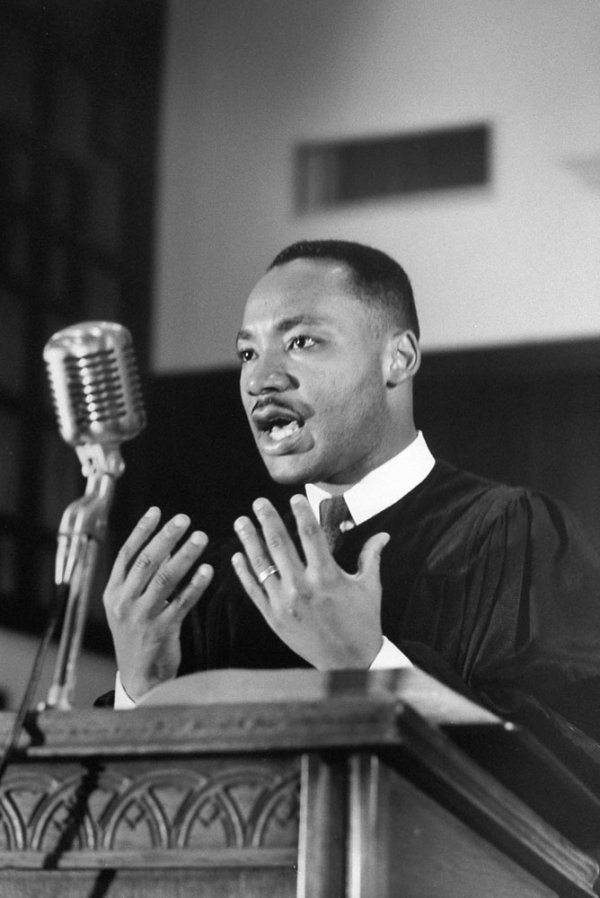
Civil Rights activist Rev. Dr. Martin Luther King Jr. gesturing during sermon at Ebenezer Baptist Church. (Photo by Donald Uhrbrock//Time Life Pictures/Getty Images)
Even though many of us may share a common first name, or surname, (or even both), our name still represents who we are–it becomes a symbolic representation of all that makes us unique– our personality, our history, and our character. And it’s not just people who carry names. We name rivers and mountains, cities, houses, farms, cars, products, pets, works of art…the list goes on. It is deep in the human soul to name things. This is a God-given desire. All the way back in the second chapter of Genesis, God brought all the beasts of the air and land to Adam, to see what name he would give them. Adam and Eve chose the names for their sons– names with very personal meanings. Names are important and carry power; they should never be taken lightly.
God recognizes each one of us by name. The prophets Isaiah and Jeremiah both refer to God calling them before they were even born! Before the great judge Samuel even knew how to recognize God’s voice, God called him by name. God often changes names– Abram to Abraham, Jacob to Israel, Saul of Tarsus to Paul, the disciple Simon to Peter (or Cephas). One reason God changes names is to show His power to transform people and give them, not just a new name, but a renewed nature and spirit.
And when we talk to God, whose very name is sacred, He allows us to call on Him through the Name He gave to Himself/His Son– Jesus. There are many boys and men who carry this name, but when we pray in the name of Jesus, we are referring to the one and only Begotten Son of God the Father; the Jesus of the Trinity; Jesus the Virgin-born Messiah. HIS name is above all other names. There is power in every ordinary name, but THIS name carries eternal, sovereign, immeasurable power. It encompasses His holiness, His compassion, His wisdom, His goodness, His faithfulness, and His Love. There is no other name by which we are saved; no other name by which we can be made new. It is not a name to be taken lightly or in vain. It is a name to be honored, cherished, and exalted. JESUS. The name above all names!
139 O Lord, You have searched me and known me. 2 You know my sitting down and my rising up; You understand my thought afar off. 3 You [a]comprehend my path and my lying down, And are acquainted with all my ways. 4 For there is not a word on my tongue, But behold, O Lord, You know it altogether. 5 You have [b]hedged me behind and before, And laid Your hand upon me. 6 Such knowledge is too wonderful for me; It is high, I cannot attain it.
7 Where can I go from Your Spirit? Or where can I flee from Your presence? 8 If I ascend into heaven, You are there; If I make my bed in [c]hell, behold, You are there. 9 If I take the wings of the morning, And dwell in the uttermost parts of the sea, 10 Even there Your hand shall lead me, And Your right hand shall hold me. 11 If I say, “Surely the darkness shall [d]fall on me,” Even the night shall be light about me; 12 Indeed, the darkness [e]shall not hide from You, But the night shines as the day; The darkness and the light are both alike to You.
13 For You formed my inward parts; You [f]covered me in my mother’s womb. 14 I will praise You, for [g]I am fearfully and wonderfully made; Marvelous are Your works, And that my soul knows very well. 15 My [h]frame was not hidden from You, When I was made in secret, And skillfully wrought in the lowest parts of the earth. 16 Your eyes saw my substance, being yet unformed. And in Your book they all were written, The days fashioned for me, When as yet there were none of them.
17 How precious also are Your thoughts to me, O God! How great is the sum of them! 18 If I should count them, they would be more in number than the sand; When I awake, I am still with You.
19 Oh, that You would slay the wicked, O God! Depart from me, therefore, you [i]bloodthirsty men. 20 For they speak against You wickedly; [j]Your enemies take Your name in vain. 21 Do I not hate them, O Lord, who hate You? And do I not loathe those who rise up against You? 22 I hate them with [k]perfect hatred; I count them my enemies.
23 Search me, O God, and know my heart; Try me, and know my anxieties; 24 And see if there is any wicked way in me, And lead me in the way everlasting.
We can’t hide from God. We can ignore Him, deny His existence, even rage against Him. But we cannot escape His Spirit. We cannot hide who we are or what we think from Him. And we cannot flee from His goodness or mercy; we cannot run beyond His ability to restore us, heal us, or save us. He knows the worst about us, and He calls us to the very best we can be. Which begs the question– Why would we want to escape from God? Why do we try to hide from Him? What is it about God that would give us a reason to flee?
There are many terrifying things in this world–right now, we are faced with a global pandemic; a plague that brings sickness and death. Now THAT is something worth hiding from! Many of us are “sheltering in place,” trying to hide out until it is safer to interact with others. The disease seems to be everywhere–but it really isn’t– it cannot go where there are no hosts to carry the virus. It can be spread wherever we find other people who are infected, or where the virus lingers on surfaces. The disease does not seek us out or come searching for us if we stay put. Unfortunately, “sheltering in place” comes with its own dangers. We cannot survive long in a bubble. We are interdependent. We need food, medicine, fresh air, and interaction with family and friends to survive and thrive. Hiding away from a tiny virus is only effective in the short term. And there are other diseases from which we cannot hide– cancer and heart disease, and even other viruses that are active, but haven’t been traced or identified.
There are other terrors that we try to escape by fleeing– hurricanes, fires, floods, war, etc. And we may escape immediate danger from such terrors–if we have advance warning or if we have the means to escape. But there is no place of absolute safety: no place on earth where such dangers cannot exist. There is no Utopia– no earthly dwelling, community, or settlement where there is only goodness, harmony, peace, and plenty. There is no place to hide, and no place of escape.
It is understandable that we should want to hide from danger or flee bad things, even if such escape is impossible in life. But why should we wish to hide from a loving and merciful God? Is He as bad as COVID-19? Is He as threatening as a hurricane or an air raid?
Certainly, He is as powerful (and even more) than any of the dangers we fear. God has the power, and the authority, to judge, punish, and destroy all who live on the planet. He has the power to obliterate all of His creation, and none of us could stop Him or challenge His right to do as He pleases. And if we should challenge God’s authority, we would be wise to want to run away, hide, or escape the consequences of such foolishness.
Adam and Eve tried this long ago. After they sinned by eating the Fruit of the Knowledge of Good and Evil, they hid from God. And God’s response was not instant obliteration. He didn’t storm through Eden, destroying everything in His righteous anger before torturing Eve, making Adam watch in horror before He killed them both. Nor did God negate His Holiness by changing the consequences of sin. Death DID enter creation– along with disease, pain, guilt, envy, hatred, lying, greed, destruction– they all exist, persist, and continue to plague all of God’s creation to this day.
But God’s first act–His first words to Adam and Eve after their rebellion– was to seek their presence. God came to walk in the Garden; to meet with Adam and Eve. He called out to them, “Where are you?” He wasn’t asking because He didn’t know that they were hiding. He knew where they were, and why. And even in assigning their punishment, God did not throw extra guilt and recrimination at the fallen couple. He didn’t shout, “How could you do this to ME?!” “How dare you!” “I wish I’d never made you!” “You’re worthless. What a waste of time and energy. Get out of my garden! I never want to see you or hear from you again!”
God’s Spirit is always seeking reconciliation, communion, restoration, and love. God is Holy, and God is Merciful. Holiness desires Whole-ness. Mercy desires Peace. God pursues us, not because He wants to infect us or devour us or destroy us– God wants to hold us, heal us, and give us Life.
The danger is not in God’s presence, but in our ability to reject it. God is everywhere, but not everyone will see Him, accept His authority, or welcome His mercy. Some will spend a lifetime hiding and fleeing, only to discover that God will, reluctantly, give them what they want– an eternity without Him. Without Grace, without Love, without Peace, without Wholeness, without Hope.
That is a fate far worse than waking up to “shelter in place,” or even suffering through a virus that can separate us from loved ones for weeks, months, or even a short lifetime.
There are many things worth fleeing in life– But we can find joy, hope, and peace in the presence of a Loving and Omnipresent God.
When we look around at all the beauty God created (see yesterday’s post:https://pursuingprayerblog.wordpress.com/wp-admin/post.php?post=1206&action=edit ), we also see the ugliness of a fallen world. What God created, he proclaimed “Good.” That goodness still exists, but it is tainted and polluted by sin. God has the authority and the right to destroy it all (and us along with it!); instead, he chose to redeem it. God’s promise to do this has been playing out from the very beginning.
God did not strike Adam and Eve– He allowed them to age, and reproduce, and live out their lifespan–but He did keep his promise that they would have to die (see Genesis 3). God kept his promise to Noah, to save his family from a worldwide flood (Gensis 6-9). He kept his promise to Abraham, to bring him to a new land and give it to his descendants– though the promise was made when Abraham as childless and wandering in the wilderness (Genesis 12-25). God kept his promise to Abraham’s descendants, to bring them back to the land he had promised them (Exodus–Joshua).
God kept his promises to Israel– promises of blessings and of curses, of retribution and revival. God chose King David, and kept many promises to him about his dynasty, the building of the temple, and the coming of a kingly redeemer in David’s line of ancestry (2 Samuel-1 Kings). He kept his promises given through the prophets concerning the exile and return to Jerusalem.
In this season, we celebrate all the many promises God made and kept regarding the coming of our Savior (Matthew-John). Just as God’s creation is “good,” so too are His promises– they are sure and true. God’s promises reveal His nature–He is Just, He is Kind, and He is Omnipotent. What He says, He can and will accomplish.
























 Pursuing Prayer