What Did Mary Know?

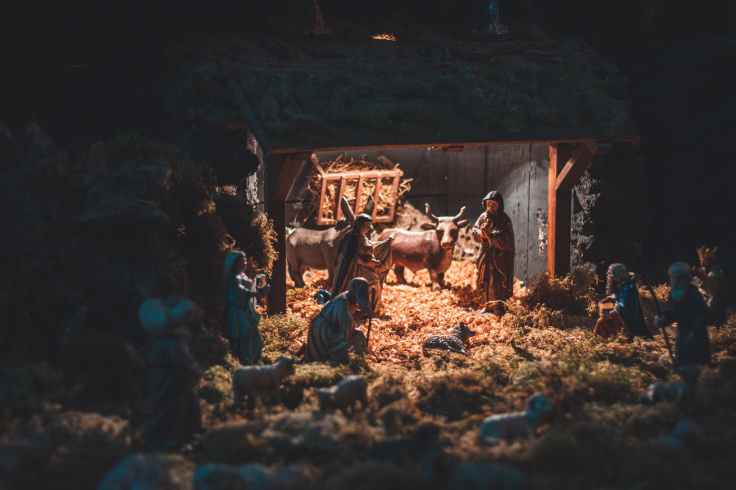
The song above asks, “Mary, did you know?” as it lists many things that Jesus did during his ministry on Earth. But just how much DID Mary know on that night in Bethlehem? From what we read in Luke 1, Mary knew only that this coming Child was sent by God to be the Messiah. But the angel didn’t spell out how that Messiah would be born or how Mary should be a mother to the King of Kings. The angel never promised Mary that Joseph would agree to marry her, or that her family would not disown her. The angel said nothing about a census; no warning that Mary would have to travel to Bethlehem, where there would be no room in any inn, and no safe, clean place to deliver God’s chosen one. Mary had no knowledge of the shepherds who would come from the cold and dirty fields to get a glimpse of her shivering infant. She had no idea that wise men from distant lands would present her with such impractical gifts as frankincense and myrrh, or that she would be forced to take her small son into Egyptian exile.

In fact, while the shepherds were visited by a heavenly host, glorifying and praising God; while the wise men were following an amazing star in the heavens, Mary was seemingly forgotten– giving birth in a cattle shed, tucked away in an unfamiliar, backwater town, without the comforts of her home and family (save Joseph, who was a first-time father himself!), without clean water or extra blankets, without the comforting voice of an angel reminding her that it would all turn out in the end.

I can only imagine how she might have felt. Was she frightened? Confused? She could have been angry or bitter, panicked or forlorn. She was not privy to the wonder of the angels or the star. She could have no idea of the miracles that her Son would do. And, while Simeon hinted at the piercing grief she would know at the crucifixion (see Luke 2:33-34), Mary could have no idea of the grueling death her Son would suffer.

Mary was so young. She knew so little. And yet, Luke tells us that she ” treasured up all these things and pondered them in her heart.” (Luke 2:19 NIV).

This Advent season, I want to take time to ponder; to meditate on the promises of God, on His timing, and His provision. Mary’s journey to Bethlehem was unplanned– by her. But God had planned it from the very beginning. He KNEW there would be no room in the inn. God KNEW all that would happen– the flight to Egypt, the years of Jesus’ ministry, the betrayal and suffering to come. And God KNEW Mary! He knew her questions, He knew her heart, He knew her fears, and her limitations.

It is comforting to know that God KNEW, and that He KNOWS all that is to come in my life. When it feels like I have been forgotten or relegated to a place where there is no room, no resources, no welcome– I can remember that God is there exactly as He was for Mary and Joseph on that night long ago. Just like Mary, I can treasure those incomprehensible moments when God sends a shepherd or a wise man into my path; someone whose presence, though unexpected or even inconvenient, reminds me that God’s plans are far bigger than what I can know or imagine.

One thing Mary DID know was that she could trust God absolutely. May we ponder this truth throughout the season and treasure His promises today.

Are You Ready?

Someone asked me yesterday if I was “ready for Christmas.” They wanted to know if I had prepared for the holiday– had I bought and wrapped presents for the family, sent out Christmas cards, decorated the house, baked cookies, etc.? I had to admit that I was not ready in that sense. I don’t generally do much in the way of decorating, and I’ve cut back on the cookie baking, too. I don’t have all the presents purchased or wrapped.

But I AM ready for Christmas– I’m ready to celebrate the coming of Jesus to Earth; His life, death, and resurrection; the new life and hope that resulted from God’s boundless love. I’m ready to sing carols and light candles and rejoice! I’m ready to be awestruck again by the ancient story of shepherds and angels and wise men from the East; of the little town of Bethlehem and the manger stall and a bright star; of a newborn child; the Lord of all Creation wrapped in rags; the Word of God willingly limited to unintelligible cooing and soft cries, to nakedness and infant human weakness.

Being “ready for Christmas” means different things to different people. To many, it means surviving the stress of shopping, going to rounds of holiday parties, and trying to remember that it is supposed to be a season of “peace on Earth.” For others, it means watching the celebration from the outside looking in; facing loneliness, grief, regret, and envying or resenting those who have found joy when all they see is darkness. For some of us, it means reflecting on the amazing transformation we experience because of the coming of this single baby. We remember that there was a time when there was no Christmas– only a dim hope that God would someday send a Savior. Once the prophets could only speak of what had been promised, but not yet seen– could only remind people to “get ready” for something they had never known.

The world was waiting for the Messiah’s coming, yet it was unprepared for His actual arrival.

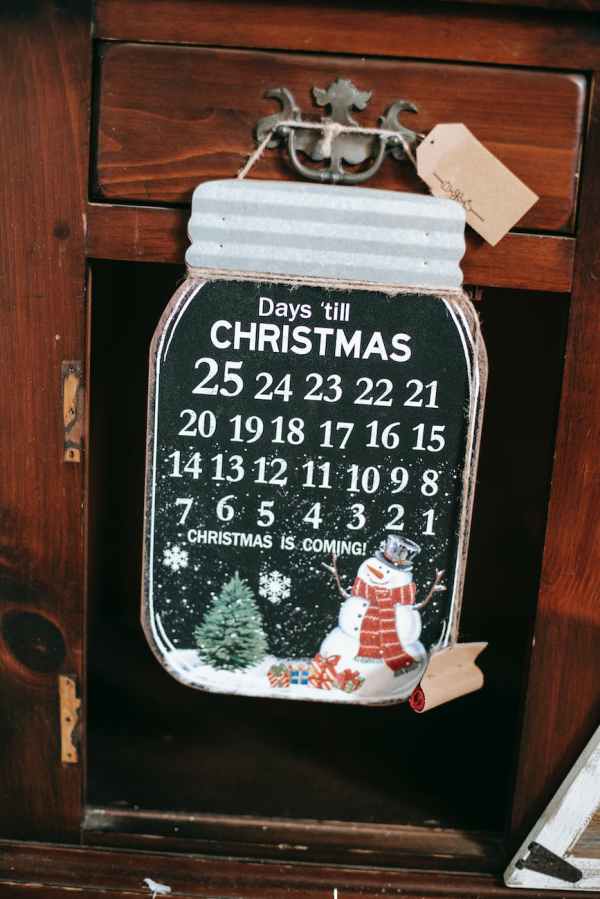
But the story of Jesus Christ didn’t end with Christmas. It didn’t even end at Easter, with the glorious resurrection. We await the triumphant return of the risen Christ. He is Coming! He will return in an instant…no long period of Advent; no countdown calendars or lists of things to get ready; no angels or stars to announce His arrival; no Christmas pageant or Easter sunrise service–just a trumpet blast and an explosion of Glory. He will not arrive as a helpless babe, or a suffering servant, but as a conquering King. There will be no carols about little towns and sleeping cattle; no time to “let every heart prepare Him room.”

Today, we prepare to celebrate Messiah’s coming. We spend time and money and energy getting “ready” to recreate the Advent of Jesus Christ. How much time have we spent getting ready for His return? I pray that this Christmas season will mean more than just a happy celebration of one event– even one as joyful as the Birth of Christ. Let us prepare our hearts to live out the joy of His Salvation, and prepare to receive our King in triumph.

All I Want for Christmas…

Children are busily writing letters to Santa and making lists for their parents– “I want…” We’re listening to “Christmas Classics” on the radio– “All I Want for Christmas is My Two Front Teeth.” “All I Want for Christmas is You,” “I’ll be home for Christmas…Please have snow and mistletoe and presents on the tree…” “Christmas, Christmas time is here; time for toys and time for cheer. We’ve been good but we can’t last– Hurry, Christmas. Hurry fast!”

Advent is a time of expectation and hope. But it can also be a time of selfishness and greed. “I want…” “I’m dreaming…” Even if the things we want and wish for are not ‘bad’ things, we can get so caught up in the wanting and wishing, that we forget the deeper meaning and purpose– not just of Christmas, but of life! Life isn’t about getting things– even good or nice things. And Christmas, while it is a season of gifts, is primarily a season of giving.

Turning the radio to a Christian station, I can hear old familiar carols reminding me of the real reason for this season. “O Come, O Come, Emanuel!” “Joy to the World!” “Hark, the Herald Angels Sing–Glory to the Newborn King!” “What Can I Give Him, Poor As I Am?” “Yet In Thy Dark Streets Shineth the Everlasting Light…” “This, this is Christ the King; whom shepherds guard and angels sing.”

Even so, it is tempting to spend time this Advent season thinking and praying about all the things we want– noble things like Peace on Earth, Good Will to Men, and good things like health and happiness for our loved ones, and even selfish things, like a new toaster or a new pair of gloves. But what about what GOD wants this Christmas?

Photo by Wolf Art on Pexels.com

God wants us to enjoy the blessings He sends our way. But He also wants us to be grateful for the blessings we already have; the ones we have enjoyed (and even taken for granted) all year long. He wants us to take time in this busy season to reach out, not just with gifts and cookies and lights and greeting cards, but with compassion, warmth of heart, a willingness to listen, an invitation to share tears as well as joys, and efforts to heal old wounds and make peace right in our own families and neighborhoods. Christmas isn’t just about the baby in the manger– it’s about the Christ of the Cross, and the Return of Christ the Triumphant. And this is Our Advent season– awaiting and preparing for His Return!

There are many good things to “want” this Christmas. But all I really want is to be ready for His Coming– ready to receive His Grace, His Hope, His Joy, and to point others to “Thy Glorious Light!”

This Little Light..

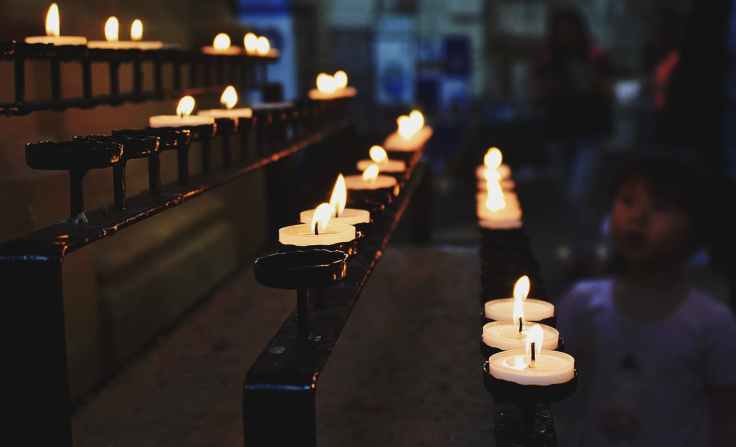
Many Christians are celebrating Advent by lighting candles. So I thought I’d just mention a couple of quick thoughts about how prayer is like a candle:

Even a small candle can provide enough light to make a real difference in the darkness. Sometimes, we feel our prayers are small and ineffective, like a single candle in a dark room. But a single candle can pierce the darkness and offer hope and focus and even warmth where there was none before. In the season of Advent, we light candles to mark the weeks of waiting for the One who is the Light of the World to come into the darkness. His light was enough to save the world from the darkness of Sin and Death. And it is This Light who hears our prayers and intercedes for us. It is This Light who empowers us to share hope and love where it is most needed right now, right where we are.

We are never a single candle! Not only do we have Christ living in us, and His Holy Spirit empowering us; God’s people around the world, through all places and times, are praying. Imagine seeing a single candle at the end of darkened room. Now, imagine how much brighter to see a long table lined with a row of candles, or a room lit by chandeliers and wall sconces with dozens of candles. Even if they are spread out– especially if they are spread out– they will fill every corner of the room with light and warmth. This is one of the reasons it is so important to pray for believers around the world, and to pray with other believers, through prayer nets, prayer meetings, prayer lists and blogs, and prayer journals.

Our prayers are powerful. Not because of our “candle”, but because of the light God provides when we pray

Let No Tongue On Earth Be Silent..

“O ye heights of Heav’n, adore Him,
Angel hosts His praises sing.
Pow’rs, dominions, bow before Him,
And extol our God and King.
Let no tongue on earth be silent,
Ev’ry voice in concert ring,
Evermore and Evermore!”

“Silent night, Holy night…” Tradition has it that Christ was born on a cold and silent night. The Bible doesn’t exactly say when he was born. It does say that the angels appeared to shepherds who were keeping watch over their flocks by night; and that the wise men of the East followed a star to find the newborn King. But the Bible doesn’t talk about the night being unnaturally silent or cold– these are details we’ve added to the story that may or may not be accurate.

But one thing is certain– whatever silence may have settled over Bethlehem near the time of Christ’s arrival; whatever lull in the hustle and bustle of the busy city’s streets–there was no silence among those who heard the good news of His birth. From the singing hosts of Heaven’s angels, to the excited voices of the shepherds, the inquiring whispers among the wise men, and the nervous recitations of the prophecies among Herod’s advisors, Christ’s birth was met with a symphony of reaction.

And so it continues–as Christmas Eve and Christmas Day approach, hymns will be sung, rich with words like “Hallelujah,” “Joy, ” “Blessed,” “Adore,” “Savior,” “Lord,” “Wonder,” “Glory,” “In Excelsis Deo,” “Redeemer,” “King,” and “Emmanuel!” From every nation, and in every language, praise and worship will erupt from homes and churches. And this is in addition to prayer and worship that rises in an unbroken stream around the globe each day, every day.

Even during this time of Advent, when we spend some time in silent reflection, we await the music and joyful sounds of Christmas. And we have songs for this season, too. Songs and prayers as we think abou the glory to come.

It fills me with wonder to think that at any given moment, someone, somewhere, is praying and praising our Wonderful God. But millions of tongues are silent– even on Christmas–in response to God’s Everlasting Love and Grace. There are millions, even billions of tongues that will greet Christmas Day without wonder, without hope, without joy. Billions who will grumble about the weather, or the outcome of a sporting match, or their family relationships. Tongues that might be singing will be mumbling, boasting, yelling, or complaining this season.

Someday, “no tongue on earth” will be able to keep silent in response to the Messiah. “Every knee shall bow, in Heaven and on earth and under the earth, and every tongue confess that Jesus Christ is Lord, to the glory of God the Father.” (Philippians 2:10b-11 NIV)

Can you imagine a choir made up of every single human being–“every voice in concert”– declaring the worth and majesty of God’s Holy Lamb?! This babe born to be the Prince of Peace; this Only Begotten of the Father; our Emmanuel– He is worthy of such a concert! Let NO TONGUE on Earth be silent! Let us Extol Him! How Great Our Joy!!

The Right Time

But when the right time finally came, God sent his own Son. He came as the son of a human mother and lived under the Jewish Law, to redeem those who were under the Law, so that we might become God’s children

Galatians 4:4-5 (Good News Translation– emphasis added)

At just the right time Christ died for ungodly people. He died for us when we had no power of our own.

Romans 5:6 (New International Reader’s Version–emphasis added)

Do you ever wonder at God’s timing throughout the Bible? Why did He take the Israelites up to the edge of the Red Sea and THEN send the entire Egyptian army after them? Why did He allow Haman to trick the king into signing an edict that would wipe out the Jews and THEN send Esther to try to save them? Why did Jesus wait until Lazarus was dead to visit His sick friend? Or God’s timing in our own lives? Why didn’t He make it possible to get the job I wanted when I first applied, instead of nearly a year later? Why is life so stressful all at once? Why does God seem to give me wisdom AFTER I’ve messed up? And yet, God’s timing is perfect. Not that it seems that way–in fact, it often seems like God is not paying attention to timing at all.

Even in Christ’s birth, it seems like the timing couldn’t have been worse–Joseph and Mary forced to travel far from home, only to find that there was no room anywhere for them to rest. And then– THEN–the labor pains began! It was cold, dark, filthy, lonely, and frightening. And not just that evening: the Romans ruled a significant portion of the world with an iron fist. Jews were not forbidden from worshipping God, but they were heavily taxed, regulated, and watched over by their invaders. This newest census was just another part of the bureaucracy and endless government red tape. It seems like it would be the worst timing ever for Emmanuel to appear.

And yet, Scripture says it was “just the right time” for Christ to come. So what can we discover about this “right time?”

  • God had been silent for 400 years before this– almost exactly the same amount of time the Israelites had been in captivity in Egypt before God sent Moses to lead them out. Coincidence? I’m not so sure…God uses patterns to illustrate concepts. Just as the Israelites had been slaves to the Egyptians, so all of us were slaves to Sin and Death. “And just as Moses lifted up the serpent in the wilderness, so must the Son of Man be lifted up” John 3:14 (New American Standard Bible)
  • The prophets made hundreds of statements about where and how Emmanuel would be born– some seemed completely contradictory; yet they were all fulfilled exactly. Again, this wasn’t a coincidence– God orchestrated events over centuries until it was “the right time” for them to all come to pass. Only God could have coordinated it all–the census, the genealogy of Jesus, Joseph’s hometown, Mary’s contractions coming THAT night in THAT cattle shed, instead of on the road somewhere, or in a private room where the shepherds couldn’t visit…
  • The Jewish people had been in exile off and on throughout the centuries; under Rome, even though they were conquered, most of the Jews who had returned to their homeland were still living there, much as they had centuries before. That wasn’t the case four or five hundred years before– it isn’t even the case today– more Jewish people live outside of Israel than in it!
  • Rome had established its rule over most of the Western World– and with it, they had established a system of roads, common currency, and a complex legal system. All of this played vital roles in the advent of the Savior– from His birth, through His ministry, and even in His trial, death, and the spreading of the Gospel. Before them, the Greeks had established cities and trading centers that would form the basis of the first missionary trips of the Apostle Paul. And they had created a “common” language in which this Good News was first written and spread. Just a few hundred years earlier, the spread of Christianity through letters and traveling ministers would have been much slower, less efficient, and more dangerous. Just a few hundred years later, the Roman Empire would be in shambles; travel would require going through regions separated by differing languages and governments.
  • To me, one of the most fascinating things to imagine is what it might be like if Christ had not come until our own time. First, there would be no Christianity, and none of the work of Christians over the centuries would have been done. But even if we imagine that all of history had unfolded and the present was much as it is, Christ’s birth would not have happened in the same way. Bethlehem would not be under the rule of Rome. In fact, Israel might not even exist; as it is, it exists in hot contention between the Jews, the Palestinians, and their close neighbors in the Middle East. There would be no census, and no need for Joseph and Mary to travel– and certainly not by donkey! There might be “no room at the inn,” but Joseph and Mary would be sent to a homeless shelter, filled with other hapless travelers. The shepherds, seeing angels, might still be filled with fright– mistaking them for missiles! Even so, it would only take minutes for a team of journalists to arrive with cameras, microphones, and commentary! The message of the angels would be dubbed “false” information or “fake news”, as would most of the prophecies about His arrival. “Fact checkers” would “kill” the story, and Mary, Joseph, and all the shepherds and wise men would be “cancelled” or receive threats.

Or not–I can only speculate. But I can say with confidence that God’s timing, even when it seems odd or “wrong” by our limited perspective, is perfect and worthy of our praise. All that seems “odd” or “wrong” about Christ’s coming when, where, or how He did, is just our limited perspective, and our tendency to doubt whatever we don’t understand.

Emmanuel came! He came at “just the right time” to fulfill all the promises and complete His ministry on Earth. Everything happened just as God designed it. And over two thousand years later, we still “Rejoice!” We sing songs, celebrate, and worship. We breathe in Hope, we give gifts, and we cherish the story of Christmas in hundreds of different ways.

This same God has a plan for us today. Throughout our lives, He sends blessings, allows struggles, and patiently stands by, offering help and hope to each of us. There is not a single detail of our lives that escapes His notice or is beyond His capacity or willingness to restore, transform, redeem, or renew.

Emmanuel– God WITH us–at “just the right time!”

How Long?

We are preparing for Advent season. We celebrate the coming of our Savior, and His humble birth in Bethlehem over 2000 years ago. We count down the days with advent calendars, candles, and other traditions. And it can be difficult to wait for Christmas Eve and Christmas Day to come.

But imagine those people who lived BEFORE the Advent…those who held the promise, but had not seen it fulfilled. Imagine waiting an entire lifetime without ever hearing the Good News– He is Here! The Messiah has come!

There are promises and hints and prophecies throughout the Bible in what we call the “Old Testament.” And the New Testament is filled with the story of Jesus’ life, death, resurrection, and rule, as well as the outcome of His mission to bring Salvation and Hope to a darkened world. But in between the two testaments there stretches a period of nearly 400 years when God was silent.

I get frustrated when I have to wait 45 minutes at the doctor’s office! Imagine listening to stories from grandparents and elders about promises made a thousand years before, knowing that there was no word, no glimmer of fulfillment for over a dozen generations or more!

And yet, we celebrate the glory of the fulfillment. And on the strength of that glory, and Jesus’ teachings, we are waiting for His triumphant return. A return that hasn’t come in nearly 2000 years.

The difference for us is that we live in the aftermath of the Advent. He HAS already come. He HAS Risen! He has assured us of His return– with His own mouth, in His own words. How long will we have to wait? Will He return within our lifetime? Christians have been asking this question for almost 100 generations now, but we ask with wonder and hope.

The mystery of Advent has become the mystery of the Revelation. We don’t just celebrate the promise given to Abraham or Moses– we celebrate the ongoing promise of Eternity– past and present and future.

I’m reminded of the classic tale by Charles DIckens– A Christmas Carol– where Ebenezer Scrooge is visited by three spirits. He is transported to his own past, sees the present through a different lens, and gets a terrifying glimpse into the future he can expect if he does not repent of his ways. So much of the tale is dark and foreboding, but the ending is rapturous– almost literally. Scrooge’s life has been a narrow life, filled with bitterness, greed, and fear. He spends much of his Christmas Eve adventure wondering about time– how long has Marley been dead? Why appear to Scrooge now? How long before the next spirit will appear? How long will Tiny Tim live? How long has he been haunted– has he missed Christmas Day? Does he still have time to change?

How Long? Ebenezer Scrooge never gets a clear answer about his own future– how long does he have to live? How long will Tiny Tim survive? At first, he is not even sure he HAS survived the night. But he DOES get a clear picture of the glory of hope; the value of time; the joy of promises made and kept; and the true riches of redemption.

We have just under four weeks before we celebrate Christmas Day. In this season of Advent, may we use our time to reflect and rejoice in the promise that was fulfilled so long ago, and in the promise that awaits us for all eternity!

Prepare Him Room

“Let every heart prepare Him room,
And Heaven and Nature sing!”

from “Joy to the World”, by Isaac Watts

I cleared a space in my living room for a tree.
I placed a Nativity set on our newly-cleaned mantle place.

I found a cozy nook to wrap all the Christmas gifts,
And I used candles and decorations to fill all the empty space.

I cashed in my Christmas club money to buy the gifts
For friends and family.

I set aside money to buy stamps for Christmas cards
And to give to charity.

I cleared my schedule and made time for
All the extra running this Holiday season.

For parties and shopping with friends;
For Church and family–all excellent reasons!

But it wasn’t until I made time and space for the Babe–
God come to Earth as a baby Boy–

It wasn’t until I let go of all of “it” for “HIM,”
That my heart was transformed with Unspeakable Joy!

Christmas has room for bells and lights,
For carols, and cookies, and festive nights.

Christmas has room for laughter and presents.
But it isn’t really Christmas without HIS PRESENCE.

“Let every heart prepare Him room” this year.
Let every heart be filled with true cheer.

Let us Adore Him–far and wide–
This Savior who was born; who died

And rose victorious over the tomb!
Who entered our world in a Virgin’s womb,

The one who came to save the human race;
The one who is filled with “redeeming Grace!”

May Christmas Day, and ALL our days
Be filled with Wonder, Joy, and Praise!

Today, as we celebrate the coming of Jesus Christ into the world, let us remember that He came into a world that wasn’t prepared. There was no room in the inn. There was no baby shower, anticipating the arrival of a long-expected birth. In fact, His birth came without all the trappings that we have added to the Holiday. I love all the wonder of the Christmas Season– all the lights and songs; gathering with family, and friends, Advent services and Christmas Eve candlelight vigils, gifts and cookies, Christmas movies and Christmas cards– I could go on for pages!

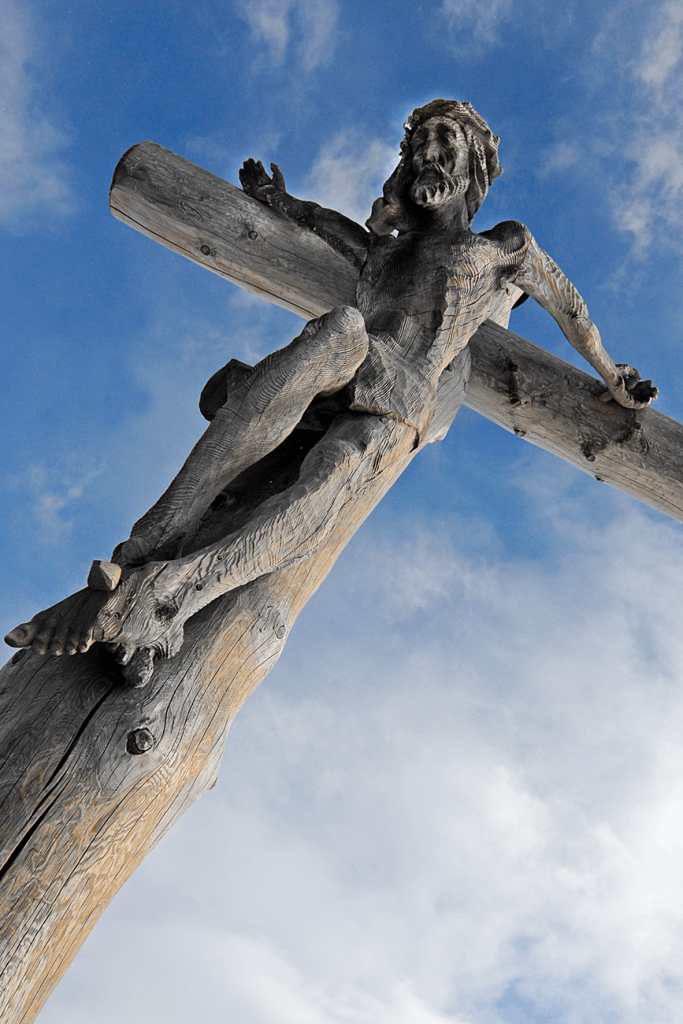
But the heart of Christmas comes quietly and simply; when we step back from all the glitter and activity and take in the absolute wonder that the God of the Universe stepped into all the limitations of His Creation– a world of time and space, dirt and disease, broken hearts and broken bodies–and He did it for YOU and for ME. He had to be fed and changed–the ruler of Nations!–and placed in a manger to lie in all the helplessness of infancy. He had to walk wherever He wanted to go. He had to eat and sleep and wait in lines and wash away the dirt and sweat of His exertions. He had to listen to the foolish arguments and explain Himself to critics whose very souls He had lovingly created. And He let them condemn Him unfairly and kill Him in the most painful and humiliating way they could dream up.

Christmas is about Joy bursting into a world that was NOT prepared for it. It is about the inextricable link between suffering and celebration; between seeking and being sought out; between salvation and sacrifice.

Our Joy at Christmas cannot be manufactured by songs or gifts or entertainments. It can’t even be found in rituals and traditions. But when Jesus finds room in our meditations, our relationships, and our lives, Joy is the overflow.

May we all find Joy this Christmas– whether or not we prepared in advance; whether or not we checked off all the items on our “to-do” lists; whether we can afford all the trimmings and decorations; even if we are crying out in the darkness– may the Joy of Christmas burst upon us, just as Jesus burst upon a weary world so long ago! 

“Joy to the world! The Lord has Come!”

Ugly Christmas Sweaters

It’s that season of the year, when several companies have their annual “Christmas Parties.” Some companies, in an effort not to offend any of their employees, investors, etc., have stopped calling them “Christmas” parties– they are “holiday” parties or “year-end” celebrations. In fact, at one place I worked, they stopped having any parties for the employees, claiming it was a “bad look” to “waste” money on such nonsense! Bah, Humbug!

But company Christmas/Holiday parties have a tendency toward the silliest and least meaningful ways of celebrating what this season and its holidays are all about. Often, the festivities involve a cash (or open) bar, some sort of anonymous gift exchange– white elephant or “secret Santa” with a spending limit of $5 or $10 dollars, and an ugly sweater contest.

And there is an entire industry predicated on the modern tradition of the “ugly” holiday sweater. Garish, loud, often bedecked with pom-poms, tinsel, or even battery-operated flashing lights, such sweaters can cost a minor fortune. They get worn once a year (twice if you have to go to a second party with a spouse, friend, or as a chaperone). And, while I don’t want them banned, I think they represent some of the worst excesses of our modern first world. They serve no higher purpose than to draw attention to bad taste and mock the core values of Christmas, Hanukkah, and other seasonal holidays. They are about tacky and fleeting entertainment, at the expense of higher virtues. 

I’m not trying to be a Scrooge or a Grinch. The holidays should be a time of joy and laughter. But is a tacky sweater really the best we can come up with? Is it in the top ten best ways to enjoy a season of miracles, love, light, giving, and hope? (I feel the same way about the focus on drinking– waking up hungover and sick; not being able to remember the end of the party– how is this “fun?”)

In our effort to have “Christmas” without “Christ” or Hanukkah without miracles; in our efforts to erase God from the celebrations of HIS goodness, we have created a level of fake celebration that echoes the story of “The Emperor’s New Clothes.” We’re walking around with ugly sweaters, each more elaborately ugly than the one before, considering it a triumph to be the biggest fool in a forest of foolishness.

Imagine giving that ugly Christmas sweater to someone who was homeless and had no warm clothes. Would it make you laugh to see someone in those circumstances wearing your once-a-year indulgence? Would your ugly sweater bring hope and healing to those who are refugees this season? Do you wear it when no one else can see it? The sweater isn’t about the season. It really has nothing to do with the meaning of the Holidays. It’s about impressing people with your willingness to stand out; your ingenuity in finding an uglier sweater than anyone else; it’s about YOU.

What would happen if, instead of an ugly sweater contest, seeing who can drink the most before passing out, or a white elephant exchange of worthless gifts, companies celebrated with worthwhile activities– building community ties, honoring achievements, or maybe even reflecting on miracles in our midst? What if our celebrations were less about empty amusements and more about reflecting on what is genuinely worth celebrating–health, friendships, family, hope, and purpose? They might be less amusing, but they might also be more memorable and meaningful.

There’s nothing “wicked” about ugly sweaters or white elephants– but they are becoming symbols of the kind of “Christ-less” Christmas that offers mild entertainment, but no hope for the dark days of a long winter. They are some of the symbols of excessive economic wealth in the midst of emotional and moral poverty. Naked and empty entertainment, pretending to offer light and satisfaction, but settling for glitter and gluttony.

Today, I’m going to wear a sweatshirt to keep warm, and I’m going to spend some time with my family– building memories that will last much longer than last season’s ugly sweater! And I will spend some time thanking God for the sweatshirt, my grandkids, and for the incredible gift of His Son–the real meaning of this season of love, gifts, miracles and hope–our real reason for celebrating Christ-mas!

Of Gingerbread, Christmas Trees, and Frankincense…

As the Christmas season approaches, people are decorating their homes– wreaths, Christmas Trees, lights, gingerbread houses, manger scenes, elves and reindeer, candles and more. And along with the sights and sounds and tastes, the air is redolent with the scents of the season.

Scents evoke memories and emotions deeper than any of our other senses. We can close our eyes or ears to unwanted stimuli, but it’s difficult not to breathe in the spicy air filled with cinnamon or cloves, or ignore the scent of pine or scented candles filling the room.

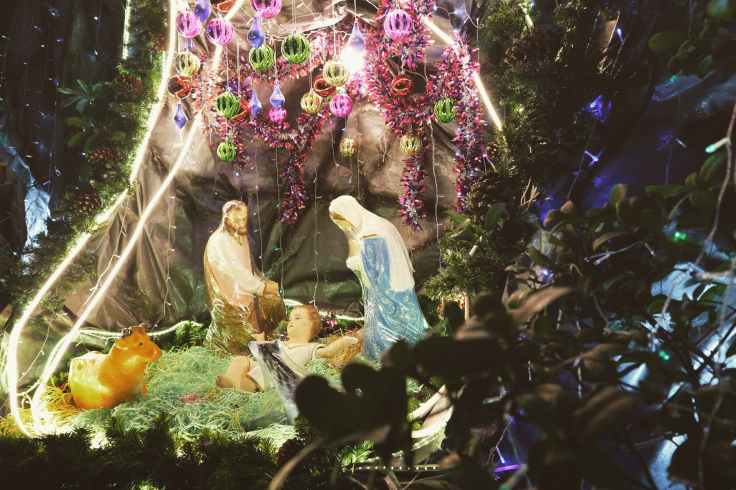
There was no gingerbread, or evergreen tree, or clove orange in the stable where Jesus was born so long ago– no candles or air fresheners to cover the other scents of animals and afterbirth. But when the wise men arrived to worship the infant King (which may have been a couple of weeks or even months later), they brought gifts, and two of the three were spices– Frankincense and Myrrh. They were precious spices, with medicinal and healing properties, and were also used in embalming– symbolic of Jesus’s future life and death. Oddly enough, their fragrances are reminiscent of citrus and pine, two scents we commonly associate with the Christmas season. https://www.history.com/news/a-wise-mans-cure-frankincense-and-myrrh

Photo by Jonathan Meyer on Pexels.com

God never wastes details. The Bible is full of them– lists of names, detailed instructions for the construction of the Tabernacle and Temple, references to various places, animals, trees, events– seemingly unimportant, sometimes even distracting–but all of them have a purpose. The gifts of the Wise Men (or Kings) were costly, prophetic, and worthy of a newborn king. But they were also physical gifts. The Bible never tells us how the gifts were eventually used– Did Joseph and Mary use the gold to help pay for their flight to Egypt? Did Mary save the frankincense and myrrh to use for Jesus’s burial? We don’t know. But the spices would have kept their scent for a long time, releasing their fragrance whenever the jars or containers were opened. And they reveal something about both the recipient and the givers.

God reveals Himself to us in many ways– and He appeals to all of our senses. Our worship of and fellowship with Him should do the same. We may not have access to frankincense or myrrh (though they have increased in popularity and are readily available from dealers in essential oils), but the Bible tells us that WE are a fragrance– our worship, our obedience, our sharing of the Gospel with others.

14 But thanks be to God, who in Christ always leads us in triumphal procession, and through us spreads the fragrance of the knowledge of him everywhere. 15 For we are the aroma of Christ to God among those who are being saved and among those who are perishing, 16 to one a fragrance from death to death, to the other a fragrance from life to life. Who is sufficient for these things?

2 Corinthians 2:14-16 (ESV) via http://www.biblegateway.com

Above all, our prayers are said to be incense– a pleasing aroma before the throne of heaven:

The Lamb Takes the Scroll (Revelation 5:1-10 CSB)

Then I saw in the right hand of the one seated on the throne a scroll with writing on both sides, sealed with seven seals. I also saw a mighty angel proclaiming with a loud voice, “Who is worthy to open the scroll and break its seals?” But no one in heaven or on earth or under the earth was able to open the scroll or even to look in it. I wept and wept because no one was found worthy to open the scroll or even to look in it. Then one of the elders said to me, “Do not weep. Look, the Lion from the tribe of Judah, the Root of David, has conquered so that he is able to open the scroll and its seven seals.”

Then I saw one like a slaughtered lamb standing in the midst of the throne and the four living creatures and among the elders. He had seven horns and seven eyes, which are the seven spirits of God sent into all the earth. He went and took the scroll out of the right hand of the one seated on the throne.

The Lamb Is Worthy

When he took the scroll, the four living creatures and the twenty-four elders fell down before the Lamb. Each one had a harp and golden bowls filled with incense, which are the prayers of the saints. And they sang a new song:

Photo by Josh Sorenson on Pexels.com

You are worthy to take the scroll
and to open its seals,
because you were slaughtered,
and you purchased people
for God by your blood
from every tribe and language
and people and nation.
10 You made them a kingdom
and priests to our God,
and they will reign on the earth.

Photo by Jeswin Thomas on Pexels.com

This season, as we revel in the scents of the season and remember the gifts given to the infant Emmanuel, let us present Him with the gift of fervent prayer and enthusiastic praise. He is Worthy!

Blog at WordPress.com.

Up ↑