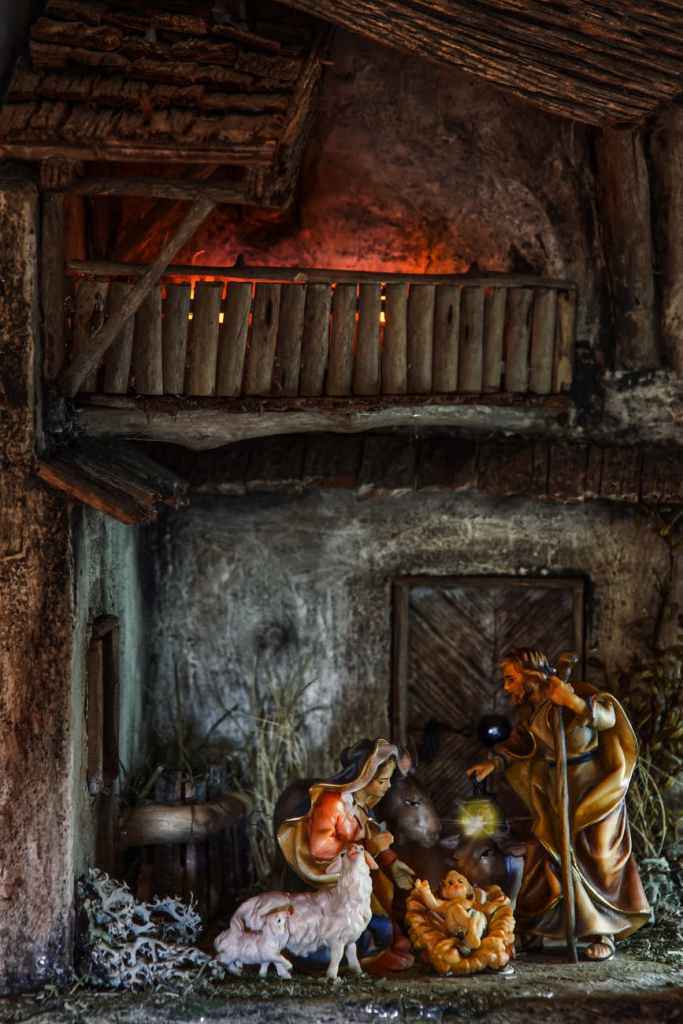
Lullabies and Hallelujahs

During this season of the year, we hear a lot of “Christmas” music. Much of it is secular music–Santa Claus and magical snowmen, gifts and parties, and the Holiday “blues.” But much of it is related to the real reason for Christmas: the birth of Our Lord. And the number of songs, hymns, cantatas and symphonies related to Christ’s birth is staggering! Popular secular singers record “their” versions of favorite hymns; choirs and orchestras present new songs and ancient melodies. Many of the songs fall into two distinct categories, however. There are quiet lullabies–peaceful and meditative, focused on the infant in the manger; and there are Hallelujahs– joyful and majestic, focused on the wonder of God coming to earth.

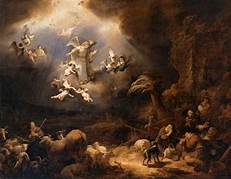
I don’t know if there were actually lullabies OR Hallelujahs on that first Christmas. The Bible mentions the visit of the angels, but they were “praising God and SAYING, ‘Glory to God in the Highest..'” We often assume that their praise included singing, but the Bible isn’t specific. But it is interesting to look at the contrast of the quietness of the manger and the Glory of the angel hosts, and hear the contrast in the hymns we raise at this time of year.

Photo by Henlynn on Pexels.com

Lullabies, and quiet songs, like “Silent Night,” or “Away in a Manger” call our minds and hearts to the humility of the Christ child. Babies are cute and engaging. And they are not “silent.” But they do not command authority and majesty. Babies cry out for help. They are needy in a way that God is NOT. And yet…God came in the form of a helpless baby. The God who created the galaxies needed someone to feed and change Him; to carry Him from place to place and rock Him to sleep. “O, Little Town of Bethlehem” reminds us that He came to a cattle shed in a small town, rather than to a palace in the seat of power.

Photo by Blue Ox Studio on Pexels.com

Hallelujahs, like “Joy to the World” and “Hark, the Herald Angels Sing,” remind us that this was no ordinary child. And yet…the angels did not appear IN the manger or even in the little Town of Bethlehem. The Angels were compelled to sing their praises, not to the learned priests, or the courts of power, but to dumb-founded shepherds on a cold hillside. What an explosive visitation! Their praises (whether shouted or sung) shattered the quiet and the darkness. Like a sudden fireworks display, the Glory of God’s servants split the night.

God enters our hearts– sometimes quietly, like the cooing of an infant; sometimes dramatically, like a chorus of angels. God is at work– sometimes in humble moments and ordinary gestures; sometimes in glorious flashes of insight and inexplicable miracles. And this season, our prayers will rise up– sometimes like the humble cries of a newborn baby; sometimes like the soaring songs of angel hosts– prayers of need; prayers of thanksgiving; prayers of awe-struck worship; prayers of simple confession of our own unworthiness, and of God’s sufficiency and everlasting Love. Peace and Glory; lullabies and Hallelujahs; simplicity and majesty– all wrapped up on a manger of hay on one Holy Night.

Photo by Daka on Pexels.com

Christmas is about both the lullabies and the Hallelujahs; the simple light of Truth and the glorious radiance of God’s Holiness.

…And the Word WAS God!

Photo by Daniel Maforte on Pexels.com

In the beginning was the Word, and the Word was with God, and the Word was God. 2 He was with God in the beginning. 3 Through him all things were made; without him nothing was made that has been made. 4 In him was life, and that life was the light of all mankind. 5 The light shines in the darkness, and the darkness has not overcome it…14 The Word became flesh and made his dwelling among us. We have seen his glory, the glory of the one and only Son, who came from the Father, full of grace and truth.

John 1:1-5; 14

Emmanuel– God WITH us. The Baby Jesus in the manger is the same Jesus on the Cross; the same Jesus who was involved in the Creation of the universe.

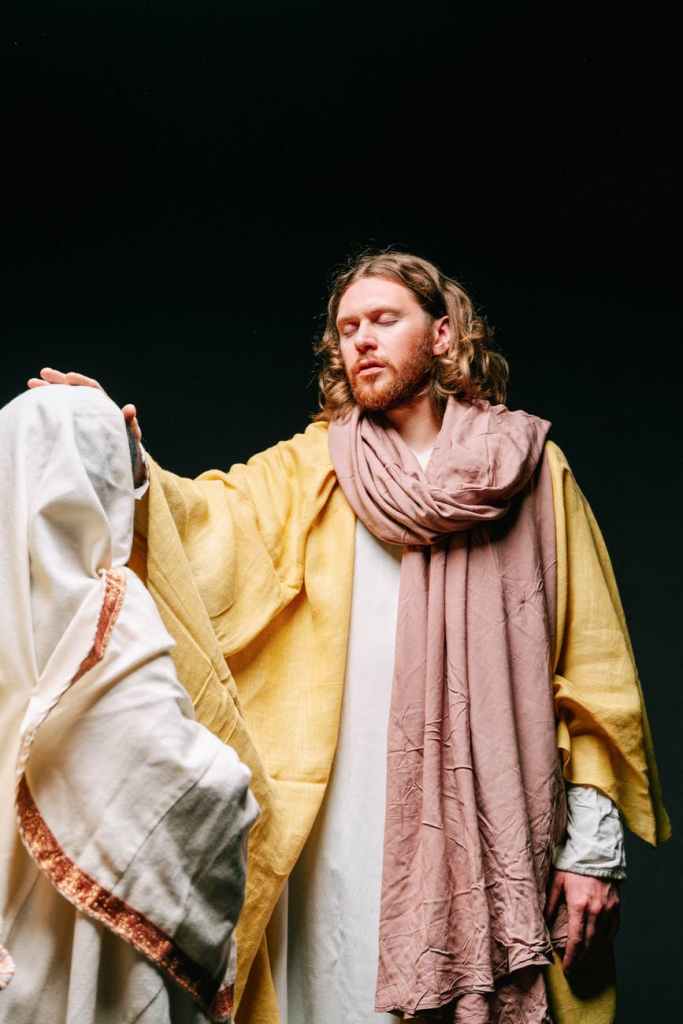
We love seeing the Baby Jesus in the manger. We like the idea of Jesus, the good teacher and friend. We even bow our heads to honor the Jesus of the cross. We pray to Jesus, acknowledging that He is the God-Man who came to save us from Sin. But sometimes, we get so comfortable seeing Jesus lying peacefully in the manger or serenely enduring the pain of the Cross, that we ignore His absolute Holiness and Power.

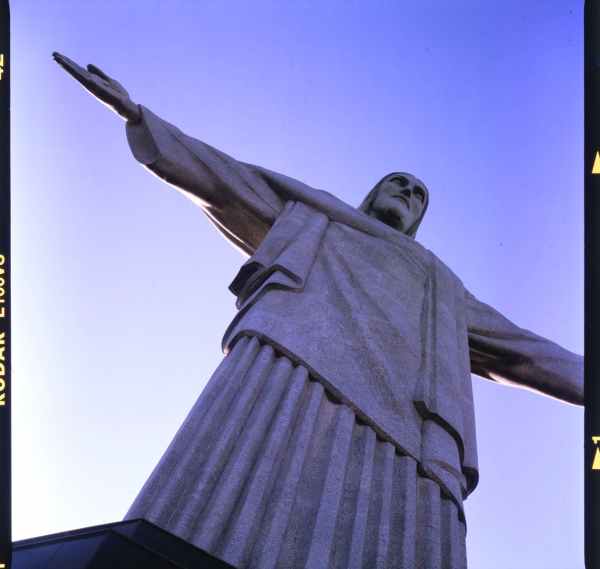
Jesus was fully human– he ate, slept, cried, felt cold, and felt pain. But He is also God– fully Divine; fully Sovereign. He doesn’t force us to worship Him– not now, anyway. Someday, though, every knee will bow, and every tongue compelled to confess that Jesus is the Ultimate Authority in Heaven and on Earth (Philippians 2:10-11). Larger than life; more permanent than history; eternally Sovereign.

Photo by Tima Miroshnichenko on Pexels.com

We pray to a God who is so awesome and glorious that no person can see His face and live. And yet, we pray to a God who so loved mankind that He came and walked among us, lived among us, and died among us. We look at Baby Jesus in the manger– we see the face of God. And when we look at our neighbors and friends, we look at those made in the image of God– we see those beloved of God; those Jesus came to save.

Photo by Henlynn on Pexels.com

This is not new theology. This is basic Christianity. But sometimes, in the bustle of the “Season, ” we forget the wonder and the miracle that is the very reason for it all. God is NOT distant. He is not looking for reasons to reject or condemn us. He reaches out to us EXACTLY like a baby reaches out– seeking to be held close. He is as close as the person sitting next to you at the dinner table, or sharing a seat on the bus. GOD! Not a theology; not a list of do’s and don’t’s. Not an esoteric idea. A Presence; a living Christmas Present! An eternal Gift of Love! One with arms and legs; a twinkling eye and infectious smile.

In this season of Advent and Christmas, may we let the Glory of God fill us with awe and wonder. And may we let the Love of God fill us with hope and joy. May our prayers be like the sweet singing of the Angels on that Holy Night so long ago. “Glory to God in the Highest! And, on earth, Peace among those with whom He is pleased.” (Luke 2:14).

…And the Word Was With God…

We get excited about Christmas coming–we put up trees and decorations, and often a manger scene or Creche, with Mary and Joseph and the baby Jesus in the manger. But Jesus didn’t start as a baby. Long before He ever came to Bethlehem, Jesus was one with the Father. He ruled from the heights of Heaven. He saw the first dawn of the first day on Earth. He walked in the Garden with Adam and Eve. He was a witness to all the events leading up to His own birth.

Photo by Pixabay on Pexels.com

We like to picture Jesus as a baby. We like to picture Him as a man. We like to think of Him as a good teacher. And these are all correct. But we miss the full picture if we never imagine Jesus with God before He ascended to Heaven. The Ascension was Jesus returning to His rightful place, after the work of Salvation was accomplished in chronological, Earthly time. Jesus walked with His disciples. He ate with them, He laughed and talked with them. But He spent His earthly life talking and walking and relating with His Father, too. Nothing separated them, until that moment when Jesus became Sin for us so that we could be restored to a relationship with the Father.

Photo by RFA on Pexels.com
Photo by Ivan Samkov on Pexels.com

On the Cross, Jesus cried out, “My God, My God, why have you forsaken ME?”(Matthew 27:46 or Mark 15:34). God was not just “sending” His son as an emissary or a benign sacrifice to demonstrate how much He could love us. Jesus came, fully intending to be a living sacrifice. He endured the “imposed” separation of a human body, bound by time and place, separated physically from the glories of Heaven. But this separation– this knowledge of being forsaken, banished to Hell and Death–was what Jesus came to take upon Himself. The one who had eternally existed in loving harmony with the Father and the Spirit, had to be ripped away from Himself, forsaken by the Father and Spirit as one condemned. The one who had lived a perfect life of obedience had to be shunned as one who was unclean and unworthy of life, so that WE could have the right to be adopted as sons and daughters of God. We can be “with God” because He chose to endure the inconceivable pain of the rejection that we deserved. But there is another miracle of the Birth of Jesus that we overlook.

At the moment of Jesus’ birth, He was Emmanuel– God with US. Just by entering into a human existence, God already fulfilled His promise to bring us to Himself. When Jesus ate with His disciples, God was eating with them. When He laughed with them and walked side by side with them, the fullness of God was there. By His death, He continued “with us” to the grave and beyond. There is not a single moment of life –or death– that God, through Jesus, has not experienced and shared with us. In His resurrection, Jesus broke the power of Sin and death to separate us from God. Even the power of God’s justice cannot condemn those who put their trust in the finished work of Jesus, because Jesus has paid the debt in full. There is NOTHING that can ever separate us from God’s love and His loving presence. The Word was with God– and that same Word was with us. That same Word lives with, and in, and through us throughout our days on earth. And, if we have put our faith in this same Emmanuel, we will be “with God” throughout eternity.

Photo by Marcelo Moreira on Pexels.com

I need to meditate on this truth today. Even in the Holiday season, I can feel very separated from God–surrounded by stress and worries; focused on my own struggles and goals; chasing after a temporary joy in the busyness of preparations. Jesus has not forsaken me to return to Heaven– He is no less “with me” for being once again “with God.” No, He doesn’t physically walk beside me and eat with me, or talk audibly to me. But His presence is constant, steady, and promised.

Photo by Alena Shekhovtcova on Pexels.com

The Word– the same Word that spoke galaxies into being; the same Word that conquered Death and Sin–is “with us!” Today. Every moment! We will never have to cry out, “My God, my God, why have You forsaken me?” And we know this because Jesus CAME! He didn’t just “say” it. He gave us “His Word.”

In the Beginning Was the Word…

1 In the beginning was the Word, and the Word was with God, and the Word was God. 2 The same was in the beginning with God. 3 All things were made by him; and without him was not any thing made that was made. 4 In him was life; and the life was the light of men. 5 And the light shineth in darkness; and the darkness comprehended it not. 6 There was a man sent from God, whose name was John. 7 The same came for a witness, to bear witness of the Light, that all men through him might believe. 8 He was not that Light, but was sent to bear witness of that Light. 9 That was the true Light, which lighteth every man that cometh into the world. 10 He was in the world, and the world was made by him, and the world knew him not. 11 He came unto his own, and his own received him not. 12 But as many as received him, to them gave he power to become the sons of God, even to them that believe on his name: 13 which were born, not of blood, nor of the will of the flesh, nor of the will of man, but of God. 14 And the Word was made flesh, and dwelt among us, (and we beheld his glory, the glory as of the only begotten of the Father,) full of grace and truth.

John 1:1-14 (Authorized KJV)
Photo by Jeswin Thomas on Pexels.com

We celebrate Christmas as the “birth” of Christ. Yet, the Bible tells us that Jesus (Christ) was in the beginning with God: Jesus had no beginning and no end. He is eternal with the Father and Spirit. We call this season before Christmas “Advent”– we await and celebrate, not the birth of a new being, but the advent of His coming from Heaven to earth.

Photo by Pixabay on Pexels.com

Jesus came to Earth for many reasons– some of which are given in the Bible, and some of which are likely beyond our comprehension. He came to live among us as a man of flesh and bone (John 1:14); He came to bring life and light (vv.4-9); He came to live a sinless life, which He sacrificed as a ransom for the sins of the those who repent: and He came to serve others–to model the kind of service that God desires from us (Matthew 20:28). Jesus came in obedience to the Father (John 6:38). Finally, Jesus (as a member of the Triune Godhead) came because “God so Loved the World” (John 3:16) –He Wanted to come! The Advent was part of God’s perfect plan. It was not Plan B, developed after the fall of man. It was so “from the beginning.” It was foretold and prophesied. It was planned down to the tiniest detail.

Photo by Ketut Subiyanto on Pexels.com

Jesus has always been. He has always been The Word of God. Jesus speaks. Jesus listens. When we pray, it is natural to speak words to The Word. Jesus created us to communicate. Unlike any other creature on earth, mankind chooses to communicate through complex and subtle language, as well as through art, music, dance, architecture…even food! We chatter about trivia; we choose to wear certain colors to express our moods; we make silly faces at infants and delight in their own facial contortions.

Photo by Antoni Shkraba on Pexels.com

Prayer is so important, because it is the essence of expressing our hearts and minds to the very one who created us to BE communicators. God listens through all the words of all the languages we use (or the non-verbalized thoughts, groanings, etc.) to hear our true heart-cry.

Photo by Pavel Danilyuk on Pexels.com

This season, we take time to reflect on just what it means that Jesus was “In the Beginning…” as well as in the manger. We reflect that “before Abraham was”–He IS (John 8:58). We glory in the knowledge that He is the same yesterday, today, and forever! (Hebrews 13:8). These “words” give us life and hope and joy– not just now, but throughout all the years of our lives.

What a reason to say just a few words today in prayer!

Joy(?) to The World

Photo by zeno ferenczi on Pexels.com

I don’t know about you, but I sometimes have problems with Advent Season. On the one hand, it’s a season of joy and wonder; a season of anticipation and expectation. But I find myself contemplating…and as the days get darker, earlier, and the snow falls, then melts, leaving everything brown and gray, I can’t seem to hang on to the joy. It slips through my fingers, leaving me thoughtful and even a little depressed.

I also find myself looking at the glitter and listening to the peppy music of the season and feeling as though all the “Merry” in Christmas is just a soap bubble, waiting to burst. I don’t watch much television, but it seems that every year the “holiday” specials and TV ads get more artificial and shallow. “Buy this!” “Turn up the Tunes!” “Wear THIS to the Holiday party!” “Eat this– Drink that!” “Get away from it all!” It’s more about escaping the ordinary, rather than celebrating the extraordinary gift of God’s Son. The more I try to get “into the Spirit” of the season, the more I seem to miss it…

Photo by Henlynn on Pexels.com

It is important to remember that this extraordinary Joy came INTO and THROUGH the ordinary. The angels didn’t announce to the shepherds that they could escape their duties and run off to a vacation cruise; Mary and Joseph didn’t celebrate their first Christmas surrounded by lights and mugs of hot cocoa. The wise men didn’t have a brand new GPS device to help them find their destination, or tasty cookies and fruit baskets to make the journey more “fun.” This “good news of great joy” was the birth of a child– an ordinary event–except that THIS birth was the fulfillment of God’s Promise and the Way, the Truth, and the Life!

Photo by Levent on Pexels.com

Many millions of people today will not have joyful circumstances to make the season “Merry and Bright.” But they can experience true Joy– the kind that comes from Knowing Jesus–and not just for a day or a season, but forever, in spite of difficulties, pain, and struggle. There IS joy in the journey, but it doesn’t always manifest as mirth and comfort.

Photo by Kampus Production on Pexels.com

This season, it is our privilege as Christians to offer a different level of Joy to the World–the Joy of forgiveness; the joy of belonging; the joy of eternal Hope and Peace. It may not be in laughter or singing. It may be in holding a hand at the side of a hospital bed. It may be in sharing tears with those who are suffering. It may be sharing a crust of bread with real thankfulness, instead of a feast with stress. Joy doesn’t have to be complicated. It doesn’t require wrapping paper sugar sprinkles. The best gifts we can give this season don’t have to be filled with merriment and laughter. They don’t have to be expensive or even filled with thoughtful intent. They should be the spontaneous response of love and compassion for those around us. Let’s give lots of hugs, smiles, and small tokens of respect and appreciation this year. After all, God’s great gift– the greatest of all– began as a tiny, wailing infant, hidden away in a spare stable, wrapped in rags. But “Behold!” It is still bringing great joy all over the world. (Luke 2:10)

Photo by Burkay Canatar on Pexels.com

Let’s not trade certain Joy for temporary mirth this season. Reflect on the Reason, and not just the Season!

It Came Without Ribbons…

In the Dr. Seuss classic, “How the Grinch Stole Christmas!,” the bitter and devious Grinch tries to “steal” Christmas from the village of Whoville. He steals all the things the Whos of the village seem to need in order to celebrate a holiday he hates. He hates their gift exchanges, their feasting, their singing, and their general happiness, all of which serve to remind him of his own loneliness and gloom.

With mounting glee, the Grinch proceeds to pile up his hoard of goodies– presents, decorations, food, anything that could serve to make the holiday cheery and bright. He loads up all his stolen loot and takes it to the top of a mountain, where he plans to dump it. But first, he stops to savor the shock and pain he expects to hear as the Whos discover that their holiday has been ruined. He waits in the cold of a clear dawn to hear wailing and lamenting, but the sound he hears instead is singing…the Whos have come together to sing a hymn of gratitude and peace. There is no lamenting; there is no distress. Instead there is a peaceful acceptance that the new day has brought joy and goodwill that has nothing to do with all the trappings of celebration.

He hadn’t stopped Christmas from coming. It came!
Somehow or other it came just the same.
And the Grinch, with his Grinch-feet ice cold in the snow,
Stood puzzling and puzzling, how could it be so?
It came without ribbons. It came without tags.
It came without packages, boxes or bags.
And he puzzled and puzzled ’till his puzzler was sore.
Then the Grinch thought of something he hadn’t before.
What if Christmas, he thought, doesn’t come from a store.
What if Christmas, perhaps, means a little bit more.

How the Grinch Stole Christmas!–Dr. Seuss
Photo by Susanne Jutzeler on Pexels.com

The first Christmas came without any of the festive trappings we’ve added over the years. There were no groups of cheery carolers; no jingle bells and tinsel; no greeting cards or candy canes. Jesus came in the dead of night, in the midst of chaos and terror, as people were groaning under the oppression of an invading empire, being forced to travel long distances to be counted and taxed by their oppressors. There were no Christmas parties, no brightly decorated trees, no stockings filled with treats, no cookies and cocoa on a cold night. The gifts would come later– and they would be followed by death threats and exile! But Jesus came! He came just the same!

Photo by Jeswin Thomas on Pexels.com

This year, Christmas will come– with or without ribbons or tags. Christmas will come to those who are homeless, and those who are lonely in palaces and mansions. Christmas will come in spite of efforts to erase the holiday from our culture. It will come just like the dawn of each new day– quiet in its wonder and glorious in its simplicity. Christmas doesn’t come wrapped in shiny paper or announced with blaring horns and neon lights. Christmas comes just as Christ came so many years ago–wrapped in rags, laid in a straw bed on a cold, dark night; announced to simple people going about their business, signaled by a single star ignored by most, wondered at by others. Christmas will seep into the hearts and eyes of those with child-like faith and willing to sing when things are darkest.

God chooses to come in simplicity– He creeps like the dawning day; He sighs like a gentle breeze; He comes as a harmless infant, or a wandering teacher and healer. And when our Christmas Day comes without ribbons and boxes or feasting and lights– it will come just the same. Christ will enter darkened hotel rooms and alleys, He will sit beside hospital beds and in makeshift refugee shelters. He will sneak into homes where Christians huddle in secret, and He will knock gently on the doors of the lonely and the lost. Because Christmas DOESN’T come from a store. It doesn’t come from our bounty and our glittering decorations. It comes from the heart– the heart of God, who SO loved the world, that He came! And He will come this year, just the same!

Photo by Josh Willink on Pexels.com

Author and Perfecter…

12 Therefore, since we are surrounded by so great a cloud of witnesses [who by faith have testified to the truth of God’s absolute faithfulness], stripping off every unnecessary weight and the sin which so easily and cleverly entangles us, let us run with endurance and active persistence the race that is set before us, [looking away from all that will distract us and] focusing our eyes on Jesus, who is the Author and Perfecter of faith [the first incentive for our belief and the One who brings our faith to maturity], who for the joy [of accomplishing the goal] set before Him endured the cross, disregarding the shame, and sat down at the right hand of the throne of God [revealing His deity, His authority, and the completion of His work].

Hebrews 12:1-2 (The Amplified Bible, via biblegateway.com)
Photo by Andrea Piacquadio on Pexels.com

My first job out of college was in an advertising/public relations firm. I was not a copywriter or an executive. I was a proofreader. It was not my job to write ad copy, or even edit it. But it was my job to see that the end product was perfect– no spelling or typographical errors, no missing punctuation or wrong spacing, no missing or “covered” text near the graphics.

Photo by Vlada Karpovich on Pexels.com

Most publishers don’t use proofreaders anymore. In this age of spellcheck and computer grammar programs, they no longer feel the need to hire a person to do such a mundane job. And it wasn’t a thrilling job. It was boring and repetitive to look over the same copy several times to make corrections or to sign off on corrected copy. Sometimes, I would look at the same few lines of text five or six times–a misspelling here, a missed comma there, or a client wanted to change the word order or the font, so I had to check if the typography matched the written specifications, and if the font change made any difference in the spacing and word divisions at the ends of lines.

One day, a mistake got by me, and made it into the final product. It was a “small job,” one that I had looked at near the end of a busy day. I looked at the changed copy, but not the entire text. I was distracted, and I signed off on it without giving it a complete study. The client caught the new mistake, and brought it to my boss’s attention. Suddenly, my obscure little corner of the office was a hot spot. The initial mistake wasn’t mine, but because I had not caught it, the print run would have to be destroyed and a new print run ordered at the company’s expense– a $14,000 mistake! I was not fired, but I was given a chewing-out, and I lost my chance at a raise and a promotion. Just one little mistake, but it ruined the message our client wanted to create!


Photo by August de Richelieu on Pexels.com

In Hebrews 12:2, we are told to “fix our eyes on Jesus, the author and perfecter of our faith.” (emphasis added) Instead of fixing our eyes on imperfect text, or being distracted by what we see going on around us, we are to study the life and words of Jesus– to be “proofreaders” of His perfect words. As we listen to, and read, and live out His words and follow His example, we will see– and become– “proof” of His wisdom and righteousness. As we study His perfection, we will also see how many of the world’s “answers” fall short.

Photo by Andrea Piacquadio on Pexels.com

Jesus is the author of our faith– not us. We cannot write our own story of obedience and faithfulness without falling short. We cannot live a perfect life; nor can we “perfect” the life we have already lived. We cannot undo our own mistakes; nor can we undo the wrongs that have been done to us. Finally, we do not have the authority or the power to create life, or establish the principles needed to have abundant or eternal life. We cannot create purpose or arrange circumstances to give our life meaning and perfection. Jesus writes the story; Jesus, by His blood and power, edits our story.

Photo by Magda Ehlers on Pexels.com

Jesus is also the perfecter of our faith– He gives us wisdom, and helps us build self-control, perseverance, goodness, patience, and love for others. He brings us through trials and sufferings, and allows us to see His faithfulness in the midst of even our worst pain. He redeems us, transforms us, and gives us the power to grow more like Him in Holiness. He sanctifies us, and readies us for our future life with Him in Glory. We can’t do any of this in our own power or strength of will. We still have a role to play in living out our own story, and our own faith–but the power and the results come from God’s work through our lives.

Photo by Vinu00edcius Vieira ft on Pexels.com

God doesn’t make mistakes. God never needs an editor. He doesn’t “need” a proofreader. But WE need to see the “proof” of God’s promises, His provisions, and His perfection. God sent His WORD to live among us– that is what we celebrate throughout this Advent season– God’s WORD is sufficient; it is perfect; it is true. And it is for ALL who believe!

Anticipation…

Yesterday was the first Sunday of Advent. Four weeks later, we will have Christmas Day. For some, the time will pass in a frenzy of shopping and wrapping– the time will fly by! For some, the time will pass in meditation and reflection– it may seem to crawl. For some, the time will pass with no difference from any other time of year. For most of us, there is a sense of anticipation…we are waiting for something: the “Christmas Spirit,” the festivals and events, the time spent with loved ones far and near…

Photo by Any Lane on Pexels.com

Christmas, more than any other day, brings this sense of expectation. We sing songs, listen to stories, reach out to friends and neighbors– all in anticipation of a single day. And sometimes, the anticipation and expectation exceed the realities of the day. We feel disappointed in the gifts, or the weather, or the circumstances. But our anticipation shouldn’t be about the single day on the calendar. Christmas is so much more than just a day, or even just the “spirit” of the day.

Photo by Any Lane on Pexels.com
Photo by Ivan Samkov on Pexels.com

We don’t know the actual, historical day when Christ entered human history as a baby. As the Gospel of John relates– “In the beginning was the Word, and the Word was with God, and the Word WAS God.” (John 1:1) But this Word, this Only Begotten Son of the Father, this second person of the Trinity, DID enter human history as a member of the human race. He came and dwelt among us, His creation. He walked and talked, ate and slept, worked and wept, lived and died as a man. The Lord of All Creation tasted freshly baked bread and felt the first raindrops of Springtime. The King of the Universe wiggled His toes in the sand, and wiped sweat from His brow. The Lamb of God shared belly-laughs with His friends over a shared joke. The Lion of Judah wept over the death of His friend. The Author of Life knew what it was to die, abandoned and betrayed.

None of this is anticipation for us, as it was for the prophets of old. It is history. Christ has already come. He already lived a life of compassion and grace, wonder and weariness, agony and anticipation, and, most of all, Love. “For God so loved the world that He gave His only begotten Son, that Whosoever believeth in Him should not perish, but have everlasting Life.” John 3:16 Christmas for us is not about anticipating Christ’s arrival. Christmas is the celebration of what that arrival means for us all these years later and forevermore. And we can celebrate all the wonder of Christ on any day of the calendar year. But there IS real anticipation at Christmas– the anticipation of Eternal Life and Christ’s triumphant return. Just like the prophets waited and wondered, we wait in Hope of a glorious reunion.

Christmas, December 25, 2022, may be a disappointing day–it may be dreary, gloomy, lonely, or disappointing in its circumstances. It may bring us bad news, or heartache. But it will also bring us another opportunity to rejoice– to rise above whatever circumstance brings to focus our thoughts forward and upward, where Christ, who once came as a baby, now reigns and rules and waits– anticipating the same reunion that brings us hope and healing.

Photo by Bich Tran on Pexels.com

The Now and the “Not Yet.”

As followers of Christ and believers in an Eternal God, we live in the “here and now,” but we also live in something called the “not yet.” Our life here is finite, but our life in the “not yet” is eternal.

Most of what we pray for belongs in the “here and now.” We pray about what we see and know. We may pray for an upcoming surgery, or a looming job loss, or give thanks for something that happened in the recent past, but most of our prayers do not venture into the eternal future.

Photo by James Wheeler on Pexels.com

Yet, God speaks to us of things to come. No, He doesn’t always reveal details or give us a calendar of times and dates; but He does remind us that what we see is not the whole picture. And we need to remember this when we pray and when we look around us.

Much of the Old Testament, plus parts of the New Testament, are given over to prophecy– visions, promises, warnings about the future. Many of the prophecies have already been fulfilled– in detail. Some of the prophets prayed for revival in Israel and Judah; others prayed for the coming of the Messiah. Their prayers were answered– but not always in their lifetime, and not always in a way they understood. The Apostles, writing to Jesus’ followers looked forward to His return– but they never saw it in their lifetime.

Now faith is confidence in what we hope for and assurance about what we do not see…And without faith it is impossible to please God, because anyone who comes to him must believe that he exists and that he rewards those who earnestly seek him.

Hebrews 11:1, 6 (NIV)

Following Christ involves living in both the “now” of immediate life, and the “not yet” of our faith. We can have confidence in what was, what is, and what is to come. And we must learn patience, and stand firm in God’s promises, as well as living “in the moment” of service and obedience,. We cannot sit back and wait for life to come to us; neither can we live such short-sighted lives that we waste our energy chasing after constant gratification and emotional peaks. Sometimes, the very circumstances we are praying for God to “change” or take away are the circumstances He will use to teach us, grow us, and bless us!

Prayer is not just about us and our immediate needs. Today, spend some time praying with an eternal mindset–that God’s will would be done, in His time and His way. And then, trust that whatever is going on in the “here and now,” it is all part of God’s perfect plan. One that we will understand more fully in the “not yet.”

Photo by Drew Rae on Pexels.com

Hallelujah!

Christmas Eve–people around the world will be celebrating the birth of Jesus Christ. Some will meet for evening and midnight candlelight services tonight. Others will begin celebrating tomorrow morning. Some will celebrate with great solemnity; others with great festivity; some, like the monks chorus above, with laughter and frivolity. Even amid continuing pandemic travel and gathering restrictions, families and individuals will celebrate with music, gift-giving, phone calls, small gatherings, reading Bible passages about Jesus’ birth, feasting, sharing memories, and praying.
There are only a few occasions throughout the year that can be said to be nearly universal, but Christmas comes close. Even where it is not celebrated as a cultural phenomenon, complete with tinsel and trees, lights and decorations, it is celebrated by the faithful who thrill with joy at the reminder that God Himself chose to come live with people He created– that He came to share in their day-to-day triumphs and struggles; so much so that He chose to share in our fate: Death. GOD cried out in hunger. GOD shivered with cold, and felt exhaustion. GOD suffered shame and misunderstanding and abandonment. GOD felt agony and struggled to breathe as blood and sweat ran down His brow and into His eyes. And by His coming, and suffering, and dying, HE brought us life and hope, eternal joy and peace! It is the very greatest reason to celebrate– bigger than national holidays or seasonal festivals; bigger than cultural differences and vast distances; bigger than mere tradition or historical remembrance.

Hallelujah!

Photo by Bich Tran on Pexels.com

For many, this Christmas will be bittersweet– we have suffered greatly; some of us are still reeling from loss and grief. Others are living with fear and confusion about the future. In many ways, our situation is not so different from that first Christmas in Bethlehem. We feel “taxed” by events and circumstances. The world seems dark and dreary and cold. More than ever, we need to listen for the song of the Angels– for “good news of great joy, which shall be to all people.”

And, maybe more than ever in our lifetime, we need to be like the shepherds–eager to seek out the gift of the newborn Savior; Eager to embrace the wonder of Emmanuel; eager to share the hope we find at the manger. Hallelujah! Unto US a child is given; unto US a son is born! (Isaiah 9:6)

Photo by MART PRODUCTION on Pexels.com

I’ve been writing a lot about Advent and Christmas lately, rather than focusing on Pursuing Prayer. But they are part of the same whole. I pursue a life of prayer precisely because Jesus came in the flesh and lived and died and rose again. I believe in the power of prayer because Jesus modeled how to pray– even as He faced betrayal and death. I believe in the gift of prayer because Jesus prayed for me long before I was ever born (see John 17). I pursue prayer with confidence because Jesus keeps His promises.

Hallelujah!

Blog at WordPress.com.

Up ↑