Influence…


This is how the Lord responds: “If you return to me, I will restore you so you can continue to serve me. If you speak good words rather than worthless ones, you will be my spokesman. You must influence them; do not let them influence you!

Jeremiah 15:19 (NLT via biblegateway.com)

I’ve been reading in Jeremiah for the past week. Jeremiah was given a thankless task of delivering a prophecy of doom for the people of Judah and Jerusalem. God, in His righteous anger even told Jeremiah that he should no longer pray for his own people. Their doom was inevitable, brought about by their continuous idolatry and arrogant disobedience. As Jeremiah received the visions, he grew discouraged. Why should he continue to preach to those who were never going to listen? Why face the ridicule, the persecution, and the death threats? Why bother? Instead of drawing closer to God, He was being influenced by the continued rebellion of the people he was supposed to be warning!

But the Lord responded with a rebuke to Jeremiah–“Don’t give up! Don’t walk away from your mission! Turn around and focus on ME! Don’t let them influence you–You must influence them!” Those are difficult words to read. And even more difficult ones to put into practice. It is very easy to feel discouraged when it seems that you are alone in your beliefs; alone in your commitment; alone in your grief and distress. Jeremiah was torn and broken by his mission–no one wanted to hear his message. No one responded to his calls for repentance or his warnings of God’s judgment. In fact, his complaint was that other “prophets” were saying the opposite– that God would rescue Judah from her enemies; that all would be well. How could Jeremiah stand firm in the face of such opposition?

God’s answer may seem a bit harsh on the surface–“Stop whining! You WILL be my spokesman, and you must influence them and not let them influence you.” But look closer, and you will see an amazing and hopeful message in God’s rebuke. God has not set Jeremiah up for failure and discouragement. God’s promise is to strengthen and protect Jeremiah in spite of the opposition– if he will stay the course. Against the worst odds, against the threats of his enemies, God will be with Jeremiah as he speaks the truth–no matter how difficult; no matter how grievous; no matter how unpopular. Moreover, God will give Jeremiah the power to influence his enemies– not just with his words, but in spite of them–by his faithful, courageous commitment to the truth.

We live in a world where people make a career out of “influencing” others– advertising, advocating, lobbying, arguing on social media, creating memes and soundbites and slogans. We are surrounded by voices and billboards and pop-ups demanding our attention and invading our thoughts. And it can be very easy to be swayed by the overwhelming noise and distraction offered up all around us. Just like Jeremiah, we can be discouraged, and even silenced, by the crowds of others, speaking fear, doubt, anger, and lies. And, in our own voices, we cannot drown out their “influence.”

Photo by Markus Spiske on Pexels.com

God does not call us to shout louder, or change our message to be more “palatable” to the masses. God does not call us to “win” every argument or convert all of our neighbors. But God does call us to be faithful in speaking the truth– more, He calls us to live out the truth in obedience and humility. It may seem thankless at times, but living with integrity and solid faith influences others in ways only God can know. We need to continue to speak truth. “Worthless words” may rule the airwaves, or glut our newsfeeds. But truth whispers in consistent, loving action, and humble service. May we be known more for our prayers and our steady confidence than for persuasive tongues or arrogant arguments. In the end, actions really do speak louder than words.

Prayer is the exception to this rule. Prayer taps directly into the heart and mind of God as we pour our own hearts and minds out to Him. Jeremiah’s heart was tender– he wanted mercy, even for those who were far from God. The same people who were taunting Jeremiah and plotting his death were the ones he was asking God to spare! Jeremiah’s prayers reflected God’s heart and character– God delights in giving Grace, and in restoring relationships. But God’s purpose in sending Jeremiah dire prophetic messages had far greater scope than what Jeremiah could imagine. Jeremiah’s prayers WERE effective, even if he couldn’t see the answers. His prophetic message made it crystal clear that Israel (and everyone else) NEEDED a Messiah– the one God would send at “just the right time” (see Romans 5:6) And right in the middle of Jeremiah’s messages of doom and destruction, God sends him a hopeful promise and great assurance :

This is God’s Word on the subject: “As soon as Babylon’s seventy years are up and not a day before, I’ll show up and take care of you as I promised and bring you back home. I know what I’m doing. I have it all planned out—plans to take care of you, not abandon you, plans to give you the future you hope for.

Jeremiah 29:10-11 (The Message)

“This is God’s Message, the God who made earth, made it livable and lasting, known everywhere as God: ‘Call to me and I will answer you. I’ll tell you marvelous and wondrous things that you could never figure out on your own.’ “This is what God, the God of Israel, has to say about what’s going on in this city, about the homes of both people and kings that have been demolished, about all the ravages of war and the killing by the Chaldeans, and about the streets littered with the dead bodies of those killed because of my raging anger—about all that’s happened because the evil actions in this city have turned my stomach in disgust. “But now take another look. I’m going to give this city a thorough renovation, working a true healing inside and out. I’m going to show them life whole, life brimming with blessings. I’ll restore everything that was lost to Judah and Jerusalem. I’ll build everything back as good as new. I’ll scrub them clean from the dirt they’ve done against me. I’ll forgive everything they’ve done wrong, forgive all their rebellions. And Jerusalem will be a center of joy and praise and glory for all the countries on earth. They’ll get reports on all the good I’m doing for her. They’ll be in awe of the blessings I am pouring on her. “Yes, God’s Message: ‘You’re going to look at this place, these empty and desolate towns of Judah and streets of Jerusalem, and say, “A wasteland. Unlivable. Not even a dog could live here.” But the time is coming when you’re going to hear laughter and celebration, marriage festivities, people exclaiming, “Thank God-of-the-Angel-Armies. He’s so good! His love never quits,” as they bring thank offerings into God’s Temple. I’ll restore everything that was lost in this land. I’ll make everything as good as new.’ I, God, say so. “God-of-the-Angel-Armies says: ‘This coming desolation, unfit for even a stray dog, is once again going to become a pasture for shepherds who care for their flocks. You’ll see flocks everywhere—in the mountains around the towns of the Shephelah and Negev, all over the territory of Benjamin, around Jerusalem and the towns of Judah—flocks under the care of shepherds who keep track of each sheep.’ God says so.

Jeremiah 33:2-13 (The Message)

God’s words are powerful. And they are backed by His actions! His Faithfulness and Compassion outweigh His punishments. His final words are Victory and Peace! May we be influenced by the Truth, and may we hold fast and be an influence that lasts longer than a soundbite or a meme!

Reflections on the “Big Game”

I missed this year’s Super Bowl. For anyone who is unfamiliar with this tradition, the Super Bowl is the name given (and trade-marked– that’s why this post’s title is the “Big Game”) to the national championship game for American Football each year. The tradition is as old as I am– 57 years–and each year, it gets nearly as much hype as the World Cup (Football in most of the rest of the world!)

Photo by Joe Calomeni on Pexels.com

Though I missed watching the game, I have some reflections to share about it:

  • While it is an important sporting event for anyone interested in American Football, it is not (for most of us) a life-changing, “Super” anything. I have not watched a Super Bowl game in many years, and my life is every bit as rich and full as it was in years when I did watch. The teams come and go, the players change, and the even the most exciting plays will be largely forgotten in the coming years (except for what gets re-played on “highlights”). It is a Big game. But it is not real life, and it is not THE Big event of anyone’s life– even the players will have other events (marriage, the birth of a child, the death of a parent, etc.) that will compete with the three hours spent one Sunday in February on a football field.
  • Football is divided into two halves (four quarters, to be exact). In between the two halves is a period known as “Half Time.” This is a curious ritual. The two teams get about a half hour to rest, reflect, strategize, and regroup before the second half of the game. Meanwhile, the fans get treated to an entertainment. In high school and college football, this is usually a chance for the marching band to show off. It has a military flavor, with drums, flags, formations, and cheerleaders all getting the crowd enthused for the “home team.” But there is no “Home” team for a Super Bowl. The teams play in a neutral location. So the “halftime” entertainment is like a condensed rock concert. The entertainment has nothing to do with the game at hand, and has no clear purpose.
  • The Super Bowl is televised, and corporations, public service groups, and other interests spend millions of dollars to buy advertising rites, and millions more dollars creating what they hope will be memorable ads to be shown during this window of high visibility. Tickets for the live event are expensive, but millions of people are watching on TV from their homes, or at sports bars or special “Super Bowl” parties.
  • Super Bowl Parties are a huge “thing.” Fans spend hundreds and even thousands of dollars on special food, decorations, venues, team-related clothing and other “gear.”

I am not a big football fan, so I don’t understand a lot of the hype. I don’t begrudge anyone the fun of watching and enjoying sporting events, but I wonder about some of the emphasis placed on this event. What would happen if:

  • People spent the same kind of energy, time, or money on strengthening their family, or building up their community, or spreading the gospel?..There are “Real life” events that are far more important and urgent than a football game– especially one in which we are mere spectators–that should cause us to clear our schedule, make preparations, and keep us riveted. How many people can recall cheering on a new bride and groom, or a high school graduate or a recovering addict or a new Christian with even a tenth of the excitement they give to a groups of players they’ve never met or spoken to, for a game that has no lasting impact on their own life, their family or community?
  • Only those people who were actual football fans attended the Super Bowl or Super Bowl Parties? How many people are spending money, time, and energy on something they don’t even really care about, because of the “shiny” extras on the periphery– the snacks, the Halftime Show, being the “first” to see the newest ads, being part of “the fun”, going along with the “in” crowd?”
  • Churches, schools, charities, etc., could garner similar commitment and excitement from their members and communities? What if we could generate the same kind of money and enthusiasm to fill food banks or send relief to those impacted by hurricanes or earthquakes? What if prayer meetings and tent revivals broke attendance records? What if graduation parties and anniversary parties were as elaborate as Super Bowl Parties?
Photo by August de Richelieu on Pexels.com

Just some thoughts. As I said above, I missed the Super Bowl this year…I don’t know what I might have enjoyed, or what memories I might have had. I much prefer the memories I have of spending time with grandkids, or celebrating special birthdays with friends and family, or helping plan a graduation party for my niece and nephew, or sharing the joy of a baptism. To me, that is Super way to spend a day.

Search Terms, Algorithms, and Prayer Requests

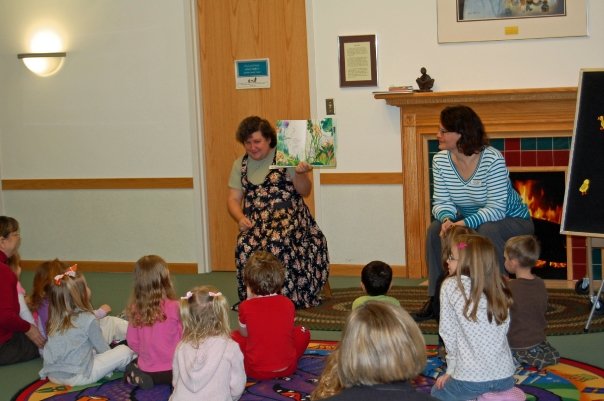
I used to work in a public library. I was the Youth Services Librarian, which meant that most of my time was spent working on building up the collection of children’s books, planning and presenting programming and story times, and going into schools to do book talks and promote library offerings. But I also spent time at the reference desks– both in the Children’s Area and the Adult Services area– and some of my time was spent finding answers to a wide range of questions:

  • Does the library have books or articles about Okapis (for a 4th grade report)?
  • Do you carry tax forms for my out-of-state business?
  • What are the school colors for _______ college (a small community college in Nebraska)?
  • Do you have a picture of the Egyptian queen Hatshepsut?
  • What is the title of a children’s book that featured muskrats making chicken soup?
  • My great-aunt left me a set of dishes and I want to know if they’re worth anything.
  • Do you have a recipe for pemmican?
  • What color is yak’s milk?
Photo by Andrea Piacquadio on Pexels.com

Some questions were easy to answer. Some required a little research within the library’s resources. Some were next to impossible and required hours of searching databases, or calling on expert help. Searching a database can be tricky. You need to find solid key words and search terms. For instance, our computer catalog did not recognize the the search term “cooking” or “cookbook.” You had to use the term “cookery” to get the best results. You could also use “cook***” to force the algorithm to look at all words that contained the letters c-o-o-k and any other letters that followed, such as cooks, cookies, cookery, etc. (Many library databases have since been updated, so searches will automatically redirect or refine common terms like this.)

Photo by Pavel Danilyuk on Pexels.com

Databases and search engines are amazing things, but they have limitations. They will only search for what you type in, and they will only search in the way they are programmed to do so. Computers (currently) “think” laterally–they do not make leaps of imagination, nor do they second-guess what you might have meant to ask but didn’t. If I want to know about pemmican, but I misspell it, the search engine may not find what I’m looking for.

Photo by Pascal Renet on Pexels.com

That’s where algorithms come in. If I misspell pemmican by leaving out the second “m”, the algorithm will look for words close to what I typed, based on thousands of other inquiries. It may ask if I meant to search for pelican, instead. Or it may ask if I want pemmican. But if my spelling is really bad, or if the word I type in is actually another word, the search engine may miss my real inquiry altogether, and send me on a fruitless search. If I’m searching for a children’s book with muskrats and chicken soup, and the search engine doesn’t find both terms in a description, the algorithm will usually stick with the first term, and give me a list of children’s books with muskrats. Hopefully one of them also includes chicken soup… If I type the key words in reverse, I will get a list of children’s books with chicken soup…hopefully one of them includes muskrat characters! And algorithms can be skewed by advertisers or other interest groups that pay to have their information appear more often or first whenever certain search terms are entered.

Photo by Pressmaster on Pexels.com

How does any of this relate to prayer requests?

When people request prayer, they are usually focused on what they perceive as their greatest need. They are searching for an answer; a solution to a specific problem or situation. “Pray for complete healing.” “Pray that my son/daughter will…” “Pray that I get this job.” And it is tempting to pray very specifically. This is not wrong. But sometimes, it limits how we see prayer and how we look at God’s answers. The opposite is also true. Sometimes, we pray so broadly, that we may not see God’s answer for what it is. Sometimes, we pray, hoping to change some sort of algorithm and get to the “top of the list” or get the “right” answer. This is not what prayer is about…we know this, but sometimes, our wants blind us to what we are actually asking (or asking others to ask for).

Photo by Luis Quintero on Pexels.com

So what are some of the key words we can use in our prayer requests and prayers? Jesus gives us a fantastic blueprint in The Lord’s Prayer (Matthew 6:9-13):

“Our Father”–remembering to whom we are praying is vital. We are not praying to a distant, absent-minded, shadowy figure; He is our Father. He knows what is necessary, and what is best.

“Who art in Heaven”–God is Omnipotent. There is nothing we can ask or imagine that is too big, too difficult, or too much to ask. That doesn’t mean that God will give us whatever we want, whenever we want it, but it does mean that God is not limited by the same things that limit us!

“Hallowed by Thy Name.”–God is not our “genie in a bottle.” He doesn’t work for us, or at our command. God is sovereign; He commands the Universe. And even though He makes Himself known and wants a relationship with us, He is not like anyone else–He ALONE is GOD. When His answers seem “wrong,” or don’t make sense, it isn’t because He didn’t hear us, or because He doesn’t love us, but His ways are not our ways (Isaiah 55:8-9).

“Thy Kingdom come, Thy will be done on Earth as it is in Heaven”–There are a lot of “good” things that are NOT part of God’s best will for us. There are a lot of difficult and painful things that God can use for our good. He wants to hear the cry of our heart–“I want to be healed.” But He also wants to hear our willingness to accept that healing may not be immediate or easy.

Photo by sergio omassi on Pexels.com

“Give us this day our daily bread”– It is not “wrong” to pray for things in the future, or to pray for “big” or complex things, but our dependence on Him is shown best when we acknowledge our everyday basic needs are met by Him.

“And forgive us our debts as we forgive our debtors, And lead us not into temptation, but deliver us from evil”–Don’t be fooled. God will not ignore our hidden resentments, hatred, disdain, rebellion, and unforgiveness. Our requests can be sidelined by holding on to grudges and harboring secret doubts about God’s essential fairness, as well as hanging on to sinful habits.

Photo by Foss Valentine on Pexels.com

God doesn’t need algorithms or special prayer “search terms”. We can come to Him with our requests, and He knows precisely what we want and what we need. But we will learn more about ourselves and about who God truly is when we refine our hearts and our prayer life.

Hearts, Hype, Hatred, and Hope

Today marks the celebration of St. Valentine– Valentine’s Day. It is a day of hearts and flowers, romantic dinners and gifts, all celebrating love and marriage. Many people choose to marry on Valentine’s day; many more choose this day to propose marriage (my dad did, in fact, and he and my mom were married just a few months later in 1963).

Photo by Blake Newman on Pexels.com

Gifts have gotten more elaborate and expensive over the years, though there are many who choose simple, homemade gifts or cards, as well. Advertisers promote their products as being perfect expressions of romance and love–diamonds, lacy nightwear, expensive candle-lit dinners, vacations, deluxe tool boxes, cars, spa treatments–if a new broom or pair of socks can be made to look romantic, look for them to be advertised as “perfect” for this year’s gift.

Photo by Pixabay on Pexels.com

I have a long and difficult history with Valentine’s Day. I remember, as a school girl, being forced to choose, sign, and address valentine cards for every person in my class at school. Some were easy enough, but I had to send cards to classmates I didn’t like; classmates who teased or bullied me, or were just “icky.” I think most parents did the same, but I noticed that I rarely got cards back from everyone, and sometimes, the “icky” kids only got two or three cards, which they hid away in their desk or threw away. I never knew if they were glad to have gotten the few cards, or if they were embarrassed and hurt (especially if they had no cards to give to anyone).

Photo by Ian Panelo on Pexels.com

As a young woman, I disliked Valentine’s Day for its way of sorting out the “loved” from the “unloved.” I was loved by my parents, and liked by friends and colleagues, students and neighbors. But every 14th of February, I was reminded painfully that I was not considered “loveable” by the young men buying candy, flowers, or engagement rings. Year after year passed with no gifts, no dates, nothing to signify that I was worthy of romantic love or attention. As I write this, I know there are millions of young women who are facing pain and rejection today, where they might feel confident and happy on any other, normal, day.

Photo by Ken Ozuna on Pexels.com

This year, Valentine’s Day seems like a bad joke– talk of love and romance rings very hollow when I see the amount of hatred being spread on social media. Should I feel “loved” if I receive a card from someone who spews hatred and death wishes for people they barely know because of something they said about politics or the environment? If I followed my parents’ rules and bought valentine cards for everyone at the office, would I be brave enough (or foolish enough) to send them?

Photo by Christina Morillo on Pexels.com

The original St. Valentine (though this is disputed and there may be more than one martyr with the same name from around the same time) is believed to be a young martyr who was beaten, stoned to death, and beheaded for marrying young Roman soldiers against the mandate of his emperor. It was felt that soldiers would fight better if they were unmarried and unencumbered by family ties, but soldiers who had converted to Christianity wanted to live pure lives, married to one woman, and faithful to their vows. St. Valentine was committed to helping these men and women live their new found faith and show love for each other, and for God. For that, he was jailed and sentenced to die a horrible death. There were no greeting cards, no diamonds, no spa treatments on that day. There was suffering, death, sacrifice, humiliation, and loss. And plenty of hatred.

But St. Valentine’s death had quite the opposite effect than the emperor intended. God’s love has a way of shining brighter for being targeted, tormented, and beaten down. Real love doesn’t show itself in new clothes, hothouse flowers, or candle-lit dinners. It shows itself in a pouring out of self, and being willing to suffer for others– even those who do not love us back.

Photo by Pixabay on Pexels.com

This Valentine’s Day, I live in hope that Christians around the world will demonstrate the true love that comes from God– a love that practices Grace, Kindness, Forgiveness, Humility, Patience, and Joy, even in the face of Hatred and Evil. Hatred shouts and raises its fists. Let Love whisper and reach out hands of service. Let Love kneel and pray for our enemies, and bless those who curse us. Let love be ready to die rather than spread hatred and return evil for evil.

Photo by Edward Eyer on Pexels.com

Love One Another (1 John 3:11-24 ESV)

11 For this is the message that you have heard from the beginning, that we should love one another. 12 We should not be like Cain, who was of the evil one and murdered his brother. And why did he murder him? Because his own deeds were evil and his brother’s righteous. 13 Do not be surprised, brothers,[a] that the world hates you. 14 We know that we have passed out of death into life, because we love the brothers. Whoever does not love abides in death. 15 Everyone who hates his brother is a murderer, and you know that no murderer has eternal life abiding in him.

16 By this we know love, that he laid down his life for us, and we ought to lay down our lives for the brothers. 17 But if anyone has the world’s goods and sees his brother in need, yet closes his heart against him, how does God’s love abide in him? 18 Little children, let us not love in word or talk but in deed and in truth.

19 By this we shall know that we are of the truth and reassure our heart before him; 20 for whenever our heart condemns us, God is greater than our heart, and he knows everything. 21 Beloved, if our heart does not condemn us, we have confidence before God; 22 and whatever we ask we receive from him, because we keep his commandments and do what pleases him. 23 And this is his commandment, that we believe in the name of his Son Jesus Christ and love one another, just as he has commanded us. 24 Whoever keeps his commandments abides in God,[b] and God[c] in him. And by this we know that he abides in us, by the Spirit whom he has given us.

Blog at WordPress.com.

Up ↑